

Note: This article contains affiliate links. If you click on these links and make a purchase, I may earn a small commission at no extra cost to you. This helps support my research and content. Read my full affiliate disclosure here.
If you spend time in the yard, on wooded trails, or working around brush, choosing the right organic tick repellent for humans matters for comfort and safety. Organic formulations can reduce synthetic chemical exposure while still providing bite protection when applied correctly. This guide covers seven shortlisted plant-based repellents chosen for real outdoor use, and it evaluates how long protection lasts, how skin-friendly the formulas are, and how easy they are to apply. Read on for practical guidance about wear time, reapplication strategy, and ingredient tradeoffs so you can pick a repellent that fits your outdoor routine.
Top Picks at a Glance
| Best Overall The best all-around choice for most situations | YAYA Organics Tick Ban All-Natural Extra Strength Tick Repellent, 16 oz Spray |  |
| Best Quality Built to a higher standard if you want something more solid | Cedarcide Tickshield Extra Strength Bug Spray (Pint) |  |
| Best Value The sweet spot between price and what you get | Nantucket Spider DEET-Free Tick Repellent Spray (16 fl oz) |  |
| Best Budget The cheapest option that still gets the job done reliably | Badger Natural Tick Repellent Spray, DEET-Free, Essential Oils, 4 fl oz |  |
| Highest Rated A top-rated pick with lots of positive feedback | Tick Tock Naturals Outdoor-Use Spray — Organic Essential Oil Blend (2.5 oz) |  |
| Most Popular A crowd favorite that many people choose with confidence | Murphy's Naturals Lemon Eucalyptus Insect Repellent Spray (4 fl oz, 2-pack) |  |
| Best Seller A high-volume bestseller chosen again and again | Badger Bug & Tick Spray Combo Pack, DEET-Free, Organic, 4 fl oz (2-Pack) |  |
YAYA Organics Tick Ban All-Natural Extra Strength Tick Repellent, 16 oz Spray
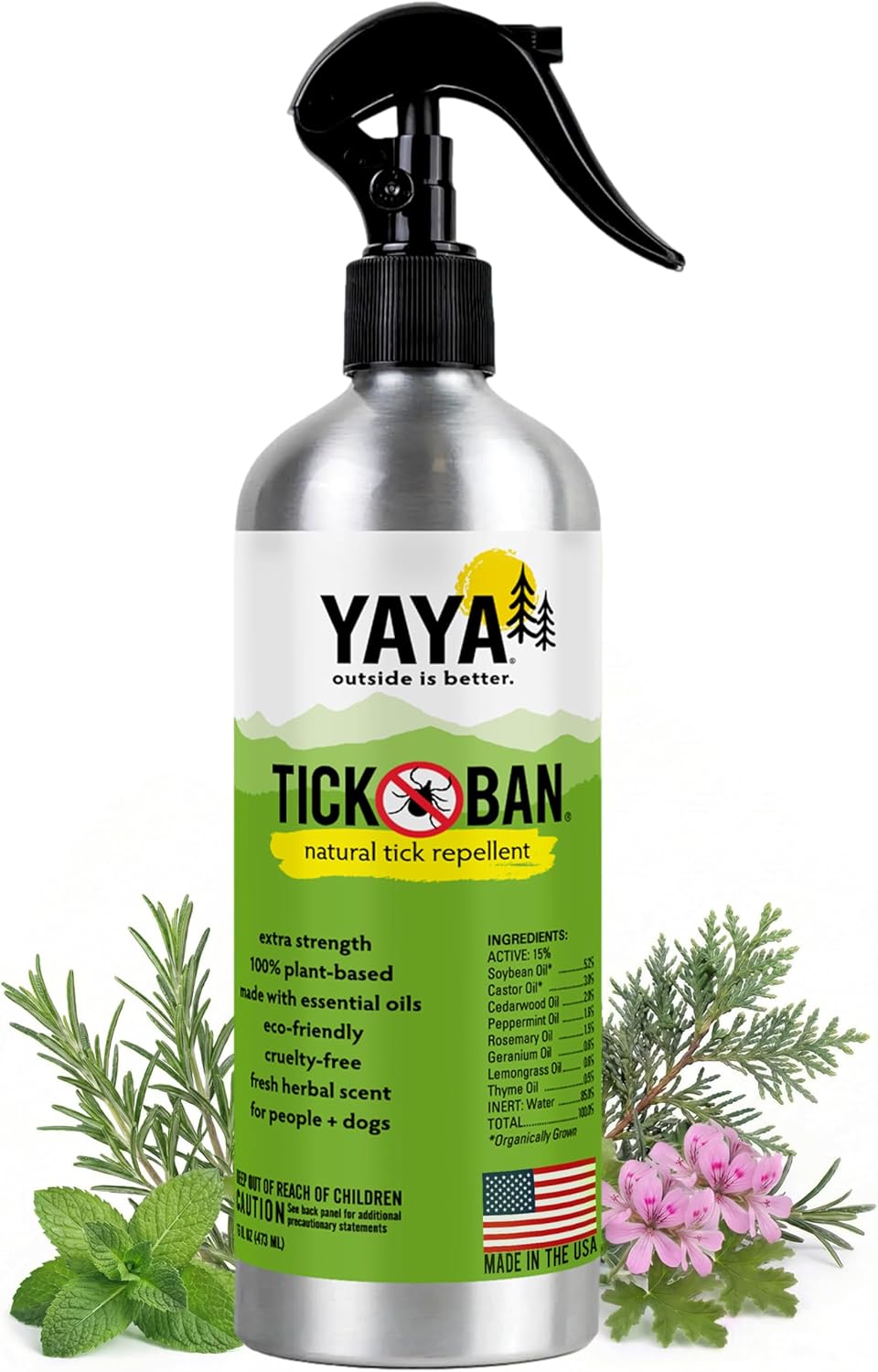
| Active ingredients | Soybean oil, castor oil, cedarwood, peppermint, rosemary, geranium, lemongrass, thyme |
|---|---|
| Bottle size | 16 oz |
| Formulation | Alcohol-free, plant-based |
| Intended use | People, dogs, horses, clothing and gear |
YAYA Organics Tick Ban is an extra-strength, DEET-free tick repellent that uses a blend of plant oils to repel ticks and other biting insects. It is typically sprayed on clothing, gear, or directly on skin and is marketed for family use, including adults, children, dogs, and horses. The formula lists soybean and castor oils as primary active ingredients plus cedarwood, peppermint, rosemary, geranium, lemongrass, and thyme essential oils, which together create a strong herbal aroma and insect-repelling effect. Practical benefits include a large 16 ounce aluminum spray bottle that is reusable and recyclable, an alcohol-free base that is gentle on fabrics and skin, and broad applicability for hiking, camping, yard work, and other outdoor recreation. Limitations to note are that effectiveness can vary by environment and user, the scent is noticeable and may not suit everyone, and plant-based repellents generally require more frequent reapplication than long-lasting synthetic options.
Best for: Buyers who prioritize natural, non-chemical protection and want a family-safe repellent for regular outdoor use across activities like hiking, camping, and yard work.
Less Ideal for: Users seeking a single-application, long-duration synthetic repellent or those who need an entirely scent-free solution.
- DEET-free, plant-based active ingredients suitable for family use
- Broadly usable on skin, clothing, gear, and animals as listed by the brand
- Large 16 oz aluminum spray bottle designed for reuse and recycling
- Alcohol-free formula that is gentler on fabrics and sensitive skin
- Natural formula may require more frequent reapplication than synthetic repellents
- Strong herbal scent may be off-putting to some users
Verdict: Choose this if you want a strong, family-safe, plant-based tick repellent for frequent outdoor use without DEET.
Cedarcide Tickshield Extra Strength Bug Spray (Pint)
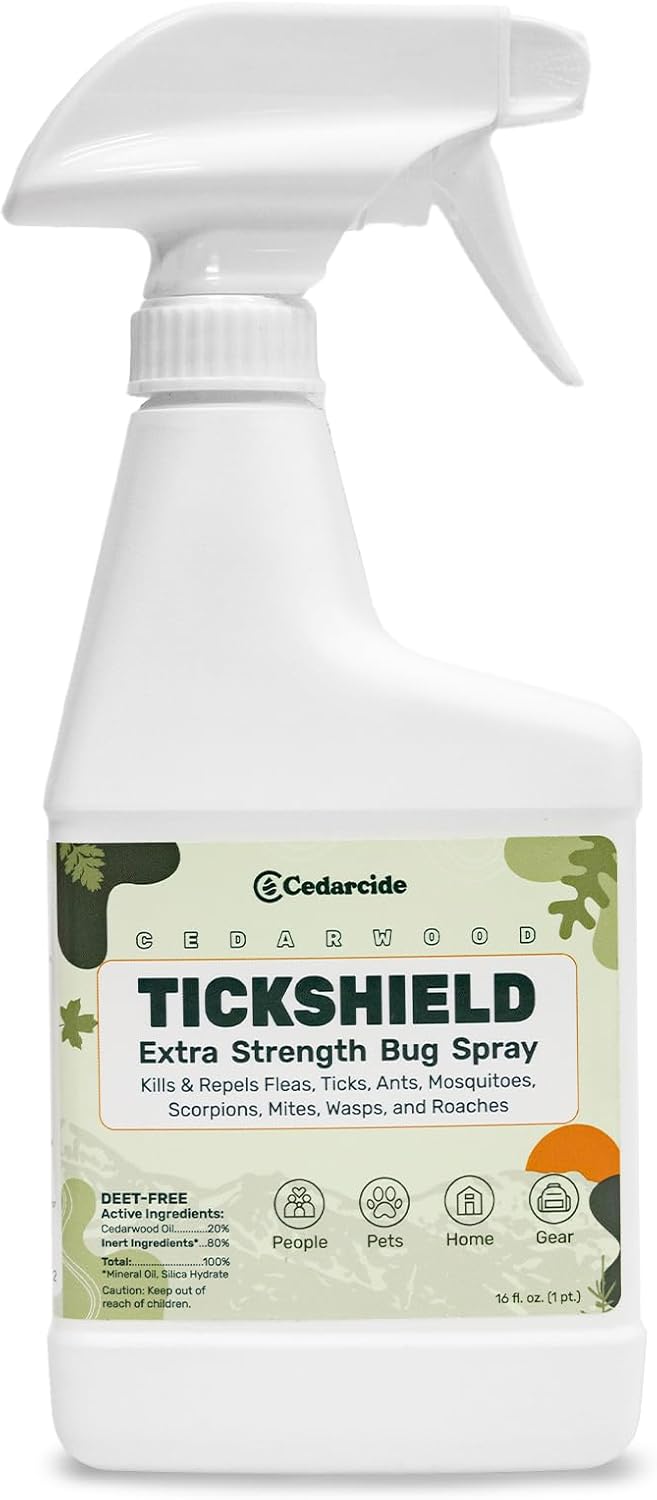
| Ingredients | 20% Cedarwood |
|---|---|
| Area of Use | People, Pets, Home |
| Reapply Interval | Every 5–7 hours (people) |
Cedarcide Tickshield Extra Strength is a cedarwood-based, plant-derived spray designed to both kill and repel ticks, mosquitoes, fleas, mites, ants, and several other pests. You can spray it on skin and clothing before outdoor activities, mist gear like backpacks and tents, or apply directly to indoor surfaces and pet coats for dogs over 20 pounds. The formula contains 20% cedarwood essential oil and is third-party tested for common biting pests, so it provides a botanical alternative to conventional chemical repellents. Practical benefits include multi-use versatility across people, gear, indoor spaces, and larger pets, and a reapplication interval of roughly every 5 to 7 hours for people or more often after getting wet. Important limitations are that it is not plant safe around lawns and gardens, it is not recommended for animals under 20 pounds, and effectiveness requires regular reapplication during prolonged exposure or after moisture exposure. For buyers seeking a stronger botanical option rather than a single long-lasting chemical treatment, Tickshield is a solid, family- and pet-friendly choice.
Best for: Buyers who prioritize a high-performing botanical repellent and want a multi-use product they can apply to clothing, gear, indoor areas, and larger pets while avoiding harsh synthetic pesticides.
Less Ideal for: People who need a single long-lasting chemical-style repellent for continuous multi-day protection or pet owners seeking a product formulated for small dogs or cats.
- Plant-based formula with 20% cedarwood that is third-party tested against ticks and common biting pests
- Multi-purpose use on people, gear, indoor surfaces, and pets over 20 lb
- Clear application guidance with repeat-apply timing for practical outdoor use
- Not safe for use directly on lawns or plants
- Not recommended for pets under 20 pounds
Verdict: A performance-oriented plant-based spray that gives reliable short-term protection and versatile application for people, gear, and larger pets.
Nantucket Spider DEET-Free Tick Repellent Spray (16 fl oz)

| Item Volume | 16 fluid ounces |
|---|---|
| Item Form | Aerosol |
| Scent Name | Rosemary, Cinnamon, Peppermint |
| Material Features | Post-Consumer Recycled Plastic Bottles |
| Ingredients | Clove Oil, Geranium Oil, Peppermint Oil, Cedarwood Oil, Spearmint Oil, Rosemary Oil, Cinnamon Oil, Distilled Water, Vegetable Glycerin, Natural Vanillin |
This 16-ounce Nantucket Spider tick repellent is a water-based spray built around organic essential oils and natural vanillin to extend protection. You use it like a typical body spray: mist onto exposed skin and outer clothing before going into tick-prone areas such as trails or the yard. Notable features include lab-tested deer tick repellency reported at 92% when used as directed, a fine mist sprayer with a safety lock for packing, and a non-greasy, quick-drying feel that leaves a mild vanilla-spice scent from rosemary, cinnamon, and peppermint oils. The formula is made from steam-distilled oils and avoids DEET, which appeals to people who prefer plant-based ingredients and gentler products. Limitations are that effectiveness in field conditions can vary from lab results and repeat applications may be needed for long outings or after heavy sweating; it is also an aerosol, which some users may choose to avoid. For routine outdoor use and short hikes, it offers a practical, lower-chemical alternative to conventional repellents.
Best for: Buyers who prioritize lower-chemical, plant-based protection for everyday outdoor activities and want a convenient spray for short hikes, yard work, or travel.
Less Ideal for: People who need maximum long-duration protection for extended backcountry trips or who prefer non-aerosol application formats should consider other options.
- DEET-free, plant-based formula using steam-distilled essential oils
- Lab-tested to repel 92% of deer ticks when used as directed
- Fine mist sprayer with a safety lock for even, packable application
- Water-based formula dries quickly and does not leave an oily residue
- Aerosol format may not suit those avoiding sprays or seeking pump bottles
- Laboratory repellency may not equal identical real-world protection over long periods
Verdict: A practical DEET-free spray that delivers plant-based, lab-tested deer tick repellency in a quick-drying, travel-friendly aerosol.
Badger Natural Tick Repellent Spray, DEET-Free, Essential Oils, 4 fl oz

| Volume | 4 fl oz |
|---|---|
| Active ingredients | Geraniol, Cinnamon oil, Thyme oil |
| Tested duration | 6+ hours |
| Container | Aluminum bottle |
Badger Natural Tick Repellent is a DEET-free spray that uses plant-derived actives such as geraniol, cinnamon, and thyme oils to repel ticks during outdoor activities. It is designed for one-handed pump application to skin, socks, shoes, and clothing and comes in a lightweight aluminum bottle that is easy to carry on hikes or in a daypack. The formula is advertised as gentle and family friendly, suitable for sensitive skin and regular use, and laboratory testing indicates protection for at least six hours under controlled conditions. Practical benefits include an eco-friendly recyclable aluminum container, a non-greasy feel, and a scent profile that is milder than many synthetic repellents. Important limitations are that protection is focused on ticks rather than broad-spectrum insect control, so you may need a separate product for reliable mosquito protection, and essential-oil repellents can require more frequent reapplication with heavy sweating or after swimming. Patch testing is recommended for very sensitive skin and this product should not be used directly on pets.
Best for: Buyers who prioritize natural, non-synthetic protection and need a portable, family-friendly tick repellent for hiking, camping, and backyard use.
Less Ideal for: Users who want a single product for strong mosquito and tick control or those who need pharmaceutical-strength, long-duration protection for high-tick-risk environments.
- Plant-based active ingredients (geraniol, cinnamon, thyme) provide a DEET-free option
- Lab-tested effectiveness of at least six hours under test conditions
- Easy one-handed pump and lightweight aluminum bottle for portable use
- Suitable for use on skin, clothing, and gear and formulated to be gentle on sensitive skin
- Primarily targeted at tick protection and not guaranteed to repel mosquitoes reliably
- Contains essential oils which may irritate very sensitive skin and require a patch test
Verdict: Choose this spray if you want a portable, DEET-free, plant-based tick repellent that balances effectiveness with a family-friendly, eco-conscious formula.
Tick Tock Naturals Outdoor-Use Spray — Organic Essential Oil Blend (2.5 oz)

| Net volume | 2.5 oz |
|---|---|
| Key oils | Lemongrass, rosemary, thyme, geranium, peppermint |
| Carrier oil | Cold-pressed grapeseed oil |
| Packaging | Biodegradable, earth-friendly |
This outdoor-use spray combines organic essential oils in a cold-pressed grapeseed oil base to provide a lightweight, skin-friendly formula for short outdoor outings. It is applied by spraying into the palms and rubbing onto exposed skin or lightly onto clothing and shoes, which makes it convenient to carry in a tote or daypack for walks, backyard time, or quick trips. Notable features include a hydrophilic oil formula that blends with skin moisture for a non-sticky, silky finish and a clean botanical aroma from lemongrass, rosemary, thyme, geranium, and peppermint. The product is presented with biodegradable packaging and avoids synthetic chemicals, which suits buyers seeking cleaner ingredient lists. Important limitations are that it is oil-based rather than alcohol or DEET-based so it is not marketed or presented as a tested insecticide, and longevity or repellency against ticks is not quantified on the label, so users should reapply as needed and not rely on it as the sole protective measure in high-risk tick areas.
Best for: Buyers who prioritize natural, ingredient-conscious personal care and want a pleasant-smelling, easy-to-apply spray for everyday outdoor use and low-to-moderate exposure situations.
Less Ideal for: People who need a proven, long-duration tick repellent for high-risk areas or who require EPA-registered chemical protection should choose a product with documented repellency data instead.
- Organic essential oil blend with recognizable botanicals such as lemongrass, rosemary, thyme, geranium, and peppermint
- Cold-pressed grapeseed oil base gives a smooth, non-sticky, hydrophilic feel on skin
- Compact 2.5 oz format is easy to carry for everyday outdoor moments
- Biodegradable packaging and no synthetic chemicals align with cleaner-ingredient preferences
- Formula is oil-based and not presented as a clinically proven insect repellent for ticks
- No quantified duration of protection or standardized repellency testing provided
Verdict: Choose this if you want a natural, skin-friendly botanical spray that smells pleasant and is easy to carry for everyday outdoor use.
Murphy's Naturals Lemon Eucalyptus Insect Repellent Spray (4 fl oz, 2-pack)

| Active ingredient | Oil of Lemon Eucalyptus (30%) |
|---|---|
| Protection duration (mosquitoes) | Up to 6 hours |
| Protection duration (ticks) | Up to 4 hours |
| Formulation | Spray, non-greasy |
This two-pack of Murphy’s Naturals spray uses a 30% oil of lemon eucalyptus formulation to repel mosquitoes and ticks without DEET or picaridin. You apply it as a light mist to exposed skin, clothing, or gear and reapply according to activity and label directions. The formula is non-greasy, has a fresh lemon scent, and is safe to use on camping and outdoor equipment because it does not damage plastics or fabrics. Practical benefits include family-friendly labeling, EPA registration of the active ingredient, and reasonably long protection windows for a plant-based repellent. Limitations to note are that protection on ticks is shorter than for mosquitoes so more frequent reapplication may be needed in high-risk tick areas, and the product must be applied correctly to exposed skin and avoided near eyes or broken skin. Users sensitive to essential oils should test a small skin area first.
Best for: Buyers who prioritize natural, EPA-registered alternatives to synthetic repellents and want a family-friendly spray for everyday outdoor activities like hiking, camping, and backyard use.
Less Ideal for: People who need the longest-possible continuous protection in heavy tick or mosquito zones or who require an odorless prescription-strength repellent should consider stronger alternatives.
- Uses 30% oil of lemon eucalyptus, an EPA-registered plant-based active ingredient
- DEET- and picaridin-free formula that is less likely to damage gear or plastics
- Non-greasy, light lemon scent that wears comfortably for outdoor use
- Family-friendly directions suitable for kids and adults when used as directed
- Tick protection duration is shorter than mosquito protection and may require more frequent reapplication
Verdict: A reliable plant-based spray for buyers who want EPA-registered, DEET-free protection for family outdoor use.
Badger Bug & Tick Spray Combo Pack, DEET-Free, Organic, 4 fl oz (2-Pack)

| Active ingredients (tick spray) | Geraniol, Organic Cinnamon Oil, Organic Thyme Oil |
|---|---|
| Active ingredients (bug spray) | Organic Citronella Oil, Organic Lemongrass Oil, Organic Cedar Oil, Organic Rosemary Oil, Organic Geranium Oil, Organic Peppermint Oil |
| Reapplication guidance | Reapply every 6 hours for tick spray and every 3 hours for bug spray |
| Bottle material | Recyclable aluminum pump bottle |
This combo pairs a 4 fl oz bug spray and a 4 fl oz tick spray formulated from organic essential oils to repel different pests during outdoor activities. The tick spray relies on cinnamon, thyme, and geraniol and is lab tested to provide up to six hours of protection, while the bug spray uses citronella, lemongrass and other oils with a roughly three-hour window. Both come in recyclable aluminum pump bottles that are easy to carry and apply to skin, clothing, and gear. Practical benefits include a gentle formula suitable for sensitive skin, clear reapplication guidance, and travel-friendly packaging. Important limitations are that protection windows are shorter than many synthetic repellents and effectiveness can decrease after swimming, heavy sweating, or in high insect pressure; the product also advises caution around certain fabrics and should not be used on pets. For people who prioritize a plant-based, low-toxicity approach the sprays offer a convenient, family-safe option, but those needing long-lasting, high-intensity protection in tick-heavy areas may want a different active ingredient.
Best for: Buyers seeking a gentler, plant-based repellent for family outdoor use who prioritize low toxicity and sustainable packaging over maximum-duration chemical protection.
Less Ideal for: People who need long continuous protection during high tick exposure or who prefer proven synthetic actives for heavy-duty fieldwork should consider alternative repellents.
- Plant-based active ingredients tested for tick and mosquito protection
- Separate formulas optimized for ticks (up to 6 hours) and biting insects (about 3 hours)
- Aluminum pump bottles are travel-friendly, leak resistant, and recyclable
- Gentle formulation suitable for sensitive skin and family use
- Clear directions for application to skin, clothing, and gear
- Shorter protection duration than many DEET-based repellents
- Not intended for use directly on pets and caution advised around delicate fabrics
Verdict: Choose this combo if you want organic, family-safe tick and bug protection in convenient travel-ready aluminum bottles.
Choosing the Right Organic Tick Repellent for Humans: Key Factors to Consider
Protection Longevity
How long a repellent lasts per application affects how you plan outdoor time and reapplication. Longer-lasting formulas reduce interruption for reapplication during hikes or yard work and are generally more convenient for multi-hour outings.
Longevity depends on the active ingredients, their concentration, and whether the product resists sweat and light moisture. Consider typical activity length and whether you will be in heavy brush or wet conditions when weighing protection time claims.
Skin Tolerability and Allergens
Because these products are applied to skin, irritation risk and allergen potential are central. Plant-derived actives like oil of lemon eucalyptus or citronella can still cause reactions in sensitive individuals.
Check for fragrance-free or dermatologically tested labels if you have reactive skin. Also consider formulations with lower alcohol content or added emollients to reduce dryness with repeated use.
Botanical Active Type and Concentration
Different botanicals work in different ways and at different concentrations. For example, para-menthane-diol derivatives from lemon eucalyptus are commonly used in human repellents and tend to offer measurable protection windows when formulated at recommended concentrations.
Know the active ingredient and its documented effective concentration range. Higher concentrations may extend protection but can increase irritation risk, so balance efficacy against tolerability for frequent use.
Ease of Application and Dosing
Application format matters for how evenly you can cover exposed skin. Sprays offer fast coverage for large areas, creams allow targeted application and reduced inhalation, and roll-ons work well for face and neck control.
Look for clear dosing instructions and pump or spray mechanisms that deliver a fine, even mist. Ease of use is also important for repeated application while outdoors.
Water and Sweat Resistance
If you plan to sweat, swim, or be in humid conditions, water and sweat resistance will determine whether protection holds. Some plant-based repellents include formulation agents that improve persistence on skin when wet.
If you expect heavy perspiration or water exposure, choose repellents with tested resistance and follow reapplication guidance after heavy sweating or towel-drying.
Safety Around Children and Pets
Consider age-appropriate labeling and whether the repellent is intended for direct application to children. Some botanical actives are not recommended for very young children, and separate clothing-only products may be advised instead.
Also be mindful of transfer risk to pets. Certain essential oils can be toxic to animals, so avoid close skin-to-skin contact with pets after application or choose products with guidance for household use.
When to Choose an Organic Repellent
Choose an organic tick repellent for humans when you want to reduce exposure to synthetic insecticides, are sensitive to conventional ingredients, or prefer plant-derived actives for environmental reasons. These products are appropriate for light to moderate tick exposure in backyard and trail situations when used according to directions.
- Prefer plant-based active ingredients for short to moderate outdoor sessions
- Select dermatologically-tested formulations for frequent use
- Avoid applying near mucous membranes and follow age restrictions on labels
Application Tips for Best Protection
Apply evenly to exposed skin and reapply at intervals recommended on the label. For sprays, keep the nozzle a few inches away and use hands to rub creams in for full coverage. Do not apply under clothing; instead apply to cuffs and collar areas to reduce transfer to fabric.
- Apply before heading into tick habitat, not after you are already surrounded by brush
- Reapply after heavy sweating, swimming, or towel-drying
- Treat clothing edges and shoe tops where ticks often latch on
Combining Repellents with Physical Barriers
Repellent use works best in combination with clothing choices that reduce skin exposure. Wear long sleeves, tuck pants into socks, and choose light-colored clothing to spot ticks early. Treating clothing and gear with separate clothing-directed products provides an additional barrier; however, follow product guidance on mixing approaches.
- Light-colored long clothing helps detect ticks sooner
- Tuck pant legs into socks and use gaiters in heavy brush
- Use both skin repellent and treated clothing for layered protection
Handling Sensitive Skin and Reactions
If you have a history of eczema or contact dermatitis, test a new repellent on a small patch of skin and wait 24 hours before widespread use. Choose formulations labeled hypoallergenic or designed for sensitive skin and avoid products with added fragrances when possible.
- Patch-test before full application if you have reactive skin
- Wash off with soap and water if irritation occurs and seek medical advice for severe reactions
- Rotate products if you suspect a sensitivity to a particular botanical
Real-World Use Scenarios
For short neighborhood walks, a light spray with moderate protection time may be sufficient. For multi-hour hikes, choose a longer-lasting formulation and plan scheduled reapplication. For gardening tasks close to the ground, focus application on lower legs and footwear plus use protective clothing.
- Short errands: quick-apply spray or wipe
- Extended hikes: longer-duration formulations and scheduled reapplication
- Gardening: concentrate on lower limbs and wrists where ticks contact first
How We Chose the Best Organic Tick Repellent for Humans
We focused on products formulated specifically for human use with plant-derived active ingredients and evidence of effectiveness in field or lab studies. Our selection prioritized items with clear ingredient labeling, repeatable protection time claims, and options suitable for sensitive skin or regular outdoor exposure. We excluded sprays and lotions intended only for clothing or gear, products with ambiguous ingredient lists, and any formulation that lacked consumer safety data or guidance for human application. Evaluation criteria emphasized protection longevity under typical outdoor conditions, skin tolerability and allergen risk, application convenience for adults, concentration and source of botanical actives, and packaging that supports correct dosing. We also considered whether manufacturers provided clear reapplication intervals and guidance for use around children and pets. These dimensions guided inclusion and the scoring labels used in our per-product scorecards.
FAQ
Are organic tick repellents effective compared with synthetic options?
Effectiveness depends on the active ingredient and concentration. Some plant-based actives provide meaningful protection for several hours, but efficacy can vary with activity level and environmental conditions.
How often should I reapply an organic repellent?
Follow the product label. Many organic formulations advise reapplication every two to four hours or after heavy sweating or water exposure. Shorter intervals are common for lower-concentration products.
Can I use organic tick repellent on children?
Some organic repellents are formulated for children, but not all botanicals are suitable for young ages. Check age recommendations and use reduced-dose or child-specific formulations when available.
Will applying repellent to clothing work instead of skin application?
Treating clothing can add protection, but many plant-based skin repellents are intended for direct skin application. Clothing treatments and skin repellents serve different roles and can be combined when products are designed for those uses.
What should I do if I get a rash after using an organic repellent?
Stop using the product and wash the area with soap and water. For mild irritation, monitor symptoms; seek medical attention for severe or spreading reactions. Patch-testing new products can reduce this risk.
Do organic repellents protect against other biting insects?
Many plant-based repellents also repel mosquitoes and biting flies to varying degrees. Check the product label for claimed target insects to confirm coverage.
Final Verdict
Choose an organic tick repellent for humans by balancing protection time against skin tolerability and your typical outdoor activities. Prioritize longer-lasting formulas for extended hikes and sweat-resistant options for hard work, while selecting fragrance-free or dermatologically tested versions if you have sensitive skin. Use repellents as one layer of protection alongside clothing and tick checks to minimize risk. Decide based on where you spend time outdoors and how often you need to reapply. When in doubt, favor clear labeling about active ingredients and reapplication intervals to match your routine and exposure level.
