

Note: This article contains affiliate links. If you click on these links and make a purchase, I may earn a small commission at no extra cost to you. This helps support my research and content. Read my full affiliate disclosure here.
Potted lime trees let you grow fresh citrus even if you only have a balcony, patio, or small yard. Choosing the right lime trees for pots matters because container culture changes how a tree roots, uses water, and handles winter. In this guide we shortlisted the top options for container growing and checked each against practical gardener needs like cold tolerance, ease of care, and fruiting reliability. Below you will find concise explanations of what to expect from potted lime trees and the evaluation criteria used to select these top picks. Use this guide to match a tree to your space, climate, and maintenance preference before you buy.
Top Picks at a Glance
| Best Overall The best all-around choice for most situations | American Plant Exchange Key Lime Tree (live, 6-inch pot) |  |
| Best Quality Built to a higher standard if you want something more solid | Via Citrus Key Lime Tree Live Plant in 1 Gallon Pot |  |
| Best Value The sweet spot between price and what you get | Garden State Bulb Persian Lime Tree (1 Gallon) |  |
| Best Budget The cheapest option that still gets the job done reliably | Kaffir Lime Tree (Citrus hystrix) Live Seedling in Pot |  |
| Highest Rated A top-rated pick with lots of positive feedback | Via Citrus Red Lime Tree Live Plant (1 Gallon) |  |
| Most Popular A crowd favorite that many people choose with confidence | Gerald Winters and Son Key Lime Tree Starter Plant (3–5") |  |
| Best Seller A high-volume bestseller chosen again and again | Brighter Blooms Key Lime Tree (1-2 ft) |  |
American Plant Exchange Key Lime Tree (live, 6-inch pot)

| Indoor Outdoor Usage | Indoor, Outdoor |
|---|---|
| Sunlight Exposure | Full Sun |
| USDA Hardiness Zone | 9,10,11 |
| Soil Type | Sandy Soil |
| Moisture Needs | Regular Watering |
This is a live Key Lime tree shipped in a 6-inch nursery pot intended for container or warm-climate planting. It brings glossy evergreen foliage and fragrant white blossoms and can produce small, aromatic limes when given enough sun and maturity. Typical use is as a patio or balcony specimen: set it where it gets 6–8 hours of direct sun, use well-draining citrus soil, and water consistently when the topsoil begins to dry. Practical benefits include year-round interest from foliage and potential flowers, compact size that fits small patios and containers, and relatively low maintenance if protected from frost. The plant arrives young so flowering and fruit are not guaranteed on delivery and fruiting depends on maturity, light, and care. If you live in cooler zones move the container indoors during cold snaps. The product is best for gardeners who want a small, manageable citrus tree for pot culture rather than an instant fruit producer.
Best for: Buyers who want a manageable potted citrus tree to grow on a sunny patio or balcony and are willing to care for a young plant until it matures and fruits.
Less Ideal for: Gardeners who need instant fruit production or who cannot provide at least 6 hours of direct sun and occasional winter protection indoors.
- Compact 6-inch nursery pot makes it easy to start in containers or on small patios
- Attractive glossy foliage and fragrant blossoms add year-round ornamental value
- Adaptable for both indoor and outdoor container growing with proper light and temperature
- Low maintenance practice recommended: tolerates regular watering and standard citrus care
- Young plant may arrive without flowers or fruit so immediate harvests are unlikely
- Not suitable for freezing climates unless moved indoors during cold weather
Verdict: A compact, easy-to-manage Key Lime tree for sunlit pots and small patios that rewards consistent citrus care with flowers and potential fruit as it matures.
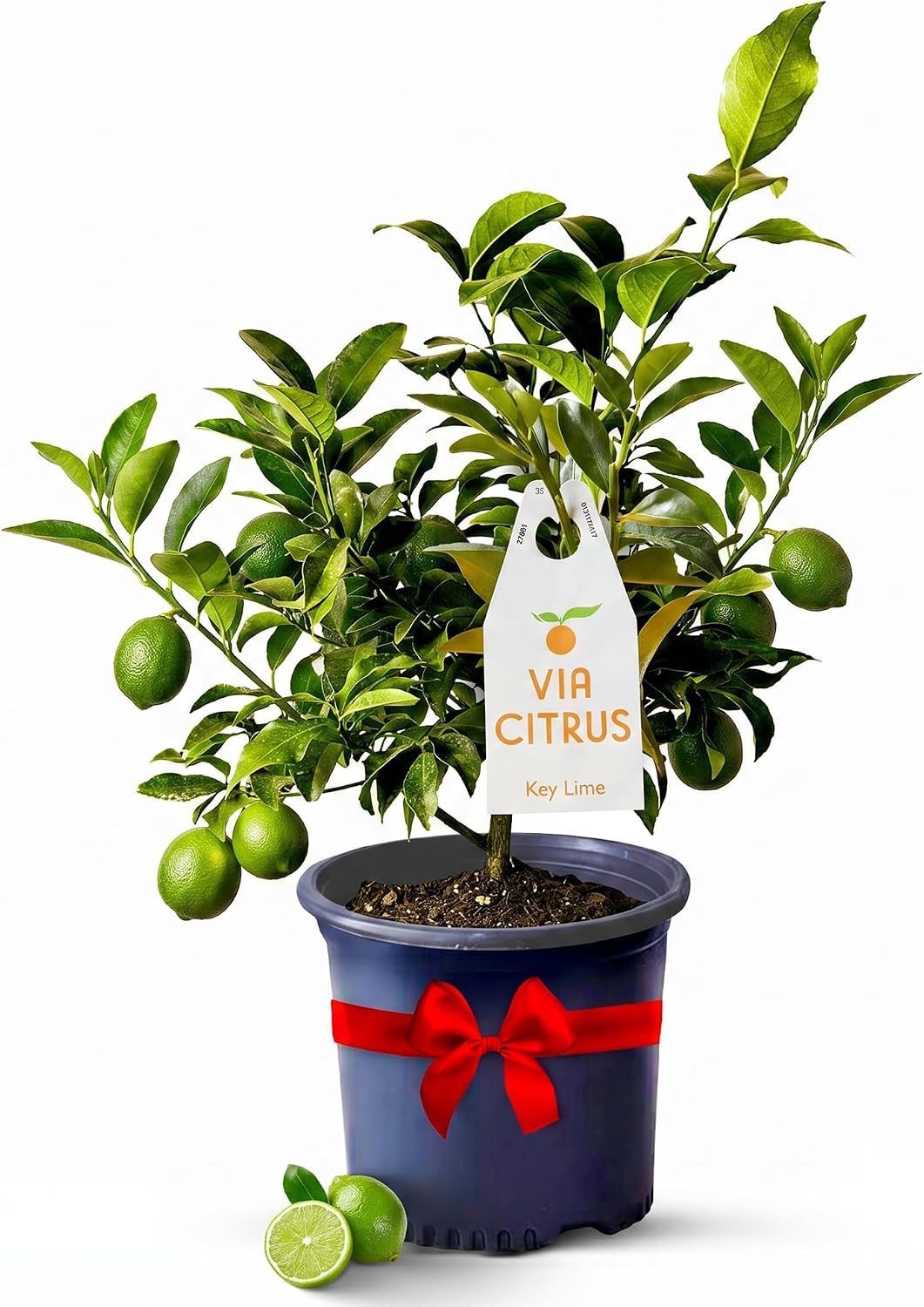
Via Citrus Key Lime Tree Live Plant in 1 Gallon Pot
| Indoor Outdoor Usage | Indoor |
|---|---|
| Other Special Features of the Product | Fragrant |
| Expected Blooming Period | Spring to Summer |
| Sunlight Exposure | Full Sun |
| USDA Hardiness Zone | 8 |
This Via Citrus key lime arrives as a ready-to-display one-gallon plant that produces fragrant white blooms and small tart fruit useful for cooking and drinks. It is typically used as a patio or sunny-window container tree where it gets full sun and well-drained soil; growers report year-round blooms and a citrus scent that enhances small outdoor or indoor spaces. Notable features include organic-grown stock, a compact size that fits balconies and terraces, and plants shipped already potted for immediate placement. The practical benefits are easy care for growers who want fresh limes without dedicating garden space, plus ornamental value from flowers and glossy foliage. Limitations to keep in mind are USDA zone 8 suitability which means it needs protection or indoor overwintering in colder climates, and the 1-gallon planting means you will likely need to repot to a larger container as the tree matures to maintain vigor and fruit production.
Best for: Growers who want a performance-minded container lime that delivers edible fruit and consistent flowering in a small-space setup and are willing to provide bright sun and occasional repotting.
Less Ideal for: Those seeking a cold-hardy outdoor tree for year-round planting in cooler zones or gardeners who do not want to manage seasonal overwintering and container upgrades.
- Compact one-gallon size ready for container growing on patios or balconies
- Fragrant white blooms with year-round flowering reported
- Organic-grown stock and shipped in a durable citrus pot for easy placement
- Produces small tart limes suitable for drinks and cooking
- Rated for USDA zone 8 so may need indoor protection in colder climates
- Will require repotting from the one-gallon container as it grows
Verdict: A compact, ready-potted key lime ideal for growers who want productive, fragrant container citrus for patios or sunny windows.
Garden State Bulb Persian Lime Tree (1 Gallon)

| Indoor Outdoor Usage | Outdoor |
|---|---|
| Expected Blooming Period | Spring to Fall |
| Sunlight Exposure | Partial Shade, Partial Sun |
| USDA Hardiness Zone | 8 to 11 |
| Moisture Needs | Moderate Watering |
The Garden State Bulb Persian lime arrives as a 1-gallon potted tree intended for outdoor container culture in zones 8 through 11. It is described as easy to grow and self-pollinating, with fragrant blooms that attract pollinators and a manageable mature height around 10 feet that makes it suitable for large pots or trained small standards. Typical use is planting into a well-draining loam-based potting mix, locating the container in partial sun to partial shade, and keeping the soil moderately moist while allowing the top to dry between waterings, especially during the first three months of establishment. Benefits include edible fruit, disease resistance, and suitability for container life when pruned to control size. Limitations are that it is sold small (1 gallon) so it will need time and attentive care to fruit well, and it is restricted from shipment to some states. Buyers should expect to plan for seasonal protection in cooler parts of the listed zones and regular watering and feeding to encourage flowering and fruit set.
Best for: Gardeners who want a practical, space-efficient lime tree for a patio or large container and who plan to invest a season or two of basic care to establish it for future fruiting.
Less Ideal for: People seeking an instant, heavy-bearing fruit tree or those in climates colder than zone 8 looking for a fully cold-hardy specimen.
- Sized for container growing in a 1-gallon growers pot ready to transplant
- Fragrant blooms that attract pollinators and support flowering over spring to fall
- Self-pollinating and described as disease resistant, easing care for backyard growers
- Suitable for USDA zones 8–11 so it can be grown outdoors in many warm-climate gardens
- Comes as a small 1-gallon plant that requires time and attentive care before reliable fruiting
- Cannot be shipped to certain states which limits where buyers can obtain it
Verdict: A compact, container-ready Persian lime tree for growers who want an easy-to-manage edible tree for patios in warm climates.
Kaffir Lime Tree (Citrus hystrix) Live Seedling in Pot

| Indoor Outdoor Usage | Indoor, Outdoor |
|---|---|
| Other Special Features of the Product | Low Maintenance |
| Sunlight Exposure | Full Sun |
| Material Features | GMO Free |
This listing is for a single potted Kaffir (makrut) lime seedling about 2–5 inches tall intended for growing in pots or planting outdoors in warm climates. Buyers typically keep it as a container specimen on a sunny patio or move it indoors through colder months; the seller includes insulation wrap and heat packs for winter transit. The plant is described as low maintenance and suited to full sun, and it produces the distinctive double-lobed leaves cooks use for curry, soups, and stir-fries as well as small bumpy fruit for zest. Practical benefits include compact size for small-space growers and immediate starter growth compared with seeds. Limitations are that the seedling is very young so it will need time to establish before producing plentiful leaves or fruit, and outdoor success depends on frost-free conditions or bringing the plant inside. Expect basic care like regular watering, bright light, and occasional fertilizing to encourage growth in a pot.
Best for: Ideal for small-space gardeners who want an inexpensive starter citrus to grow in a pot for cooking and who are willing to nurse a young plant through its establishment period.
Less Ideal for: Not a good choice for gardeners seeking immediate harvests or for those in cold climates who cannot provide frost protection or indoor space in winter.
- Sold as a potted seedling so you get a live, established start rather than seeds
- Aromatic, double-lobed leaves prized for authentic Southeast Asian cooking
- Described as low maintenance and suitable for indoor or outdoor container growing
- Includes winter shipping protection (insulation wrap and heat packs) when needed
- Very young plant (2–5 in) so it requires time and attentive care before producing usable leaves or fruit
- Not suitable for climates with hard frost unless moved indoors
Verdict: A compact, budget-friendly way to start a potted Kaffir lime for cooks who want authentic aromatic leaves in a small-space container garden.
Via Citrus Red Lime Tree Live Plant (1 Gallon)

| Sunlight Exposure | Full Sun |
|---|---|
| Moisture Needs | Moderate Watering |
| Indoor Outdoor Usage | Indoor |
| Material Features | Organic |
The Via Citrus Red Lime is a compact live lime tree intended for container and small-space growers who want a reliably fruiting citrus with visual impact. It ships in a 1-gallon pot and is grown organically; the tree prefers full sun, sandy soil, and moderate watering, and it blooms and fruits throughout the year. Typical use is as a patio or sunny-window container plant where its fragrant blossoms and red-orange fruit add both decoration and edible harvests. Practical benefits include continuous harvests from an ever-bearing variety, a compact form that fits pots and small patios, and fragrant blooms that improve indoor atmosphere. Limitations are that it needs consistently bright light to perform well and will require seasonal care such as pruning, fertilizing, and protection from cold in cooler zones; shipping restrictions mean it is not legally available to some states and U.S. territories. For buyers who want a dependable, ornamental fruiting tree in a pot, this is an easy-to-manage choice, but it is not a no-maintenance houseplant and will need routine citrus care to stay productive.
Best for: Buyers who prioritize a reliable, productive container lime tree for a sunny window, balcony, or patio and who are prepared to provide routine citrus care.
Less Ideal for: People seeking a low-light houseplant or those unwilling to follow basic citrus care routines or restricted-shipping locations should look elsewhere.
- Ever-bearing variety provides year-round blooms and regular small harvests.
- Compact growth habit suited to 1-gallon pots and small patios or balconies.
- Grown organically and shipped in a ready-to-grow citrus pot for easy container planting.
- Requires consistent full sun and attentive watering and fertilizing to remain productive.
- Not allowed to ship to certain states and U.S. territories due to regulations.
Verdict: A dependable, compact red lime tree for pots that delivers year-round blooms and reliable fruit for sunny patios or bright indoor spaces.
Gerald Winters and Son Key Lime Tree Starter Plant (3–5")

| Indoor Outdoor Usage | Indoor |
|---|---|
| Sunlight Exposure | Full Sun |
| Expected Blooming Period | Winter |
| USDA Hardiness Zone | 3 |
| Moisture Needs | Moderate Watering |
This Key Lime starter arrives as a 3–5 inch seed-grown plant that has been nurtured for several months and packaged for safe transit. It is intended for growers who want a citrus tree they can raise to fruiting size over a couple of years, and can be kept indoors in cold climates or moved outdoors where temperatures allow. The listing notes full sun exposure and moderate watering, and the plant is described as well rooted and quick growing, which helps it acclimate to container culture on a patio or in a sunroom. Practical advantages are the included seed for a companion plant and protective bubble wrap for shipping. Limitations to expect are the very small initial size and the time and care required before it becomes fruit-bearing, plus the need for supplemental light if kept indoors through winter. For someone looking for a starter specimen to train in a pot and monitor closely, this is a straightforward option; if you need an established, fruit-producing tree immediately, this is not that.
Best for: Buyers who want an inexpensive starter lime to grow on a patio or in a sunny indoor spot and who prefer to nurture a young plant into a productive container tree over time.
Less Ideal for: People who need an established, immediately fruiting lime tree or who want a low-maintenance houseplant that tolerates deep shade.
- Seed-grown and well rooted after several months of nursery care
- Suitable for indoor or outdoor keeping which aids overwintering in cold climates
- Described as quick growing, helpful for faster establishment in containers
- Arrives packaged with bubble wrap to reduce transit damage
- Very small initial size means several seasons of care before fruiting
- Requires full sun or supplemental grow lights indoors to develop well
Verdict: A good choice for gardeners who want a young, well-rooted key lime to raise in a pot and are prepared to provide sun and seasonal care until it fruits.
Brighter Blooms Key Lime Tree (1-2 ft)

| Indoor Outdoor Usage | Indoor, Outdoor |
|---|---|
| Sunlight Exposure | Full Sun, Partial Shade |
| USDA Hardiness Zone | 3 |
| Moisture Needs | Moderate Watering |
| Expected Blooming Period | Winter |
This Brighter Blooms Key lime tree arrives as a small, established 1–2 foot plant intended for indoor or outdoor planting and is suited to container growing on a sunny patio. It produces glossy green foliage and, with proper care, will flower and set tangy key limes—blooming is expected in winter. The plant prefers well draining loam soil, moderate watering, and a location with full sun or partial shade, which makes it straightforward to maintain. Notable features include cold hardiness listed to USDA zone 3 and a brand warranty that covers delivery issues and plant health. Practical benefits for potted growers are its compact size and predictable light and moisture needs, which simplify placement and routine care. Important limitations are that fruiting and vigor depend on climate and sunlight so it will perform best in warm, sunny locations, and small young plants will need time to develop a stronger trunk and root system before heavy fruit production begins.
Best for: A cautious gardener who wants a manageable lime tree for a pot or small patio and prioritizes an easy-care plant with support from the seller.
Less Ideal for: Growers in very shaded yards or those expecting immediate, heavy fruit harvests from a young 1–2 ft specimen should consider larger specimens or different cultivars.
- Compact 1–2 ft size suited to pots and small patios
- Tolerates indoor or outdoor placement with full sun or partial shade
- Clear care guidance: prefers well draining loam and moderate watering
- Brand warranty covers delivery and plant health issues
- Fruit production and growth depend heavily on local climate and available sunlight
Verdict: A small, easy-to-manage Key lime tree ideal for pot growers who want a low-fuss citrus with seller support.
Choosing the Right Lime Trees for Pots: Key Factors to Consider
Cold Tolerance and Overwintering
Cold tolerance matters because potted lime trees are more vulnerable to low temperatures than field-planted trees. Roots in containers freeze faster and recover more slowly, so a tree rated for a slightly colder zone in the ground may still need winter protection in a pot. Consider whether you will move the pot indoors, provide frost cloth, or use root insulation; this affects what varieties will survive and fruit reliably.
Evaluate microclimate options as well. A sheltered courtyard or sunny wall can raise effective temperature and allow marginally hardy selections to thrive in a container where they would fail in the open.
Root Behavior and Container Size
How a lime tree roots determines pot size and repotting frequency. Some selections tolerate root restriction and set fruit in smaller pots, while others develop strong root systems that need larger containers to avoid stress and poor fruiting. Choose container size based on projected mature root mass and plan for repotting intervals to refresh soil and prevent root binding.
Drainage and substrate depth influence root health. A shallow pot with poor drainage increases root rot risk and can cause nutrient imbalances, so match the tree to a container that supports steady moisture control and root aeration.
Flowering, Pollination, and Fruit Set
Lime trees in pots can bloom profusely but still fail to set fruit if conditions are wrong. Limited root volume affects water and nutrient supply, which in turn influences flowering intensity and fruit retention. Warm nights, adequate pollinator activity, and steady feeding improve fruit set for container-grown citrus.
If you plan indoor overwintering, consider pollination needs. Some lime tree types are self-pollinating, while others benefit from insect activity outdoors. Moving a tree indoors during bloom can reduce fruiting unless you hand-pollinate or provide pollinator access.
Watering and Drainage Management
Containers change how quickly soil dries and how salts accumulate. Lime trees in pots generally need more frequent, measured watering than planted trees, with attention to avoiding both drought stress and waterlogged roots. Using a well-draining potting mix formulated for citrus or containers reduces root disease risk and helps manage irrigation frequency.
Regular leaching during the growing season prevents salt buildup from fertilizer, and using saucers or drip trays requires care to avoid standing water that can harm roots.
Pruning, Training, and Size Control
Pruning keeps potted lime trees at a manageable size and encourages productive branching. Choose a selection that responds well to pruning if you plan to maintain a compact form in a pot. Training young limbs and removing inward-growing shoots improves light penetration and air circulation, which supports fruit production and reduces pest problems.
Routine pruning also makes moving and storing the tree easier. Consider the ease of shaping and the tree's natural growth habit when selecting a container variety.
Feeding and Nutrient Needs
Nutrient supply in containers depletes faster than in-ground soil, so potted lime trees require a consistent feeding routine. Use a fertilizer formulated for citrus with the appropriate balance of nitrogen, phosphorus, potassium, and micronutrients like iron and manganese to prevent deficiency symptoms common in container citrus.
Adjust feeding through the growth cycle: lighter applications during dormancy or cool periods and higher frequency in active growth to support flowering and fruit development.
Best Potting Mixes and Soil Amendments
Choosing the right potting mix makes an immediate difference for lime trees in pots. Look for a mix that combines good drainage with moisture retention such as blends containing composted bark, perlite, and a quality loam or peat alternative. Avoid heavy garden soil that compacts in containers and restricts root oxygen.
Adding slow-release citrus fertilizer or a controlled-release formula at planting helps provide steady nutrients. Incorporate a handful of organic matter or mycorrhizal inoculant to encourage healthy root development, but avoid over-amending which can retain too much moisture.
- Use a deep pot to allow vertical root growth
- Ensure at least one drainage hole and raised feet for water escape
- Topdress or repot every 2 to 3 years to refresh media
Pot Types, Mobility, and Winter Storage
Tank-style plastic pots are lighter and easier to move, while ceramic and terracotta offer thermal mass that moderates temperature swings. When wintering a lime tree, consider how you will move it; wheeled dollies or lightweight containers make relocation practical. Protect pots from freezing by insulating or elevating them off cold surfaces.
If you plan to move trees indoors for the cold months, ensure the chosen pot fits the intended indoor location. Drainage management indoors is important to protect floors while maintaining root health.
- Lightweight pots help repositioning for sun and shelter
- Terracotta breathes but dries faster, increasing watering needs
- Insulate pots in cold climates or use frost cloth when stationary
Common Pests and Practical Control Methods
Container citrus can attract scale, aphids, whiteflies, and spider mites. Monitor foliage and stems regularly for sticky residues, discolored leaves, or visible insects. Early intervention prevents heavy infestations that are harder to manage in a small-root environment.
Use horticultural oil sprays, insecticidal soaps, and timely pruning to reduce pest pressure. Encouraging beneficial insects in outdoor spaces and avoiding over-fertilization will also lower pest outbreaks.
- Inspect new growth weekly during warm months
- Prune crowded branches to improve airflow
- Rinse leaves occasionally to remove dust and small pests
Fruiting Rhythm and Harvest Tips
Potted lime trees may produce multiple flushes of flowers and fruit in a season if conditions are stable. Harvest fruit when they reach expected size and aromatic maturity rather than waiting for full color changes, which vary by variety. Picking at peak flavor yields the best culinary results.
If fruit set is heavy, thin some developing fruits to improve size and overall tree vigor. Frequent but gentle harvesting also reduces stress on branches and maintains tree balance.
- Harvest based on aroma and juice, not just color
- Thin excessive croplets to prevent branch strain
- Store picked limes in a cool, shaded spot before use
Managing Light and Temperature for Maximum Yield
Lime trees need bright light to flower and set fruit. Place pots where they receive several hours of direct sun, with afternoon shade in very hot climates to prevent leaf scorch. Indoor windowsill locations should provide intense light or be supplemented with grow lights during short winter days.
Temperature influences flowering and fruit maturation. Warm daytime temperatures and moderately cool nights promote bloom, but exposure to prolonged cold can abort flowers and damage developing fruit. Plan placement and seasonal moves to keep temperatures within a lime-friendly range.
- Aim for at least 6 hours of direct sun daily during the growing season
- Provide afternoon shade in regions with extreme heat
- Use supplemental light during short winter days if flowering indoors
How We Chose the Best Lime Trees for Pots
We prioritized characteristics that directly affect success in containers and small outdoor spaces. Key evaluation criteria included cold tolerance for overwintering in pots, root vigor and container adaptability, flowering and fruit set under restricted root volume, and maintenance needs such as pruning and feeding frequency. We also considered disease and pest resistance common to citrus grown in pots, and practical factors like typical pot sizes and mobility for moving plants indoors or to sheltered spots. We excluded full-size orchard varieties and selections that require ground planting to perform well. We focused on trees that reliably fruit in restricted soil volumes, are manageable for a home gardener, and have documented performance in container culture. The shortlist reflects cultivars and types that balance container vigor with fruit quality and manageable upkeep.
FAQ
How large should a pot be for a lime tree?
Start with a pot at least 15 to 20 inches wide and plan to upsize gradually as the tree grows. Larger pots stabilize moisture and reduce how often you need to water, while small pots restrict root growth and may limit fruiting.
Can I keep a lime tree in a pot year-round outdoors?
You can keep a lime tree in a pot outdoors if your climate stays above its cold tolerance. In marginal zones, you will need to provide winter protection or move the pot to a sheltered, frost-free location to prevent root and trunk damage.
How often should I fertilize a potted lime tree?
Feed regularly during the active growing season, typically every 4 to 8 weeks with a citrus-specific fertilizer or according to a controlled-release schedule. Reduce feeding in cooler months when growth slows to avoid encouraging weak, tender growth.
Do lime trees in pots need pruning?
Yes. Pruning maintains size, improves light penetration, and helps develop a strong fruiting structure. Remove dead or crossing branches and thin the canopy to keep the tree manageable in a container.
How can I prevent overwatering in container citrus?
Use a well-draining potting mix and ensure pots have adequate drainage holes. Water deeply but infrequently so the top few inches dry between waterings, and avoid letting the pot sit in standing water.
Final Verdict
Potted lime trees are a rewarding option for gardeners with limited space, but success depends on matching a tree to your climate, container strategy, and maintenance willingness. Prioritize cold tolerance and container-rooting behavior if you expect to move or winter the tree, and plan for a consistent feeding and watering routine to support flowering and fruit set. Balance tradeoffs between mobility and thermal mass when choosing pot type, and be ready to prune and monitor for pests. With the right selection and care approach, lime trees for pots can provide reliable fruit and year-round fragrance in small-space gardens.
