

Note: This article contains affiliate links. If you click on these links and make a purchase, I may earn a small commission at no extra cost to you. This helps support my research and content. Read my full affiliate disclosure here.
If you want the impact of a tree but only have a balcony, patio, or small yard, choosing small trees that thrive in containers makes a big difference. Potted trees behave differently from ground-planted trees: root restriction, watering needs, winter protection, and regular pruning all change how a tree grows and how long it will live in a container. This guide covers six shortlisted small trees that can grow in pots and explains the practical tradeoffs gardeners face when growing trees in containers. We evaluate candidates for cold hardiness, root control, ease of pruning, and container adaptability to help you pick the best fit.
Top Picks at a Glance
| Best Overall The best all-around choice for most situations | Brussel's Bonsai Golden Gate Ficus Live Bonsai Tree with Ceramic Pot |  |
| Best Quality Built to a higher standard if you want something more solid | Live Dwarf Juniper Bonsai Tree in Glazed Ceramic Pot |  |
| Best Value The sweet spot between price and what you get | Plants for Pets Pachira aquatica (Money Tree) Live Plant in 2.5" Nursery Pot |  |
| Best Budget The cheapest option that still gets the job done reliably | Verdant Vigor Live Money Tree (Pachira aquatica), 8–10" |  |
| Highest Rated A top-rated pick with lots of positive feedback | Live Dwarf Juniper Bonsai Tree (3 Years) in Nursery Pot |  |
| Most Popular A crowd favorite that many people choose with confidence | Costa Farms Money Tree (10 in.) Live Indoor Plant |  |
Brussel's Bonsai Golden Gate Ficus Live Bonsai Tree with Ceramic Pot

| Indoor Outdoor Usage | Indoor |
|---|---|
| Other Special Features of the Product | Beginner Friendly, Indoor, Low Maintenance |
| Sunlight Exposure | Full Sun |
| Moisture Needs | Moderate Watering |
| Included Components | Bonsai Tree, Ceramic Pot |
This Golden Gate Ficus bonsai arrives planted in a ceramic pot and is positioned as a beginner-friendly indoor bonsai that fits desks, shelves, and windowsills. It thrives with bright light and moderate watering, making it suitable for plant owners who want a small living accent without advanced bonsai skills. Notable features include its spiraling trunk and dense dark foliage that create an attractive miniature tree silhouette, plus protective shipping and a care guide to help new owners establish the plant. Practical benefits are immediate displayability straight from the box and a compact size that works in apartments or offices. Limitations to expect are the standard indoor light requirement—insufficient light will slow growth and require relocation to a brighter spot—and seasonal sensitivity during transit since the seller notes shipping is optimized when nighttime temperatures stay above 50°F. For buyers wanting a low-effort, decorative small tree, this offers a straightforward introduction to bonsai care, but expect to manage light and watering rather than treating it like an outdoor tree.
Best for: Buyers who want a compact, attractive indoor tree they can display immediately and are looking for an easy-entry bonsai to care for in apartments or offices.
Less Ideal for: People seeking a fully outdoor specimen or those who want a hands-off plant that tolerates prolonged low light and irregular watering.
- Arrives planted in a ceramic pot ready to display
- Marketed as beginner friendly and low maintenance
- Compact size suits small indoor spaces like desks and shelves
- Distinctive spiraling trunk and dense foliage for decorative appeal
- Requires bright light to perform well indoors
- Shipping and establishment can be sensitive to low nighttime temperatures
Verdict: A compact, beginner-friendly ficus bonsai that brings instant, low-effort greenery to small indoor spaces.
Live Dwarf Juniper Bonsai Tree in Glazed Ceramic Pot

| Tree Type | bonsai |
|---|---|
| Plant or Animal Product Type | Juniper |
| Material Type | bonsai tree, ceramic pot |
| Recommended Uses For Product | Office Décor |
This dwarf juniper bonsai arrives as a small, three to four year old living specimen already styled and planted in a glazed ceramic pot. It is intended as a decorative indoor or patio plant and includes artificial moss and a small figurine for presentation. Typical use is as a low-profile potted specimen for desks, windowsills, or small patios where it can get direct sunlight and fresh air. The main practical advantages are that it is hand-trimmed and shaped at the nursery so it has immediate visual impact, and the ceramic pot is finished for display without repotting. Care notes emphasize consistent soil moisture and access to sunlight, so it is best for owners willing to monitor watering and provide a bright spot. Limitations are that as a living bonsai it will need ongoing pruning and attention to watering and light, and size and age mean it is not a mature specimen for advanced shaping or large displays. For a small-potted tree that provides instant bonsai aesthetic, this is a convenient ready-to-display option.
Best for: Buyers who want a small, ready-to-display potted tree that adds bonsai character to a desk, windowsill, or small patio and are prepared to provide basic watering and light care.
Less Ideal for: People seeking a project tree for extensive bonsai training or those who prefer fully low-maintenance, foliage-only houseplants that tolerate low light.
- Hand-trimmed and styled at the nursery so it is display-ready on arrival
- Comes planted in a glazed ceramic pot suitable for immediate placement
- Suitable for indoor or outdoor placement where direct sunlight is available
- Includes presentation elements such as artificial moss and a small figurine
- Requires regular monitoring of soil moisture and access to direct sunlight to stay healthy
- Not a large or mature specimen for advanced bonsai training
Verdict: A compact, hand-styled juniper bonsai in a finished ceramic pot that delivers instant potted tree appeal for small spaces.
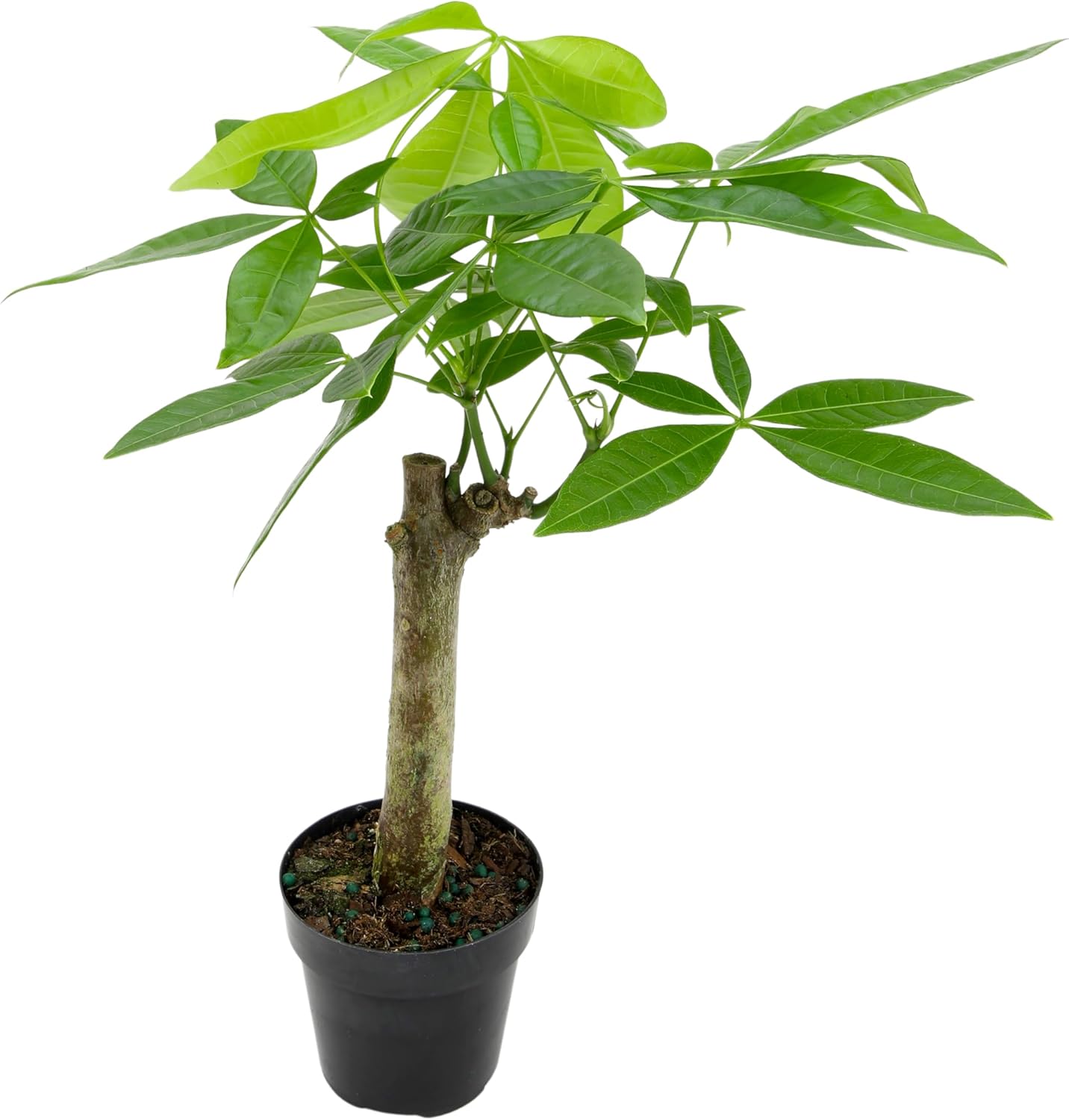
Plants for Pets Pachira aquatica (Money Tree) Live Plant in 2.5" Nursery Pot
| Indoor Outdoor Usage | Indoor |
|---|---|
| Other Special Features of the Product | Air Purification, Pet Friendly |
| Sunlight Exposure | Full Sun |
| Moisture Needs | Regular Watering |
This Pachira aquatica money tree arrives as a small, ready-to-pot indoor plant that provides attractive bright green, lance-shaped foliage and a low-maintenance presence for homes or offices. It is typically used as a potted specimen or trained as a small bonsai, preferring bright indirect light and regular but moderate watering when the top inch of soil dries. The listing highlights pet-safe status and some air-purifying benefit, and the plant comes fully rooted in a 2.5-inch grow pot so you can transplant it into a decorative planter or leave it in the nursery pot for a tidy desktop display. Practical features include tolerance for standard indoor conditions and guidance to maintain humidity around 50 percent to reduce stress. Limitations are inherent to its size on arrival — you should expect to repot within weeks for faster growth or to train the trunk for a bonsai form — and it needs protection from temperature extremes and prolonged direct sun. With routine, simple care this plant adapts well to container living and adds a long-lived focal point to small-space planting.
Best for: Buyers who want a low-maintenance, attractive small tree for indoor pots or desks and prefer a pet-safe plant that can be trained as a compact bonsai or left to grow in a decorative planter.
Less Ideal for: Gardeners who want an instantly full, statement-sized tree or those who cannot provide occasional repotting and basic humidity care should consider larger established specimens instead.
- Pet-friendly species suitable for homes with animals
- Arrives fully rooted in a 2.5" nursery pot ready for repotting or tabletop display
- Bright jade-green foliage offers decorative interest and pairs well with small-space decor
- Adaptable to indoor conditions and can be trained as a compact bonsai
- Small size on arrival means you will likely need to repot soon for continued healthy growth
- Requires humidity management and protection from temperature swings to thrive
Verdict: A compact, pet-safe money tree that makes an easy, attractive potted focal point for small indoor spaces when you plan to repot it into a larger container.
Verdant Vigor Live Money Tree (Pachira aquatica), 8–10"

| Indoor Outdoor Usage | Indoor, Outdoor |
|---|---|
| Other Special Features of the Product | Pet Friendly |
| Sunlight Exposure | Partial Sun |
| USDA Hardiness Zone | 10 |
| Moisture Needs | Moderate Watering |
This live Money Tree arrives fully rooted in a small nursery pot and is intended as an easy indoor decorative tree for windowsills, desks, or small plant groupings. It has a compact, slow-growing habit with braided woody stems and glossy palmate leaves that add vertical interest without needing much space. The listing recommends bright indirect light and allowing the top of the soil to dry slightly between waterings, which makes it low-maintenance for beginners. Notable features include pet-friendly foliage, readiness to display without immediate repotting, and a preference for well-aerated, sandy potting mixes to avoid overwatering problems. Limitations are its small initial size—you will need to repot as it develops if you want a larger specimen—and its suitability for only mild climates if placed outdoors, since it is rated to USDA zone 10. Expect modest growth and occasional tiny flowers rather than a large indoor tree in low-light rooms; for dim interiors it will do best near a bright window or under supplemental light.
Best for: Buyers looking for an affordable, low-maintenance indoor tree to add greenery to a small space or desk who prioritize ease of care and immediate displayability.
Less Ideal for: Those seeking a large indoor tree for deep-shade rooms or buyers who want a mature specimen right away should consider larger, established plants instead.
- Arrives potted and ready to display without immediate repotting
- Compact, slow-growing habit suits small spaces and desks
- Pet friendly and suitable for households with animals
- Requires only moderate watering when allowed to dry between sessions
- Small starter size will require repotting for long-term growth
- Prefers bright indirect light so not ideal for very low-light interiors
Verdict: A budget-friendly, pet-safe starter money tree that gives instant indoor greenery with minimal day-to-day care.
Live Dwarf Juniper Bonsai Tree (3 Years) in Nursery Pot

| Tree Type | Bonsai |
|---|---|
| Material Type | Plastic (nursery pot) |
| Plant or Animal Product Type | Bonsai |
This live dwarf juniper is sold as a three-year-old outdoor bonsai pre-shaped and hand-trimmed, ready to sit on a patio or porch in its nursery pot. It is intended for outdoor use where it can receive regular natural light and ventilation; growers should expect to water frequently in summer (twice daily) and reduce to once in the morning during winter while avoiding a fully dry root ball. The nursery plastic pot promotes healthy root development and makes acclimation and repotting straightforward if you want a decorative ceramic container later. The tree’s compact size and established shaping make it an easy starter specimen for container bonsai culture, and the included care guidance simplifies seasonal maintenance. Buyers should note it is not marketed for permanent indoor placement and will require consistent outdoor care to stay healthy, so plan a stable outdoor spot with morning or afternoon sun and room for routine watering.
Best for: Gardeners who want a reliable, low-footprint outdoor bonsai that arrives pre-shaped and is intended for steady container display and seasonal care.
Less Ideal for: People seeking a low-maintenance indoor houseplant or buyers who cannot commit to regular outdoor watering and seasonal care routines.
- Hand-trimmed and shaped for an attractive, ready-to-display bonsai form
- Shipped in a sturdy plastic nursery pot that supports root health and makes repotting easy
- Clear seasonal watering guidance included to simplify care
- Compact, three-year-old specimen suitable for small containers and patio spaces
- Not suitable for permanent indoor use since it needs natural sunlight and fresh air
- Requires frequent summer watering which demands regular attention
Verdict: A dependable, pre-shaped outdoor bonsai that simplifies starting container bonsai with an established three-year specimen and clear seasonal care instructions.
Costa Farms Money Tree (10 in.) Live Indoor Plant

| Height | 10-in. tall |
|---|---|
| Pet safety | ASPCA-certified non-toxic |
| Packaging | Farm-direct, transit-safe packaging |
The Costa Farms Money Tree is a small, easy-care indoor tree sold ready to display and commonly used on plant stands, shelves, or near windows with indirect light. It ships rooted and is packaged for transit to preserve soil moisture and reduce shock. Notable features include a braided trunk for visual interest, compact 10-inch height that fits small spaces, and ASPCA-certified non-toxicity for homes with cats and dogs. In typical use it needs bright indirect to low light, occasional watering when the topsoil dries, and minimal pruning to keep a tidy shape. Practical benefits are immediate decor impact without re-potting, pet safety, and straightforward maintenance that suits first-time plant owners. Limitations are its small size if you want a statement floor tree and the usual sensitivity of tropical houseplants to overwatering and sudden light changes, so placement and watering routine still matter for reliable success.
Best for: Buyers who want a low-fuss, pet-safe indoor tree that provides decorative structure in small or low-light rooms and prefer a plant that arrives ready to display.
Less Ideal for: Not a good fit for shoppers seeking a large statement floor tree or for those who prefer fully mature specimens that require no early growth management.
- Arrives rooted and packaged to reduce transit shock
- Compact size fits shelves, stands, and small rooms
- ASPCA-certified non-toxic for homes with pets
- Attractive braided trunk offers instant decorative impact
- Small 10-inch height may be too short for people wanting a floor-level indoor tree
- Requires consistent, moderate light and careful watering despite being low-maintenance
Verdict: Choose this Costa Farms Money Tree when you want an easy-care, pet-friendly indoor tree that arrives ready to brighten small, low-light spaces.
Choosing the Right Small Trees That Can Grow in Pots: Key Factors to Consider
Container Size and Root Volume
Container size directly limits how large a tree can grow and how much root mass it can develop. A deeper container favors taproot development and stability, while a wider, shallower pot supports branched root systems better. Upsizing a container gives the tree more soil for water and nutrients, but larger pots are heavier and harder to winter-protect or move.
Think about the final footprint you can accommodate and choose a container that balances root space with practical handling. Also plan for periodic root pruning or repotting; many small trees will need a refresh every few years to avoid becoming root-bound and to maintain vigor.
Cold Hardiness and Winter Protection
Trees in pots are more exposed to freezing temperatures because the limited soil volume cannot buffer cold the way in-ground roots can. You must match the tree's hardiness range to your winter conditions and be prepared to insulate pots, move them to sheltered spots, or provide temporary wrapping for trunks and soil in severe weather.
Choosing a naturally cold-tolerant species reduces winter work, but even tolerant trees benefit from mulching the container surface and elevating pots off cold ground. For marginal climates, consider semi-hardy options only if you can move or protect containers during extreme cold snaps.
Root Management and Repotting Frequency
Root-bound trees decline over time as their root system exhausts the available soil and nutrients. Some species tolerate root restriction and continue flowering and fruiting in relatively small pots; others quickly lose vigor and require frequent repotting or root pruning to stay healthy.
Assess how much maintenance you are willing to do. If regular root pruning and repotting are not practical, favor trees known to adapt to constrained root zones. For those open to hands-on care, scheduled repotting every 2 to 4 years and annual root inspections will extend a tree's productive life in a container.
Watering Regime and Soil Mix
Potted trees dry out faster than in-ground specimens, so choose a soil mix that retains moisture yet drains well to prevent root rot. The tree's species-specific water needs matter: some small trees tolerate intermittent drying, while others require consistently moist but not waterlogged soil.
Plan for more frequent summer watering and consider self-watering containers or drip irrigation for hot, windy sites. Fertility also matters because nutrient leaching is greater in pots; regular, measured feeding keeps growth balanced without salt buildup.
Growth Habit and Pruning Ease
Compact, naturally columnar or slow-growing habits are ideal for containers because they reduce the need for heavy structural pruning. Trees that respond well to heading cuts and shaping give you the option to control size and form without damaging long-term health.
If you prefer a formal look or plan to train a multi-stem specimen, pick species with flexible young wood and predictable branching. Consider how often you will prune and whether you want seasonal flowering or year-round foliage interest when evaluating growth habit.
Pests, Diseases, and Maintenance Needs
Container culture can concentrate pests and diseases if air circulation, watering, and sanitation are neglected. Some species are naturally less prone to common pests and leaf diseases, reducing routine interventions. Others may show susceptibility when stressed by heat, drought, or root restriction.
Factor in your tolerance for monitoring and treating issues. Good cultural practices such as clean pots, well-draining mix, routine inspection, and avoiding overfertilizing will lower the incidence of problems regardless of species choice.
Best Containers and Potting Mixes for Small Trees
Choose containers made of breathable materials or add drainage and aeration to keep roots healthy. Terracotta and unglazed ceramic breathe better but dry out faster; consider their weight and winter fragility if you plan to move pots. Lightweight composite or resin containers are easier to handle and often weather well but may need extra safeguards to prevent overheating in full sun.
Use a potting mix formulated for trees and shrubs that balances drainage with moisture retention. A mix with coarse grit or perlite, organic matter, and a time-release fertilizer helps stabilize nutrition and water availability. For young trees, start with a slightly finer mix and shift to a more structured blend as the rootball matures.
- Ensure at least one drainage hole and elevate the pot to avoid waterlogging.
- Consider insulating pots or using nested containers for winter protection.
- Match pot depth to the tree's root pattern; deeper for taproots, wider for fibrous roots.
Training, Pruning, and Shaping Potted Trees
Regular pruning controls size and encourages a strong structure suited to container life. Early formative pruning shapes the central leader or encourages a multi-stem look depending on your aesthetic. Remove crowded branches and crossing limbs to maintain airflow and reduce disease risk.
For confined roots, lighter, more frequent cuts are better than heavy annual reductions. Use sharp tools and disinfect between cuts if you suspect disease. Training with ties and stakes can direct growth but should be monitored to avoid girdling as the trunk thickens.
- Prune in the species-appropriate season to avoid removing flower buds or stressing the tree.
- Perform root pruning during repotting to stimulate fresh feeder roots.
- Use balanced fertilization after pruning to support recovery.
Watering Strategies and Seasonal Care
Establish a consistent watering routine that responds to season, pot size, and exposure. In summer, check moisture daily for small pots; in cooler months, reduce frequency but do not let roots dry out completely. Water deeply until it drains to ensure the entire rootball is wetted.
Adjust care for rainy seasons and cold snaps. Temporary shelter during heavy storms prevents soil erosion and root exposure. Before the first hard freeze, reduce watering, mulch the container surface, and consider relocating pots to a protected area to reduce freeze-thaw stress.
- Water early in the day to reduce fungal risk and help foliage dry.
- Use a moisture meter or finger test rather than a fixed schedule.
- Top-dress with compost annually to replenish organic matter in the potting mix.
Moving and Wintering Potted Trees
Plan how you will move and protect large containers before selecting a tree. Use pot movers, casters, or platforms to make seasonal relocation feasible. For heavier pots, lightweight nests or insulated wraps reduce the risk of root freeze while limiting water loss.
In winter, position pots against a warm wall or under eaves to reduce exposure. Protect the root zone with insulating material and avoid placing pots directly on cold ground. For very cold climates, some gardeners bury pots in sheltered ground or place them in unheated garages for the coldest months.
- Elevate pots slightly to avoid saturated soil from standing water.
- Wrap pots with bubble wrap or horticultural fleece for added insulation.
- Label varieties and care notes so winter routines are consistent year to year.
Design Uses and Placement for Container Trees
Potted trees add vertical interest, shade, and focal points to patios and balconies. Use them to create privacy screens, define seating areas, or soften hardscape edges. Consider seasonal display by pairing evergreens for year-round structure with flowering or fruiting potted trees for summer interest.
Place trees where their mature canopy will not crowd nearby structures or obstruct views when grown in an appropriate container. Grouping pots of different sizes can create depth and make maintenance like watering easier if they share compatible light and moisture needs.
- Use larger pots for specimen trees and smaller pots for companion shrubs or bulbs.
- Avoid locations with reflected heat from walls that can stress container trees.
- Plan sightlines so tree trunks and forms remain visible and attractive even in winter.
How We Chose the Best Small Trees That Can Grow in Pots
We focused on traits that matter when a tree must spend most or all of its life in a container. Primary evaluation criteria included how well a species tolerates root restriction, its hardiness range and winter survival in pots, demonstrated control with pruning and training, and general drought and feeding needs when grown in limited soil volume. We also considered mature canopy size in containers, susceptibility to common container pests and diseases, and how readily the species responds to repotting or root pruning. Excluded were trees that only survive briefly in pots before needing transplanting, varieties that require large specimen-root volumes beyond typical patio containers, and species with legally restricted or invasive status in many regions. Our short list emphasizes manageable growth habit, predictable seasonal behavior, and low-to-moderate maintenance demands for most home gardeners. The scoring labels reflect these priorities so you can compare choices on the practical dimensions that determine success in containers.
FAQ
How often should I repot a small tree kept in a pot?
Most small trees need repotting or root pruning every 2 to 4 years depending on growth rate and pot size. Faster-growing species or those in small containers will need attention more frequently, while slow growers can often go longer between repots.
Can I grow fruiting trees in pots and still get fruit?
Yes, many fruiting trees will produce crops in containers if they receive adequate sunlight, proper pruning, and consistent feeding. Expect smaller yields than ground-planted trees, and be prepared to manage water and nutrient needs closely to support fruiting.
What soil mix is best for a tree in a container?
Use a well-draining, organic-rich potting mix with added grit or perlite to improve aeration. Avoid straight garden soil because it compacts and holds too much water in containers. A balanced mix that retains moisture yet drains prevents both drought stress and root rot.
How do I winter-protect a potted tree in a cold climate?
Insulate the container, move pots to sheltered locations, and add mulch over the soil surface to moderate temperature swings. For very cold zones, consider moving containers into an unheated garage or wrapping pots and trunks with protective material during the coldest weeks.
Will a tree in a pot need more fertilizer than one in the ground?
Generally, yes. Nutrients leach more quickly from containers, so potted trees often need regular, measured feeding during the growing season. Use slow-release formulations or a routine liquid feed to maintain balanced growth without causing salt buildup.
How can I tell if a potted tree is root-bound?
Signs include reduced growth, frequent wilting despite watering, roots circling the pot or appearing at drainage holes, and soil that dries out rapidly. During repotting, a dense mass of roots with little soil indicates the tree is root-bound and needs root pruning or a larger container.
Final Verdict
Choosing small trees for containers requires prioritizing root tolerance, winter resilience, and manageable growth habit. Balance container size with your ability to move and protect pots, and expect to perform regular root care, pruning, and feeding to keep container trees healthy. Focus on species that match your climate and maintenance willingness; the right combination of tree and container will deliver long-term structure, seasonal interest, and easier care than trying to force an unsuitable species into a pot.
