

Note: This article contains affiliate links. If you click on these links and make a purchase, I may earn a small commission at no extra cost to you. This helps support my research and content. Read my full affiliate disclosure here.
If invasive vines are smothering your shrubs, fences, or garden beds, choosing the right weed killer matters more than frequency of application. You need a product that moves beyond top-growth browning and reaches the root system to limit resprouting. This guide covers seven top weed killers suitable for invasive vines, each shortlisted for how it performs in real garden situations. We evaluated products for how quickly they act on foliage, whether they translocate to roots, and how easy they are to apply safely around desirable plants. Read on for practical notes on application technique and what to expect when treating heavy vine infestations.
Top Picks at a Glance
| Best Overall The best all-around choice for most situations | Roundup Poison Ivy Plus Tough Brush Killer with Comfort Wand, 1 gal. |  |
| Best Quality Built to a higher standard if you want something more solid | ALLIGARE Triclopyr 4 EC Selective Herbicide (1 Quart) |  |
| Best Value The sweet spot between price and what you get | BioAdvanced Poison Ivy Killer Plus Concentrate, 32 oz |  |
| Best Budget The cheapest option that still gets the job done reliably | Bonide Poison Oak & Ivy Killer Ready-to-Use Spray, 32 oz |  |
| Highest Rated A top-rated pick with lots of positive feedback | RM43 Concentrated Extended Control Weed Killer (1 gallon) |  |
| Most Popular A crowd favorite that many people choose with confidence | Bonide Stump-Out Stump & Vine Killer, 8 oz with Applicator | 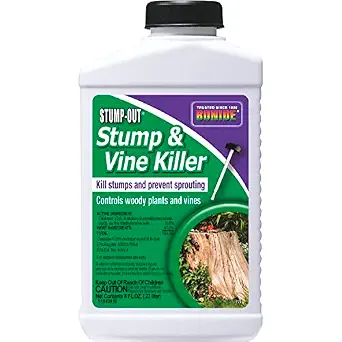 |
| Best Seller A high-volume bestseller chosen again and again | Roundup Weed & Grass Killer with Comfort Wand, 1.33 gal. |  |
Roundup Poison Ivy Plus Tough Brush Killer with Comfort Wand, 1 gal.

| Unit Count | 128 Fluid Ounces |
|---|---|
| Item Form | Spray |
| Coverage | 300 square feet |
| Liquid Volume | 1 gallons |
This 1 gallon Roundup formula is designed to tackle poison ivy, poison oak, poison sumac, wild blackberry, kudzu and other tough weeds by killing them down to the root. The container includes a reusable Comfort Wand that snaps on for one-touch, precision spraying so you can treat vines, fence lines, around trees and foundations without bending over. The product is rainproof in about 30 minutes and reports visible wilting within hours, and the label gives guidance for replanting 1 to 30 days after application depending on the site. Practical benefits include broad-spectrum control of woody vines and brush, a large coverage area (about 300 sq ft per gallon), and easier application with the wand. Important limitations are typical of strong herbicides: treated areas must be kept free of people and pets until dry and care is required near desirable plants to avoid drift or overspray. Also the formula contains multiple active ingredients, so follow label instructions for safe use and site-specific planting intervals.
Best for: Buyers who want an all-purpose, easy-to-apply solution for stubborn brush and poison ivy around yards, fence lines, and foundations, and who prioritize straightforward application and fast visible results.
Less Ideal for: Not a good choice for gardeners who need a selective lawn-safe product or who must treat areas where children, pets, or desirable plants cannot be kept away during drying and planting intervals.
- Targets woody vines and tough brush as well as broadleaf weeds and grasses
- Includes a reusable Comfort Wand for precision, reduce bending and easier spot treatment
- Rainproof in about 30 minutes so treatment holds up to light weather soon after application
- Covers roughly 300 square feet per gallon for treating fence lines, foundations and small infestations
- Contains potent active herbicide ingredients requiring careful handling and strict adherence to label safety directions
- Not selective so it can harm desirable plants if sprayed or if drift occurs
Verdict: A convenient, large-format ready-to-use herbicide with a precision Comfort Wand that makes fast, effective control of poison ivy and tough brush simple for typical homeyards.
ALLIGARE Triclopyr 4 EC Selective Herbicide (1 Quart)

| Unit Count | 32 Fluid Ounces |
|---|---|
| Item Form | Liquid |
| Coverage | Pastures, rangelands, rights-of-way, lawns, golf courses, sod farms, industrial properties, ditches |
| Active Ingredients | Triclopyr |
ALLIGARE Triclopyr 4 EC is a concentrated liquid herbicide used to target woody plants, broadleaf weeds, and brush in large outdoor areas. It is typically mixed into a spray tank at recommended rates (about 3.2 to 6.4 oz per gallon) with a penetrant and applied to foliage or cut stems to achieve systemic control. Notable features include an ester formulation that improves leaf and bark absorption and compatibility with many tank-mix partners, which lets you customize treatments for stubborn species. In practice it is effective for restoring pastures, clearing rights-of-way, and reducing invasive broadleaf growth while leaving grasses largely unharmed when used as directed. Important limitations are that it is a professional-strength chemical requiring careful PPE and adherence to safety and application instructions, it can harm non-target broadleaf plants if drift or overspray occurs, and restrictions apply in some states and situations. For spot treatments or large-area brush control it is a dependable option when handled responsibly.
Best for: Gardeners or land managers who need a reliable, selective herbicide to control woody and broadleaf invasives across pastures, rangelands, or larger outdoor areas and who follow safety procedures for concentrated chemicals.
Less Ideal for: Casual home gardeners with small ornamental beds or indoor herb gardens seeking a gentle, non-chemical solution should consider mechanical removal or lower-strength spot treatments instead.
- Targets woody plants, broadleaf weeds, and brush for effective control of invasive species
- Ester formulation promotes absorption through leaves and bark for systemic action
- Tank-mix compatible so you can combine with other herbicides or adjuvants
- Suitable for a wide range of large outdoor sites including pastures, rangelands, and rights-of-way
- Professional-strength concentrate that requires protective clothing and careful mixing
- Can damage non-target broadleaf plants if it contacts desirable species
- Not suitable for use where restrictions or local regulations prohibit triclopyr products
Verdict: Choose ALLIGARE Triclopyr 4 EC when you need a professional-strength, tank-mix compatible herbicide to reliably remove woody and broadleaf invasives across large outdoor areas.
BioAdvanced Poison Ivy Killer Plus Concentrate, 32 oz

| Unit Count | 32 Fluid Ounces |
|---|---|
| Coverage | Up to 4,000 square feet |
| Item Form | Liquid |
| Active Ingredients | Triclopyr, triethylamine salt 8.8% |
This BioAdvanced concentrate is a targeted solution for removing poison ivy, kudzu, blackberry and many other hard-to-control brush and vines by working systemically from leaf to root. It is typically mixed or applied undiluted for stump treatment and can treat up to 4,000 square feet from a single 32 oz bottle, which makes it useful for fence lines, wooded edges, trails, and overgrown patches. The active ingredient triclopyr moves through foliage into stems and roots so treated plants tend not to resprout, and the product is marketed to handle more than 70 listed species. Practical benefits include one-time applications that keep working after you spray and the ability to paint stumps to prevent regrowth. Limitations are that it is a nonselective brush control chemical so care is needed to avoid desirable plants and follow label directions for timing and application, and it requires standard protective measures when mixing and applying concentrated herbicides.
Best for: Gardeners and property owners looking to clear established patches of woody brush and invasive vines quickly and with lasting results who prioritize efficiency and fewer repeat treatments.
Less Ideal for: Those who need a selective solution for weeds in mixed beds with desirable plants nearby or users uncomfortable handling concentrated herbicides should consider alternative targeted methods.
- Systemic action with triclopyr that kills roots and reduces regrowth
- Concentrate covers up to 4,000 sq ft from a 32 oz bottle, efficient for large patches
- Works on a broad list of tough brush and vines including poison ivy, kudzu, and blackberry
- Can be applied undiluted to stumps to stop resprouting
- Nonselective herbicide so it can damage desirable plants if not applied carefully
- Requires handling precautions and following label instructions when mixing and applying
Verdict: Choose this concentrate when you need an efficient, single-product solution to eliminate large patches of poison ivy and other tough brush down to the roots.
Bonide Poison Oak & Ivy Killer Ready-to-Use Spray, 32 oz

| Unit Count | 32 Ounce |
|---|---|
| Item Form | Spray |
| Coverage | approximately 1000 square feet |
| Included Components | Bonide Poison Ivy & Oak Killer Ready-To-Use, 32 oz |
| Active Ingredients | Herbicide |
This Bonide ready-to-use spray is a straightforward spot treatment for poison ivy and poison oak around the yard. The trigger bottle requires no mixing, so you can aim and spray directly where the vines and patches are actively growing. It is a systemic herbicide, so it moves into the plant to kill roots rather than only burning foliage, and the product becomes rainfast once dry—helpful if weather is uncertain. Coverage is listed at approximately 1,000 square feet from the 32 ounce bottle, making it a practical choice for small to medium problem areas. Important considerations are following label directions to avoid drift onto desirable plants and wearing protection to prevent skin or eye contact. The formula is intended to spare lawn grasses when applied properly, but it is not selective for all garden plants, so care is needed around beds and ornamentals.
Best for: Buyers who want an easy, no-mix solution to tackle small to moderate poison ivy or poison oak patches quickly and without complex preparation.
Less Ideal for: People managing large-scale infestations, extensive acreage, or those who need a selective product for mixed garden beds should consider professional treatments or concentrate products designed for larger areas.
- Ready-to-use trigger bottle requires no mixing and is simple to apply
- Systemic action that targets roots for longer-term control of poison ivy and oak
- Rainfast after drying so treatment holds up if it rains within a short window
- Advertised to be safe for lawn grasses when used according to directions
- Limited volume for large infestations so multiple bottles may be needed
- Non-selective herbicide risk if accidentally sprayed on desirable plants
Verdict: A simple, ready-to-use systemic spray that kills poison ivy and oak down to the root and is ideal for small to medium yard patches.
RM43 Concentrated Extended Control Weed Killer (1 gallon)

| Unit Count | 128 Fluid Ounces |
|---|---|
| Item Form | Spray |
| Coverage | 17297 square feet |
| Active Ingredients | glyphosate |
RM43 is a concentrated glyphosate‑based weed killer blended for broad, long‑lasting vegetation control on noncrop areas. You mix it with water and apply through a sprayer to drive down perennial weeds, fence lines, gravel areas, and other places where you want no plant growth. The formula pairs glyphosate with a second herbicide and a surfactant so it kills to the root and claims prevention of new growth for up to a year while becoming rainfast in about two hours. A single gallon treats a large area, making it suitable for larger properties or professional use. Important practical limits are safety and site restrictions: it must not be used near desirable plants or crops and requires cautious handling to avoid drift and contact with skin and eyes. For routine spot treatments it is concentrated enough that careful measuring is needed, and it is intended only for areas where total vegetation removal is acceptable.
Best for: Buyers who need a powerful, long‑lasting solution for clearing and keeping large nonplant areas free of vegetation, including property managers and professional landscapers focused on durable results.
Less Ideal for: Gardeners who need selective weed control around ornamentals or vegetable beds or those who want an organic or low‑toxicity option should choose a different product.
- Concentrated one‑gallon formula treats large areas, reducing trips to refill
- Combination of glyphosate and a second herbicide for deeper, longer control
- Rainfast in about two hours so results are less affected by light rainfall
- Designed for total vegetation control and claims up to 12 months of prevention
- Not selective so will kill desirable plants and must be applied only to noncrop areas
- Requires careful mixing and handling because of strong active ingredients
Verdict: Choose RM43 when you need a concentrated, professional‑strength herbicide that kills to the root and provides long‑term vegetation control on noncrop areas.
Bonide Stump-Out Stump & Vine Killer, 8 oz with Applicator

| Unit Count | 8 Ounce |
|---|---|
| Item Form | Spray |
| Coverage | Stumps, woody plants, vines, broadleaf weeds |
| Liquid Volume | 8 fluid ounces |
| Active Ingredients | 3,5,6-Tricloro-2-Pyridinyloxyacetic Acid |
Bonide Stump-Out is a concentrated herbicide designed for targeted stump and vine control around homes and walkways. It is typically used undiluted on freshly cut stumps or as a foliar spray on woody vines and broadleaf weeds; the included brush applicator helps apply the product directly to the cut surface to prevent resprouting. The active ingredient listed is a pyridinyloxyacetic acid derivative, and the formula is intended to work within one to six weeks depending on the plant. Practical benefits include focused application that reduces drift onto turf, a small 8 ounce size that is easy to store, and compatibility with hose-end or tank sprayers for foliar work. Important limitations are that it must be applied according to label directions for safety and effectiveness, it is a specialized product for woody plants rather than a general lawn weed killer, and multiple applications or physical stump removal may still be necessary for large or well-established stumps.
Best for: Buyers who want a focused, proven solution to stop stump sprouting and eliminate woody vines around yards and structures and who prioritize products with established user feedback and clear instructions.
Less Ideal for: Homeowners seeking a general yard or turf weed control product or those who need large-volume treatments for extensive properties should consider broader-coverage herbicides or professional services.
- Targeted brush applicator for direct application to stumps and cut surfaces
- Effective on woody plants, vines and broadleaf weeds when used as directed
- Works relatively quickly with visible results in 1–6 weeks
- Can be applied undiluted for stump treatment or via hose/tank sprayer for foliar use
- Small 8 oz volume may require multiple purchases for many or large stumps
- Specialized formulation not intended as a broad-spectrum lawn herbicide
Verdict: Choose this product when you need a targeted, easy-to-apply stump and vine killer that prevents resprouting with minimal off-target spray.
Roundup Weed & Grass Killer with Comfort Wand, 1.33 gal.

| Item Form | Liquid |
|---|---|
| Coverage | 400 sq. ft. |
| Liquid Volume | 1.33 gallons |
This Roundup package pairs a 1.33 gallon liquid formulation with a Comfort Wand for easier spraying around beds, walkways, and foundations. It is formulated to kill common broadleaf weeds and grasses down to the root, with visible wilting in hours and rainfast protection in about 30 minutes, so treated areas are less likely to wash away after a brief rain. The wand offers one-touch continuous spray, which reduces hand fatigue during spot treatments and makes edging and targeted applications simpler than using a separate sprayer. Coverage is listed at about 400 sq. ft., appropriate for small yards, beds, or multiple spot-treatment sessions. Important limitations are that this is a nonselective herbicide so it will damage desirable plants if contacted and the product directions include replanting wait times of 1 to 30 days depending on use. Users should follow label precautions about keeping people and pets away until spray has dried and applying only in calm conditions to avoid drift.
Best for: Buyers who want a straightforward, ready-to-use herbicide for targeted spot treatments and edging where quick, reliable weed control is the priority and minimizing application fuss matters.
Less Ideal for: Large properties or users who need selective lawn-safe control should consider professional application methods or products formulated specifically for turf.
- Fast visible results in hours and rainproof in as fast as 30 minutes
- Comfort Wand with one-touch continuous spray reduces hand fatigue and improves targeting
- Kills a wide range of broadleaf weeds and grasses to the root
- Ready-to-use liquid requires no mixing and covers up to 400 sq. ft.
- Nonselective formula will damage desirable plants if contacted
- Container and wand limit treatment area per refill compared with larger tank sprayers
Verdict: A convenient, ready-to-use herbicide with a Comfort Wand that delivers fast, reliable spot control of broadleaf weeds and grasses for homeowners who want an easy, low-fuss solution.
Choosing the Right Weed Killer for Invasive Vines: Key Factors to Consider
Active Ingredient and Mode of Action
Different active ingredients work in different ways. Systemic herbicides travel inside plant tissues to reach roots and rhizomes, which is crucial for killing perennial vines that resprout from buried crowns. Contact herbicides burn back only the green tissue and are useful for quick knockdown but rarely stop regrowth on their own.
Understanding mode of action helps you match the product to the vine species and the stage of infestation. For woody or established perennial vines, choose a herbicide known to translocate. For young annual vines or for spot cleaning, a fast-acting contact product may be sufficient.
Application Method and Targeting
How you apply a weed killer determines how much non-target exposure occurs and how effective treatment will be. Foliar sprays are common for broad coverage but can drift or hit nearby ornamentals. Cut-and-treat techniques, where herbicide is applied directly to a freshly cut stem, concentrate the chemical into the vine vascular tissue for better root kill and reduced drift.
Consider whether you need a ready-to-spray bottle, a concentrate you can dilute for larger infestations, or a brush-on formulation for precise stem treatment. Practical applicator choices reduce waste and limit harm to surrounding plants.
Persistence and Soil Activity
Some herbicides leave residues in soil that provide weeks or months of control against new shoots, while others break down quickly. Residual activity can be an advantage when preventing resprouts from the same location, but it may limit planting choices afterward if you want to re-establish desirable plants.
If you plan to replant treated beds, choose a product with minimal soil persistence or follow label guidance on waiting periods. For right-of-way, fence lines, or areas where long-term vegetation suppression is desired, a longer residual product may be preferable.
Selectivity and Safety Near Desirable Plants
Many vine invasions occur close to shrubs, trees, and garden plants you want to keep. Selective herbicides or targeted application methods help protect those plants. Non-selective systemic products can kill anything they contact, so strict application care is required.
Read label directions about buffering, drift reduction, and maximum application rates. Consider mechanical barriers, timing applications on calm days, and using shielded sprayers or wicking tools to lower the risk to nearby ornamentals.
Regrowth Potential and Follow-Up Requirements
Even effective treatments may require follow-up monitoring and repeat applications to handle regrowth from deep roots or large seed banks. Some vines resprout aggressively from fragments, so physical removal combined with chemical treatment often gives the best long-term results.
Plan for aftercare: cut dead vines away to reduce debris, retarget any resprouts promptly, and schedule checks during the next growing season. Understanding the follow-up workload influences whether a product is practical for your situation.
Environmental Considerations and Local Regulations
Herbicide behavior varies with climate, soil type, and local rules. Some active ingredients are restricted in certain jurisdictions or have recommended buffer distances from water. Runoff risks increase on slopes and near waterways, so choosing an appropriate product and timing treatments around rainfall is important.
Consult local guidance for pesticide use, avoid applications before heavy rain, and follow label requirements for protective equipment and disposal. Minimizing environmental impact often means combining targeted chemical use with mechanical control and native-plant restoration.
When to Use Foliar Spray Versus Cut-and-Treat
Foliar sprays are effective for broad infestations of low-growing vines where complete coverage of leaves is feasible. They work best on actively growing foliage and when weather conditions minimize drift. For large tangles, multiple passes may be necessary to reach inner stems.
Cut-and-treat or stem‑application methods concentrate herbicide into the plant's vascular system. This approach is often superior for woody vines or large stems where foliar spray would risk significant runoff or non-target damage. Use cut-and-treat when vines are climbing trees or entwined with ornamentals you want to save.
- Use foliar spray for extensive groundcover and annual vines during active growth.
- Choose cut-and-treat for woody, climbing, or established perennial vines to improve root kill.
- Shielded or wick applicators reduce drift when treating near desirable plants.
Timing Treatments for Best Results
Treat vines when they are actively growing and translocation to roots is strongest. Late spring through early fall is typically best for systemic action. Avoid treatments during drought stress or before a forecasted heavy rain, which can reduce uptake or cause runoff.
For winter-deciduous vines, late-season applications after flowering but before leaf drop can move herbicide into stored root reserves. Monitor weather and plant vigor to choose the optimal window for your chosen product.
- Apply during warm, calm weather for steady uptake and minimal drift.
- Avoid treatments immediately before heavy rainfall.
- Re-inspect treated areas after 4 to 8 weeks and spot-treat resprouts as needed.
Protecting Desirable Plants and Soil Life
Minimizing damage to nearby ornamentals starts with targeted application. Use physical shields, direct stem treatments, or wicking tools to avoid contact with desirable foliage. When spraying, keep nozzle pressure low and use coarse droplets to reduce drift.
Consider the impact on beneficial soil organisms and pollinators. Avoid spraying flowering plants and follow label intervals before replanting. When possible, combine chemical control with manual removal to reduce chemical load and protect ecosystem health.
- Avoid spraying on windy days and use shields when treating close to shrubs or trees.
- Do not spray flowering plants to protect pollinators.
- Combine mechanical removal with chemical treatment to minimize overall herbicide use.
Managing Large-Scale Infestations
For acres or long fence lines, plan a staged approach. Break the area into manageable sections and prioritize zones where vines threaten infrastructure or high-value plantings. Larger treatments often require concentrate formulations and calibrated equipment for even coverage.
Follow-up is essential. After initial control, treat new shoots quickly and consider restorative planting in cleared areas to reduce the chance of re-invasion. Coordinated efforts across neighboring properties yield the best long-term results for widespread vine problems.
- Divide large infestations into treatment zones and work methodically.
- Use appropriate equipment for even application when treating large areas.
- Plan revegetation with competitive, non-invasive species after control.
Safe Disposal and Cleanup
Handle unused mixed solutions and empty containers according to label directions. Never pour leftover herbicide down drains or into water bodies. Rinse sprayers and tools in a designated area away from desirable plantings and filter rinse water for proper disposal if required locally.
Clean protective equipment and clothing after treating vines, and store containers in a secure, labeled location until they can be disposed of or recycled as allowed. Proper cleanup reduces accidental exposure and environmental contamination.
- Rinse sprayers in a contained area and follow local disposal rules.
- Store and label chemical containers out of reach of children and pets.
- Wash application clothing separately from other laundry.
How We Chose the Best Weed Killer for Invasive Vines
We prioritized products that demonstrably address the two biggest challenges with invasive vines: rapid dieback of foliage and translocation to underground structures. Our selection filters favored formulations with documented systemic action or fast-acting contact ingredients appropriate for dense vine stems. We also weighed application versatility so gardeners can treat climbing vines, groundcover tangles, and regrowth from roots or runners. Concrete criteria included active ingredient mode of action, documented systemic translocation, labeled uses for woody or perennial vines, application method options (spray, cut‑and‑treat, or direct-stem), and safety guidance for use near ornamentals and turf. We excluded products labeled only for lawn weeds, contact-only sprays that do not move to roots, and any formulation lacking clear instructions for vine control. The resulting shortlist reflects a balance of efficacy against persistent vine species, ease of targeted application, and gardener-friendly handling features.
FAQ
Will a single treatment usually kill persistent vine root systems?
Often it depends on vine species and size. Many persistent vines require multiple treatments because large root systems and stored energy can support resprouting. Combining stem application with periodic spot treatments improves the chance of eradication.
Can I treat vines growing up trees without harming the tree?
It depends on application care. Shielded or cut-and-treat methods limit exposure to tree foliage and roots. Avoid spray drift and apply herbicide directly to vine stems rather than to leaves brushing the tree.
How long after treatment can I replant the area?
Waiting periods vary by product. Some formulations break down quickly and allow replanting in weeks, while others with longer soil activity require months. Check label directions for specific replanting intervals.
Are there non-chemical options worth trying first?
Mechanical removal, repeated pulling of young vines, and solarization for small patches can be effective. For heavy infestations, combining physical removal with a targeted herbicide often gives a more reliable long-term result.
Is spot-treating more effective than broadcast spraying?
Spot treatments reduce non-target damage and use less product, making them a good first approach for mixed plantings. Broadcast spraying may be needed for uniform groundcover infestations but requires care to protect nearby desirable plants.
How soon will I see results after applying a systemic herbicide?
Systemic herbicides often show foliar yellowing or wilting within days to a couple of weeks, with full dieback taking several weeks. Root translocation and complete plant death may take longer, so patience and follow-up checks are important.
Final Verdict
Pick a weed killer based on how the vine grows and where it is located. For perennial or woody vines, prioritize systemic products and application methods that deliver herbicide into the stem or root system. For annual or small infestations, contact sprays and careful spot treatment can be effective with less risk to nearby plants. Balance speed of control against soil persistence and non-target risk. Plan for follow-up monitoring and a combination of mechanical and chemical tactics when necessary. With a targeted strategy and careful application, you can reduce regrowth and reclaim planting areas confidently.
