

Note: This article contains affiliate links. If you click on these links and make a purchase, I may earn a small commission at no extra cost to you. This helps support my research and content. Read my full affiliate disclosure here.
If you want to turn kitchen scraps into rich worm castings without a backyard, an indoor worm compost bin makes that possible. The right setup keeps food waste contained, minimizes odors and fruit flies, and produces usable soil amendment on a regular schedule. You likely need a system sized for your household output and simple enough to maintain in a kitchen, balcony, or utility room. This guide covers seven shortlisted indoor worm compost bins suited to small-space, apartment, and balcony use. We evaluated each option against practical gardener-focused criteria like capacity, odor containment, drainage and leachate management, and ease of harvesting castings. Read on to match a system to how much food waste you generate and where you plan to keep it.
Top Picks at a Glance
| Best Overall The best all-around choice for most situations | TOP XIAN 5-Tray Worm Composter (100 L) |  |
| Best Quality Built to a higher standard if you want something more solid | Worm Factory 360 4-Tray Worm Composting System (Black) |  |
| Best Value The sweet spot between price and what you get | Outsunny 4‑Tray Worm Composter Bin, 7.4 Gal |  |
| Best Budget The cheapest option that still gets the job done reliably | Generic 4-Tray Worm Farm Composting Bin, 20L |  |
| Highest Rated A top-rated pick with lots of positive feedback | VermiHut 5-Tray Worm Composter (Terracotta) |  |
| Most Popular A crowd favorite that many people choose with confidence | VermiHut Plus 5-Tray Worm Composter |  |
| Best Seller A high-volume bestseller chosen again and again | Blütezeit 5-Tray Worm Composter 53QT Worm Farm Kit |  |
TOP XIAN 5-Tray Worm Composter (100 L)

| Capacity | 100 liters |
|---|---|
| Material Type | Plastic |
| Item Type Name | Compost bin |
| Number of Items | 1 |
| Model Number | TX-005-G5 |
This TOP XIAN 5-tray worm composter is a stacked vermicompost system that turns kitchen scraps into usable compost and compost tea without needing a backyard pile. You load worms and waste into the removable trays, then lift and rotate or harvest lower trays as material breaks down; the built-in spigot lets you collect liquid fertilizer easily. The unit’s closed plastic construction and ventilation holes are intended to reduce odors while providing airflow to support decomposition, and the 100-liter total capacity means it can handle steady household food waste. It ships with starter accessories such as coconut coir, gloves, a scoop, and a scraper to get you going. Limitations to expect are the plastic build, which is lightweight and may be less durable than heavier-duty models, and the multi-tray design can require regular tray shifting and monitoring to prevent overfeeding or moisture imbalances in small indoor spaces. For users who want a tidy, higher-capacity indoor worm system, this makes vermicomposting straightforward, but it needs routine attention to maintain the right moisture and feed balance.
Best for: A household wanting a compact but higher-capacity indoor vermicompost system that prioritizes tidy, odor-controlled processing of daily kitchen scraps and regular harvesting of finished compost.
Less Ideal for: People who want a set-and-forget, zero-maintenance composter or those needing an ultra-durable outdoor unit for large volumes of garden waste.
- Five removable trays allow continuous feeding and staggered harvesting
- Built-in faucet for easy collection of liquid fertilizer
- Designed ventilation and closed lid help control odors indoors
- 100 liter total capacity suits households producing regular food waste
- Plastic construction is lightweight and may show wear faster than metal or thicker materials
- Requires routine tray rotation and moisture management to avoid soggy or anaerobic conditions
Verdict: If you want a tidy indoor worm farm that handles steady household food waste and yields both compost and compost tea, this five-tray TOP XIAN composter is a practical, higher-capacity choice.
Worm Factory 360 4-Tray Worm Composting System (Black)

| Trays | 4 trays (expandable to 6) |
|---|---|
| Material Type | Plastic |
| Made in | USA |
| Recommended Temperature | 40 to 80°F |
| Capacity | 1 liters |
The Worm Factory 360 is a space-efficient indoor vermicomposter designed to turn everyday kitchen waste into usable compost and liquid fertilizer. You stack the plastic trays, add bedding and worms to the bottom tray, then feed the top tray with fruit and vegetable scraps, coffee grounds, and paper; as the worms migrate upward the finished castings accumulate below for easy harvesting. The unit includes a spigot to collect compost tea, nested trays for passive drainage and airflow, and it can be expanded from four to six trays as your output grows. Practical benefits include continuous, low-effort compost production, compact footprint for apartments or utility rooms, and easy assembly. Important limitations are the need to maintain temperature between about 40 and 80°F for worm health and to avoid meat, dairy, and citrus in the feedstock; heavy or very wet food waste can also increase maintenance. The bin is plastic and lightweight, so it needs a stable, level location and occasional monitoring of moisture and aeration for best results.
Best for: Buyers who prioritize reliable, continuous compost production in a small indoor footprint and want a system that scales with their household waste.
Less Ideal for: People who need a low-maintenance solution that can handle meat, dairy, or large volumes of very wet food waste or who cannot keep the unit within the recommended temperature range.
- Stacked tray system lets worms migrate up so finished compost is easy to harvest
- Expandable from 4 to 6 trays to match household composting volume
- Built-in spigot collects liquid fertilizer for direct plant use
- Compact, space-efficient design suited to indoor use
- Made in the USA with durable plastic construction
- Requires monitoring of moisture and temperature to keep worms healthy
- Not suitable for processing meat, dairy, or large quantities of very wet waste
Verdict: For indoor gardeners who want steady, scalable vermicompost and liquid fertilizer from kitchen scraps, the Worm Factory 360 delivers efficient, manageable performance.
Outsunny 4‑Tray Worm Composter Bin, 7.4 Gal

| Capacity | 7.4 gallons |
|---|---|
| Material Type | Polypropylene (PP) |
| Number of Trays | 4 |
The Outsunny 4‑tray worm composter is a space-conscious system for turning kitchen waste into nutrient-rich castings and 'worm tea.' Its stackable ventilated trays let worms migrate upward as each layer fills, which simplifies batch harvesting and speeds decomposition compared with single-chamber bins. The polypropylene construction is lightweight and easy to wipe clean, and the kit includes a shovel, scraper, and a bottom spigot with collection tray for draining excess liquid. In typical use you layer bedding and food scraps in the bottom tray, add worms, then stack additional trays as material breaks down and worms move up. The grid ventilation reduces odors when kept in a cool, shaded spot and the 7.4 gallon capacity fits on a balcony, in a utility room, or under a sink. Limitations are its modest capacity for households that produce lots of scraps and the plastic build which can be less durable than heavier outdoor units; it also requires routine attention to moisture and airflow to avoid anaerobic smells. For small-scale indoor vermicomposting it is straightforward and low-maintenance.
Best for: Someone who wants an efficient, compact indoor vermicomposter to reduce kitchen waste and produce usable castings with minimal space and effort.
Less Ideal for: Not a good choice for gardeners who need high-volume composting or want an outdoor heavy-duty bin that tolerates rough weather and large loads.
- Four stackable, ventilated trays enable easy batch composting and harvest
- Bottom spigot and collection tray provide simple drainage of liquid fertilizer
- Includes shovel and scraper for convenient setup and maintenance
- Compact footprint fits indoor spaces like kitchens, balconies, and patios
- 7.4 gallon capacity may be small for larger households or heavy food waste producers
- Polypropylene construction is lightweight but not as rugged as metal or heavy-duty outdoor bins
Verdict: A compact, easy-to-use indoor worm composter that streamlines small-batch vermicomposting for space-conscious users.
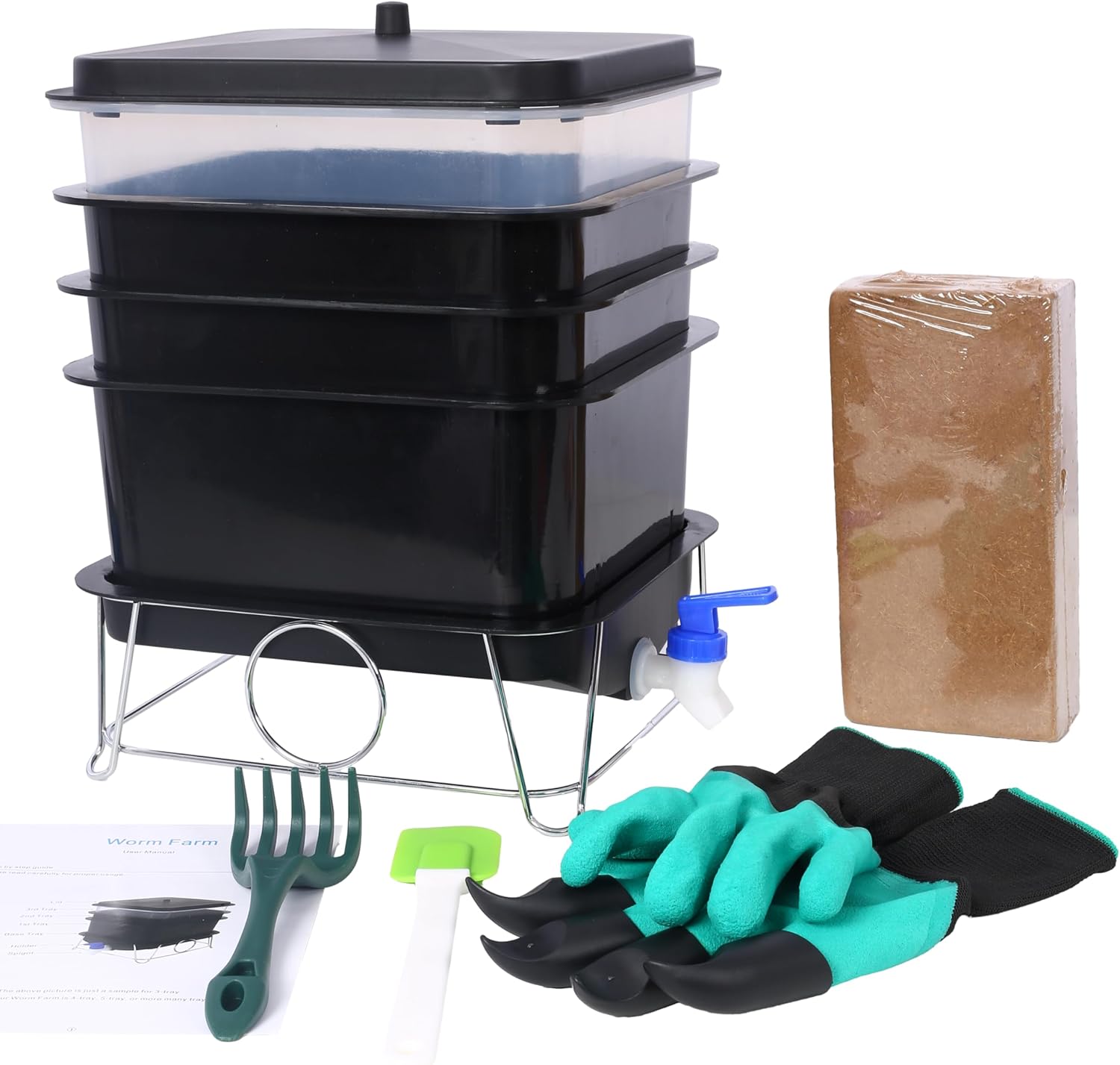
Generic 4-Tray Worm Farm Composting Bin, 20L
| Capacity | 20 liters |
|---|---|
| Material Type | Plastic |
| Number of Trays | 4 |
| Includes | Gloves, coconut coir brick, scraper, rake |
| Feature | Spigot for liquid drainage |
This 4-tray worm farm is a simple, space-conscious system for turning kitchen scraps into usable compost and liquid fertilizer. You stack the ventilated trays, add bedding and worms, and feed kitchen scraps into the top tray; as material breaks down the finished castings are harvested from lower trays. The kit includes gloves, a coconut coir brick for bedding, a scraper and a rake, and the built-in spigot collects nutrient-rich worm tea for easy draining. Because it is made from PP plastic and measures a modest 20 liters, it works well on a countertop, balcony, or small patio and is straightforward to move or store. Practical benefits include odor reduction from the ventilated trays, simple maintenance with the included tools, and steady production of compost suitable for potted plants. Limitations are modest capacity for larger households and the need to manage moisture and temperatures for indoor use; heavy or very wet food waste will require extra attention to avoid soggy conditions.
Best for: Buyers wanting an affordable, compact indoor worm composter to recycle daily kitchen scraps and produce fertilizer for houseplants or small container gardens.
Less Ideal for: Not the best choice for households that need to process large volumes of yard or food waste or for users who prefer heavy-duty, outdoor-only compost systems.
- Stackable four-tray design allows staged composting and easy harvesting
- Includes bedding (coconut coir brick) and basic tools for immediate setup
- Spigot for collecting drained worm tea makes liquid removal simple
- Ventilated trays and compact footprint suit indoor or balcony use
- 20 L capacity may be small for households that produce a lot of food waste
- Plastic construction can retain heat in hot conditions and needs sensible placement
Verdict: A budget-friendly, compact worm farm kit that makes indoor food-waste recycling and small-scale compost production easy and practical.
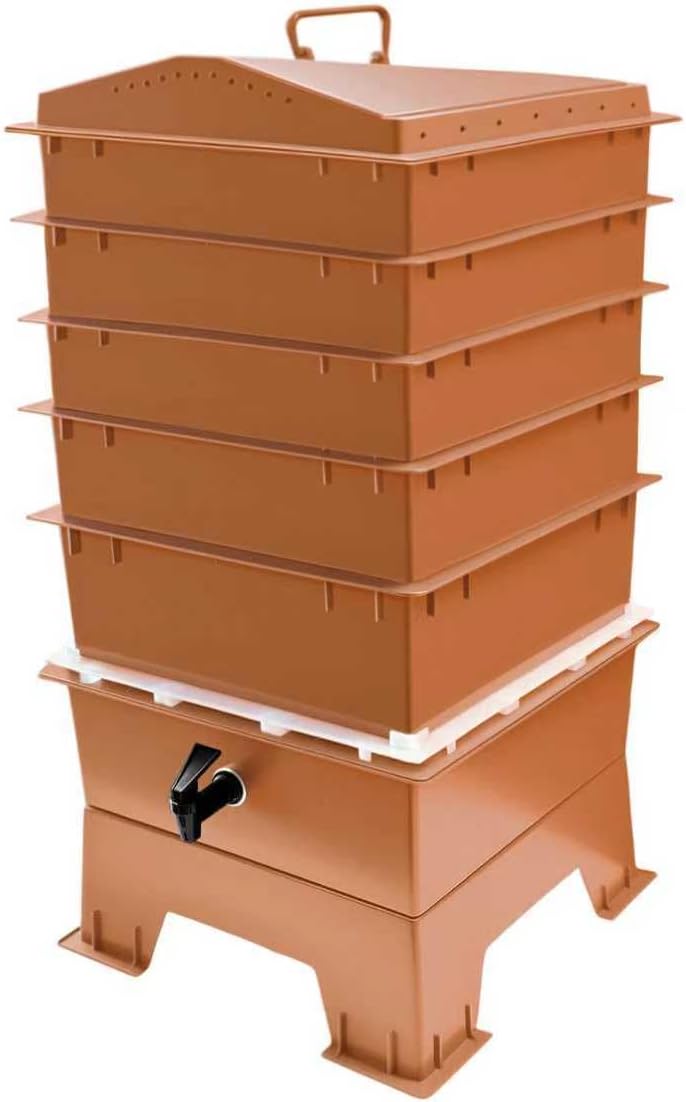
VermiHut 5-Tray Worm Composter (Terracotta)
| Capacity | 50 liters |
|---|---|
| Material Type | High Density Polyethylene (HDPE) |
The VermiHut 5-tray worm composter is a compact, stackable system that turns kitchen scraps into usable worm castings with minimal fuss. You set up bedding and composting worms in a working tray, add food scraps, and as the worms finish material they migrate upward into the tray above, leaving finished compost behind for easy harvest. The unit emphasizes airflow and moisture control with vented lids and a dome-shaped top to help keep the bedding at a comfortable moisture level. A worm-saver tray prevents worms from falling into the liquid collection tray and the stacked footprint is small enough for indoor placement in a utility room or on a balcony. Made from HDPE, it is durable for routine household use. Expect simple maintenance and regular monitoring of moisture and food levels; large amounts of very wet or fatty scraps will still require attention or pre-processing. Capacity is best suited to a typical household rather than heavy-duty or community-scale composting.
Best for: Buyers who want a reliable, low-maintenance indoor vermicomposter for everyday household food scraps and value steady, odor-controlled composting.
Less Ideal for: People needing a very large-capacity system for communal or high-output food waste or those who prefer fully passive systems that require no monitoring.
- Stackable five-tray design maximizes composting area while keeping a small footprint
- Designed airflow and vented lid for better oxygenation of worms
- Worm-saver tray and liquid collection reduce worm loss and make maintenance cleaner
- Made of durable HDPE suitable for indoor or outdoor placement
- 50 liter capacity fits typical household food-waste production
- Not intended for high-volume or community composting needs
- Requires routine moisture and food management to avoid excess liquid or odors
Verdict: A compact, reliable five-tray worm bin that delivers consistent indoor composting results for typical household food-waste needs.
VermiHut Plus 5-Tray Worm Composter

| Capacity | 5 pounds |
|---|---|
| Number of Trays | 5 |
| Material Type | High Density Polyethylene (HDPE) |
The VermiHut Plus 5-Tray Worm Composter is a stacked worm bin that makes household vermicomposting straightforward for kitchens, garages, or small patios. You load bedding, red worms, and food scraps into the top tray and as the worms follow fresh food upward they leave finished castings behind in lower trays, allowing continuous harvesting without disturbing the colony. Notable features include a V-Board and coconut mat for airflow and moisture balance, a worm-saver tray to keep worms out of the liquid collection area, and protective base feet designed to deter ants. The unit is made from durable HDPE and holds roughly 5 pounds capacity with support for up to about 10 pounds of worms across trays under ideal conditions. Practical benefits are a compact footprint for indoor placement, reduced odors compared with open bins, and simple tray-by-tray harvesting. Important limitations are the potential for slight smells if ventilation or maintenance lapses and the need to manage moisture and feeding rates to avoid anaerobic conditions or pests.
Best for: Buyers who want a low-footprint indoor worm composter that supports continuous harvesting and prefer a well-documented, widely used system with practical odor and moisture controls.
Less Ideal for: People who want a completely maintenance-free solution or who need a very large-capacity commercial composter for heavy daily food-waste volumes.
- Stacked 5-tray design enables continuous composting and easy harvesting
- Built-in V-Board and coconut mat improve airflow and moisture balance
- Worm-saver tray and liquid collection reduce mess and protect worms
- Compact footprint suitable for indoor use in kitchens or garages
- Made from durable HDPE for outdoor durability as well as indoor use
- May emit a slight odor if not properly ventilated or maintained
- Requires regular moisture and feeding management to prevent anaerobic conditions
Verdict: A compact, well-engineered 5-tray system that lets home users compost kitchen scraps continuously while minimizing odor and mess.
Blütezeit 5-Tray Worm Composter 53QT Worm Farm Kit

| Capacity | 13.2 gallons |
|---|---|
| Material Type | Polypropylene (PP) |
| Included Components | 5-Tray worm bin, turning fork, shovel, soil meter, non-woven fabric, coco-coir brick, anti-slip feet, cup, spigot |
The Blütezeit 5-tray worm composter is a stackable vermicompost system intended for apartments, balconies, or small yards where you want a tidy indoor option. Users set up bedding and red wigglers in the bottom tray then add food scraps to the top trays; as worms finish a tray you lift it and let the next tray collect castings. Notable features include molded ventilation holes for airflow, a built-in spigot for collecting worm tea, and a small toolkit—turning fork, shovel, soil meter, coco-coir brick and a cover fabric—that helps beginners maintain moisture and pH. The polypropylene construction feels durable and the modular trays keep the system compact and easy to manage. Because the kit emphasizes odor control and includes a soil meter and instructions, it lowers the learning curve for someone cautious about mess or smells. Limitations are the moderate 13.2 gallon volume, which suits households producing modest food waste but may need more frequent attention in larger families, and worms are not included so you must source them separately.
Best for: Buyers who want a low-risk, compact indoor vermicompost system that minimizes odor and comes with tools to guide setup and maintenance.
Less Ideal for: Large households or gardeners who want high-volume outdoor composting or a system that arrives with starter worms included.
- Stackable five-tray design keeps composting organized and simplifies harvesting castings
- Includes practical accessories (turning fork, shovel, soil meter, coco-coir brick, fabric, spigot) for easier setup and maintenance
- Ventilated trays and a design focused on odor control make indoor use more manageable
- Durable polypropylene construction suitable for regular indoor or outdoor use
- 13.2 gallon capacity may be small for households that generate large amounts of kitchen waste
- Worms are not included so customers must purchase composting worms separately
Verdict: A beginner-friendly, compact five-tray worm bin that prioritizes odor control and straightforward maintenance for indoor vermicomposting.
Choosing the Right Indoor Worm Compost Bin: Key Factors to Consider
Bin Size and Household Capacity
Size determines how much kitchen waste the system can process between harvests. A bin too small will fill and slow decomposition, while one too large may sit underused and invite moisture problems. Consider how much raw food waste you produce weekly and choose a container with enough tray area or volume to host the bedding, worms, and incoming scraps without crowding.
Stackable tray designs let you scale capacity gradually as your composting habit grows. For apartment gardeners, footprint matters: measure the intended storage spot and allow clearance for opening lids and removing trays. Remember that bedding and moisture add to weight, so check whether you will need to move the bin for cleaning or harvesting.
Odor Control and Pest Prevention
Indoors, smell and flies are the top concerns. Effective systems combine breathable but screened ventilation, tight-fitting lids, and bedding management to keep conditions aerobic and low-odor. Carbon-rich bedding such as shredded paper or coconut coir buffers moisture and reduces smells when balanced with food scraps.
Built-in features like charcoal filters, screened vents, or sealed tray edges reduce escape routes for odors and pests. Regular maintenance-burying fresh scraps, avoiding excess citrus or oily foods, and monitoring moisture-works hand-in-hand with hardware to prevent problems that are more noticeable in small living spaces.
Moisture Management and Leachate Handling
Excess moisture creates anaerobic pockets that smell and harm worm health. Good indoor worm compost bins provide a way to separate and collect leachate or include a drainage tray beneath stackable layers. A removable drip tray or spigot makes routine draining simple and prevents wet bedding.
Look for clear instructions on how much water to expect and recommended bedding-to-food ratios. Some designs rely on absorbent bedding layers to trap moisture, while others channel liquid to a separate reservoir. Whatever the method, predictable moisture control is essential for an indoor environment where constant dampness is unacceptable.
Harvesting Access and Castings Removal
How easily you can remove finished castings affects whether you will keep composting regularly. Systems with lift-out trays, pull-apart layers, or simple rake-and-screen setups reduce the mess and effort of harvesting. Frequent, messy harvesting is a common reason indoor composting projects stop.
Consider where you will perform harvesting. If you need to bring trays to an outdoor sink or garbage area, lighter trays and handles help. Some designs allow worm migration to fresh bedding so you can harvest from lower trays with minimal manual sorting. Clear access also makes it easier to add bedding and inspect worm health.
Ventilation and Aeration Design
Worms and the microbes that break down organic matter need oxygen. Inadequate ventilation slows decomposition and promotes foul smells. Indoor bins should balance screened vents that allow airflow with barriers against flies and small pests.
Aeration can also be achieved through tray spacing, interior ribs that prevent compacting, or by periodically turning bedding. Choose a bin whose ventilation strategy suits the indoor location-kitchen counters may need more sealed vents with filters, while a sheltered balcony can tolerate simpler screened openings.
Materials, Durability, and Maintenance Needs
Durable, food-safe materials stand up to repeated moisture and handling. Sturdy plastics resist cracking and staining, and smooth surfaces are easier to wipe down. Consider whether the bin will sit on a floor that could be damaged by occasional spills and choose a design with protective base or drip tray features.
Also think about cleaning frequency: removable parts and smooth interiors shorten the time spent on maintenance. If you plan to keep the system in a visible spot, low-maintenance finishes and neutral colors can make indoor composting less obtrusive.
Where to Keep an Indoor Worm Compost Bin
Choose a cool, stable spot out of direct sunlight and away from high-heat appliances. Kitchens, utility rooms, enclosed balconies, and covered patios are common locations. If the unit will sit on a counter, confirm that the surface can carry the weight of a full tray plus bedding and scraps.
- Avoid direct sun which overheats the worms.
- Keep the bin near where food scraps are generated for convenience.
- Place a mat or tray underneath to protect surfaces from occasional drips.
What Worms Need to Thrive Indoors
Worms require a moist, dark, and oxygenated bedding environment with a steady supply of carbon and nitrogen materials. Maintain bedding that is damp like a wrung-out sponge, not soggy, and keep a balance of green (food scraps) and brown (shredded paper, dry leaves, or coir) inputs. Monitor temperature: most composting worms do best between about 55 and 75 degrees Fahrenheit, so avoid locations that routinely exceed or drop below that range.
- Use bedding to moderate acidity from fruit scraps.
- Avoid adding meat, dairy, or oily foods that attract pests.
- Feed in small amounts until you know your worms' processing rate.
Starting Your Indoor Worm Bin Successfully
Begin with a bedding layer several inches deep and moistened evenly. Add a modest amount of food scraps initially and give worms time to acclimate before increasing inputs. Chop or blend scraps to speed processing and reduce odors. Keep a simple feeding schedule that matches how fast the worms are processing material rather than an arbitrary calendar.
- Start small and increase feeding as castings accumulate.
- Mix bedding into food scraps to discourage surface fruit fly infestations.
- Rotate feeding zones to encourage even decomposition.
Common Problems and Easy Fixes
If your bin smells, check for excess moisture and compacted bedding. Open vents briefly for airflow, remove any large wet clumps, and add more dry bedding. If fruit flies become noticeable, bury new scraps beneath bedding, reduce exposed wet food, and consider adding a fine mesh cover to vents. If worms are congregating at the edges or trying to escape, inspect temperature and moisture. Overly acidic conditions from too much citrus or too-fast feeding can prompt migration. Slow feeding, add more browns, and ensure adequate aeration to encourage worms to return to the bedding.
- Smell: add dry bedding and improve drainage.
- Flies: bury scraps and add mesh covers.
- Escape attempts: check moisture and temperature.
How Much Castings You Can Expect
Output varies with worm population, feeding rate, and system size. Modest indoor bins can produce small but frequent harvests of nutrient-rich castings suitable for potted plants, seed starting mixes, and indoor container gardens. Rather than expecting large volumes, aim for steady top-ups of potting mixes and root dips for houseplants. Harvest frequency also affects available castings. Frequent small harvests keep the system active and prevent overaccumulation, while longer intervals produce larger batches that require more handling during removal.
- Use castings sparingly as a concentrated soil amendment.
- Blend castings into potting mixes at low ratios for container plants.
- Reserve larger quantities for garden beds or heavy-feeding plants.
How We Chose the Best Indoor Worm Compost Bin
To assemble this list we applied criteria gardeners need when adding vermicomposting to indoor or small-space routines. Our primary filters favored systems designed for indoor placement: compact footprint, sealed or ventilated lids that limit odors and pests, and materials suitable for repeated moisture exposure. We prioritized bins with straightforward moisture control and leachate collection or drainage, because excess liquid is the most common cause of smell and anaerobic conditions indoors. We also considered capacity relative to household waste-systems that either scale with stackable trays or offer clear volume guidance scored better. Ease of harvesting castings and adding fresh bedding matter for regular use, so we looked for accessible tray designs or simple separation methods. Durability of materials, ventilation design to support aerobic breakdown, and clear setup instructions were other deciding factors. Units lacking basic odor control, without any drainage or that were impractically large for typical indoor spots were excluded. We did not include outdoor-only designs, experimental DIY setups with unclear maintenance needs, or systems that require specialized consumables without clear benefit.
FAQ
How often should I feed an indoor worm compost bin?
Often depends on your worm population and bin size. Start with small weekly feedings and increase as worms multiply. Watch processing speed and adjust: feed only as much as they can consume in a few days to a week.
Can I keep an indoor worm bin in a kitchen?
Usually yes, if you control moisture and odors. Place it away from heat sources, use proper bedding, and empty leachate regularly. A sealed-lid or filtered-vent design is best for visible indoor spots.
What should I not put in an indoor worm bin?
Avoid meat, dairy, oily foods, bones, and large amounts of citrus or onion that can create acidity. Also skip pet waste and diseased plant material. Stick to fruit and vegetable scraps, coffee grounds, tea bags, and small amounts of grains.
How do I prevent fruit flies around my indoor system?
Bury new food under bedding, keep the surface dry, and use a fine mesh over vents or the lid. Reducing exposed wet food and maintaining a balanced bedding mix makes conditions less attractive to flies.
How do I know when castings are ready to harvest?
Castings look dark, crumbly, and soil-like and are typically less distinguishable from bedding after several weeks of processing. If most of the material is broken down and worms have migrated to fresher trays or bedding, it is a good time to harvest.
Do I need special worms for an indoor bin?
Most indoor bins use surface-feeding composting worms rather than earthworms. These worms are well adapted to breaking down kitchen scraps. Local garden centers or vermiculture resources can point you to the right species for indoor systems.
Final Verdict
An indoor worm compost bin is a practical way to turn kitchen scraps into valuable castings without outdoor space. Prioritize systems that balance capacity with a small footprint, control moisture and odors, and make harvesting straightforward. Tradeoffs are typical: compact units are convenient but yield smaller batches, while larger stackable systems produce more castings but need more space and management. Choose the setup that matches how much food waste you generate and where you will site the bin. With sensible feeding, regular moisture checks, and simple maintenance, an indoor worm composting system can reliably supply nutrient-rich amendments for houseplants and container gardens.
