

Note: This article contains affiliate links. If you click on these links and make a purchase, I may earn a small commission at no extra cost to you. This helps support my research and content. Read my full affiliate disclosure here.
If you fish regularly, keeping a steady supply of live bait can save time and trips to the store. A worm compost bin for fishing converts kitchen scraps into healthy, active worms and nutrient-rich castings you can use as bait or to refresh your garden beds. The right bin holds enough worms for frequent harvesting, minimizes odor and pests near your tackle, and makes collecting bait quick and sanitary. This guide covers the top shortlisted options in the category and explains the practical criteria we used to evaluate them, including bait yield, odor control, and ease of harvest. Read on to find a system that matches how often you fish and where you plan to keep your bin.
Top Picks at a Glance
| Best Overall The best all-around choice for most situations | VermiHut 5-Tray Worm Composter (Terracotta) |  |
| Best Quality Built to a higher standard if you want something more solid | Worm Factory 360 4-Tray Worm Composting System (Black) |  |
| Best Value The sweet spot between price and what you get | Blütezeit 5-Tray Worm Composter (50L) with Starter Kit |  |
| Best Budget The cheapest option that still gets the job done reliably | ZZOFSWORM Inground Worm Farm Composter (Small) |  |
| Highest Rated A top-rated pick with lots of positive feedback | HTtoy 2-Pack Underground Worm Composting Bin (Metal) with Gardening Gloves |  |
| Most Popular A crowd favorite that many people choose with confidence | VermiHut Plus 5-Tray Worm Compost Bin |  |
| Best Seller A high-volume bestseller chosen again and again | VermiHut Plus 5‑Tray Worm Composter |  |
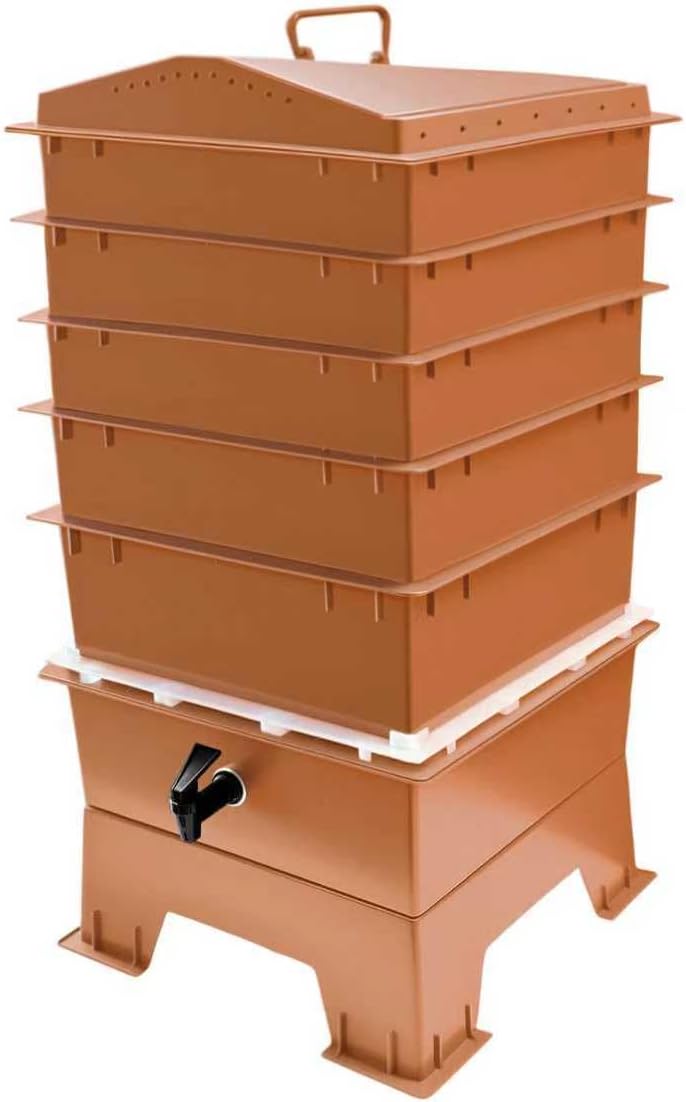
VermiHut 5-Tray Worm Composter (Terracotta)
| Capacity | 50 liters |
|---|---|
| Material Type | High Density Polyethylene (HDPE) |
The VermiHut 5-tray worm composter is a stacked bin system that turns kitchen scraps into usable worm castings and liquid ‘worm tea’ with minimal day-to-day effort. You load a working tray with bedding, add composting worms and food scraps, and as the worms finish a tray they migrate upward into the next tray so you can harvest rich castings below. The design emphasizes airflow and moisture control through venting and a dome lid, and it includes a worm-saver tray to keep worms out of the liquid collection area. For a homeowner or angler who wants a compact, odor-controlled way to produce bait and plant feed, the unit offers a small footprint with five harvestable trays and a dedicated liquid tray. It is made from HDPE so it tolerates indoor or outdoor placement, but capacity is limited to about 50 liters and a single stack may require frequent feeding or more frequent harvests if you plan to produce large volumes of worms or tea. Setup and routine maintenance are straightforward but you should follow basic vermicomposting practices to avoid excess moisture or food that can attract pests.
Best for: Buyers who want a compact, low-maintenance vermicompost system to convert household scraps into castings and liquid feed, and who value odor control and easy tray-by-tray harvesting.
Less Ideal for: People who need commercial-scale worm production or continuous high-volume bait harvesting should choose a larger or purpose-built breeding system.
- Stacked five-tray design allows sequential harvesting of finished castings without disturbing active trays
- Good airflow and dome-vent lid help maintain oxygen levels and control moisture
- Includes worm-saver tray and a liquid collection tray for easy separation of worms and worm tea
- Built from durable HDPE suitable for indoor or outdoor use
- 50 liter capacity may be small for users who want to produce large quantities of worms or liquid bait
- Requires regular management of moisture and feeding to prevent odors or pests
Verdict: A compact, user-friendly five-tray worm bin that produces harvestable castings and collectable worm tea with minimal fuss for home-scale composting and bait production.
Worm Factory 360 4-Tray Worm Composting System (Black)

| Material Type | Plastic |
|---|---|
| Capacity | 1 liters |
| Model Number | WF360 Black |
| Manufacturer | Nature's Footprint, Inc. |
The Worm Factory 360 is a 4-tray plastic vermicomposter built for continuous home composting. You assemble the stack, add bedding and red wigglers to the bottom tray, then feed kitchen scraps into the top tray; as worms process material they migrate upward and finished castings accumulate below for straightforward harvesting. Notable features include the nested tray design for passive worm migration, a spigot to collect liquid fertilizer, expandable capacity up to six trays, and a durable injection-molded plastic construction that tolerates indoor or sheltered outdoor use. For someone focused on performance, it delivers steady throughput when maintained in the recommended 40 to 80°F range and with a 50/50 balance of food and fiber inputs. Limitations to expect are the need for periodic moisture and bedding management to avoid excess leachate or anaerobic conditions and the temperature sensitivity that makes it unsuitable for unheated outdoor locations in extreme climates. The system is space-efficient and low-noise, but getting top performance requires active attention to feeding rates and basic worm care.
Best for: Anglers or backyard anglers who want a reliable, higher-throughput source of worm castings and liquid feed for bait and soil enrichment and who are willing to manage feeding and moisture for steady performance.
Less Ideal for: People who need a maintenance-free or winter-proof outdoor composting solution or who cannot keep the bin in a temperate, sheltered spot year-round.
- Nested tray design lets worms migrate upward for continuous harvesting without frequent sorting
- Spigot collects liquid fertilizer for easy use on bait or plants
- Expandable from 4 to 6 trays to increase processing capacity as needs grow
- Durable, molded plastic construction suited for indoor or sheltered outdoor setups
- Requires active moisture and bedding management to avoid excess leachate
- Performance drops outside the recommended 40 to 80°F temperature range
Verdict: If you want a compact, expandable system that reliably produces worms, castings, and liquid fertilizer for bait or soil, the Worm Factory 360 delivers strong, continuous performance when properly managed.
Blütezeit 5-Tray Worm Composter (50L) with Starter Kit

| Capacity | 50 liters |
|---|---|
| Material Type | Polypropylene (PP) |
| Included Components | 5-Tray bin, turning fork, shovel, soil meter, non-woven fabric, coco-coir brick, spigot |
The Blütezeit 5-tray worm composter is a compact, stackable vermicomposting system built for steady, small-to-moderate volumes of kitchen waste. You assemble trays, add bedding and worms, and harvest castings or drain liquid through the included spigot for “worm tea.” The kit includes practical tools—a turning fork, shovel, soil meter, coco-coir brick and non-woven fabric—that simplify setup and moisture control, and the molded PP construction and anti-slip feet make the unit sturdy enough for a porch or garage. Each tray has ventilation holes to reduce odors and keep conditions aerobic, which helps maintain a usable bait supply and minimizes maintenance. The 50 L capacity is large enough to produce a reliable stream of live bait and nutrient-rich castings without taking much space. Limitations are the plastic construction, which can warp if exposed to direct sun long-term, and the system requires basic attention to moisture and feed balance to avoid excess liquid or fruit fly issues. For anglers who want a tidy, all-in-one starter setup for producing worms and worm tea, this is a practical choice.
Best for: Anglers who want a tidy, beginner-friendly system to produce a steady supply of live worms and nutrient tea without dedicating much space or time to complex composting setups.
Less Ideal for: People needing large-scale bait production or a heavy-duty outdoor system that withstands constant sun and rough handling should consider larger metal or commercial worm farms instead.
- Five stackable trays let you harvest worms or castings without disturbing the whole colony
- Includes tools and accessories (turning fork, shovel, soil meter, coco-coir brick, non-woven fabric) for easy setup and moisture control
- Built-in ventilation and spigot let you control odor and collect nutrient-rich worm tea
- Compact 50 L capacity fits tight spaces like a garage, balcony, or shed while producing usable bait
- Polypropylene plastic can degrade or warp with prolonged direct sun exposure
- Requires regular moisture and feeding management to prevent excess liquid and pests
Verdict: A compact, ready-to-use vermicompost kit that produces live worms and worm tea with minimal space and straightforward maintenance, ideal for anglers wanting an efficient home bait source.
ZZOFSWORM Inground Worm Farm Composter (Small)

| Capacity | 0.6 gallons |
|---|---|
| Material Type | Plastic |
| Item Type Name | Worm composting bin |
This small inground worm farm is a simple, no-power solution for turning food scraps into nutrient-rich worm castings. Designed to be buried in a raised bed, balcony planter, or tight outdoor corner, you add kitchen waste, screw on the lid, and let red wigglers do the work. The cylindrical plastic shell and locking cover help keep pests out while the 360-degree ventilation and feeder openings promote airflow to reduce odors and keep conditions favorable for worms. At just 0.6 gallon capacity it is best for small-scale use like producing a steady supply of bait worms and castings for anglers or feeding a few potted plants. The unit is lightweight and easy to set up, and its sealed design makes it low-maintenance compared with tumblers or electric units. Expect limited throughput because of the compact volume and note that live worms are not included, so you will need to source them separately. Also avoid direct sun and certain food wastes that can upset the bin’s balance.
Best for: Anglers or gardeners on a tight budget who want a low-maintenance, space-saving way to produce live bait and small batches of nutrient-rich castings without electricity.
Less Ideal for: People who need to compost large volumes of kitchen waste or want a rapid, high-output system for commercial bait production should choose a larger or purpose-built wormery.
- Compact subterranean design fits in small garden beds or tight outdoor spaces
- Locking lid and sealed plastic body help deter wildlife and contain odors
- 360-degree ventilation system promotes airflow to reduce smell and maintain worm health
- Easy, low-effort operation—add scraps and let worms convert them without electricity
- Very small capacity limits how much waste it can process at once
- Does not include live worms so you must purchase starter worms separately
Verdict: A very affordable, low-maintenance inground worm bin that delivers a compact, odor-controlled way to produce bait worms and small amounts of castings for anglers and small-space gardeners.
HTtoy 2-Pack Underground Worm Composting Bin (Metal) with Gardening Gloves

| Number of Items | 2 |
|---|---|
| Material Type | Metal |
| Includes | 2 bins and 1 pair gardening gloves |
These compact metal composting bins are designed to be buried upright in a garden bed or a hole to encourage worms and microbes to turn kitchen scraps and yard waste into usable compost. Each stainless-steel-style bin has a perforated 360-degree design for air circulation and comes with a lid so you can add scraps and close the unit between feedings. You typically install one or more in strategic spots, fill them with veggie peelings, paper, and leaves, and wait a couple of months for the worms to process material into nutrient-rich matter that can be dug into soil or used around plants. The pack includes two bins plus a pair of gardening gloves so you can set up multiple bait-production stations or keep one cycling while the other matures. Because the bins are compact and metal, they are durable and resist moisture-related breakdown, but their small size means they hold limited volume and will need more frequent additions or more units if you want steady output. They are best for hands-off, reliable composting where long service life matters more than large capacity.
Best for: Buyers who want a low-maintenance, long-lasting vermicompost solution they can install and forget for weeks at a time, especially those who prioritize dependable materials and minimal upkeep.
Less Ideal for: People who need large-volume composting or who cannot bury units in soil should consider larger or aboveground composters instead.
- Sturdy metal construction resists rust and corrosion for long service life.
- 360-degree perforations promote airflow and worm movement for efficient breakdown.
- Includes two bins so you can run staggered composting cycles or place multiple stations.
- Simple bury-and-fill setup requires no power or complex tools.
- Comes with gardening gloves for safe handling of compost materials.
- Small internal volume limits how much organic waste each unit can process before needing emptying or rotation.
- Designed to be buried so not suitable for apartment balconies or purely aboveground setups.
Verdict: A durable, low-maintenance pair of buried worm bins ideal for anglers who want a reliable, long-lasting way to produce small, consistent batches of bait-friendly compost.
VermiHut Plus 5-Tray Worm Compost Bin

| Capacity | 50 liters |
|---|---|
| Material Type | High Density Polyethylene (HDPE) |
The VermiHut Plus 5-Tray is a stacked worm bin that converts kitchen scraps into usable compost while keeping a compact footprint suitable for porches, sheds, or a garage. You load food waste onto the top tray and harvest finished castings from lower trays as worms migrate upward, which makes continuous-flow composting straightforward. The unit includes a molded liquid collection base to capture excess moisture, a V-Board and coconut mat to balance airflow and humidity, and a worm saver tray that prevents worms from dropping into the liquid. High density polyethylene construction is weather-resistant for outdoor use and the raised protective feet help deter ants. For anglers wanting live bait, the system produces steady numbers of healthy red worms if fed regularly and kept moist. Limitations to note are the limited 50-liter capacity for large volumes of waste and the need for routine maintenance of moisture and feeding to avoid odors or leachate buildup.
Best for: Buyers who want a compact, low-maintenance vermicompost system that reliably produces live worms and castings for bait or garden use and who prefer a proven product with strong user feedback.
Less Ideal for: People who need to process very large volumes of food waste or who want a fully hands-off system that requires little to no routine care.
- Continuous-flow 5-tray design allows easy harvesting without disturbing the whole colony
- Integrated molded liquid collection base simplifies moisture management
- V-Board and coconut mat promote airflow and reduce odors
- HDPE construction suitable for indoor or sheltered outdoor use
- Raised protective feet help reduce ant intrusion
- 50 liter capacity may be small for households generating large amounts of food waste
- Requires regular feeding and moisture checks to maintain worm health
Verdict: A compact, proven 5‑tray worm bin that produces steady worms and compost while keeping moisture and odors under control.
VermiHut Plus 5‑Tray Worm Composter

| Capacity | 5 pounds |
|---|---|
| Material Type | High Density Polyethylene (HDPE) |
| Number of Trays | 5 |
The VermiHut Plus 5‑Tray is a stacked vermicomposting system that turns kitchen scraps into nutrient‑rich worm castings using red worms and a simple top‑feed workflow. You set up bedding and worms in the top tray, add food scraps over time, and worms migrate upward as trays below fill with finished compost. Notable features include a V‑Board and coconut mat to balance airflow and moisture, a worm saver tray to keep worms out of collected leachate, and protective base feet that can be filled to deter ants. The compact footprint and five trays let you run a continuous system so finished castings are available without disturbing active worms. For the risk‑averse buyer the unit is straightforward to maintain and designed to limit odors when ventilated properly, though it will still require routine attention to moisture levels and occasional leachate drainage. The system works well in garages, patios, or on a covered porch for anglers who want a steady supply of live worms and compost for bait and garden use.
Best for: Someone who wants an easy, low‑risk way to produce live worms and compost at home for bait or garden use and prefers a straightforward, contained system that requires predictable maintenance.
Less Ideal for: People who need a very large volume composting solution or who prefer a fully passive, maintenance‑free option should consider different systems.
- Five stacked trays allow continuous harvesting of finished castings without disturbing active worms
- V‑Board and coconut mat promote moisture balance and airflow to reduce odors
- Worm saver tray keeps worms out of the leachate collection area for healthier worm migration
- Protective base feet can be filled to block ants and stabilize the bin for outdoor use
- May emit a slight smell if not ventilated and maintained properly
- Capacity listed in manufacturer details is modest relative to very large households
Verdict: A compact, user‑friendly stacked worm bin that gives anglers a steady supply of live worms and compost while minimizing fuss and odor when cared for properly.
Choosing the Right Worm Compost Bin for Fishing: Key Factors to Consider
Bin Capacity and Worm Population
How many worms the bin can sustain determines whether it will produce enough bait between harvests. A bin sized for occasional anglers might hold a few hundred worms, while frequent fishers need systems that support several thousand worms and regular harvesting cycles.
Capacity affects feeding frequency, moisture balance, and how often you must rotate bedding. Choosing the right size helps you avoid overfeeding or starving the colony and ensures a steady supply of active worms when you need them.
Harvest Access and Collection Method
Collecting bait without damaging the worm colony keeps production steady and minimizes stress on the worms. Look for bins that offer shallow trays, removable screens, or gentle migration harvest methods so you can take bait from the top layers without digging through the entire system.
Accessible collection reduces time at the bin and lowers the chance of accidentally releasing excess moisture or compacting bedding. For anglers who need quick access before a trip, a design with easy-lift trays or simple sift screens makes bait retrieval faster and cleaner.
Ventilation and Odor Management
Good airflow prevents anaerobic conditions that cause foul smells and can attract flies or other pests. Vented lids, breathable trays, and drainage systems help keep bedding aerobic and reduce odors. For bins kept in garages, porches, or near boats, strong odor control protects gear and prevents nuisances for neighbors.
Managing moisture through proper drainage and avoiding overfeeding are part of odor control. Choose a design that allows you to monitor moisture and air exchange easily so the colony stays healthy and discreet.
Material Durability and Weather Resistance
Bins used near docks, in sheds, or on patios face humidity, temperature swings, and occasional splashes. Durable plastics, rot-resistant wood, or coated metals extend service life and protect worms from cold drafts and heat. Materials also affect cleaning and longevity; smooth, molded plastics resist staining and are easier to rinse.
Consider UV resistance if the bin will get sun exposure and sturdy fastenings so lids and trays do not warp with time. A robust build reduces the chance of damage during transport to fishing spots or storage between seasons.
Drainage and Moisture Control
Worms need a moist but not waterlogged environment. Effective drainage systems and the ability to remove excess liquid prevent harmful anaerobic pockets and the buildup of ammonia. Look for bins with leachate catchment or spigots so you can drain excess moisture without disturbing the bedding.
Moisture control also makes it easier to maintain consistent bedding texture, which affects worm activity and bait quality. A bin that simplifies drainage will need fewer emergency interventions after heavy rains or accidental spills.
Ease Of Setup and Ongoing Care
Anglers are often managing gear on top of chores, so a bin that is straightforward to assemble, feed, and maintain encourages long-term use. Clear tray layouts, labeled parts, and simple instructions reduce setup time. Ongoing care touches include how easy it is to add bedding, harvest castings, check moisture, and harvest worms.
Low-fuss systems save time and reduce mistakes that can harm worm populations. If you plan to keep the bin near your fishing supplies, choose one that integrates with your routine and requires minimal dedicated attention.
Where to Keep Your Bait Bin
Location affects worm activity and bait availability. A sheltered spot out of direct sun but not subject to freezing temperatures is ideal. Garages, covered porches, and insulated sheds are common choices for anglers who need quick access while keeping worms protected from temperature extremes.
If you store the bin near fishing gear, use secondary containment to protect tackle from leachate and keep lids secured to prevent curious pets from accessing the bedding.
- Avoid uninsulated outdoor exposure during winter unless you plan to winterize the bin.
- Keep the bin off damp ground to reduce cold transfer and pests.
- Place the bin where you can easily check moisture and feed without disrupting other storage.
Feeding Schedule for Active Bait Production
A steady feeding schedule supports continuous reproduction and active worms for harvest. Feed small amounts on a regular cadence instead of large one-time meals to reduce smell and avoid anaerobic pockets. Typical feed items include shredded vegetable scraps, paper bedding, and small amounts of crushed eggshell.
Monitor the bedding and adjust frequency based on how quickly the scraps disappear. Overfeeding is a common cause of odor and maggot problems, while underfeeding slows worm reproduction and reduces bait availability.
- Feed 2 to 3 times per week for an active colony, less for low-use bins.
- Hide food under bedding or in designated feeding pockets to reduce fly attraction.
- Rotate feeding spots to distribute nutrients and encourage even worm movement.
Harvesting Techniques for Live Bait
Collecting worms without harming the colony preserves production. Use surface harvesting or migration methods when possible, allowing worms to move toward fresh bedding while you remove top trays. If sifting is necessary, work gently and return most bedding so the colony can recover quickly.
Sanitize tools after harvesting to avoid transferring contaminants between bins or from the field. Keep harvested bait in breathable containers with damp bedding for transport so worms stay active.
- Use shallow trays for quick surface picks.
- Encourage migration by adding fresh bedding on one side and harvesting from the opposite side after several days.
- Avoid prolonged exposure to heat during transport; keep bait shaded and cool.
Winter Care and Temperature Management
Worms slow down in cold weather, so winter strategies are important if you fish year-round. Move the bin to an insulated spot, add thicker bedding, and reduce feeding frequency to match slower activity. In milder climates you may keep normal production, but avoid placing the bin in unheated spaces where temperatures drop below the worms' tolerant range.
For temporary outdoor winter storage, burying the bin partially or using insulating wraps can help buffer sudden temperature swings. Check moisture periodically since evaporation drops in cold air.
- Reduce feeding and check every few weeks instead of daily.
- Add dry bedding to maintain warmth and prevent compaction.
- Bring the bin indoors during extreme cold snaps if possible.
Keeping Pests and Flies at Bay
Preventing pests starts with good feed management and sealed access points. Bins with tight-fitting lids, fine mesh ventilation, and buried food avoid attracting flies. Remove uneaten meat or oily scraps immediately and monitor for fruit fly activity, which often indicates overripe food or high moisture.
Traps and natural repellents can help, but the most effective approach is consistent maintenance: regular removal of excess moisture and avoiding overly sweet or fermenting scraps.
- Use a tablespoon of grit like crushed eggshell to reduce acidity and flies.
- Cover fresh food with dry bedding to hide scents.
- Clean leachate trays and empty spigots to remove breeding spots.
How We Chose the Best Worm Compost Bin for Fishing
We prioritized features that matter to anglers who want a reliable, low-maintenance source of live bait. Our evaluation focused on capacity for steady worm production, ventilation and odor control to avoid attracting pests at the dock or in the garage, and harvest access that lets you collect bait without disturbing the colony. Durability and materials mattered because outdoor or garage storage exposes bins to moisture and varying temperatures. We also judged ease of setup and ongoing care so busy anglers can keep worms healthy with minimal fuss. Excluded from consideration were designs intended purely for large-scale commercial worm farms or tiny single-use cups that cannot sustain a harvest schedule. We removed bins with poor drainage or airtight designs that encourage anaerobic conditions. The final list emphasizes systems that balance steady castings output, simple harvesting, and practical odor and pest management that suit recreational fishers.
FAQ
How many worms do I need to produce bait for weekend fishing?
It depends on how often and how much bait you harvest. A small bin with a few hundred mature worms can support occasional weekend trips, while anglers harvesting heavily should aim for a larger colony that reproduces faster.
Can I keep a worm bin indoors near other gear without strong odors?
Yes, with proper ventilation, controlled feeding, and regular drainage you can minimize odors. Choose a bin designed for odor control and avoid overfeeding to keep smells low.
What should I feed the worms to make them good bait?
Vegetable scraps, fruit peels in moderation, and paper bedding produce active, healthy worms. Avoid oily foods, dairy, and meat which attract pests and create foul conditions.
How do I store harvested worms for a fishing trip?
Keep them in a breathable container with damp bedding or shredded paper, shaded and cool. Check moisture so they do not dry out and avoid prolonged heat exposure during transport.
Will a worm bin survive winter outside?
Survival depends on your climate and the bin design. In cold regions you should move the bin to an insulated or heated space, add extra bedding, and reduce feeding. Some bins can be winterized outdoors with insulation but risks remain in severe cold.
Final Verdict
For anglers, the best worm compost bin balances steady bait production with easy harvesting and reliable odor control. Prioritize bins sized to match how frequently you fish, with accessible trays or migration-friendly layouts so you can collect bait without destabilizing the colony. Materials and drainage influence durability and day-to-day maintenance, so choose a design that fits your storage conditions and maintenance habits. By weighing bait yield, harvest access, and moisture management you can pick a system that supplies live bait consistently while staying low-maintenance and pest-resistant.
