

Note: This article contains affiliate links. If you click on these links and make a purchase, I may earn a small commission at no extra cost to you. This helps support my research and content. Read my full affiliate disclosure here.
If birds are stripping berries, snipping blossoms, or trampling seedlings, the right bird netting can save a season. Choosing netting that suits your garden layout and plant types matters because mesh size, material strength, and installation approach determine both protection and how easily you care for plants underneath. This guide shortlists top bird netting options tested for common garden uses, explaining how each choice fares for fruiting shrubs, vegetable beds, and container gardens. Below we outline the criteria we used to select these nettings and what to consider before you buy, then present the best options for different garden situations.
Top Picks at a Glance
| Best Overall The best all-around choice for most situations | AlpineReach Garden Netting 7.5 x 100 ft Heavy Duty Black Mesh |  |
| Best Quality Built to a higher standard if you want something more solid | JUNKOGO Heavy-Duty Garden Bird Netting 25 x 100 ft, 1 in Mesh |  |
| Best Value The sweet spot between price and what you get | RIFNY Garden Bird Netting, 13 x 40 ft HDPE Anti-Bird Mesh |  |
| Best Budget The cheapest option that still gets the job done reliably | 33 ft x 6.5 ft Garden Plant Netting (Nylon) – Protective Garden Mesh |  |
| Highest Rated A top-rated pick with lots of positive feedback | YUESHUNSLL Polyethylene Garden Bird Netting, 13 x 33 ft |  |
| Most Popular A crowd favorite that many people choose with confidence | AlpineReach 7.5 x 65 ft Heavy Duty Garden Netting | |
| Best Seller A high-volume bestseller chosen again and again | Feitore 7 x 100 ft Polypropylene Garden Netting with Reinforced Edges |  |
AlpineReach Garden Netting 7.5 x 100 ft Heavy Duty Black Mesh

| Unit Count | 750 Square Feet |
|---|---|
| Item Type Name | garden netting |
| Item Highlight | Deer Fence, Plant Protection, Extra Strong Woven Mesh for Fruits Trees, Reusable Kit with Zip Ties |
| Material Type | Composite |
This AlpineReach garden netting is a large 7.5 by 100 foot woven mesh designed to keep birds, squirrels, rabbits, and deer from damaging plants. You unroll and cut the net to length, then secure it with the included zip ties or stakes to cover raised beds, fruit trees, shrubs, or to form a simple perimeter fence. The 5/8 inch fine mesh and extra-strong woven construction give the net notable tensile strength and a bit of stretch, which helps resist tearing when animals push against it or during windy conditions. Because the material is lightweight and weather resistant it is easy to handle and can be layered for added protection where pests are persistent. Important limitations are that the netting is a passive barrier rather than a rigid fence so very large animals can still push through and it requires anchoring and periodic adjustment to prevent sagging or entanglement with plants. Cutting to size is straightforward but seams and attachment points need attention to avoid gaps around trunks or corners.
Best for: Gardeners who want an easy-to-deploy, reusable protective barrier for fruit trees, raised beds, and mixed planting areas and value a balance of durability and convenience.
Less Ideal for: Those needing a permanent or heavy-duty livestock fence or buyers who prefer a rigid, tamper-proof barrier for large wildlife.
- Large coverage area suitable for multiple beds or several small trees
- 5/8 inch fine woven mesh blocks common garden pests while being gentle on foliage
- Durable composite material with extra tensile strength for season-long use
- Includes zip ties for quicker setup and straightforward modification by cutting
- Not a rigid barrier so determined large animals may be able to push through
- Requires careful anchoring and occasional re-tensioning to avoid sagging or plant entanglement
Verdict: A roomy, heavy-duty woven mesh that gives balanced, reusable protection for beds and small trees without being hard to install.
JUNKOGO Heavy-Duty Garden Bird Netting 25 x 100 ft, 1 in Mesh

| Material Type | High Density Polyethylene (HDPE) |
|---|---|
| Mesh size | 1 inch |
| Item Highlight | Extra Strong Woven Mesh Netting Pest Barrier |
| Unit Count | 1 Count |
This JUNKOGO garden netting is a heavy-duty woven HDPE mesh intended to keep birds and small wildlife off fruit, vegetables, and raised beds. In practice you drape or stake the sheet over plants or trees, trim it to fit, and secure it with ties or stakes; the 1 inch mesh blocks most birds and deters squirrels, rabbits, and raccoons while letting sunlight and rain pass. The woven construction and higher fabric weight make the net noticeably more tear resistant than thin knotless nets and the material is UV and temperature resistant for repeated seasonal use. It is also flexible and easy to cut, so you can make custom covers, tent frames, or overhead protection for chicken coops. The main compromises are that large gaps at edges will still allow determined critters through if not well secured and the net is not rigid, so it needs proper anchoring or a frame for long-term installations. For gardeners focused on dependable, reusable protection, this netting performs reliably when installed carefully.
Best for: Gardeners who prioritize durable, reusable pest protection and want a large customizable net to secure fruiting plants, raised beds, or overhead coop covers.
Less Ideal for: People who need a rigid or permanent fence solution or who prefer a pre-framed enclosure that requires minimal installation.
- Woven HDPE construction gives higher tear resistance than thin knotless nets
- 1 inch mesh blocks most birds while allowing light and water through
- UV and temperature resistant for repeated seasonal or year-round use
- Large 25 x 100 ft sheet is easy to cut and customize for beds, trees, or coops
- Flexible sheet requires careful anchoring or a frame to prevent gaps
- Not rigid so it will sag without support over larger spans
Verdict: Choose this netting if you want a large, heavy-duty, UV-resistant woven mesh that reliably protects fruit and vegetable plantings from birds and small animals when properly secured.
RIFNY Garden Bird Netting, 13 x 40 ft HDPE Anti-Bird Mesh

| Material Type | High Density Polyethylene (HDPE) |
|---|---|
| Mesh Size | 5/8 inch (1.5 cm) |
| Weight | 30 g |
| Item Highlight | Heavy Duty Netting with Staples for Vegetable, Fruit Trees & Other Plants |
This RIFNY bird netting is a simple, reusable barrier for keeping birds, squirrels, rabbits, and similar pests off vegetables, berries, and low trees. Made from woven HDPE with a fine 5/8-inch mesh it drapes over raised beds or can be stretched across frames to protect fruit and flowers without blocking sunlight or rain. The netting is UV treated and rated for a wide temperature range, so it stands up to seasonal outdoor use and can be stored and reused year after year. It comes with landscape staples and twist ties and is easy to cut to size with scissors; the mesh stretches widthwise so you can fit irregular beds if you avoid overstretching lengthwise. Because it is lightweight and flexible, it performs best as a surface cover or wrapped enclosure rather than a rigid predator-proof fence, and very large gaps or heavy deer pressure may require stronger fencing or a frame to keep the net taut.
Best for: Gardeners who want a low-cost, reusable way to protect vegetables, berries, and small fruit trees from birds and small pests and who prefer simple, quick installation and seasonal use.
Less Ideal for: Those needing a permanent, heavy-duty fence for large mammals or compound enclosures for active predators should consider sturdier fencing or framed structures instead.
- Fine 5/8-inch mesh keeps small birds and garden pests away while allowing light, air, and water to pass
- UV-resistant HDPE construction made for repeated seasonal outdoor use
- Easy to customize cut-to-size and supplied with staples and twist ties for quick installation
- Lightweight and stretchable so it can drape over beds or be supported on simple frames
- Not a rigid or heavy-duty barrier against larger animals like deer without additional support
- Very lightweight material can snag on sharp branches if installed without care
Verdict: A lightweight, UV-resistant HDPE net that gives practical, reusable protection for beds and fruit plants with quick, customizable installation.
33 ft x 6.5 ft Garden Plant Netting (Nylon) – Protective Garden Mesh

| Material | Nylon |
|---|---|
| Coverage | 33 ft x 6.5 ft |
This 33 by 6.5 foot nylon garden netting is a simple, no-frills solution for keeping birds, rabbits, and other small pests off young plants, shrubs, and small ponds. It is sold as an open-weave green mesh that you cut to length with scissors and drape or secure over frames, hoops, or stakes. In practice it lets sunlight and water pass through, so it does not interfere with normal growth or watering, and its lightweight construction makes it easy to handle and store when not in use. The netting is best for seasonal protection and quick installations rather than heavy-duty enclosure because the thin nylon can snag on branches or be chewed by persistent animals. Its main advantages are low cost and versatility for covering beds, seedlings, or small fruiting plants, but buyers seeking long-term, vandal-resistant barriers should consider sturdier options. For basic bird and rodent deterrence on a budget this netting is practical and easy to use.
Best for: Gardeners who need a low-cost, easy-to-use way to protect seedlings, fruiting plants, or small beds from birds and small mammals for a season or two.
Less Ideal for: People who need a permanent, heavy-duty barrier against larger animals or who require a chew-resistant, tamper-proof solution for long-term protection.
- Large coverage area with a 33 ft by 6.5 ft sheet suitable for multiple beds
- Lightweight nylon weave allows sunlight and water to pass through
- Easy to trim and deploy with scissors for custom fits
- Affordable option for seasonal or temporary garden protection
- Thin nylon can snag on plants and may not withstand heavy wear or chewing
- Not rigid enough for permanent enclosures or heavy-duty animal deterrence
Verdict: A very affordable, lightweight netting that lets light and water through while keeping common garden birds and small rodents off vulnerable plants.
YUESHUNSLL Polyethylene Garden Bird Netting, 13 x 33 ft

| Material Type | Polyethylene (PE) |
|---|---|
| Item Dimensions L x W | 157.5"L x 393.7"W |
| Unit Count | 1 Count |
This polyethylene bird netting is a straightforward solution for keeping birds and small animals away from fruit trees, shrubs, and vegetable beds. It ships as a large 13 x 33 foot sheet that you can cut to fit raised beds, individual plants, or drape over small trees; the diamond-shaped mesh stretches widthwise when tensioned, so a little loose draping is recommended. The net is lightweight yet woven tightly for added tensile strength and resists rot and corrosion from sun and rain, so it can be reused season after season. Installation is simple for one person: stretch to a support or drape and secure with stakes or ties. Practical benefits include good light and water transmission to plants and flexible sizing for varied garden layouts. The main limitations are that the mesh requires proper tensioning to avoid snagging and that very persistent or larger animals may still work at the edges unless the net is well anchored and combined with barriers.
Best for: Gardeners who want a dependable, reusable netting solution to reliably protect fruit and vegetable plantings from birds and small wildlife and who prefer a product that is easy to cut and fit to different layouts.
Less Ideal for: Large animal exclusion or high-traffic installations where a rigid barrier is needed; not the best choice for users who need an anchored, permanent fence alternative.
- Large 13 x 33 ft area that can be cut to size for flexible coverage
- Tightly woven polyethylene mesh provides tensile strength and resists rot
- Permits sunlight and rain to pass through so plants keep growing normally
- Lightweight and reusable for seasonal protection
- Diamond-shaped stretch means width decreases if overstretched lengthwise, requiring careful placement
- Lightweight construction can snag if not tensioned and securely anchored
Verdict: A dependable, easy-to-cut polyethylene net that provides reusable, breathable protection for gardens and fruit trees.
AlpineReach 7.5 x 65 ft Heavy Duty Garden Netting
| Unit Count | 487.5 Square Feet |
|---|---|
| Item Type Name | Garden Mesh Kit 7.5 x 65 ft. |
| Material Type | Composite |
| Item Highlight | Extra Strong Woven Mesh, Reusable Kit with Zip Ties |
This AlpineReach garden netting is a large woven mesh cover intended to keep birds, squirrels, rabbits, and deer away from beds and fruit trees. It is supplied in a 7.5 by 65 foot roll of composite net with a relatively fine 5/8 inch mesh that balances animal exclusion with airflow and light penetration. The material is described as weather resistant and slightly stretchy, so it can be cut to length and layered for extra protection without shredding fragile leaves. The kit includes zip ties for anchoring, which speeds installation around raised beds and small perimeter fences. Practical benefits are clear: the net is lightweight for handling, reusable between seasons, and can be shaped to fit irregular plantings. Limits to expect are typical for woven netting: it requires anchoring to keep persistent larger animals out and will not replace a rigid fence for heavy deer pressure, and the black color can be visually noticeable over delicate plantings. For buyers who look to proven, well-reviewed options, this netting offers a straightforward, durable solution for bird and small-animal exclusion.
Best for: Gardeners who want a proven, ready-to-use netting option to reduce bird and small-animal damage and prefer a product with solid customer feedback and included installation hardware.
Less Ideal for: People needing a permanent, heavy-duty deer fence or an invisible net for ornamental plant displays should consider other specialized barriers.
- Tightly woven 5/8 inch mesh effectively keeps out birds, squirrels, and rabbits
- Large 7.5 x 65 ft roll covers multiple beds or several small trees without seams
- Weather-resistant composite material designed for seasonal reuse
- Includes zip ties for faster anchoring and straightforward installation
- Not a rigid barrier so may need additional anchoring or layering against persistent deer
- Black netting is visually noticeable over plants compared with near-invisible options
Verdict: A well-reviewed, heavy-duty woven net that gives reliable seasonal protection from birds and small critters with easy installation.
Feitore 7 x 100 ft Polypropylene Garden Netting with Reinforced Edges
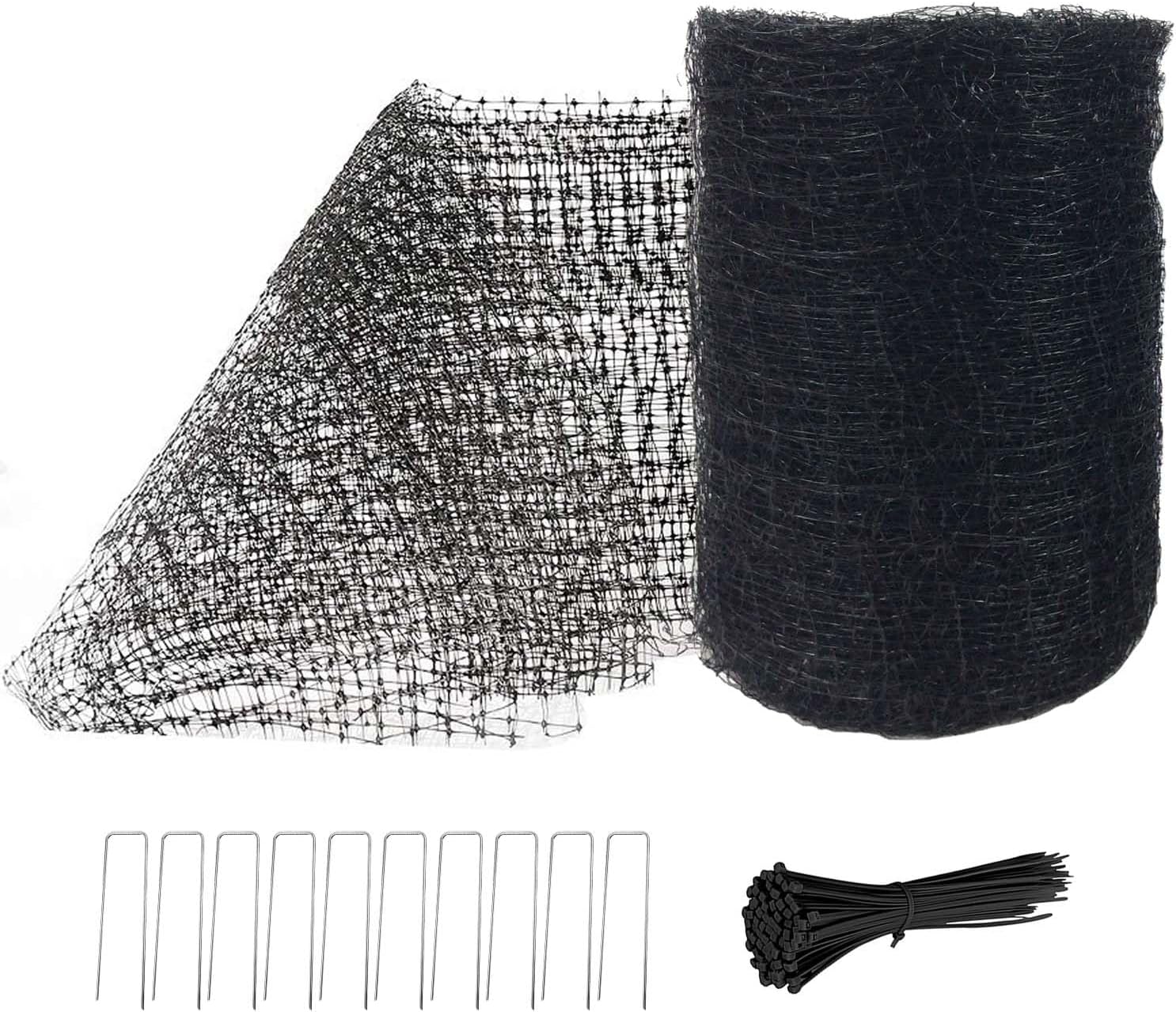
| Unit Count | 100 Feet |
|---|---|
| Mesh Opening | 3/4" square mesh |
| Material Type | Polypropylene |
| Included Accessories | 10 stakes and 50 zip ties |
This polypropylene garden netting unrolls to cover a large area and is intended to keep birds, rabbits and other small animals away from fruiting plants and raised beds. Typical use is to drape or surround plants and secure the top and bottom edges with stakes, U-shaped staples or zip ties; the package includes 10 staples and 50 cable ties to simplify installation. The 3/4 inch square mesh stops pecking on berries and small fruit without tightly restricting plant growth, while the reinforced edge bands make it easier to anchor the net and reduce tearing. Because the material is UV-stabilized and rot resistant it can be reused season after season, and it is easy to cut to fit irregular beds or individual shrubs. Limitations are that the net is lightweight so very determined larger animals can push through unless supported by stakes or a frame, and it requires some effort to tension neatly over tall or heavily branched plants.
Best for: Buyers who want a low-maintenance, reusable way to protect fruits and vegetables from birds and small mammals and prefer a straightforward install with included accessories.
Less Ideal for: People who need a heavy-duty physical barrier against deer or large wildlife or who want a permanent, self-supporting fencing solution.
- Large 7 x 100 ft coverage suitable for protecting multiple beds or a small orchard area
- 3/4" square mesh that prevents bird pecking while allowing light and water through
- Reinforced top and bottom edges for easier anchoring and reduced tearing
- Made from UV-stabilized, rot-resistant polypropylene for seasonal reuse
- Includes installation accessories (U-staples and cable ties) to get started immediately
- Lightweight construction needs stakes or a frame to stop larger browsing animals
- Black color can absorb heat in full sun which may be noticeable on very hot days
Verdict: A simple, reusable large-roll net that reliably keeps birds and small animals off fruit and vegetable plantings when tensioned and anchored properly.
Choosing the Right Bird Netting for Garden: Key Factors to Consider
Mesh Size and Bird Exclusion
Mesh size determines which birds and pests can get through. Fine mesh (small openings) keeps out small songbirds and starlings but can also trap beneficial insects and slow airflow, so pick a mesh that balances exclusion with plant needs.
For berry bushes and small fruits, a tighter mesh prevents beaks reaching in. For larger fruit and vegetable beds, slightly larger mesh that still blocks adult birds can reduce wind drag and is easier to drape without creating strain points.
Material Durability and UV Resistance
Netting left in place for weeks or months must resist sun damage. UV-stabilized materials last longer and retain strength through full growing seasons, while non-stabilized netting becomes brittle and tears faster.
Also assess the filament type. Knotted, thicker strands usually hold up to rubbing from branches and fruit better than very fine, loosely woven meshes. Durability affects how often you need to replace the net and how well it protects heavy or thorny plants.
Tear Strength and Knot Construction
How the net is constructed affects whether a tear will spread. Knotted nets tend to localize damage so a single hole does not enlarge rapidly, while knotless designs can run and rip if snagged.
Consider the garden environment: areas with rough bark, trellised vines, or frequent foot traffic need higher tear resistance. Stronger nets also tolerate being pulled taut over frames without failing at attachment points.
Ease of Installation and Mounting Options
Installation effort affects whether you will actually use the netting when needed. Netting that works with simple hoops, frames, or tent poles is faster to deploy over beds or individual plants. Some nets include grommets or reinforced edges for tacking or tying; others are sold as loose sheeting that needs additional fasteners.
Think about whether you want a temporary drape you can lift daily for harvesting or a semi-permanent cover. Lightweight nets are easier to handle for daily access, while heavier materials are better for long-term protection but more cumbersome to move.
Pollinator and Airflow Considerations
Netting can unintentionally exclude pollinators and reduce air circulation. For flowering crops, ensure the mesh allows pollinators access or plan to remove the net during peak bloom. Mesh that is too dense can also trap humidity and increase disease risk in humid climates.
Choosing a design that allows targeted coverage of fruiting parts while leaving flowers accessible will protect yield without sacrificing pollination. Alternatively, set up supports that keep netting clear of blossoms and foliage.
Storage, Reuse, and Seasonal Handling
Netting that packs into a compact roll and resists mildew will last through multiple seasons and is simpler to store. Some materials absorb moisture and become stiff, leading to folds that stress fibers when rehung.
Check whether the netting tolerates folding or should be rolled loosely. Durable packaging and reinforced edges also make seasonal handling faster and reduce the risk of damage during on-off installation cycles.
Best Netting Setups for Small Vegetable Beds
For narrow or raised beds, low hoops or wire frames covered with netting create a convenient barrier that you can lift for weeding and harvest. Use lightweight netting with reinforced edges so the cover drapes without sagging onto plants.
When tomatoes or cucumbers are present, position the net a few inches above the tallest fruiting parts to avoid abrasion. Small beds benefit from netting that is easy to secure with removable clips or clothespins for daily access.
- Use hoop supports to keep mesh off foliage
- Choose a mesh that blocks small birds but allows pollinators if flowers are present
- Secure edges to prevent birds from sneaking underneath
Protecting Fruit Trees and Shrubs
Fruit trees and bushes often require larger coverage and stronger netting because branches and ripening fruit can press against the mesh. Create a tented canopy using poles or a lightweight frame so fruit does not touch the net.
Drape netting down to the ground and anchor it with rocks, soil, or heavy staples to prevent birds from reaching underneath. Reusable, UV-resistant netting is especially important here since covers may stay in place for extended ripening periods.
- Allow slack to prevent fruit-to-mesh contact
- Anchor perimeter to block access from below
- Consider seasonal removal after harvest to allow wildlife movement
Netting Options for Container Gardens and Balconies
Container gardens on patios or balconies need netting solutions that are lightweight and easy to attach to railings or temporary frames. Self-supporting hoops or small freestanding frames work well for single pots and small clusters.
Because space is limited, choose mesh that is fine enough to block small birds common in urban settings but not so heavy that it overloads balcony railings.
- Use compact frames for individual pots
- Fasten with reusable clips to avoid damaging railings
- Prefer breathable mesh to keep roots and foliage healthy
Maintaining Netting to Extend Service Life
Regular inspection prevents small tears from becoming large ones. After high winds or storms, check attachment points and repair any holes promptly with patches or by trimming and retying edges.
Store netting dry and rolled rather than folded to prevent permanent creases. Clean off dirt and plant residue before storage to avoid mildew and fiber breakdown.
- Patch small holes immediately
- Roll and store in a dry place
- Replace netting with significant UV degradation
Balancing Bird Control With Wildlife Considerations
Netting can block access to native birds as well as pest species. Use mesh sizes and placement that minimize accidental entanglement and avoid trapping animals. Leave escape gaps or install netting in ways that allow larger wildlife to move around garden edges.
Consider timing coverage to avoid nesting seasons when birds might be using shrubs or trees. Temporary netting during peak ripening reduces conflict with birds while preserving habitat at other times of the year.
- Avoid loose, baggy nets where birds can become entangled
- Monitor netted areas daily for trapped wildlife
- Use targeted coverage during vulnerable ripening windows
How We Chose the Best Bird Netting for Garden
We prioritized attributes that matter in day-to-day garden use and long-term protection. Durability and UV resistance were key because netting left on frames or hoops must survive sun exposure without shredding. Mesh size and knot type were evaluated to ensure the netting keeps out the smallest common pest birds while still allowing airflow and light. Strength and tear-resistance mattered for gardens with climbing plants or heavy fruit that can rub against the mesh. Ease of installation and compatibility with common supports like hoops, posts, and frames was included so gardeners can mount netting without specialized tools. Finally, storage and reusability were considered, since netting that packs down neatly and survives multiple seasons reduces waste. We excluded products with poor material specifications, unclear mesh measurements, or designs that restrict pollinator access. We also left out netting primarily intended for large-scale agricultural applications where mounting and handling requirements differ significantly from typical home garden setups.
FAQ
What mesh size keeps away small songbirds?
A fine mesh with openings smaller than about 1/2 inch usually stops small songbirds and starlings. The exact size depends on local bird species; measure common garden birds if uncertain and choose a tighter mesh to be safe.
Can bird netting harm pollinators?
Netting can reduce pollinator access if it covers flowers directly. To avoid this, remove covers during peak bloom or use supports that keep netting off flowering structures so pollinators can still reach blooms.
How do I prevent birds from getting trapped in the netting?
Use nets with visible mesh or larger patterns so birds can see and avoid them, and avoid loose draping that creates pockets. Anchor edges securely and check netting daily to release any trapped animals promptly.
Is knotless or knotted netting better for gardens?
Knotted netting typically localizes damage and resists tear propagation, making it preferable in areas with branches or heavy fruit contact. Knotless netting can be lighter and cheaper but may run if torn.
How often should I replace garden bird netting?
Replacement depends on exposure and material quality. UV-stabilized netting may last multiple seasons, while untreated materials can degrade within a season. Inspect annually for brittleness, large holes, or significant color fading.
Final Verdict
Focus on the combination of mesh size, durability, and how you will mount the netting in your garden. Smaller mesh and knotted construction increase protection but require thought about pollinator access and airflow. Durable, UV-stabilized materials and easy mounting systems reduce labor and prolong service life. Decide which tradeoffs matter most for your plot: lightweight, easy-to-handle netting for frequent access, or heavier, longer-lasting covers for seasonal protection. Prioritize solutions that protect ripening crops while minimizing harm to wildlife and simplifying routine garden work.
