

Note: This article contains affiliate links. If you click on these links and make a purchase, I may earn a small commission at no extra cost to you. This helps support my research and content. Read my full affiliate disclosure here.
If birds are stripping fruit, tearing bark, or leaving persistent droppings in your trees, the right repellent can reduce damage while preserving the health of the canopy. Choosing the best bird repellent for trees matters because a solution that works in open lawn conditions may stress leaves or interfere with pollinators in a fruiting tree. This guide covers the top shortlisted repellents suited for trees, with attention to how they affect foliage, worker safety, and seasonal timing. We evaluated options for effectiveness at deterring common nuisance behaviors, how gentle they are on bark and leaves, and how practical they are to apply in small yards and larger landscapes. Read on for the evaluation approach and practical advice to match a repellent to your trees and situation.
Top Picks at a Glance
| Best Overall The best all-around choice for most situations | Chephon Double-Sided Bird Scare Discs — 24 Large Reflective Discs |  |
| Best Quality Built to a higher standard if you want something more solid | ToBeAce Stainless Steel Fishbone Wind Spinners — 12 Reflective Bird Deterrent Discs (4 Strands) |  |
| Best Value The sweet spot between price and what you get | KOKMEYA Reflective Bird Scare Tape, 262 ft Roll |  |
| Best Budget The cheapest option that still gets the job done reliably | Hutisyoe Reflective Bird Scare Tape Ribbon (524 ft, Pack of 2) |  |
| Highest Rated A top-rated pick with lots of positive feedback | CXIENAOY Solar Ultrasonic Outdoor Bird Repellent |  |
| Most Popular A crowd favorite that many people choose with confidence | Besmon Reflective Bird Scare Rods (6-Pack) |  |
| Best Seller A high-volume bestseller chosen again and again | Hausse 10‑Pack Reflective Mylar Pinwheels with Stakes |  |
Chephon Double-Sided Bird Scare Discs — 24 Large Reflective Discs

| Unit Count | 24 Count |
|---|---|
| Target Species | Birds, Pigeon |
| Material Type | Plastic |
These Chephon bird scare discs are a simple visual-deterrent system meant for hanging in trees, on eaves, or around gardens to discourage pigeons, woodpeckers and other birds. Each kit contains 24 large mirrored plastic discs with rings, swivels and hooks so you can string them up to catch sunlight and rotate in breeze. The double-sided reflective finish increases visibility compared with single-sided discs and the included swivels help keep the discs moving rather than tangling. Installation is straightforward and customizable because the product ships unassembled so you can space and cluster discs to suit branch layout. As a nonlethal, low-maintenance option they are quiet and do not damage plants. Limitations are that effectiveness depends on placement and consistent sun or wind to create reflection and motion, and the plastic mirrors may show wear over time in harsh weather. For dense canopy or very high-roosting birds you may need more coverage or complementary methods for best results.
Best for: Homeowners or gardeners who want a low-effort, humane way to reduce bird activity in trees and around fruiting plants and are willing to experiment with placement for best results.
Less Ideal for: People needing an instant or guaranteed solution for large flocks or birds nesting high in dense canopy; those seeking a permanent, maintenance-free barrier should consider other exclusion methods.
- Double-sided mirrored discs increase reflectivity compared with single-sided designs.
- Comes with rings, swivels and hooks for quick hanging and rotation.
- Large 24-disc pack provides broad coverage for multiple trees or large branches.
- Plastic construction is lightweight and easy to handle during installation.
- Performance depends on sunlight and wind so results vary by site and weather.
- Plastic mirrored surface can degrade over prolonged exposure to sun and rain.
Verdict: A simple, humane visual deterrent that gives balanced coverage for most home trees when hung to maximize reflection and movement.
ToBeAce Stainless Steel Fishbone Wind Spinners — 12 Reflective Bird Deterrent Discs (4 Strands)

| Number of Pieces | 12 |
|---|---|
| Material Type | Metal, Stainless Steel |
These stainless steel fishbone wind spinners are decorative hangings that deter birds by spinning in the breeze and reflecting sunlight. They arrive as four preassembled strands (12 double-sided mirrored discs) with rotating hooks and connecting clips for quick mounting on porch eaves, railings, or trees. The polished stainless construction resists rust and holds up better than thin plastic reflectors, so they stay shiny through wet weather and repeated use. In practice they work best where direct sun and even a light breeze let the discs rotate and flash; in still shade their effect is much reduced. Installation is simple and flexible thanks to included 360-degree hooks, but coverage depends on placement and number of strands so you may need to space them to protect a whole porch. These are a humane, low-maintenance option that also add a subtle decorative touch, though they are not a guaranteed solution for aggressive or persistent species and perform poorly at night or on cloudy, windless days.
Best for: Porch owners who want a low-effort, humane deterrent that doubles as decor and who can place it where sunlight and light wind will reach it.
Less Ideal for: People needing a 24/7 or very high-security solution for persistent birds or those with large open areas where many more units would be required.
- Durable stainless steel construction resists rust and lasts longer than plastic reflectors
- Double-sided mirrored discs provide strong reflectivity when in sunlight
- Includes rotating hooks and connecting clips for easy, flexible installation
- Serves as both a visual deterrent and attractive porch decoration
- Requires direct sunlight and some breeze to be effective
- Limited effectiveness at night, in shade, or against very determined birds
Verdict: A durable, decorative and humane porch deterrent that uses sunlight and wind-driven reflection to reduce bird visits when mounted where it can spin and shine.
KOKMEYA Reflective Bird Scare Tape, 262 ft Roll

| Unit Count | 1 Count |
|---|---|
| Power Source | hand_powered |
| Number of Pieces | 1 |
This reflective bird scare tape is a simple, low-tech deterrent that relies on bright, double-sided reflective surfaces to keep birds away from gardens, eaves, balconies, and orchards. You unroll and cut the supplied 262-foot length into strips, tie or hang them where birds congregate, and let sunlight and wind create flashing motion that startles sparrows, pigeons, and woodpeckers. The material is described as thickened, UV-resistant plastic so it should hold up to sun and rain for seasonal use and typically lasts around one to two years before effectiveness declines. Its length and flexibility make it easy to cover large areas or experiment with placement, and it can be combined with spikes or other deterrents for better results. Limitations are that it provides a visual-only deterrent that some birds may habituate to over time, and long-term outdoor exposure will gradually reduce reflectivity and strength. For gardeners on a tight budget who want an easy, nonlethal option, this tape is a practical first step.
Best for: Practical gardeners and property owners looking for an inexpensive, easy-to-deploy, nonlethal method to reduce bird presence around plants and structures.
Less Ideal for: People needing an immediate, permanent solution for large persistent flocks or those who prefer nonvisual control methods such as trapping or netting.
- Long 262-foot roll covers large areas or multiple sites without cutting many pieces
- Double-sided reflective surface and bright colors create noticeable flashes in sunlight
- UV-resistant, thickened plastic intended for year-round outdoor use
- Simple DIY installation — cut, tie, and hang where birds gather
- Effectiveness can decline after one to two years as reflectivity and material degrade
- Visual-only deterrent that some birds may become accustomed to over time
Verdict: A very affordable, easy-to-install visual deterrent that lets you cover wide areas quickly to reduce nuisance bird activity.
Hutisyoe Reflective Bird Scare Tape Ribbon (524 ft, Pack of 2)
| Number of Items | 2 |
|---|---|
| Unit Count | 2 Count |
| Scent Name | Unscented |
| Item Form | Stick |
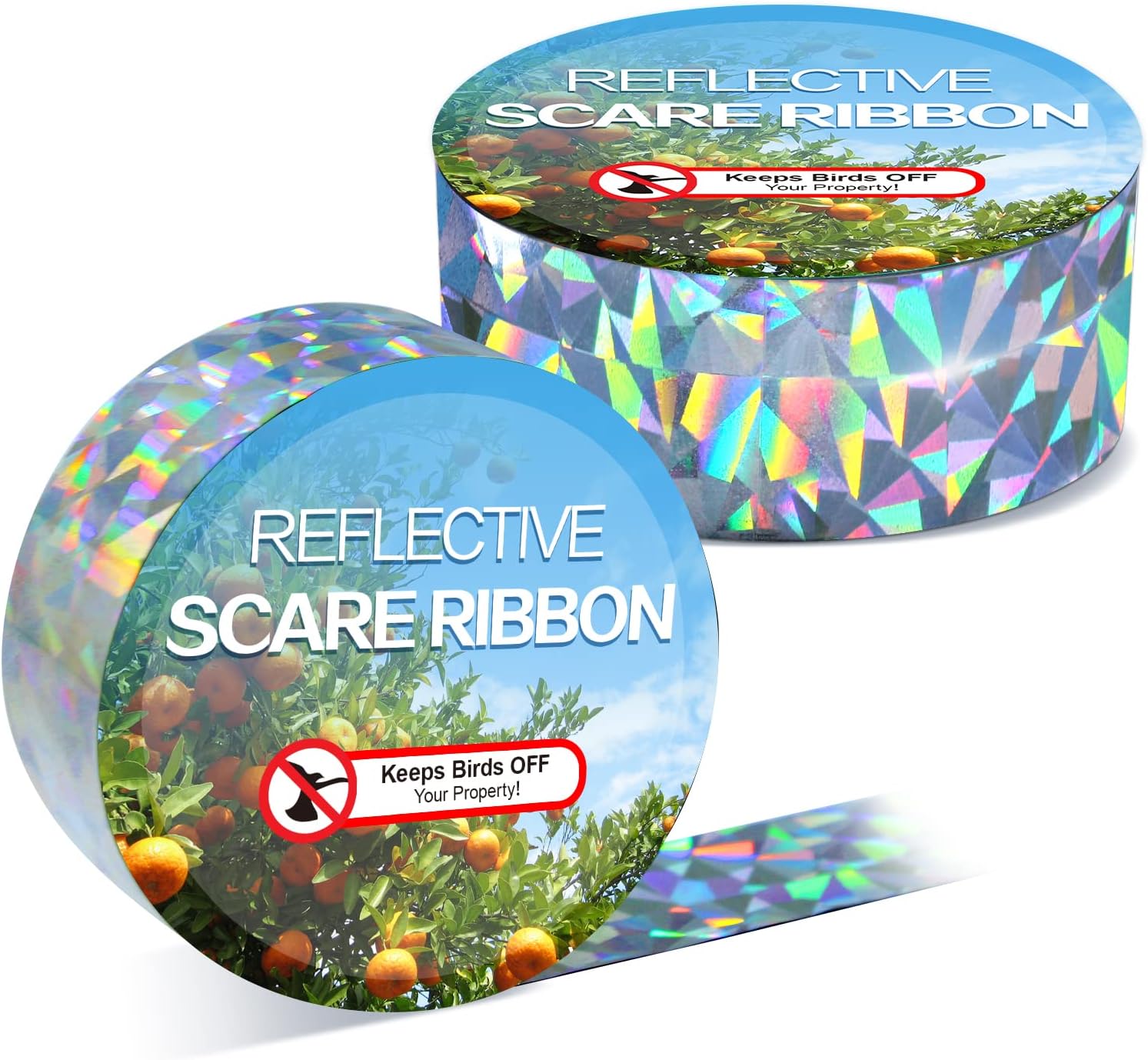
This reflective bird scare tape is a simple, low-cost deterrent for keeping birds away from trees and other outdoor areas. The product consists of two long non-adhesive ribbons that are meant to be hung or tied where sunlight and breeze can make them flash and move, creating visual and audio disturbance that deters birds including pigeons and woodpeckers. Its weather-resistant construction means you can leave it outdoors through sun and light rain without frequent replacement, and installation is straightforward so you can target problem trees, branches, or fence lines quickly. Because the tape is not adhesive, it cannot be stuck directly to surfaces and requires tie points or string to mount, which may limit placement options on some tree branches. For a budget-conscious gardener looking to protect trees from pecking or roosting damage, this is an inexpensive, humane tool, though it works best as part of a layered approach rather than a lone long-term solution.
Best for: Home gardeners on a tight budget who want a quick, humane way to reduce bird damage to trees and branches with minimal setup and ongoing effort.
Less Ideal for: People needing a permanent, tamper-proof solution or who require silent, invisible deterrents for ornamental or sensitive garden areas.
- Very long length provided across two ribbons covers multiple trees or large branches
- Reflective surface flashes in sunlight to create a strong visual deterrent
- Durable, weather-resistant material suitable for outdoor use
- Easy to install by tying or hanging without tools
- Not adhesive so cannot be attached directly to trunks or smooth surfaces
- Effectiveness can diminish over time as birds habituate if used alone
Verdict: An inexpensive, easy-to-install reflective ribbon that gives budget-conscious gardeners a quick, humane way to help protect trees from bird damage.
CXIENAOY Solar Ultrasonic Outdoor Bird Repellent

| Power Source | Solar Powered |
|---|---|
| Number of Pieces | 1 |
| IP Rating | IPX5 |
This solar ultrasonic repellent uses adjustable-frequency sonic and ultrasonic pulses to encourage nuisance birds to leave without harm. It is intended for permanent outdoor mounting on balconies, roofs, garden edges, or small orchards and runs continuously using a built-in solar panel with an option for backup adapter charging. The device advertises coverage up to 3,500 square feet, an IPX5 weather rating for rain and snow resistance, and simple setup via a DIP switch to select modes and frequencies. For a practical buyer it delivers low ongoing cost and minimal maintenance because it needs no bait, traps, or consumables and can operate unattended. Limitations include dependence on solar charging in prolonged low-light conditions unless you supply an adapter and the usual variability of ultrasonic deterrents, which can be less consistent against determined or habituated birds; effectiveness will also vary with landscape layout and mounting height.
Best for: Buyers who want a low-maintenance, install-and-forget deterrent to reduce bird damage across outdoor living spaces and who prioritize practical, cost-effective solutions over guaranteed removal of every pest.
Less Ideal for: People needing immediate removal of large flocks or professional pest control level performance, or those who cannot provide occasional supplemental power in consistently shaded or northern locations.
- Solar-powered with backup adapter option for continuous operation
- Adjustable-frequency ultrasonic pulses to target different bird species
- IPX5 weather resistance suitable for year-round outdoor mounting
- Covers large areas up to 3,500 square feet for yards and balconies
- Simple installation and mode selection via DIP switch with low maintenance
- Performance can vary by species and site so some birds may habituate over time
- Backup power adapter not included so continuous operation in low sunlight requires an extra purchase
Verdict: A practical, low-maintenance solar ultrasonic unit that provides wide-area, year-round bird deterrence with simple installation and minimal ongoing cost.
Besmon Reflective Bird Scare Rods (6-Pack)

| Unit Count | 6 Count |
|---|---|
| Target Species | Birds |
| Power Source | air_powered |
| Number of Pieces | 12 |
These Besmon reflective bird scare rods are simple, no‑tools deterrents that use mirrored surfaces and wind-driven spin to discourage birds from landing in protected areas. Each pack includes multiple spiral rods with elastic hanging loops so you can hang them from branches, pergolas, fences, or around a pool; in direct sun and a breeze they flash light and move unpredictably, which many birds find aversive. The rods are made of ABS plastic with a mirror-like coating intended to resist cracking and provide sustained reflection. They are quiet, odorless, and double as decorative outdoor accents when installed. Expect best results in sunny locations with at least light wind, and understand they may not stop every species or work in still, overcast conditions. For larger or very determined flocks you may need to combine these with other measures for reliable protection.
Best for: Homeowners who prefer low-effort, humane bird control and want a quiet, maintenance-free option that also adds a decorative touch to sunny outdoor spaces.
Less Ideal for: People needing guaranteed protection from persistent flocks or those who require a solution that works in shaded, windless locations should consider more robust active deterrents.
- Reflective mirror surface and spinning motion provide a visual deterrent without noise or chemicals
- Easy to hang with included elastic ropes and requires no assembly
- Durable ABS plastic construction and larger mirror surface for improved reflection
- Also functions as decorative outdoor accents when installed
- Effectiveness depends on sunlight and wind so performance drops in still or cloudy conditions
- May not deter aggressive or highly food-motivated bird species
Verdict: Choose these reflective rods if you want an easy, maintenance-free visual deterrent that works best in sunny, breezy outdoor areas.
Hausse 10‑Pack Reflective Mylar Pinwheels with Stakes

| Material Type | Plastic |
|---|---|
| Additional Features | waterproof |
| Number of Items | 10 |
| Blade Shape | Petal |
These Hausse reflective pinwheels are a simple visual bird deterrent sold in a 10‑pack and intended for garden, orchard, or yard use. Each unit assembles from separate plastic pieces onto a stake, then spins in light winds to create bright flashes that can discourage birds from landing on crops, balconies, or ponds. The set is made from waterproof, non‑toxic plastic Mylar so the blades stay shiny and usable outdoors, and the included stakes make it easy to place them across a small field, vegetable bed, or around fruit trees. Because they rely on wind and sunlight, they work best in open, sunny spots and where there is at least a light breeze; they will be less effective on calm, overcast days or for determined birds that have grown used to static deterrents. Assembly is required and the thin plastic parts are not heavy‑duty, so expect to replace or rebuy if left in storms or harsh conditions. For low‑risk, humane bird control over a broad area these pinwheels are an inexpensive, low‑maintenance option.
Best for: Buyers who want a low‑cost, humane way to reduce bird damage across gardens, small orchards, patios, or raised beds and prefer easy, visual deterrents over chemical or lethal options.
Less Ideal for: Not a good fit for people needing a reliable solution in calm, shaded locations or those who require heavy‑duty, permanent deterrents for large commercial fields.
- Ten pieces provide broad coverage for gardens or orchards
- Reflective Mylar blades produce bright flashes that scare birds without harm
- Waterproof, non‑toxic plastic construction suitable for outdoor use
- Included stakes make placement straightforward and flexible
- Performance depends on wind and sunlight so effectiveness varies by location and weather
- Plastic blades and connectors are lightweight and can wear or break in strong weather
Verdict: A budget-friendly, humane visual deterrent that gives risk‑averse gardeners an easy way to cover plants and keep birds away when placed in sunny, breezy spots.
Choosing the Right Bird Repellent for Trees: Key Factors to Consider
Deterrent Mechanism and Target Behavior
Different repellents work by sight, sound, taste, or texture, and each mechanism suits certain bird behaviors better. Visual devices and reflective materials are often effective against birds startled by light or movement, while auditory devices or distress-call repellents target flocking and roosting. Taste or sticky coatings discourage pecking at fruit but require careful placement to avoid contact with edible parts.
Understanding which behavior is the core problem helps you choose a mechanism that will actually change bird habits rather than simply annoy them. For example, products that torment birds with continuous noise might scatter a roost but not stop repeated feeding during fruit season.
Tree Health and Material Compatibility
Anything applied to leaves, bark, or branches can affect photosynthesis, respiration, or bark integrity if it blocks pores or contains harsh chemicals. Spray-on repellents should list plant-safe formulations and guidance for use on foliage. Sticky or textured coatings need to be rated for branches and fruiting areas so they do not cause leaf burn or impede fruit development.
Also consider how adhesives or fasteners interact with bark. Ties or wraps that constrict growing trunks or branches can damage cambium tissue over time. Choose attachment methods and products that avoid long-term contact with delicate bark surfaces.
Application Practicality in Trees
Applying repellents in trees often means working from ladders, poles, or the ground with a long-reach applicator. Ease of application covers product weight, spray nozzle reach, cure time, and the need for repeat treatments during a season. Aerosol or pump sprays designed for overhead use and products compatible with extension wands reduce the hazard of climbing.
Consider whether the product can be placed by hand in branches or must be sprayed. Lightweight visual devices that clip to limbs are simple to install, while chemical sprays may require more planning and protective gear.
Duration and Weather Resistance
Exposure to sun, rain, and wind in the canopy affects how long a repellent remains effective. UV-sensitive materials or water-soluble coatings can lose their deterrent properties quickly, making frequent reapplication necessary. Look for products rated for rain resistance or that specify a reapplication interval based on typical weather.
Longer-lasting options reduce labor but may increase risk to non-target species if they persist in the environment. Balance the convenience of longevity with environmental safety and tree health.
Safety for Non-target Wildlife and Pollinators
Many trees host pollinators and beneficial wildlife that should not be harmed by repellents. Avoid broad-spectrum chemical agents that can reduce pollinator visits or harm small mammals. Nonlethal, non-toxic deterrents minimize collateral effects on insect and bat populations that provide ecological services.
Check product labels for restrictions around flowering periods and for guidance on protecting pollinators. Timing applications outside peak bloom reduces risk to beneficial insects.
Visibility, Aesthetics, and Neighborhood Impact
Repellents deployed in trees are highly visible. Reflective tape, streamers, and visual decoys can be effective but may be objectionable to neighbors or conflict with property aesthetics. Consider how long devices will hang in your canopy and whether their movement or sound will be tolerated in a residential area.
If appearance matters, choose low-profile solutions that still present a visual or tactile deterrent, or plan for temporary deployment during critical seasons such as fruit ripening.
Matching Repellent Type to Common Tree Problems
Start by naming the specific bird problem you want to solve. Is the issue birds eating ripening fruit, pecking at bark, or creating noisy roosts? Visual deterrents and reflective materials work best for daytime, fruit-focused raids, while sound-based options or temporary netting handle persistent roosting and larger flocks.
For bark pecking by species that search for insects under bark, texture-based deterrents or repellents that alter the branch surface can reduce the behavior. If roosting is the problem, focus on items that make the site uncomfortable to use rather than trying to harm or remove the birds.
- Fruit predation: consider netting, visual scare devices, or taste deterrents designed for edible trees
- Bark damage: use surface-safe coatings or physical barriers that do not trap moisture
- Roosting and noise: long-term options include habitat modification and selective visual and auditory discouragements
Safe Timing and Seasonal Use
Timing applications around flowering and fruiting stages reduces harm to pollinators and limits contamination of harvestable fruit. For chemical or taste-based repellents, avoid applying during bloom and follow label guidance for pre-harvest intervals where applicable.
Temporary devices such as reflective tape or movable decoys are useful in short high-risk windows like ripening periods. Plan to remove or relocate conspicuous items after the season to restore canopy appearance and wildlife access.
- Avoid treatments during peak pollinator activity
- Use temporary measures during short high-risk periods
- Rotate visual devices occasionally to reduce habituation
Installation Tips for Working Safely in Canopies
Prioritize safety when installing repellents in trees. Use a stable ladder, have a second person hold the base, or use long-reach tools and extension wands to place devices from the ground where possible. Lightweight clip-on deterrents and reflective strips are easiest to install without climbing.
When using sprays, wear eye protection and gloves. Apply in calm weather to reduce drift onto non-target plants and people. Secure loose ties and cords so they do not become entanglement hazards for birds or mammals.
- Use extension poles or reach tools for high branches
- Avoid wrapping or tying materials too tightly around trunks
- Check installations regularly for wear and tear
Combining Methods for Better Results
No single approach works in every situation. Combining visual, physical, and behavioral deterrents often yields the best outcomes. For example, use netting during ripening, reflective tape for daytime visual disruption, and selective auditory deterrents to discourage early morning roosting.
Rotate methods to reduce habituation. Birds that become used to a single visual decoy will resume damaging behavior, whereas changing the mix of deterrents keeps the environment unpredictable and less attractive.
- Pair physical barriers like netting with visual elements
- Use short-term auditory measures in conjunction with permanent low-profile devices
- Adjust strategy seasonally as tree use by birds changes
Maintaining Tree Health While Using Repellents
Inspect trees regularly for signs of stress after applying repellents. Look for leaf discoloration, premature leaf drop, or unusual bark lesions. If you notice adverse effects, stop the treatment and rinse the affected foliage with water where possible.
Avoid long-term contact attachments that can girdle branches or trunks as trees grow. Remove temporary devices at the end of the season and replace or reposition zip ties and fasteners to prevent constriction.
- Rinse foliage if chemical spray contacts leaves inadvertently
- Replace constricting ties annually to accommodate growth
- Monitor for changes in flowering or fruit set after treatment
How We Chose the Best Bird Repellent for Trees
We shortlisted products that are specifically formulated or commonly used on standing trees and ornamental canopies. Selection emphasized real-world performance in tree settings rather than general open-area deterrents. Concrete evaluation criteria included deterrent effectiveness against common behaviors like fruit stripping and flock roosting, material compatibility with bark and foliage, longevity of protection between applications, application ease when working from a ladder or pole, and environmental and non-target safety. We excluded sprays and treatments intended only for building exteriors, indoor use, or ground-level baiting systems that cannot be deployed in tree canopies. We also filtered out products with unclear ingredient lists or without clear guidance for use on living plants. The final picks prioritize solutions that balance reliable bird avoidance with minimal harm to tree tissues, practical application methods for backyard gardeners, and clear reapplication intervals.
FAQ
Can I use bird repellents on fruit trees without contaminating the harvest?
Often yes, but it depends on the repellent. Choose products labeled safe for edible trees and follow any recommended pre-harvest intervals. Mechanical methods like netting avoid contamination entirely.
How soon will I see results after applying a repellent in trees?
Results vary by method. Visual or physical barriers can deter birds immediately, while taste or scent-based products may take a few applications for birds to learn to avoid the tree. Expect trial-and-error and short-term monitoring.
Are sticky or tacky repellents safe for use on branches and fruit?
Some tacky materials are formulated for branch use, but many are not recommended near harvestable fruit. Check product labeling for fruit-tree approval and avoid anything that could adhere to edible surfaces or trap pollinators.
Will reflective tape or visual decoys stop large flocks from roosting?
Reflective materials can be effective for small to moderate numbers and during daylight, but larger flocks or habituated birds may ignore static decoys. Combining visual tactics with other methods improves chances of success.
How often should I reapply sprays or replace deterrent devices in trees?
Reapplication frequency depends on weather and product durability. Many sprays require reapplication after rain and every few weeks for continuous protection. Visual devices may need replacement if faded or damaged.
Will these repellents harm beneficial birds or pollinators in my yard?
Nonlethal, targeted repellents minimize harm to beneficial species, but anything that repels birds broadly could reduce visits from desirable species. Avoid applying strong deterrents during bloom to protect pollinators.
Final Verdict
Choose a bird repellent for trees by first identifying the specific behavior you need to stop and matching the mechanism to that problem. Prioritize tree-safe formulations and application methods that avoid long-term contact with bark and flowers. Combine physical barriers, visual cues, and temporary auditory measures as needed and plan seasonal deployment to protect pollinators. Balancing effectiveness, tree health, and neighborhood aesthetics will guide the best choice for your situation. Focus on reversible, nonlethal methods that let you adapt the approach as birds habituate or seasonal pressures change.
