

Note: This article contains affiliate links. If you click on these links and make a purchase, I may earn a small commission at no extra cost to you. This helps support my research and content. Read my full affiliate disclosure here.
You want to protect ripening fruit without turning your yard into a hazard for birds or pollinators. Choosing the right fruit tree bird netting matters because the net you use determines how well fruit is shielded, how easy it is to install and remove, and whether beneficial insects can still do their job. This guide covers seven shortlisted options that suit a range of tree sizes and gardening styles and explains the practical tradeoffs between mesh size, material strength, and installation method. Below we describe the criteria we used to evaluate each option so you can match a netting solution to your trees and maintenance preferences.
Top Picks at a Glance
| Best Overall The best all-around choice for most situations | Homoda 15ft x 15ft Fruit Tree Netting Cover with Zipper and Drawstring |  |
| Best Quality Built to a higher standard if you want something more solid | JUNKOGO Heavy-Duty 1/2" Mesh Bird Netting, 25 x 25 ft |  |
| Best Value The sweet spot between price and what you get | Avagiaforu 13 x 32 ft Garden Bird Netting, 0.8" Mesh |  |
| Best Budget The cheapest option that still gets the job done reliably | CandyHome 13 ft x 33 ft Anti-Bird Garden Netting |  |
| Highest Rated A top-rated pick with lots of positive feedback | YUESHUNSLL 13 x 33 ft Garden Bird Netting (Polyethylene) |  |
| Most Popular A crowd favorite that many people choose with confidence | Feitore 7 x 100 ft Polypropylene Garden Netting with Reinforced Edges |  |
| Best Seller A high-volume bestseller chosen again and again | KLEWEE 7.5 ft x 100 ft Garden Bird and Deer Netting (3/4" Mesh) |  |
Homoda 15ft x 15ft Fruit Tree Netting Cover with Zipper and Drawstring

| Material Type | High Density Polyethylene (HDPE) |
|---|---|
| Item Type Name | Mesh Bag |
| Unit Count | 1 Count |
| Number of Packs | 1 |
This Homoda fruit tree netting is built for full-canopy protection on medium to large trees and offers practical features that make regular use straightforward. The 15 by 15 foot mesh is large enough to drape over a mature canopy and the ultra-fine HDPE weave keeps small insects and birds out while avoiding entanglement. A zipper plus drawstring lets you reach fruit or prune branches without removing the whole cover, and the manufacturer recommends sizing up so the net sits loosely and allows growth. Installation for larger trees is easiest with two people, a ladder, or long poles, and the material is described as UV resistant for seasonal reuse. Expect a bit of fiddliness when positioning and securing such a large bag, and you may need clips or ties in windy sites because the net alone does not include ground stakes. For gardeners who want reliable, humane pest and bird protection across seasons, this netting balances coverage, access, and durability.
Best for: Home gardeners who need dependable, humane protection for fruit trees and larger shrubs and who value easy access for harvesting and maintenance.
Less Ideal for: People with only very small potted plants or those who need a quick clip-on solution for many scattered plants across a large yard.
- Extra-large 15ft x 15ft coverage suitable for full tree canopies
- Ultra-fine HDPE mesh keeps birds and small insects out without trapping them
- Zipper and drawstring provide convenient access to fruit and branches
- Made from UV-resistant HDPE for multi-season reuse
- Large size can be awkward to position alone and may require two people or poles
- No included ground stakes or fasteners so additional securing is needed in wind
Verdict: A large, reusable HDPE net that provides humane, full-canopy protection with convenient zipper access for fruit tree growers seeking reliable seasonal coverage.
JUNKOGO Heavy-Duty 1/2" Mesh Bird Netting, 25 x 25 ft

| Material Type | High Density Polyethylene (HDPE) |
|---|---|
| Mesh Size | 1/2 inch |
| Unit Count | 1 Count |
This JUNKOGO bird netting is a woven HDPE mesh sized to cover medium fruit trees and garden beds while blocking birds and small mammals. With a 1/2-inch diamond mesh it keeps out starlings, pigeons, squirrels and rabbits yet allows sunlight and rain through, so plants can be watered and pollinated without removing the cover. The woven construction and higher fabric weight give it noticeably more strength and elasticity than lightweight netting, so it resists tearing and can be draped over trees, secured with ties or staked around raised beds. It is UV resistant and intended for repeated seasonal use, though the flexible mesh can stretch during installation so you should allow extra material when planning coverage. The net is easy to cut to shape but will require secure fastening at the edges to prevent animals from working underneath. Best for gardeners who want robust, reusable protection rather than a temporary, fine-mesh exclusion net.
Best for: Gardeners who prioritize durable, reusable protection for fruit trees and beds and want a strong net that withstands repeated seasonal use and animal pressure.
Less Ideal for: Growers who need predator-proof fine mesh for very small insects or those who prefer a rigid frame system instead of flexible draped netting.
- Woven HDPE construction offers higher tear resistance and reusability
- 1/2-inch mesh blocks common fruit pests while letting light and water through
- Large 25 x 25 ft coverage suitable for multiple trees or beds
- UV resistant material designed for seasonal outdoor use
- Mesh can stretch when draped so actual coverage may shrink in one direction
- Requires secure fastening at edges to fully prevent small animals from getting underneath
Verdict: Choose this netting if you need a stronger, reusable 1/2" mesh cover that keeps birds and small mammals off fruit trees and garden beds.
Avagiaforu 13 x 32 ft Garden Bird Netting, 0.8" Mesh

| Material Type | Polypropylene (PP) |
|---|---|
| Mesh Size | 0.8" x 0.8" |
| Unit Count | 1 Count |
| Number of Packs | 1 |
This Avagiaforu garden netting is a lightweight, reusable polypropylene mesh sized to cover small orchards, raised beds, balconies, and individual fruit trees. It is typically draped or wrapped around trees and beds or secured to posts and railings using the included cable ties for a quick protective barrier against birds, squirrels, and deer. The 0.8 inch mesh keeps most small animals out while still permitting sunlight, water, and pollinator access, and the polypropylene construction resists UV and rot for seasonal reuse. Because it is cuttable, the netting adapts to irregular shapes and can be configured as a full enclosure or a simple drape. Important limitations are that the net is flexible rather than rigid, so it needs good anchoring to prevent sagging or animals pushing through, and very determined larger animals may still breach it; it is not a replacement for heavy-duty fencing where persistent deer pressure exists. For gardeners who want an affordable, adaptable protection layer that is easy to install and store, this netting performs well.
Best for: Gardeners who want a practical, reusable barrier to protect fruit trees and vegetable beds without installing permanent fencing and who value quick installation and adaptable coverage.
Less Ideal for: Owners dealing with persistent large-deer pressure or who need a rigid, tamper-proof perimeter should consider sturdier fencing solutions instead.
- Durable polypropylene construction resists UV exposure and rot for seasonal reuse
- 0.8 inch mesh blocks birds and most small animals while allowing light, rain, and pollinators through
- Comes with 50 cable ties and can be cut to size for flexible, tool-free installation
- Large 13 x 32 ft coverage fits beds, balconies, raised gardens, and multiple trees
- Flexible netting needs solid anchoring to avoid sagging or animals pushing through
- Not as effective as rigid fencing against large or very determined deer
Verdict: A cost-effective, reusable mesh that gives fast, adaptable protection for fruit trees and beds when you need a flexible, easy-to-install barrier.
CandyHome 13 ft x 33 ft Anti-Bird Garden Netting

| Unit Count | 429 Square Feet |
|---|---|
| Material Type | Nylon |
| Mesh Size | 1.5×1.5 cm |
This CandyHome garden netting is a large, lightweight mesh sheet intended to keep birds, deer, and other small pests off fruit trees and garden beds. Made from nylon/polyethylene with a 1.5 x 1.5 cm mesh, the net can be draped over trees, hoops, or frames, or cut to size for covering beds and ponds. It is anti-UV and resistant to tearing so it can be reused across seasons, and the green color blends into garden plantings. Installation is straightforward: secure with tie-wraps, ground pegs, or staples and join multiple pieces where needed. The netting protects soft fruit like strawberries, cherries, and tomatoes without harming birds when used correctly. Expect some limitations: thin, lightweight netting may shift in strong winds and will need regular fastening, and the small mesh size can tangle on branches when applying or removing it. For budget buyers the large coverage and reusability deliver strong value but you should plan a bit of time for cutting and securing the material each season.
Best for: Gardeners on a tight budget who need broad, season-to-season protection for fruiting plants and are willing to spend time cutting and securing netting for a custom fit.
Less Ideal for: People who need a heavy-duty, permanent enclosure or who want a quick on-off solution for tall mature trees without scaffolding or repeated adjustments.
- Very large coverage suitable for multiple trees or beds
- Lightweight and reusable material that is anti-UV
- Can be cut to size without fraying for custom installs
- Lightweight construction can shift in high winds unless well anchored
- Small mesh can catch on branches when fitting or removing
Verdict: A very economical, reusable large-sheet net that gives wide protection for fruit and vegetable plots when you are willing to cut and secure it yourself.
YUESHUNSLL 13 x 33 ft Garden Bird Netting (Polyethylene)

| Material Type | Polyethylene (PE) |
|---|---|
| Unit Count | 1 Count |
| Number of Items | 1 |
This polyethylene bird netting is a straightforward solution for keeping birds and small animals off fruit trees and garden plantings. The 13 x 33 foot net comes as a single sheet you can cut to size and drape over trees, shrubs, raised beds, or stretch across supports; the diamond mesh lets sunlight and rain through so plants continue to grow normally. Its woven construction gives the net some stretch and tensile strength, which helps it resist tearing when tensioned and when animals push against it. Installation is simple for one person and the material is corrosion and rot resistant, so it can be reused season after season. Expect to secure the netting to a frame, stakes, or ties to prevent sagging and to maintain clearance from fruit to avoid entanglement. The net is an economical option but offers limited built-in fastening hardware and will require careful placement to keep small gaps where birds can enter from being created.
Best for: Gardeners who prioritize dependable, reusable protection for fruit trees and small plantings and who want a simple net they can size and secure themselves to prevent bird damage.
Less Ideal for: People who need a turnkey kit with specific mounting hardware or who want rigid cages that maintain fixed spacing between net and fruit.
- Permeable diamond mesh allows sunlight and rain to reach plants while excluding birds
- Lightweight yet tear-resistant polyethylene construction suitable for seasonal reuse
- Large single-sheet size that can be cut to fit trees, beds, or row covers
- Resistant to corrosion and rot so it holds up to sun and storm exposure
- No built-in fasteners included in the product listing so additional ties or stakes are needed
- Width can narrow if overstretched lengthwise, requiring careful installation to keep full coverage
Verdict: A practical, reusable polyethylene net that reliably protects fruit trees and garden beds when cut and securely fastened to keep birds out.
Feitore 7 x 100 ft Polypropylene Garden Netting with Reinforced Edges
| Unit Count | 100 Feet |
|---|---|
| Mesh Opening | 3/4" square mesh |
| Material Type | Polypropylene |
| Included Accessories | 10 stakes and 50 zip ties |
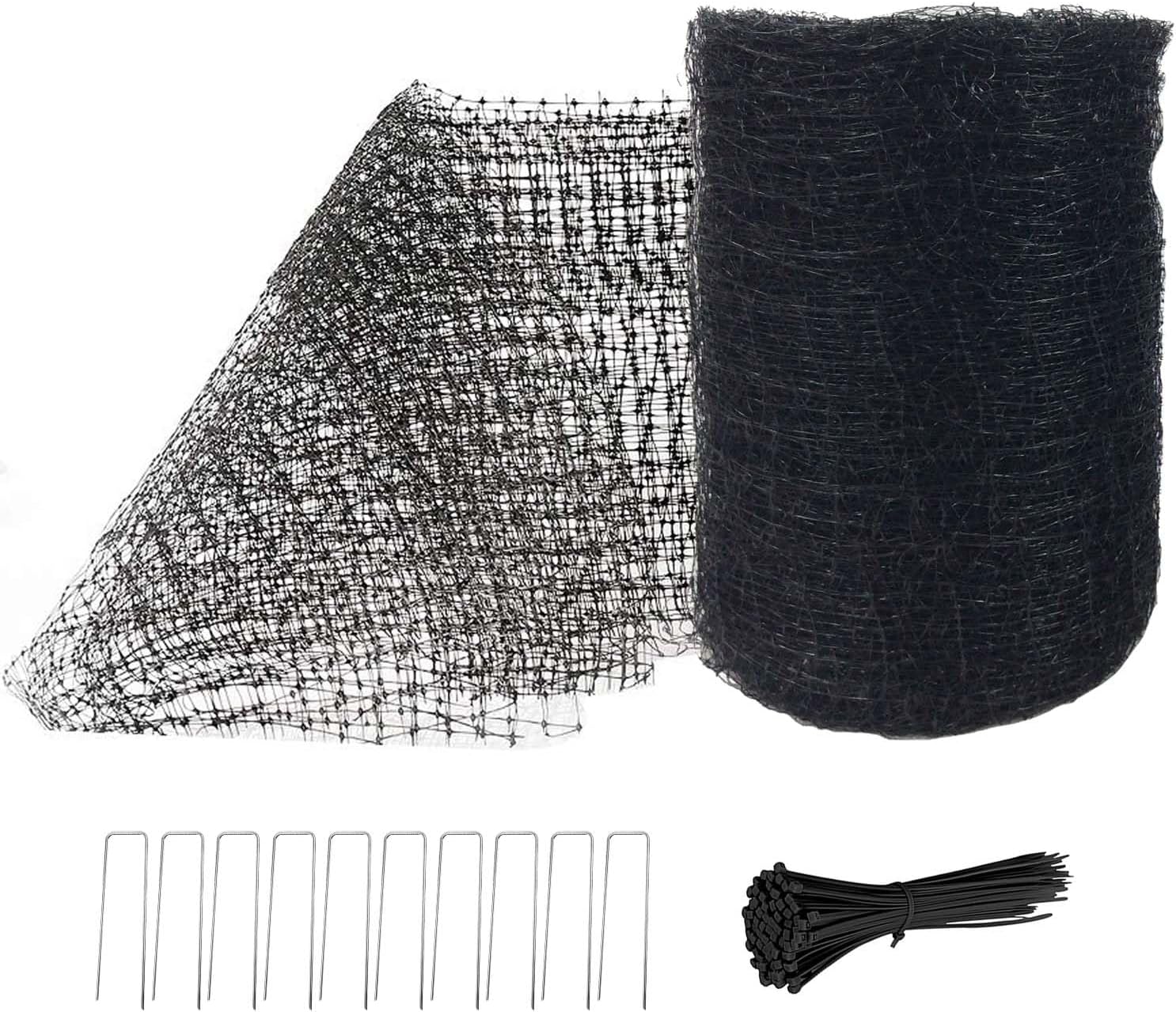
This polypropylene garden netting unrolls to cover a large area and is intended to keep birds, rabbits and other small animals away from fruiting plants and raised beds. Typical use is to drape or surround plants and secure the top and bottom edges with stakes, U-shaped staples or zip ties; the package includes 10 staples and 50 cable ties to simplify installation. The 3/4 inch square mesh stops pecking on berries and small fruit without tightly restricting plant growth, while the reinforced edge bands make it easier to anchor the net and reduce tearing. Because the material is UV-stabilized and rot resistant it can be reused season after season, and it is easy to cut to fit irregular beds or individual shrubs. Limitations are that the net is lightweight so very determined larger animals can push through unless supported by stakes or a frame, and it requires some effort to tension neatly over tall or heavily branched plants.
Best for: Buyers who want a low-maintenance, reusable way to protect fruits and vegetables from birds and small mammals and prefer a straightforward install with included accessories.
Less Ideal for: People who need a heavy-duty physical barrier against deer or large wildlife or who want a permanent, self-supporting fencing solution.
- Large 7 x 100 ft coverage suitable for protecting multiple beds or a small orchard area
- 3/4" square mesh that prevents bird pecking while allowing light and water through
- Reinforced top and bottom edges for easier anchoring and reduced tearing
- Made from UV-stabilized, rot-resistant polypropylene for seasonal reuse
- Includes installation accessories (U-staples and cable ties) to get started immediately
- Lightweight construction needs stakes or a frame to stop larger browsing animals
- Black color can absorb heat in full sun which may be noticeable on very hot days
Verdict: A simple, reusable large-roll net that reliably keeps birds and small animals off fruit and vegetable plantings when tensioned and anchored properly.
KLEWEE 7.5 ft x 100 ft Garden Bird and Deer Netting (3/4" Mesh)
| Material Type | Polypropylene |
|---|---|
| Mesh Size | 3/4" square |
| Included Accessories | 10 stakes and 50 zip ties |
| UV Resistant | Yes |
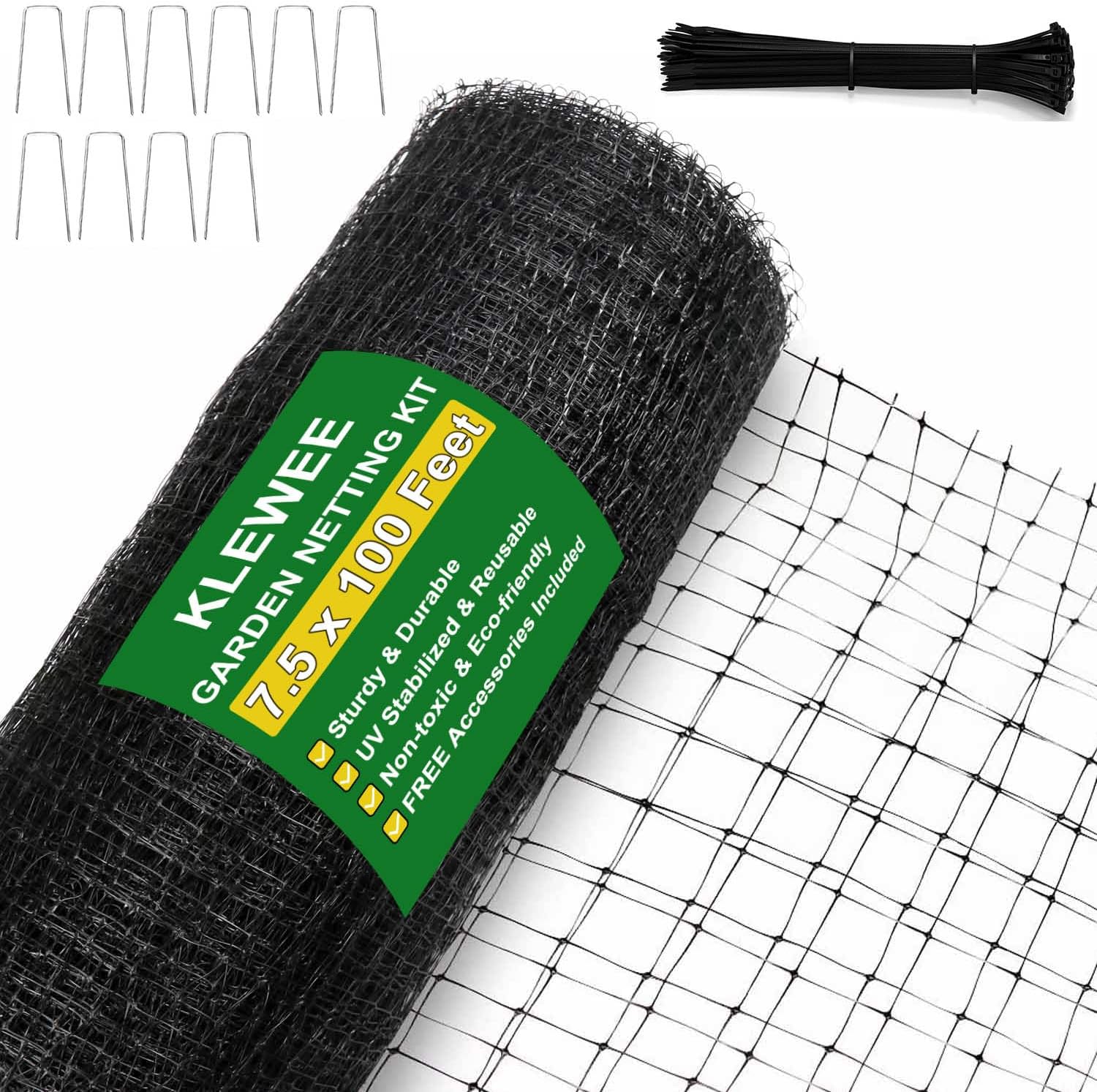
This KLEWEE garden netting is a long, reusable mesh sheet intended to keep birds, squirrels, deer, and other small pests off fruit trees, berry bushes, and vegetable rows. You can drape it over plants, secure it with stakes or hoops, or fix it to the ground with the included U-shaped stakes and zip ties; the 3/4" square mesh is fine enough to block small birds while still allowing light and water through. Made from UV-stabilized polypropylene, the netting is weather resistant and resists fraying when cut to size, so you can customize coverage for irregular beds and trees. Practical benefits include straightforward installation, long length for large gardens or multiple beds, and animal-friendly protection that does not use chemicals. Limitations are that the net requires firm anchoring to prevent animals from getting underneath and it can be awkward to handle alone for taller trees; the black color blends in but can make it a little harder to see when retrieving or adjusting under low light.
Best for: Buyers who want a straightforward, low-risk physical barrier to protect fruit trees and berry beds and prefer a reusable, chemical-free solution they can install themselves.
Less Ideal for: People needing a rigid permanent fence or those who want a nearly invisible ultralight mesh for ornamental plantings; not the best choice for very tall trees where full taming of the canopy is needed.
- Fine 3/4" mesh blocks small birds and most small pests while letting light and water pass
- UV-stabilized polypropylene resists rot and sun damage for season-to-season reuse
- Long 7.5 ft x 100 ft sheet covers large beds or multiple plants without seams
- Easy to cut to custom shapes without fraying and includes stakes and zip ties for installation
- Requires careful anchoring around edges to fully prevent animals from getting underneath
- Large single sheet can be bulky to handle and position by one person
Verdict: A heavy, UV-resistant garden net that provides reliable, reusable protection for fruit trees and berry patches without chemicals.
Choosing the Right Fruit Tree Bird Netting: Key Factors to Consider
Mesh Size and Wildlife Safety
Mesh size determines which animals can pass through and which will be blocked. Small openings prevent small birds from reaching fruit but can also trap or injure wildlife if the net is too coarse or has large knotted openings. Look for netting described by aperture dimensions rather than generic labels so you can match the mesh to the typical bird species at your site.
Mesh shape and knot style influence safety too. Knotless, soft-knit netting reduces snag points and lowers entanglement risk, while open knotted nets can catch feathers and feet. Consider how pollinators and beneficial insects will interact with the mesh; if you need bees to access blossoms, use a netting plan that covers only ripening fruit or is deployed after bloom.
Material Strength and UV Resistance
Netting used outdoors faces sun, wind, rain, and handling during installation. Polyethylene or polypropylene meshes treated for UV resistance last longer in bright sun and are less likely to become brittle. Tensile strength and stitch density affect how well a net resists tearing from branches, wind gusts, or a bird landing on it.
Durable material also reduces maintenance. Thin, untreated nets may develop holes quickly, creating escape routes and requiring frequent replacement. Check manufacturer guidance on expected outdoor life and favor fabrics that balance flexibility with tear resistance so they conform to branches without shredding.
Ease of Installation and Removal
You will likely install and remove netting seasonally, so time and effort required matter. Lightweight nets that unfold and drape over branches make short work of covering trees, while heavy or rigid nets require ladders and extra hands. Nets that come in pre-cut sizes or with clear marking for center and edges reduce guesswork.
Consider whether the netting can be installed by one person and whether it can be anchored without complicated hardware. Quick-release ties or sewn-in edges for stakes speed installation. Simpler systems encourage consistent use, which directly improves harvest protection.
Attachment Method and Fit
How you secure netting determines how well it stays in place through wind, animal activity, and seasonal movement. Options include drawstrings, sewn-in hems for stakes, grommets, or heavy hems for tying. A proper fit that reaches the ground or fastens tightly around trunks and limbs prevents birds from slipping underneath.
Think about uneven ground, irregular canopy shapes, and side access for picking. Netting designed to be tied or weighted at the edges often performs better than nets that rely solely on draping. Good attachment systems also reduce the need to climb trees repeatedly.
Visibility and Accessibility
Net color and weave density affect how visible the net is to birds and to you. Black or dark nets tend to blend into canopy shadows and may be less noticeable to birds until they are close, while lighter nets can be more visible and may deter some species earlier. Visibility also impacts human tasks like pruning, inspecting fruit, and harvesting.
Accessibility considerations include built-in openings or overlap panels for picking fruit without removing the entire net. Nets that allow a deliberate access point make harvesting faster and reduce the temptation to leave nets loosely secured, which can create entry points for birds.
Storage, Packability, and Maintenance
After the season, you will fold and store netting, so size and how it compresses matter. Thin, pliable nets roll compactly into small bags while bulky or stiff nets require more storage space. Easy-clean materials that resist dirt and mold save time in spring.
Consider how you will dry nets before storage to avoid mildew. Repairability is relevant too; nets that accept simple stitch repairs or patching tape extend usable life and reduce long-term cost and waste.
When to Install and Remove Fruit Tree Netting
Timing net deployment to match fruit development and bird pressure maximizes protection while minimizing impacts on pollinators. For most fruit trees, nets are most useful once fruit starts to color and soften and after petals have fallen so bees have already pollinated blooms.
Remove or open nets only when the threat level drops or when fruit is harvested. Leaving nets on year-round can increase wear and make pruning and inspection harder.
- Install after petal fall to avoid blocking pollinators.
- Take nets off promptly after harvest to inspect trees and avoid trapping wildlife.
- Check nets regularly for holes and secure edges after storms.
Safe Installation Tips to Reduce Entanglement
Reducing wildlife harm starts with how you drape and secure the net. Avoid taut stretches that create small gaps where feet or beaks can catch. Instead, aim for a smooth, even drape and fasten edges to the ground or wrap them around the trunk.
If nets must cross branches, avoid sharp knots and tight cinches. Use soft ties and bury edges under a light layer of mulch or a row of stones to keep nets closed at ground level.
- Use knotless netting where possible to reduce snag points.
- Create access panels for harvesting rather than cutting new holes.
- Check undernets for trapped animals before storage.
Sizing Netting for Different Tree Shapes
Measure canopy spread and tree height before buying netting so you can choose a piece that covers the full canopy to the ground. For espaliered or columnar trees, narrow but tall panels work better than wide sheets. For multi-stemmed or irregular trees, plan on some overlap or extra material.
If in doubt, pick a slightly larger size that you can secure at the base. Oversized netting can be trimmed or folded, but undersized netting leaves openings and defeats the purpose.
- Measure full canopy width plus 2 to 3 feet for fastening.
- For rows of small trees, continuous netting can be anchored at the edges.
- Allow extra for training wires, supports, or trellis attachments.
Alternatives and Complementary Bird-Deterrent Methods
Netting is often the most direct protection for fruit, but consider combining it with other non-harmful deterrents for improved results. Visual deterrents such as reflective tape or pendants can reduce initial bird interest, especially when used near nets or during early fruit stages.
Adjusting harvest timing, thinning fruit, or using temporary exclusion cages over high-value branches are additional tactics. These methods can reduce reliance on large nets in small gardens while still protecting the best fruit.
- Use visual deterrents early, then deploy netting as fruit ripens.
- Protect especially vulnerable branches with small cages if full-tree netting is impractical.
Maintaining and Repairing Netting
Quick repairs extend net life and preserve protection. Small holes can be stitched or patched with compatible fabric tape. Inspect nets after storms and remove debris to prevent abrasion.
Before storage, lay nets flat to dry and fold loosely to avoid permanent creases. Label net pieces by tree or size to streamline redeployment the following season.
- Patch small holes immediately to prevent enlargement.
- Clean and dry nets before folding to avoid mildew.
- Store nets in breathable bags away from rodents and direct sunlight.
How We Chose the Best Fruit Tree Bird Netting
We focused on practical, garden-tested performance factors that matter when protecting fruit trees from birds without creating hazards. Evaluation emphasized mesh aperture and hole shape because openings determine which species can access fruit and whether pollinators pass through. We rated material durability and UV resistance to estimate how long netting remains effective outdoors and how it stands up to wind and repeated handling. Ease of installation and removal got attention since nets that are awkward or time-consuming discourage seasonal use. We examined attachment options and edging design because secure fastening reduces fruit loss during wind and when animals try to push through. Finally, we considered packability and storage size because many gardeners need nets that fold or roll compactly for offseason storage. We excluded products that required permanent hardware installation or that had known entanglement hazards for wildlife. The included filters favored soft, flexible netting with clear mesh specifications, tested attachment methods, and documented UV treatment or tensile-strength information.
FAQ
Will netting stop all birds from eating my fruit?
Netting reduces access for many bird species but does not guarantee 100 percent exclusion. Effectiveness depends on correct mesh size, how well the edges are secured, and whether nets are installed before birds learn to feed on fruit. Smaller birds may still find gaps if nets are not fitted tightly.
Is there a safe netting type for both birds and pollinators?
Yes, choosing when to deploy netting is often the best solution. Allow pollinators access during bloom and install nets afterward. Using knotless, soft-knit netting with an aperture that blocks songbirds but still allows air movement reduces harm while protecting ripening fruit.
How do I keep netting from tearing on branches?
Use netting with adequate tensile strength and avoid stretching it tightly across branches. Fasten edges to the ground or trunk rather than relying on branch friction. Inspect and loosen any tight points that rub against bark to prevent abrasion and tearing.
Can I leave netting on year-round?
Leaving nets on year-round is generally not recommended because it increases wear, complicates pruning, and risks trapping wildlife. Seasonal deployment timed to fruit ripening gives protection while minimizing downsides.
What is the best way to store netting between seasons?
Clean off dirt and debris, let nets dry fully, then fold or roll them loosely into breathable storage bags. Keep them in a cool, dark place to limit UV degradation and protect them from rodents and moisture.
Final Verdict
Choosing the right fruit tree bird netting comes down to matching mesh size, material durability, and attachment method to your trees and local wildlife. Prioritize safety by selecting knotless or soft-knit materials, securing edges to prevent gaps, and timing deployment to avoid interfering with pollination. Balance convenience and longevity by favoring nets that are easy to install, repair, and store. With those priorities in mind, you can confidently protect ripening fruit while minimizing harm to birds and reducing maintenance.
