

Note: This article contains affiliate links. If you click on these links and make a purchase, I may earn a small commission at no extra cost to you. This helps support my research and content. Read my full affiliate disclosure here.
If you spend time outdoors with pets, the right yard bug spray keeps animals safe and reduces bites without heavy chemical residue. Pet safe yard bug spray choices vary in active ingredients, longevity, and how soon it is safe to let pets back on treated grass or decking. This guide shortlists top options for typical yards and patios and explains the practical tradeoffs gardeners and pet owners should expect. We evaluated products for how well they control common outdoor pests, how safe and low-exposure the formulations are for dogs and cats, application ease, and how long protection lasts. Read on to find the best fit for your outdoor space and pet routine.
Top Picks at a Glance
| Best Overall The best all-around choice for most situations | Wondercide Outdoor Pest Control Spray — 32 oz Ready-to-Use |  |
| Best Quality Built to a higher standard if you want something more solid | Wondercide Flea & Tick Yard Spray (Ready-to-Use, 32 oz) |  |
| Best Value The sweet spot between price and what you get | Cutter Essentials Bug Control Spray Concentrate, 32 fl oz |  |
| Highest Rated A top-rated pick with lots of positive feedback | Yard Patrol Cedar Oil Yard Spray, 32 oz |  |
| Most Popular A crowd favorite that many people choose with confidence | Vet's Best Flea & Tick Yard and Kennel Spray, 32 oz |  |
Wondercide Outdoor Pest Control Spray — 32 oz Ready-to-Use
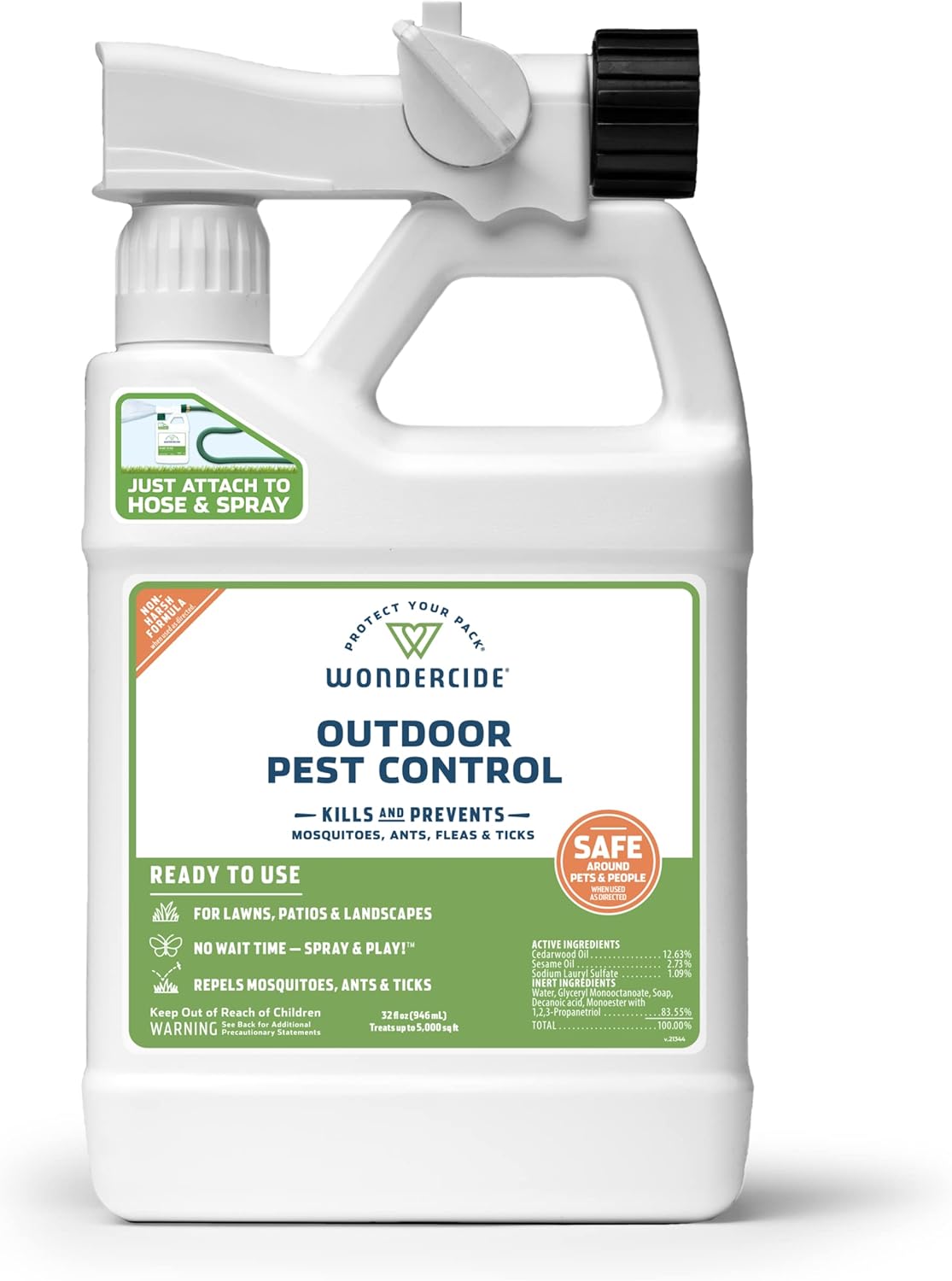
| Format | Pre-mixed, hose-end spray |
|---|---|
| Active ingredients | Cedarwood Oil 12.63%, Sesame Oil 2.73% |
| Coverage | Up to 5,000 sq ft (general); 2,500 sq ft (ticks/mosquito repel) |
Wondercide Ready-to-Use Outdoor Pest Control is a hose‑end spray designed for treating yards up to 5,000 sq ft for general pests and 2,500 sq ft for ticks and mosquito repellency. You attach the bottle to a garden hose, sweep the nozzle across lawns, patios, and foundation lines, and the cedarwood‑based formula delivers quick coverage with no dry time required. Notable features include plant-powered active ingredients (cedarwood and sesame oils), ready-to-use convenience, and instructions for both active infestations and preventative maintenance. Practical benefits are that it is safe to use around people and pets when directions are followed, residues are reported to be non-harmful to pollinators, and the hose attachment makes treating large areas fast. Important limitations are that effectiveness depends on water pressure, walking speed, and weather, heavy rain may require reapplication, and spraying in temperatures above 90°F or direct sun can cause plant burn. Users who need an all‑season, high‑durability pesticide for heavy infestations should plan on repeated applications and follow label precautions to protect sensitive plants.
Best for: Buyers who prioritize effective, plant‑based mosquito and tick control for medium to large yards and want a fast hose‑attached solution that is safe around families and pets when used as directed.
Less Ideal for: Gardeners who need a single, long‑lasting professional‑grade pesticide for severe, persistent infestations or who cannot reapply after rain should consider alternative, heavier‑duty treatments.
- Ready-to-use hose-end applicator for fast coverage of large yards
- Plant-based active ingredients (cedarwood and sesame oils) that target common yard pests
- No dry time required so kids and pets can re-enter treated areas quickly
- Covers up to 5,000 sq ft for general pest control and 2,500 sq ft for ticks/mosquito repellency
- May cause phytotoxic burning if applied in direct sun or temperatures above 90°F
- Performance depends on water pressure and user walking speed which can lead to uneven coverage
- Heavy rain can wash it away and requires reapplication
Verdict: If you want a fast, family- and pet-friendly plant‑based spray to reduce mosquitoes and ticks across a medium to large yard, this ready‑to‑use hose‑end formula delivers practical, repeatable results.
Wondercide Flea & Tick Yard Spray (Ready-to-Use, 32 oz)

| Liquid Volume | 946 ml |
|---|---|
| Item Form | Spray |
| Active ingredient | 12.63% Cedarwood Oil |
| Coverage (fleas/mosquitoes) | Up to 5,000 sq ft |
| Coverage (ticks/mosquito repel) | Up to 2,500 sq ft |
Wondercide Flea & Tick Yard Spray is a ready-to-use hose-end treatment that uses cedarwood and other plant-derived ingredients to kill and repel fleas, ticks, and mosquitoes in the yard. You attach the bottle to a garden hose, turn the sprayer on, and walk steady sweeping passes to treat up to 5,000 sq ft for fleas and mosquitoes or 2,500 sq ft for ticks and mosquito repellency. Notable features include a pre-mixed formula for quick application, a hose-powered sprayer for even coverage, and an ingredient list centered on cedarwood oil that the brand says is safe for pollinators when used as directed. In practice it is convenient for routine maintenance and for reducing pest pressure around foundations, patios, and pet areas without waiting for drying or reentry. Important limitations are sensitivity to high heat or direct sun which can cause plant foliage browning if applied above 90°F and reduced residual effect after heavy rain, which may require reapplication. The product is exempt from EPA registration under FIFRA and carries typical safety instructions to avoid eye contact and keep out of reach of children.
Best for: Buyers who want a convenient, natural-first yard repellent that treats broad outdoor areas and lowers pest pressure around pets and play spaces with minimal setup.
Less Ideal for: Those who need a product that holds up through heavy storms or who require a chemically registered pesticide for regulatory or commercial settings should consider other options.
- Pre-mixed hose-end bottle makes whole-yard treatment fast and easy
- Plant-based active (cedarwood oil) targets fleas, ticks, and mosquitoes
- Covers a large area per bottle (up to 5,000 sq ft for fleas and mosquitoes)
- Formulated to be safe for people, pets, and pollinators when used as directed
- Can cause phytotoxic browning if applied in direct sun or when temperatures exceed 90°F
- Heavy rain or intense irrigation can wash away residue and may require reapplication
Verdict: If you want an easy, plant-powered yard spray to reduce mosquitoes, fleas, and ticks over large lawns while prioritizing pet and pollinator safety, this ready-to-use option delivers fast, low-fuss coverage.
Cutter Essentials Bug Control Spray Concentrate, 32 fl oz

| Unit Count | 32 Fluid Ounces |
|---|---|
| Item Form | Liquid |
| Target Species | Insects |
| Liquid Volume | 32 fluid ounces |
Cutter Essentials Bug Control Spray Concentrate is a garden hose‑attachable liquid designed to treat lawns, landscaping and outdoor play areas for mosquitoes, ticks and other listed insects. You mix it on a hose-end sprayer and spray evenly over the treatment area; the manufacturer says one bottle covers up to 5,000 square feet. Notable features include a convenient hose-end applicator and a formula that uses plant-derived oils such as cinnamon, peppermint and cornmint, which the brand positions as mindful ingredients and safe around children and pets when used and stored as directed. In practice this product is best for broad perimeter treatments and spot applications where contact kill is acceptable. Expect fast knockdown of visible insects but remember it works by contact so it will not provide long‑term systemic control. Follow label directions about pollinators and avoid spraying blooming plants. The hose‑end application makes coverage quick for larger yards, though users who need residual, long‑lasting protection or indoor use will want a different approach.
Best for: Buyers who prioritize practical, fast yard treatments and want a pet- and family-conscious option for knocking down mosquitoes across a medium to large outdoor area.
Less Ideal for: Gardeners seeking long‑term residual pest control, indoor insect solutions, or a product safe to spray on blooming plants frequented by pollinators should look elsewhere.
- Hose‑end sprayer connects to a garden hose for quick, even coverage
- Covers up to 5,000 square feet for treating lawns and landscaping
- Formulated with plant-derived oils and described as safe around children and pets when used and stored as directed
- Kills mosquitoes and other listed insects by contact for immediate knockdown
- Kills by contact and does not provide systemic or long-lasting residual control
- Should not be applied when pollinators are foraging and may harm ornamental foliage if overapplied
Verdict: A practical hose‑end concentrate for fast, large‑area knockdown of mosquitoes that prioritizes family and pet safety when used as directed.
Yard Patrol Cedar Oil Yard Spray, 32 oz

| Volume | 32 oz |
|---|---|
| Application | Hose-end sprayer |
| Coverage | Approx. 3,000 sq ft |
| Active ingredient | Cedarwood oil |
Yard Patrol is a ready‑to‑use, hose‑end insect barrier built around cedarwood oil and a short list of plant‑based ingredients. You attach the included sprayer to a garden hose and spray perimeter areas, under decks, and around shrubs; one 32 oz bottle is claimed to cover about 3,000 sq ft. The product is intended to work by masking the scent cues insects use to navigate, so it is used preventively rather than as a knockdown insecticide. Practical benefits include quick application with no mixing, a natural ingredient profile that is marketed as kid and pet safe, and a straightforward reapplication schedule to build and maintain the barrier. Limitations are that effectiveness depends on consistent coverage and reapplication after heavy rain, and results will vary by pest species and local conditions since this is a scent‑based repellent rather than a contact kill. Expect best results when you follow the recommended weekly applications for the first three weeks and refresh every three to four weeks during the season.
Best for: Homeowners who prioritize a low-toxicity, easy-to-apply perimeter solution and want a pet- and family-friendly way to reduce nuisance yard insects.
Less Ideal for: People needing fast elimination of an active infestation or who require an insecticide with long residual chemical knockdown should consider stronger targeted treatments.
- Hose‑end applicator for quick, no‑mixing application
- Plant-based formula centered on cedarwood oil
- One 32 oz bottle covers approximately 3,000 square feet
- Marketed as kid- and pet-safe when used as directed
- Works as a scent barrier so it may not provide immediate knockdown of active infestations
- Needs regular reapplication and after heavy rain to maintain effectiveness
Verdict: A quick, plant‑based hose‑on perimeter spray that gives pet-safe, preventive protection from nuisance yard insects when applied regularly.
Vet's Best Flea & Tick Yard and Kennel Spray, 32 oz

| Unit Count | 32 Fluid Ounces |
|---|---|
| Item Form | Spray |
| Scent Name | Peppermint |
| Target Species | Dog |
| Active Ingredients | eugenol, peppermint oil |
This 32 oz Vet's Best yard and kennel spray is a plant-based, ready-to-use treatment designed to protect outdoor spaces from fleas, ticks, and mosquitoes. It connects to a garden hose via a built-in applicator so you can cover turf, patios, kennels, and other landscaping quickly and evenly without mixing. The active botanical ingredients are peppermint oil and eugenol from clove, which the maker says kill pests on contact while leaving a peppermint scent rather than strong synthetic odors. Practical benefits include easy application with a hose attachment, coverage suitable for large areas, and a formula safe to use around dogs 12 weeks and older when directions are followed. Important limitations are that it is for outdoor use only, requires reapplication after heavy rain or for severe infestations, and can cause eye or skin irritation in sensitive people or pets if not rinsed promptly. For owners looking for a natural, vet-formulated option to add to a multi-pronged flea control plan, this spray is a convenient outdoor tool, but it should be used as directed and paired with pet treatments for best results.
Best for: Pet owners who want an easy, plant-based yard spray to reduce outdoor flea and tick pressure and who prefer solutions backed by vet formulation and broad customer use.
Less Ideal for: People who need an all-in-one single-treatment solution for severe indoor infestations or who require products safe for pregnant or nursing animals should look at other specialized options.
- Ready-to-use hose attachment for fast, even coverage of yards and kennels
- Plant-based active ingredients (peppermint oil and eugenol) that kill fleas, flea eggs, ticks, and mosquitoes on contact
- Formulated for use around dogs 12 weeks and older when used according to label
- Leaves a natural peppermint scent instead of strong synthetic fragrances
- Outdoor use only and not designed to replace on-pet treatments
- Requires reapplication after heavy rain and for ongoing infestations
- Contains ingredients that can cause eye or skin irritation in sensitive individuals or animals
Verdict: A convenient, vet-formulated plant-based yard spray for pet owners who want a ready-to-use outdoor tool to reduce fleas, ticks, and mosquitoes without harsh chemicals.
Choosing the Right Pet Safe Yard Bug Spray: Key Factors to Consider
Active Ingredients and Pet Toxicity
Active ingredients determine both what pests the spray controls and how hazardous it is to pets. Some actives have low oral or dermal toxicity for dogs and cats when used as directed, while others require longer wait times before pets can re-enter treated areas. Understand whether an active is broad-spectrum or targeted and whether it is listed with specific restrictions for certain animals.
Labels often list first-aid statements and re-entry intervals. Shorter re-entry times reduce the chance pets will sniff or groom residues, but always follow label directions. If a pet licks grass or groomed fur, lower-toxicity formulations help reduce risk compared with high-concentration synthetics.
Application Method and Dosage
How you apply the spray affects both efficacy and exposure. Ready-to-use hose-end sprayers and pump bottles reduce mixing mistakes and limit direct contact with concentrated chemicals. Concentrates let you treat larger areas more economically but require careful measuring and protective gloves to avoid spills.
Nozzle type and spray pattern matter too. A coarse fan pattern covers lawn quickly with less drift, while a misting nozzle can deposit residue on vertical surfaces and increase inhalation risk. Choose a method that matches your yard layout and comfort with handling liquids.
Residual Life and Weather Resistance
Residual life is how long treated surfaces continue to repel or kill pests. Longer residual protection means fewer reapplications but can also prolong the time residues remain in the environment where pets could contact them. Persistence depends on formulation and the surface treated: grass, mulch, and porous stone absorb differently.
Rainfastness and UV stability determine whether the spray washes off or breaks down quickly. If your yard receives frequent rain, look for products formulated to hold up longer or plan to reapply after significant rainfall, following label timings to maintain pet safety.
Target Pest Spectrum
Different sprays are optimized for mosquitoes, ticks, fleas, or biting flies. Identify the primary pests you need to control and check whether the active ingredients or labeled claims include them. A product focused on mosquitoes might not control ticks effectively, which requires different actives or application timing.
If you keep multiple pets that spend time in shrubs, under decks, and inside tall grass, choose a spray with a broader labeled control range or plan complementary measures like habitat modification for pests that are not well covered by a single spray.
Environmental and Surface Compatibility
Consider where you will spray: lawn, flower beds, vegetable gardens, patios, or play areas. Some formulations are safe on ornamental plants but not on edible vegetables or delicate foliage. Water-based products are usually less likely to stain patios and are easier to rinse from hard surfaces.
Also factor in environmental considerations. Formulations that are less persistent reduce exposure to beneficial insects and soil organisms. When treating near water features or storm drains, choose products with label instructions for buffer zones and aquatic safety to avoid harming wildlife.
Scent, Residue Visibility, and Pet Comfort
Odor can be a major practical concern. Strong-smelling sprays may cause pets to avoid treated areas or show signs of discomfort. Low-odor and unscented formulations tend to be better accepted by animals and people.
Residue visibility matters for owners who let pets play on patios or furniture. Some sprays leave a visible film that can rub onto fur or paws; others dry clear. Consider how much time you are willing to keep pets away after application and whether wiping paws or rinsing areas will be necessary.
Preparing Your Yard Before Treatment
Clear debris and mow tall grass before applying a yard spray so the product reaches the surfaces where pests rest. Trimming back dense shrubs and removing leaf litter reduces pest harborage and improves spray coverage. For areas where pets sleep or play, wash or replace bedding and toys after the re-entry interval to avoid trapped residues.
Check the label for any instructions about watering or irrigation. Some products require the grass to be dry at application for best adherence. Plan to keep pets away until the treated surfaces are fully dry or until the label-specified re-entry time has passed.
- Remove pet food, water dishes, and toys from the treatment area
- Mow and edge lawn for more uniform coverage
- Note wind and temperature to reduce drift during application
Using Spot Treatments Versus Full-Yard Applications
Spot treatments focus on shady, moist areas where fleas and ticks concentrate, such as under hedges, along fence lines, and near woodpiles. Spot spraying reduces overall chemical exposure and can be effective when pest pressure is localized. Full-yard applications are better for widespread mosquito problems or when multiple pets use the entire yard.
Decide based on where your pets spend most time and where you have seen pests. For homes with small yards or heavy pest pressure, alternating spot and full treatments through the season can lower exposure while maintaining control.
- Spot treat high-traffic pet areas and likely harborage spots
- Use full-yard applications only when pest pressure is diffuse
- Combine targeted spraying with habitat reduction for best results
Timing Applications Around Pet Activity
Time sprays when pets are not present and can remain away for the recommended re-entry interval. Early morning or late evening treatments often coincide with peak mosquito activity but plan to keep pets indoors overnight if the label calls for a longer wait. For quick-drying low-toxicity options, a shorter separation may be acceptable, but always confirm with the product directions.
Avoid applying on windy days to prevent drift onto areas where pets nap or to neighboring yards. If pets go into areas you treat, check paws and fur after they return inside and rinse if you suspect contact with residue.
- Apply when pets are safely confined or away for the full re-entry period
- Avoid peak wind or temperature extremes that increase drift
- Schedule regular treatments to match the residual protection window
Integrated Pest Management for Pet Areas
Combine sprays with nonchemical controls to reduce overall reliance on treatments. Remove standing water to limit mosquito breeding, treat pet bedding for fleas, and keep grass short to reduce tick habitat. Physical barriers like screens on patios and pet-safe repellents applied to gear can lower contact with pests without adding environmental load.
Monitor pest populations and adjust application frequency rather than increasing concentration. Regular inspection of high-use pet zones helps you target treatments more effectively and maintain safer conditions for animals.
- Eliminate standing water and dense ground cover
- Use collars or topical pet treatments as complementary measures only after consulting a veterinarian
- Inspect pets regularly for ticks and fleas to catch infestations early
Safe Storage and Disposal
Store concentrates and unused sprays out of reach of pets and children, in their original container with the label intact. Dispose of empty containers and leftover product according to local hazardous waste rules and label instructions to avoid accidental pet exposure.
Never leave containers where animals can knock them over or chew caps. Rinse sprayers and application equipment per label guidance and store them away from pet areas to prevent contamination.
- Keep products locked up and away from living areas
- Follow label disposal and triple-rinse instructions for containers
- Record application dates so you know when it is safe for pets to return
How We Chose the Best Pet Safe Yard Bug Spray
We focused on attributes that matter to people who keep pets and want effective pest control with reduced risk. Key evaluation criteria were the safety profile for common pets, measured by known toxicity and required re-entry intervals; the spray's real-world effectiveness against biting pests such as mosquitoes, fleas, ticks, and biting flies; persistence and residual protection on lawn, mulch, and hard surfaces; application convenience including ready-to-use versus concentrate and nozzle performance; and formulation characteristics that affect exposure risk like odor, volatility, and whether the product is water-based or oil-based. We excluded products labeled for indoor-only use, treatments that require complex professional application, and sprays with active ingredients known to be highly toxic to pets when typical label directions could not reasonably mitigate risk. Our shortlist favored options that balance demonstrable pest-reduction with short safe re-entry times and straightforward application. When available, we emphasized formulations and packaging that reduce user exposure during mixing and application.
FAQ
How long should I keep pets off the lawn after spraying?
It depends on the product. Many pet-friendly formulations specify a short wait until treated areas are dry, while others require several hours. Always follow the label's stated re-entry time and extend it if pets are likely to lick or roll on treated surfaces.
Are natural or botanical sprays safer for pets than synthetic ones?
Natural actives are not automatically safer. Some botanical oils can be irritating or concentrated enough to harm small animals. Safety depends on formulation, concentration, and exposure route, so review re-entry times and toxicity information rather than assuming 'natural' equals safe.
Can I spray near my vegetable garden if I have pets?
Most yard bug sprays are labeled for ornamental use only and may prohibit application directly to edible plants. If you treat nearby areas, follow label buffer zone instructions and keep pets away from edible plants until any specified wait time has passed to prevent contamination of produce or pet ingestion.
Should I use a concentrated product or a ready-to-use spray?
Ready-to-use sprays reduce mixing errors and lower the chance of high-concentration exposure, which can be helpful for pet owners. Concentrates can be more economical for large yards but require careful measuring, protective gear, and safe storage to avoid accidental pet contact.
Will yard sprays affect beneficial insects or pollinators?
Some formulations can harm beneficial insects, especially persistent broad-spectrum actives. Apply sprays in the evening when bees are less active, avoid flowering plants, and choose lower-persistence options to reduce impacts on pollinators.
Can I spray while my pets are outside but in a fenced area?
No. Keep pets completely away from treated areas until the label-specified re-entry time has passed and surfaces are dry. Fences do not prevent exposure if pets can reach treated surfaces or inhale drift.
Final Verdict
When choosing a pet safe yard bug spray, balance the need for reliable pest reduction with the lowest practical exposure to animals. Prioritize products with short re-entry times, clear label directions, and application methods you can perform safely. Combine targeted spraying with habitat modification and regular pet checks to reduce overall chemical use while keeping pets comfortable and protected.
