

Note: This article contains affiliate links. If you click on these links and make a purchase, I may earn a small commission at no extra cost to you. This helps support my research and content. Read my full affiliate disclosure here.
If you do heavy cutting day after day, the right professional chainsaw bar makes a big difference in control, wear life, and maintenance time. This guide looks at a shortlist of top-performing bars chosen for professional use so you can pick the shape and construction that matches your cutting style and saw. We evaluate durability, straightness, bar profile, and compatibility with common chain types and drive sprockets. Read on to understand which bar suits long shifts, frequent re-tensioning cycles, and the kinds of wood you tackle most often.
Top Picks at a Glance
| Best Overall The best all-around choice for most situations | Husqvarna X‑Tough 24" RSN Chainsaw Bar |  |
| Best Quality Built to a higher standard if you want something more solid | Stihl Rollomatic 25-Inch Guide Bar (Part 3003 000 5231) |  |
| Best Value The sweet spot between price and what you get | Oregon 20" Power Match Solid Guide Bar with Replaceable Sprocket Nose |  |
| Best Budget The cheapest option that still gets the job done reliably | EXSHP 20 inch Chainsaw Bar, 3/8" Pitch .050" Gauge, 72 Drive Links |  |
| Highest Rated A top-rated pick with lots of positive feedback | Oregon 28" PowerMatch Solid Body Guide Bar, .050" Gauge 3/8" Pitch |  |
| Most Popular A crowd favorite that many people choose with confidence | Husqvarna HLN250 18-Inch Laminated Chainsaw Bar (.325" Pitch, .050" Gauge) |  |
| Best Seller A high-volume bestseller chosen again and again | Husqvarna X‑Tough Light 24" RSN Chainsaw Guide Bar |  |
Husqvarna X‑Tough 24" RSN Chainsaw Bar

| Pitch | 3/8" |
|---|---|
| Gauge | .050" |
| Drive links | 84 |
| Power Source | hand_powered |
The Husqvarna X‑Tough 24" RSN guide bar is a professional‑grade replacement bar built for felling, bucking, and cutting firewood with high productivity in mind. It mounts to common Husqvarna chainsaws and accepts a 3/8" pitch chain with .050" gauge and 84 drive links. The solid steel body, increased rail hardness, and optimized oil hole reduce maintenance and friction while the replaceable sprocket nose and roller bearing support smooth chain movement and extend service life. In practice this means a durable bar that stays true under heavy use and is easier to keep lubricated during long cuts. The bar is best for landscapers, landowners, or experienced users who run professional saws and need a rugged upgrade that tolerates tough conditions. Important limitations are that it is a single replacement part and requires correct chain specification and compatible saw models to fit; buyers should verify fit and chain pitch before swapping bars. Overall it delivers professional durability and smoother cutting where heavier workload is common.
Best for: Experienced homeowners, landowners, or professional users who run Husqvarna chainsaws and prioritize a durable, low‑maintenance guide bar for frequent heavy cutting.
Less Ideal for: Casual or infrequent users who do not want to verify fitment or purchase compatible chains and mounting hardware separately.
- Solid steel construction and increased rail hardness for long service life
- Replaceable sprocket nose with roller bearing for smoother chain operation and reduced friction
- Optimized oil hole reduces maintenance and improves lubrication during cutting
- Designed for professional saws and heavy use, supporting efficient felling and bucking
- Requires matching chain pitch, gauge, and drive link count and will not fit incompatible saws
- Single replacement part only; does not include chain or mounting hardware
Verdict: Buy this bar if you want a rugged, professional‑grade 24" guide bar with a replaceable sprocket nose that reduces friction and holds up under heavy cutting.
Stihl Rollomatic 25-Inch Guide Bar (Part 3003 000 5231)

| Manufacturer | Stihl |
|---|---|
| Part Number | 3003 000 5231 |
| Item Package Quantity | 1 |
| Number Of Pieces | 1 |
This is a factory Stihl Rollomatic guide bar intended as a direct replacement for Stihl chainsaws that accept a 25-inch bar. In use it provides a precise, OEM-fit mounting surface for the chain and helps maintain the cut geometry designed for Stihl machines. The notable feature is that it is a genuine manufacturer part so you get the exact fit, material specification and tolerances Stihl engineers intended, which supports consistent chain alignment and reliable performance during sustained cutting. Practical benefits are straightforward: it simplifies maintenance, reduces setup time compared with generic bars, and helps preserve the saws original handling characteristics. Important limitations are that it only fits specific Stihl models that accept the 25-inch Rollomatic bar and it does not include a chain or mounting hardware beyond the single bar, so you must confirm model compatibility before purchase and factor in additional parts if needed.
Best for: Professional users and serious operators who prioritize factory-spec performance and predictable handling when replacing a worn guide bar on a Stihl saw.
Less Ideal for: Casual users who need a universal replacement for multiple brands or those looking for a complete bar-and-chain kit in one purchase.
- Genuine Stihl OEM part for exact fit and factory tolerances
- Rollomatic design maintains precise chain alignment for consistent cutting
- Simplifies maintenance by matching original equipment specifications
- Durable construction intended for professional use on compatible saws
- Only compatible with saws specified for the 25-inch Rollomatic bar
- Sold as a single bar with no chain or extra mounting hardware included
Verdict: Choose this genuine Stihl 25-inch Rollomatic bar when you need an exact OEM replacement to preserve professional-level cutting performance and fit.
Oregon 20" Power Match Solid Guide Bar with Replaceable Sprocket Nose

| Bar length | 20" |
|---|---|
| Gauge | .050" |
| Pitch | 3/8" |
| Sprocket nose | Replaceable |
This Oregon 20" Power Match guide bar is built for demanding, professional chainsaw work where durability and field serviceability matter. The solid-body design resists bending and wear when cutting large timber, while the replaceable sprocket nose lets you renew the most stressed part of the bar instead of replacing the entire unit. Specified for .050" gauge and 3/8" pitch, it matches common heavy-duty chains and is suitable for big-timber and pulpwood operations or wildfire suppression tasks. In practice you get a rugged bar that holds alignment under hard use and simplifies maintenance on the job because you can swap the sprocket nose if it wears or is damaged. Limitations are that it is a specialized professional bar intended for larger chains and bars, so it is overbuilt for casual homeowner trimming and requires the correct chain pitch and gauge to perform safely. Buyers should also expect typical professional installation and tensioning procedures rather than consumer-level plug-and-play fitment.
Best for: Buyers who need a robust, serviceable guide bar for commercial or frequent heavy cutting and who prioritize long life and on-site reparability.
Less Ideal for: Homeowners or occasional users seeking a lightweight, easy-fit bar for small trees and yard maintenance should consider consumer-grade bars instead.
- Solid-body construction for durability under heavy cutting loads
- Replaceable sprocket nose extends service life and reduces full-bar replacement
- Matches common professional chain specs (.050" gauge, 3/8" pitch) for compatibility with heavy-duty chains
- Designed for commercial uses such as big-timber, pulpwood, and fire-fighting operations
- Intended for professional heavy-duty use and is excessive for casual homeowner tasks
- Requires correct chain pitch and gauge and professional-level installation and maintenance
Verdict: Choose this bar if you need a heavy-duty, serviceable 20" guide bar built for professional logging and frequent hard use.
EXSHP 20 inch Chainsaw Bar, 3/8" Pitch .050" Gauge, 72 Drive Links
| Pitch | 3/8" |
|---|---|
| Gauge | 0.050" |
| Drive links | 72 |
| Length | 20" |
| Brand | EXSHP |
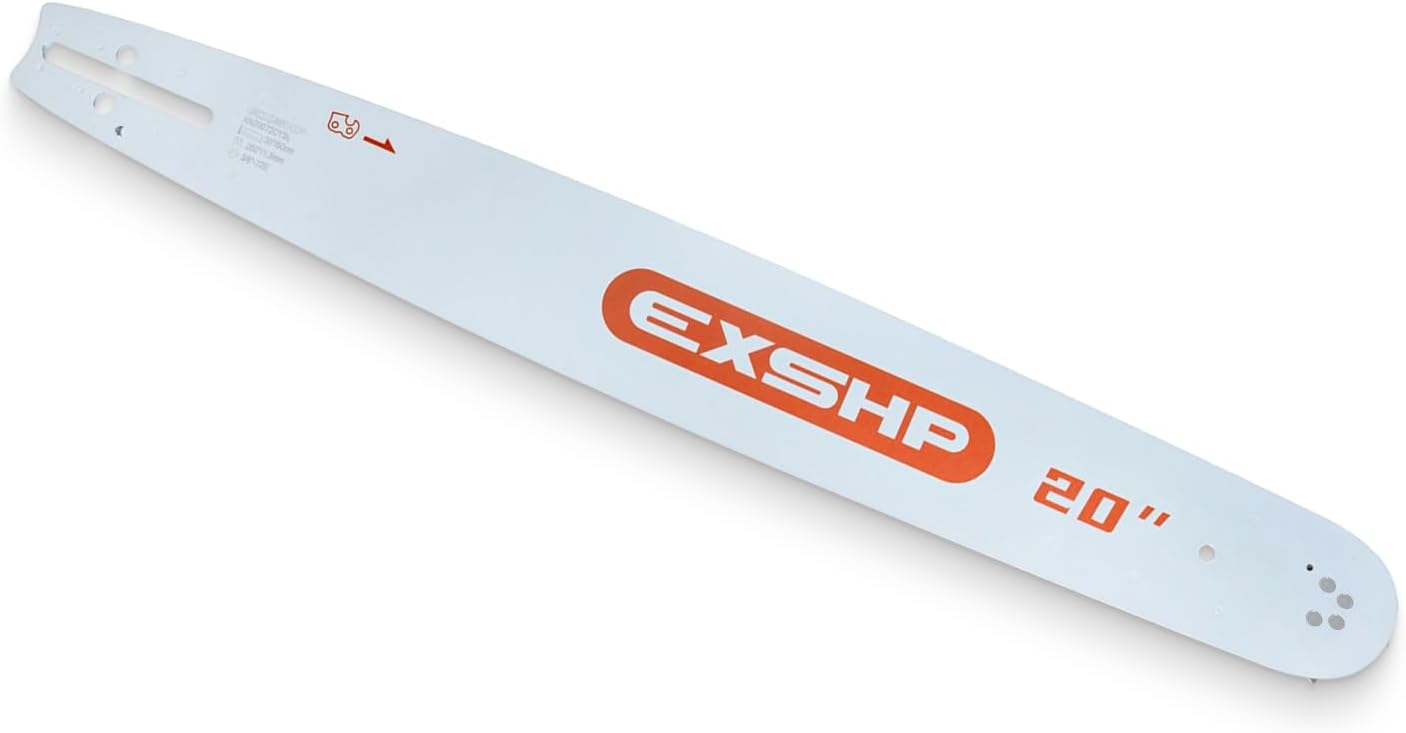
This EXSHP 20 inch chainsaw bar is a straightforward replacement bar aimed at users who need a durable, compatible spare for heavy cutting tasks. It is laser heat treated to a Rockwell 58 hardness and finished with a clear coating, which should resist wear during regular cutting and reduce the need for frequent replacement. The bar uses a sprocket nose with a single-rivet replaceable tip so swapping or servicing the nose is simple and fast. Compatibility notes list many common models from Stihl, Husqvarna, Poulan and others, making it a practical go-to when a brand-specific OEM bar is not available. Practical benefits include rugged construction intended for logging or firewood work and an easy install process on most 20 inch chainsaw mounts. Important limitations are that the listing focuses on the bar itself without including chain or mounting hardware details and buyers should confirm pitch, gauge and drive link count match their saw and chain before purchase.
Best for: Practical owners and small-scale pros who need a low-cost, heavy-duty replacement bar that fits a variety of common chainsaw models and can be installed quickly.
Less Ideal for: Buyers who need an exact OEM part match for warranty compliance or those who prefer a packaged bar and chain set ready to run without verifying fit specifications.
- Heat treated to Rockwell 58 for improved wear resistance
- Sprocket nose with single-rivet replaceable tip for easier maintenance
- Wide multi-brand compatibility with many common chainsaw models
- Durable side rails and solid steel construction intended for heavy use
- Listing does not include chain or hardware so matching pitch/gauge/drive links is required
- No warranty information provided in the product details
Verdict: A budget-friendly, heat-treated 20 inch replacement bar built for heavy use and broad compatibility with popular chainsaw brands.
Oregon 28" PowerMatch Solid Body Guide Bar, .050" Gauge 3/8" Pitch

| Bar length | 28" |
|---|---|
| Gauge | .050" |
| Pitch | 3/8" |
| Sprocket nose | Replaceable |
This Oregon PowerMatch 28-inch guide bar is built for demanding, professional use where durability and consistent performance matter. Its solid-body construction and replaceable sprocket nose mean the bar resists bending and can be serviced in the field instead of replaced, which keeps saws running longer on remote jobs. The .050" gauge with 3/8" pitch fits common heavy-duty chains and is compatible with a range of commercial saw brands, making it straightforward to swap onto many powerheads. In practice it is best used for big-timber cutting, pulpwood work, and firefighting tasks where a robust bar and reliable chain engagement are critical. The bar’s heavier build adds longevity but contributes to overall saw weight and may require a more powerful engine for optimal handling. If you need a professional replacement bar that emphasizes serviceability and long service life, this is a practical choice; casual users with smaller saws or who prioritize light weight may prefer a slimmer option.
Best for: Professional loggers, pulpwood cutters, and wildfire crews who need a tough, serviceable bar that stays reliable under heavy, repetitive cutting.
Less Ideal for: Homeowners or operators using small consumer chainsaws who prioritize lightweight handling and easier maneuverability.
- Solid-body construction for improved durability under heavy use
- Replaceable sprocket nose allows field servicing rather than full replacement
- .050" gauge and 3/8" pitch match common heavy-duty chains for reliable chain engagement
- 28" length suited to large-timber and pulpwood cutting
- Heavier design increases overall saw weight and can affect handling
- May require a higher-powered saw for smooth performance at full length
Verdict: Choose this Oregon 28" solid-body guide bar when you need a serviceable, heavy-duty replacement that stays dependable on professional big-timber work.
Husqvarna HLN250 18-Inch Laminated Chainsaw Bar (.325" Pitch, .050" Gauge)
| Pitch | 0.33 inches |
|---|---|
| Chain Type | Full Chisel or Semi-Chisel |
| Drive Link Count | 72 |
| Included Components | Chainsaw Bar |
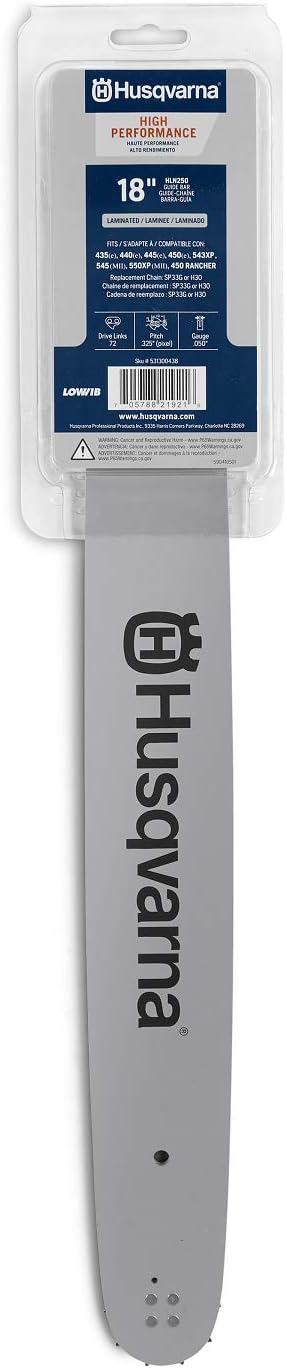
The Husqvarna HLN250 18-inch laminated guide bar is a direct-replacement bar intended for small-mount Husqvarna saws and built to deliver dependable, professional-style cutting. It installs like a stock part and pairs with .325" pitch chains and 72 drive-link chains for straightforward compatibility with models such as the 435, 440, 445 and 450 series. The laminated construction and hardened materials resist scratches and corrosion while the gentle curve and small nose radius reduce kickback and improve handling on limbing and crosscutting. Precision manufacturing helps ensure a snug fit that minimizes the need for frequent adjustments. This bar is best for users who need a durable OEM replacement that preserves factory handling and safety characteristics. It is not a specialty low-profile or long-reach bar, so users wanting different lengths or non-Husqvarna pattern bars should look elsewhere. Expect professional durability and predictable performance when paired with the correct chain and routine maintenance.
Best for: Buyers who prioritize proven OEM compatibility and predictable, low-kickback performance on small-mount Husqvarna saws and want a durable replacement that maintains factory handling.
Less Ideal for: Users who need non-Husqvarna pattern bars, unusual lengths, or specialty bars for heavy-duty felling should consider alternative aftermarket options.
- OEM Husqvarna fit for compatible small-mount models simplifies installation and reduces fitment issues
- Laminated and hardened construction resists corrosion and surface wear for longer service life
- Small nose radius and gentle curve lower kickback risk and improve cutting control
- Compatible with .325" pitch chains and 72 drive links for standard chain selection
- Only available in an 18-inch length in this listing so alternate reach requires choosing a different SKU
- Designed specifically for select Husqvarna small-mount saws so not universal across brands
Verdict: Choose this Husqvarna 18-inch laminated guide bar when you want a durable OEM replacement that preserves factory fit, handling, and low-kickback control.
Husqvarna X‑Tough Light 24" RSN Chainsaw Guide Bar

| Pitch | 3/8" |
|---|---|
| Gauge | .050" |
| Drive links | 84 |
| Power source compatibility | For Gas chainsaws |
| Mount type | RSN with replaceable sprocket nose |
The Husqvarna X‑Tough Light 24" RSN guide bar is a factory replacement designed for extended cutting tasks on compatible Husqvarna gas chainsaws. It pairs a 3/8" pitch, .050" gauge and 84 drive links with a replaceable sprocket nose and three‑rivet RSN mount for a secure fit and robust tip. The bar is marketed as lightweight yet hardened for long working days, and its oil hole and nose design reduce friction which can slightly improve fuel and oil efficiency during heavy use. Coatings resist scratches and corrosion to extend service life in outdoor conditions. Typical use is for professional or serious homeowner work such as felling, limbing, and cutting firewood with a matching Husqvarna saw; installation is straightforward for users familiar with bar and chain replacement. Limitations are that it is specific to RSN‑mount Husqvarna models and only offered in the 24" length shown, so buyers needing a different length or a different nose/mount type must choose another bar.
Best for: Buyers who prefer low‑risk, OEM replacements for Husqvarna gas chainsaws and need a durable 24" bar for heavy cutting tasks performed regularly.
Less Ideal for: Shoppers who need a different bar length, a non‑RSN mount, or a universal aftermarket bar should consider other options.
- Factory Husqvarna part ensures exact fit for compatible Husqvarna RSN saws
- Replaceable sprocket nose and three‑rivet RSN mount for a durable, secure tip
- Coated finish for improved corrosion and scratch resistance
- Design features (oil hole, RSN nose) that reduce friction and improve fuel/oil efficiency during heavy cutting
- Only available in the 24 inch length shown which limits versatility across jobs
- Intended for specific Husqvarna RSN mount models so not universal across all chainsaws
Verdict: Choose this Husqvarna 24" RSN bar if you want a factory OEM replacement that combines lightweight handling with durable, serviceable components for professional cutting.
Choosing the Right Professional Chainsaw Bar: Key Factors to Consider
Bar Material and Heat Treatment
The specific steel alloy and heat treatment determine how well a chainsaw bar resists wear, bends, or develops burrs along the rail. Hardening at the rail edges and controlled tempering in the spine improve longevity without making the bar brittle. For professionals who re-tension frequently and cut abrasive or frozen wood, a bar with proven edge hardening will keep the chain seating correctly longer and reduce the need for early replacement.
Material also affects repairability. Bars made from widely understood alloys are easier to file and true up in the field, while exotic treatments can complicate maintenance. Consider what you can realistically maintain between jobs and whether you need a bar built for heavy daily use rather than occasional yard work.
Rail Profile and Straightness
The rail profile determines how the chain tracks and where wear concentrates. A precisely machined rail and consistent curvature minimize lateral chain drift and reduce the tendency for the chain to ride high or low under load. Straightness matters because even slight warp will accelerate uneven wear on both bar and chain, leading to more frequent adjustments and decreased cutting accuracy.
Professionals should look for bars that are factory-checked for straightness or include a reputation for stable geometry after heat cycles. A stable profile keeps cut lines predictable and lowers the chance of pinching or binding in dense or knotty wood.
Compatibility With Chain Pitch and Drive Link Count
Matching bar nose sprocket size, pitch, and the drive link count is essential for proper fitment. A professional bar that supports the most common pitches used on pro saws gives flexibility across fleet maintenance and inventory. Bars that require special chains or uncommon pitches increase downtime and complicate spare parts management.
Also consider nose sprocket type and whether the bar accepts replaceable tip sprockets. Replaceable tips extend usable life and simplify field repairs, which is important when downtime costs are high.
Weight, Balance, and Operator Fatigue
Bar weight affects how the saw handles, especially during prolonged use or when making many overhead or felling cuts. A well-balanced bar minimizes vibration and reduces strain on the operator, which matters across long shifts. Heavier bars can smooth cutting in large-diameter timber but increase fatigue; lighter bars improve maneuverability but may transmit more vibration.
Think about the typical job: long straight cuts on large logs versus frequent limbing and precision cutting. Choose a balance that matches your workflow to maintain control without exhausting the operator.
Serviceability and Parts Availability
Professional users rely on quick, low-friction maintenance. Bars designed with replaceable nose sprockets, accessible mounting holes, and clear part numbering make in-field repairs faster. Availability of spare rails, tips, and mounting hardware reduces downtime and keeps a fleet moving.
Also factor in how easy a bar is to true, clean, and inspect. Features that simplify routine checks and maintenance save time over weeks of continuous use.
Choosing the Right Length for Your Work
Bar length affects cutting capacity and power demand. Longer bars let you tackle large-diameter logs but increase power draw and stress on the saw. Shorter bars improve acceleration, reduce kickback risk in some cuts, and are easier to handle during limbing.
Match bar length to typical job sizes and the saw's recommended maximum. If you rotate between tasks, keep two lengths on hand so you can swap bars rather than forcing one bar into all applications.
- Use a longer bar for bucking large logs with steady feed.
- Choose a shorter bar for limbing and precise cuts.
- Avoid running a bar longer than the saw manufacturer recommends.
Nose Sprocket Types and Benefits
Nose sprockets reduce friction at the bar tip and extend chain life. Sprockets can be sealed or open, and some bars accept replaceable tip sprockets. Replaceable tips are especially useful for professionals because a worn tip can be swapped without replacing the entire bar.
Sealed bearings in a sprocket can keep contaminants out in dirty, wet jobs, while open designs are easier to service in the field. Consider the environment you work in when choosing a sprocket type.
- Replaceable tips extend bar life and simplify repairs.
- Sealed nose bearings protect from sawdust and moisture.
- Open sprockets are often easier to clean and inspect.
Common Mounting Patterns and Fleet Compatibility
If you manage multiple saws, choose bars that match common mounting patterns and bolt spacing. Standardized fitment reduces the number of spare parts you must stock and simplifies swaps between machines. Before buying, check drive stud spacing and mounting hole dimensions against your saw fleet.
Some professional bars are designed for broad compatibility, while others are optimized for specific high-output saws. For teams that share equipment, prioritize bars that fit the widest range of saws you use.
- Verify drive stud spacing before purchase.
- Standard patterns reduce spare parts inventory.
- Consider bars with universal-type nose fittings for fleet use.
Maintaining Straightness and Reducing Rail Wear
Routine maintenance extends bar life. Keep rails clean of pitch and grit, file the chain correctly to avoid accelerated rail wear, and inspect for burrs or gouges after heavy use. Rotate bars occasionally between saws to even out wear patterns if your workflow allows it.
When rails develop light burrs, use a fine file to true them. For deeper damage, a professional service can re-machine the rail if the bar's construction and history justify the repair.
- Clean rails after cutting resinous or dirty wood.
- File chains to the correct angle to prevent uneven rail wear.
- Inspect mounting face and rivet holes for elongation periodically.
Safety Considerations for Professional Use
A properly matched bar lowers the risk of kickback and binding. Use chain brakes, regular chain sharpening, and correct bar length for the task. Inspect the bar for cracks or severe bending before each shift, and replace components that show structural compromise.
Also account for PPE and handling training. The best bar cannot compensate for unsafe cutting practices, so pair any equipment upgrade with safe operating procedures and regular operator training.
- Check for stress cracks near the mounting area.
- Keep chain tension within recommended ranges.
- Use correct PPE and follow safe cutting techniques.
How We Chose the Best Professional Chainsaw Bar
We prioritized bars built for real professional workloads rather than casual or occasional use. Key evaluation factors were material durability and wear resistance, bar straightness and stability under load, compatibility with common chain pitches and drive links, and serviceability including replaceable wear plates and available spare parts. We also considered weight and balance because that affects operator fatigue over a workday, and mounting tolerance to prevent eccentric wear on chains. Bars that required unusual tools, exotic chains, or proprietary fittings were excluded unless they offered clear, practical benefits for professionals. We filtered out consumer-grade bars with thin rails or unclear heat treatment, and we avoided bars with limited compatibility across common saw models. The final shortlist reflects bars that meet high standards for construction, predictable in-field performance, and ease of maintenance in professional cutting conditions.
FAQ
How often should I replace a professional chainsaw bar?
Replacement depends on use intensity and maintenance. High-hour professional use can wear rails noticeably over months; inspect rails regularly and replace when wear affects chain seating, straightness, or safety. Well-maintained bars in moderate use can last several seasons.
Can I use a professional bar on different saw brands?
Often yes if the pitch and drive link count match and the mounting pattern aligns. Confirm drive stud spacing and chain pitch compatibility before swapping bars between brands to avoid fitment issues and accelerated wear.
Are replaceable tip sprockets worth it for pros?
Replaceable tips are usually worth it for professionals because they extend the bar's service life and reduce downtime. If you cut abrasive materials or often run at high chain speeds, the ability to swap a worn tip can be a cost-effective solution.
What signs show a bar is out of straightness?
Look for uneven chain wear, the chain pulling to one side during cuts, or visible warp when the bar is mounted on a flat surface. Increased need for frequent re-tensioning and inconsistent cut lines are practical indicators of loss of straightness.
How does bar width affect performance?
Wider rails support heavier chains and distribute load over more material, which can suit heavy cutting but may increase drag. Narrower rails cut lighter and are easier to handle for quick maneuvers. Match rail width to chain type and the saw's power.
Final Verdict
For professional cutting, prioritize bars that combine durable rail construction, consistent straightness, and broad compatibility with common chain pitches and mounting patterns. Consider replaceable tips and maintenance-friendly designs if you need to minimize downtime. Balance bar length and weight against the saw's output and the types of cuts you make most often. With those tradeoffs in mind, pick the bar that matches your daily workload and service capabilities to keep cuts accurate and downtime low.
