

Note: This article contains affiliate links. If you click on these links and make a purchase, I may earn a small commission at no extra cost to you. This helps support my research and content. Read my full affiliate disclosure here.
If you split or season firewood regularly, the chain you put on your saw will change how fast and clean those rounds come apart. A chain built for cutting firewood needs to slice through end grain, stand up to gritty bark, and be easy to maintain between sessions. This guide looks at seven shortlisted chainsaw chains chosen for their cutting aggressiveness, durability, and ease of sharpening so you can get through cords with less effort. Below you will find the top chains we vetted for firewood work, along with the specific performance traits we tested and why they matter in a busy woodlot or home firewood setup.
Top Picks at a Glance
| Best Overall The best all-around choice for most situations | Husqvarna X‑Cut S83G 20" Chainsaw Chain, .3/8" Pitch, .050" Gauge, 72 Drive Links |  |
| Best Quality Built to a higher standard if you want something more solid | Husqvarna X-Cut C83 24" Chainsaw Chain, 3/8" Pitch, .050" Gauge, 84 Drive Links |  |
| Best Value The sweet spot between price and what you get | Oregon PowerCut 20" Chainsaw Chain, 3/8" Pitch, .050" Gauge, 70 Drive Links |  |
| Best Budget The cheapest option that still gets the job done reliably | UNCO 20" Chainsaw Chain 3/8" LP Pitch, 0.050" Gauge (3-Pack) |  |
| Highest Rated A top-rated pick with lots of positive feedback | Husqvarna X-Cut 20" Full Chisel Chainsaw Chain 3/8" .050" (3-pack) |  |
| Most Popular A crowd favorite that many people choose with confidence | KAKEI 18" Chainsaw Chain 3/8" LP Pitch .050" Gauge 62 Drive Links (3-Pack) – Semi Chisel |  |
| Best Seller A high-volume bestseller chosen again and again | Oregon D72 20" Chainsaw Replacement Chain, 3/8" Pitch, .050" Gauge, 72 Drive Links |  |
Husqvarna X‑Cut S83G 20" Chainsaw Chain, .3/8" Pitch, .050" Gauge, 72 Drive Links
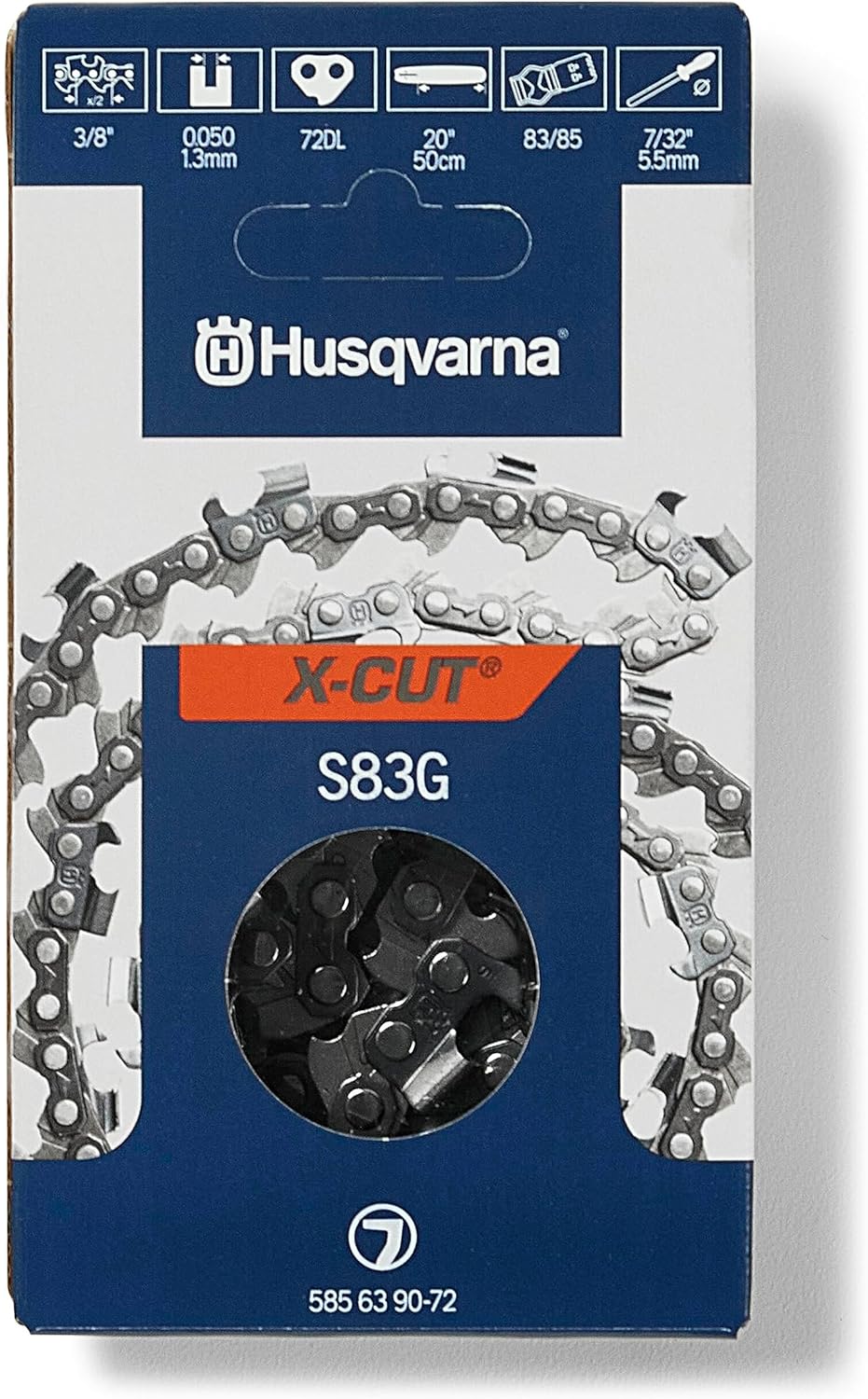
| Pitch | 0.38 inches |
|---|---|
| Chain Type | Semi-Chisel |
| Drive Link Count | 72 |
| Compatible Devices | Husqvarna 460 Rancher, Husqvarna 455 Rancher |
The Husqvarna X‑Cut S83G 20-inch chain is a ready-to-install replacement chain built for general cutting tasks like firewood splitting and limb work. It is a semi-chisel, pre-stretched design with guarded drive links that help reduce kickback and hold an edge longer than basic chisel profiles, so you spend less time sharpening between jobs. Oil channels in the links promote lubrication and reduce wear, which helps when you are cutting lots of seasoned wood. With 72 drive links and a .3/8" pitch/.050" gauge, it fits the 455 and 460 Rancher models and other saws with the same specs. The chain balances cutting efficiency and durability well: it cuts quickly through rounds but is slightly less aggressive than full-chisel chains, making it more forgiving in dirty or knotty wood. The main limitations are compatibility restricted to the stated pitch and drive link count and that users who prioritize the absolute fastest cutting on clean hardwoods might prefer a different cutter profile.
Best for: Homeowners and weekend users who want a reliable, low-maintenance replacement chain that balances sharpness retention, safety, and consistent performance for regular firewood cutting.
Less Ideal for: Professional loggers or users who need the fastest possible cutting speed on clean hardwoods should look at more aggressive full-chisel chains or options sized for different saws.
- Pre-stretched semi-chisel cutters maintain sharpness longer and need less frequent filing
- Guarded drive links reduce kickback for safer handling during firewood cutting
- Oil-shaped channels improve lubrication and reduce wear for sustained cutting sessions
- Designed and tested alongside Husqvarna saws for consistent fit and performance
- Only compatible with chainsaws that accept .3/8" pitch, .050" gauge and 72 drive links
- Less aggressive cut rate than full-chisel chains on clean hardwoods
Verdict: A balanced, low-maintenance replacement chain that delivers safer, long-lasting cutting performance for regular firewood work.
Husqvarna X-Cut C83 24" Chainsaw Chain, 3/8" Pitch, .050" Gauge, 84 Drive Links

| Pitch | 0.38 inches |
|---|---|
| Chain Type | Full Chisel |
| Gauge | 0.05 |
| Drive Link Count | 84 |
The Husqvarna X-Cut C83 24-inch chain is a performance-focused replacement blade intended for heavy-duty cutting and professional use. It fits Husqvarna saws with a 3/8" sprocket and features square-corner full chisel cutters that cut aggressively and stay sharp longer than many bargain chains. Typical use is high-production cutting of clean wood and processing firewood where speed and smooth cuts matter. Notable features include a low-stretch design for consistent tension, low vibration for reduced operator fatigue, and a durable construction that postpones the need for frequent sharpening. In practical terms you get faster cuts and fewer maintenance interruptions compared with standard chains, which saves time when processing large volumes of wood. The trade-off is that full-chisel teeth are less forgiving around dirty wood, nails, or frozen logs and will dull faster under contaminated conditions compared with semi-chisel designs. This chain is best for someone who prioritizes cutting speed and efficiency on clean, seasoned timber.
Best for: Ideal for performance-minded users who process large amounts of clean firewood and want fast, professional-level cutting with less downtime for maintenance.
Less Ideal for: Not a good choice for occasional users who frequently cut logs with embedded dirt, nails, or frozen wood who would benefit from a more forgiving semi-chisel chain.
- Full-chisel cutters deliver fast, efficient cuts for high productivity
- Low-stretch construction maintains consistent tension and reduces adjustment
- Low-vibration design improves operator comfort during long cutting sessions
- Durable sharpness reduces frequency of sharpening under normal conditions
- Full-chisel cutters are more vulnerable to dulling or damage when cutting dirty, frozen, or contaminated wood
Verdict: Choose this chain if you want professional-level, high-speed cutting of clean firewood with longer-lasting sharpness and low vibration.
Oregon PowerCut 20" Chainsaw Chain, 3/8" Pitch, .050" Gauge, 70 Drive Links

| Pitch | 0.38 inches |
|---|---|
| Chain Type | 72LPX |
| Gauge | 0.05 |
| Drive Link Count | 70 |
The Oregon PowerCut 20-inch saw chain is a replacement low-vibration chain designed for demanding cutting tasks such as firewood processing. It uses a 3/8" pitch and .050" gauge with full chisel cutters and an offset depth gauge to deliver aggressive, fast cuts while reducing the chance of cutters digging into the sidewall. In practice it fits chainsaws that accept 70 drive links and a 20" bar and is commonly used for crosscutting logs and bucking firewood. Notable features include the PowerCut hardened cutters for longer edge life and a design that emphasizes smoother cutting with reduced vibration. The chain makes quick work of larger rounds, so you spend less time per log and fewer sharpening cycles between jobs. The main trade-offs are that full chisel cutters are less forgiving on dirty or knotty wood and require more frequent sharpening than semi-chisel designs, and you must confirm pitch, gauge, and drive link count before purchase to ensure fit.
Best for: Buyers who want a productive, professional-style chain for cutting lots of firewood and value fast cutting speed and reduced vibration over maximum tolerance for dirty or knotty timber.
Less Ideal for: Casual users who cut mostly dirty, frozen, or very knotty wood and prefer lower-maintenance chains or those who do not want to manage frequent sharpening.
- Full chisel cutters deliver fast, aggressive cuts for efficient firewood processing
- Offset depth gauges promote smoother cutting and reduced tendency to bind
- Low-vibration design reduces operator fatigue during extended cutting sessions
- Compatible with many popular saw brands that accept 3/8" pitch and .050" gauge
- Full chisel cutters dull faster on dirty, frozen, or knotty wood compared with semi-chisel chains
- Requires exact match of pitch, gauge, bar length, and drive link count to fit properly
Verdict: Choose this Oregon 20" PowerCut chain if you want a fast, low-vibration chain that speeds up firewood cutting with professional-level cutters.
UNCO 20" Chainsaw Chain 3/8" LP Pitch, 0.050" Gauge (3-Pack)

| Pitch | 3/8" LP |
|---|---|
| Gauge | 0.050" |
| Drive links | 80 |
| Quantity | 3 pack |
| Material | Manganese steel |
This UNCO 20-inch three-pack provides a straightforward, economical option for replacing worn chains on common chainsaws. Each chain uses a 3/8" low-profile pitch, 0.050" gauge, and 80 drive links, so they fit most standard 20" bars that accept those specifications. Made from manganese steel with precision-ground cutters, the chains are intended to hold an edge for routine tasks like splitting firewood, trimming branches, and general yard cleanup. Buyers can expect smooth, consistent cuts when the chains are properly tensioned and sharpened, and having three spares on hand reduces downtime during a long cutting session. Limitations to note are that low-profile chains can cut a bit slower than full-profile professional chains and may need more frequent sharpening under heavy use. Also compatibility depends strictly on matching pitch, gauge, and drive link count so confirm your saw specs before purchasing.
Best for: Homeowners who cut firewood and want an affordable, ready-to-use set of replacement chains to keep a 20" saw productive without frequent trips for parts.
Less Ideal for: Professional arborists or users who need the fastest, most durable full-profile chains for daily heavy logging should choose a commercial-grade chain instead.
- Three chains in one package reduces downtime and gives immediate spares for extended firewood sessions
- Common 3/8" low-profile pitch and 0.050" gauge fit many consumer 20" bars
- Manganese steel construction and precision-ground cutters provide reliable cutting performance for routine tasks
- Low-profile design is less aggressive than full-profile professional chains under heavy, continuous cutting
- Requires matching pitch, gauge, and 80 drive links so it will not fit all 20" chainsaws
Verdict: A budget-friendly three-pack of 20" 3/8" LP chains that keeps a homeowner’s chainsaw cutting through firewood with minimal interruption.
Husqvarna X-Cut 20" Full Chisel Chainsaw Chain 3/8" .050" (3-pack)

| Chain Type | Full Chisel |
|---|---|
| Compatible Devices | 20-inch, 3/8-inch, .050-inch, 72 drive link chains |
| Drive Link Count | 45 |
| Number of Packs | 3 |
This Husqvarna X-Cut three-pack supplies replacement chains intended for 20-inch bars and 3/8" .050" drive link chainsaws. Each chain is a full chisel design, which means the cutters are square-edged for fast, aggressive cutting ideal for felling and bucking. The package gives you spare chains to keep a saw running through long jobs without stopping to sharpen, and the Husqvarna X-Cut geometry is engineered to hold a consistent cutting angle for reliable, repeatable performance. In use you get quick bite and efficient timber removal, though full chisel chains require more frequent maintenance and are more sensitive to contact with dirt or nails than lower-profile designs. This set is a practical choice for users who prioritize dependable, high-performance cutting and want the convenience of extra chains on hand, but those who want lower maintenance or quieter, less aggressive cutting may prefer a different cutter type.
Best for: Buyers who need reliable, high-performance replacement chains to keep a 20-inch saw working through heavy cutting tasks and who maintain their chains regularly.
Less Ideal for: Casual homeowners seeking low-maintenance, quieter chains for occasional pruning or those who frequently encounter dirty, gritty wood should consider lower-profile or semi-chisel options.
- Full chisel cutter profile for fast, aggressive cutting
- Three-chain pack provides backups to minimize downtime on long jobs
- Made by Husqvarna with X-Cut geometry for consistent cutting performance
- Full chisel design is more maintenance-sensitive and dulls faster when run through dirty conditions
- Not optimized for low-vibration or quieter trimming tasks
Verdict: If you want dependable, high-speed cutting and on-hand spares for demanding 20" chainsaw work, this Husqvarna X-Cut three-pack delivers.
KAKEI 18" Chainsaw Chain 3/8" LP Pitch .050" Gauge 62 Drive Links (3-Pack) – Semi Chisel

| Pitch | 3/8" LP |
|---|---|
| Gauge | 0.050" |
| Drive Links | 62 |
| Chain Type | Semi-Chisel |
| Unit Count | 3 |
This KAKEI three-pack supplies 18-inch, 3/8" low-profile chains with a .050" gauge and 62 drive links for routine cutting and maintenance. Built from German 68CrNiMo steel with chrome-plated cutters and hardened rivets, the chains are intended to stay sharp longer and resist wear in dirty or abrasive conditions. The semi-chisel design balances cutting speed with durability and is marketed as low-kickback for safer operation on many consumer saw models. Typical use is replacing a worn chain on an 18" guide bar for yard cleanup, pruning, or small felling tasks; the three-pack keeps a spare on hand and reduces downtime. Practical benefits include corrosion-resistant protective oil at delivery, compatibility with a long list of popular saws, and manufacturing processes aimed at consistent fit and tension behavior. Important limitations are that the chain must match your bar pitch, gauge, and drive link count exactly and semi-chisel cutters cut slower than full-chisel alternatives, so users seeking maximum speed on clean timber may prefer a different tooth profile.
Best for: Buyers who prioritize reliable, longer-lasting replacement chains and want a ready supply of spares for routine yard work while keeping safety in mind.
Less Ideal for: Professional loggers or users who need the fastest cutting speed on clean timber should consider full-chisel chains or professional-grade options instead.
- Made from premium German 68CrNiMo steel for improved toughness and wear resistance
- Chrome-plated cutters and hardened rivets for longer edge life and consistent tension
- Sold as a three-pack so you have spares to reduce downtime
- Designed to meet low-kickback safety performance standards for consumer use
- Semi-chisel cutters are slower to cut than full-chisel teeth on clean wood
- Requires exact match of pitch, gauge, and drive link count to your guide bar
Verdict: Choose this three-pack if you want durable, low-kickback replacement chains that stay sharp longer and keep a spare on hand for regular yard maintenance.
Oregon D72 20" Chainsaw Replacement Chain, 3/8" Pitch, .050" Gauge, 72 Drive Links

| Pitch | 0.38 inches |
|---|---|
| Chain Type | 72TXL |
| Gauge | 0.05 |
| Drive Link Count | 72 |
The Oregon D72 is a 20-inch replacement chainsaw chain built for homeowners and light commercial users who need a dependable cutter for firewood and general yard work. It fits many popular models from Stihl, Husqvarna, Makita and others that use a 3/8" pitch, .050" gauge with 72 drive links. The chain uses heat-treated, chrome-plated cutters and hardened rivets to resist wear and hold an edge longer, and Oregon’s Lubri-Tec automatic oiling feature helps keep the chain lubricated during use which reduces frequent adjustments. It is marketed as a low-kickback, low-vibration design certified to meet ANSI kickback performance standards, which makes it a safer option for risk-conscious users. In practice this chain delivers smooth, consistent cuts for splitting rounds and routine firewood processing, and the broad compatibility simplifies finding a correct replacement. Limitations are that it is a semi-chisel style so it may dull sooner than full-chisel professional chains when cutting dirty or frozen wood, and you still need to verify drive link count and bar length before buying.
Best for: Buyers who prioritize predictable, safer performance for routine firewood cutting and yard work and want a replacement chain that fits popular consumer chainsaws with minimal fuss.
Less Ideal for: Professional loggers or users who need maximum cutting speed and edge retention for continuous heavy-duty work should choose a full-chisel or professional-grade chain instead.
- Wide compatibility with many Stihl, Husqvarna, Makita and other common chainsaw models using 3/8" pitch and .050" gauge
- Heat-treated, chrome-plated cutters and hardened rivets for longer wear and fewer adjustments
- Built-in Lubri-Tec automatic oiling to keep the chain lubricated during use
- Low-kickback, low-vibration design certified to meet ANSI kickback performance requirements
- Semi-chisel design can dull faster than full-chisel chains when cutting dirty, frozen, or abrasive wood
- Requires confirming bar length and 72 drive links—wrong size will not fit
Verdict: A reliable, low-kickback 20" replacement chain that balances safety and durability for homeowners cutting firewood on common consumer chainsaws.
Choosing the Right Chainsaw Chain for Cutting Firewood: Key Factors to Consider
Cutter Tooth Design
Tooth geometry determines how aggressively a chain removes wood. Full chisel teeth cut quickly and are great for clean, straight-grain hardwood rounds, but they dull faster when you hit dirt or gritty bark. Semi-chisel or impulse-ground designs sacrifice a little cutting speed for better edge retention when conditions are less than perfect. For firewood you usually want cutters that can take a slightly deeper bite without constant filing, so consider the tradeoff between raw speed and how often you are willing to resharpen.
Also note that tooth shape affects chip clearance and how the chain moves sawdust away from the kerf. Chains that eject chips well tend to maintain cutting efficiency through a long cord of wood, while those with restricted chip flow can bog down and demand more throttle management.
Cutting Pitch and Gauge
Pitch and gauge must match your guide bar and sprocket; mismatches cause poor fit, excess wear, or unsafe operation. Pitch measures the spacing between drive links and affects how smooth the chain feeds over the bar and sprocket. A larger pitch often pairs with heavier-duty bars and is common on full-size saws used for big firewood. Gauge refers to the thickness of the drive link that seats in the bar groove and affects lateral stability and performance.
When choosing a chain for firewood, pick the correct pitch and gauge first, then look at cutter style and material. Using the right size prevents rapid wear and reduces the chance of the chain derailing during heavy cuts.
Material and Heat Treatment
The steel alloy and heat treatment process determine how long cutters hold an edge and how they resist deformation. Hardened cutters will stay sharper longer when cutting abrasive materials like bark with embedded grit. Some chains use specialty alloys or additional surface treatments for improved wear resistance.
While harder steel holds an edge better, extremely hard cutters can be more brittle and chip if they strike nails, dense knots, or hidden debris. For firewood, a balance that favors wear resistance but retains some toughness is ideal, because you will often meet dirt and irregularities in logs.
Ease of Sharpening and Maintenance
No chain stays razor-sharp forever, so how easy it is to restore the cutting profile matters. Chains with straightforward cutter profiles allow for fast, consistent hand filing, while more complex or impulse-ground cutters benefit from a bench grinder or a professional tune-up. Consider whether you will be sharpening by hand in the field or prefer to send chains out for periodic service.
Maintenance also includes tensioning and lubrication. Chains that require frequent retensioning or have tight tolerances may slow you down during a long cutting session. Look for chains with accessible drive links and tolerances that make on-the-bar adjustments simple.
Kickback and Safety Features
Kickback is a real hazard when cutting firewood, especially with powerful saws and aggressive chains. Some chains are designed with reduced-kickback profiles, such as guard links or deeper gullets, that limit the severity of a reactive upward motion. These designs often trade a bit of peak cutting speed for safer handling, which is a sensible trade for homeowners and less experienced sawyers.
Evaluate whether a reduced-kickback chain still cuts efficiently for the wood species you plan to process. For experienced users handling large logs, the extra bite of a semi- or full-chisel chain might be acceptable, but for general backyard firewood work, safer profiles are usually preferable.
Compatibility with Bar Length and Saw Power
A chain that performs well on a small homeowner saw may not be the best match for a larger saw and vice versa. Bar length and engine or motor power influence chain speed and the load each cutter sees. Using a chain optimized for heavier, larger saws on a low-power saw can result in bogging and overheating; conversely, using a lightweight chain on a high-torque saw can lead to excessive wear.
Review the chain's recommended bar range and intended saw class. For frequent firewood cutting where you alternate between small rounds and larger splits, choose a chain that tolerates a range of bar lengths and power levels without rapid loss of performance.
Best Chain Types by Firewood Situation
Different firewood setups call for different chain priorities. If you are processing predominantly seasoned hardwoods, prioritize sharper, faster-cutting profiles that slice through end grain efficiently. If you are cutting mixed species with dirty bark or sawpit exposure, choose a chain with better wear resistance and a more forgiving tooth shape.
For occasional backyard users who value safety, a reduced-kickback chain with easier sharpening is often the best compromise. Commercial or heavy-use situations benefit from chains with hardened cutters and serviceable geometry that can be quickly re-tipped or professionally maintained.
- Seasoned hardwood: prioritize cutting speed and chip ejection
- Mixed species with grit: favor wear resistance and semi-chisel profiles
- Frequent users: choose chains designed for easy resharpening and high load
- Safety-first backyard use: reduced-kickback profiles and forgiving cutters
Maintaining Chains During a Cutting Session
Keep a compact sharpening kit, a good file guide, and a bar groove cleaner with you when processing firewood. Light, periodic sharpening during long sessions keeps cutters cutting efficiently and prevents chains from overheating or stalling the saw.
Check tension regularly. Chains heat and stretch during heavy cutting, so retensioning every few cords or after extended cutting prevents derailment and uneven wear. Also inspect for damage from nails, metal, or large knots and replace the chain if cutters are chipped or drive links are bent.
- Carry a round file and guide sized to the chain pitch
- Clear the bar groove of debris every few hours
- Stop and inspect for damaged links after any unusual hit
Field Sharpening Tips for Consistent Results
Use a file that matches the cutter radius and maintain the factory filing angle for the best balance of cutting performance and longevity. Filing every cutter to a consistent depth and angle prevents vibration and uneven cutting that makes the job harder.
For impulse-ground or micro-chisel cutters, take smaller, more frequent strokes. If you do not feel confident maintaining these profiles by hand, carry a spare chain you can swap in and resharpen the duller one at a workbench or professional shop.
- Set a repeatable filing angle with a guide
- File cutters in the same direction and stroke count
- Rotate chains between saws or spares to extend service life
When to Replace Instead of Sharpening
If cutters are repeatedly chipping, drive links are deformed, or the chain requires frequent sharpening after only a short service life, replacement is more economical and safer. Extremely thin or heavily stretched chains also indicate underlying wear in the drive links and should be retired.
Chains exposed to heavy grit or frequent contact with ground-held debris will have shortened service life. In those situations, plan for a regular replacement cycle and keep a spare chain on hand to avoid downtime.
- Replace when cutters are chipped or misshapen
- Retire chains that pull to one side after sharpness is restored
- Watch for excessive elongation that prevents proper tensioning
Pairing Chains with Guide Bars and Saws
Match the chain pitch and gauge to the bar and sprocket first. Beyond that, choose a chain whose cutter style complements your saw power. Lightweight, high-rpm saws benefit from lighter-cutting chains that reduce amp draw or fuel load, while heavy-duty saws can exploit more aggressive cutters without sacrificing performance.
Consider bar features like low-kickback designs or noise-reduction grooves if you are working in a residential area. The right bar and chain combination improves control and reduces operator fatigue over long cutting sessions.
- Confirm pitch and gauge compatibility before buying
- Select cutter aggressiveness based on saw torque
- Account for bar length and the types of logs you will process
How We Chose the Best Chainsaw Chain for Cutting Firewood
We focused on attributes that matter for repeated firewood cutting rather than light landscaping or pruning. Primary evaluation criteria were cutting tooth design and aggressiveness, cutter material and heat treatment for wear resistance, pitch and gauge compatibility across common saws, ease of field sharpening, and the chain's behavior with typical firewood species and bark conditions. We examined chain durability under abrasive conditions, how often the chain needs filing, and whether specialized cutters or alloy choices reduced the frequency of maintenance. Chains were excluded if they were intended only for pruning, pole saws, or ornamental carving where cutting angles and cutter geometry differ from log splitting. We also excluded chains that required proprietary tools or setups that most homeowners do not have. The final shortlist balances performance for hardwood and softwood rounds, maintenance demands, and compatibility with common bar-and-saw setups so gardeners and homeowners can choose a practical chain for bulk firewood work.
FAQ
How often should I sharpen a chainsaw chain used for firewood?
It depends on wood species and conditions, but many users sharpen after several hours of continuous cutting or sooner if the chain starts to smoke, pull to one side, or require more throttle. Frequent light filing is better than letting the chain become very dull.
Can I use a pruning or carving chain for firewood?
Pruning and carving chains have different cutter geometries optimized for crosscuts, detail work, or limb cutting and usually wear faster on heavy firewood work. They are not ideal for bulk firewood processing where chip clearance and durability matter more.
Does pitch or gauge affect cutting performance for firewood?
Yes. Pitch and gauge determine fit and stability on the bar and influence how the chain shares load with the saw. Using the correct pitch and gauge for your bar prevents excessive wear and ensures the chain feeds and cuts as designed.
Are reduced-kickback chains slower at cutting firewood?
Reduced-kickback chains can be slightly less aggressive than full-chisel designs, but the difference is often acceptable for backyard and homeowner work. The safety tradeoff is worthwhile for many users who process a variety of log sizes and species.
How do I choose a replacement chain for an older bar and saw?
Measure the bar groove width and count the drive links, and confirm the pitch stamped on the bar or original chain. Once pitch and gauge are matched, select a cutter profile that suits your typical wood species and intended balance between cutting speed and durability.
Final Verdict
For cutting firewood, prioritize chains that balance cutting speed with wear resistance and simple maintenance. Match pitch and gauge to your bar and favor cutter designs that tolerate gritty bark if you process logs stored outdoors. If safety is a concern, choose reduced-kickback profiles that still cut efficiently for your species mix. Weigh the tradeoffs between raw bite and edge retention based on how often you will sharpen and the typical debris in your wood. With the right chain choice and routine maintenance, you will spend less time fighting dull cutters and more time stacking dry, split rounds.
