

Note: This article contains affiliate links. If you click on these links and make a purchase, I may earn a small commission at no extra cost to you. This helps support my research and content. Read my full affiliate disclosure here.
If you want to add vertical interest from a small patio, balcony, or doorstep, choosing climbing plants suited to containers makes the difference between a thriving display and a summer of struggle. Potted climbers behave differently from those in the ground: root volume is limited, water moves faster, and supports must be proportional to the container. This guide shortlists the strongest options for growing climbers in pots and explains practical care tradeoffs like light, watering, and trellis type. Below you will find our top picks for climbing plants to grow in pots along with clear evaluation criteria that reflect real gardener needs. Use the summaries and buying guidance to match a plant to your specific container, exposure, and maintenance plan.
Top Picks at a Glance
| Best Overall The best all-around choice for most situations | Flora's Market Confederate Jasmine (1 Gallon, 2-Pack) with Planting Kit |  |
| Best Quality Built to a higher standard if you want something more solid | Plants by Mail Star Jasmine 'Large Leaf' (2.5 Quart) – Evergreen Climbing Vine |  |
| Best Value The sweet spot between price and what you get | Thorsen's Greenhouse Hahn's Green Ivy Plant (4" Pot) |  |
| Best Budget The cheapest option that still gets the job done reliably | KVITER Blue & White Morning Glory Seeds (100 Count) |  |
| Highest Rated A top-rated pick with lots of positive feedback | ma cherie roses Yellow Lady Banks Climbing Rose, 2-Quart Own-Root Potted Plant |  |
| Most Popular A crowd favorite that many people choose with confidence | Perfect Plants Confederate Jasmine (2-Pack), Star Vine, 1 Gal |  |
| Best Seller A high-volume bestseller chosen again and again | Plants for Pets Pothos 4-Pack (4" Assorted) |  |
Flora's Market Confederate Jasmine (1 Gallon, 2-Pack) with Planting Kit

| Indoor Outdoor Usage | Outdoor |
|---|---|
| Sunlight Exposure | Full Sun-Partial Shade |
| USDA Hardiness Zone | 7-10 |
| Included Components | Pebbles, Plant Hanger, Saucer |
Flora's Market Confederate Jasmine is an evergreen, twining vine sold here as a pair of nursery-grown 1-gallon plants with a planting kit that includes fertilizer, premium planting mix, pebbles, a saucer, and a hanger. It is typically used on trellises, fences, pergolas, or in containers where you want fragrant white, star-shaped blooms from late spring into early summer and year-round glossy foliage. Key features are its strong fragrance, fast climbing habit, and tolerance of full sun to partial shade; the included planting guide and starter amendments make it easier to get the plants established in pots. In practice the vine is straightforward to train and will quickly provide screening or vertical interest, and once established it is reasonably drought tolerant. Limitations to note are its zone range and that peak flowering and vigor depend on good light and well-draining media in containers, so potted installations need regular monitoring of moisture and support for training.
Best for: Gardeners who want a fragrant, fast-climbing evergreen for containers or small vertical structures and who value an easy start with included planting supplies and guidance.
Less Ideal for: People seeking a cold-hardy climber for northern climates or buyers who want a truly low-light flowering vine for deep shade.
- Fragrant, showy white flowers that attract pollinators
- Evergreen foliage provides year-round screening and visual interest
- Includes planting kit with fertilizer and planting mix to simplify potting
- Tolerates full sun to partial shade so it adapts to a range of pot locations
- Best performance limited to USDA zones 7 to 10 so not suitable for colder climates
- Potted plants require well-draining soil and regular moisture checks for optimal blooms
Verdict: A fragrant, evergreen climbing jasmine sold with a starter planting kit that makes it an easy, high-impact choice for container-grown vertical planting in mild climates.
Plants by Mail Star Jasmine 'Large Leaf' (2.5 Quart) – Evergreen Climbing Vine

| Expected Blooming Period | Spring to Summer |
|---|---|
| Sunlight Exposure | sun to partial shade |
| USDA Hardiness Zone | 9 |
| Moisture Needs | Moderate Watering |
| Soil Type | Loam Soil |
This large-leaf Star Jasmine is a versatile, fast-growing evergreen vine that is typically used on trellises, arbors, fences, or as a groundcover. It produces clusters of fragrant white, star-shaped flowers in late spring through summer and can be trained to reach tall supports where it will twine and fill in quickly. The plant prefers full sun but tolerates partial shade and benefits from regular watering during its first seasons to establish strong roots. Practical features include vigorous twining habit that makes it easy to train on a trellis and glossy leathery leaves that provide year-round greenery. Expect steady vertical coverage and strong fragrance that attracts pollinators. Limitations to consider are its USDA zone preference (best in warmer climates) and the need for routine watering and occasional pruning after flowering to keep it neat and encourage denser growth. For gardeners wanting a reliable, fragrant climber for sunny trellis sites, this jasmine is a straightforward choice.
Best for: Gardeners who want a reliable, fragrant climber to quickly cover a sunny trellis or fence and value year-round evergreen screening with seasonal blooms.
Less Ideal for: Those in consistently cold climates or gardeners seeking a low-water, drought-tolerant climber should consider alternative species better adapted to cooler or xeric conditions.
- Fast-growing twining habit that quickly covers trellises and fences
- Fragrant clusters of white star-shaped flowers in spring and summer
- Evergreen glossy foliage provides year-round screening
- Tolerates full sun to partial shade and attracts pollinators
- Best suited to warmer USDA zones so may not survive cold winters without protection
- Requires regular watering and occasional pruning to maintain shape and vigor
Verdict: Choose this Star Jasmine when you need a fast, fragrant evergreen climber to quickly fill a full-sun trellis and provide seasonal white blooms.
Thorsen's Greenhouse Hahn's Green Ivy Plant (4" Pot)

| Indoor Outdoor Usage | Indoor |
|---|---|
| Other Special Features of the Product | Air Purification, Low Maintenance |
| Sunlight Exposure | Partial Shade |
| Moisture Needs | Moderate Watering |
| Soil Type | Peat Soil |
This Hahn's Green Ivy arrives as a compact, trailing houseplant sold in a 4-inch grower pot with a plastic cache pot. It is typically used in hanging baskets, on shelves, or trained up a small trellis where it produces fast-growing vines and dense green foliage. Notable features include tolerance for a wide range of light levels, moderate watering needs, and a plant-based peat soil that makes it ready to display or repot. Practically, the plant's vigor and NASA-recognized air-purifying reputation make it a low-effort way to add vertical greenery inside small spaces. Expect an acclimation period after shipping and occasional leaf loss from transit stress, but recovery is straightforward with even moisture and bright indirect light. Limitations: the included plastic cache pot lacks drainage holes so you will need to remove the plant for watering or place it in a draining liner, and growth can become leggy in low light requiring pruning or training.
Best for: A practical plant owner who wants an inexpensive, low-maintenance climbing or trailing houseplant to quickly add vertical green cover in small pots or hanging displays.
Less Ideal for: Not the best choice for someone seeking a self-contained planter with built-in drainage or a very slow-growing, compact specimen for tiny spaces.
- Fast-growing trailing habit suitable for hanging baskets or training on a trellis
- Tolerates a wide range of indoor light conditions from bright indirect to lower light
- Low-maintenance watering needs with clear care guidance for seasonal adjustment
- Ships in a ready-to-display 4-inch grower pot with a decorative plastic cache pot
- Cache pot does not have drainage holes which complicates watering without removing the grower pot
- May arrive with minor shipping stress that requires a short recovery period
Verdict: Choose this Hahn's Green Ivy when you want an affordable, fast-growing indoor climber that quickly adds trailing greenery and cleans the air.
KVITER Blue & White Morning Glory Seeds (100 Count)

| Unit Count | 100 Count |
|---|---|
| Sunlight Exposure | Full Sun |
| Expected Blooming Period | Spring to Fall |
| USDA Hardiness Zone | 2-11 |
| Material Features | GMO Free, Heirloom |
These KVITER morning glory seeds produce fast-growing, showy blue and white vines that are well suited to trellises and fences. The packet contains 100 heirloom, GMO-free seeds and includes a step-by-step growing guide that walks you through soaking, sowing depth, spacing, and sun needs. Planted in full sun and loam soil with moderate watering, expect vigorous vines that can reach about 8 feet and bloom from spring through fall in USDA zones 2–11. They are low-maintenance and attract pollinators, making them a good choice for adding vertical color and covering structures quickly. Because they are untreated seeds, they work well for gardeners who prefer straightforward, traditional varieties, but germination can vary with seed age and conditions so following the included soak-and-sow instructions improves results. These are best for gardeners who want an inexpensive, large-quantity seed pack to populate trellises and containers rather than precise cultivar selection or guaranteed uniformity.
Best for: Gardeners who want an affordable, high-volume seed packet to quickly cover trellises, fences, or containers with pollinator-friendly flowering vines and who value practical growing guidance.
Less Ideal for: Growers seeking a specific named cultivar, strict uniformity of flower color, or guaranteed germination rates should consider certified or pre-started plants instead.
- Large 100-count packet provides many plants for trellises or mass planting
- Heirloom and GMO-free seeds with a growing guide included for beginners
- Fast-growing vines that can reach about 8 feet and bloom from spring to fall
- Attracts pollinators and works well in containers or on fences
- Germination and flower color distribution can vary since seeds are untreated and mixed
- Not a named cultivar so uniformity and specific flower traits are not guaranteed
Verdict: A generous pack of heirloom morning glory seeds that reliably produces fast, pollinator-friendly vines ideal for quickly dressing trellises and fences.
ma cherie roses Yellow Lady Banks Climbing Rose, 2-Quart Own-Root Potted Plant

| Expected Blooming Period | Spring to Fall |
|---|---|
| Sunlight Exposure | Full Sun |
| Soil Type | Loam Soil |
| Moisture Needs | Regular Watering |
This Yellow Lady Banks climbing rose arrives as an established 2-quart own-root plant intended for training on a trellis, fence, or in a large patio pot. It produces abundant clusters of soft yellow to creamy blooms from spring through fall and is described as nearly thornless, which makes pruning and handling easier. Being own-root rather than grafted means it should be more resilient and able to re-sprout true to variety over time, a practical benefit for gardeners who want long-term reliability. Typical use is planting into loam-based potting mix, placing in full sun, and keeping regular watering during the growing season; its vigorous, cascading habit suits vertical displays or large container plantings. Limitations to consider are that climbing roses need structural support and space to spread, and a 2-quart rootball is a starting size that will require transplanting to a larger container for best flowering and stability. Expect routine maintenance such as seasonal feeding and occasional pruning to maintain shape and encourage blooms.
Best for: Gardeners who want a reliable, low-maintenance climbing rose for a sunny patio or container and who prioritize plants that re-establish true to variety and handle routine care well.
Less Ideal for: People with very small pots or primarily shaded balconies, or those wanting a fully container-dwarf shrub that requires no structural support or training.
- Own-root propagation for better cold tolerance and true-to-variety regrowth
- Nearly thornless canes make training and pruning easier
- Long bloom period from spring to fall provides extended color
- Arrives as an established 2-quart plant for a quicker start in containers
- 2-quart pot size will need transplanting into a larger container for sustained growth
- Requires full sun and regular watering which can be demanding for shaded or drought-prone patios
Verdict: Choose this own-root, nearly thornless climbing rose when you want a dependable cascading bloom for a sunny patio pot or trellis that will perform year after year.
Perfect Plants Confederate Jasmine (2-Pack), Star Vine, 1 Gal
| Indoor Outdoor Usage | Outdoor |
|---|---|
| Expected Blooming Period | Spring |
| Sunlight Exposure | Full Sun, Partial Shade |
| Moisture Needs | Moderate Watering |
| Unit Count | 1 Count |
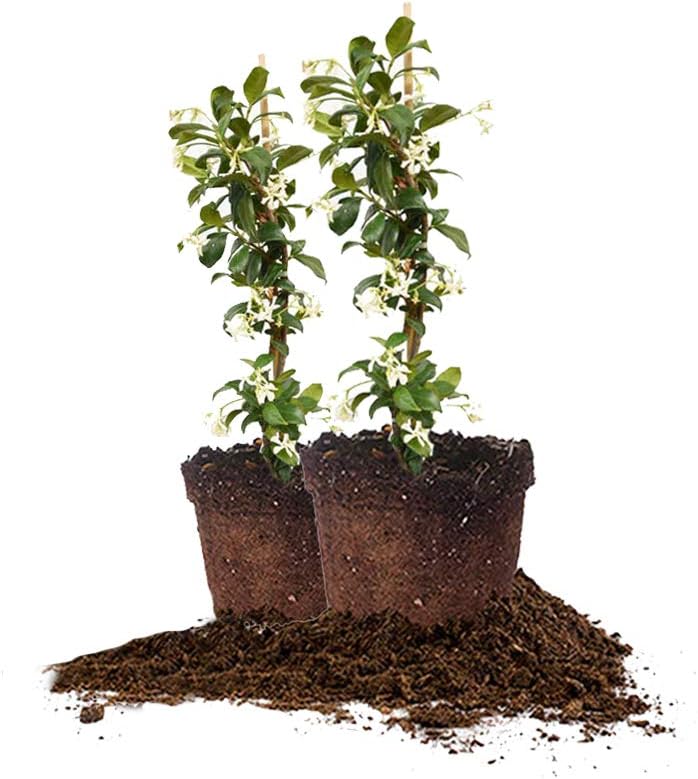
These two Confederate jasmine vines arrive in individual 1‑gallon nursery pots and are meant to be trained on fences, trellises, railings or other supports to form a fragrant, evergreen screen. They perform best in full sun to part shade and are rated for USDA zones 7–11, so on a shaded porch they will tolerate lower light but bloom most reliably where they get some sun. The plants are described as easy to establish; new arrivals need deep watering every day or two for the first two weeks and can drop some leaves while roots settle. Notable features are the glossy evergreen foliage, sweet white pinwheel flowers in spring and early summer, and organic plant material. Limitations include that each order contains small 1‑gallon pots so expect a period of growth before reaching the listed mature height, and some variability between the two plants. Buyers should plan to provide a structure and basic training to get a neat coverage and to monitor moisture while the plants establish.
Best for: Gardners who want a fragrant, evergreen climbing vine to train on a porch trellis or railing and who prefer a low‑maintenance plant that establishes quickly with basic watering.
Less Ideal for: Those seeking instant privacy or mature coverage right away or gardeners unwilling to train or support vines as they grow.
- Two evergreen vines per order for quicker coverage when planted together
- Fragrant white spring blooms that add scent to a porch area
- Tolerates full sun to partial shade, making it adaptable to sheltered porches
- Ships in 1‑gallon nursery pots so plants are ready to plant immediately
- Described as easy to establish with straightforward watering guidance
- Plants are small 1‑gallon specimens so visual impact takes time as they grow to mature height
- Some leaf drop and minor shipping damage to stems is possible during establishment
Verdict: A practical choice for porch gardeners who want a fragrant, adaptable evergreen vine they can train for seasonal blooms and long‑term screening.
Plants for Pets Pothos 4-Pack (4" Assorted)

| Indoor Outdoor Usage | Indoor |
|---|---|
| Other Special Features of the Product | Air Purification |
| Sunlight Exposure | Full Sun |
| Moisture Needs | Regular Watering |
| USDA Hardiness Zone | 3 |
This four-pack delivers beginner-friendly pothos varieties that suit low-light rooms and simple indoor care routines. Each plant comes rooted in a 4" nursery pot and the assortment rotates between familiar types such as Marble Queen, Golden, Neon, and Satin, so you get visual variety without extra effort. Pothos are typically grown in hanging planters, on shelves, or trained up a support; they prefer bright, indirect light but tolerate lower light levels that many apartments and offices have. The listing emphasizes air-purifying benefits and gives clear care guidance: allow the soil to dry between waterings and keep temperatures above about 60 F. Practical strengths are resilience, fast trailing growth for a lush look, and compatibility with common indoor spots like living rooms, kitchens, or bathrooms. Limitations are that you may receive different varieties than pictured and plants arrive in small 4" pots, so plan to repot sooner if you want bigger specimens or longer-term display without frequent watering.
Best for: Buyers who want low-maintenance greenery for indoor spaces and prefer reliable, easy-to-care-for plants that tolerate lower light and occasional neglect.
Less Ideal for: Growers seeking large, mature plants ready for instant statement displays or those who want guaranteed, specific rare varieties.
- Easy to grow and tolerant of low to bright indirect light
- Four different varieties provide visual variety in one purchase
- Ships in small nursery pots that establish quickly and are ready for hanging or shelving displays
- Listed care guidance is straightforward for first-time plant owners
- Arrives in 4" pots so plants may need repotting soon for faster growth or long-term display
- Specific varieties are not guaranteed and assortment can vary
Verdict: A simple, low-maintenance way to add trailing, low-light-friendly pothos to your home with minimal fuss.
Choosing the Right Climbing Plants to Grow in Pots: Key Factors to Consider
Container Size and Root Volume
Container size is the single biggest determinant of how a climbing plant will perform in a pot. A larger container provides more moisture reserves and nutrients, which reduces stress and supports longer, fuller growth. In practice this means choosing a pot at least 12 to 16 inches wide for most small climbers and larger for vigorous species.
Root volume affects how often you must water and fertilize. Plants confined to small pots will need more frequent irrigation and lighter feeding schedules to avoid salt build-up. Also consider pot depth for root crops and for plants that develop strong basal stems; shallow containers can stunt growth and reduce the vigor needed to climb effectively.
Light Exposure and Microclimate
Climbers vary widely in their light requirements, from full sun bloomers to shade-tolerant vines that perform best in filtered light. Evaluate the actual hours of direct sun your balcony or patio receives and select species that match that exposure, not just the general label of 'sun' or 'shade.'
Microclimates created by nearby buildings, reflective surfaces, or heat-absorbing walls can alter a plant's water needs and flowering. South- or west-facing balconies often need heat-tolerant choices and more frequent watering, while east-facing or shaded patios benefit from climbers that tolerate less light and cooler root temperatures.
Support Type and Installation
The kind of support you provide affects both plant health and aesthetics. In containers you can use short obelisks, bamboo canes, lightweight trellis panels, or wall-attached wires depending on the scale of the plant. Choose supports that anchor securely to the pot or structure; lightweight pots can tip if supports are tall and unsupported.
Think about training style too. Some climbers twine and need close, vertical supports. Others produce tendrils or adhesive pads and can attach to flat trellis panels or walls. The support material should match the plant's climbing habit to avoid damage and to ensure neat coverage over time.
Watering Rhythm and Soil Mix
Potted climbers dry out faster than those in beds, so understanding each species' watering rhythm is critical. Use a free-draining potting mix amended with moisture-retaining components like coco coir or composted bark for plants that need steady moisture. For drought-tolerant climbers, leaner mixes with more grit help prevent root rot.
Consider using consistent watering practices such as top-watering until water flows from the drainage holes, and employ mulch or surface cover to reduce evaporation. Self-watering containers or drip irrigation can stabilize moisture levels for thirsty climbers on hot balconies.
Pruning and Training Needs
Pruning frequency and training requirements determine the time you will spend maintaining a potted climber. Some species need regular pinching to encourage lateral branching and flowers, while others are low-maintenance and can be left to scramble.
Regular removal of old growth, spent blooms, and overly long stems keeps a container plant balanced and prevents it from becoming top-heavy. Choose a species whose pruning needs match your willingness to intervene, and plan for seasonal shaping to maintain vigor in a confined root space.
Winter Care and Overwintering in Containers
Containers expose roots to colder temperatures than in-ground planting, so winter protection is a real concern for many climbers. For marginal hardy species, bring pots into a sheltered location, insulate containers with bubble wrap or straw, or sink pots into the ground for winter months.
Decide whether you will treat a climber as an annual in cold climates or commit to winter protection. Hardy options reduce winter labor, while tender species may reward you with longer seasons if you provide frost protection.
Best Exposures for Patio and Balcony Climbers
Different climbers shine in different exposures. For full sun balconies, look for varieties that tolerate heat and reflectivity; they will reward you with reliable blooms if given consistent water and fertilizer. East-facing sites often support morning-flowering climbers that prefer cooler afternoons, while shady courtyards require species that produce attractive foliage or delayed flowering under lower light.
- Assess actual sun hours across the day, not just general direction.
- Match flower timing to exposure for best display.
- Consider heat-reflective surfaces when selecting sun-loving plants.
Choosing the Right Trellis for Containers
Support selection is a practical choice that affects aesthetics and plant health. Low obelisks are ideal for small pots and prevent tipping, while flat trellis panels work well when pots sit against a wall. Lightweight wire frames suit twining vines, while broader mesh or panels support tendril-bearing climbers.
- Anchor tall supports to a stable base or the surrounding structure.
- Use materials that resist rot for long-term outdoor exposure.
- Consider removable supports if you plan to repot regularly.
Soil Mixes and Feeding Schedule for Potted Climbers
A quality container mix tailored to climbing plants balances drainage with moisture retention. Incorporate compost for nutrients but keep the mix light with perlite or coarse sand to avoid waterlogging. Feed regularly with a balanced liquid fertilizer during the active growing season, following package dilution guidance for container-grown plants.
- Top-dress with compost in spring for a slow nutrient boost.
- Reduce feed in late season to prepare plants for dormancy.
- Use water-soluble fertilizer every 2 to 4 weeks in peak growth.
Managing Pests and Common Container Problems
Potted climbers share pest pressures with in-ground plants but can show stress symptoms faster due to the limited root zone. Monitor regularly for aphids, spider mites, and scale, and treat early with appropriate cultural controls or targeted organic products. Watch for root-bound symptoms such as reduced growth or rapid drying between waterings, which indicate a need to repot or root-prune.
- Inspect undersides of leaves and new growth weekly.
- Maintain airflow around foliage to reduce fungal issues.
- Repot every 1 to 3 years depending on root vigor.
Design Ideas: Small-Space Vertical Gardening
Climbers in pots let you add height and drama to tight outdoor spaces without sacrificing floor area. Combine a taller climbing specimen with trailing plants around the pot rim to create layered interest. For privacy, group several container climbers along a railing or balcony to form a living screen that can be changed seasonally.
- Use matching pots for a unified look or varied textures for contrast.
- Rotate containers periodically to ensure even light exposure.
- Pair flowering climbers with evergreen foliage plants for year-round structure.
How We Chose the Best Climbing Plants to Grow in Pots
We focused on plants that reliably climb or scramble when confined to a pot and that perform well with container-sized root balls. Our editorial filters prioritized ease of establishment in containers, consistent flowering or foliage interest in limited soil, tolerance of common container stresses, and clarity about light and support needs. We favored species and cultivars known for predictable behavior in patio containers over those that require heavy pruning, deep soil, or extensive root space. Selection criteria used across the shortlist included container adaptability, light tolerance, watering rhythm, support compatibility, and seasonal interest. We excluded plants that routinely need ground planting, very deep root systems, or aggressive, invasive root behavior that is unsuitable for confined containers. The plants that made the list are those that balance compact root habits with useful climbing vigor and manageable maintenance for typical home gardeners.
FAQ
Can I grow climbing plants in small pots on a balcony?
Often yes. Many climbers will perform well in smaller containers if you choose species that tolerate limited root volume and provide consistent water and fertilizer. Use dwarf or patio varieties when available and provide proportional support.
How often should potted climbers be watered?
It depends on pot size, exposure, and species. Small pots and hot, sunny sites need daily or every-other-day watering, while larger pots in cooler spots can be watered less frequently. Check the top inch of soil and water when it begins to dry.
Do climbing plants need deep pots?
Depth matters more for some species than others. Twining vines generally do fine in moderate-depth containers, while plants that develop substantial root systems or tubers may need deeper pots. Match pot depth to the plant's root habit to avoid stunting.
How do I prevent a potted climber from toppling over?
Use broad, heavy pots or weighted bases and secure supports to the pot or nearby structure. Keep the center of gravity low by training stems upward and avoiding overly tall, unsupported stakes in lightweight containers.
When should I repot my climbing plant?
Repot when you see signs of being root-bound such as roots circling the drainage hole, rapid drying between waterings, or slowed growth. For many potted climbers this is every 1 to 3 years depending on vigor and pot size.
Final Verdict
When selecting climbing plants to grow in pots, balance the plant's light and support needs with the container size you can provide. Prioritize species that match your exposure, water routine, and willingness to train or prune. Accepting tradeoffs-such as choosing a less vigorous but easier-to-manage climber for a small pot-will reduce maintenance and improve long-term performance. Focus on container adaptability, support compatibility, and watering tolerance when deciding. Those priorities will guide you to a durable, attractive potted climber that fits your outdoor space and lifestyle.
