

Note: This article contains affiliate links. If you click on these links and make a purchase, I may earn a small commission at no extra cost to you. This helps support my research and content. Read my full affiliate disclosure here.
If you need dependable soil preparation without fuss, choosing the right 4 Cycle Cultivator matters for how fast and clean your beds get turned. These machines are built for repeated use across vegetable plots, flower beds, and larger garden areas where steady torque and straightforward maintenance matter most. In this guide we shortlisted seven top-rated 4 Cycle Cultivators suited to common garden conditions and varied soil types. We evaluate each candidate for engine reliability, tine design, and overall handling so you can match a unit to your workload and terrain. Read on to see which features influence real-world performance and which machines best fit specific garden tasks.
Top Picks at a Glance
| Best Overall The best all-around choice for most situations | TAZZ 2-in-1 Front Tine Tiller Cultivator, 79cc Viper Engine |  |
| Best Quality Built to a higher standard if you want something more solid | Mantis Deluxe XP 4-Cycle Tiller with Kickstand, 16-Inch |  |
| Best Value The sweet spot between price and what you get | SENIX 4QL 46cc 4-Cycle Gas Tiller Cultivator, 15" Tilling Width |  |
| Best Budget The cheapest option that still gets the job done reliably | YDOOLNG 63CC 4-Stroke Gas Mini Tiller Cultivator |  |
| Highest Rated A top-rated pick with lots of positive feedback | Mantis 7940 4-Cycle Tiller/Cultivator with Honda Engine |  |
| Most Popular A crowd favorite that many people choose with confidence | Earthquake Versa 2-in-1 Front-Tine Tiller/Cultivator with 99cc Viper Engine |  |
| Best Seller A high-volume bestseller chosen again and again | BILT HARD 46cc 4-Cycle Gas Tiller Cultivator, 16" Tilling Width |  |
TAZZ 2-in-1 Front Tine Tiller Cultivator, 79cc Viper Engine
| Engine | 79cc 4-cycle Viper |
|---|---|
| Tilling width | Adjustable 11", 16", 21" |
| Max tilling depth | 11" |
| Power source | Gas Powered |
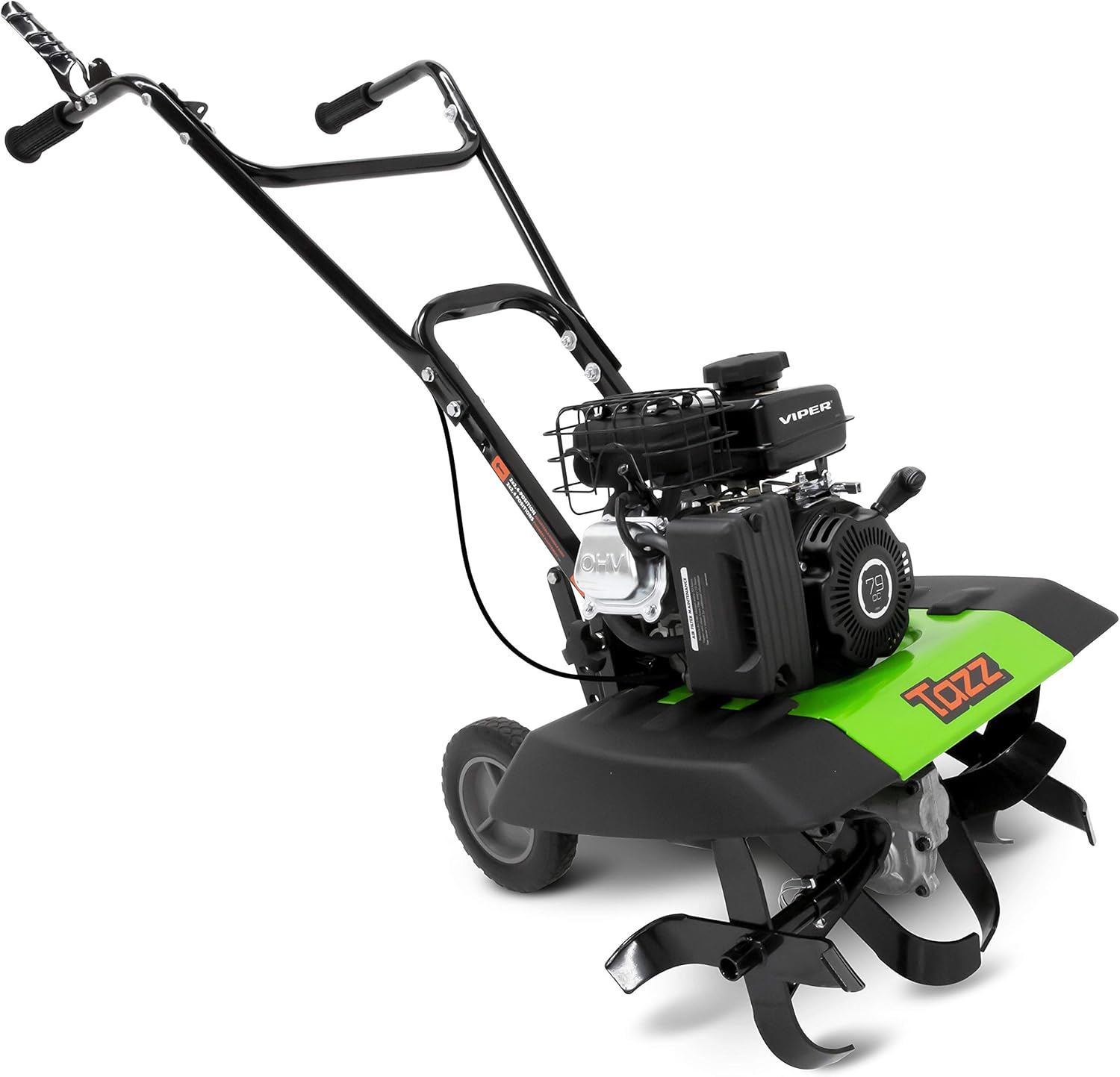
The TAZZ 2-in-1 front tine tiller/cultivator is a gas-powered tool designed to prepare seedbeds and maintain garden rows without needing separate machines. It pairs a 79cc Viper 4-cycle engine with a bronze gear drive and forged steel tines to deliver enough torque to break compacted soil while remaining maneuverable for smaller plots. Switching between full tiller mode and narrower cultivator widths is tool-free: removing outer tines and side shields lets you choose 21, 16, or 11 inch working widths, and a multi-position drag stake controls depth up to 11 inches. Four handle height positions and a low center of gravity make it easier to steer and control at the end of rows. For a cautious buyer, the use of proven mechanical components and a simple recoil start make operation predictable, and the included three-year limited warranty and US-based support add reassurance. Bear in mind it is gas powered, so it requires fuel, routine maintenance, and storage space compared with electric alternatives.
Best for: Shoppers who want a reliable, conventional gas-powered tiller that handles both initial bed preparation and seasonal row maintenance and who prioritize proven mechanical durability and straightforward service.
Less Ideal for: Gardeners who need a zero-emission, low-maintenance electric option or who routinely work very large plots where rear-tine commercial tillers are more efficient.
- Powerful 79cc 4-cycle Viper engine provides strong tilling performance
- Forged steel tines and bronze gear drive for durable, long-lasting operation
- Tool-free adjustment between 11", 16", and 21" widths for versatile use
- Adjustable tilling depth up to 11" and four handle heights improve control and ergonomics
- Requires gasoline and routine engine maintenance
- Front-tine design is better for smaller beds and may struggle in very large acreage tasks
Verdict: A sturdy, two-mode gas cultivator that gives risk-averse buyers a dependable, serviceable solution for prepping and maintaining garden beds.
Mantis Deluxe XP 4-Cycle Tiller with Kickstand, 16-Inch

| Power Source | gas-powered |
|---|---|
| Engine | Honda 35cc 4-cycle |
| Tilling Depth | Up to 10 inches |
| Tilling Width | 16-Inch |
| Material Type | Alloy Steel, Cast Iron |
The Mantis Deluxe XP is a performance-focused 4-cycle garden tiller that delivers strong torque and efficient soil work in a lightweight package. It uses a Honda 35cc 4-cycle engine so you do not need to mix gas and oil, and the machine tills up to 10 inches deep across a 16-inch width, which makes short work of compacted soil and new ground. At about 34 pounds with folding handles and a kickstand, it is much easier to move, store, and position than larger rototillers while still handling demanding cultivation tasks. The alloy steel and cast iron construction feels durable and the extra-wide tines reduce the number of passes required in medium to large beds. Important limitations are the single-cylinder small-engine power envelope and narrower 16-inch path compared with full-sized tillers, so very heavy clay or extremely large acreage will require more time or a heavier machine. For gardeners prioritizing reliable, no-mix gas performance and maneuverability, this unit balances power and portability well.
Best for: Gardeners who need a reliable, no-mix gas tiller that punches above its weight for medium to large home plots and value maneuverability and engine reliability.
Less Ideal for: Users with very large acreage, commercial plots, or consistently heavy clay soils should consider a heavier-duty tiller with a wider cutting path and greater horsepower.
- Honda 35cc 4-cycle engine eliminates the need to mix gas and oil
- 16-inch tilling width covers ground quickly for its size
- Tills up to 10 inches deep to break compacted soil
- Lightweight design with folding handles and kickstand for easy transport and storage
- Small-engine power may struggle in very heavy clay or large acreages
- Narrower working path than full-size tillers, requiring more passes on very large beds
Verdict: Choose this tiller if you want a maneuverable, no-mix 4-cycle machine that delivers strong torque and deep tilling for medium to large home gardens.
SENIX 4QL 46cc 4-Cycle Gas Tiller Cultivator, 15" Tilling Width

| Power Source | Gas Powered |
|---|---|
| Material Type | Alloy Steel |
| Item Type Name | Gas Cultivator Tiller |
| Manufacturer Warranty Description | 2 year limited warranty |
The SENIX 4QL is a straightforward, practical gas cultivator aimed at everyday garden tasks. Its 46cc full-crank 4-cycle engine runs without mixing gas and oil, so you do not need to pre-mix fuel and the patented 4QL design helps keep lubrication correct when operating at different angles. Six forward-rotating steel tines deliver up to a 15-inch swath and about 8 inches of depth, which is suitable for preparing flower beds, vegetable plots, and small patch tilling. Controls like auto choke and compression release make starting easier for users who do not want fuss during startup, and the foldable handles reduce storage footprint in a shed or garage. Expect typical gas-tiller noise and routine engine maintenance such as oil checks and spark plug care. This model balances useful power and compactness but is best for small to medium plots rather than heavy-duty primary tilling on large acreage.
Best for: Gardeners who want a reliable, no-mix gas tiller for prepping beds and maintaining small to medium plots and who prioritize straightforward operation and compact storage.
Less Ideal for: Landscapers or homeowners with large acreage who need a heavy-duty commercial tiller or those who prefer electric or battery-powered, quieter tools.
- 4-cycle 46cc full-crank engine eliminates the need to mix fuel and oil
- Six forward-rotating steel tines provide up to 15-inch width and 8-inch depth for efficient small-plot tilling
- Auto choke and compression release simplify cold starts
- Foldable handles save storage space when not in use
- Designed for small to medium garden plots and not intended for heavy commercial tilling
- Gas engines require regular maintenance and produce noise during operation
Verdict: A practical, no-mix 4-cycle tiller that delivers easy starts and compact storage for everyday small-plot garden cultivation.
YDOOLNG 63CC 4-Stroke Gas Mini Tiller Cultivator

| Engine | 63CC 4-Stroke |
|---|---|
| Power | 1.6 kW |
| Tilling width | 13.78 inches |
| Tilling depth | 1.97-5.90 inches |
| Fuel tank | 0.25 gal |
This YDOOLNG mini tiller is a straightforward four-stroke cultivator built for small- to medium-sized garden tasks. Its 63cc engine produces up to 1.6 kW and high rpm for quick soil breaking, while a 13.78-inch tilling width and adjustable depth let you switch between light surface cultivation and deeper loosening. The 0.25 gallon fuel tank reduces refilling interruptions and the concealed handle switch supports one-click starting. It is cordless and intended for use in beds, greenhouses, orchards, and similar plots where access to power is limited. Construction appears focused on practical use rather than premium finish, so expect typical entry-level plastics and a need for routine maintenance on a gas motor. The four-stroke engine avoids mixing oil and gas and generally runs cleaner and quieter than two-stroke units, but you should plan for seasonal tune-ups, fuel stabilization, and storage care. For gardeners who want a capable, gas-powered cultivator without high-end features, this unit covers the basics efficiently.
Best for: Gardeners on a budget who need a capable gas cultivator for seasonal bed preparation and spot tilling in small to medium plots and unpowered locations.
Less Ideal for: Large-scale farms or users who want a premium, heavy-duty commercial tiller or a fully electric, low-maintenance option.
- Four-stroke 63cc engine delivers up to 1.6 kW for efficient soil tilling
- Adjustable tilling depth and 13.78-inch tilling width for versatile cultivation
- 0.25 gallon fuel tank reduces the frequency of refueling during tasks
- Cordless gas design allows use in remote beds, greenhouses, and orchards
- One-button concealed handle switch for simple starting and operation
- Entry-level plastic components may require careful handling and regular maintenance
- Limited documentation of long-term durability or manufacturer support
Verdict: If you want an affordable four-stroke gas cultivator for routine garden bed work in areas without power, this compact 63cc unit delivers practical, no-frills performance.
Mantis 7940 4-Cycle Tiller/Cultivator with Honda Engine
| Power Source | gas-powered |
|---|---|
| Material Type | Metal |
| Manufacturer Warranty Description | 2-year limited |
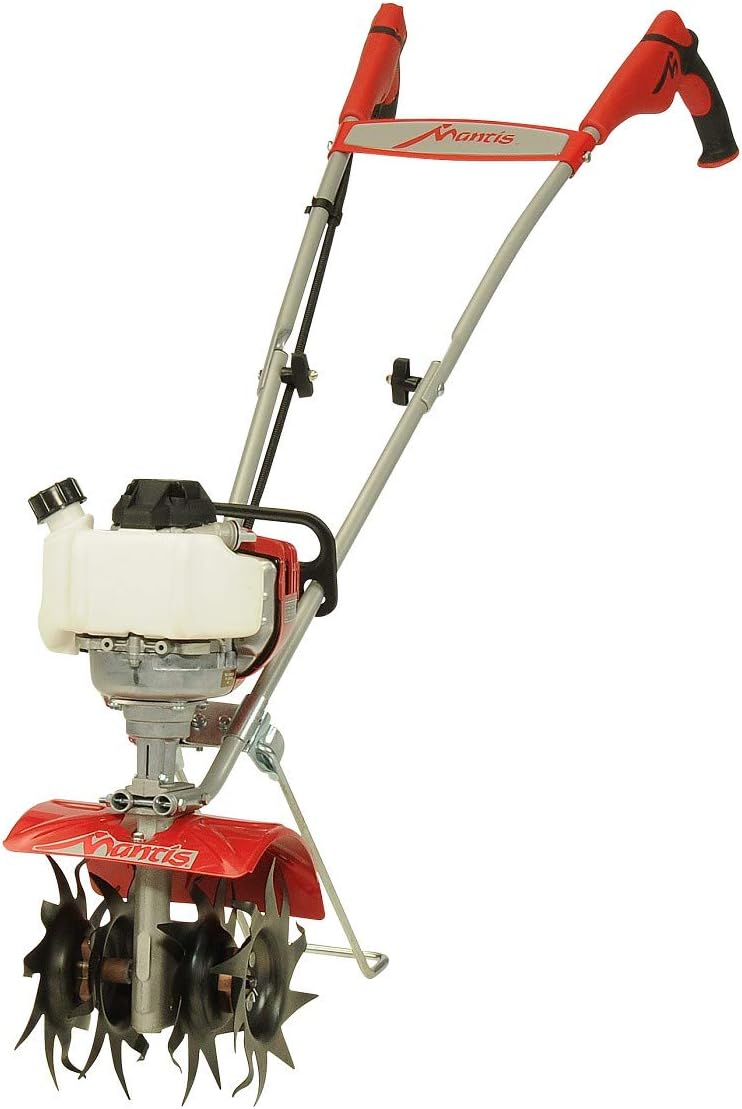
The Mantis 7940 is a compact, performance-focused mini tiller that uses a Honda 4-cycle engine to deliver strong tilling power without the need for fuel mixing. It is typically used to break sod, loosen compacted soil, and prepare planting beds where a full-size tiller would be overkill. Notable features include a high-tine speed (up to 240 rpm), finger-controlled throttle for infinite speed adjustment, ergonomic sure-grip handles, folding handlebars for storage, and a standard kickstand for easy staging. In practice the machine is easy to start and maneuver thanks to its light 24-pound build, yet the transmission and tine design let it dig deeply—claims note up to 10 inches—so you can tackle tougher ground and precision-weed around plants by flipping the tines. The main trade-offs are that it is a small, single-purpose tool: it is ideal for garden beds and rows but not intended to replace larger tillers for very large acreage or heavy-duty landscaping, and being gas-powered it requires routine engine maintenance and hearing/eye protection during use.
Best for: Gardeners who prioritize tilling performance in small to medium beds and want a compact, easy-to-handle machine that still delivers strong digging power for sod and compacted soil.
Less Ideal for: Landscapers or homeowners who need to cultivate large acreages or who prefer zero-emission electric tools for frequent, heavy-duty work.
- Honda 4-cycle engine provides reliable, no-mix gas power and strong tine speed.
- Lightweight 24 lb design makes it easy to carry, maneuver, and store.
- Finger-controlled throttle offers infinite speed control for delicate or aggressive work.
- Folding handlebars and a kickstand improve storage and on-site handling.
- Small, single-tine design is not suited for very large areas or heavy landscaping jobs.
- As a gas engine tool it requires regular maintenance and produces noise and emissions.
Verdict: If you want a lightweight mini tiller that punches above its size for serious bed preparation, the Mantis 7940 delivers reliable Honda-powered performance in a compact package.
Earthquake Versa 2-in-1 Front-Tine Tiller/Cultivator with 99cc Viper Engine
| Engine | 99cc 4-cycle Viper |
|---|---|
| Tilling width | Adjustable 11" to 21" |
| Tilling depth | Up to 11" |
| Power source | Gas powered |
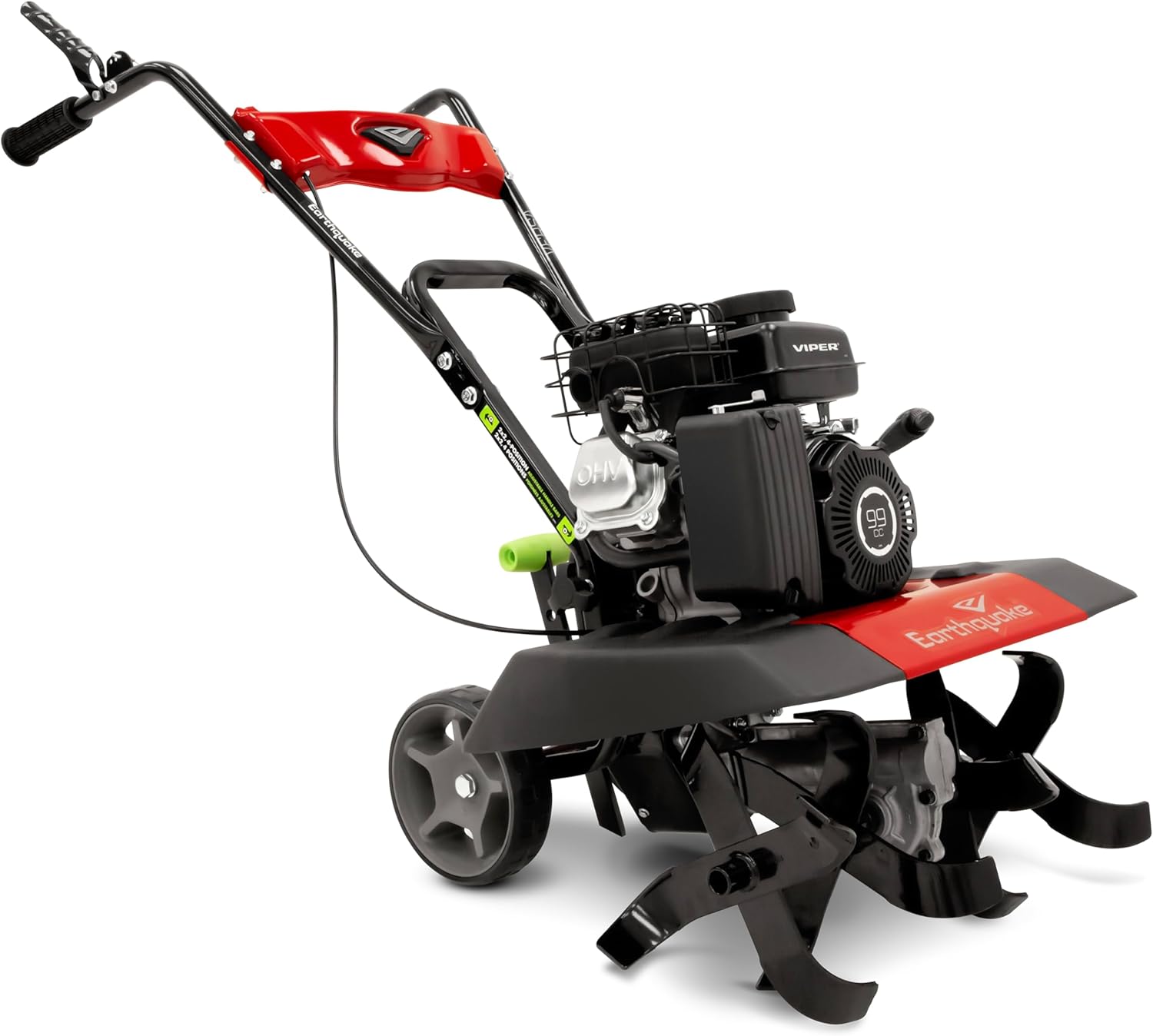
The Earthquake Versa is a two-in-one front-tine tiller and cultivator built around a 99cc 4-cycle Viper engine; it handles both preparing large garden beds and working narrow rows by removing outer tines and side shields. In tiller mode the 21-inch maximum width and deep 11-inch depth let you break compacted soil and prepare seedbeds quickly, while the 11-inch cultivator setting makes it easy to work between plants and along fences. Tool-less removal of outer tines and integrated transport wheels speed conversion and moving the unit around the yard. The low center of gravity and adjustable handlebar height improve control during use, and the onboard wheels reduce lifting when transporting. Because it is gas powered, expect routine engine maintenance, noise, and fuel handling compared with electric alternatives, and its front-tine design is better for garden rows than heavy-duty sod or clay in large acreage jobs. For homeowners who want a reliable, convertible gasoline tiller for regular garden prep and midseason cultivating, the Versa covers both roles without specialized tools.
Best for: Home gardeners who want a dependable gas machine that can both prepare full beds in spring and work narrow rows midseason, and who prioritize a versatile, easy-to-convert tool over quieter electric alternatives.
Less Ideal for: People who need a quiet, low-maintenance electric option or who must till very large areas of heavy sod or clay where a rear-tine, heavy-duty machine would be more efficient.
- Convertible 2-in-1 design switches quickly between 21" tiller and 11" cultivator without tools
- Powerful 99cc 4-cycle Viper engine suitable for breaking compacted garden soil
- Tilling depth up to 11" lets you prepare deep seedbeds and remove stubborn roots
- Integrated transport wheels and adjustable handlebar height improve maneuverability and handling
- Gas engine requires regular maintenance, fuel, and produces noise and exhaust
- Front-tine layout is less efficient than rear-tine tillers for very large or heavy sod removal
Verdict: Choose the Versa if you want one gas tiller that reliably converts to a narrow cultivator so you can both prep large beds and work tight rows with the same machine.
BILT HARD 46cc 4-Cycle Gas Tiller Cultivator, 16" Tilling Width

| Engine | 46cc 4-Cycle |
|---|---|
| Power | 1.9 HP |
| Tilling Width | 16 in. |
| Operation Mode | Gas |
The BILT HARD 46cc 4-cycle tiller is a straightforward gas-powered cultivator aimed at homeowners who need a capable machine for regular garden bed preparation. Its 46cc engine runs on separate gasoline and oil so there is no pre-mixing, and the unit drives six steel tines arranged for a 16-inch working width and up to roughly 8-inch depth in softer soils. Two-position adjustable wheels and foldable handles make it easier to move, store, and transport between beds. Cushioned grips and one-hand throttle control reduce operator fatigue during longer runs. Practical benefits include the 4-stroke engine's smoother operation and lower emissions compared with 2-stroke models and a tine arrangement that mixes compost or fertilizer into soil effectively. Limitations to note are its modest 1.9 hp output and relatively narrow 16-inch width, which mean the machine is best for medium to large garden plots rather than large acreage or very hard, compacted ground where a heavier 24–30 inch tiller would be faster. Routine engine maintenance and safe fueling practices are required for reliable performance.
Best for: Gardeners who want a reliable, easy-to-maintain gas tiller to prepare and maintain medium to large vegetable beds and borders without dealing with gas-oil mixing.
Less Ideal for: Property owners needing high-capacity tilling for several acres or contractors who require a wider, heavier-duty commercial tiller for hardpan or rocky ground.
- 46cc 4-stroke engine with separate oil reservoir avoids gas-oil mixing and runs smoother than 2-stroke units
- Six steel tines and 16-inch cutting width provide thorough soil mixing for garden beds
- Foldable handles and 2-position transport wheels simplify storage and movement
- Cushioned grips and one-hand throttle control reduce operator fatigue during extended use
- Relatively low horsepower and narrow width make it slower on very large or heavily compacted areas
- Not suited for breaking heavy clay or rocky soil without multiple passes
Verdict: A practical, easy-to-maintain 4-stroke gas tiller for homeowners who want efficient soil preparation for medium to large garden beds.
Choosing the Right 4 Cycle Cultivator: Key Factors to Consider
Engine Size and Torque
Engine displacement and torque determine how well a 4 cycle cultivator pulls through dense or compacted soil. Higher torque at low RPMs helps the tines maintain speed under load so the machine does not bog down when hitting clay pockets or root mats.
Consider whether you need a unit tuned for light surface cultivation or one capable of deeper, more aggressive churning. Larger engines typically mean more weight and fuel consumption, so match engine size to the scale of your beds and the soil conditions you encounter most often.
Tine Design and Configuration
Tine shape, width, and the number of tines affect how the cultivator cuts, mixes, and pulverizes soil. Curved tines tend to pull and lift soil for better aeration, while straighter blades can slice roots and surface vegetation more cleanly.
Tine spacing also matters for how well the tool chops clods and avoids clogging. Interchangeable or reversible tines add versatility and lengthen usable life because you can rotate wear points rather than replace the whole assembly.
Transmission and Gearbox Build
The gearbox transfers engine power to the tines and takes the brunt of impact when you hit rocks or roots. A robust gearbox with metal gears and good seals will resist wear and prevent grit from accelerating failure.
Inspect whether the design isolates shock loads with a slip clutch or shear pin. Those features can save you from costly repairs by protecting gears during abrupt stalls or impacts.
Weight and Maneuverability
Weight influences both traction and ease of handling. Heavier machines give better bite in firm soils but can be harder to turn and transport. Lighter units are easier to lift and reposition but may struggle to penetrate compacted ground without added downforce.
Consider handle ergonomics, adjustable grip height, and the turning radius. Good balance between front and rear sections reduces operator fatigue during extended sessions in beds or along narrow pathways.
Starting and Fuel System Simplicity
A simple, reliable starting system is valuable because cultivators are often used intermittently during the season. Pull-start engines with clear choke and prime controls reduce fumbling when the machine is cold. Fuel systems that tolerate a mix of seasonal fuels and have easy-access filters are also more user friendly.
Less finicky systems save time and reduce the chance of stalling while you work. Accessibility of spark plugs, air filters, and drains simplifies storage and winterization procedures.
Serviceability and Parts Access
Regular maintenance extends the life of a cultivator. Units that allow easy access to oil drains, filters, and drive components make routine tasks quicker and less messy. Common fasteners and standardized replacement parts increase the odds of convenient repairs.
Also check whether the design permits quick tine swaps and whether routine adjustments can be made without specialized tools. Service-friendly designs reduce downtime during the growing season and keep the machine productive longer.
Matching Cultivator Depth to Garden Tasks
Different jobs call for different working depths. Shallow passes are useful for weed disruption and soil aeration in established beds, while deeper tilling is required for new beds or incorporating large amounts of organic matter.
Set your cultivator to the shallowest effective depth for maintenance passes to avoid disturbing plant roots. For establishing new beds, make a few steady, deeper passes rather than forcing a single aggressive cut. Adjust tines and wheel settings to control depth consistently across the plot.
- Shallow cultivation: weed suppression and surface aeration
- Medium depth: mixing compost into topsoil
- Deep passes: breaking compacted layers and new bed prep
Working in Rocky or Rooty Soil
If your garden has rocks or dense root systems, look for cultivator features that reduce shock to the drivetrain. Slip clutches, shear pins, or torque-limiting couplings help the unit survive sudden impacts without irreparable gearbox damage.
When operating, scan the area and remove large surface obstacles where practical. Use slower forward speeds and higher engine revs to keep tines turning through debris rather than stalling abruptly.
- Use protective couplings to prevent damage
- Clear large obstacles before cultivation
- Operate at a speed that keeps tines engaged
Storage, Winterizing, and Seasonal Care
Proper end-of-season care preserves engine life and keeps the cultivator ready for spring. Drain or stabilize fuel per manufacturer guidance and change oil if recommended for long storage periods. Remove or clean tines to prevent rust and inspect fasteners for tightness.
Store the machine in a dry, ventilated area off the ground if possible. Lubricate linkages and apply light corrosion inhibitor to exposed metal to reduce surface rust during humid months.
- Stabilize or drain fuel before storage
- Clean and lightly lubricate tines
- Store indoors or under cover on a raised surface
Handling Tight Rows and Raised Beds
Gardens with narrow rows or raised beds need a cultivator that can maneuver without damaging edges or adjacent plants. Look for adjustable handles and compact working widths to navigate between beds and around irrigation lines.
Consider detachable tines or partial-width shields that let you run only the active working section you need. Controlled passes with slow, deliberate steering reduce the chance of colliding with bed walls.
- Adjustable width settings for narrow passages
- Partial tine engagement for edge work
- Soft steering technique to protect beds
Noise, Vibration, and Operator Comfort
Four-cycle engines are typically quieter and produce less vibration than some two-stroke alternatives, but comfort still varies by model. Pay attention to vibration-dampening features on handles and the general ergonomics of controls.
Shorter runs with regular breaks reduce fatigue. If you expect to work long sessions, prioritize a cultivator with comfortable grips, easily reachable controls, and vibration isolation between the engine and handles.
- Look for cushioned grips and isolated mounts
- Position controls for minimal hand movement
- Take breaks during extended cultivation runs
How We Chose the Best 4 Cycle Cultivator
We focused on attributes that predict dependable performance in typical home garden and small-acreage use. Selection prioritized engine reliability measures such as consistent starting, fuel system simplicity, and parts availability for routine maintenance. Tine design and construction came next, with emphasis on tine shape, spacing, and material hardness because those factors determine digging depth, clumping behavior, and wear life. Durability of the drive train and gearbox was considered to ensure the unit holds up when encountering roots, rocks, and compacted soil. Ease of handling and operator comfort were included to reflect how the tool performs during longer prep sessions and in tighter rows. Maintenance and serviceability were evaluated to favor machines with accessible filters, simple oil-change procedures, and common fasteners. Exclusions: we excluded specialty tillers designed only for commercial agriculture or ultra-light units meant for potted-plant work, focusing on 4 cycle cultivators sized for home and small-farm garden beds. The scoring emphasized engine reliability, tine performance, drive durability, handling, and ease of maintenance.
FAQ
How deep should I set a 4 cycle cultivator for new beds?
For new beds, start with a deeper pass of 4 to 6 inches to break compacted layers, then follow with shallower passes to refine the soil texture. Exact depth depends on soil type and tine design, but multiple steady passes give better results than forcing a single deep cut.
Can I use a 4 cycle cultivator in clay soil?
Yes, but clay requires patience. Work when the soil is slightly moist rather than wet to avoid clumping. Use lower forward speed, higher revs, and consider multiple passes to gradually loosen compacted clay without creating hard clods.
What maintenance should I do after each use?
After each session, remove soil and debris from tines, check for loose fasteners, and inspect for damage. Wipe down metal parts and apply light oil if the machine will not be used soon. Periodically check oil level and air filter according to the service schedule.
Is a heavier cultivator always better for traction?
Not always. Heavier machines can provide better bite in firm ground, but they may be harder to maneuver and transport. If your soil is light or you need to work in raised beds, a lighter, well-balanced unit with good tine geometry can be a better fit.
Will money spent on a stronger gearbox reduce repairs?
Generally, a more robust gearbox with protective features lowers the risk of damage from impacts and heavy loads. However, correct operating technique, obstacle removal, and routine maintenance are equally important in reducing repair needs.
Final Verdict
Choose a 4 cycle cultivator by balancing engine torque, tine design, and durability against the size and soil conditions of your garden. Prioritize reliable starting and an accessible maintenance layout if you expect frequent seasonal use. For rocky or heavily rooted plots, a cultivator with protective drivetrain features will reduce downtime. Ultimately, match working depth and machine weight to your beds so you get efficient soil preparation without excess effort.
