

Note: This article contains affiliate links. If you click on these links and make a purchase, I may earn a small commission at no extra cost to you. This helps support my research and content. Read my full affiliate disclosure here.
If you garden in a small yard, raised beds, or on a patio, the right small electric cultivator saves time and keeps soil health in check. These lighter, easier-to-handle machines are designed for turning compact areas, weeding between rows, and mixing amendments without the weight or fumes of gas models. This guide covers the top shortlisted options that perform well in small-scale settings and explains the practical tradeoffs you should expect. We evaluated each choice for what matters most in tight spaces: motor power and torque for consistent tine action, physical balance and handling for precise work, and tine design and durability for effective soil turnover. Read on for concise buying guidance and real-use considerations before the product list.
Top Picks at a Glance
| Best Quality Built to a higher standard if you want something more solid | Endutools Plus 21V Cordless Garden Tiller Cultivator with Dual 4.0Ah Batteries |  |
| Best Value The sweet spot between price and what you get | OGORI Cordless Electric Mini Tiller with Two 4.0Ah Batteries |  |
| Best Budget The cheapest option that still gets the job done reliably | Muylux 20V Cordless Tiller Cultivator (1 x 2.0Ah Battery) |  |
| Highest Rated A top-rated pick with lots of positive feedback | NERITOS Cordless Electric Tiller Cultivator with 900W Brushless Motor and 9.8" Tilling Width |  |
| Most Popular A crowd favorite that many people choose with confidence | Muylux 20V Cordless Tiller Cultivator with 2 x 2.0Ah Batteries |  |
| Best Seller A high-volume bestseller chosen again and again | HEINPRO Cordless Garden Tiller Cultivator (Compatible with DEWALT 20V MAX) |  |
Endutools Plus 21V Cordless Garden Tiller Cultivator with Dual 4.0Ah Batteries

| Power Source | Battery Powered |
|---|---|
| Operation Mode | Battery-powered Cordless |
| Batteries Included | 2 × 21V 4000mAh |
| Tilling Width | 9-inch |
| Tilling Depth | Up to 7-inch |
This compact cordless tiller is built for home gardeners who need an easy-to-use tool for bed preparation, soil aeration, and light weeding. The 360 RPM motor driving four heavy-duty steel tines delivers a 9-inch working width and up to 7-inch tilling depth, which is enough for loosening compact soil and breaking clods in small plots and raised beds. It ships with two 21V 4.0Ah batteries and a fast charger so you can work longer without frequent recharges; the handle battery-level indicator helps avoid surprise shutdowns. At about 10.6 pounds the unit is easy to maneuver and the telescopic handle reduces arm strain while the safety lock prevents accidental starts. Being cordless and battery powered means quiet, emission-free operation and minimal maintenance compared with gas tillers. Limitations are that it is aimed at light-to-moderate soil rather than heavy rocky ground and its 9-inch width makes it slow for large areas, so it is best for small gardens, beds, and edging work rather than full-size plots.
Best for: Home gardeners with small yards or raised beds who want a lightweight, low-maintenance tiller that is easy to handle and provides reliable battery runtime for routine soil preparation.
Less Ideal for: People preparing large plots, commercial gardens, or frequently working in heavy rocky clay should consider a wider, more powerful gas or corded tiller instead.
- Comes with two 21V 4.0Ah batteries and fast charger for extended run time
- Lightweight design and telescopic handle make maneuvering and storage easy
- 360 RPM motor with four steel tines provides up to 7-inch tilling depth for effective bed preparation
- Cordless battery operation offers quiet, emission-free use and low maintenance
- 9-inch working width is slow for larger areas
- Not suited for very rocky or heavy compacted soils
Verdict: A lightweight, easy-to-handle cordless tiller that pairs decent power with dual batteries to make small-bed soil prep fast and fuss-free.
OGORI Cordless Electric Mini Tiller with Two 4.0Ah Batteries

| Power Source | dc |
|---|---|
| Operation Mode | Electric |
| Battery capacity | 2 × 4.0Ah |
| Tilling area | 9" × 6.3" |
The OGORI cordless mini tiller is a lightweight, battery-powered cultivator built for preparing soil in tight spaces, raised beds, and small vegetable plots. It uses a high-torque motor driving four steel tines (12 blades) at up to 360 RPM to break up compacted soil and remove weeds while keeping operation noticeably quieter than gas models. The unit ships with two 4.0Ah lithium batteries, which together provide long runtime so you can finish most small jobs without recharging. Its 9-inch tilling width and 6.3-inch depth make it easy to maneuver between rows and in crowded beds, and the ergonomic handle plus low weight reduce fatigue during longer sessions. Assembly is straightforward and maintenance is minimal since there is no oil or gas. Limitations are its small working width and shallow depth, which mean it is not suited for large beds or deep primary tilling, and the handheld format requires you to walk the tool rather than ride it for bigger areas.
Best for: Gardeners who want a practical, easy-to-use cultivator for small plots, raised beds, and routine soil refreshes and value quiet cordless operation and low maintenance.
Less Ideal for: People with large vegetable gardens, heavy clay that needs deep tilling, or those who want a ride-on or full-size rear-tine tiller for large-scale soil preparation.
- Battery kit includes two 4.0Ah lithium batteries for extended runtime
- High-torque motor with four steel tines and 12 blades reaches 360 RPM for effective soil breakup
- Compact 9" width and 6.3" depth fit tight spaces and raised beds
- Lightweight and ergonomic design reduces user fatigue and is easy to maneuver
- Small tilling width and depth limit efficiency on larger garden beds
- Handheld format is impractical for large-scale or deep primary tilling
Verdict: A portable, battery-powered mini tiller that delivers quiet, effective soil cultivation for small beds and raised gardens.
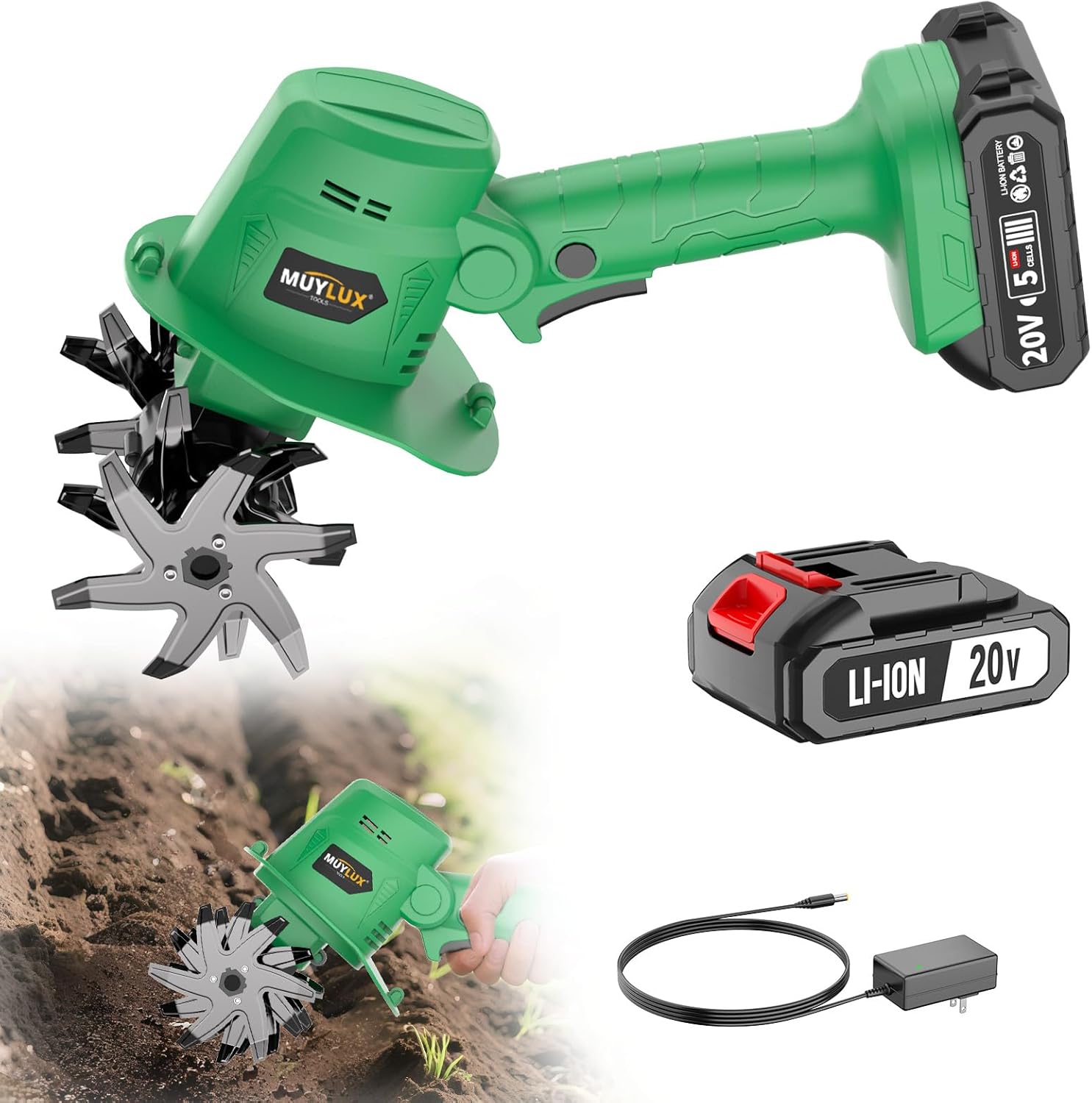
Muylux 20V Cordless Tiller Cultivator (1 x 2.0Ah Battery)
| Power Source | Battery Powered |
|---|---|
| Operation Mode | Electric |
| Model Number | CT-20LS |
| Brand Name | Muylux |
The Muylux 20V cordless tiller is a compact electric cultivator meant for quick soil preparation in small beds, containers, and narrow garden zones. It uses two steel tines that rotate up to 240 RPM to break up soil about 4 inches deep, making it useful for aerating lawns, mixing amendments, and loosening light compacted ground. The included 20V rechargeable battery removes cords and improves maneuverability for working around plants and raised beds. Its lightweight plastic construction and ergonomic grip reduce fatigue during short sessions, and the single-battery setup is easy to swap if you already own compatible batteries. Expect straightforward, low-effort use for light to moderate tasks, but it is not designed for heavy clay, deep digging, or large acreages where a full-size tiller is needed. Battery runtime will limit extended jobs and the small tines work best in previously loosened or loamy soils. For budget-minded gardeners who need a simple cordless option for regular small-area cultivation, this is a practical choice.
Best for: Gardeners on a tight budget who need a simple cordless tool for light soil cultivation in small beds, container gardens, and around established plants.
Less Ideal for: Do not choose this if you need to prepare large areas, dig deep trenches, or work regularly in dense clay where a heavier-duty tiller is required.
- Cordless 20V battery power provides untethered maneuverability in tight beds and around plants
- Two steel tines deliver up to 240 RPM and loosen soil to about 4 inches for quick cultivation
- Lightweight design with ergonomic grip reduces user fatigue during short tasks
- Includes a rechargeable battery so it is ready to use out of the box
- Small tines and limited depth are not suited for heavy clay or large-scale tilling
- Single 2.0Ah battery limits continuous runtime for longer jobs
Verdict: A budget-friendly, lightweight cordless cultivator that makes quick work of light soil preparation in small gardens and tight spaces.
NERITOS Cordless Electric Tiller Cultivator with 900W Brushless Motor and 9.8" Tilling Width

| Power Source | Battery Powered |
|---|---|
| Operation Mode | Electric |
| Material Type | Alloy Steel, Plastic |
The NERITOS cordless tiller is a compact electric cultivator aimed at home gardeners who need a reliable, easy-to-use tool for small beds, raised boxes, and light landscaping. It uses a 900W brushless motor and four manganese steel tines to break up compacted soil and organic matter; the blades are removable for cleaning. The unit is battery powered with an LED charge indicator and a dual safety lock so you can monitor runtime and avoid accidental starts. Its three-piece, tool-free design makes assembly, storage, and transport straightforward for someone moving between plots or storing in a shed. Practical benefits include quieter, lower-maintenance operation than a gas tiller and a light overall weight that reduces fatigue during repeated passes. Limitations are typical of mini tillers: it is best for small areas and lighter soils rather than continuous heavy-duty use on large acreage or very rocky ground, and battery life may limit the size of jobs you can complete on a single charge.
Best for: Home gardeners and hobbyists who prioritize a dependable, low-maintenance tiller for preparing small vegetable beds, raised planters, and light landscaping tasks.
Less Ideal for: Property owners with large gardens, commercial plots, or heavy rocky clay who need a high-capacity or continuous-duty tiller should look at larger gas or heavy-duty electric models.
- Powerful 900W brushless motor for consistent torque and reduced maintenance
- Four manganese steel tines that resist wear and penetrate compacted soil
- Lightweight, three-piece tool-free design for easy assembly, storage, and transport
- LED battery indicator and dual safety lock for convenient monitoring and safe operation
- Small tilling width and battery runtime limit use to small beds and short sessions
- Not intended for prolonged heavy-duty work or very rocky soils
Verdict: Choose this compact cordless tiller when you want a reliable, low-maintenance electric tool to quickly prep small garden beds and raised planters.
Muylux 20V Cordless Tiller Cultivator with 2 x 2.0Ah Batteries

| Power Source | Battery Powered |
|---|---|
| Operation Mode | Electric |
| Material Type | Alloy Steel |
| Number of Items | 2 |
The Muylux 20V cordless tiller is a compact electric cultivator built for light-duty garden tasks like prepping planting beds, aerating turf edges, and breaking up shallow compacted soil. It uses two steel tines that rotate up to 240 RPM and are rated to loosen soil about 4 inches deep, which makes quick work of small plots and tight spaces where a full-size tiller would be unwieldy. The included pair of 2.0Ah 20V batteries lets you swap packs to keep working without long interruptions, and the cordless design improves maneuverability around raised beds and landscaping. Its lightweight, ergonomic handle reduces user fatigue for shorter sessions. Expect this to perform well for routine cultivation and small vegetable patches, but it is not intended for deep digging or heavy clay and will struggle on very compacted ground or large acreage. Durable alloy-steel tines and simple electric controls keep maintenance low, though run time depends on battery capacity and the unit is best suited to frequent short jobs rather than extended commercial work.
Best for: Buyers who want an affordable, easy-to-use cordless tool for prepping small vegetable beds, container gardens, or flower borders and prefer portability over heavy-duty power.
Less Ideal for: Do not choose this if you need a machine for deep tilling, extensive acreage, or frequent heavy-duty landscaping tasks.
- Cordless battery operation improves maneuverability in small gardens and tight spots.
- Two included 20V batteries allow quick swapping to extend working time for short tasks.
- Steel tines rated to loosen soil up to 4 inches deep for efficient bed preparation.
- Lightweight ergonomic design reduces user fatigue during routine cultivation.
- Not designed for deep tilling or heavy clay soils where a larger gas or heavy-duty electric tiller is needed.
- 2.0Ah batteries provide limited run time for larger areas and may require frequent recharging or replacements.
Verdict: A budget-friendly cordless cultivator that delivers convenient, lightweight soil prep for small gardens and tight spaces.
HEINPRO Cordless Garden Tiller Cultivator (Compatible with DEWALT 20V MAX)

| Power Source | Battery Powered (Battery and Charger not Included) |
|---|---|
| Working Width | 9In tilling width |
| Tilling Depth | 7In depth |
| Blades | 4 hardened steel blades |
| Speed | 360 RPM |
This HEINPRO cordless tiller is a compact electric cultivator aimed at quick soil prep in small plots and raised beds. It uses DEWALT 20V MAX-compatible batteries so you can borrow power from an existing tool collection, and an integrated battery gauge shows runtime at a glance. The unit turns soil with four hardened steel blades at about 360 RPM across a 9-inch working width and up to 7-inch depth, making light plowing, aerating, mixing compost, and weeding straightforward. The tiller is easy to assemble with a three-section pole and quick-release collar and has an adjustable auxiliary handle and non-slip soft grip for better control. Safety is addressed with a dual-switch system to prevent accidental starts. Limitations include modest power and a narrow working width that make it unsuitable for heavy sod, dense grass, or large acreage, and the battery and charger are not supplied. For small vegetable plots and tight garden spaces it is a practical, low-maintenance alternative to gas tillers.
Best for: Buyers who want a simple, low-maintenance electric tiller for small vegetable plots, raised beds, or flower borders and who prioritize safety and ease of use over maximum power.
Less Ideal for: People needing a heavy-duty tiller for large gardens, commercial use, or for removing established turf should consider a larger gas or higher‑power electric model.
- Cordless design compatible with DEWALT 20V MAX batteries for convenient shared power
- Lightweight and ergonomic with adjustable handle and soft grip for reduced user fatigue
- Four hardened steel blades provide efficient soil mixing, aeration, and light plowing
- Dual safety switch reduces accidental starts and improves user safety
- Quick three-section assembly and compact storage for tight sheds and garages
- Not intended for heavy sod or dense grass where blades can tangle
- Battery and charger are not included so runtime depends on separate purchase or existing batteries
- Narrow 9-inch width and modest RPM limit efficiency on larger areas
Verdict: A lightweight, safe cordless tiller that makes quick soil prep in small beds easy using DEWALT 20V MAX batteries.
Choosing the Right Small Electric Cultivator: Key Factors to Consider
Motor Power and Torque
Motor power and torque determine how well a small electric cultivator penetrates compacted soil and maintains consistent tine rotation under resistance. Higher power helps break into heavier topsoil and root mats without bogging down, but excessive power can make a lightweight frame harder to control. For small gardens, moderate continuous power with good torque delivery often balances soil-cutting ability with manageable handling.
Also consider the motor type and cooling. Electric motors with good cooling manage repeated short runs across raised beds better than those that overheat quickly. If a battery model is chosen, check rated wattage and how torque holds up as the battery discharges because performance can drop markedly late in a charge.
Tine Design and Pattern
Tine shape, length, and spacing affect how the tool cultivates soil, chops weeds, and mixes amendments. Curved or L-shaped tines tend to lift and turnover soil more effectively, while straight tines can be better for shallow weeding and surface disturbance. Closer tine spacing produces finer crumb structure but can clog faster in sticky soils.
Material and attachment method are also important. Hardened steel tines resist bending and wear when meeting small roots or stones, and bolt-on or replaceable tines simplify repairs. For beds with lots of roots or compacted clay, look for sturdier tine patterns and easy serviceability.
Handling and Ergonomics
A cultivator that is easy to steer and control reduces fatigue and improves precision in narrow rows or around plants. Handle height, grip shape, and the machine's center of gravity all influence control. Lighter units are simpler to lift and reposition but can be more affected by vibration or torque reactions.
Variable speed controls and soft-start features make it easier to engage tines without sudden jerks that can disturb adjacent plants. Evaluate how the handle layout allows you to walk or work beside low beds; compact head designs often help when working close to plants or edging paths.
Power Source, Runtime, and Reach
Small electric cultivators come as corded or battery-powered options. Corded models offer continuous power without runtime limits but rely on extension reach and safe outdoor cabling. Battery models provide freedom of movement and are quieter but require planning for charge time and spare batteries if you have multiple beds.
Consider how long a typical session lasts for your plot size. A short recharge or a single spare battery may be enough for a single raised-bed setup, while larger gardens benefit from longer runtimes or multiple batteries. Also check how power delivery changes across the battery charge range, since usable torque late in a cycle impacts real-world performance.
Build Quality and Maintenance
Durability matters even for small garden tools. Look for solid housings, well-sealed motor compartments, and easy access to wear parts. Corrosion-resistant finishes on tines and tiller housings extend service life in damp garden environments, and straightforward disassembly makes cleaning and replacement easier after gritty or compacted use.
Availability of replaceable parts and a clear maintenance routine reduces long-term frustration. Simple features like tool-free tine removal or accessible grease points make the cultivator more usable season after season.
Best Uses for Small Electric Cultivators
Small electric cultivators excel at light soil preparation tasks that would otherwise require hand tools. They are ideal for refreshing the top few inches of soil in raised beds, mixing in compost or amendments, aerating compacted planting rows, and removing shallow-rooted weeds before seedlings are established.
Expect them to perform best in loam, sandy loam, and lightly compacted soils. In heavy clay or lots of deep roots, you may need to follow up with a fork or a heavier tiller for deeper work.
- Refreshing seedbeds and mixing surface amendments
- Weeding between closely spaced rows and around young plants
- Breaking crusted surface layers to improve water infiltration
- Working in raised beds, containers, and tight garden paths
Corded Vs Battery-Powered Models
Corded cultivators provide uninterrupted power but require planning for extension cords and safe routing around beds and plants. They tend to have consistent torque and are a good fit when your garden is close to outdoor outlets.
Battery models give full freedom to move without managing cords and are quieter for neighborhood settings. They require attention to battery capacity and charging logistics. For multiple small beds, a single long-lasting battery or a spare battery is often enough to cover an afternoon of work.
- Corded: unlimited runtime, tethered movement, consistent power
- Battery: portable, quieter, performance varies with charge level
Preparing Soil Before Using a Cultivator
Clear the area of large debris, rocks, and flexible stems so the tines can work without jamming. Hard items in the ground can damage tines or strain the motor. For compacted spots, scoring with a fork first reduces load on the cultivator and improves results.
Moisture level matters. Slightly damp soil usually cultivates cleanly; overly wet soil will cake and clog tines, while very dry, hard soil reduces penetration and increases wear. Aim for workable moisture that allows the tines to bite without creating sticky clods.
- Remove debris and large roots before tilling
- Avoid using on waterlogged soil to prevent clogging
- Break very hard patches with a fork before cultivating
Safety and Storage Tips
Always switch the unit off and disconnect power before adjusting or cleaning tines. Electric cultivators have sharp rotating parts that can cause injury even when stationary if the power source is still connected.
Store the cultivator in a dry spot to prevent corrosion and keep batteries at recommended charge levels if applicable. Regularly inspect tines and fasteners for wear and tighten any loose components before use.
- Disconnect power before maintenance
- Keep out of reach of children and pets
- Clean soil from tines and let dry before storage
Accessory and Attachment Options
Some manufacturers offer optional tine sets, depth guards, or edging wheels that change how a cultivator handles specific tasks. Interchangeable tine widths let you adapt the tool for narrow rows or wider beds.
Depth control accessories prevent over-working roots in established beds and help keep consistent cultivation depth. When considering add-ons, prefer simple, tool-free attachments that make switching quicker and less fiddly in the field.
- Interchangeable tines for different soil textures
- Depth guards for consistent working depth
- Wheels or guides for straight-line cultivation
How We Chose the Best Small Electric Cultivator
We focused on attributes that directly affect how a small electric cultivator behaves in a real garden. Primary evaluation criteria included motor power and torque, which determine how easily the machine breaks compacted soil and maintains speed under load; tine durability and pattern, which affect how thoroughly soil is turned and how long the tool lasts; handling and balance, since maneuverability is essential in beds, borders, and tight pathways; battery life or cord management, because uninterrupted work in small plots depends on reliable runtime or reach; and build quality and serviceability, which influence the cultivator's lifespan and ease of maintenance. Products were excluded if they were oversized for small-space use, lacked clear specifications for motor or tine construction, or relied solely on exotic components that complicate basic maintenance. We prioritized cultivators that showed consistent real-world performance metrics, clear electrical power ratings, and practical design features like adjustable tine width and ergonomic controls. The final shortlist reflects machines that meet those measurable criteria and suit compact gardening tasks.
FAQ
How deep will a small electric cultivator dig?
Most small electric cultivators work the top 2 to 6 inches of soil, which is usually sufficient for seedbed prep and surface weeding. For deeper loosening or breaking up compacted subsoil, a garden fork or a heavier rotary tiller is usually needed.
Can I use a cultivator in raised beds without damaging plant roots?
Yes, if you use it carefully and limit depth. Adjust the working depth to the top few inches and avoid passing the tines directly over the roots of established plants. Shallow, targeted passes around plants minimize disturbance.
Are battery-powered models powerful enough for small garden tasks?
Often they are. Modern battery cultivators provide adequate torque for most small garden soils, but performance depends on battery capacity and how much charge remains. For prolonged or heavier tasks, check runtime specs or plan for a spare battery.
How often do tines need replacement?
Tine lifespan depends on soil type and use frequency. In gritty or rocky soils, tines wear faster and may need replacement every season or two. In softer soils with light use, they can last several seasons. Choose cultivators with replaceable tines for easier upkeep.
Can a small electric cultivator handle weed roots?
They handle shallow-rooted weeds and seedlings well by cutting and mixing them into the soil. Tough, deep-rooted perennials may require digging or spot treatment because the cultivator tines may not remove the entire root system.
Final Verdict
For small gardens and raised beds, prioritize a cultivator with enough motor torque to work your soil type, comfortable handling for precise passes, and a tine design suited to the texture of your beds. Decide between corded models for continuous power or battery models for freedom of movement based on how your space is laid out. Balance run time, maintenance simplicity, and tine serviceability when choosing. Focusing on these tradeoffs will help you pick a compact electric cultivator that speeds routine tasks without overcomplicating storage or upkeep.
