

Note: This article contains affiliate links. If you click on these links and make a purchase, I may earn a small commission at no extra cost to you. This helps support my research and content. Read my full affiliate disclosure here.
When flies swarm a barn or turnout, horses become restless, irritated, and prone to rubbing or skin damage. Choosing the right natural fly repellent for horses matters because it balances real protection with skin sensitivity, tack compatibility, and safety for pasture-sharing animals. This guide focuses on the top shortlisted natural repellents specifically formulated for horses and evaluates them on how well they stop biting flies, how easy they are to apply, and how gentle they are on coats and skin. Below you will find practical notes on application, longevity, and pasture safety to help you pick the best natural option for your stable. Read on for criteria we used and helpful buying factors before the product summaries.
Top Picks at a Glance
| Best Overall The best all-around choice for most situations | Tack Shack of Ocala Pyranha Zero-Bite Fly Spray (32 oz) |  |
| Best Quality Built to a higher standard if you want something more solid | PYRANHA Zero-Bite Natural Fly Spray (Gallon) |  |
| Best Value The sweet spot between price and what you get | Absorbine UltraShield Green Natural Fly Repellent, 128 fl oz |  |
| Best Budget The cheapest option that still gets the job done reliably | Farnam Nature's Defense Botanical Fly Repellent Spray for Horses, 32 oz |  |
| Highest Rated A top-rated pick with lots of positive feedback | Tack Shack of Ocala Pyranha Wipe N' Spray Fly Spray for Horses, Gallon |  |
| Most Popular A crowd favorite that many people choose with confidence | Absorbine UltraShield Green Natural Fly & Insect Repellent, 32 oz Sprayer |  |
Tack Shack of Ocala Pyranha Zero-Bite Fly Spray (32 oz)

| Volume | 32 oz |
|---|---|
| Active ingredients | Geraniol 2.00%, Clove Oil 0.50%, Peppermint Oil 0.25% |
The Pyranha Zero-Bite Fly Spray from Tack Shack of Ocala is a 32 oz spray designed to keep flies and insects off horses using a plant-oil formulation. It is typically applied to a clean, well-brushed coat and shaken before use to re-emulsify the oils; directions note that ingredients like geraniol, clove oil, and peppermint oil are the active components. In practice the product is convenient for daily barn work or prepping a horse for a show because the trigger spray covers broad areas and the botanical mix leaves little residue. The natural oils mean it is gentler than many synthetic insecticides and suitable for repeated use, but oil-based sprays can separate and require vigorous shaking and occasional reapplication in heavy fly pressure or after sweating and rain. There is no indication of synthetic permethrin or long-lasting chemical actives, so users looking for extended 24-hour protection may need to reapply more often. For owners prioritizing a botanical approach, this is an easy-to-use, effective option for routine fly control.
Best for: Horse owners who prefer a plant-oil based, gentler fly control for daily barn routines and for preparing horses for shows.
Less Ideal for: Riders or managers needing multi-day, heavy-duty protection in high fly-pressure environments should consider products with longer-lasting synthetic actives.
- Uses botanical actives (geraniol, clove oil, peppermint) favored for gentler, natural repellency
- Convenient 32 oz spray bottle appropriate for everyday barn and show use
- Formulation is practical for broad coverage with a trigger applicator
- Instructions and ingredients are transparent, helping sensitive-skinned horses avoid unknown chemicals
- Oil-based formula separates and requires shaking before each use
- Likely requires more frequent reapplication than synthetic long-lasting repellents
Verdict: Choose this spray if you want a straightforward, plant-oil based fly repellent that is safe for routine use and show prep.
PYRANHA Zero-Bite Natural Fly Spray (Gallon)

| Active ingredients | Geraniol 1.00%, Clove oil 0.50%, Peppermint oil 0.25% |
|---|---|
| Other ingredients | Water, Glycerin, Sodium lauryl sulfate, etc. |
| Formulation | Water-based ready-to-use spray |
| Intended use | Horses, dogs, cats, livestock and plants |
PYRANHA Zero-Bite is a gallon-size, ready-to-use fly spray that relies on geraniol, clove and peppermint oils suspended in a mostly water formula to repel and kill biting flies and no-see-ums. It is typically applied with a refillable sprayer across tack, turnout areas, stall fronts, and directly on animals for daily protection without leaving an oily residue. The product highlights suspension technology so it does not require shaking and the high water content keeps coats and equipment non-greasy. Because it is plant-based and labeled safe for horses, dogs, cats and some plants, it is a practical choice for barn managers who prefer natural active ingredients and need a bulk supply. Expect effective short- to medium-duration protection that is best when used as part of a regular program; like most botanical repellents it may need more frequent reapplication in heavy fly pressure or after rain. The gallon format is convenient for large properties but requires a proper sprayer for economical use and transport around a barn.
Best for: For stable managers and horse owners who prioritize effective, plant-based fly control and need a bulk, non-greasy spray for daily use around multiple animals and turnout areas.
Less Ideal for: Not the best choice for users seeking a single-application, long-duration synthetic repellant or for small hobby owners who prefer ready-to-use hand-size bottles.
- Uses plant-derived actives (geraniol, clove, peppermint) that avoid synthetic pesticides
- Water-based, non-greasy formula suitable for use on animals and equipment
- Gallon size suitable for large stables or repeated daily use
- Suspension technology means no shaking required before application
- Botanical actives typically require more frequent reapplication than longer-lasting synthetic repellents
- Gallon container needs a separate sprayer for easy, controlled application
Verdict: A large-volume, plant-oil fly spray that gives stable-scale, non-greasy protection for performance-focused horse owners who prefer natural actives.
Absorbine UltraShield Green Natural Fly Repellent, 128 fl oz

| Item Volume | 128 fluid ounces |
|---|---|
| Scent Name | Citronella |
| Item Form | Liquid |
| Target Species | Dog, Horse |
Absorbine UltraShield Green is a gallon-sized, water-based fly spray that uses a blend of botanical oils to repel flies, ticks, mosquitoes, and gnats on horses and dogs. It arrives ready to use so you simply shake and spray onto a clean coat or apply with a cloth for faces and sensitive areas. The formula is designed to leave no greasy residue and to provide daily protection; the manufacturer recommends roughly 2 ounces per application for full coverage. Notable features include a citronella scent, EPA-approved active ingredients, and a plant-oil based ingredient list that many owners prefer over petroleum-based repellents. Practical benefits are easy application for frequent use, suitability for premise or barn spot treatments, and versatility across horses, ponies, and approved dogs. Important limitations are the need for regular reapplication if animals are exposed to heavy fly pressure or water and that premise-use directions vary by formula, so follow label instructions closely. Large-volume packaging is economical for barns but can be bulky to handle during repeated spraying.
Best for: Barn owners and riders who prioritize an eco-friendlier, ready-to-use daily fly control that is economical in large volumes and easy to apply across multiple animals.
Less Ideal for: Casual owners who only need occasional small-quantity treatments or people who prefer aerosol or pump-spray bottles for one-handed application.
- Water-based, ready-to-use formula that leaves no greasy residue
- Powered by botanical essential oils including geraniol and citronella for natural repellency
- Large 128 fl oz size suited to regular barn use and treating multiple animals
- Approved for use on horses and, where listed, on dogs and puppies
- Requires regular reapplication under heavy insect pressure or after exposure to water
- Gallon container can be awkward to handle during direct spraying
Verdict: Choose UltraShield Green when you want a large-volume, water-based botanical fly spray that is safe for daily barn use and effective on horses.
Farnam Nature's Defense Botanical Fly Repellent Spray for Horses, 32 oz

| Item Volume | 32 fluid ounces |
|---|---|
| Scent Name | Fresh,Mint,Thyme,Citronella |
| Item Form | Liquid |
| Target Species | Equine |
Farnam Nature's Defense is a water-based, botanical fly spray formulated for daily use on horses. It combines citronella and other essential oils to deter horn, stable, house, horse and deer flies plus mosquitoes and gnats, and is sold in a 32-ounce trigger bottle for straightforward application. The alcohol-free, non-greasy formula is designed to be gentle on sensitive skin and can be sprayed over the coat or applied with a sponge to faces and sensitive areas following the directions. Practical benefits include a pleasant herbal scent, no oily residue, and the convenience of a ready-to-use quart that fits into a tack room routine. Limitations are that it is a botanical, not a chemical insecticide, so protection may be shorter-lived in heavy insect pressure and it may require daily reapplication; users seeking long-lasting residual control may prefer stronger formulations. Overall, it is a sensible natural option for owners who want frequent, gentle protection without sticky residues or harsh solvents.
Best for: Horse owners who prioritize a gentler, plant-based fly control they can use frequently and conveniently as part of regular grooming.
Less Ideal for: Users needing long-lasting residual protection during extremely heavy fly infestations or for pastures where infrequent treatment is required.
- Water-based, non-greasy formula that leaves no oily residue
- Botanical blend (citronella and essential oils) suitable for sensitive skin
- Ready-to-use 32 oz trigger bottle for easy daily application
- Repels multiple fly types plus mosquitoes and gnats
- Botanical formula provides shorter residual protection compared with stronger chemical insecticides
- May require daily reapplication in heavy fly pressure
Verdict: Buy this if you want an easy, gentle botanical fly spray for daily use that avoids greasy residue and harsh solvents.
Tack Shack of Ocala Pyranha Wipe N' Spray Fly Spray for Horses, Gallon

| Unit Count | 32 Fluid Ounces |
|---|---|
| Item Form | Liquid |
| Scent Name | unscented |
| Active Ingredients | Geraniol, Clove Oil, Peppermint Oil |
Tack Shack of Ocala Pyranha Wipe N' Spray is a gallon, ready-to-use fly spray designed for regular turnout and show use. The pyrethrum-based formula targets biting flies, mosquitoes, and gnats and is meant to be applied directly to a clean, groomed coat using about two ounces per animal for effective coverage. Notable features include citronella scent, lanolin as a coat conditioner that helps produce a high shine, and a wipe-and-spray style that makes spot application easy. Practical benefits are long-standing knockdown of common pests and a groomed appearance that appeals to show riders. Because the product uses pyrethrum and essential oils, it can separate in storage so thorough shaking before use is important and the scent may bother very scent-sensitive horses. This is a high-volume option best for owners who need consistent, reliable protection for multiple animals or frequent applications rather than single-use convenience packaging.
Best for: Owners who prioritize dependable, show-ready protection and need a large, ready-to-use supply for multiple horses or frequent applications.
Less Ideal for: People looking for unscented, hypoallergenic options for extremely sensitive animals or those who prefer single-use travel-sized packaging.
- Ready-to-use pyrethrum formula effective against flies, mosquitoes, and gnats
- Includes lanolin to condition coat and impart a high shine
- Large gallon supply suitable for multiple horses or frequent use
- Wipe-and-spray application allows targeted spot treatment
- Contains pyrethrum and essential oils which may separate and require shaking before use
- Citronella scent could be objectionable to very scent-sensitive horses
Verdict: Choose this gallon Pyranha formula when you need a reliable, ready-to-use fly spray that repels common biting insects and leaves a show-ready shine.
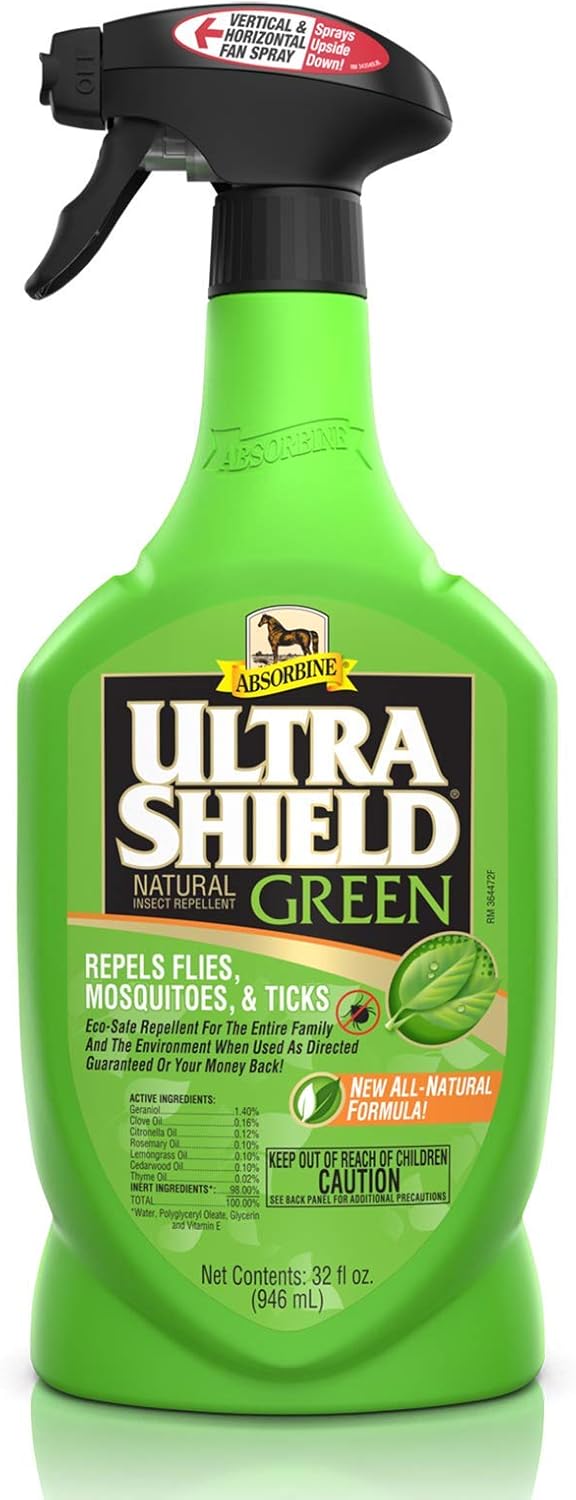
Absorbine UltraShield Green Natural Fly & Insect Repellent, 32 oz Sprayer
| Item Volume | 32 fluid ounces |
|---|---|
| Scent Name | Citronella |
| Target Species | Dog, Horse |
| Material Features | Natural |
Absorbine UltraShield Green is a 32 oz, ready-to-use spray that uses botanical essential oils including geraniol and citronella to provide daily, water-based insect protection for horses and dogs. It is typically applied directly to a clean coat before turnout, riding, or time outdoors and is formulated to leave no greasy residue while imparting a light botanical scent. Notable features include EPA-approved protection against many species of biting flies and ticks, suitability for use on dogs as well as horses, and clear directions for coverage that make it straightforward to use. The spray is practical for routine, frequent applications since the label supports daily use and it is water-based so it will not build an oily film on hair. Expect to reapply more often in wet conditions or after heavy sweating because botanical repellents generally do not last as long as stronger synthetic alternatives. Users should follow label safety instructions and avoid spraying eyes and mucous membranes. For those wanting an eco-friendlier, easy-to-apply daily repellent for animals, this product delivers dependable, non-greasy protection with a natural ingredient profile.
Best for: Buyers who prioritize effective, pet-safe daily protection and prefer a natural, water-based repellent they can use routinely on dogs and horses.
Less Ideal for: People who need prolonged, all-weather residual protection or who prefer a synthetic long-duration insecticide should consider other formulations.
- Ready-to-use water-based formula that requires no mixing
- Formulated with botanical essential oils for natural repellency
- Approved for use on both horses and dogs when used as directed
- Non-greasy finish suitable for daily application
- Botanical formula typically requires more frequent reapplication than longer-lasting synthetic sprays
Verdict: A user-friendly, natural water-based repellent that gives safe daily protection for dogs and horses without leaving a greasy residue.
Choosing the Right Natural Fly Repellent for Horses: Key Factors to Consider
Active Ingredients and Mode of Action
Natural fly repellents rely on a range of plant-derived oils and extracts that repel or confuse biting insects rather than killing them. Understanding the active ingredients helps you match a product to your horse's sensitivities. For example, lemongrass, citronella, cedar, and neem oils are commonly used; each has a different scent profile and volatility. Volatile oils often provide an immediate repellent effect but may evaporate faster, reducing time between applications.
Knowing whether a product uses a single essential oil, a blend of botanicals, or an oil-in-water formulation matters because blends can broaden pest coverage while emulsified products may adhere better to hair and last longer. Check if the manufacturer specifies concentrations and whether the product is labeled for sensitive skin or foals when considering use on young or thin-skinned animals.
Formulation and Longevity
How a repellent is formulated greatly affects how long it protects a horse. Straight essential oil preparations can be very potent at first but often need more frequent reapplication. Emulsions, gels, or oil-based carriers can extend contact time on the coat and resist light sweating. Look for information on expected hours of protection and whether the product requires reapplication after heavy sweating, bathing, or rain.
Longevity also influences daily barn routines. A repellent that lasts longer reduces labor for owners who manage multiple horses, while a short-lived spray might be acceptable for turnout near dawn and dusk. Consider whether a product can be layered under a fly sheet or blanket without causing slickness or staining.
Application Method and Practicality
Application style affects both coverage and convenience. Pump or aerosol sprays can deliver wide coverage quickly but may waste product if not aimed carefully. Wipes and towelettes are useful for targeted protection on faces, pasterns, and girth areas where horses show the most irritation. Oils and gels can give longer protection but require wiping off excess to prevent tack transfer.
Practical considerations include how easy it is to apply with one hand, whether the product spreads evenly through the coat, and if it leaves a residue that attracts dirt. Barn workflows, number of animals, and whether you need portable options for trail rides should influence the application format you prefer.
Skin Sensitivity and Allergic Reactions
Horses vary in skin thickness and reactivity, and some essential oils that repel insects can also cause irritation or allergic responses. Signs of sensitivity include reddening, rubbing, hair loss, or dry flaky skin. For horses with a history of dermatitis, choose products explicitly labeled as gentle, diluted, or tested on equines. Patch testing a small area for 24 to 48 hours is a prudent step before widespread use.
Also consider the impact on treated tack or blankets: some oil-based products can darken or stiffen leather and fabrics. If your horse has open wounds or raw patches, avoid topical repellents until the skin has healed unless the product specifically indicates it is safe for compromised skin.
Safety Around Foals and Other Animals
If you keep foals, nursing mares, or mixed-species pastures, prioritize products with clear safety information for young animals and non-target species. Some botanical compounds can be more concentrated than a foal's system can tolerate, and salivary transfer from mutual grooming can expose other animals to the repellent.
Review label guidance on lactating mares and avoid products that advise against use on foals. Also consider whether the repellent is safe for use in confined barn spaces where people and companion animals may be present. Ventilation and careful application reduce inhalation exposure for handlers and sensitive animals.
Environmental Persistence and Pasture Impact
Natural does not always mean instantly biodegradable or ecologically neutral. Some oil-based repellents can leave residues on stall bedding, paddock fence posts, or trough rims. Consider whether repeated use might alter soil surface oils or affect aquatic life if used near water features.
Choose products that provide guidance on safe use around ponds and avoid direct application over water sources. For pasture-managed properties, look for formulations that break down quickly and state minimal environmental persistence to reduce unintended impacts on beneficial insects.
When to Use Natural Repellents Versus Physical Barriers
Natural repellents work best as part of an integrated approach. Use topical natural repellents around feeding and turnout times when flies are most active, and pair them with physical barriers like fly sheets, masks, and leg wraps in high-pressure situations. Repellents can reduce landings and biting at close range, while sheets and masks provide continuous protection without reapplication.
- Use repellents in combination with well-fitted fly sheets for maximal daytime protection.
- Apply repellents to exposed areas like the face, flank, and girths where sheets do not cover.
- Reserve heavy-duty physical barriers for breeding pastures or horses with sensitive skin.
Applying Natural Repellents Safely and Effectively
Always follow label directions and start with a small test patch to check for sensitivity. Apply products to clean, dry coats for better adhesion. For face applications use a wipe or cloth to avoid getting product into eyes, nostrils, or mouth. Keep a note of how long protection lasts after a typical turnout and reapply accordingly.
- Avoid applying to open wounds or raw skin.
- Let oily formulations absorb briefly before tacking up to prevent tack transfer.
- Record reapplication intervals in a barn log when managing multiple horses.
Managing Flies in Different Horsekeeping Setups
Stall-kept, paddock, and pasture systems expose horses to different fly pressures. In stalls you may want a longer-lasting product with less odor because smells concentrate indoors. For pastured horses that move through wetter environments, choose formulations with better sweat and rain resistance. Consider targeted applications on legs and bellies for grazing animals that are more exposed to biting flies.
- Indoor stalls benefit from low-odor, non-aerosol formats.
- Pasture horses may need more frequent applications after rain or heavy sweating.
- Targeted leg and belly applications reduce rubbing and tail swishing caused by gnats.
Integrating Repellents Into Routine Care
Make repellent application part of regular grooming or turnout routines so it becomes predictable for both handlers and horses. Applying right after grooming or before turnout helps coverage and reduces fly pressure during peak activity times. Keep application tools accessible in the tack room or grooming kit to avoid skipping steps when schedules are tight.
- Store repellents in a cool, dark place to prolong shelf life.
- Rotate between methods if a single product loses efficacy for a particular pasture or season.
- Keep small bottles or wipes in a trail kit for use during rides.
Troubleshooting Common Issues
If a repellent appears less effective, check for product age, whether the horse has been washed recently, or if environmental fly pressure has increased. Heavy infestations may require combining repellent applications with improved sanitation and fly control in the barn. If you notice coat staining or tack residue, switch application methods or use less product to reduce transfer.
- Patch-test new products to prevent allergic reactions.
- Reduce product concentration or frequency if you see skin irritation.
- Improve barn sanitation to reduce reliance on topical repellents alone.
How We Chose the Best Natural Fly Repellent for Horses
To assemble this list we prioritized formulations and delivery methods that are appropriate for equine use and common barn situations. We evaluated each option against practical, horse-focused dimensions: how well it reduces fly landings and bites in real turnout and stalled conditions; the likelihood of skin irritation on sensitive horses; application convenience for busy barn routines; and pasture and tack safety so the product works with saddles, blankets, and herd mates. Longevity and weather resistance under heat and sweat were also weighed to reflect real-world wear. Exclusions included products with synthetic insecticides, products intended only for other livestock, and any repellent with ingredients known to irritate equine skin. We also excluded unproven folk remedies lacking clear ingredient lists or usage directions. The final short list emphasizes verifiable ingredient transparency, equine-safe labeling, and formats riders and barn managers commonly use, such as sprays, wipes, and oils.
FAQ
Are natural fly repellents safe for foals and young horses?
Many natural repellents are formulated for adult horses, and safety for foals depends on the specific ingredients and concentrations. Check labels for foal-safe guidance, perform a small patch test, and consult your veterinarian before using any repellent on very young animals.
How often should I reapply a natural repellent during turnout?
Reapplication frequency depends on the formulation, sweat, and weather. Some products last several hours while lighter essential oil sprays may need reapplication at dawn and dusk or after heavy sweating. Track observed protection time and adjust your schedule accordingly.
Will natural repellents stain tack or blankets?
Oil-based or concentrated botanical repellents can darken or stiffen leather and some fabrics. To avoid transfer, let the product absorb fully before saddling or covering, and test on an inconspicuous area of tack or fabric first.
Can I use natural repellents on horses with existing skin conditions?
If a horse has open sores, dermatitis, or thinning hair, avoid applying repellents until the skin is treated and healed unless the product specifically states it is safe for compromised skin. Always consult a veterinarian for horses with chronic skin issues.
Do natural repellents harm beneficial insects or pollinators?
Natural repellents are generally less persistent than synthetic insecticides, but residues can still affect beneficial insects if applied near flowering plants or water. Use repellents selectively and avoid spraying flowering pastures or nearby pollinator habitat.
Are sprays better than wipes or oils for facial protection?
Wipes are often preferred for facial applications because they reduce the risk of product entering eyes or nostrils. Sprays can work if applied carefully with the horse's head steady, while oils may be too heavy for sensitive facial skin.
Final Verdict
Choosing the best natural fly repellent for horses means balancing bite reduction, skin safety, and how the product fits your daily barn routine. Prioritize formulations that are clearly labeled for equine use, match the application method to the areas where your horse shows the most irritation, and factor in longevity so you know how often to reapply. Tradeoffs are inevitable: longer-lasting oil-based options can transfer to tack, while lighter sprays need more frequent attention. Use the decision criteria above to weigh those tradeoffs and pick an approach that reduces fly pressure without creating new skin or management problems.
