

Note: This article contains affiliate links. If you click on these links and make a purchase, I may earn a small commission at no extra cost to you. This helps support my research and content. Read my full affiliate disclosure here.
Gardenias are prized for glossy leaves and fragrant blooms but are also prone to fungal problems that can quickly ruin appearance and flowering. Choosing the right fungicide for gardenias matters because the wrong product or timing can burn sensitive foliage, disrupt bloom cycles, or fail to control the specific diseases common to gardenias. This guide covers seven top picks for gardenia disease control, shortlisted for gardeners who want dependable disease coverage with minimal plant stress. We evaluate each option on disease spectrum, safety for tender foliage, ease of use, and persistence. Read on to understand which traits matter most for protecting your gardenias and how to apply treatments safely.
Top Picks at a Glance
| Best Overall The best all-around choice for most situations | BioAdvanced Disease Control for Roses, Flowers & Shrubs Concentrate, 32 oz |  |
| Best Quality Built to a higher standard if you want something more solid | ferti-lome Liquid Systemic Fungicide II Ready-to-Use, 32 oz |  |
| Best Value The sweet spot between price and what you get | Bonide Captain Jack Copper Fungicide 16 oz Concentrate |  |
| Best Budget The cheapest option that still gets the job done reliably | Bonide Fung-onil Multi-Purpose Fungicide, 32 oz Ready-to-Use Spray |  |
| Highest Rated A top-rated pick with lots of positive feedback | Monterey Fungi-Max Systemic Fungicide, 16 oz (with Measuring Spoon) |  |
| Most Popular A crowd favorite that many people choose with confidence | Bonide Captain Jack's Liquid Copper Fungicide Ready-to-Use, 32 oz |  |
| Best Seller A high-volume bestseller chosen again and again | BioAdvanced 3-in-1 Insect, Disease & Mite Control Spray, 24 fl oz |  |
BioAdvanced Disease Control for Roses, Flowers & Shrubs Concentrate, 32 oz

| Unit Count | 32 Fluid Ounces |
|---|---|
| Item Type Name | Fungicide |
| Item Form | Spray |
| Active Ingredients | Tebuconazole |
This concentrate uses a systemic active ingredient to both cure and prevent common fungal diseases on ornamental plants when mixed and applied as a coarse spray. It is typically used outdoors on roses, flowers, shrubs, vines and other ornamentals by diluting the 32-ounce bottle into water to make garden spray that covers a large area. Notable features include systemic action that protects plants from the inside out for up to two weeks and rainproof protection once dry, which reduces the need for reapplication after light rain. The product lists control of black spot, powdery mildew, rust and other common diseases and is compatible with pump-style sprayers for straightforward application. Practical benefits for a gardenia grower are regular disease suppression and the ability to treat larger plantings from a single bottle. Limitations are that it is a chemical fungicide with a specific active ingredient and labeled uses, so it must be applied according to safety directions and only to listed outdoor-treated plants; it is not intended as an all-purpose solution for every pest or for in-home use without following label instructions.
Best for: Gardeners who want a reliable, preventive and curative fungicide to keep ornamental shrubs and flowering plants like gardenias healthy, and who prefer treating beds and multiple plants with a single concentrate.
Less Ideal for: People seeking organic-only products for sensitive plantings or indoor treatments should consider alternative fungicides or nonchemical controls focused specifically on those needs.
- Systemic formulation that protects plants from the inside for up to two weeks
- Controls a wide range of foliar fungal diseases including black spot and powdery mildew
- Rainproof once dry, so treatments are less likely to wash away after light rain
- Concentrate yields a large volume of spray, useful for treating multiple shrubs
- Contains a specific active ingredient that requires following label safety and use restrictions
- Not labeled for indoor application unless plants are treated outside
Verdict: A concentrated, systemic fungicide that offers multi-week, rainproof control of common foliar diseases for gardeners treating ornamental shrubs and flowers like gardenias.
ferti-lome Liquid Systemic Fungicide II Ready-to-Use, 32 oz

| Item Form | Liquid |
|---|---|
| Target Species | Fungus |
| Special Features | organic |
| Unit Count | 32 Ounce |
This ready-to-use ferti-lome Liquid Systemic Fungicide II is a 32 oz spray designed to prevent and control common fungal diseases such as leaf spot, brown patch, dollar spot and take-all patch on ornamentals, roses, trees and turf. You use it by spraying plants to the point of runoff or applying to lawns after mowing; being systemic means it is absorbed and helps protect new growth rather than only treating surface spores. The bottle arrives pre-mixed for quick application, which saves prep time for spot treatments or small beds. Practical benefits include broad disease coverage labeled for many garden situations and ease of use for seasonal preventative applications. Limitations are that the label lists it generically as a fungicide without detailing active ingredient concentration on the product summary and it is packaged as a 32 oz ready-to-use bottle, which may not be economical for treating large landscapes or repeated heavy-use programs.
Best for: Gardeners seeking a fast, no-mixing fungicide to prevent and treat common foliar diseases on gardenias and nearby ornamentals will appreciate this product for seasonal spot treatments and preventative sprays.
Less Ideal for: Large-property owners or commercial applicators who need concentrated product or bulk coverage should consider concentrate formulations or professional-grade options instead.
- Ready-to-use spray bottle for quick spot or small-area applications
- Systemic action that helps protect new growth after application
- Labeled for a wide range of turf and ornamental fungal diseases
- Organic listed special feature noted in product specs
- Small 32 oz ready-to-use volume may require multiple bottles for larger gardens
- Product summary does not list the active ingredient concentration for easy comparison
Verdict: Use this ready-to-use systemic spray when you want a convenient, preventive fungicide for gardenias and small ornamental beds without mixing or specialized equipment.
Bonide Captain Jack Copper Fungicide 16 oz Concentrate

| Unit Count | 16 Ounce |
|---|---|
| Item Form | Liquid |
| Target Species | Fungus |
| Active Ingredients | Copper Octanoate (Copper Soap) |
Bonide Captain Jack Copper Fungicide is a liquid concentrate designed to prevent and treat a broad range of fungal diseases on vegetables, fruits, ornamentals, and turf. Mixed with water per label directions, it is sprayed onto plant surfaces, including tops and undersides of leaves, and can be applied up to the day of harvest, which makes it practical for food crops like tomatoes. The active ingredient copper octanoate provides contact protection against powdery mildew, blight, black spot, rust, peach leaf curl and similar diseases. Application is straightforward and repeatable every 7 to 10 days as needed, and the product is cleared for use in organic gardening. Limitations to consider are that copper is a contact fungicide so it does not systemically move through the plant and works best as a preventative or early-treatment tool rather than curing severe systemic infections. Users should follow safety directions and avoid overuse to reduce copper buildup in soil.
Best for: Gardeners looking for a performance-focused, organic-approved fungicide to include in a preventative disease program for tomatoes and other edibles.
Less Ideal for: Growers seeking a systemic treatment for already advanced internal infections or those who prefer non-copper chemistries to avoid soil accumulation.
- Approved for organic gardening and can be used up to the day of harvest
- Controls a wide range of common diseases affecting tomatoes such as blight and powdery mildew
- Concentrated liquid formula mixes with water for spray application
- Repeatable 7–10 day application schedule makes preventative programs easy to maintain
- Acts as a contact fungicide and does not move systemically within the plant
- Repeated use can contribute to copper accumulation in soil if not managed
Verdict: Use this organic-approved copper concentrate when you want an effective, easy-to-apply preventative spray to protect tomatoes from common fungal diseases.
Bonide Fung-onil Multi-Purpose Fungicide, 32 oz Ready-to-Use Spray

| Unit Count | 32 Ounce |
|---|---|
| Item Form | Spray |
| Target Species | Fungicide |
| Active Ingredients | Chlorothalonil |
Bonide Fung-onil is a 32-ounce ready-to-use spray that uses chlorothalonil to control and prevent common fungal problems such as leaf spot, blight, rust, and mildew. It comes in a trigger-sprayer bottle so you can shake and apply directly to affected lawns and plants without mixing concentrates. Typical use is to spray both tops and bottoms of leaves or turf blades until wet and repeat every 7 to 14 days when disease pressure appears. The practical benefits are broad-spectrum activity across vegetables, ornamentals, shrubs, trees, and grass, convenient spray delivery for small areas and quick application, and a trusted active ingredient for preventative protection. Important limitations are that it is a chemical fungicide so users must follow label safety directions and reapply on a schedule rather than rely on a single treatment, and it is not an organic option. For someone managing recurring fungal issues on turf like St. Augustine grass, this product provides an easy, affordable way to reduce disease spread when used as part of routine care and proper cultural practices.
Best for: Gardeners on a tight budget who need a straightforward, ready-to-use fungicide to manage recurring fungal problems on lawns and landscape plants and who prioritize convenience and proven chemistry over organic options.
Less Ideal for: Homeowners seeking certified organic treatments, those who prefer systemic or single-application alternatives, or users who do not want to follow safety precautions for chemical fungicides.
- Ready-to-use trigger bottle requires no mixing for quick spot treatments
- Chlorothalonil offers broad-spectrum control of leaf spot, blight, rust, mildew and other common fungal diseases
- Suitable for use on a wide range of plants including turf, ornamentals, vegetables and fruit
- Convenient 32 oz size covers multiple small-to-medium applications
- Chemical active ingredient limits use for organic or low-chemical gardening approaches
- Requires repeated applications on a 7 to 14 day schedule while disease pressure persists
Verdict: A low-cost, ready-to-use broad-spectrum fungicide that makes routine disease control on St. Augustine grass and other garden plants quick and simple.
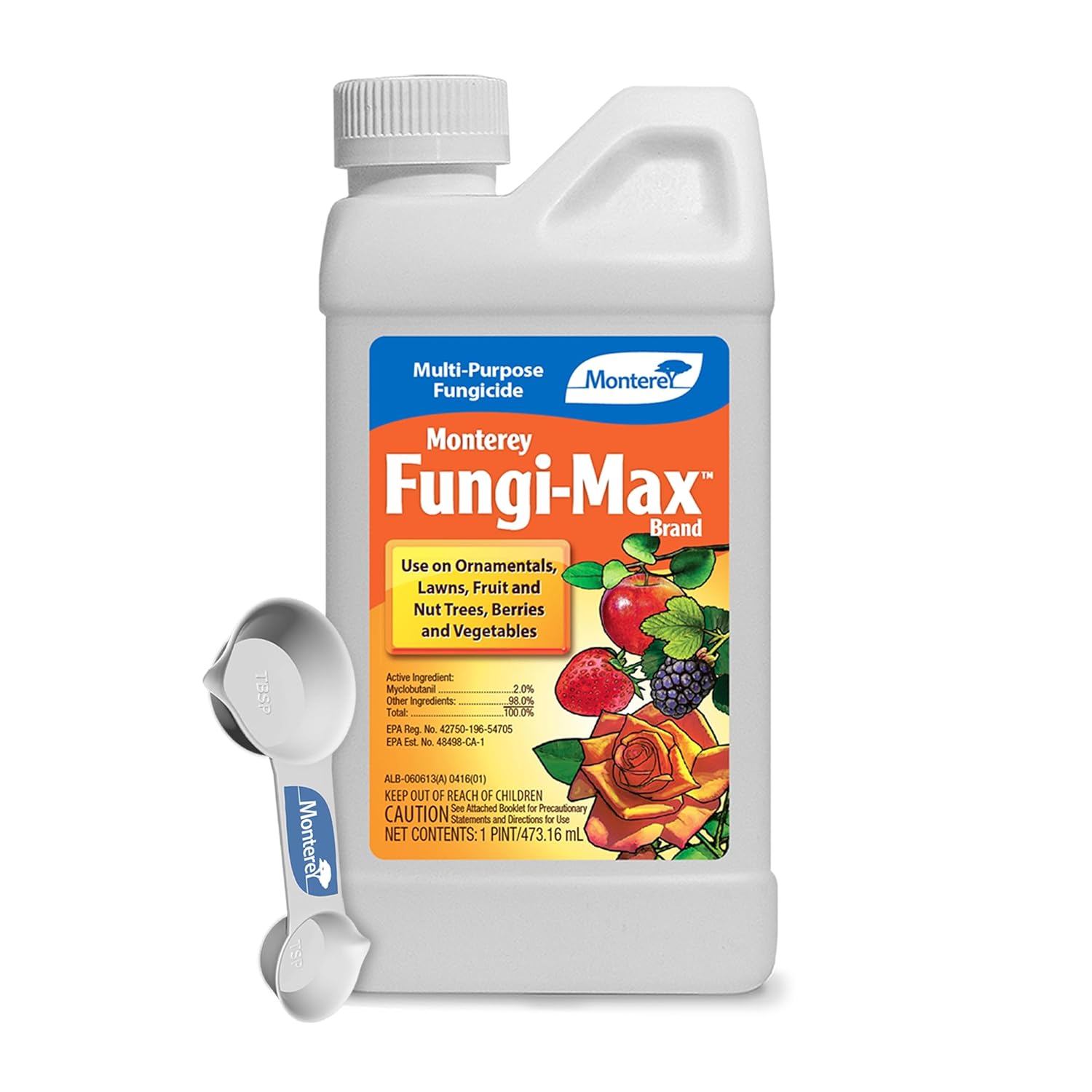
Monterey Fungi-Max Systemic Fungicide, 16 oz (with Measuring Spoon)
| Item Form | Liquid |
|---|---|
| Application Method | Spray |
| Coverage | Wide range of plants and plant types |
| Target Species | Flowers, Vegetables, Trees, Lawn Grass |
| Liquid Volume | 16 fluid ounces |
Monterey Fungi-Max is a concentrated liquid fungicide that you dilute and apply with a sprayer to prevent and control many common plant diseases. It is used outdoors on flowers, shrubs, trees, lawns and edible plants including vegetables and fruiting trees; for tomato growers it is intended to control leaf spots, blights and powdery mildew when applied at the first sign of disease. The product’s systemic action means it is absorbed and provides residual protection for up to two weeks, which reduces how often you need to spray during an outbreak. A measuring spoon is included to help with mixing and the spray application method works with standard pump or backpack sprayers. Important limitations are that it must be mixed and applied correctly according to the label and it is not listed as organic, so it may not suit organic-certified operations; also coverage on large plantings requires multiple bottles. For gardeners who want a reliable, easy-to-use fungicide to protect tomatoes and other outdoor plants, Fungi-Max delivers predictable, short-term disease control when applied promptly.
Best for: Gardeners who prioritize reliable, fast-acting disease control for outdoor tomato beds and mixed orchards and who want a product that gives measurable residual protection between applications.
Less Ideal for: Growers who require organic-certified products or those managing very large commercial tomato plantings where bulk coverage and cost per acre are primary concerns.
- Systemic action provides plant uptake and up to two weeks of protection per application.
- Broad labeled coverage for many plant types including vegetables and fruit trees.
- Liquid concentrate mixes for use with standard spray equipment for even coverage.
- Includes a measuring spoon to simplify accurate dilution amounts.
- Not listed as organic so unsuitable for certified organic production.
- One bottle may not cover large tomato plantings without repeated purchases.
Verdict: For home tomato growers seeking dependable, systemic disease control that reduces spray frequency, Monterey Fungi-Max is a practical, easy-to-use choice.
Bonide Captain Jack's Liquid Copper Fungicide Ready-to-Use, 32 oz

| Item Form | Spray |
|---|---|
| Unit Count | 32 Ounce |
| Active Ingredients | copper |
Bonide Captain Jack’s Liquid Copper Fungicide is a trigger-spray, ready-to-use copper treatment designed to control common fungal diseases such as black spot, powdery mildew, blight and peach leaf curl. It is applied by shaking and thoroughly spraying tops and undersides of leaves every 7 to 10 days or as needed, and the label allows application up to the day of harvest on listed edible plants. The product’s copper active ingredient makes it broadly effective against many foliar diseases and the convenient spray bottle removes the need to mix concentrates. Practical benefits include organic approval for many uses and clear directions for repeat treatments, which helps with consistent disease management. Important limitations are that it is a contact-style copper spray rather than a systemic cure, so thorough coverage and repeated applications are required for control, and care must be taken to follow label directions to avoid phytotoxicity on sensitive varieties.
Best for: Gardeners who prioritize established, proven solutions and want an organic-approved spray that controls common foliar diseases on roses and other plants with minimal setup.
Less Ideal for: Growers looking for a systemic fungicide or a single-application cure for long-term prevention should consider alternatives with systemic activity.
- Ready-to-use trigger spray for easy application without measuring or mixing
- Approved for organic gardening and label allows use up to day of harvest on listed edibles
- Effective copper active ingredient against a wide range of foliar fungal diseases including black spot
- Clear instructions for treatment interval make follow-up applications straightforward
- Contact-action copper requires thorough coverage and repeat sprays rather than a one-time systemic fix
- Potential for phytotoxicity on some sensitive plants if label directions are not followed
Verdict: A ready-to-use, organic-approved copper spray that provides reliable contact control of black spot and other foliar diseases when applied thoroughly and on schedule.
BioAdvanced 3-in-1 Insect, Disease & Mite Control Spray, 24 fl oz

| Unit Count | 24 Fluid Ounces |
|---|---|
| Item Form | Spray |
| Liquid Volume | 24 fluid ounces |
| Active Ingredients | 0.012% Imidacloprid, 0.014% Tau-fluvalinate, 0.015% Tebuconazole |
| Specification Met | EPA |
This ready-to-use BioAdvanced 3-in-1 spray combines an insecticide, miticide, and fungicide for broad protection on ornamental plants, including orchids listed among similar use sites. It is applied with a trigger sprayer to foliage and blooms, killing aphids, caterpillars, Japanese beetles and controlling spider mites on contact while the systemic components provide rainproof protection for up to 30 days. The inclusion of a fungicide helps manage common diseases such as powdery mildew and black spot, which can benefit orchids prone to fungal problems in humid conditions. Practical benefits are ease of use, multi-target control in one bottle, and coverage for dozens of plants per container. Important limitations are that the formula contains systemic insecticides so it must be used according to label directions and is not allowed for sale in several states, and specific orchid suitability is not detailed on the label so spot-testing on a few plants is prudent before wide application. Expect good short-term control but follow safety and timing guidance for flowering plants.
Best for: Home gardeners who want a single, easy-to-use product to manage common insect pests, mites, and fungal issues on ornamental plants and potted specimens while minimizing application time.
Less Ideal for: Specialist growers who require orchid-specific products or organic/chemical-free controls should consider targeted or softer alternatives tailored to sensitive species.
- Combines insect, mite, and fungal control in one ready-to-use spray for simplified treatment.
- Trigger-spray applicator makes spot and foliar application easy for container and potted plants.
- Systemic, rainproof protection that can last up to 30 days reduces reapplication frequency.
- Covers many common pests on ornamentals including aphids, caterpillars, Japanese beetles, and spider mites.
- Label does not list detailed directions specific to orchids so compatibility with sensitive species is not guaranteed.
- Not available for sale in several states which limits access depending on location.
- Contains multiple active ingredients so users must follow safety precautions and withholding periods for bloom treatments.
Verdict: A convenient all-in-one ready-to-use spray for casual orchid and ornamental growers who want combined insect, mite, and disease control with minimal fuss.
Choosing the Right Fungicide for Gardenias: Key Factors to Consider
Disease Coverage and Spectrum
Knowing which pathogens are active on gardenias matters because no single product controls every fungus. Some formulations target surface foliar problems like leaf spots and powdery mildew, while others include systemic activity that helps suppress root or crown pathogens. Choose a product whose labeled spectrum matches the disease signs you observe.
If you have recurring seasonal outbreaks, a broader-spectrum option or alternating products with different modes of action can reduce the chance of resistance. For isolated, cosmetic spots, a contact spray with quick knockdown may be enough; for progressive defoliation or root rot symptoms, you need something with systemic or soil-targeted activity.
Foliage Safety and Phytotoxicity Risk
Gardenia leaves are glossy and tend to be sensitive to heat and chemicals. Some fungicides can cause leaf scorch or discoloration, especially when applied during hot sun or to drought-stressed plants. Always check label directions for temperature and timing restrictions and avoid applications when plants are under heat stress.
Lower-concentration, plant-safe formulations and products labeled for ornamental shrubs reduce the risk of damage. Perform a spot test on a small branch before treating a whole shrub if you are unsure. Factor in the plant's growth stage because sprays can sometimes affect buds and newly opening flowers.
Systemic Versus Contact Action
Contact fungicides sit on the plant surface and provide quick protection where they are applied but offer little movement within the plant. They are effective for fast knockdown and immediate protection but need reapplication after rain or new growth.
Systemic fungicides are absorbed and translocated inside plant tissue, offering longer protection and sometimes curative activity. However, systemic chemistry can require different safety and withholding intervals for flowering shrubs. Consider whether you need immediate surface control or longer-term internal protection when selecting a product.
Residual Protection and Rainfastness
How long a treatment protects gardenias and whether it remains effective after rain determines reapplication intervals and labor. Contact products often wash off and require more frequent treatments after heavy rain. Some formulations bind to leaf surfaces or have rainfast properties that maintain efficacy for several days.
Longer residual protection reduces application frequency but may increase exposure risk to non-target organisms. Balance how often you want to treat against how persistent you need the product to be in your climate.
Application Method and Ease
Ease of use matters for backyard gardeners. Products come as ready-to-use sprays, hose-end applicators, concentrates that require measuring, or granules for soil treatment. Consider storage, mixing complexity, and whether you prefer low-drift spray delivery for shrubs with tight branching.
Also account for safety equipment required during mixing and application. Simpler applications reduce the chance of dosing mistakes and make it more likely you will follow label intervals correctly.
Environmental and Soil Considerations
Some fungicides are formulated for foliar use only, while others can be applied to soil to target root pathogens. Gardenias prefer acidic, well-drained soil, so choose products that do not harm soil biology or alter pH in a way that stresses the plant.
Pay attention to persistence in soil and any restrictions around nearby water features or pollinator-attractive plants. In many landscapes, minimal drift and careful timing reduce unintended impacts on beneficial insects and nearby ornamentals.
Identifying Common Gardenia Fungal Problems
Recognizing the specific disease helps you pick an appropriate treatment. Leaf spot diseases typically cause round or irregular brown spots with yellow halos and may lead to defoliation if untreated. Powdery mildew appears as white dusty patches on upper leaf surfaces and is most active when nights are cool and days are humid. Root and crown rots often show as wilting, yellowing, and poor vigor even with adequate water.
Timing your diagnosis is important. Early-season spotting often responds best to quick-contact sprays and sanitation, while later or systemic infections may require a product with internal activity and soil treatment. Inspect both upper and lower leaf surfaces, branches, and the root zone when possible.
- Examine both sides of leaves for differing symptoms.
- Note seasonal patterns and recent weather that favors disease.
- Collect a sample photo or a few leaves for extension identification if unsure.
Safe Application Timing and Technique
Apply treatments in the cool morning or late afternoon to reduce leaf scorch risk and improve spray coverage. Avoid application during midday heat or when foliage is drought stressed. For foliar sprays, aim for thorough but light coverage of both upper and lower leaf surfaces because many pathogens colonize undersides.
When treating multiple shrubs, avoid overlap that creates runoff. If plants are in bloom, check label guidance regarding treatment during flowering to protect pollinators. Wear recommended protective gear and follow mixing instructions carefully to prevent overconcentration that can harm gardenias.
- Time sprays for cooler parts of the day.
- Target both leaf surfaces for better control.
- Follow label restrictions regarding blooms and pollinator protection.
Cultural Practices That Reduce Fungus Pressure
Good cultural care often reduces how often you need chemical control. Improve air circulation by spacing plants and pruning congested branches to lower humidity around the plant. Mulch lightly to moderate soil moisture but avoid piling mulch against the trunk, which can create a wet microclimate inviting root rot.
Proper irrigation is critical. Water at the base of the plant and avoid overhead irrigation that wets leaves overnight. Maintain soil acidity and fertility within the preferred range for gardenias to keep plants vigorous and less susceptible to disease.
- Prune for airflow and light penetration.
- Mulch correctly and avoid crown contact.
- Use targeted soil moisture practices to keep leaves dry.
Integrating Fungicides with Cultural Controls
Fungicides work best as one part of an integrated program. Use sprays to reduce active inoculum when signs first appear, and pair chemical control with sanitation: remove and dispose of infected leaves and reduce sources of re-infection. For recurrent problems, rotate between products with different modes of action to slow resistance development.
Monitor treated plants and adjust frequency based on disease pressure, weather, and plant response. Combining good cultural care with targeted treatments reduces overall inputs and improves long-term plant health.
- Remove and destroy heavily infected foliage.
- Rotate modes of action to delay resistance.
- Adjust treatment frequency to conditions rather than a fixed calendar.
How We Chose the Best Fungicide for Gardenias
We focused on products and formulations best suited to the biology and growing conditions of gardenias. Gardenias commonly face foliar pathogens such as leaf spot, powdery mildew, and root-related fungi when conditions are warm and humid. We prioritized options that provide proven activity against those disorder groups while being usable on acid-loving, evergreen shrubs with delicate, glossy leaves. Evaluation criteria included breadth of disease control, contact versus systemic action, foliar safety and phytotoxicity risk, and application convenience for home gardeners. We also considered residual protection and rainfastness for typical outdoor conditions. Products not labeled for ornamental shrubs or explicitly contraindicated on sensitive evergreen foliage were excluded. We filtered out formulations that require specialized equipment or commercial licensing. The result is a list of practical choices that balance efficacy, plant safety, and household application needs.
FAQ
How often should I apply a fungicide to treat leaf spot on gardenias?
Frequency depends on the product type and disease pressure. Contact sprays may require applications every 7 to 14 days and after heavy rain. Systemic products often have longer intervals, usually set on the label. Reassess after initial treatments and follow label guidance for repeat intervals.
Can fungicides harm gardenia blooms or fragrance?
Some products can affect buds or cause temporary discoloration if applied at high temperatures or during bloom. Choose products labeled for ornamental shrubs and avoid spraying during open bloom unless the label permits it. Spot testing on a small branch before full application reduces risk.
Are soil drenches useful for gardenia fungal problems?
Soil drenches can be helpful when root or crown pathogens are suspected because they deliver active ingredients to the root zone. Use a product labeled for soil application and follow soil moisture and application rate guidance to avoid root injury.
Should I alternate fungicides to avoid resistance?
Alternating chemistries with different modes of action is a common resistance management practice, especially for recurring diseases. Rotate between contact and systemic actives as recommended on labels and avoid overuse of a single active ingredient.
Can I safely use a fungicide near other acid-loving plants or vegetables?
Many fungicides labeled for ornamentals are safe around companion acid-loving plants when used according to directions. Always read the label for any crop or proximity restrictions and avoid drift onto sensitive vegetables or pollinator-attractive blooms.
Final Verdict
Focus on matching the treatment to the disease and the plant's sensitivity. Prioritize products labeled for ornamental shrubs with clear instructions for gardenias, and weigh foliage safety, disease spectrum, and application convenience. Combine targeted fungicide use with improved cultural practices and routine monitoring to reduce repeat outbreaks. By balancing efficacy with plant safety and adapting applications to seasonal conditions, you can protect glossy gardenia foliage and maintain reliable flowering while minimizing unnecessary treatments.
