

Note: This article contains affiliate links. If you click on these links and make a purchase, I may earn a small commission at no extra cost to you. This helps support my research and content. Read my full affiliate disclosure here.
Italian cypress are prized for their narrow, formal silhouette, but they can be vulnerable to fungal diseases that discolor foliage, defoliate branches, and weaken trees over time. Choosing the right fungicide for Italian cypress matters because the product you pick determines how broadly it protects against common pathogens, how safe it is to apply near other plants, and how often treatments will be needed to keep a dense canopy healthy. This guide covers six shortlisted fungicides chosen for use on Italian cypress and similar evergreen conifers. We explain practical differences in disease coverage, residual activity, and application method so you can match a product to the specific disease pressure and maintenance routine in your landscape. Read on to understand the criteria used to select these options and what to consider before you treat.
Top Picks at a Glance
| Best Overall The best all-around choice for most situations | Bonide Captain Jack Copper Fungicide 16 oz Concentrate |  |
| Best Quality Built to a higher standard if you want something more solid | Atticus Gunner 14.3 MEC Propiconazole Fungicide (32 oz) |  |
| Best Value The sweet spot between price and what you get | BioAdvanced 3-in-1 Insect, Disease & Mite Control Concentrate, 32 oz |  |
| Best Budget The cheapest option that still gets the job done reliably | Bonide Copper Fungicide Ready-to-Use Spray or Dust, 16 oz |  |
| Highest Rated A top-rated pick with lots of positive feedback | Monterey Fungi-Max Systemic Fungicide, 16 oz (with Measuring Spoon) |  |
| Most Popular A crowd favorite that many people choose with confidence | Bonide Captain Jack's Liquid Copper Fungicide Ready-to-Use, 32 oz |  |
Bonide Captain Jack Copper Fungicide 16 oz Concentrate

| Unit Count | 16 Ounce |
|---|---|
| Item Form | Liquid |
| Target Species | Fungus |
| Active Ingredients | Copper Octanoate (Copper Soap) |
Bonide Captain Jack Copper Fungicide is a liquid concentrate designed to prevent and treat a broad range of fungal diseases on vegetables, fruits, ornamentals, and turf. Mixed with water per label directions, it is sprayed onto plant surfaces, including tops and undersides of leaves, and can be applied up to the day of harvest, which makes it practical for food crops like tomatoes. The active ingredient copper octanoate provides contact protection against powdery mildew, blight, black spot, rust, peach leaf curl and similar diseases. Application is straightforward and repeatable every 7 to 10 days as needed, and the product is cleared for use in organic gardening. Limitations to consider are that copper is a contact fungicide so it does not systemically move through the plant and works best as a preventative or early-treatment tool rather than curing severe systemic infections. Users should follow safety directions and avoid overuse to reduce copper buildup in soil.
Best for: Gardeners looking for a performance-focused, organic-approved fungicide to include in a preventative disease program for tomatoes and other edibles.
Less Ideal for: Growers seeking a systemic treatment for already advanced internal infections or those who prefer non-copper chemistries to avoid soil accumulation.
- Approved for organic gardening and can be used up to the day of harvest
- Controls a wide range of common diseases affecting tomatoes such as blight and powdery mildew
- Concentrated liquid formula mixes with water for spray application
- Repeatable 7–10 day application schedule makes preventative programs easy to maintain
- Acts as a contact fungicide and does not move systemically within the plant
- Repeated use can contribute to copper accumulation in soil if not managed
Verdict: Use this organic-approved copper concentrate when you want an effective, easy-to-apply preventative spray to protect tomatoes from common fungal diseases.
Atticus Gunner 14.3 MEC Propiconazole Fungicide (32 oz)

| Unit Count | 32 Fluid Ounces |
|---|---|
| Item Form | Liquid |
| Target Species | Fungus |
| Active Ingredients | Propiconazole |
| Specification Met | EPA |
Gunner 14.3 MEC is a professional-style propiconazole fungicide formulated as a microemulsion concentrate for use on turf and ornamentals, including landscape trees and shrubs. It is typically mixed into a sprayer at label rates and applied every 14 to 28 days as a preventive program or at first signs of disease. The MEC formulation makes the concentrate easy to mix and keeps suspensions stable in the tank, and the low odor and rain resistance mean sprays stay on foliage after drying. Labeled for control of more than 20 diseases, Gunner works by moving into plant tissue for root-to-leaf protection and can offer up to 28 days of control. Important limitations: it is a chemical fungicide that should be rotated with different modes of action to reduce resistance, mixed solutions should not be stored beyond one day, and state registrations vary so check local label directions. For Italian cypress, it can be used on ornamentals but you must follow the label for rates and tree-specific instructions.
Best for: Gardeners and landscape managers who prioritize potent, predictable disease control for ornamentals and turf and are comfortable following labeled chemical-application practices.
Less Ideal for: Homeowners seeking only organic or non-chemical treatments or those unwilling to follow precise mixing and rotation schedules should consider alternative products or cultural controls.
- Contains 14.3% propiconazole, a systemic active ingredient effective against many foliar and root-borne diseases
- Microemulsion concentrate mixes easily and stays stable in tank for consistent applications
- Provides up to 28 days of residual protection after application
- Low-odor formulation and resistant to wash-off once sprays have dried
- Requires rotation with other fungicide classes to manage resistance risk
Verdict: Choose Gunner 14.3 MEC when you need a strong, fast-acting propiconazole fungicide that delivers predictable, long-lasting protection for ornamentals like Italian cypress.
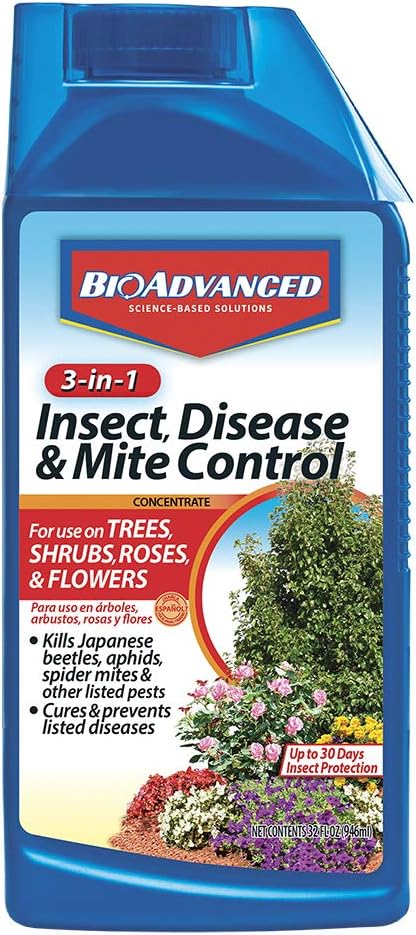
BioAdvanced 3-in-1 Insect, Disease & Mite Control Concentrate, 32 oz
| Unit Count | 32 Fluid Ounces |
|---|---|
| Item Type Name | Concentrate |
| Liquid Volume | 32 fluid ounces |
| Active Ingredients | Imidacloprid, Tau-fluvalinate, Tebuconazole |
| Specification Met | EPA |
This BioAdvanced concentrate is designed as an all-purpose plant treatment that kills listed insects on contact, controls common fungal diseases, and suppresses spider mites in one product. You mix the concentrate with water to make spray solution (it yields up to about 12 gallons), then apply to roses, flowers, shrubs, trees, and other ornamentals. Key active ingredients—imidacloprid, tau-fluvalinate, and tebuconazole—deliver systemic, rainproof protection that the label says can last up to 30 days. For mite control specifically, the miticide component gives both suppression and residual activity, so it is useful for follow-up sprays during an outbreak. Practical benefits include fewer separate products to buy and the convenience of treating multiple problems with one application. Important limitations are regulatory restrictions that make it unavailable in several states and the need to follow label safety precautions because it contains systemic insecticide active ingredients that can affect non-target insects if misused.
Best for: Gardeners who want a single, practical product to manage insect pests, fungal diseases, and spider mites on roses and ornamentals and who prefer a preventive residual treatment.
Less Ideal for: Organic gardeners or those managing pollinator-attractive plantings who avoid systemic insecticides should choose non-systemic or organic miticide and fungicide options instead.
- Combines insecticide, fungicide, and miticide in one concentrate for fewer products to store and apply
- Systemic formulation with rainproof protection that can last up to 30 days after application
- Makes up to 12 gallons of spray from a 32 fl oz bottle, suitable for treating multiple plants or repeat applications
- Active ingredients target a broad list of pests including aphids, spider mites, Japanese beetles and common foliar diseases
- Not available for sale in several U.S. states, limiting where it can be used
- Contains systemic insecticides that require careful adherence to label directions to avoid harming beneficial insects
Verdict: If you want one dependable product to both kill spider mites and prevent common foliar diseases across roses and ornamentals, this 3-in-1 concentrate simplifies treatment with a month-long systemic residual.
Bonide Copper Fungicide Ready-to-Use Spray or Dust, 16 oz

| Item Form | Spray |
|---|---|
| Target Species | Plants |
| Special Features | organic |
| Unit Count | 16 Ounce |
This Bonide copper fungicide is a ready-to-use spray or dust intended to prevent and control common fungal issues such as powdery mildew, leaf spots, blight and peach leaf curl on a wide range of garden plants. For Italian cypress, it can be applied as a foliar spray or dust to treat and help prevent fungal infections when used according to label directions. The product uses basic copper sulfate/copper octanoate as the active ingredient, so it functions as a modern Bordeaux-type protectant and is accepted for organic use. Practical benefits include quick mixing for hose-end or tank sprayers, multiple application options, and suitability up to the day of harvest on edible plants. Important limitations are that copper products are protective rather than curative for systemic infections and repeated heavy use can lead to copper buildup in soil, so follow rates and spray intervals on the label. Also this is a small ready-to-use container, so larger properties or frequent treatments will require multiple purchases or a concentrated alternative.
Best for: Gardeners seeking an affordable, organic-approved protectant to prevent and manage common foliar diseases on ornamental trees like Italian cypress and other landscape plants.
Less Ideal for: Homeowners who need a curative systemic treatment for advanced infections or who manage large properties and prefer concentrated commercial-strength formulations.
- Ready-to-use format that sprays or dusts without mixing concentrates
- Active copper ingredient accepted for organic gardening
- Works on a broad list of foliar diseases common to ornamentals and trees
- Can be applied with hose-end or tank sprayers for flexible coverage
- Protectant action means it does not reliably cure advanced systemic infections
- Small 16 oz ready-to-use size may be insufficient for large trees or repeated seasonal use
Verdict: A budget-friendly, organic-approved copper protectant that's easy to apply for preventing common fungal issues on Italian cypress and other landscape plants.
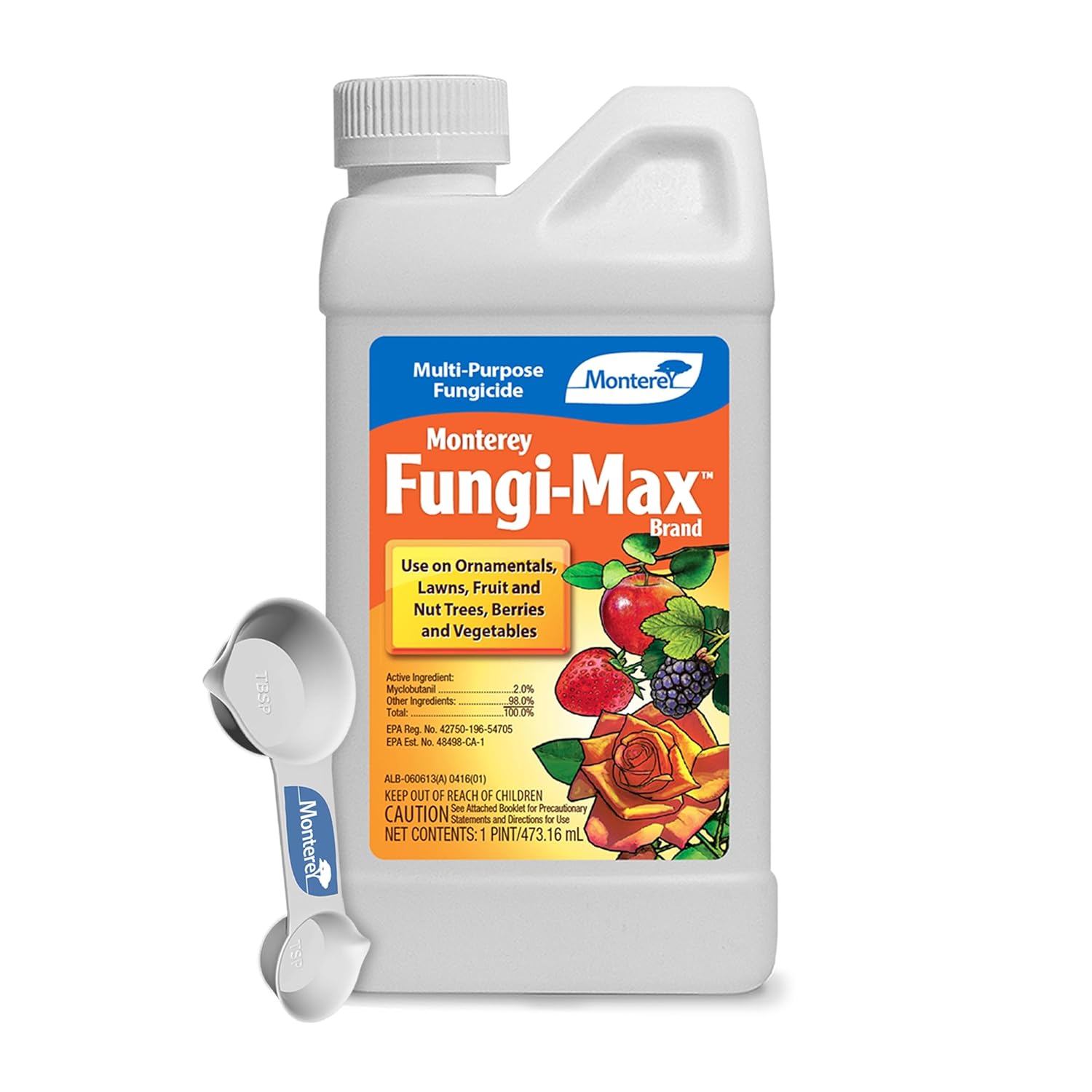
Monterey Fungi-Max Systemic Fungicide, 16 oz (with Measuring Spoon)
| Item Form | Liquid |
|---|---|
| Application Method | Spray |
| Coverage | Wide range of plants and plant types |
| Target Species | Flowers, Vegetables, Trees, Lawn Grass |
| Liquid Volume | 16 fluid ounces |
Monterey Fungi-Max is a concentrated liquid fungicide that you dilute and apply with a sprayer to prevent and control many common plant diseases. It is used outdoors on flowers, shrubs, trees, lawns and edible plants including vegetables and fruiting trees; for tomato growers it is intended to control leaf spots, blights and powdery mildew when applied at the first sign of disease. The product’s systemic action means it is absorbed and provides residual protection for up to two weeks, which reduces how often you need to spray during an outbreak. A measuring spoon is included to help with mixing and the spray application method works with standard pump or backpack sprayers. Important limitations are that it must be mixed and applied correctly according to the label and it is not listed as organic, so it may not suit organic-certified operations; also coverage on large plantings requires multiple bottles. For gardeners who want a reliable, easy-to-use fungicide to protect tomatoes and other outdoor plants, Fungi-Max delivers predictable, short-term disease control when applied promptly.
Best for: Gardeners who prioritize reliable, fast-acting disease control for outdoor tomato beds and mixed orchards and who want a product that gives measurable residual protection between applications.
Less Ideal for: Growers who require organic-certified products or those managing very large commercial tomato plantings where bulk coverage and cost per acre are primary concerns.
- Systemic action provides plant uptake and up to two weeks of protection per application.
- Broad labeled coverage for many plant types including vegetables and fruit trees.
- Liquid concentrate mixes for use with standard spray equipment for even coverage.
- Includes a measuring spoon to simplify accurate dilution amounts.
- Not listed as organic so unsuitable for certified organic production.
- One bottle may not cover large tomato plantings without repeated purchases.
Verdict: For home tomato growers seeking dependable, systemic disease control that reduces spray frequency, Monterey Fungi-Max is a practical, easy-to-use choice.
Bonide Captain Jack's Liquid Copper Fungicide Ready-to-Use, 32 oz

| Item Form | Spray |
|---|---|
| Unit Count | 32 Ounce |
| Active Ingredients | copper |
Bonide Captain Jack’s Liquid Copper Fungicide is a trigger-spray, ready-to-use copper treatment designed to control common fungal diseases such as black spot, powdery mildew, blight and peach leaf curl. It is applied by shaking and thoroughly spraying tops and undersides of leaves every 7 to 10 days or as needed, and the label allows application up to the day of harvest on listed edible plants. The product’s copper active ingredient makes it broadly effective against many foliar diseases and the convenient spray bottle removes the need to mix concentrates. Practical benefits include organic approval for many uses and clear directions for repeat treatments, which helps with consistent disease management. Important limitations are that it is a contact-style copper spray rather than a systemic cure, so thorough coverage and repeated applications are required for control, and care must be taken to follow label directions to avoid phytotoxicity on sensitive varieties.
Best for: Gardeners who prioritize established, proven solutions and want an organic-approved spray that controls common foliar diseases on roses and other plants with minimal setup.
Less Ideal for: Growers looking for a systemic fungicide or a single-application cure for long-term prevention should consider alternatives with systemic activity.
- Ready-to-use trigger spray for easy application without measuring or mixing
- Approved for organic gardening and label allows use up to day of harvest on listed edibles
- Effective copper active ingredient against a wide range of foliar fungal diseases including black spot
- Clear instructions for treatment interval make follow-up applications straightforward
- Contact-action copper requires thorough coverage and repeat sprays rather than a one-time systemic fix
- Potential for phytotoxicity on some sensitive plants if label directions are not followed
Verdict: A ready-to-use, organic-approved copper spray that provides reliable contact control of black spot and other foliar diseases when applied thoroughly and on schedule.
Choosing the Right Fungicide for Italian Cypress: Key Factors to Consider
Disease Spectrum and Diagnosis
Accurately identifying the fungus affecting Italian cypress determines which active ingredient will help. Needle blights, tip and shoot dieback, root-infecting fungi, and trunk cankers each respond differently to contact versus systemic fungicides. A contact fungicide can protect new growth from spores landing on foliage but may need more frequent reapplication. A systemic material moves within plant tissues and can help control infections already present in needles or shoots.
Before treating, inspect needles, branch collars, and the lower trunk for characteristic symptoms such as brown banding, premature needle drop, cankered bark, or resin bleeding. If symptoms are ambiguous or advanced, consult a local extension service or certified arborist for diagnosis because applying the wrong type of product wastes time and can delay effective measures.
Residual Activity and Reapplication Frequency
Residual protection refers to how long a fungicide remains effective after application. Products with longer residuals reduce how often you need to spray and lower disturbance to the tree and surrounding planting beds. However, residual duration is influenced by rainfall, irrigation, and needle density that traps spray.
In landscapes with frequent rain or overhead irrigation, expect shorter field residuals and plan for follow-up applications on the manufacturer label schedule. For high-value specimen cypress, longer residuals or systemic options are often preferred to maintain continuous protection through vulnerable growth flushes.
Application Method and Coverage
How a fungicide is applied affects its effectiveness on Italian cypress. Foliar sprays need thorough coverage of the foliage, inner canopy, and lower branches to contact spores and vulnerable tissue. Dense, narrow crowns common to Italian cypress can be hard to penetrate with handheld sprayers, so selecting a product compatible with higher-pressure equipment or adding appropriate surfactants can improve coverage.
Systemic products that translocate within the plant may be applied as foliar sprays, soil drenches, or trunk injections, depending on the product and label. Consider access to equipment, ability to reach the canopy safely, and the need to avoid runoff into landscaped beds or water features when choosing an application method.
Tree Size, Age, and Health
The size and vigor of the Italian cypress influence both product selection and timing. Young or newly planted trees may be more sensitive to certain active ingredients and may require gentler contact materials or lower rates. Mature specimens with established root systems can often tolerate systemic treatments and benefit from them when infections are internal.
Compromised trees with repeated stress from drought, soil compaction, or root damage will be slower to recover, so fungicide treatment should be part of an integrated plan that also addresses cultural stressors. For large trees, access and safe application technique become a primary concern and may change whether you opt for a product that requires frequent reapplication.
Environmental and Non-target Considerations
Think about the landscape context when choosing a fungicide for Italian cypress. Products applied near flowering ornamentals, vegetable beds, or water features require careful handling to protect pollinators and aquatic organisms. Drift control, buffer zones, and timing applications outside peak pollinator activity reduce non-target exposure.
Biodegradability, soil mobility, and label restrictions for use near water should factor into selection. In public or heavily planted residential settings, choose options with clear mitigation instructions and consider mechanical or cultural measures to reduce fungicide dependence.
Label Directions and Legal Use
Always follow the product label because it is the legal use document and contains species lists, application rates, and safety precautions. Labels specify whether a product is registered for ornamental conifers and list any required personal protective equipment, reentry intervals, and preharvest intervals if applicable in mixed-use landscapes.
Using a product outside label instructions risks harm to the tree and the environment and may be unlawful. If label language is unclear for Italian cypress, consult the manufacturer or a local extension specialist before applying.
Common Fungal Problems on Italian Cypress
Italian cypress commonly faces a handful of fungal issues that manifest in distinct ways. Needle blight causes browning and banding of needles, often progressing from the lower branches upward. Tip dieback appears as browned shoot tips and can lead to thinning of the column if left untreated. Root and crown rots show as general decline, poor shoot growth, and canker development at the trunk base.
Understanding these patterns helps you choose a fungicide with the right mode of action and application strategy. For example, surface-active products are better for preventing spore germination on needles, while systemic agents are more appropriate when infections have progressed into shoots or when root-associated pathogens are suspected.
- Needle blight: visible browning and needle drop starting low in the crown
- Tip dieback: dead shoot tips causing slender gaps in the column
- Canker and trunk rot: sunken bark, resin, and branch girdling
- Root rot: slow decline, chlorosis, and poor response to irrigation
Timing Treatments for Best Results
Applying fungicide at the right time maximizes effectiveness. For needle-borne diseases, schedule preventive sprays just before new growth flushes and again during wet periods when spore pressure increases. In many climates, the spring growth period and late autumn wet season are high-risk windows.
If treating an active infection, follow label guidance for repeated applications at recommended intervals to break the disease cycle. Combine timing with cultural measures such as pruning to improve air circulation and reduce moisture retention inside the crown.
- Preventive schedule: prior to budbreak and during prolonged wet spells
- Active infections: adhere to labeled retreatment intervals
- Coordinate sprays with pruning and irrigation management
Integrating Cultural Controls with Chemical Treatment
Fungicides work best as part of an integrated approach. Improve soil drainage, avoid overwatering, and reduce mulch against the trunk to minimize root and crown disease risk. Prune dead or crowded branches to increase airflow within the narrow crown, which reduces humidity and spore retention.
Sanitation matters. Remove and dispose of heavily infected needles and small branches rather than leaving them under trees where spores can survive. Cultural practices reduce disease pressure and can lower the number of chemical applications required over time.
- Adjust irrigation to reduce prolonged needle wetness
- Prune to open canopy and remove infected material
- Improve soil health to support root vigor
Application Tips for Effective Coverage
Achieving thorough coverage on Italian cypress can be challenging because of its dense, vertical growth habit. Use an adjustable nozzle, appropriate pressure, and a surfactant if the product label permits to help spray penetrate the inner canopy and lower branches. Apply from multiple angles when possible to reach hidden foliage.
For systemic treatments delivered as soil drenches, ensure the root zone receives the specified volume so the active ingredient is taken up. When trunk injections are recommended, work with a professional to avoid wounding the tree excessively and follow strict label instructions.
- Use multiple spray angles and proper nozzle selection
- Follow labeled volumes for soil drenches to reach roots
- Hire professionals for trunk injections when required
Safety and Personal Protective Equipment
Personal protective equipment requirements vary between products. At minimum, many fungicide labels require gloves, eye protection, and long sleeves during mixing and application. Some systemic or more concentrated chemistries call for respiratory protection during mixing or when using high-pressure equipment.
Keep bystanders, pets, and nearby flowering plants out of treatment zones until spray residues have dried. Store products securely and dispose of rinsate and containers according to local regulations and the product label.
- Wear label-specified PPE during mixing and application
- Protect non-target plants and keep people away until dry
- Follow container disposal and rinsate guidelines
How We Chose the Best Fungicide for Italian Cypress
We evaluated products by the attributes that matter most to home gardeners and landscape professionals treating Italian cypress. Key criteria included disease spectrum, meaning whether a product controls common cypress fungal problems such as needle blight, tip dieback fungi, and canker pathogens. We prioritized products with documented effectiveness against the pathogens typically encountered on narrow-columnar cypress. Residual protection and reapplication interval were assessed because longer residual activity reduces labor and disturbance to established plantings. We also scored application flexibility, including whether a product can be used as a spray, trunk injection, or soil drench where appropriate for systemic activity. Safety and plant tolerance were important: we excluded products with known phytotoxicity risks on evergreen conifers or those lacking clear label directions for ornamental trees. Ease of use and mixing characteristics were considered for gardeners who apply treatments themselves, including concentrate dilution clarity and suitability for handheld sprayers. Finally, environmental impact and non-target safety were weighed, favoring fungicides with lower drift risk and clear guidance for pollinator and beneficial organism protection. Products that lacked label directions for cypress or had insufficient disease coverage were excluded.
FAQ
How often should I reapply fungicide to Italian cypress?
Reapplication frequency depends on the active ingredient and environmental conditions. Preventive contact treatments often require repeat sprays every 7 to 21 days during high-risk wet periods, while systemic products can last longer. Always follow label intervals because weather and disease pressure change the schedule.
Can I treat a mature Italian cypress with a soil drench?
Some systemic fungicides can be applied as soil drenches and taken up by roots, which is useful for root or shoot-invading pathogens. Effectiveness depends on proper application volume, root health, and soil conditions. For large, established trees consider professional advice to ensure adequate uptake.
Will pruning alone control fungal disease on cypress?
Pruning reduces disease pressure by improving airflow and removing infected material, but it rarely eliminates active infections on its own. Combine targeted pruning with appropriate fungicide treatments and cultural adjustments for best results.
Are organic fungicides effective on Italian cypress?
Some organic options provide preventive protection and can be useful for early-stage disease or low-pressure situations. They often require more frequent applications and may have a narrower disease spectrum than synthetic systemic products. Choose based on disease severity and tolerance for follow-up treatments.
Is it safe to apply fungicide near water features or ornamental beds?
Safety depends on the product's environmental profile and label restrictions. Many labels include buffer recommendations and explicit directions for avoiding runoff into water. Select products with clear guidance for sensitive areas and use application techniques that minimize drift and runoff.
When should I call an arborist instead of treating myself?
Consult an arborist when symptoms are severe, when trunk cankers or root rot are suspected, or when the tree is large and difficult to treat safely. Professionals can diagnose complex infections, recommend integrated treatments, and perform specialized applications such as injections when appropriate.
Final Verdict
When choosing a fungicide for Italian cypress, prioritize products that match the diagnosed disease type, provide adequate residual protection for your local climate, and offer an application method you can apply safely and effectively. Combine chemical treatment with cultural adjustments such as pruning, irrigation management, and sanitation to reduce long-term disease pressure. Balancing disease coverage, plant safety, and application practicality will guide your selection. Focus on the factors most relevant to your planting situation so you can maintain the tall, narrow form and health of Italian cypress with minimal disruption.
