

Note: This article contains affiliate links. If you click on these links and make a purchase, I may earn a small commission at no extra cost to you. This helps support my research and content. Read my full affiliate disclosure here.
If you tend small beds, containers, or narrow borders, the right garden hand rake makes light work of breaking soil, removing debris, and leveling seedbeds. A handheld rake designed for close-up work gives you more control than a full-size rake and limits disturbance to nearby plants. This guide shortlists the top options suited to confined spaces and repeated daily use. We evaluated models for tine layout, handle ergonomics, materials, and how they perform in realistic garden tasks like crumbling clods, clearing mulch, and grooming potting mix. Below are our top picks and the practical criteria used to judge them, followed by detailed buying guidance to help you pick the best rake for your planting and maintenance needs.
Top Picks at a Glance
| Best Overall The best all-around choice for most situations | Garden Guru Stainless Steel Hand Rake with Ergonomic Handle |  |
| Best Quality Built to a higher standard if you want something more solid | Fiskars Xact Hand Rake (Stainless Steel) |  |
| Best Value The sweet spot between price and what you get | WORKPRO 16" Hand Rake with Soft Grip |  |
| Best Budget The cheapest option that still gets the job done reliably | GINTBN 13" Stainless Steel Hand Rake with Short Handle |  |
| Highest Rated A top-rated pick with lots of positive feedback | Haliaeetus 14.6" Stainless Steel Garden Hand Rake with Ergonomic Wood Handle |  |
| Most Popular A crowd favorite that many people choose with confidence | FLORA GUARD 6-Piece Garden Tool Set (High Carbon Steel) |  |
Garden Guru Stainless Steel Hand Rake with Ergonomic Handle

| Material Type | Stainless Steel |
|---|---|
| Power Source | Hand |
| Operation Mode | Manual |
This Garden Guru hand rake is a straightforward, durable tool for everyday garden tasks like cultivating, breaking up soil, and working mulch around plants. The stainless steel tines resist bending and make it easier to work in compacted soil and between stems, while the ergonomic handle reduces hand and wrist strain during longer sessions. It is typically used for prepping planting rows, aerating the topsoil in raised beds, and tidying flower beds where a full-size rake would be cumbersome. The manual, hand-powered design gives precise control but limits reach compared with a long-handled tool, so it is best for beds, containers, and close work. Notable features are the rust-resistant stainless steel construction and a comfort grip that improves leverage and reduces fatigue. The tool is simple to maintain and should last longer than cheaper plated tools, though it is not suited to heavy digging or prying large roots. For gardeners who want a reliable small cultivator for routine bed work, this is a solid pick.
Best for: Gardeners who want a dependable small cultivator for everyday bed and container work and who prioritize comfort and durability in a handheld tool.
Less Ideal for: People who need to work large lawns or perform heavy digging and root removal should choose a long-handled rake or digging tool instead.
- Stainless steel tines that resist bending and corrosion
- Ergonomic handle designed to reduce hand and wrist fatigue
- Compact size for precise work in flower beds and containers
- Durable construction suitable for regular garden use
- Hand-powered design limits reach so it is not ideal for large areas
Verdict: A durable, comfortable hand cultivator that delivers precise control for routine flower bed and container work.
Fiskars Xact Hand Rake (Stainless Steel)

| Head Material | Stainless Steel |
|---|---|
| Handle Material | Stainless Steel |
| Grip Material | Stainless Steel |
| Head Size | 4.75 inches |
The Fiskars Xact Hand Rake is built for precision work in flowerbeds, planters, and other tight spots where a full-size rake is awkward. Its stainless steel head and flexible tines let you comb through compacted or clumpy soil and remove debris without bending or disturbing nearby plants. The SoftGrip weighted handle gives multiple grip positions and better balance for controlled motions during longer tasks, and the hang hole makes storage simple. Because the head and tines are steel, the tool resists bending and stands up to repeated heavy use, though the short length limits reach compared with long-handled rakes. This rake is best used for targeted tasks like prepping seed rows, cleaning around perennials, and light cultivation rather than moving large volumes of leaves. If you want a durable, ergonomic hand tool that delivers accurate results in confined gardening spaces, this model performs reliably with minimal fuss.
Best for: Gardeners who prioritize precise, high-performance hand tools for frequent targeted tasks in beds and containers and who value durable, ergonomic construction.
Less Ideal for: Those who need to clear large areas or move heavy leaf loads should choose a full‑size rake instead.
- Stainless steel head and tines for rust resistance and durability
- Flexible tines provide precise soil raking and debris removal in tight spaces
- SoftGrip weighted handle improves balance and comfort during extended use
- Short length restricts reach for larger beds or tall planting areas
Verdict: Choose this rake when you need a durable, ergonomic hand tool that delivers precise, repeatable results in small beds and containers.
WORKPRO 16" Hand Rake with Soft Grip

| Handle Material | PP+TRP |
|---|---|
| Head Material | Stainless Steel |
| Length | 16" |
| Item Weight | 8 ounces |
This small WORKPRO hand rake is a practical tool for gathering grass clippings, debris, and loosening soil in tight spots where a full-size rake is awkward. Its polished stainless-steel head and flexible tines resist rust and provide enough spring to collect clippings without digging up delicate roots. The PP+TPR soft-grip handle improves comfort and control during repetitive raking, and the hole in the handle makes it easy to hang for storage. Because it is only 16 inches long and lightweight, it is easy to maneuver around flower beds, planters, and lawn edges, but it is not intended to replace a full-size rake for large lawns. For routine clipping cleanup on small to medium patches of grass, edging, or quick spot work near garden beds, this rake offers precise results and durable construction at a modest scale.
Best for: Buyers who want an affordable, durable hand rake for spot-cleaning grass clippings, edging, and precision work around beds and containers.
Less Ideal for: Users who need to clear large areas of turf or collect heavy, wet clippings should choose a full-size rake or a leaf blower instead.
- Stainless steel tines resist rust and maintain shape for long-term use
- Soft PP+TPR handle offers a secure, comfortable grip that reduces wrist strain
- Compact 16-inch length reaches tight spots and works well around beds and edges
- Lightweight design is easy to maneuver for quick grass clipping cleanup
- Short length makes it inefficient for cleaning large lawns or long sessions
Verdict: A compact, budget-friendly stainless-steel hand rake that excels at precise grass clipping cleanup and edging in small garden areas.
GINTBN 13" Stainless Steel Hand Rake with Short Handle

| Head Material | Stainless Steel |
|---|---|
| Handle Material | Plastic |
| Rake Type | Garden Rake |
This small hand rake is a basic, no-frills tool for light garden tasks around flower beds, containers, and tight borders. The stainless steel head with nine tines moves mulch and loosens soil effectively around delicate plants while the short plastic handle keeps the tool compact and easy to control. It is typically used for weeding, preparing small planting holes, and raking soil in confined spaces where a full-size rake would be unwieldy. The durable stainless head resists rust and the hole in the handle makes simple storage possible. Because it is small and lightweight it is comfortable for quick chores and for gardeners who prefer handheld tools. The main compromises are its short reach and modest size, which make it unsuitable for large areas or heavy-duty clearing, and the plastic handle is less durable than wooden or metal alternatives for long, hard use. For routine light gardening this rake delivers straightforward performance at a low cost.
Best for: Budget-minded gardeners who need a simple, compact tool for weeding, planting, and soil work in small beds, containers, or tight landscape corners.
Less Ideal for: Users who need a tool for large lawns, heavy debris removal, or extended continuous use should choose a full-size or heavier-duty rake instead.
- Stainless steel head resists rust and handles regular light garden use
- Nine tines provide good control for moving soil and mulch in tight spaces
- Compact short handle makes the tool easy to maneuver around plants
- Lightweight design is comfortable for quick tasks and container gardening
- Short handle limits reach and makes prolonged use less ergonomic
- Plastic handle is less robust than wooden or metal alternatives for heavy use
Verdict: A low-cost, compact stainless steel hand rake that is a practical choice for light garden tasks and tight spaces.
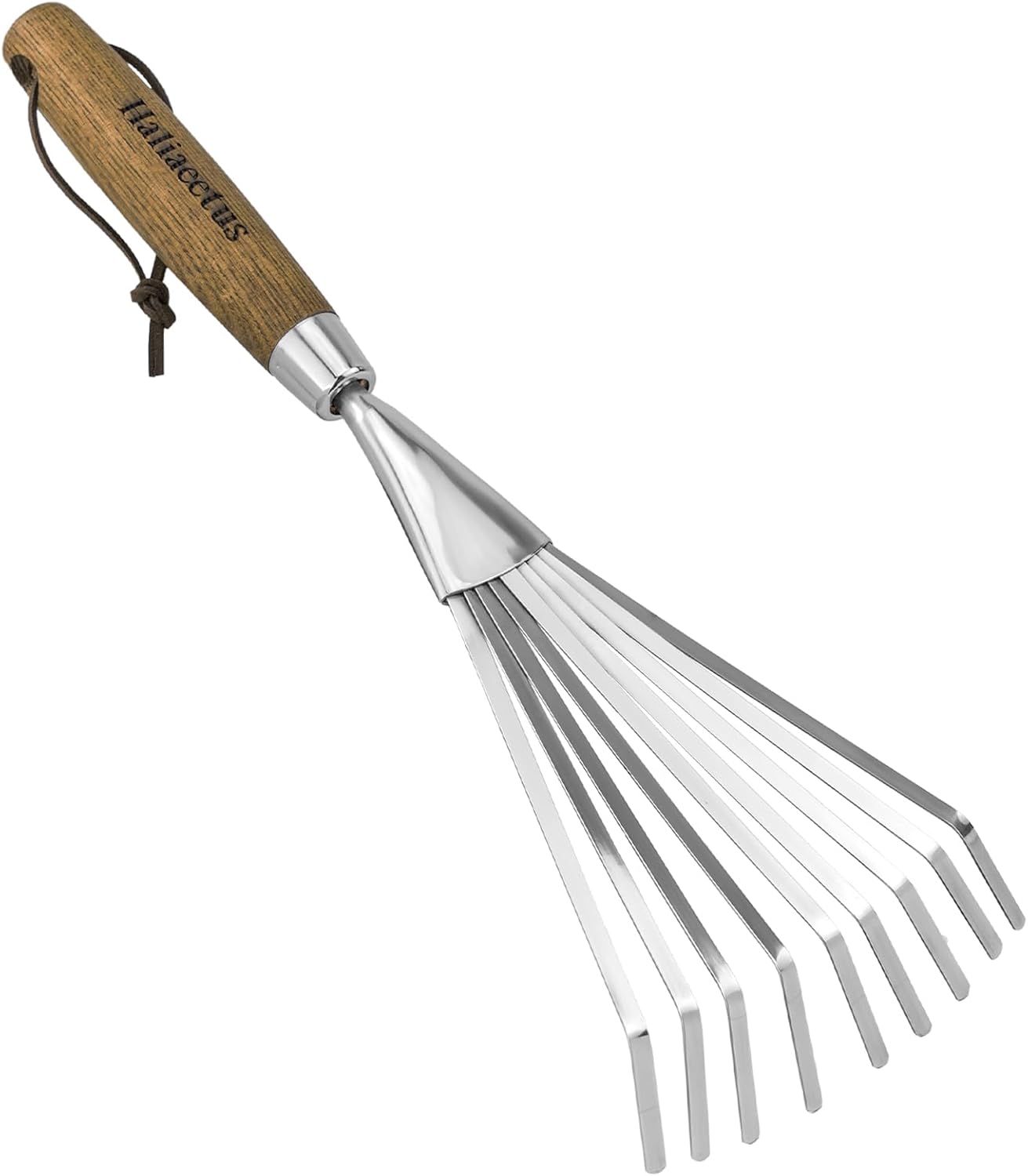
Haliaeetus 14.6" Stainless Steel Garden Hand Rake with Ergonomic Wood Handle
| Rake Type | Garden Rake |
|---|---|
| Item Highlight | 9 Tine Stainless Steel Small Rake with Ergonomic Wood Handle |
| Handle Material | Wood |
| Head Material | Stainless Steel |
This compact hand shrub rake is built for precise work around flower beds and between plants where a full-size rake cannot reach. The nine closely spaced stainless steel tines grab leaves, mulch, and loose debris while the slightly flexible metal helps avoid damaging delicate roots and stems. Its streamlined solid wood handle is shaped for comfort and offers good control for repeated use. Notable features include polished stainless steel construction and seamless welding at the head-to-handle junction, which increase durability and resist bending during regular garden tasks. The tool is lightweight and easy to maneuver for edging, spreading mulch, and light soil stirring, but its small head limits productivity on large areas and it is not intended for heavy digging or prying. For gardeners who value a long-lasting, well-made hand tool, this rake offers straightforward, reliable performance with an ergonomic grip that reduces wrist strain during routine bed maintenance.
Best for: Gardeners who prioritize a durable, well-built hand tool for regular bed maintenance and precise cleanup around plants and shrubs.
Less Ideal for: People needing a high-capacity rake for large lawns or workers who require a tool for heavy digging and breaking compacted ground.
- Stainless steel head resists bending and corrosion for long service life
- Ergonomic solid wood handle shaped to reduce wrist strain during use
- Nine close-set tines capture small leaves and loose debris in tight spaces
- Seamless welding between head and handle improves durability
- Small head size makes it slow for clearing large areas
- Not suitable for heavy digging, prying, or breaking compacted soil
Verdict: A reliable, compact hand rake built to last that excels at precise cleanup and routine bed maintenance.
FLORA GUARD 6-Piece Garden Tool Set (High Carbon Steel)

| Number of items | 6 |
|---|---|
| Material Type | High Carbon Steel |
| Handle Material | Plastic |
| Recommended Uses For Product | Gardening, transplantation |
This 6-piece FLORA GUARD set bundles a trowel, 5-tine hand rake, 9-tine leaf rake, double hoe, cultivator and crack weeder so you have the basic hand tools for planting, weeding and bed preparation. High carbon steel heads are designed to resist bending when loosening compacted soil or levering out roots, while the ergonomic, non-slip plastic handles help reduce hand fatigue during longer sessions. The compact hand rake and cultivator are useful for raised beds and narrow spaces where a full-size rake would be awkward, and the crack weeder makes work between pavers or tight rows easier. Because these are handheld tools they are best for small- to medium-sized beds, container gardens and detail work rather than clearing large lawns. Expect solid durability from the steel, but like most carbon-steel tools they will need basic cleaning and drying after use to avoid surface rust. Overall this set gives beginner and home gardeners a practical, ready-to-use selection of tools for routine bed maintenance and planting.
Best for: Home gardeners and beginners who want a single, ready-to-use kit for planting, weeding and maintaining small beds, raised beds or containers and who prioritize reliable, proven tools.
Less Ideal for: Gardeners who need long-handled rakes, large-area cleanup tools, or professional landscapers who require industrial-grade handles and replacement part options.
- High carbon steel heads for strength when digging and breaking compacted soil
- Includes a focused set of six hand tools covering digging, weeding and light raking
- Ergonomic non-slip plastic handles that improve grip and reduce hand fatigue
- Compact hand rake and cultivator well suited for raised beds and tight spaces
- Not intended to replace full-size long-handled rakes or heavy-duty tools for large areas
- Plastic handles may wear faster than wood or rubber on very heavy use
Verdict: A dependable six-piece hand tool kit that gives home gardeners the essential steel tools for planting, weeding and small-bed maintenance.
Choosing the Right Garden Hand Garden Rake: Key Factors to Consider
Tine Design and Spacing
Tine shape, thickness, and spacing determine how a hand rake interacts with soil and debris. Narrowly spaced tines are better for fine seedbed work and removing small bits of debris without catching on seedlings, while wider spacing clears larger clumps and old mulch more quickly.
Stiffer tines give more scraping power for breaking light crusts, whereas springier tines conform to uneven surfaces and are gentler around roots. Consider the typical task you perform most often and choose a tine layout that matches that task to avoid disturbing nearby plants.
Handle Ergonomics and Length
Handle diameter, grip shape, and length affect wrist position and leverage during repetitive work. A thicker, cushioned grip reduces hand fatigue and the chance of blisters during long sessions. Short handles give precise control in tight spaces, while slightly longer handles let you work from a more upright posture to reduce back strain.
Also factor in grip texture for wet conditions and whether the handle end allows for a hanging loop or easy storage. Ergonomic choices matter most when you plan frequent light cultivation or long stretches of bed grooming.
Construction Materials and Corrosion Resistance
Materials affect how long a hand rake holds up to damp soil, fertilizer salts, and repeated knocks against rocks. Steel tines offer strength and scraping ability but need protective coatings or stainless alloys to resist rust. Aluminum is lighter and resists corrosion but can bend under heavy strain.
Handles made from hardwood are comfortable and durable but need sealing; fiberglass offers weather resistance and shock absorption. Match material expectations to your climate and how often you store the tool indoors.
Weight, Balance, and Control
Overall weight influences fatigue and how much control you have when working close to plants. A well-balanced rake feels neutral in the hand so you can make fine adjustments without fighting a heavy head or an overly heavy handle.
Lightweight rakes reduce wrist and arm fatigue for detailed work, while slightly heavier heads can help when scraping compacted soil. Think about the balance point and whether it supports the motions you use most: short pulling strokes, light scraping, or leaf gathering.
Maintenance and Tine Clearance
How easily you can clean soil, roots, and mulch from the tines determines the tool's day-to-day convenience. Tines with enough spacing to clear debris but not so wide that small bits compact between them hit the balance between efficiency and cleaning time.
Also consider whether finishes chip, exposing bare metal, and how straightforward it is to re-tighten or replace any fasteners. Low-maintenance designs save time and keep the tool working well season after season.
Intended Use and Working Area
A hand rake for containers faces different demands than one for in-ground beds. Container work emphasizes narrow heads and gentle tines to avoid uprooting roots, while larger raised beds need a wider head and stronger tines to move heavier organic matter.
Consider the width you need to access plantings without disturbing neighbors and whether you need a multipurpose rake that also performs light weeding and aeration.
Best Rake Types for Different Garden Tasks
Different hand rakes suit different jobs. Narrow-headed rakes excel at finishing seedbeds and working between tight rows, while broader, stiffer-head designs speed clearing of old mulch and larger debris. Choose the head style that lines up with the most common chores you perform.
Some rakes have flexible tines for gently raking leaf mold or fine compost into place. Others use stiff, closely spaced tines to break crusts and remove compacted soil. Match the head style to the texture of soil and the delicacy of surrounding plants.
- Narrow head: precise in containers and tight rows
- Broad head: faster clearing in raised beds
- Flexible tines: gentle grooming of mulch and compost
- Stiff tines: scraping compacted soil and removing crusts
Maintaining Your Hand Rake
Rinse soil off the tines after use and let the tool dry before storage to reduce corrosion. For steel tines, apply a light coating of oil to prevent rust during the off-season. Wooden handles benefit from an occasional rub with linseed oil or another sealant to keep them from splitting.
If roots or debris collect between tines, use a narrow stick or a wire brush to clear them. Periodically inspect connections and tighten any screws or rivets to keep the head secure. Simple routine care extends the life of the tool and maintains performance.
- Clean tines and dry before storing
- Oil metal parts to prevent rust
- Seal wooden handles yearly
- Tighten fasteners and clear debris between tines
Using a Hand Rake Without Damaging Plants
Work from the edges toward the center and use light, controlled strokes to avoid disturbing shallow roots or seedlings. Keep the rake shallow so tines skim the surface rather than digging deeply into root zones. Where seedlings are present, use the rake head at a low angle and pull gently.
When in doubt, switch to a narrow tined or flexible rake for delicate areas. Practicing in a less planted area helps you gauge how aggressive the tool is before using it near young plants.
- Use shallow strokes and low angles near seedlings
- Work edges toward center to control debris movement
- Choose flexible tines for delicate areas
Storage and Seasonal Care
Store hand rakes in a dry, ventilated spot off the ground. Hanging tools prevents moisture pooling and keeps tines from bending. If you keep tools outdoors, use a covered rack to minimize exposure to rain and winter thaw cycles.
Before long-term storage, clean and oil metal parts and lightly sand and re-seal any worn wooden grips. Proper seasonal care reduces repair needs and preserves usable life.
- Hang tools to prevent moisture and bending
- Clean and oil before winter storage
- Re-seal worn wooden grips
Adjusting Technique for Soil Types
In sandy soil use lighter, higher-frequency strokes that lift and level without digging. Sandy soils are easy to comb but can shift too much if you use heavy scraping motions. For clay or compacted soils, use firmer, more deliberate strokes and consider loosening the surface first with a fork before raking.
For loam and mixed soils a moderate approach works: break clods with the rake's edge and finish with shallower strokes to create a fine surface. Adjust tine pressure and angle to suit the soil's resistance to avoid tearing plant roots.
- Sandy soil: light strokes, avoid overworking
- Clay soil: deliberate scraping, pre-loosen if needed
- Loam: moderate pressure, finish with shallow strokes
How We Chose the Best Garden Hand Garden Rake
We started by focusing on tools built specifically for close-in garden tasks rather than large yard rakes. Key evaluation criteria included tine design and spacing for how well a rake grabs debris without uprooting seedlings, handle ergonomics and length for wrist comfort and leverage, construction materials for corrosion resistance and durability in damp soils, and overall balance and weight that affect control during repeated use. We also considered ease of maintenance and how straightforward it is to remove trapped roots or compacted soil from the tines. Products were excluded if they were oversized full-length rakes, multi-tool hybrids that sacrifice tine geometry, or made from materials known to corrode quickly in typical garden conditions. We prioritized tools that offer consistent performance across tasks gardeners do most often in beds and containers: light cultivation, debris clearing, and soil leveling. The scoring focused on measurable, gardener-relevant dimensions rather than marketing claims.
FAQ
What head width is best for container gardening?
A narrow head, typically under 6 inches, is best for containers and tight rows. It lets you work between plants without disturbing rootballs and gives precise control when grooming potting mix.
Are metal tines always better than plastic?
Metal tines are stronger and better for scraping compacted soil, while plastic tines resist corrosion and are gentler around delicate roots. Choose metal for durability and heavier tasks, plastic for very light, gentle work.
How long should a hand rake handle be for comfortable use?
Handle length depends on posture and task. Short handles offer precision in containers and close-in work; slightly longer handles let taller gardeners avoid bending as much. Try to match handle length to the typical working position you use.
Can a hand rake substitute for a small garden fork?
They overlap for light tasks like surface aeration and breaking small clods, but a fork is better for deep loosening and lifting roots. Use a hand rake for finishing and surface work and a fork when you need to penetrate deeper.
How do I stop a hand rake from rusting quickly?
Dry the tool after use and apply a light film of oil to metal parts before storage. Store in a dry location and avoid leaving the rake in contact with moist ground or mulch for extended periods.
Final Verdict
Prioritize the combination of tine layout and handle ergonomics that matches how and where you work most. Narrow, flexible heads and short, cushioned handles favor container work and delicate plants, while stiffer tines and slightly longer handles suit raised beds and heavier clearing. Balance the tradeoffs between weight, durability, and maintenance needs. Focus on the few criteria that matter most for your garden tasks to pick a hand rake that stays comfortable and effective throughout the season.
