

Note: This article contains affiliate links. If you click on these links and make a purchase, I may earn a small commission at no extra cost to you. This helps support my research and content. Read my full affiliate disclosure here.
If you want plants and turf that develop deeper, more resilient root systems, a sprinkler designed for deep watering changes how you irrigate. The right product delivers steady, even water at a depth and rate that reduces runoff, improves soil infiltration, and supports drought tolerance. This guide covers six shortlisted garden sprinklers for deep watering, chosen for their spray reach, soak patterns, and ability to get water into the root zone rather than only wetting the surface. Below we explain the criteria used to evaluate each option and offer practical advice to match sprinkler behavior to your soil and landscape.
Top Picks at a Glance
| Best Overall The best all-around choice for most situations | Varomorus Stainless Steel Deep Root Irrigator with T-Handle |  |
| Best Quality Built to a higher standard if you want something more solid | Corona Clipper RootIRRIGATOR Deep Root Watering Tool |  |
| Best Budget The cheapest option that still gets the job done reliably | Rocky Mountain Goods Bubbler Sprinkler (Aluminum Flood Nozzle) |  |
| Highest Rated A top-rated pick with lots of positive feedback | Hourleey Aluminum Bubbler Sprinkler Heads (2-Pack) |  |
| Most Popular A crowd favorite that many people choose with confidence | ZZM 360° Tree Watering Ring Irrigation Sprinkler (Small) |  |
| Best Seller A high-volume bestseller chosen again and again | Yard Butler Deep Root Irrigator |  |
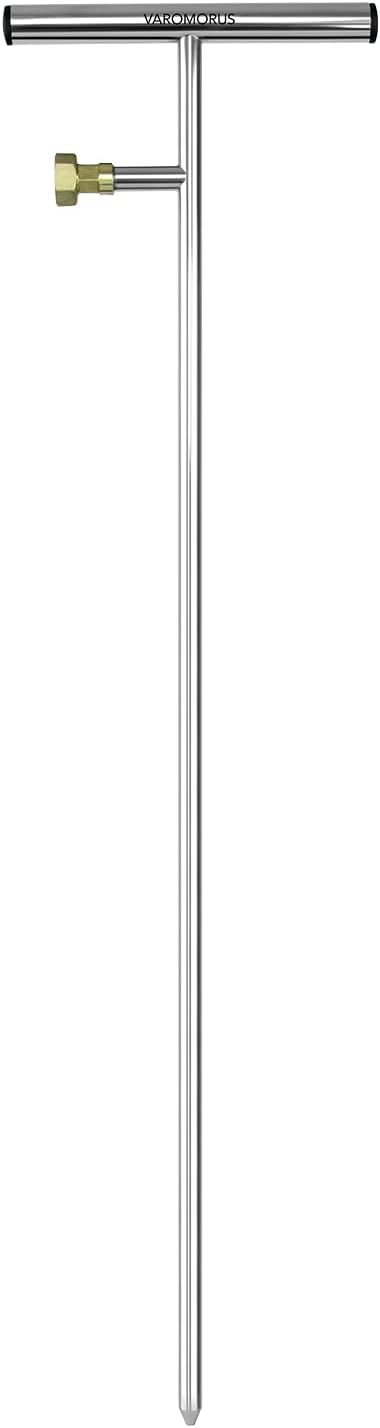
Varomorus Stainless Steel Deep Root Irrigator with T-Handle
| Size | 36" |
|---|---|
| Power Source | Manual |
| Special Features | Adjustable |
| Material | Stainless Steel |
This Varomorus deep root irrigator is a simple, manual tool for delivering water directly to a plant's roots. It is a one-piece stainless steel wand with a T-handle, pointed tip, and brass hose connector so you attach a standard garden hose, open the flow to a low setting, and insert the tip into the soil up to about 32 inches. In practice it provides slow, steady water delivery well below the surface, which reduces surface runoff and evaporation and helps establish deeper root systems for trees, shrubs, and larger perennials. The stainless construction and welded finish should resist rust and stand up to regular backyard use. Limitations are that it requires manual positioning and hose management so it is best for spot-treating individual plants rather than watering large beds, and it needs relatively loose or pre-drilled soil to penetrate easily. It also offers no timed or automated flow control so you must monitor water volume yourself.
Best for: Gardeners who want a straightforward tool to establish deeper roots for trees and shrubs and who prefer focused, water-efficient spot watering over automated systems.
Less Ideal for: Those who need to water large lawns, many small plants, or require scheduled/automated irrigation should look for multi-zone or timed systems instead.
- Direct deep delivery of water to root zones to reduce runoff and evaporation
- Stainless steel construction with welded joints for durability and rust resistance
- Brass hose connector that fits standard garden hoses for easy hookup
- Pointed tip and T-handle allow controlled insertion and stable handling during use
- Manual operation requires holding or steadying the wand and monitoring water flow
- Not suitable for irrigating large areas or many plants at once
Verdict: Use this sturdy stainless steel root irrigator when you want a simple, effective way to deliver water deep into roots and cut surface waste.
Corona Clipper RootIRRIGATOR Deep Root Watering Tool

| Power Source | Manual |
|---|---|
| Material | Brass |
| Model Name | Corona LG 3710 RootIRRIGATOR |
The Corona Clipper RootIRRIGATOR is a simple, manual tool for targeted deep watering of trees, shrubs, and garden plants. You insert the brass probe into the soil near the plant base and apply water directly to the root zone, which reduces evaporation and surface pooling compared with overhead sprinkling. Notable features include a durable brass construction, depth markings for precise placement, a shutoff valve for controlled flow, and ergonomic ComfortGel handles to reduce hand fatigue during repeated use. In practice this tool is best for spot-watering individual plants, establishing new plantings, or supplementing a sprinkler system in compacted or drought-prone soils where deep penetration is needed. It conserves water by delivering moisture where roots actually take it up, and its manual operation means no power source or irrigation setup is required. The main limitations are that it is labor intensive for large areas and not suited to watering large lawns or many plants at once, and effectiveness depends on proper insertion depth and a steady water source.
Best for: Gardeners who prioritize efficient, performance-focused irrigation for individual trees and specimen plants and who are willing to do spot watering for better root development.
Less Ideal for: Large-property owners or those who need to irrigate wide areas quickly should choose a sprinkler or automated irrigation system instead.
- Delivers water directly to the root zone to reduce evaporation and runoff
- Durable brass construction built for repeated outdoor use
- Shutoff valve and depth markings enable precise, controlled watering
- Ergonomic ComfortGel handles reduce hand fatigue during use
- Manual operation is time consuming for large gardens or many plants
- Not suitable for evenly watering lawns or large planting beds
Verdict: Choose the RootIRRIGATOR when you need a durable, no-power tool to deliver precise deep watering that improves root health and conserves water for individual plants.
Rocky Mountain Goods Bubbler Sprinkler (Aluminum Flood Nozzle)

| Material Type | Aluminum |
|---|---|
| Number of Packs | 1 |
| Unit Count | 1 Count |
This bubbler sprinkler nozzle is a simple, durable tool for deep surface soaking in vegetable beds, flower borders, and dry lawn patches. Made from rustproof aluminum, the nozzle disperses water through multiple perforated holes so water bubbles out slowly across the surface rather than blasting a single spot. In practice it is used on the end of a hose where you place it over the area to be watered or move it along rows; the gentle, wide dispersion soaks the root zone quickly while minimizing soil wash and hole formation. The build is straightforward with no moving parts, which keeps maintenance low and lifespan high for ordinary garden use. It does not replace an automated sprinkler for large lawns or adjustable spray patterns where coverage control is needed, and placement or multiple passes may be necessary to cover bigger beds evenly. For gardeners who want a low-tech, long-lasting way to deeply water small to medium planting areas, this nozzle is an efficient option.
Best for: Buyers who prioritize a low-cost, durable watering tool for deep, gentle soaking of vegetable beds, flower borders, or small dry spots and who prefer simple hands-on watering over automated systems.
Less Ideal for: Homeowners needing automated, wide-coverage sprinkler systems or precise adjustable spray patterns for large lawns should consider other solutions.
- Rustproof aluminum construction for long life and low maintenance
- Perforated flood-style nozzle gently bubbles water to rapidly soak surface soil
- Simple, no-moving-parts design reduces clogging and makes it easy to use
- Better at preventing soil erosion and hole formation compared with concentrated jets
- Not adjustable for spray radius or pattern so coverage must be managed manually
- Not suited to irrigate large lawns or areas without moving or multiple units
Verdict: A sturdy, rustproof bubbler nozzle that gives fast, gentle surface soaking—ideal if you want a low-cost way to deeply water small garden areas.
Hourleey Aluminum Bubbler Sprinkler Heads (2-Pack)

| Material Type | Aluminum |
|---|---|
| Outlet Connection Type | 3/4 inch garden hose thread |
| Number of Ports | 2 |
| Inlet Connection Type | Threaded |
| Valve Type | Globe Valve |
These Hourleey bubbler sprinkler heads are simple, no-frills irrigation tools built for steady deep watering. Made from aluminum alloy with an internal nylon mesh, each bubbler softens and disperses flow into a gentle bubbling action that reduces surface runoff and protects soil from erosion while directing water toward root zones. They thread directly onto standard 3/4-inch garden hoses or pipes and the two-port design makes it easy to water two spots at once or run a short loop. In practical use they are best for vegetable beds, flower borders, shrubs, and small lawn patches where slow, localized soaking is desired. The aluminum construction helps resist corrosion in damp conditions, and the nylon mesh keeps debris from clogging the outlet. Limitations to note are the simple, passive flow control—there is no adjustable spray pattern or built-in pressure regulator—so they work best on moderate-pressure systems or with a pressure regulator upstream. For gardeners who want straightforward, durable bubblers for deep root watering, these perform well without fuss.
Best for: Gardeners who prioritize a durable, low-maintenance solution for deep, localized watering of beds and shrubs and who want reliable, root-focused irrigation without complex setup.
Less Ideal for: Large lawns needing wide coverage or users who require adjustable spray patterns, timers, or pressure regulation integrated into the sprinkler head.
- Aluminum alloy body provides corrosion resistance for wet environments
- Internal nylon mesh reduces debris entry and helps maintain consistent flow
- Gentle bubbling action minimizes soil erosion and targets root zone watering
- Fits standard 3/4-inch garden hose thread for easy attachment
- Two-pack lets you water multiple locations or create a small local loop
- No adjustable flow or spray pattern limits fine control over watering rate
- Passive design may perform unevenly at very high or very low water pressures
Verdict: Choose these aluminum bubbler heads when you need a durable, easy-to-use way to deliver slow, deep watering directly to plant root zones.
ZZM 360° Tree Watering Ring Irrigation Sprinkler (Small)

| Size | Small |
|---|---|
| Power Source | Hand Powered |
| Material | Acrylonitrile Butadiene Styrene |
| Fit Type | rigid tubing connections |
This small 360° Tree Watering Ring is a hose‑attached drip/trickle irrigation tool designed to deliver slow, targeted watering around the root perimeter of young trees, shrubs and raised beds. You loop the plastic ring around the trunk or base, attach the included valve and a garden hose (or link several rings with the supplied Y splitter), then adjust flow to soak the feeder root zone without runoff. The ABS construction is lightweight and portable so a single ring can be moved between plants or combined into a simple network to water multiple specimens at once. Practical benefits include much deeper, slower watering that reduces evaporation and helps establish roots during hot or dry periods, plus easy tool‑free setup. Limits are the small size and basic plastic fittings, which mean it works best for small to medium trunks and depends on steady hose pressure; it is not a permanent underground system or suited to very large trees without multiple rings or higher flow setups.
Best for: Buyers who want a simple, efficient way to deep-water young trees and shrubs and who value proven user feedback and ease of use when choosing garden tools.
Less Ideal for: Gardeners needing a permanent underground irrigation system or those maintaining large, mature trees that require higher-volume watering solutions.
- Delivers slow, targeted watering to the feeder root zone to encourage deep root growth.
- Portable and easy to move between plants or expand into a simple network with Y splitters.
- Tool-free setup and an on-ring valve for easy flow adjustment at the plant.
- ABS plastic resists rot and allows lightweight handling for seasonal use.
- Small diameter design limits use to younger trees and shrubs rather than large established trunks.
- Plastic fittings rely on hose pressure and can leak if connections are not snug.
Verdict: Use this ring when you want a simple, movable way to deliver slow, deep watering directly to the root zone of young trees and shrubs.
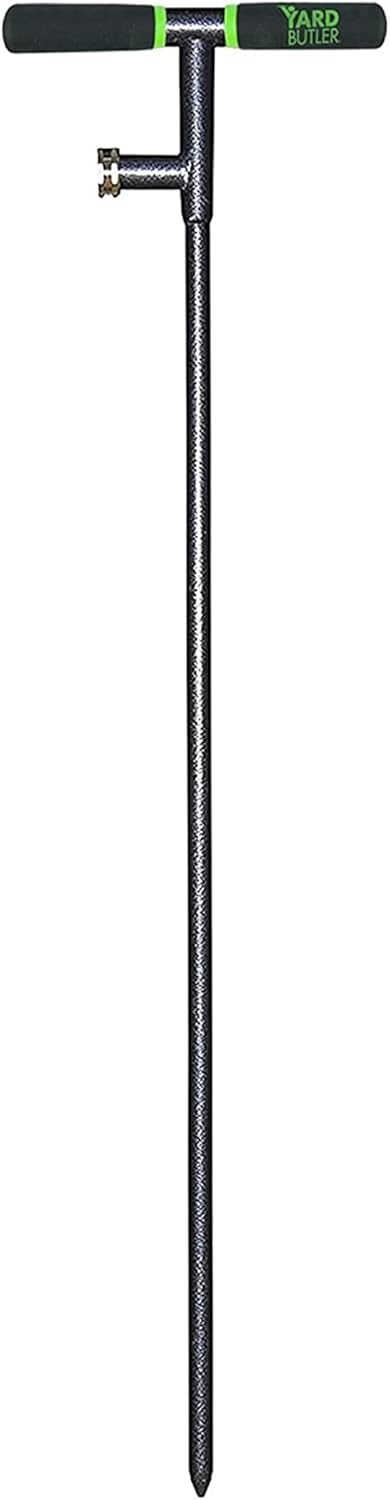
Yard Butler Deep Root Irrigator
| Material Type | Metal |
|---|---|
| Indoor Outdoor Usage | Outdoor |
| Item Type Name | Deep Root Irrigator |
| Manufacturer Warranty Description | Lifetime warranty. |
The Yard Butler Deep Root Irrigator is a simple, metal watering tool that delivers water directly to plant roots by inserting the long tube into the soil and attaching a hose. It is designed for outdoor use and typically used for trees, shrubs, and larger perennials where deep, slow watering encourages stronger root development and reduces surface runoff. Notable features include a durable metal construction and a long handle that reaches deep into the root zone so water bypasses evaporation and wetting only the topsoil. Practically, it conserves water and can speed recovery for drought-stressed plants compared with surface watering. The tool is easy to operate with a standard garden hose and requires minimal setup. Important limitations are its single-function design and the need to manually place it at each plant so it is not a hands-off sprinkler substitute for large lawns. Very compact plants or tightly planted beds may be awkward to access without moving surrounding soil or plants.
Best for: A cautious buyer who prefers proven, durable tools for targeted deep watering of trees and shrubs and who values straightforward, low-risk solutions over complex irrigation systems.
Less Ideal for: People needing automated or broad-coverage lawn irrigation or those who want a fully hands-off drip system for many small plants.
- Metal construction built for outdoor durability
- Delivers water directly to root zone to reduce surface evaporation
- Simple hose hookup and easy to use with one person
- Helps revive drought-stressed trees and shrubs by targeting deep roots
- Manual placement required at each plant so it is not suited for unattended large-area watering
- Single-purpose tool that does not replace sprinklers or drip systems
Verdict: Buy this if you want a durable, no-frills tool that reliably delivers water deep into roots for targeted deep watering of trees and shrubs.
Choosing the Right Garden Sprinkler for Deep Watering: Key Factors to Consider
Spray Pattern and Reach
Spray pattern determines how evenly water is distributed across a lawn or bed. Wide, adjustable patterns let you match spray to shape and avoid oversaturating borders. Consistent reach matters for deep watering because uneven coverage forces some areas to be run longer, increasing runoff risk.
When planning deep-soak cycles, choose a sprinkler whose pattern can be narrowed or expanded and whose maximum radius covers the largest contiguous planting area with minimal overlap. That reduces the number of repeat passes and helps water penetrate rather than pool at the edges.
Output Rate and Droplet Size
Output rate measures how much water the sprinkler puts out over time. For deep watering you often want a moderate to low output rate delivered as larger droplets. Larger drops are less prone to wind drift and are more likely to reach the soil surface intact. A lower rate gives soil time to absorb water and reduces surface runoff on slopes or compacted soils.
Consider your soil type when selecting output rate. Sandy soils accept higher rates, while clayey soils need slower delivery. Many sprinklers allow flow adjustments or have interchangeable nozzles to tune droplet size and output for better infiltration.
Pressure Compatibility and Adjustability
Household water pressure varies and affects sprinkler behavior. Sprinklers that perform well across a range of pressures or that include flow regulators let you maintain a steady soak rate. Adjustable heads, pressure-compensating nozzles, or built-in regulators are helpful for matching spray energy to soil infiltration capacity.
On small properties or those with weak supply pressure, choose a design that works at lower psi or that can be paired with a portable pump. On higher-pressure supplies, ensure the sprinkler has a way to reduce nozzle velocity to avoid misting that reduces infiltration.
Pattern Control and Zoning
Deep watering works best when you irrigate in zones that share similar water needs and soil types. Sprinklers with fine-grain pattern control, adjustable arc, or sector stops make it easier to limit watering to one zone without wasting water on paths or structures.
Evaluate whether a sprinkler can be mounted or moved to create consistent zones and whether it can be coordinated with simple timers or manual cycles for repeated deep-soak schedules. Good pattern control reduces overlapping passes that can lead to puddling and uneven root development.
Durability and Ease of Maintenance
Outdoor irrigation gear is exposed to sun, soil, and mechanical wear. Materials that resist corrosion and UV degradation, plus easily replaceable nozzles and screens, extend the useful life of a sprinkler. For deep-watering use, maintenance often involves clearing clogged orifices and checking seals to keep output consistent.
Choose products with accessible parts and common spare components. Simpler designs with fewer small internal parts are often easier to service and less likely to fail mid-season, which preserves consistent deep-soak performance.
Adaptability to Soil and Landscape
Different soils and landscape features change how water moves. A sprinkler that can be adjusted for drop size, mounted at different heights, or used with extension stakes gives you options for beds, slopes, and lawns. Being able to alter run time and sequence helps tailor soak depth across varied areas of the garden.
Consider whether the sprinkler can be used with pulse cycles or paired with a soaker-line approach for beds. Flexibility lets you adapt the same unit to new plantings as garden needs change.
Matching Sprinkler Behavior to Soil Type
Soil texture does more to control infiltration than any sprinkler setting. Sandier soils accept water quickly, so you can use higher output rates or fewer repeat cycles. Heavy clay needs slow delivery and longer soak intervals to prevent puddling and surface runoff. Loam sits between these extremes and is forgiving with a wider range of sprinkler behaviors.
Test a new sprinkler by running a short cycle and digging a shallow test hole to see how far moisture reached. That gives a practical sense of whether you need to reduce flow, shorten run times, or split watering into multiple passes to reach the root zone without oversaturating the surface.
- Sandy soil: higher flow, shorter cycles
- Clay soil: lower flow, longer soak intervals
- Loam: moderate flow and cycle length
Setting Up Deep-Soak Cycles
Deep watering is usually achieved with shorter, repeated cycles rather than a single long run. For example, two or three passes spaced an hour or more apart let water move down between cycles and reduce runoff. The exact timing depends on soil and slope.
Use a timer or manual schedule to split sessions. Start conservatively and measure moisture depth with a probe or by digging. Adjust duration and number of passes until you reach the target root zone depth without surface pooling.
- Run multiple short cycles rather than one long cycle
- Allow time between passes for infiltration
- Measure soil moisture to confirm depth reached
Placement and Overlap for Even Soak
Even coverage is essential to avoid dry spots and shallow-rooted plants. Place sprinklers so their wetting patterns overlap slightly at the edges. Overlap reduces the number of hours needed to achieve uniform infiltration across the area.
On irregular shapes, rotate sprinklers or use adjustable arcs to match boundaries. Avoid placing heads where water will hit hard surfaces and run off into drains or paved areas.
- Aim for light overlap at pattern edges
- Avoid spraying onto hardscape
- Adjust position after a test cycle if pooling occurs
Using Pressure Regulators and Nozzle Options
Pressure affects droplet size and distribution. A pressure regulator or pressure-compensating nozzle helps maintain consistent output across zones. Some sprinklers include interchangeable nozzles to change droplet size and trajectory for better soil infiltration.
If your system lacks stable pressure, choose nozzles that produce larger drops and reduce misting. Keep spare nozzles and screens on hand to adapt to seasonal changes in water supply behavior.
- Install regulators where pressure varies widely
- Carry multiple nozzle sizes for tuning
- Clean screens regularly to prevent flow changes
Practical Tips for Winter Care and Storage
If you live where freezing occurs, remove and drain portable sprinklers before cold weather. Freeze-damaged components can crack and change spray performance the following season. Store small parts in a dry container and inspect seals before reusing.
For year-round installations, check seals and hose connections each spring and replace weathered parts. Regular winter care reduces unexpected failures during peak watering months.
- Drain and store portable units before freezing weather
- Inspect seals and O-rings in spring
- Replace worn nozzles and screens before peak season
How We Chose the Best Garden Sprinkler for Deep Watering
We focused on features that directly affect how well a sprinkler soaks soil to depth rather than just wetting the surface. Key evaluation criteria included spray reach and pattern control to match coverage needs; output rate and droplet size, since slower, coarser delivery improves infiltration; adjustable flow and pressure compatibility to tune soak depth; durability of materials and simple maintenance to ensure reliable performance season after season; and ease of setup and pattern adjustment so gardeners can position and program the sprinkler for repeatable deep cycles. We excluded sprinklers designed exclusively for fine misting, temporary decorative use, or those that require specialized plumbing modifications. Each shortlisted sprinkler was assessed using these dimensions to reflect how it will behave in typical backyard lawns, garden beds, and mixed soil conditions.
FAQ
How long should I run a sprinkler to reach root depth?
It depends on soil type and sprinkler output. Start with brief cycles and dig a small hole after watering to check how deep moisture moved. Adjust run time and repeat cycles until moisture reaches the intended root zone without surface pooling.
Can I use a regular lawn sprinkler for deep watering flower beds?
Often yes if the sprinkler allows flow or nozzle adjustment to reduce output and produce larger droplets. For beds with delicate plants, consider lower-pressure settings or placing the head further away to avoid foliage damage while still wetting the root zone.
Will deep watering increase my water usage?
Deep watering can be more efficient over time because it encourages deeper roots and reduces frequent shallow watering. Short, targeted cycles focused on infiltration are typically more water-efficient than long, surface-wet runs that lead to evaporation and runoff.
How do I prevent runoff on slopes during deep watering?
Run shorter cycles and allow time between passes so water can absorb. Use lower output nozzles or reduce pressure and position sprinklers to avoid concentrated flow paths. Terracing, mulch, and soil amendments can also improve infiltration on slopes.
How often should I deep water established plants?
Frequency depends on plant type, soil, and weather. Established plants often benefit from less frequent, deeper watering rather than daily shallow sprays. Monitor soil moisture at root depth and schedule based on measured needs rather than a fixed calendar.
Final Verdict
Prioritize sprinklers that let you control output rate, droplet size, and coverage so you can tailor irrigation to your soil and landscape. Tradeoffs are common: higher reach can be useful for large lawns but may require flow tuning to avoid misting, while compact units are easier to position in beds but might need more repeats. Focus on consistent infiltration and simple adjustability as you choose, and plan watering cycles that allow the soil to absorb moisture between passes for reliable deep-soak results.
