

Note: This article contains affiliate links. If you click on these links and make a purchase, I may earn a small commission at no extra cost to you. This helps support my research and content. Read my full affiliate disclosure here.
A neat edge between lawn and planting beds makes a garden look finished and makes mowing and maintenance faster. The right grass garden edging holds soil and mulch back, stands up to repeated mower contact, and gives a clear visual boundary that reduces accidental turf invasion into beds. This guide shortlists seven strong options suited to typical yard conditions and maintenance styles. We evaluated each pick for durability, installation effort, and how well it keeps grass and soil in their lanes. Read on to compare those factors and choose a border solution that fits your lawn care routine.
Top Picks at a Glance
| Best Overall The best all-around choice for most situations | MIXC Landscape Edging Kit, 3-Pack (33 ft each) with 150 Spikes, 1.5 in Tall |  |
| Best Quality Built to a higher standard if you want something more solid | Edge Right COR-TEN Steel Hammer-In Landscape Edging, 48-inch Strips (5 Pack) |  |
| Best Value The sweet spot between price and what you get | Amazon Basics Flexible Landscape Edging Coil, 5 in x 40 ft with Stakes |  |
| Best Budget The cheapest option that still gets the job done reliably | Yowlieu 20 ft No-Dig Plastic Landscape Edging Kit with 20 Spiral Stakes |  |
| Highest Rated A top-rated pick with lots of positive feedback | VEVOR Galvanized Steel Landscape Edging, 6-Pack (40 x 6 in) |  |
| Most Popular A crowd favorite that many people choose with confidence | EasyFlex No‑Dig Landscape Edging Kit, 100 ft |  |
| Best Seller A high-volume bestseller chosen again and again | STIRLINGEAR 33 ft Galvanized Steel Landscape Edging (10-Pack) with Stakes |  |
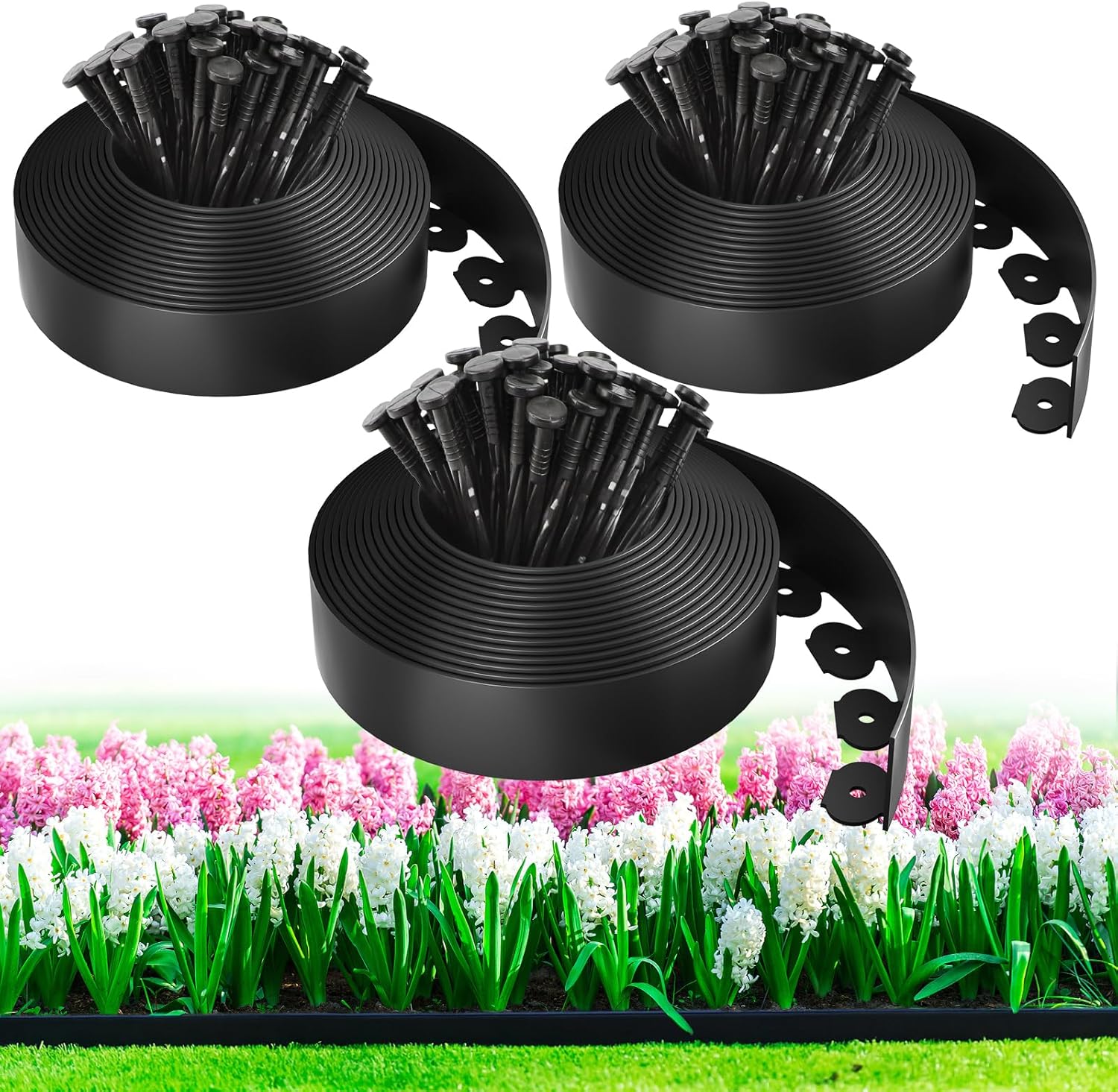
MIXC Landscape Edging Kit, 3-Pack (33 ft each) with 150 Spikes, 1.5 in Tall
| Number of Packs | 3 |
|---|---|
| Unit Count | 100 Feet |
| Material Type | Plastic |
| Item Highlight | Not Digging Flexible Plastic Edge Border |
| Product Style | Modern |
The MIXC Landscape Edging Kit is a simple, no-dig solution for defining flower beds, pathways, and lawn borders. Each pack includes three 33 foot rolls of flexible HDPE edging and 150 spikes, so you can lay curved or straight runs without heavy cutting or extra hardware. Pre-drilled holes take the guesswork out of fastening and let one person install short lengths quickly on relatively soft ground. The product uses a dual-layer profile to block roots and help limit soil erosion on slopes, and the HDPE material is formulated to resist UV and temperature stress for several seasons of use. It performs well for tidy visual separation between turf and beds and for basic edging tasks, but it is not designed for very hard or rocky soil where spikes will be difficult to drive. Expect serviceability for a few years rather than a permanent hardscape replacement, and plan to stake it at regular intervals on long runs for stable alignment.
Best for: Home gardeners who want an easy, no-dig way to define beds and control grass intrusion and who value quick DIY installation and flexible layout options.
Less Ideal for: People seeking a permanent, heavy-duty edging solution for rocky or compacted sites or for commercial installations that require metal or concrete edging.
- Three 33 ft rolls plus 150 spikes allow flexible layout without cutting long heavy coils
- Flexible HDPE bends for curves and uneven terrain, easing installation by one person
- Pre-drilled holes and included spikes simplify fastening and placement
- Dual-layer profile helps block roots and reduce minor soil erosion
- UV- and temperature-resistant material extends useful life outdoors
- Not suitable for very hard or rocky ground where spikes cannot be driven
- Plastic construction is durable but not as long-lasting or rigid as metal edging
Verdict: An easy, no-dig edging kit that lets homeowners quickly create neat curved or straight borders with minimal tools and effort.
Edge Right COR-TEN Steel Hammer-In Landscape Edging, 48-inch Strips (5 Pack)

| Number of Items | 5 |
|---|---|
| Unit Count | 5 Count |
| Material Type | COR-TEN Steel |
This Edge Right COR-TEN steel edging is a hammer-in system made for defining beds, containing mulch or rocks, and stopping grass from encroaching into planting areas. Each 48-inch strip has a serrated lower edge so you set it along a planted line and drive it in with a hammer and a block; top clamps join adjacent pieces for a continuous run. COR-TEN steel is intentionally weathering, so the panels form a protective rust patina that reduces maintenance and gives a consistent, natural look over time. The heavy-gauge construction stands up to weed trimmers and foot traffic far better than plastic alternatives and can be shaped to gentle curves. Expect straightforward, quick installation for long runs, but be prepared for manual labor when installing in compacted or rocky soil and for sharp edges during handling. Also the weathering finish means it will rust by design, which may not suit every aesthetic without sealing. This is a durable, low-maintenance edging choice when you want a permanent, professional-looking border around lawns and beds.
Best for: A buyer who wants a long-lasting, low-maintenance edging solution that creates clean, professional borders and stands up to regular landscape use.
Less Ideal for: Those seeking a temporary, decorative, or non-rusting edging option or buyers who cannot do manual installation work should consider different materials or professional installation.
- Durable COR-TEN steel resists damage from weed trimmers and foot traffic.
- Hammer-in teeth allow fast installation without specialized tools.
- Develops a protective patina that reduces need for repainting or replacement.
- Heavy-gauge construction holds straight lines and can be formed to gentle curves.
- Installation requires physical hammering and can be difficult in rocky or compacted soil.
- Exposed edges are sharp during handling and may need care or gloves.
Verdict: Choose this COR-TEN steel hammer-in edging when you need a permanent, rugged barrier that creates crisp, long-lasting lawn and bed lines.
Amazon Basics Flexible Landscape Edging Coil, 5 in x 40 ft with Stakes

| Item Type Name | Edging Coil |
|---|---|
| Material Type | All-new material |
| Unit Count | 1 Count |
| Color | Brown |
This flexible landscape edging coil creates neat, low-profile borders for lawns, flower beds, pathways and raised beds. The 5-inch-high coil ships as a 40-foot roll that you unroll along the desired line, shape into curves or straight runs, and anchor with the included stakes. Its recycled-plastic construction and faux woodgrain surface give a more natural look than plain black plastic while resisting rot and most moisture-related deterioration. The main benefits are simple installation without digging heavy trenches and the ability to form gentle curves for informal beds or crisp edges for turf. Expect it to be best for soft soils and medium-use edges; in very rocky ground you may need extra tools to seat the edging and drive stakes. Also, because it is relatively low and flexible, it is not a rigid barrier against aggressive grass or deep-rooted runners, so periodic maintenance to keep turf from creeping over the edge may be required.
Best for: Gardeners who want an affordable, low-effort way to create tidy lawn and bed edges and who prioritize ease of installation and a natural look.
Less Ideal for: Those needing a heavy-duty, rigid barrier for invasive roots or for high-traffic edging where a solid metal or concrete edge is required.
- Long 40 ft coil covers large runs without seams
- Faux woodgrain finish blends better with planting beds than plain black edging
- Includes 10 matching stakes for straightforward installation
- Recycled plastic resists rot and moisture so it lasts in outdoor conditions
- Only 10 stakes included which may be sparse for very exposed or loose soils
- Low profile and flexible design won't stop aggressive, deep-rooted runners
Verdict: A long, easy-to-install recycled-plastic edging coil that quickly creates natural-looking turf and flower-bed borders with minimal effort.
Yowlieu 20 ft No-Dig Plastic Landscape Edging Kit with 20 Spiral Stakes

| Material Type | Plastic |
|---|---|
| Number of Items | 20 |
| Number of Packs | 1 |
This Yowlieu landscape edging kit supplies a simple, no-dig way to define lawn and flowerbed borders. The roll of flexible PE plastic unrolls to create straight or curved edging and can be trimmed with garden shears to fit pathways, beds, or driveways. Installation uses the included spiral anchoring stakes hammered through the edging into the soil, which hold the strip in place through rain and mild frost without trenching. Benefits include quick setup for DIY projects, low weight for storage and handling, and compatibility with weed fabric or pavers. The plastic construction is durable for routine outdoor use but is not as rigid or long-lasting as metal edging and can be damaged by high heat or sharp objects. Hard, compacted ground may require watering or softening before driving the spiral stakes. For a budget garden edging solution that you can install in an afternoon, this kit is easy to work with, though homeowners seeking a permanent, heavy-duty border may prefer metal or concrete alternatives.
Best for: Homeowners wanting an inexpensive, easy-to-install border to tidy lawns and flowerbeds who prioritize quick DIY results over a permanent heavy-duty solution.
Less Ideal for: Anyone needing a long-term, high-impact barrier for heavy equipment, vehicles, or extreme climates should consider sturdier metal or concrete edging options.
- No-dig installation speeds up projects and reduces labor
- Flexible plastic roll can be cut to length and shaped to curves
- Includes spiral stakes to secure edging against shifting
- Lightweight material is easy to handle and store
- Plastic material is less durable than metal for permanent edging
- Can be vulnerable to heat, sharp objects, or heavy impacts
Verdict: A budget-friendly, no-dig plastic edging kit that makes it fast and easy to define lawn and garden borders.
VEVOR Galvanized Steel Landscape Edging, 6-Pack (40 x 6 in)

| Material Type | Alloy Steel |
|---|---|
| Number of Items | 1 (6-Pack sections) |
| Item Dimensions L x W | 40"L x 6"W |
| Item Weight | 13.8 pounds |
This VEVOR landscape edging is a practical solution for defining lawn and garden borders with a durable galvanized alloy-steel design. Each pack includes six 40 x 6 inch sections, mounting clips, and spikes that connect to form straight runs or smooth curves; the panels are bendable so you can shape beds or pathways without specialty tools. The galvanized finish and treated surface increase resistance to rust and fading, so installed edges stay visible and functional through seasonal weather. Setup is straightforward: link sections, drive the spikes into soil, and trim or overlap where needed, making it suitable for one- or two-person installs. Expect a rigid, low-profile edge that keeps grass from creeping into beds and contains mulch or gravel neatly. Limitations: the panels are intended for in-ground edging only and require a manual tap-in installation that can be harder in very compacted or rocky soil, and the fixed 6-inch height suits shallow beds but will not replace taller containment needs.
Best for: Buyers who prioritize a reliable, low-maintenance edge to keep grass out of beds and want a durable steel solution they can install themselves.
Less Ideal for: Avoid this if you need deep containment, a temporary portable edge, or if your site has consistently rocky or compacted soil that prevents spike installation.
- Galvanized alloy-steel resists rust and fading for long outdoor life
- Bendable sections allow curves and straight runs without special tools
- Comes as a complete set with clips, spikes, and gloves for immediate installation
- Low-profile 6-inch height effectively keeps grass and mulch separated
- Not designed for very rocky or heavily compacted soils where driving spikes is difficult
- 6-inch height is too short for applications that need taller containment
Verdict: A sturdy, galvanized steel edging set built for dependable, long-lasting lawn and flower-bed borders.
EasyFlex No‑Dig Landscape Edging Kit, 100 ft

| Unit Count | 100 Feet |
|---|---|
| Included Components | (1) 100' coil of edging, (5) connectors, (30) spiral anchoring spikes |
| Material Type | Plastic |
| Item Type Name | No-Dig Landscape Edging |
The EasyFlex No‑Dig Landscape Edging Kit provides a simple way to define lawn and garden borders without trenching. The 100 ft coil bends to form curved or straight edges and is intended to be placed on the lawn edge or around flower beds, then secured with the included spiral anchoring spikes. Because it is made from recycled plastic it is flexible enough for tight curves yet sturdy enough to hold mulch and soil back when backfilled. Installation is straightforward for most homeowners—score the ground, lay the edging with tabs toward the planting bed and hammer spikes through the tabs no more than 40 inches apart, then backfill. Notable conveniences include the long continuous length that reduces joints and the option to cut with garden shears and connect sections with the supplied connectors. Limitations are that it sits low to the ground so it will not contain very deep mulch or heavy edging loads and it relies on spikes rather than buried weight for retention, which can be less secure in very loose or sandy soils.
Best for: Homeowners who want an easy, low‑effort way to create neat grass and garden edges without digging and who value products with broad positive user feedback.
Less Ideal for: People needing a high barrier for heavy mulch, retaining significant soil height, or a permanently buried metal edge should consider more robust or trench‑installed options.
- No‑dig installation speeds up projects and avoids trenching
- Flexible coil forms tight curves or straight runs for versatile designs
- Includes anchors and connectors for a mostly complete kit
- Made from recycled plastic for durability in typical garden soils
- Low profile may not stop very deep mulch or aggressive soil movement
- Relies on spikes for hold which can be less secure in extremely loose or sandy soil
Verdict: A practical, easy-to-install no‑dig edging kit that quickly creates tidy grass and garden borders with minimal tools or skill.
STIRLINGEAR 33 ft Galvanized Steel Landscape Edging (10-Pack) with Stakes

| Material Type | Powder-Coated Galvanized Steel |
|---|---|
| Total Length | 33 ft (10-pack) |
| Stakes Included | 11 |
This 33 ft set of galvanized steel landscape edging is designed to create neat, durable borders around grass, beds, and walkways. Each 40-inch panel includes integral hammer-in stakes that drive into the soil so you can install a continuous edge without trenching. The powder-coated finish and galvanized construction resist rust and deliver a low-profile black border that blends into most yards. The pack includes 11 stakes to anchor the run and the panels can be cut or gently bent to follow curves. For a risk-averse buyer this product is appealing because the metal construction is long-lasting and the hammer-in design keeps installation straightforward and reversible. Practical limits are that the edging is low height, so it controls shallow grass encroachment and defines borders but will not hold back heavy mulch or soil on steep slopes. Also, shaping tighter, small-radius curves requires careful bending and may be easier with narrower or flexible edging alternatives.
Best for: Homeowners who want a durable, low-maintenance border to define lawns and flower beds with a straightforward, no-dig installation process and long-term corrosion resistance.
Less Ideal for: Gardeners who need high containment for raised beds or steep slopes or those who require very tight-radius decorative edging.
- Galvanized steel with powder-coat finish for corrosion resistance
- Hammer-in stakes and panels for quick installation without digging
- Low-profile black appearance blends with lawns and beds
- Panels can be cut or bent to follow gentle curves
- Low visible height limits ability to retain large amounts of soil or heavy mulch
- Requires manual bending for tight curves which can be awkward without tools
Verdict: A long-lasting, low-profile metal edging kit that makes risk-free, no-dig lawn borders easy to install and maintain.
Choosing the Right Grass Garden Edging: Key Factors to Consider
Material and Longevity
The material determines how well an edging holds up to sun, moisture, and mower contact. Rigid metals resist deformation but can corrode if not treated; plastics resist rust and can flex or crack under freezing cycles. Consider the climate you garden in and pick materials rated for UV exposure and moisture.
Longevity affects long-term maintenance. Higher-quality materials mean fewer repairs and less replacement. If you plan to install edging once and leave it, invest in materials that are known to resist bending, cracking, or breaking under repeated use.
Mower Impact Resistance
Edges take direct contact from blades, wheels, and trimmers. A profile that deflects or stops mower strikes protects the edging and prevents dulling equipment. Thicker profiles or inward-facing lips can better absorb accidental hits and maintain a clean cut line when mowing.
Consider how close your mower deck runs to the edge and whether you use a string trimmer for final touches. Edging that allows a clean vertical cut without being easily deformed will reduce ongoing touch-up work.
Installation Effort and Tools Required
Installation ranges from laying flexible strips in a shallow trench to driving rigid stakes into compacted soil. Time, physical effort, and tool availability will influence which system fits your plans. Some options need digging a defined trench with edging spades while others snap together or stake into place.
If you are working on long continuous runs or irregular curves, factor the labor involved. Easier installations reduce upfront cost in time and allow you to correct mistakes during placement more readily.
Soil Retention and Root Barrier Performance
Good edging prevents soil and mulch from spilling onto the lawn and limits grassroots from infiltrating beds. Taller or deeper profiles provide a stronger vertical barrier to roots and migrating soil, while shallow systems may rely on a tight fit or trench to work effectively.
Evaluate how well the chosen edging keeps mulch in place after rainfall and whether it blocks creeping grasses. In perennial or shrub beds where roots are vigorous, a deeper or buried barrier will perform better long term.
Aesthetic and Profile Height
Edging contributes to the garden's look as well as function. Profiles can be subtle and low to the ground for a natural transition, or raised and crisp for a formal look. Choose a height and finish that complements plantings and lawn grade.
Also consider how visible the edge will be from common viewpoints. A profile that is too tall can trap debris and water, while one that is too low may not provide a clear separation under heavy mulch.
Flexibility and Curve Handling
Many yards have curved beds; not all edging bends smoothly. Flexible materials and segmented systems allow tight radii without gaps, while rigid materials suit straight runs or gentle sweeps. The ability to form continuous curves reduces seams that grass can exploit.
If you have intricate bed shapes, select a system designed for curves or one that can be cut and joined neatly. Properly formed curves reduce long-term maintenance and improve the finished appearance.
Preparing the Lawn and Bed Before Installing Edging
Clear turf and debris from the planned line and use a string or hose to mark the edge so you can see the intended profile. Cutting the turf with an edging spade or half-moon tool gives a cleaner trench and reduces regrowth under the new edging.
Check the ground for buried utilities, roots, or rocks that could affect installation. Level small grade transitions to avoid creating water pockets; the goal is a smooth transition so water drains away from planted areas rather than pooling against the edging.
- Mark the layout with string or a garden hose for curves
- Cut a tidy trench for buried or semi-buried systems
- Remove stones and compact the base for consistent installation
Installing Edging on Sloped or Uneven Ground
On slopes, maintain an even visual profile while ensuring the bottom of the edging is well seated. You may need to step the edge down the slope in short runs to maintain stability and prevent soil from slipping.
Use stakes or anchoring systems at closer intervals where soil is loose or erosion is likely. For very uneven ground, consider a modular edging that can be adjusted piece by piece to follow the grade without large gaps.
- Step or terrace edging on significant slopes
- Use additional anchors on loose soil
- Check alignment frequently during installation
Maintaining Edging for Long-Term Performance
Routine maintenance keeps edges neat and preserves their function. Trim grass back from the edge regularly, and inspect for bends, warps, or loose anchors after winter or following heavy mower contact.
Re-secure stakes and replace small damaged sections quickly to prevent the problem from spreading. Clean out trapped debris and mulch to avoid moisture buildup that can accelerate material degradation.
- Trim and clean the edge each season
- Repair or tighten anchors after frost heave
- Replace small damaged sections rather than postponing
Matching Edging Style to Garden Design
Choose an edging profile that complements planting style. Low, buried profiles suit cottage or naturalistic beds, while crisp metal or stone edges work well for formal layouts and pathways. Consider the visual line you want to create between turf and planting areas.
Think about long-term plant growth. Taller perennials or shrubs near the edge may conceal low profiles, while small ornamental grasses may benefit from a clearly visible border to avoid being mowed over.
- Select profile height based on planting scale
- Pick finishes that age well with your landscape
- Consider how winter snow or summer mulch will interact with the edge
Tools and Materials Commonly Used in Edging Projects
Typical tools include an edging spade, mallet, rubber mallet, stakes, and a level. For cutting rigid materials, use a hacksaw or metal snips as appropriate. For plastic or composite edging, heavy-duty shears or a circular saw with an appropriate blade are useful.
Prepare grounding tools such as a tamper for compacting soil around the base and gloves for handling sharp edges. Having the right anchors and a measuring tape will make the installation more accurate and reduce rework.
- Edging spade or half-moon tool for trenching
- Rubber mallet and stakes for anchoring
- Cutting tools matched to the material
How We Chose the Best Grass Garden Edging
We prioritized durable materials and real-world installation scenarios gardeners face when separating turf from beds. Our selection process focused on edge systems that resist mower strikes, limit turf creep, and require realistic maintenance time. We tested product specifications and installation methods for ease of cutting, anchoring, and achieving a consistent profile. Drainage and soil retention mattered because poorly vented or flimsy edging can trap water or fail under frost. We also considered adaptability to common lawn types and curves versus straight runs, plus how neat the finished edge looks after routine mowing. We excluded temporary or decorative-only options that do not provide a lasting turf barrier, and products that depend on frequent replacement or heavy modification to perform. The filters used were material longevity, impact resistance, installation complexity, soil-retention effectiveness, and compatibility with common lawn equipment and mowing techniques. These dimensions guided which edging systems made the final shortlist.
FAQ
How deep should grass garden edging be buried?
Depth depends on the edging profile and soil type but typically 3 to 6 inches is enough to hold mulch and block most surface-rooting grass. For vigorous roots or heavy turf invasion, a deeper bury of 6 to 8 inches gives a better root barrier.
Can edging prevent grass runners from invading beds?
Edging helps when it provides a continuous vertical barrier and is buried sufficiently to stop surface runners. Very aggressive spreading grasses may require deeper or buried root barriers in combination with regular monitoring and trimming.
Will edging damage my mower if hit?
A solidly anchored, blunt-edged profile reduces damage risk to mower blades. Thin or sharp metal edges can nick blades, and loosely installed edging may move and cause more severe contacts. Proper installation and choosing a profile rated for mower contact lowers the risk.
How do I hide low-profile edging from view?
Plant low groundcovers or mulch to soften the transition while keeping the edging functional. Regular cleaning and trimming help maintain a neat look without exposing the edging as a visual line.
Is flexible edging better for curved beds?
Flexible systems are easier to conform to tight radii and organic bed shapes. Rigid edging is better for straight runs or gentle curves where a crisp, unbroken line is desired. The choice depends on the bed shapes in your landscape.
How often should edging be inspected or replaced?
Inspect edging annually and after extreme weather. Small repairs can extend service life; replacement frequency varies by material and exposure. Well-installed durable materials can last many years with minimal upkeep.
Final Verdict
Choose edging by balancing durability, the amount of installation work you are willing to do, and how the profile fits your garden style. If you need a long-lasting, low-maintenance border for high-traffic mowing, prioritize sturdier materials and a deeper install. For decorative curves and easier DIY installs, pick flexible or modular systems. Weigh the tradeoffs between initial effort and long-term upkeep: a slightly more involved installation can reduce repairs and trimming later. With a clear idea of how you mow, the bed shapes you have, and how aggressive nearby turf is, you can pick the edging that will keep lawns and beds looking neat for seasons to come.
