

Note: This article contains affiliate links. If you click on these links and make a purchase, I may earn a small commission at no extra cost to you. This helps support my research and content. Read my full affiliate disclosure here.
Picking the right garden water pump affects how well your irrigation, pond, or rainwater system performs and how much time you spend on maintenance. The wrong pump can under-deliver on flow, clog more often, or wear out prematurely in outdoor conditions. This guide shortlists seven top garden water pumps suited to common outdoor uses, and evaluates them across the most relevant performance and durability criteria for real gardens. Read on to see the key tradeoffs and what to expect from each category of pump before you move to product details.
Top Picks at a Glance
| Best Overall The best all-around choice for most situations | SEESII 1HP Submersible Water Pump with 23 ft Hose Kit |  |
| Best Quality Built to a higher standard if you want something more solid | SEAFLO 33 Series 115V AC Fresh Water Pressure Pump, 3.3 GPM 45 PSI | 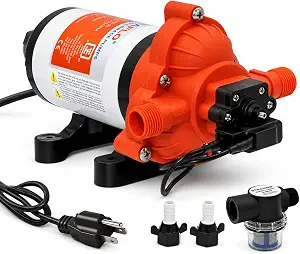 |
| Best Value The sweet spot between price and what you get | Superior Pump 91250 1/4 HP Thermoplastic Submersible Utility Pump |  |
| Best Budget The cheapest option that still gets the job done reliably | CWKJ 25W Submersible Fountain Pump (400 GPH) with Tubing and Nozzles |  |
| Highest Rated A top-rated pick with lots of positive feedback | LEO 1.5 HP Shallow Jet Well Pump — Portable Water Transfer Pump |  |
| Most Popular A crowd favorite that many people choose with confidence | ECO-WORTHY 33-Series 110V AC Diaphragm Water Pressure Pump (4.0 GPM, 50 PSI) |  |
| Best Seller A high-volume bestseller chosen again and again | AQUASTRONG 1 HP Submersible Utility/Sump Pump |  |
SEESII 1HP Submersible Water Pump with 23 ft Hose Kit

| Power Source | Corded Electric |
|---|---|
| Flow Rate | 79.25 gpm |
| Maximum Lifting Height | 36 feet |
| Horsepower | 1 hp |
| Included Components | 23 ft hose kit and adapters |
The SEESII 1HP submersible pump is built for fast water removal around the garden and home. Its 1 hp motor can move up to about 4,755 gallons per hour, and the included 23 foot hose and adapters make it ready to use for draining pools, ponds, hot tubs, flooded basements or rooftop water transfer. A polypropylene housing and a built-in anti-clog filter bag let it handle clean to lightly dirty water while reducing maintenance from debris. The pump offers a 36 foot maximum lift, so it can push water uphill or across long runs in many yard draining scenarios. Practical benefits include a long power cord for flexible placement, a mostly complete hose kit so no extra parts are required, and a 3 year warranty for support. Important limitations are that it is intended for clean or slightly dirty water rather than heavy solids and that its corded electric design requires a nearby grounded outlet and appropriate GFCI protection for safe outdoor use.
Best for: Garden and home owners who need a reliable, ready-to-use pump for frequent draining tasks and value high flow plus simple setup.
Less Ideal for: People who need to move slurry, heavy debris, or large solids should choose a trash pump designed for that purpose rather than this unit.
- High flow capacity up to 4,755 GPH for fast drainage
- Includes 23 ft hose and adapters for immediate setup
- Anti-clog filter bag reduces debris intake and maintenance
- 36 ft maximum lift for uphill or long-distance pumping
- Polypropylene construction resists corrosion for outdoor use
- Not designed for heavy solids or very dirty water
- Requires a nearby grounded outlet and appropriate outdoor electrical protection
Verdict: Pick this pump if you want a high-flow, ready-to-use submersible unit for fast garden and household water removal.
SEAFLO 33 Series 115V AC Fresh Water Pressure Pump, 3.3 GPM 45 PSI

| Flow Rate | 3.3 gpm |
|---|---|
| Shut-Off Pressure | 45 PSI (3.1 BAR) |
| Voltage | 115 volts |
| Self-Priming Lift | 6 ft |
| Power Source | Corded Electric |
The SEAFLO 33 Series is a plug-in 115V diaphragm pressure pump designed to provide steady on-demand water for small irrigation, garden washdown, and domestic freshwater systems. It uses a three-chamber Santoprene diaphragm with EPDM valves to produce an open flow of 3.3 GPM and a 45 PSI shut-off, while a smart adjustable pressure switch supplies water only when needed. Typical uses include feeding a few drip lines or sprinkler heads, powering a garden hose spray station, or pressurizing a small cabin or greenhouse water line. Notable practical features are self-priming up to 6 ft, run-dry capability, vibration-dampening mounts for quiet operation, and a pre-installed 115V wall plug for tool-free electrical hookup. For performance-focused users the pump offers predictable pressure and low noise, but its 3.3 GPM flow limits it to small systems and it requires AC power rather than 12V DC, which can restrict off-grid installations without shore power or an inverter.
Best for: Gardeners and small-property owners who prioritize steady, tunable water pressure for a few irrigation zones or hose-fed tasks and who have reliable 115V power available.
Less Ideal for: Large lawn irrigation or users who need a high-flow pump or who operate exclusively on 12V battery systems should consider higher-capacity or DC models.
- Consistent on-demand pressure with adjustable 17–60 PSI range for tuning to fixtures or irrigation needs
- Self-priming to 6 ft and run-dry capable for flexible installation above tanks
- Quiet operation with vibration-dampening mounts suitable for near-living spaces
- Plug-and-play 115V power lead requires no special wiring for quick installation
- 3.3 GPM open flow is best for small gardens and will not support multiple large sprinklers simultaneously
- Requires 115V AC power so it is not directly compatible with 12V-only off-grid systems
Verdict: A quiet, plug-in pressure pump that gives performance-focused small-garden owners reliable, adjustable on-demand water pressure for compact irrigation and domestic freshwater needs.
Superior Pump 91250 1/4 HP Thermoplastic Submersible Utility Pump

| Flow Rate | 30 gpm |
|---|---|
| Maximum Lifting Height | 25 feet |
| Voltage | 120 volts |
| Horsepower | 0.25 |
| Material Type | Thermoplastic |
The Superior Pump 91250 is a straightforward submersible utility pump intended for draining basements, emptying ponds, and moving water for garden irrigation or construction cleanup. It delivers up to 1,800 GPH at its best point and will lift water vertically up to 25 feet, making short runs and moderate heads easy to handle. Construction is thermoplastic with quality internal components such as solid copper windings and stainless jacketed seals, and a removable suction screen that handles solids up to 1/8 inch. The pump has a top discharge with a 1-1/4 inch NPT outlet and includes a 3/4 inch garden hose adapter for quick hookups. Practical benefits are simple setup, decent flow for small-to-medium tasks, and UL/CSA safety listings. Limitations are its modest 1/4 HP motor and 10 foot power cord, which may restrict long-reach use and heavy continuous duty compared with larger metal-bodied pumps, and it is best for residential light-duty applications rather than heavy commercial pumping.
Best for: Buyers who want a reliable, no-frills pump for seasonal or routine yard and basement water removal and who prioritize durability and straightforward performance over high horsepower. Ideal for homeowners who maintain ponds, shallow sumps, and garden water transfer tasks.
Less Ideal for: Not a good fit for contractors or sites requiring long cable runs, continuous heavy-duty pumping, or larger solids handling where a higher-capacity metal pump would be preferable.
- Moves up to 1,800 gallons per hour for efficient small-to-medium draining tasks
- Thermoplastic body with quality motor components and sealed shaft for corrosion resistance
- Removable suction screen and 1/8 inch solids handling to reduce clogging
- Top discharge with 1-1/4 inch NPT plus included 3/4 inch garden hose adapter for flexible hookups
- UL/CSA listed for safety and backed by manufacturer support
- 10 foot power cord limits placement from fixed outlets
- 1/4 HP motor is not suited for continuous heavy commercial pumping
Verdict: A durable, compact utility pump that delivers strong everyday flow and reliable service for residential garden and drainage jobs.
CWKJ 25W Submersible Fountain Pump (400 GPH) with Tubing and Nozzles

| Power Source | ac |
|---|---|
| Flow Rate | 1500 liters per hour |
| Maximum Lifting Height | 6.5 feet |
| Voltage | 110 volts |
| Horsepower | 25 watts |
This CWKJ submersible pump is a straightforward, budget-friendly unit for circulating water in small ponds, tabletop fountains, and medium aquariums. The 25W motor produces a maximum flow of about 400 GPH and a lift up to roughly 6.5 feet, and an adjustable knob lets you throttle the output to suit a fountain head or gentle circulation. It ships with 6.5 feet of tubing, multiple nozzle heads and suction cups so you can set up a fountain or hide the pump against a basin wall. The plastic housing and user-serviceable impeller make cleaning simple, and the manufacturer recommends keeping the pump submerged and the water clean to prolong life. Because it is compact and relatively quiet it is good for visible installs where you want low noise. Downsides are the basic plastic construction which may wear faster than heavier-duty pumps and the 110V single-speed motor means it is best for lighter tasks rather than continuous heavy-duty circulation in larger ponds.
Best for: Buyers looking for an inexpensive, easy-to-install pump to add circulation or a small fountain effect to a patio fountain, desktop water feature, or medium aquarium.
Less Ideal for: Gardeners who need a heavy-duty, long-run pump for large ponds, irrigation of larger beds, or industrial circulation should choose a higher-capacity commercial unit.
- Reasonably powerful 25W motor rated up to 400 GPH for small ponds and fountains
- Adjustable flow control for matching fountain height or gentle circulation
- Includes tubing, multiple nozzles and suction cups for ready setup
- Compact, quiet operation suitable for visible tabletop or patio installations
- Plastic construction and basic components are less durable than commercial-grade metal pumps
- Not intended for continuous heavy-duty use in larger ponds
Verdict: A low-cost, compact submersible pump that delivers adjustable 400 GPH circulation and simple setup for small garden fountains and aquariums.
LEO 1.5 HP Shallow Jet Well Pump — Portable Water Transfer Pump

| Power Source | Corded Electric |
|---|---|
| Horsepower | 1.5 hp |
| Maximum Lifting Height | 164 feet |
| Voltage | 115 volts |
| Material Type | Stainless Steel |
This LEO 1.5 HP shallow jet pump is a portable corded unit intended for moving clean water from shallow wells, tanks, ponds, and rain barrels or for use as a booster when paired with a regulator. In use it self-primes, delivers up to 1200 gallons per hour and can lift water to about 164 feet, which makes it suited to most garden irrigation and drainage jobs. The stainless steel casing, aluminum motor housing, carbon ceramic mechanical seal, and built-in thermal overload and dry-run shutoff all point to a focus on durability and motor protection for repeated backyard use. It is lightweight enough to carry by the iron handle and includes hose adapters and PTFE tape so you can get running quickly. Expect quieter operation and energy-efficient performance compared with larger pumps, but note it is designed for clean water only and not for debris-laden or heavy solids, and it requires a 115V electrical supply and simple user attention to avoid running dry. For gardeners who value dependability and basic portability, this pump covers the common tasks reliably.
Best for: Gardeners and homeowners who need a reliable, portable pump for routine irrigation, draining, and transferring clean water and who prioritize motor protection and long-term durability.
Less Ideal for: People who need a pump for muddy water, sludge, or large solids, or those who require an off-grid solution without mains power.
- Solid motor protection with automatic thermal overload and dry-run shutoff to reduce failure risk
- Stainless steel casing and aluminum motor housing for corrosion resistance
- Self-priming and portable with an iron handle for easy relocation
- Includes common hose adapters and PTFE tape for quick setup
- Designed for clean water only and not suitable for pumping solids or heavy debris
- Requires a 115V mains supply so not ideal for remote off-grid use
Verdict: Choose this pump if you want a durable, self-priming garden transfer pump with strong motor protection for dependable everyday irrigation and draining tasks.
ECO-WORTHY 33-Series 110V AC Diaphragm Water Pressure Pump (4.0 GPM, 50 PSI)

| Power Source | Corded Electric |
|---|---|
| Flow Rate | 4 gpm |
| Maximum Lifting Height | 148 feet |
| Voltage | 110 volts |
The ECO-WORTHY 33-Series 110V AC diaphragm pump is a compact electric water pump designed to deliver steady on-demand water for gardening, irrigation, RVs and marine use. It provides up to 4.0 gallons per minute and a 50 PSI shut-off, so it can run several low-flow outlets or small sprinklers without noticeable pressure loss. The unit is self-priming to about 9.8 feet and includes an automatic pressure switch that starts and stops the motor with water demand, plus built-in thermal overload protection for safer operation. Construction uses corrosion-resistant materials for the diaphragm and valves, which helps durability when used with garden water or non-corrosive sources. Practical benefits include quiet automatic operation, low amp draw for AC use, and included hose adapters for quick hookup. Important limitations are the intermittent duty cycle and modest flow/pressure that make it unsuitable for large irrigation zones or continuous heavy-duty pumping; it is meant for smaller systems and periodic use. Expect to mount it in a sheltered, frost-free location and follow priming and winterization guidance for reliable service.
Best for: Buyers who want a reliable, automatic small pump to boost water pressure for a garden, small sprinkler run, RV or boat and who prioritize proven performance and built-in safety features.
Less Ideal for: People needing high-flow continuous irrigation, large lawn sprinkler systems, or heavy commercial pumping should choose a higher-capacity pump built for continuous duty.
- Automatic pressure switch provides on-demand start/stop for hands-free operation
- Self-priming up to 9.8 feet for easy installation above the water source
- Corrosion-resistant diaphragm and valve materials improve durability in outdoor use
- Compact, low-amp AC motor suitable for household 110V outlets
- Intermittent duty cycle and modest flow/pressure make it ill suited for large or continuous irrigation
- Not designed for pumping abrasive or heavily sedimented water without pre-filtration
Verdict: A compact, automatic 110V diaphragm pump that reliably boosts water pressure for small garden, RV, and marine watering tasks.
AQUASTRONG 1 HP Submersible Utility/Sump Pump

| Flow Rate | 75 gpm |
|---|---|
| Maximum Lifting Height | 30 feet |
| Horsepower | 1 hp |
| Power Source | AC |
| Material Type | Thermoplastic |
This AQUASTRONG 1 HP submersible pump is built for heavy-duty water removal tasks such as draining ponds, pools, basement water, and garden water features. It delivers up to 4500 GPH (75 GPM) at shallow lift and can push water vertically as high as 30 feet, which makes short transfers and filling elevated outlets practical. The reinforced thermoplastic casing and mechanical seal improve corrosion resistance and reduce the chance of leaks, while the bottom-suction design handles small solids down to 1/5 inch so it will clear fine debris without constant clogging. Installation is straightforward with the supplied adapters for common hose sizes and a 10 ft UL power cord for flexible placement. It lacks an automatic float switch, so it must be monitored or paired with an external controller for unattended sump work. For buyers focused on reliability, the pump’s durable motor protection and commonly reported positive feedback provide strong social proof, but expect manual operation for many applications.
Best for: Buyers who want a proven, high-capacity submersible pump for pond draining, pool emptying, or emergency water removal and who value durability and positive user feedback when choosing gear.
Less Ideal for: Users who need fully automatic unattended sump control or very fine debris filtration should consider pumps with integrated float switches or specialized filters.
- High flow capacity up to 4500 GPH (75 GPM) for fast draining
- 30 foot maximum vertical lift suitable for elevated discharge
- Reinforced thermoplastic housing and mechanical seal resist corrosion and leakage
- Bottom-suction design handles solids up to 1/5 inch to reduce clogging
- Includes multiple hose adapters and a 10 ft UL power cord for easy installation
- No built-in float switch for automatic on/off operation
Verdict: AQUASTRONG's 1 HP submersible pump is a reliable, high-flow choice for quickly draining ponds and other water features when you want a sturdy, well-reviewed unit.
Choosing the Right Garden Water Pump: Key Factors to Consider
Flow Rate and Head Height
Flow rate and head height determine whether a pump can supply enough water where you need it. Flow is usually quoted in gallons per minute or liters per minute, and head height tells you how much vertical lift the pump can sustain before flow drops to zero. In practical garden terms, compare the pump's flow at the actual lift and hose length you will use rather than its maximum free-flow rating.
Selecting a pump with adequate flow at the realistic head avoids underperforming irrigation lines and slow fills for ponds or barrels. Allow some margin for future expansions, longer hose runs, or minor clogging so the system still performs on hot days or with partially restricted intakes.
Debris Tolerance and Intake Protection
Garden water sources often contain leaves, sediment, or small gravel. Pumps designed with larger intake screens, removable prefilters, or a self-priming and vortex-style impeller handle debris better and reduce clogging. Submersible pumps may perform well for ponds but can be more sensitive to sand or grit if the screen is fine.
Consider whether you can place a removable strainer at the source and how easy it is to access and clean. Pumps that allow brief dry runs without immediate damage are advantageous for shallow sources but verify manufacturer guidance on dry-run limits and cooling requirements.
Materials and Corrosion Resistance
Exposure to water, sunlight, and seasonal temperature swings accelerates corrosion on metal parts and degradation of seals and electrical components. Look for pumps that specify stainless steel, brass, or durable plastic for wetted parts and housings designed for outdoor use.
Good material choices extend service life, particularly when using harvested rainwater or slightly brackish sources. UV-stable plastics and quality seals reduce the chance of leaks, while waterproofed electrical connections and gaskets improve safety and longevity outdoors.
Power Source, Efficiency, and Motor Protection
Motor efficiency affects operating cost and how long a pump can run continuously before overheating. For electric pumps, check whether the motor includes thermal cutout, a capacitor start, or fan cooling. Low-wattage pumps may be fine for small fountain recirculation, but irrigation systems and deep transfers need motors sized to sustain required flow.
If you plan off-grid or solar use, confirm the electrical requirements and whether the pump supports DC or is compatible with an inverter. Also consider duty cycle ratings; some pumps are rated for continuous duty while others are intended only for intermittent operation.
Installation Compatibility and Fittings
Practical installation is shaped by inlet and outlet sizes, whether the pump uses common garden hose threads or BSP/NPT pipe threads, and the mounting options provided. A pump that mates cleanly with your existing hoses or PVC reduces the need for adapters that can leak or restrict flow.
Also factor in footprint and mounting: submersible pumps sit in basins, while inline or surface pumps require a flat, ventilated pad. Vibration isolation, cord length, and included accessories like hose clamps or adapters influence how much extra plumbing work you face during installation.
Maintenance, Winterization, and Serviceability
Routine cleaning of strainers, impellers, and seals extends pump life and keeps performance stable. Pumps designed for easy access to the intake screen and impeller let you service them without specialized tools. Replaceable seals and commonly available bearings simplify long-term repairs.
For climates with freezing winters, the ability to remove and drain the pump or to locate it where freezing is unlikely is important. Also check whether the manufacturer documents routine maintenance steps and parts availability so you are not left with an unserviceable unit after a seasonal failure.
Types of Garden Water Pumps and Where They Make Sense
Different pump architectures suit different garden tasks. Submersible pumps sit in the water and are efficient for ponds, fountains, or transfers from barrels and sumps where intakes can stay submerged. Surface or inline pumps work well for pressurized irrigation lines, elevated sprinkler layouts, or when you need the pump above water for easier access.
- Submersible pumps: quiet operation and compact installation for ponds and cisterns.
- Surface pumps: easier access for maintenance and better suited to pressurized garden irrigation.
- Utility transfer pumps: high flow for emptying basins and moving large volumes but may sacrifice head and fine debris handling.
Matching Pump Capacity to Common Garden Setups
Estimate total head by adding vertical lift and friction losses from hose length and fittings. For sprinkler loops and raised beds, head is often low but steady flow is needed. For fountains or multi-level water features, you need enough head to reach the highest discharge point while maintaining visual flow.
- Calculate vertical lift plus about 10 to 20 percent extra for friction over long runs.
- Favor pumps with published flow/head curves so you can select a unit that meets your real-world needs.
Installing and Protecting Your Pump Outdoors
Placement and protection affect performance and longevity. Submersible units are protected by being underwater but still benefit from a cleared intake area and a screened housing. Surface pumps require a sheltered, ventilated platform off the ground to avoid flooding and prolonged exposure to sun and rain.
- Use a screened prefilter on intakes to reduce clogging.
- Provide a short suction hose with a rigid riser for surface pumps to reduce cavitation risk.
Using Pumps with Rainwater Harvesting and Storage Barrels
Pumps used with harvested rainwater need to tolerate variable water quality and changing water levels. A small prefilter and a pump designed to handle intermittent shallow-water conditions prevents air entrainment and premature wear. Consider an automatic float switch or a pressure sensor to protect the pump from dry running when barrels run low.
- Install a low-profile strainer so barrels can feed the pump without large debris entering.
- Combine with a simple shutoff sensor to prevent damage when the water source is depleted.
Safety, Wiring, and Local Code Considerations
Electrical safety is critical around outdoor water. Use GFCI-protected circuits for electric pumps and keep connections elevated and weatherproofed. For permanent installs, follow local electrical codes and consider a licensed electrician for hardwired surface pumps or when routing conduit.
- Keep cords and junctions off the ground and shielded from splashing.
- Label shutoff switches and make sure disconnection points are accessible for maintenance.
How We Chose the Best Garden Water Pump
We focused on features and real‑world durability that matter in outdoor garden use. Selection started with pumps designed for common garden duties such as irrigation, pond circulation, rainwater transfer, and filling water features. We filtered out units intended only for indoor appliance use or industrial high-pressure systems that do not suit typical garden plumbing and hose fittings. Evaluation criteria emphasized measurable, gardener-relevant attributes: sustained flow rate at practical head heights, weather and corrosion resistance of wetted parts, debris-handling capability, power efficiency and run-time thermal control, and ease of winterization and routine maintenance. We also considered compatibility with standard garden hoses and fittings, and whether units included useful protections like thermal cutoff or dry-run prevention. Products were excluded if specifications lacked clear flow/head curves, materials were unspecified for wetted components, or if the design clearly targeted non-garden applications. The final list balances dependable field performance, serviceability, and construction suited to outdoor conditions.
FAQ
Can I use a garden water pump to move rainwater from a barrel to garden beds?
Often yes. Choose a pump that maintains adequate flow at the small vertical lift typical between a barrel and beds. A screened intake and protection against dry running are important when water levels vary.
Will a submersible pump handle leaves and small debris in my pond?
Some submersible pumps are designed to handle moderate debris with larger intake screens or vortex impellers. Heavy leaf loads usually require a prefilter or separate skimmer to prevent frequent clogs.
How do I size a pump for a sprinkler system?
Calculate required flow for all heads running simultaneously and estimate total head by adding vertical lift and friction losses. Use the pump's flow/head curve to confirm the unit can deliver the needed flow at that head.
Can I run a garden pump nonstop for irrigation?
It depends on the pump's duty rating. Pumps labeled for continuous duty can run for long periods if properly cooled. Others are rated for intermittent use and need rest to avoid overheating. Check motor cooling and thermal protection features.
What maintenance does a garden water pump need?
Routine tasks include cleaning intake strainers, checking seals and hoses, and flushing sediment from the housing. Periodically inspect electrical connections and replace worn gaskets or screens to keep the pump operating efficiently.
Are there options for solar or battery operation?
Yes. Some pumps are rated for DC power or are compatible with inverters for solar setups. Confirm voltage and start-current requirements, and size batteries or panels to handle the pump's draw plus any irrigation runtime.
Final Verdict
Choosing the right garden water pump means matching capacity to the real-world demands of your irrigation, pond, or rainwater system while prioritizing debris tolerance and corrosion-resistant construction. Balance flow and head requirements with the pump's duty rating and available power, and plan for easy access to strainers and service points. Prioritize pumps with clear flow/head specifications, robust wetted materials, and practical protections like thermal cutoff or dry-run prevention. That approach minimizes downtime and maintenance, helping you pick the pump best suited to your garden's layout and seasonal needs.
