

Note: This article contains affiliate links. If you click on these links and make a purchase, I may earn a small commission at no extra cost to you. This helps support my research and content. Read my full affiliate disclosure here.
If you spend time pruning roses, harvesting raspberries, or clearing brambles, the right thorn-proof gloves make chores safer and less painful. This guide focuses on thorn-resistant gloves designed for women, with attention to fit, material, and how the gloves behave during real garden tasks. We shortlisted six top options that balance puncture protection, hand mobility, and long-wear comfort. Below you will find practical notes on materials, fit, and durability plus the evaluation criteria used to compare these gloves, so you can match a style to the work you do most often.
Top Picks at a Glance
| Best Overall The best all-around choice for most situations | WOHEER Long Thorn-Proof Cowhide Gardening Gloves for Women |  |
| Best Quality Built to a higher standard if you want something more solid | OIZEN Cowhide Leather Thorn‑Proof Gardening Gloves (Medium) |  |
| Best Value The sweet spot between price and what you get | DLY Women's Thornproof Cowhide Gardening Gloves with Long Floral Cuff |  |
| Best Budget The cheapest option that still gets the job done reliably | KDK Women’s Thorn‑Proof Leather Gardening Gloves (Small) |  |
| Highest Rated A top-rated pick with lots of positive feedback | LELETEIL Thorn Proof Long Leather Gardening Gloves |  |
| Most Popular A crowd favorite that many people choose with confidence | HANDLANDY Rose Pruning Long Thorn-Proof Gardening Gloves |  |
WOHEER Long Thorn-Proof Cowhide Gardening Gloves for Women

| Material | Cowhide leather |
|---|---|
| Thorn Proof | Yes |
| Waterproof | No |
| Touchscreen | No |
These WOHEER long gardening gloves are built for thorny tasks like rose pruning, handling cactus and blackberry vines. Constructed from thick cowhide leather with extra patches on the palm and fingertips, they provide puncture and abrasion resistance where you need it most. The extended gauntlet cuff protects forearms from scratches during hedge work and while reaching into dense plants. Elastic at the wrist keeps the gloves in place during active use and the leather is described as soft and flexible enough to preserve dexterity for tool handling and pruning. They are breathable compared with full synthetic alternatives but will not be waterproof and require occasional cleaning and conditioning to stay supple. Sizing and break-in vary with leather gloves, so expect a short adjustment period before they feel fully comfortable. For routine thorn-prone gardening these gloves prioritize protection and durability over lightweight wet-weather performance.
Best for: A gardener who needs robust protection for pruning roses and working with thorny shrubs and who values durability and hand protection over lightweight or waterproof gloves.
Less Ideal for: People who need washable, waterproof gloves for wet or muddy chores or those who prioritize a very lightweight, high-precision glove for fine potting work.
- Thick cowhide leather with reinforced palm and fingertip patches for puncture and abrasion resistance
- Elbow-length gauntlet cuff protects forearms from thorns and scratches
- Elastic wrist keeps gloves secure during active tasks
- Soft, flexible leather preserves dexterity for pruning and tool use
- Not waterproof so they absorb moisture and need drying or conditioning
- Leather requires break-in and occasional care to maintain flexibility
Verdict: Choose these gloves when you want durable, elbow-length cowhide protection for pruning and other thorn-prone gardening tasks.
OIZEN Cowhide Leather Thorn‑Proof Gardening Gloves (Medium)

| Material | Leather |
|---|---|
| Fabric Type | Cowhide |
| Reusability | Reusable |
| Thumb Style | Reinforced Thumb |
| Closure Type | Elastic |
These OIZEN gloves use cowhide leather on the palm and reinforced stitching to deliver tough, long‑lasting protection for pruning, weeding, and harvesting. They are built with a double foam padded palm and reinforced thumb and fingertips to absorb shock and resist punctures from thorns and rough branches. A stretchable, breathable fabric on the back keeps hands flexible and helps wick sweat during longer jobs, while elastic cuffs provide a snug fit so dirt stays out. The gloves include touchscreen-capable material on the thumb and forefinger so you can use a phone without removing them. Practical limitations are that they are not waterproof and are medium-weight rather than heavy-duty for very abrasive or chemical tasks, and the listed size is Medium so fit should be checked before purchase. For routine thorn protection and lighter garden labor these gloves balance protection, comfort, and dexterity effectively.
Best for: A gardener who prioritizes protection against thorns and wants a balance of durability and dexterity for pruning, picking, and regular bed maintenance. Ideal for someone who values comfort during frequent garden tasks and occasional tool use without sacrificing hand protection.
Less Ideal for: Not the best choice for users who need waterproof gloves or heavy-duty cut- and chemical-resistant protection for industrial tasks or prolonged wet work.
- Cowhide leather palm and reinforced stitching for abrasion and puncture resistance
- Double foam padded palm reduces shock and hand fatigue during repetitive tasks
- Breathable, stretch back keeps fingers flexible and helps manage sweat
- Touchscreen-capable thumb and forefinger let you use a phone without removing gloves
- Not water resistant so hands can get wet in damp conditions
- Medium-weight construction may not suit very heavy demolition or corrosive work
Verdict: Buy these if you want tough, thorn‑resistant cowhide gloves that preserve fingertip dexterity for regular gardening and pruning tasks.
DLY Women's Thornproof Cowhide Gardening Gloves with Long Floral Cuff
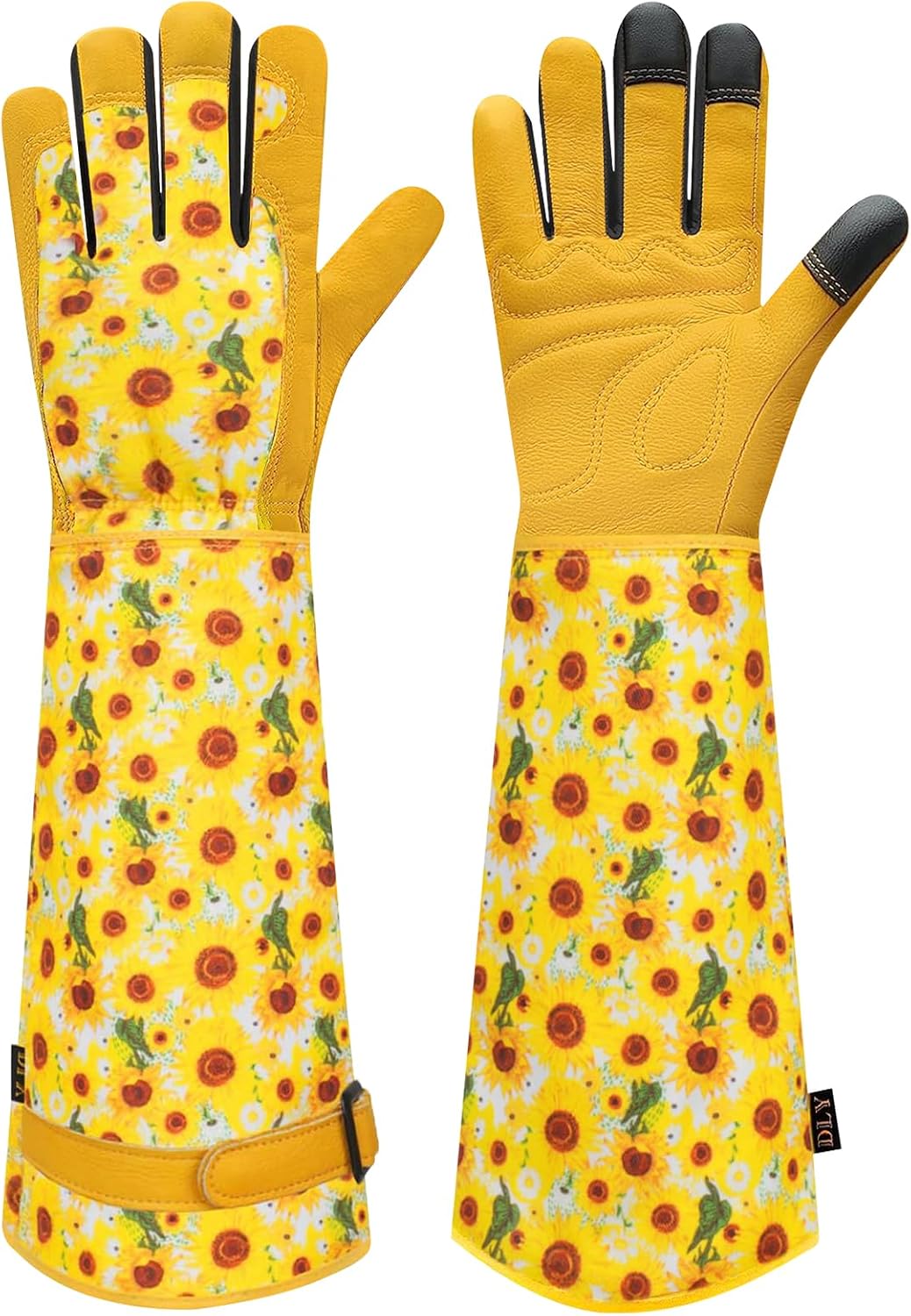
| Material | Leather (cowhide) |
|---|---|
| Unit Count | 2 Count |
| Is Waterproof | False |
| Sleeve Length Description | Long Sleeve |
| Other Special Features of the Product | Abrasion Resistant, Breathable, Puncture Proof, Thorn Proof, Touchscreen |
These DLY gloves combine a cowhide leather palm with a breathable canvas back and an extended cuff to protect hands and forearms while pruning, weeding, and handling thorny plants. The foam-padded palm improves grip and reduces abrasion during repetitive tasks, while reinforced fingertips and double stitching add wear resistance for heavier garden work. The long sunflower-print cuff and elastic wrist help keep debris out and shield the forearm from scratches. A three-finger touchscreen patch lets you use a phone without removing the gloves, and the canvas back is sweat-wicking for warm-weather use. They are described as machine washable on a gentle cycle, which makes maintenance straightforward. Limitations to expect are that they are not waterproof and the fit is intentionally snug, so choose a larger size if you prefer looser gloves or plan to layer for colder weather. Overall they are a solid, protective option for frequent pruning and rose care when thorn resistance and dexterity matter.
Best for: Gardeners who prune roses and do frequent thorny or abrasive tasks and want durable, protective gloves that still offer dexterity and breathability.
Less Ideal for: People who need waterproof gloves for wet digging or those seeking heavy insulated gloves for cold-weather gardening should look elsewhere.
- Cowhide leather palm with foam padding for abrasion resistance and improved grip
- Long cuff and elastic wrist protect forearms and keep dirt out
- Reinforced fingertips and double-stitched construction increase durability
- Breathable canvas back wicks sweat for comfort in warm weather
- Three-finger touchscreen feature lets you use devices without removing gloves
- Not water resistant, so hands can get wet during damp tasks
- Runs snug by design which may require sizing up for a comfortable fit
Verdict: A tough, dexterous thornproof glove built for pruning and rose care when protective leather palms and a long cuff are a priority.
KDK Women’s Thorn‑Proof Leather Gardening Gloves (Small)

| Unit Count | 2 Count |
|---|---|
| Recommended Uses For Product | Gardening, Light Duty Work |
| Is Waterproof | true |
| Material | Leather, Spandex |
| Palm Material | synthetic_leather |
These KDK gloves are designed for gardeners who need puncture resistance without sacrificing comfort. Reinforced synthetic leather palms and textured grip give solid protection and control when pruning roses, pulling weeds, or handling tools, while the cushioned palm reduces fatigue during extended tasks. The breathable microfiber and spandex mesh back keeps hands cooler in summer, and elastic wrist closures provide a secure fit. Touchscreen-capable fingertips let you check a phone without removing the gloves, and the listed water resistance helps with light wet work. Expect good durability for routine garden chores, but keep in mind the mesh tops prioritize airflow so you should avoid wiping thorns directly across the fabric. Care is simple since the product is machine‑washable or hand‑washable per instructions. These are a practical, value-oriented choice if you want reliable thorn protection and everyday comfort without specialty gauntlets or heavy leather.
Best for: Gardeners looking for an inexpensive, comfortable glove that balances thorn protection with breathability for everyday pruning, planting, and light yard work.
Less Ideal for: Those doing heavy-duty thorn handling, livestock work, or tasks requiring full gauntlet protection should choose thicker full-leather or long-sleeve gloves instead.
- Reinforced synthetic leather palms provide puncture and abrasion resistance for pruning and thorny plants
- Cushioned palm padding reduces hand fatigue during repetitive digging or use of hand tools
- Breathable microfiber and spandex mesh back improves airflow for hot‑weather gardening
- Textured palm offers non‑slip grip for secure tool handling
- Touchscreen‑compatible fingertips let you use a phone without removing gloves
- Mesh back improves breathability but is not meant for direct thorn contact and can be less protective than full leather gauntlets
- Available sizing listed as small for this ASIN so buyers needing other sizes must confirm options elsewhere
Verdict: A budget-friendly, comfortable thorn-resistant glove that protects palms and reduces fatigue for routine women’s gardening tasks.
LELETEIL Thorn Proof Long Leather Gardening Gloves

| Manufacturer | LELETEIL |
|---|---|
| Item Weight | 9.92 ounces |
| Department | Women’s Men‘s |
| Date First Available | September 7, 2026 |
These thorn-proof gardening gloves use long leather gauntlets to protect hands and lower forearms when handling roses, brambles, and other plants with sharp thorns. They fit like traditional leather gloves and are typically used for pruning, transplanting, and clearing thorny growth where puncture resistance and abrasion protection matter. Notable features visible in the listing include extended cuff coverage and reinforced leather construction, which translate to confident handling of thorny stems and fewer punctures compared with thin cloth gloves. The gloves are practical for repetitive pruning because leather resists wear and can be wiped clean, though leather may stiffen if frequently exposed to water and will require occasional care to stay supple. These are not thin dexterity gloves, so fine fingertip tasks like tying knotty twine or handling tiny seedlings will feel less precise. For gardeners prioritizing durable, reliable protection while working with roses and brambles, these gloves deliver the core safety and longevity you want.
Best for: Gardeners who prioritize dependable protection when working with roses, brambles, and other thorny plants and who want a durable glove for regular pruning and clearing tasks.
Less Ideal for: People who need high fingertip sensitivity for delicate potting, seed work, or tasks requiring fine motor control should consider thinner dexterity gloves instead.
- Extended leather gauntlet protects lower forearm from thorns
- Reinforced leather construction offers strong puncture and abrasion resistance
- Wipe-clean surface and durable material stand up to repeated pruning tasks
- Leather can stiffen when wet and needs occasional conditioning to remain flexible
- Reduced fingertip dexterity compared with thin or synthetic gloves
Verdict: Choose these gloves if you want sturdy leather gauntlet protection you can rely on when tackling roses and other thorny plants.
HANDLANDY Rose Pruning Long Thorn-Proof Gardening Gloves

| Material | Leather, Synthetic Leather |
|---|---|
| Palm Material | cowhide |
| Sleeve Length | Long Sleeve |
| Fit Type | Regular |
| Reusability | Yes |
These HANDLANDY rose pruning gloves are long gauntlet-style leather gloves designed to protect hands and forearms while pruning, trimming roses, handling thorny plants, and general yard work. Constructed with split cowhide on the palm and leather on the back, they offer a secure grip and puncture resistance for tasks like cutting stems and removing thorny weeds. The inner cotton lining helps wick sweat for more comfortable, all-day wear and an elastic wrist helps keep dirt out. The extended sleeve gives forearm coverage that makes them useful for rose bushes, holly, and cactus handling. They are not waterproof and the heavy leather means less dexterity than thinner gloves, so very fine finger work will feel bulkier. Sizing runs large compared with typical glove charts, so checking measurements before choosing a size is important. For gardeners who prioritize protection over fingertip sensitivity, these gloves provide solid, reusable defense against thorns and abrasion.
Best for: Gardeners who want strong, reliable protection while pruning roses and other thorny plants and who prioritize safety and durability over fine fingertip feel.
Less Ideal for: People who need high dexterity for detailed potting or touchscreen use or gardeners who primarily work in wet conditions.
- Split cowhide palm provides durable abrasion and puncture resistance for thorny tasks
- Extended gauntlet cuff protects forearms during pruning and brush clearing
- Inner cotton lining improves comfort and wicks sweat during extended use
- Elastic wrist closure helps keep dirt and debris out and ensures a snug fit
- Heavyweight leather construction is reusable and built for repeated yard work
- Not water resistant so they will absorb moisture in wet conditions
- Heavy leather reduces fingertip dexterity for delicate tasks
- Sizing is reported to run large so buyers should compare measurements before ordering
Verdict: Choose these gauntlet-style leather gloves when you need dependable thorn and abrasion protection for rose pruning and heavy yard work.
Choosing the Right Women S Thorn Proof Gardening Gloves: Key Factors to Consider
Puncture Resistance and Layering
Puncture resistance is the primary function of thorn-proof gloves. Look for multiple material layers, such as a tough outer shell combined with a cut-resistant lining or tightly woven synthetic fibers. A thicker outer layer improves protection but can reduce fingertip sensitivity, so evaluate how much protection you need based on the plants you handle.
Layering location matters. Reinforced palms and fingertip areas that receive the most contact with thorny stems provide meaningful protection. Some gloves concentrate puncture-resistant material on the back of the hand and forearm for bramble work. Understanding where the layers sit helps you choose gloves that protect the zones you use most without adding unnecessary bulk elsewhere.
Fit, Sizing, and Hand Shape
Proper fit keeps gloves secure and preserves dexterity. Women's gloves often have narrower palms and shorter fingers than unisex styles, so check sizing guidance and whether the design runs true. A snug fit around the base of the fingers prevents material bunching that can reduce control while pruning.
Consider hand length and circumference separately. Some brands offer multiple widths or sizes that account for both. Adjustable cuffs or wrist closures help customize the fit and prevent dirt or thorns from entering the glove during use. If you plan to layer liners in cold months, account for that extra bulk when choosing a size.
Dexterity and Grip
Dexterity determines how well you can hold pruners, tie plant supports, or pick fruit while wearing the gloves. Thin but strong materials on the fingertips and palm allow better tactile feedback. Textured palms or rubberized patches improve grip on wet stems or tools and reduce slipping when hands are sweaty.
Grip patterns should be placed where you naturally hold tools. Excessive padding or overly stiff reinforcements can trade safety for clumsiness. Assess the balance between protection and the ability to perform detailed tasks such as deadheading or tying grafts.
Palm and Fingertip Durability
The palms and fingertips take most of the abrasion in gardening. Durable materials or added overlays in these zones extend glove life, especially if you frequently handle rough stems, wire, or thorns. Look for double-layer palms or reinforced patches that resist shredding and seam failure.
Durability affects long-term cost and performance. A glove that resists wear maintains consistent protection and fit as the material breaks in. Also consider replacement parts such as reinforced fingertips versus full leather palms when assessing long-term value.
Comfort, Breathability, and Climate
Comfort influences how long you can work without needing a break. Breathable fabrics and moisture-wicking liners reduce sweat buildup on warm days, while windproof or insulated options are better for cooler seasons. Stiff puncture-resistant materials can be uncomfortable during extended use, so padding placement and liner choice matter.
Cuff design also affects comfort. Longer gauntlets protect forearms from thorns but can trap heat, while short wrists are easier to remove and more breathable. Match glove construction to the local climate and the length of typical gardening sessions.
Maintenance and Cleanability
Gloves used in thorny areas pick up sap, dirt, and plant residues that can degrade materials or smell over time. Materials that tolerate hand washing or machine-wash cycles extend usable life and keep gloves hygienic. Quick-dry properties reduce the chance of mildew when gloves are stored damp.
Consider how easy it is to remove debris from textured grips and whether reinforced seams survive repeated washing. Some protective coatings or leathers require specific care products, so check care requirements before deciding.
Matching Glove Style to Thorny Tasks
Different thorny-plant jobs demand different glove styles. Pruning rose bushes close to the stem benefits from gloves that provide fingertip sensitivity and a tapered finger fit. Clearing brambles or pulling invasive vines often needs extended gauntlets and thicker outer layers to protect forearms as well as hands.
For harvest work such as picking blackberries, prioritize dexterity and a secure grip so you can handle fruit without crushing it. If you switch between tasks, consider carrying two pairs: a supple, high-dexterity pair for fine work and a heavier, more protective pair for heavy pruning.
- Short gloves: better for planting and light pruning where mobility matters.
- Long gauntlets: protect wrists and forearms during bramble clearing.
- Layered approach: keep a light liner for cold mornings under a thorn-resistant outer glove.
Materials and Tradeoffs
Common materials include leather, synthetic cut-resistant fibers, and coated textiles. Leather offers abrasion resistance and a good grip but can be stiff and requires care. Synthetic cut-resistant fibers deliver high puncture resistance with less bulk, and coatings on the palm add grip but may reduce breathability.
Think about the tradeoff between protection and hand feel. A thicker leather or multilayer synthetic will protect better against deep thorns but will reduce fingertip sensitivity. For many gardeners a hybrid construction that balances both is the most practical choice.
- Leather: durable, good grip, may need break-in.
- Cut-resistant synthetics: high puncture resistance, lightweight.
- Coated palms: improved wet grip but less airflow.
Sizing Tips and How to Test Fit at Home
Measure both the circumference at the widest part of your palm and the length from wrist to fingertip to compare against sizing charts. Try gloves on with the hand positions you use in the garden: pinch, hold pruning shears, and mimic harvesting motions to check for bunching or restricted movement.
If you cannot try gloves on before buying, look for brands that publish detailed dimensions or offer adjustable wrists. Remember that some materials stretch over time while others remain rigid; allow for a modest break-in period for leather options.
- Measure palm circumference and hand length before selecting size.
- Simulate common gardening motions to evaluate dexterity.
- Account for liners or seasonal layering when choosing size.
Care and Storage to Extend Glove Life
After working with thorny plants, gently remove debris from seams and textured grips. Rinse off sap and dirt promptly and let gloves dry fully away from direct heat. For leather gloves, use recommended conditioners sparingly to maintain suppleness and avoid stiffening.
Store gloves in a dry, ventilated spot to prevent mildew. Rotate pairs so each has time to dry between uses, and inspect seams and reinforcement patches regularly to catch small failures before they spread.
- Rinse off sap quickly to prevent sticky buildup.
- Air dry away from direct sunlight or heaters.
- Inspect reinforced areas after heavy use.
Glove Alternatives and Layering Strategies
Layering a thin liner under a thorn-proof glove can increase comfort and provide thermal insulation in cool weather. Liners also make it easier to pull gloves on and off and reduce sweat contact with the primary glove. For very heavy-duty tasks, consider combining a thin nitrile-coated glove under a thicker outer glove for added puncture resistance.
If fingertip sensitivity is critical, carry a lightweight pair for finish work and switch to a heavier pair only for tasks with high thorn exposure. This approach preserves dexterity while minimizing wear on the more protective pair.
- Use liners for warmth and sweat control.
- Keep a high-dexterity pair for delicate tasks.
- Swap to heavier protection for bramble removal.
How We Chose the Best Women S Thorn Proof Gardening Gloves
We evaluated gloves based on performance in thorny-plant tasks, fit and sizing options for women, material durability, and comfort for extended use. Our filters prioritized gloves that offer documented puncture resistance or multilayer construction suitable against rose and bramble thorns. Fit mattered because a glove that is too loose or too bulky reduces dexterity during pruning and planting. Durability was judged by material type and reinforcement in high-wear zones such as palms and fingertips. Breathability and flexibility were considered to ensure gloves can be worn during warm-weather tasks without excessive sweating or hand fatigue. Ease of cleaning and quick-dry properties were included because thorny tasks often involve sap and soil. We excluded gloves designed solely for industrial safety or heavy chemical protection since those do not reflect garden-hand comfort or fit. We also excluded lightweight fabric gloves without any puncture-resistant layering. The final selection reflects a balance of puncture resistance, fit for women's hands, durability, comfort, and practical garden usability.
FAQ
How do I know when thorn-proof gloves need replacing?
Replace gloves when you see thinning in the palm or fingertip areas, holes, split seams, or a noticeable loss of puncture resistance. Visible wear often means protection is compromised even if the glove still fits.
Are leather gloves better than synthetics for thorn protection?
Leather is durable and resists abrasion well, but modern synthetic cut-resistant fibers can offer equal or better puncture resistance with less bulk. The best choice depends on whether you prioritize abrasion resistance and grip or lightweight protection and dexterity.
Can I repair small holes or worn patches on thorn-proof gloves?
Minor stitching repairs can extend life, especially on seams or weak spots. Patches can restore abrasion resistance on palms, but repairs rarely fully restore original puncture protection. For critical protection, replacement is safer.
How should I clean thorn-proof gloves with leather components?
Wipe leather parts with a damp cloth to remove soil and sap, avoid machine washing, and let them air dry. Apply a leather conditioner occasionally to keep the material supple, but avoid over-conditioning which can reduce grip.
Are longer gauntlet gloves necessary for all thorny work?
Not always. Longer gauntlets protect wrists and forearms when pruning tall brambles or reaching into dense shrubs. For routine rose pruning or harvesting, a shorter glove with strong palm and fingertip protection may be more comfortable and provide better dexterity.
Final Verdict
Choose thorn-proof gloves by prioritizing the protection level you need and the tasks you do most often. If you work aggressively with brambles and tall shrubs, favor gloves with extended gauntlets and reinforced palms. If pruning and harvesting require precision, look for slimmer profiles with puncture-resistant fingertips. Weigh the tradeoffs between protection, dexterity, and comfort, and consider having two pairs for different jobs. Proper fit, durable reinforcement in wear zones, and materials suited to your climate will give the most reliable, long-lasting protection in thorny gardens.
