

Note: This article contains affiliate links. If you click on these links and make a purchase, I may earn a small commission at no extra cost to you. This helps support my research and content. Read my full affiliate disclosure here.
Ants can move from a harmless nuisance to a major problem when they find food indoors or damage outdoor plantings. Choosing the right ant trap affects how quickly colonies are controlled, how safely baits can be placed around kids and pets, and whether ants will carry bait back to the nest where it matters most. This guide shortlists seven top ant trap options suited to common home and garden scenarios and explains the practical differences that will matter in everyday use. We evaluate bait formulation, placement flexibility, and ease of use so you can pick the trap that matches where you plan to use it.
Top Picks at a Glance
| Best Overall The best all-around choice for most situations | TERRO Multi-Surface Liquid Ant Baits, 20 Bait Stations |  |
| Best Quality Built to a higher standard if you want something more solid | Syngenta Advion Ant Gel (4 tubes, 30 g each) |  |
| Best Value The sweet spot between price and what you get | Raid Ant Killer Baits, Household Ant Bait Traps, 8 Count |  |
| Best Budget The cheapest option that still gets the job done reliably | Raid MAX Liquid Ant Baits, 4 Count |  |
| Highest Rated A top-rated pick with lots of positive feedback | Terro Liquid Ant Baits, 2-Pack |  |
| Most Popular A crowd favorite that many people choose with confidence | TERRO Liquid Ant Bait Stations, 12-Pack (T300B) |  |
| Best Seller A high-volume bestseller chosen again and again | TERRO Multi-Surface Liquid Ant Baits, 8-Count |  |
TERRO Multi-Surface Liquid Ant Baits, 20 Bait Stations

| Unit Count | 1 Count |
|---|---|
| Item Type Name | Terro Multi-Surface Liquid Ant Baits 6 20 Bait Stations |
| Target Species | Insects |
TERRO Multi-Surface Liquid Ant Baits are ready-to-use stations containing a sweet borax-based liquid that attracts foraging ants and lets them transport the bait back to the nest. You can lay the flat stations on counters and floors or use the included adhesive strips to attach them to walls, under cabinets, or other discreet places where ants travel. In practice the bait draws in visible ants quickly and, because the active ingredient acts slowly, worker ants repeatedly visit the station and share the bait so the colony is affected. The product is simple to deploy, low-profile in appearance, and designed to keep stations out of reach of pets and small children when adhered to vertical surfaces. Expect to see a noticeable drop in activity within days and more complete control over two to four weeks. Limitations are that you will initially see increased ant traffic as they find the bait and some species may be less attracted to sweet liquid formulations, so placement and patience matter for best results.
Best for: Homeowners who want a low-effort, discreet indoor solution to reduce ant activity across a household colony and who value flexible placement options.
Less Ideal for: People needing immediate knockdown of every visible ant or those dealing with outdoor or non-sugar-preferring ant species should consider different methods.
- Multi-surface design lets you place stations flat or adhere them to walls and under cabinets
- Ready-to-use, pre-filled stations require no mixing or setup
- Slow-acting borax formula allows worker ants to carry bait back to the colony for broader control
- Discreet two-color design blends into indoor spaces
- Initial increase in visible ants as foragers find the bait
- Sweet liquid bait may be less effective on ant species that prefer protein-based foods
Verdict: A simple, versatile indoor bait station that uses a slow-acting liquid formula to target the whole ant colony with minimal setup.
Syngenta Advion Ant Gel (4 tubes, 30 g each)

| Unit Count | 4.23 Ounce |
|---|---|
| Included Components | 4 Tubes x 30-Grams, 1 Plunger and 2 Tips |
| Item Form | Gel |
| Active Ingredients | 0.05% indoxacarb |
| Target Species | Insects |
Advion Ant Gel is a concentrated, non-repellent gel bait designed to attract foraging worker ants and deliver a transferred toxicant back to the nest for colony elimination. It is supplied in syringe-style tubes with a plunger and application tips for precise placement in cracks, crevices, along trails and near nests. The 0.05% indoxacarb formulation is highly attractive to many common species and supports secondary kill when workers feed nestmates and the queen. Practical benefits include odorless application, easy targeting of active trails without broadcast spraying, and suitability for both indoor and outdoor spots where baiting is appropriate. Limitations are that correct placement and inspection are required for best results and it is not a preventative barrier product so it will not stop new colonies from reinfesting if entry points are not addressed. Users should follow safety guidance and keep the gel away from children and pets.
Best for: Buyers who want a high-performance, targeted solution to eliminate established ant colonies and prefer baiting over sprays for precise indoor and outdoor treatment.
Less Ideal for: People seeking a long‑term perimeter barrier or an all-in-one insect control product for multiple pest types should consider other solutions.
- Non-repellent indoxacarb formula encourages ants to feed and transfer bait into the nest
- Syringe and tips allow precise application into cracks, crevices, and along trails
- Odorless gel suitable for discreet indoor and outdoor use
- Effective against multiple major ant species including Argentine and carpenter ants
- Requires correct placement and monitoring for colony-level control
- Not a preventative barrier so reinfestation can occur if entry points are not fixed
Verdict: Choose this gel if you need a professional, transfer-effective bait that targets and eliminates established ant colonies with precise, low-odor application.
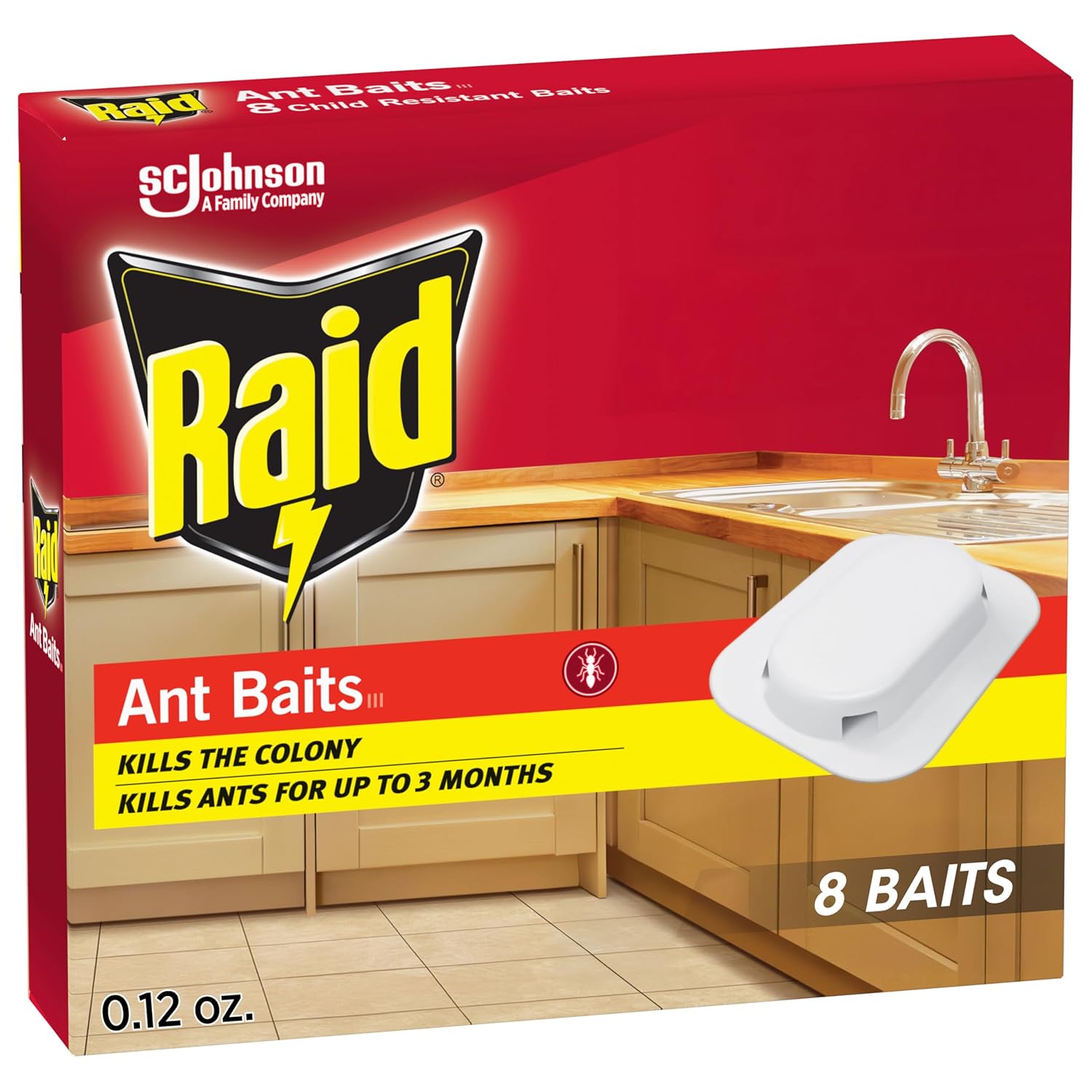
Raid Ant Killer Baits, Household Ant Bait Traps, 8 Count
| Contents | 8 bait stations |
|---|---|
| Child-resistant | Yes |
| Effective duration | Up to 3 months |
| Intended use | Indoor |
These Raid Ant Killer Baits are small, prefilled stations designed for indoor use along walls, in corners, and near likely ant entry points. Ants feed on the bait and carry it back to the colony, which helps eliminate the nest rather than just individual foragers. The child-resistant housing reduces accidental access and makes placement around common household areas safer than loose bait. Each station provides continuous control for up to three months, so you can place them and check back only occasionally. The product is easy to use with no mixing or measuring required, and the compact form helps hide stations from view. Limitations: they are intended for indoor use only and work specifically on ants that accept the bait, so they may be less effective against ants with different feeding preferences or for immediate control of large visible infestations where spraying might give faster knockdown.
Best for: Best for practical homeowners who want a low-maintenance indoor solution to control ant colonies without frequent monitoring or complicated application.
Less Ideal for: Not a good fit for people needing rapid visible knockdown of a large indoor infestation or for outdoor ant problems.
- Targets the colony by allowing foragers to transfer bait to nest members
- Child-resistant stations reduce accidental access in homes
- Prefilled, no-mix design is simple to place and maintain
- Long-lasting effect up to three months per station
- Formulation only works if local ants accept the bait so results can vary
- Not designed for outdoor use or immediate knockdown of heavy infestations
Verdict: Choose these Raid bait stations when you want an easy, low-maintenance indoor method that targets the entire ant colony rather than just killing individual ants.
Raid MAX Liquid Ant Baits, 4 Count

| Unit Count | 4 Count |
|---|---|
| Item Form | LIQUID |
| Target Species | Insects |
| Active Ingredients | Spinosad |
Raid MAX Liquid Ant Baits are pre-filled liquid stations designed to lure common household ants, let them feed, and carry the bait back to the colony to eliminate the queen and nest. You place the small, spill-proof stations where you see ant activity — along baseboards, near trash, in pantries or at entry points. The product contains spinosad as the active ingredient and targets a wide list of common ants while excluding certain species like fire ants and carpenter ants. Practical benefits include convenience of ready-to-use units, low mess thanks to the enclosed liquid reservoir, and a colony-level control approach rather than just killing visible workers. For a budget-minded shopper the four-count pack covers multiple hotspots around a home. Limitations to note are the restricted species list so it will not control all ant types and bait effectiveness depends on ants taking the liquid back to the nest which can take days; environmental factors and competing food sources can reduce effectiveness.
Best for: Homeowners and renters who want a low-effort, inexpensive way to reduce common indoor and perimeter ant activity and who prefer ready-made bait stations they can place around the house.
Less Ideal for: People dealing with fire ants, carpenter ants, pharaoh ants or large outdoor infestations should choose targeted professional treatments or products labeled for those species.
- Ready-to-use, prefilled bait stations for quick placement
- Enclosed liquid reservoir reduces spills and odor compared with loose baits
- Uses spinosad which is effective when ants consume and transfer it to the colony
- Four units let you treat multiple indoor and outdoor hotspots
- Does not target fire ants, carpenter ants, pharaoh ants or some other species
- Works only if ants accept the bait and return it to the colony which can be slow
Verdict: A simple, low-cost pack of prefilled liquid bait stations that quietly targets common household ants by killing the colony from the inside out.
Terro Liquid Ant Baits, 2-Pack

| Unit Count | 2 Count |
|---|---|
| Item Form | Liquid |
| Target Species | Insects |
These Terro liquid ant baits come as compact, snap-open stations filled with a sweet liquid bait that worker ants readily take back to the nest. You place the stations where you see ant activity — along baseboards, in corners, on counters, or near appliances — and the ants feed and carry the slow-acting toxin through the colony. The closed station design helps prevent the bait from drying out and lets the product remain effective for weeks while visits continue. In practice you may see more ants at first as they discover the bait, but numbers should fall within days and colony collapse typically occurs over 2 to 4 weeks depending on infestation size. The product is simple to use with no mixing or setup and the small footprint makes placement discreet. Limitations are that it targets sweet-eating, common household ants and may be less effective if competing food sources remain or if non-sweet-preferring species are present.
Best for: Buyers who want a reliable, low-effort way to remove common household ant colonies by placing discreet bait stations in problem areas and monitoring until activity stops.
Less Ideal for: People dealing with outdoor carpenter ants, fire ants, or ant species that do not prefer sweet baits should consider species-specific control options or professional help.
- Ready-to-use stations require no mixing or tools
- Closed design helps keep liquid bait from drying out for longer residual activity
- Attracts sweet-preferring worker ants that then carry bait to eliminate the colony
- Compact size fits along baseboards and in tight placement spots
- Formulated for sweet-eating common household ants and may not attract all ant species
Verdict: Use these ready-to-use liquid stations when you want a simple, proven bait that worker ants will carry back to eliminate a household colony.
TERRO Liquid Ant Bait Stations, 12-Pack (T300B)

| Unit Count | 12 Count |
|---|---|
| Item Form | Liquid |
| Target Species | Insects |
| Active Ingredients | Sodium Tetraborate Decahydrate (Borax), 5.40% |
TERRO Liquid Ant Bait Stations are small, prefilled traps designed for indoor ant control. You open the tab and place the stations where you see ant activity—along baseboards, near appliances, or on counters—and the sweet liquid attracts worker ants that feed on it and transport it back to the colony. The active ingredient is borax, formulated so ants survive long enough to spread the bait, which can reduce visible activity within days and achieve broader colony control in two to four weeks. The 12-pack provides multiple placements for coverage across rooms, and the compact stations are easy to position and replace as bait is consumed. Because the product is a bait rather than a spray, it targets the nest rather than only killing foragers, which is useful for recurring indoor infestations. Limitations include the need to remove competing food sources for best results and the fact that success depends on ants accepting the bait, so placement and monitoring are important for maximum effectiveness.
Best for: Buyers who want a practical indoor solution that focuses on eliminating entire ant colonies rather than just killing visible workers and prefer a low-effort, deploy-and-monitor approach.
Less Ideal for: People who need an immediate kill of visible ants only or who require outdoor ant control should consider contact sprays or professional services instead.
- Targets the colony by having worker ants carry bait back to the nest
- Ready-to-use stations require no mixing or setup
- Compact stations are easy to place along baseboards and in tight spots
- 12-count pack gives coverage for multiple rooms or hotspots
- Contains borax so stations should be kept away from children and pets
- Effectiveness depends on ants being attracted to the sweet bait and may require repositioning
Verdict: A simple, ready-to-use liquid bait system that kills entire indoor ant colonies by having worker ants carry borax-based bait back to the nest.
TERRO Multi-Surface Liquid Ant Baits, 8-Count

| Unit Count | 8 Count |
|---|---|
| Target Species | Insects |
| Recommended Uses For Product | Indoor |
| Material Type | Plastic |
TERRO Multi-Surface Liquid Ant Baits are prefilled, easy-to-place stations that use a sweet liquid bait with borax to attract foraging ants and carry the poison back to the nest. The stations can be set on counters or stuck to walls, kick plates, and under cabinets using the included adhesive strips, so they stay out of the way and out of reach of children and pets. In use you will often see more ants at first as workers find the bait, but that activity is part of how the formula spreads through the colony and achieves control over a few weeks. The product is simple to monitor and replace when the bait is gone, and the discreet clear design blends into most indoor spaces. Limitations are that results can take 2 to 4 weeks for full colony elimination and stations must be placed where ants actually forage to work; large or outdoor infestations will need additional measures.
Best for: Buyers who want a low-effort, child- and pet-conscious indoor solution for household ant trails and small infestations and prefer products that work via colony-level control rather than instant knockdown.
Less Ideal for: People needing immediate outdoor or large-scale ant eradication or those who expect instantaneous results should consider faster-acting or professional options.
- Multi-surface design for flat placement or adhesive mounting
- Prefilled, ready-to-use stations require no mixing or setup
- Borax-based bait spreads through the colony for comprehensive control
- Discreet appearance that can be placed out of sight
- Includes adhesive strips for stable placement on walls and under cabinets
- Works only where ants are actively foraging so placement matters
- Takes days to weeks for full colony control rather than instant knockdown
Verdict: Choose TERRO Multi-Surface Liquid Ant Baits when you want a low-effort, discreet indoor bait station that eliminates ant colonies by letting foragers carry borax back to the nest.
Choosing the Right Ant Trap: Key Factors to Consider
Bait Formula and Target Species
Different ant species prefer different food types, so the bait formulation matters. Sweet-based baits work well on sugar-loving species, while protein- or oil-based baits are better for protein-hunting ants. A bait that matches local ant preferences will see more worker traffic and higher chances of carrying toxicant back to the colony.
Bait chemistry also influences how long it takes to affect the nest. Slow-acting toxicants let workers share the bait among nestmates before dying, increasing nest-level impact. Fast-acting poisons might kill foragers before they return home, reducing effectiveness at the colony scale.
Trap Design and Safety
The physical trap should allow ants easy access to bait while keeping the toxicant contained to reduce accidental contact by people, pets, or wildlife. Look for enclosed stations, secure lids, or compartments that hide bait wells. Size and locking mechanisms help when traps must be placed where children or curious animals can reach.
Design affects maintenance too. Disposable stations are simple but create waste and need replacement. Refillable stations cost less over time but should be simple to open and reseal without touching bait directly. Consider how visible activity is through the station so you know when to replace or refill bait.
Placement Options and Practical Reach
Effective control depends on placing traps along active trails, near entry points, and in shaded, protected spots outdoors. Some stations are low-profile and slide under appliances or into narrow foundation gaps. Others are bulkier but provide larger bait capacity for heavy infestations.
Consider where ants forage at your site: under pavers, along baseboards, in planter soil, or near pet food dishes. A trap that can be mounted, staked, or anchored is useful outdoors to prevent displacement. The ability to place traps discreetly without blocking use of the area improves long-term control.
Weather Durability and Outdoor Performance
If you need outdoor control near patios, garden beds, or foundation lines, the trap must withstand rain and sun. Waterlogged bait loses attractiveness and efficacy, while UV exposure can degrade plastics. Stations with sealed compartments or elevated designs keep bait dry and active longer.
Also consider temperature extremes. Very hot or cold conditions can change bait consistency or volatilize active ingredients, reducing attractiveness. Choose traps rated for the climate where you will use them so bait remains effective between checks.
Monitoring and Evidence of Activity
Visible signs of ant activity help you know whether a chosen placement and bait are working. Transparent lids, activity windows, or shallow bait wells that reveal feeding tracks make monitoring straightforward without opening the station.
Frequent monitoring reduces wasted effort on ineffective placements. If the trap shows no traffic after a few days, you can move it to a new trail or try a different bait formulation. Monitoring also informs when to replace or refill baits before effectiveness drops.
Environmental and Household Safety
Consider non-target effects when placing toxic baits around edible gardens, bird feeders, or areas where pollinators forage. Choose traps that confine bait to inaccessible wells and avoid placing stations directly in raised beds or on flowering plants.
For households with pets or small children, pick tamper-resistant stations and place them where supervision is easy. Read labels for any use restrictions near food prep areas, ornamental ponds, or compost piles, and use physical barriers or relocation if necessary to protect non-target organisms.
When to Use Traps Versus Other Control Methods
Traps are most effective when you see foraging trails or concentrated activity and the goal is colony-level suppression. They work well for localized infestations and as part of an integrated plan that includes sanitation and sealing entry points.
For wide-area, landscape-level problems or species that do not readily accept bait, alternative methods such as targeted liquid treatments or professional interventions may be required. Traps are a low-effort first step for many homeowners and gardeners and often reduce the need for broader treatments.
- Use traps when you can locate trails or food sources
- Combine traps with removing attractants like exposed food and standing water
- Switch tactics if traps show no activity after multiple relocations
Best Placement Practices for Indoors and Outdoors
Indoors, set stations along baseboards, under sinks, near food storage, and where ants enter from outside. Keep traps away from areas of heavy foot traffic and out of reach of children and pets.
Outdoors, place stations along foundation lines, near mulch edges, under eaves, and adjacent to known trails. Elevate or anchor stations in areas prone to flooding or high winds to keep bait dry and in place.
- Position stations at right angles to ant trails, not directly on top of large gatherings
- Avoid placement on flowering plants or near pollinator foraging areas
- Rotate placement if activity shifts or if you do not see traffic within several days
How to Read Activity and Adjust Strategy
Look for steady worker traffic into the station and diminishing external sightings over time as signs that colony transfer is happening. If you see heavy dead ant carcasses near the station, relocate the bait further from heavy feeding areas so foragers can return alive to the nest.
If activity remains low, try switching bait type to match ant dietary preferences or move the station closer to visible trails. Regular observation for one to two weeks helps determine whether the approach is working.
- Visible traffic into the bait indicates the correct bait and placement
- No activity after several days suggests relocation or bait change
- If activity spikes but outdoor sightings increase, spread traps to intercept additional foragers
Safe Disposal and Replenishment Tips
When bait is spent or visibly contaminated, dispose of disposable stations as directed and replace with fresh bait. For refillable stations, use gloves or tools to swap bait cartridges to avoid direct contact with toxicants.
Store spare baits in a cool, dry place away from children and pets. Mark opened bait containers with the date and rotate stock so you use fresher material first.
- Follow label instructions for disposal and container recycling
- Use gloves when handling spent bait or refill cartridges
- Check traps after heavy rain and replace bait if saturated
Preventing Reinfestation
Eliminating attractants is as important as baiting. Keep food sealed, clean up spills promptly, and avoid leaving pet food outdoors. Trim vegetation away from foundation lines so ants have fewer easy routes into the structure.
Seal gaps and cracks where ants enter and maintain good drainage to remove moist areas that attract certain species. Ongoing monitoring with a few discreet stations can catch new activity early before colonies establish.
- Maintain sanitation and remove open food sources
- Seal openings and maintain perimeter barriers
- Use traps proactively in known problem spots during warm months
How We Chose the Best Ant Trap
We focused on the features that actually determine success in real garden and household settings. Criteria included bait attraction and delayed-action chemistry to encourage worker ants to carry poison back to the nest, trap or station design for safe unattended placement around children, pets and plants, and placement flexibility for indoor, patio, or foundation-line use. We also considered how easy traps are to refill or dispose of, resistance to weather and rain for outdoor use, and visible indicators that confirm activity without needing constant checks. Products that relied on unproven active ingredients, required complex setup, or were impractical to place where ants forage were excluded. Our selection emphasizes traps that balance effective colony control with practical safety and long-term usability.
FAQ
How long does it take for an ant trap to reduce visible activity?
It often takes several days to a few weeks. You need foraging workers to take bait back to the nest and spread it, so slow-acting baits may show gradual reductions in surface activity as the colony is affected.
Can I use ant traps around edible plants and vegetable beds?
Traps that fully enclose bait can be used near vegetable beds if placed outside the crop area and not on flowering plants. Avoid placing open baits directly in soil where pollinators or beneficial insects forage.
What should I do if I see no ants entering the trap?
Move the station closer to visible trails or try a different bait formulation. Some species prefer protein over sugar or vice versa, so matching bait type to ant preference usually increases activity.
Are refillable stations better than disposable ones?
Refillable stations are more economical for long-term use and reduce waste, but disposable stations are simpler for one-off problems. Choose based on how often you expect to bait and how comfortable you are handling refills.
Will rain ruin the bait in outdoor traps?
Heavy rain can waterlog or dilute bait unless the station is weather-resistant. Use sealed or elevated stations in rainy spots and check bait after storms to ensure it remains attractive.
Is it safe to use ant traps if I have pets or children?
Many stations are designed to be tamper-resistant, but placement matters. Use secure, enclosed stations and place them where children and pets cannot reach. Follow label guidance and use barriers when necessary.
Final Verdict
Choosing the right ant trap comes down to matching bait type to the ants you see, placing stations where foragers travel, and prioritizing safety and weather resistance for the intended location. Expect a week or more before colony-level effects become apparent and be prepared to relocate or change baits if activity does not pick up. Prioritize traps that combine attractive, slow-acting bait with secure, weatherproof designs for the best balance of effectiveness and household safety. With the right placement and monitoring, traps are a practical, low-effort way to reduce ant pressure around gardens and homes.
