

Note: This article contains affiliate links. If you click on these links and make a purchase, I may earn a small commission at no extra cost to you. This helps support my research and content. Read my full affiliate disclosure here.
Choosing the right compost aerator makes a big difference in how quickly and cleanly organic material turns into usable compost. The right tool helps introduce oxygen, speed microbial activity, and reduce wet, smelly zones that slow decomposition. This guide covers six shortlisted compost aerators that suit a variety of pile sizes and gardener habits. We evaluate build durability, ability to move air through dense material, ease of use, and maintenance requirements to help you pick a tool that fits your workflow. Read on for concise comparisons and practical notes to match a tool to your compost setup.
Top Picks at a Glance
| Best Overall The best all-around choice for most situations | Lotech Compost Crank Twist Corkscrew Compost Aerator |  |
| Best Quality Built to a higher standard if you want something more solid | EJWOX Stainless Steel Compost Aerator with Hardwood Handle |  |
| Best Value The sweet spot between price and what you get | moonateen Compost Aerator Tool Turner with Rotating Spiral |  |
| Best Budget The cheapest option that still gets the job done reliably | DRESSOOS 19.9" Stainless Steel Manual Compost Aerator and Stirring Rake |  |
| Highest Rated A top-rated pick with lots of positive feedback | Lotech Compost Crank Corkscrew Aerator |  |
| Most Popular A crowd favorite that many people choose with confidence | Bosmere 36" Compost Aerator |  |
Lotech Compost Crank Twist Corkscrew Compost Aerator

| Material Type | stainless steel, textured vinyl grip |
|---|---|
| Manufacturer | Lotech Products LLC |
| Model Number | CCT |
| Unit Count | 1 Count |
The Compost Crank Twist is a simple, heavy-duty corkscrew aerator designed to make turning and aerating compost quick and ergonomic. You insert the spiral into your bin or pile, twist clockwise to engage the material, then lift to pull compost up from the base for mixing and aeration; twisting in and out also creates long air channels. Its 3/8 inch stainless-steel spiral and textured vinyl grip give it solid durability and a comfortable hold so it can work through leaves, food scraps, and even viney material without clogging. Because it is a one-piece tool with no assembly, it is ready to use and easy to clean by laying the spiral on the edge and unscrewing debris. The tool is best for regular maintenance of backyard bins and heaps where a quick, physical turn is preferred to mechanical tumblers. It is not a substitute for powered or large-scale aeration if you manage very large commercial volumes, and using force against hidden rocks or large branches can be awkward, so care is needed when resistance is high.
Best for: Gardeners who want a durable, manual tool to keep a backyard compost bin well aerated with minimal fuss and regular quick maintenance.
Less Ideal for: People managing large-volume or commercial composting operations or those who need a powered or automated turning solution.
- Corkscrew spiral design aerates and mixes deeply with simple twisting motions.
- Solid 3/8 inch stainless-steel construction built for long-term use.
- Textured vinyl grip provides a secure, comfortable hold for one- or two-handed use.
- One-piece design requires no assembly and resists clogging for easy maintenance.
- Not suitable for very large or commercial-scale composting where powered aeration is needed.
- Can be difficult to use if the pile contains large roots, rocks, or dense compacted material.
Verdict: A tough, no-frills corkscrew aerator that makes regular backyard compost turning fast and effective.
EJWOX Stainless Steel Compost Aerator with Hardwood Handle

| Material | Stainless steel |
|---|---|
| Handle material | Hardwood |
| Item weight | 1.9 pounds |
This EJWOX compost aerator is a manual corkscrew-style tool intended to speed decomposition by pulling core material to the surface and introducing air into compost piles or bins. You push the spiraled steel shaft into the pile, turn the free-spinning hardwood handle several times, then withdraw the tool to lift and loosen compacted material. The stainless steel construction resists rust and the hardwood handle gives a comfortable grip for repeated use. In practice it is best for spot aeration, breaking up clumps, and refreshing the center of smaller bins or piles where tumblers or pitchforks cannot reach easily. It is lightweight and simple to store, and because it is manual it requires no power or maintenance. The main limitation is that it is a labor tool rather than a bulk-turning solution, so aerating very large or densely compacted piles will be slow compared with using a pitchfork or powered tumbler. Reach is also limited by the shaft length, so very deep, layered systems may require additional effort or repeated insertions.
Best for: Gardeners who prioritize faster, hands-on composting and want a durable, no-power tool to aerate and break up material in backyard bins or small piles.
Less Ideal for: People who need to turn large commercial-scale heaps or who prefer low-effort bulk turning should consider a tumbler or fork instead.
- Stainless steel spiral resists rust and lifts compacted material effectively
- Free-spinning hardwood handle for comfortable, controlled turning
- Simple manual design requires no power or maintenance
- Good for spot aeration and breaking up clumps in bins and small piles
- Not efficient for turning very large or heavily compacted compost piles
- Limited shaft length reduces effectiveness in very deep bins
Verdict: Buy this if you want a durable, manual aerator that makes spot aeration and breaking up compacted compost quick and reliable.
moonateen Compost Aerator Tool Turner with Rotating Spiral

| Brand Name | moonateen |
|---|---|
| Material Type | Plastic Metal |
| Unit Count | 1 Count |
The moonateen compost aerator is a simple handheld mixing tool built to speed up backyard composting by mechanically agitating and aerating materials. You insert the spiral into a bin or bag and use the rotating drill-style mechanism to pull down and turn the pile, which helps introduce air and evenly mix grass clippings, leaves, and kitchen scraps. The metal-plastic construction is described as rust-resistant and easy to clean, and the improved rotation reduces the physical effort compared with a plain pitchfork or stick. It is straightforward to use with no assembly required and works well for routine turning of medium to large outdoor bins. Limitations include a manual operating style that still requires some lifting and twisting, and it is not a powered device for heavy-duty commercial composting. The tool is best for gardeners who want a faster, cleaner way to aerate home compost without bulky equipment, but those with very large volumes or who prefer fully hands-off solutions may want a mechanical tumbler or powered aerator instead.
Best for: Home gardeners who want a practical, low-effort way to aerate and mix compost regularly to speed decomposition without buying powered equipment.
Less Ideal for: Large-scale composters or users seeking a fully automated, hands-free aeration system should consider mechanical tumblers or powered aerators instead.
- Rotating spiral mechanism mixes and introduces air for faster decomposition
- Rust-resistant metal and plastic construction that is easy to clean
- Simple, no-assembly operation suitable for routine bin stirring
- Designed to fit common outdoor compost bins and tumblers
- Manual operation still requires physical effort and twisting
- Not suitable as a powered solution for very large or commercial volumes
Verdict: A practical, easy-to-use handheld aerator that speeds backyard composting by mechanically mixing and adding air without the complexity of powered tools.
DRESSOOS 19.9" Stainless Steel Manual Compost Aerator and Stirring Rake

| Brand Name | DRESSOOS |
|---|---|
| Number of Items | 1 |
| Model Number | VQ552B4N3581MWN |
This DRESSOOS manual compost aerator is a straightforward hand tool for mixing and aerating backyard compost piles or bins. At about 20 inches long with a narrow head, it is used by inserting the tines into the pile or bin contents and twisting or pulling to break up compacted material and introduce air. The stainless steel construction resists rust and abrasion so it stands up to outdoor use without much maintenance. Its slim profile helps reach into narrow compost tumblers and dense piles where larger tools struggle. Because it is manual, it relies on user effort rather than power, which makes it lightweight and low-cost to operate but means larger or very compacted piles will take more time and physical work. The tool is best for routine turning and aeration of small to medium home compost systems and for gardeners who prefer a no-frills, durable tool on a budget.
Best for: Buyers who want an inexpensive, durable manual tool for routine turning and aeration of small to medium home compost bins and piles and who prioritize simplicity and low ongoing cost.
Less Ideal for: People with very large compost systems, frequent heavy-duty turning needs, or limited physical ability should consider larger tools or powered aerators instead.
- Stainless steel resists rust for outdoor durability.
- Slim 19.9" length and narrow head reach into bins and tight piles.
- Simple manual design requires no power or complicated parts.
- Helps loosen compacted material to improve airflow and speed composting.
- Manual operation can be tiring on large or heavily compacted compost heaps.
- No extendable handle or cushioned grip for added leverage or comfort.
Verdict: A durable, no-frills stainless steel aerator that gives budget-minded gardeners an effective manual way to mix and aerate small to medium compost systems.
Lotech Compost Crank Corkscrew Aerator

| Material Type | Stainless Steel, Glass-filled Nylon |
|---|---|
| Style Color | stainless steel, black, copper |
| Item Weight | 2 pounds |
The Lotech Compost Crank is a simple, rugged corkscrew aerator designed to mechanically mix and aerate compost without turning the whole pile. You insert the stainless steel spiral, crank the free‑spinning handles clockwise to bite into the material, then lift to pull compost up from the bottom; repeating in layers lets you reach dense spots and corners in most bins. Its solid 3/8‑inch stainless steel shaft and glass‑filled nylon handles make it durable for frequent backyard use and easy to grip while cranking. The tool is lightweight for its length, so you move compost rather than heft a heavy implement, and its effective depth lets you work deep inside taller tumblers or static bins. Limitations are that very heavy, compacted loads may need to be loosened in stages and the manual action requires some effort compared with powered mixers. The Compost Crank is straightforward, low maintenance, and built to last for gardeners who prefer a nonpowered, reliable way to aerate their compost.
Best for: Buyers who prioritize a long‑lasting, no‑frills method to reliably aerate and mix compost by hand and who value durability and simplicity over powered options.
Less Ideal for: People who need a motorized or zero-effort solution for very large commercial piles or who cannot perform repetitive manual cranking.
- Durable 3/8-inch stainless steel spiral resists bending and rust
- Free-spinning glass-filled nylon handles provide comfortable, controlled cranking
- Long reach and corkscrew shape access deep and cornered areas of bins
- Lightweight for its length so you move compost rather than lifting a heavy tool
- Manual operation can be tiring on very large or compacted piles
Verdict: If you want a dependable, built‑to‑last manual aerator that reaches deep into bins and reliably loosens compost, the Lotech Compost Crank is the practical choice.
Bosmere 36" Compost Aerator
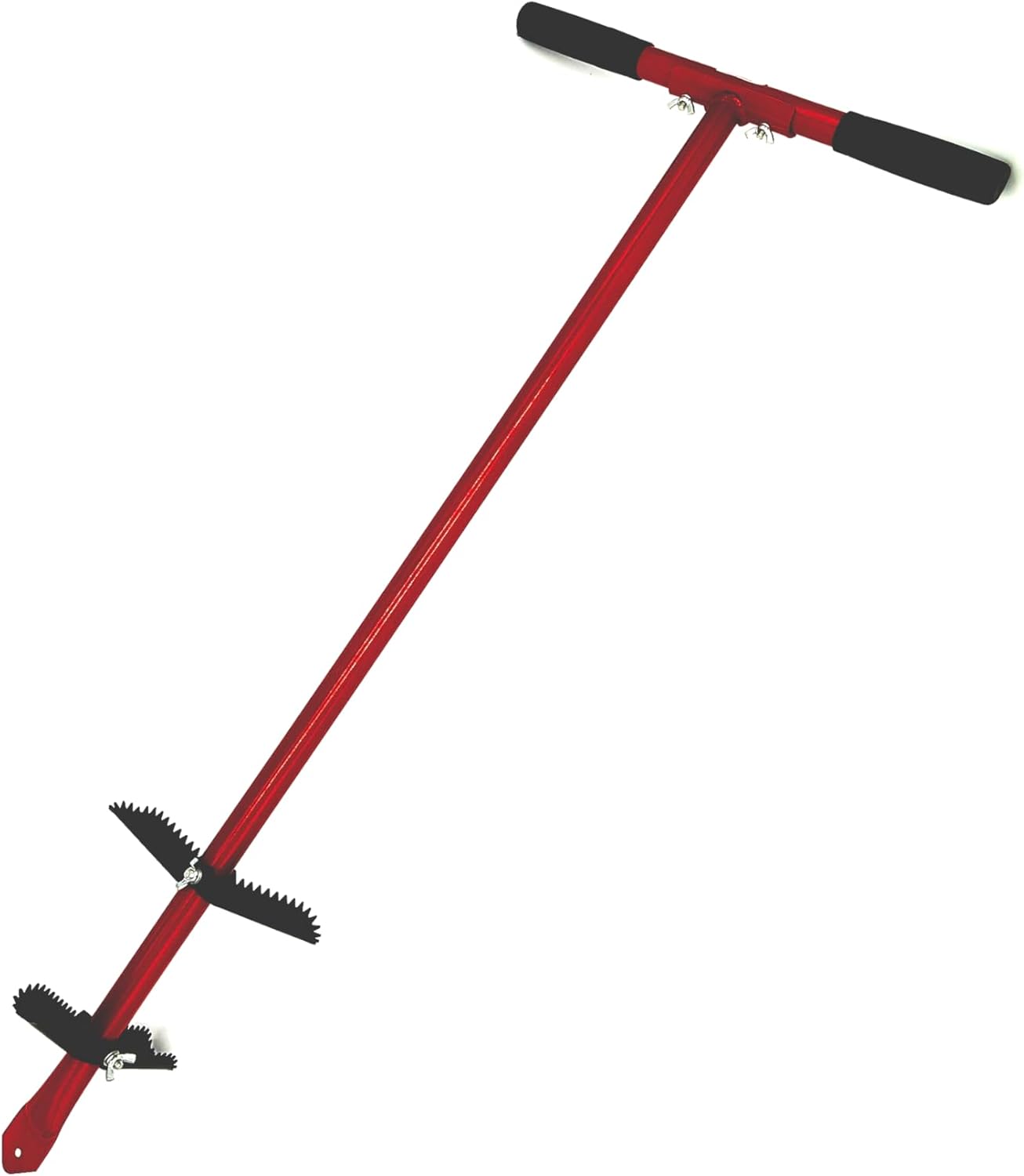
| Material Type | non-rust steel |
|---|---|
| Handle height | 36" |
| Number of activating wings | Two sets |
| Hand grip | Vinyl |
The Bosmere 36" Compost Aerator is a simple, hands-on tool for punching into a compost heap, opening its folding wings, and letting air reach deeper layers to speed breakdown. It is made from non-rust steel and has two sets of activating wings that fold closed for insertion and open to lift and aerate the material. A vinyl hand grip improves comfort during repeated use and the handle can be adjusted for left- or right-handed orientation. In practice it works best for turning and aerating medium to large backyard piles where you can reach different depths without needing a powered tool. The metal construction promises durability in outdoor conditions but requires a bit of physical effort in dense or compacted piles. There is no mechanism for gripping or removing very wet, compacted material, so you may still need a fork for heavy turning. Its straightforward design makes it low maintenance and easy to use for gardeners who prefer manual, tool-based compost management.
Best for: Gardeners who want a durable, low‑maintenance manual tool for regularly aerating backyard compost piles and prefer simple mechanical solutions over powered options.
Less Ideal for: People with limited strength, mobility issues, or those who primarily work with very compacted or wet compost should consider a fork or powered aeration tool instead.
- Non-rust steel construction resists corrosion for outdoor use
- Two sets of folding wings that open to aerate multiple depths of the heap
- Adjustable handle accommodates left- or right-handed use
- Vinyl hand grip improves comfort during repeated aeration tasks
- Manual operation requires physical effort and is less effective on very compacted or waterlogged compost
- No mechanical leverage or tines for lifting heavy, dense material
Verdict: A robust, no-frills manual aerator that reliably introduces air into backyard compost heaps to speed decomposition.
Choosing the Right Compost Aerator: Key Factors to Consider
Airflow and Penetration
How well a compost aerator moves air deep into the pile governs decomposition speed. A tool that only skims the surface will leave anaerobic pockets in the center that slow breakdown and produce odors.
Look for designs that penetrate compacted layers and create channels for oxygen without requiring excessive force. The shape and length of tines or augers affect how deep you can reach and whether the tool pulls up heavy, wet material or merely shifts surface layers.
Build Material and Corrosion Resistance
Compost is a wet, acidic environment that can rapidly degrade low-quality metals and some coatings. Longevity depends on the base metal, protective finishes, and how well moving joints are sealed.
Stainless steel, powder-coated steel, or durable plastics resist rust and abrasion. Consider how connections are fastened and whether replacement parts are available. Heavier, sturdier construction usually tolerates long seasons of turning without bending or breaking.
Ergonomics and Effort Required
Turning compost should not be a back-breaking chore. Ergonomics affects how comfortable you are using the aerator and whether you will use it often enough to notice benefits.
Handle length, grip shape, required twisting or pulling force, and overall tool weight all influence user fatigue. Tools that allow you to work from a standing position and use leg and core muscles reduce strain compared with tools that force frequent bending.
Compatibility With Pile Size and Bin Types
Different aerators work better with small countertop bins, medium backyard tumblers, or large open piles. A compact hand tool may be ideal for a 2-cubic-foot bin but useless in a 4-foot windrow.
Assess the maximum penetration depth and reach. Also consider whether the tool can be used inside a closed tumbler or whether it requires free access to the pile. Versatility across bin styles adds long-term value for changing garden needs.
Maintenance and Ease of Cleaning
Compost tools pick up sticky, fibrous, and wet material that can clog tines and joints. Ease of cleaning affects hygiene and how frequently you will actually use the aerator.
Tools with simple, open designs rinse clean with a hose or disassemble for occasional deep cleaning. Avoid designs with many small crevices or exposed bearings that trap material and accelerate wear.
Effectiveness With Different Feedstocks
Aerator performance varies by material type. Wet food scraps and grass clippings compress differently than dry leaves, straw, or woody twigs.
Choose a tool able to handle mixed loads if your kitchen and yard wastes vary. Some tools excel at loosening fibrous material while others are better at slicing through dense, compacted layers. Consider how often you will add bulky stems or woody prunings and whether the aerator can manage them without clogging.
How Aeration Speeds Microbial Activity
Oxygen availability is the single biggest limiter in many backyard piles. Aerobic microbes do most of the heat-producing work that converts organic matter into humus. Introducing and maintaining air channels keeps those populations active and helps the pile reach temperatures that kill weed seeds and pathogens.
Mechanical aeration improves oxygen flow faster than passive methods alone. Regular turning redistributes moisture and feedstocks so microbes have more uniform conditions. For gardeners seeking quicker finished compost, aeration tools are the practical way to create and maintain those conditions.
- Air channels reduce anaerobic zones that produce odors.
- Even distribution of moisture prevents soggy, slow-decomposing pockets.
- Improved heat retention speeds pathogen and seed breakdown.
Manual Vs. Mechanical Approaches
Manual aeration tools rely on human force and simple leverage. They are lightweight, low maintenance, and work well for small to medium piles. Mechanical options apply moving blades or powered augers and can handle larger volumes but add complexity and maintenance considerations.
For most home gardeners, manual tools offer the best balance of cost, reliability, and simplicity. Mechanical approaches may be worthwhile if you manage large volumes or need to reduce labor significantly, but they require attention to power source, cleaning, and safe operation.
- Manual tools: low cost, low maintenance, best for small to medium piles.
- Mechanical tools: good for large volumes, require power and upkeep.
Using an Aerator Through the Seasons
Seasonal changes affect moisture and decomposition rates. In spring and summer, warmer temperatures increase microbial activity and you may need to aerate more to avoid drying out the pile. In cool weather, aeration helps maintain internal temperatures but you may choose gentler turns to avoid heat loss.
Adjust your aeration frequency based on pile size and moisture. Small, hot piles often benefit from turning every few days, while larger, slower piles may be aerated less frequently. Watch for signs such as foul smells, compacted layers, or stagnant center temperatures to time your interventions.
- Aerate more in warm, active months to prevent compaction.
- Be conservative in cold months to preserve heat in large piles.
Safety and Good Practices
Wear gloves and eye protection when working with compost, especially with tools that can fling material. Stems and debris can be sharp and spores in old material can irritate sensitive lungs, so avoid inhaling dust when turning dried piles.
Clean tools after heavy use and inspect for bent tines or worn fasteners. Store aerators in a dry spot to slow corrosion and prolong useful life. Regular, small interventions are safer and more effective than infrequent violent turning of an overcompacted pile.
- Use personal protective equipment for dusty or woody compost.
- Inspect and store tools to extend lifespan.
DIY Aeration Hacks and Low-Cost Options
If you prefer a budget approach, simple methods can help. Inserting rigid tubes or old PVC pipes into a new pile during build reduces the need for frequent turning because they create passive air channels. Mixing bulky carbon materials like straw or twiggy prunings into the pile from the start prevents tight compaction.
Another low-cost option is to repurpose long-handled garden forks for occasional loosening. While not as efficient as purpose-built aerators in some setups, these tools are often already in the shed and are effective when used correctly.
- Place rigid tubes during pile construction to create passive aeration.
- Mix bulky carbon materials early to prevent compaction.
How We Chose the Best Compost Aerator
We prioritized features that matter most when turning kitchen scraps and yard waste into usable compost. Primary evaluation criteria included airflow effectiveness, measured by how well a tool penetrates and loosens compacted material to introduce oxygen; build durability and corrosion resistance for frequent outdoor use; ergonomics and ease of handling so turning is less tiring and awkward; and maintenance needs, including cleaning and replacement parts. We also considered suitability across pile sizes and situations, from small backyard bins to larger outdoor windrows, and effectiveness with varied feedstocks such as food scraps, grass clippings, and woody trimmings. Products were excluded if they lacked clear materials or construction details, relied on electrical inputs not suited to most home gardens, or were designed only for industrial composting. The winning shortlist balances real-world durability with practical airflow performance and straightforward handling so gardeners can turn more often and get consistent results.
FAQ
How often should I aerate my compost pile?
Frequency depends on pile size, materials, and temperature. Small hot piles often benefit from aeration every few days, while larger piles may be aerated weekly or less. Watch for odors or compacted zones as signals to aerate more often.
Can I use a compost aerator inside a closed tumbler?
Some aerators are sized to work through the hatch of a tumbler, but many are designed for open piles. Check reach and clearance before assuming a tool will fit inside a closed unit. In many tumblers, rotating the drum itself provides sufficient mixing.
Will aerating reduce compost odors?
Yes. Introducing oxygen prevents anaerobic pockets that produce foul smells. Regular, light aeration and balancing wet and dry materials are both important to keep odors under control.
Is a powered aerator necessary for a backyard garden?
Most backyard setups do well with manual aeration tools. Powered aerators can speed work for very large piles but add complexity, maintenance, and safety considerations that many home gardeners do not need.
How do I clean and maintain an aerator?
Rinse off wet material after use and remove stuck fibers with a brush. Inspect for bent tines and lubricate any exposed joints if the manufacturer recommends it. Store in a dry place to slow corrosion and check fasteners periodically.
Final Verdict
Selecting the right compost aerator comes down to matching tool reach and penetration to your pile size and feedstocks, while balancing durability and ease of use. Prioritize airflow effectiveness and a build that resists corrosion if you aerate often. For small to medium backyard setups, ergonomic manual tools usually provide the best blend of performance and low upkeep; gardeners with larger volumes may consider more robust designs. Focus on what you can use regularly and maintain so aeration becomes a routine part of faster, cleaner composting.
