

Note: This article contains affiliate links. If you click on these links and make a purchase, I may earn a small commission at no extra cost to you. This helps support my research and content. Read my full affiliate disclosure here.
A versatile hand saw is one of the most practical tools you can keep in a garden shed or workshop. Whether you need to trim small branches, rip a plank, or make a neat crosscut for a raised bed, the right hand saw saves time and reduces extra trips to powered tools. This guide focuses on adaptable hand saws suited to a range of outdoor and light carpentry tasks and presents our top six shortlisted options. We evaluated each saw for how it performs on typical garden and yard jobs: blade durability, cut control, tooth configuration for different materials, and how comfortable it is to use for extended tasks. Read on to find a versatile hand saw that fits the jobs you do most, with practical notes to help you match a saw to your projects.
Top Picks at a Glance
| Best Overall The best all-around choice for most situations | IRWIN Marathon ProTouch 15-Inch Coarse-Cut Carpenter Saw |  |
| Best Quality Built to a higher standard if you want something more solid | Bahco Laplander Folding Saw 7-1/2" |  |
| Best Value The sweet spot between price and what you get | REXBETI 11-Inch Folding Pruning Saw (SK5 Steel, 7 TPI) |  |
| Highest Rated A top-rated pick with lots of positive feedback | Jorgensen 20-Inch Hand Saw with 11 TPI Black-Coated Blade and Ergonomic Non-Slip Handle |  |
| Most Popular A crowd favorite that many people choose with confidence | Mossy Oak 3-in-1 Folding Hand Saw with Three Blades |  |
| Best Seller A high-volume bestseller chosen again and again | TOOLAN 8-in-1 Multi-Blade Hand Saw with Quick-Change Handle |  |
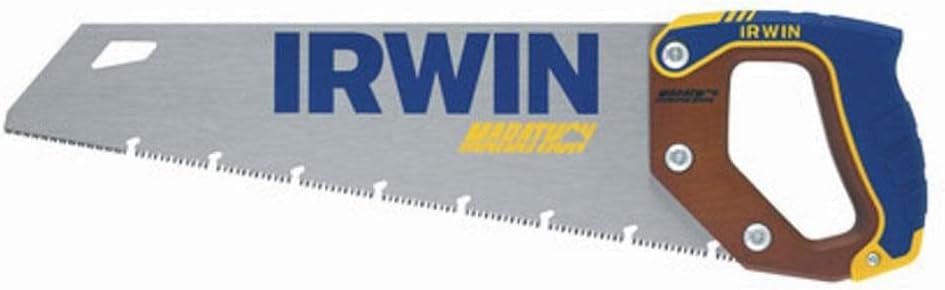
IRWIN Marathon ProTouch 15-Inch Coarse-Cut Carpenter Saw
| Blade Material | Alloy Steel |
|---|---|
| Number of Teeth | 14 |
| Blade Shape | Rectangular |
| Power Source | Hand powered |
The IRWIN Marathon ProTouch 15-inch carpenter saw is built for heavy-duty, performance-focused wood cutting. Its M2 tooth geometry and Tri-Ground teeth deliver fast, efficient cutting across and with the grain, while deep gullets clear chips quickly to maintain cutting speed. The tapered-pitch nose improves clearance and control when starting cuts and working near corners, and the thick-body blade adds rigidity for straighter strokes when ripping or crosscutting. The wood ProTouch handle is shaped for comfort during extended use but remains robust for jobsite wear. This saw is best used for framing, rough carpentry, and general-purpose wood cutting where speed and aggressive material removal matter more than super-fine finish. Limitations include a coarse 9-point tooth pattern that leaves a rougher cut compared with fine-tooth saws and a wooden handle that some users may find less ergonomic than modern composite grips.
Best for: Buyers who prioritize fast, aggressive cutting for framing, rough carpentry, or frequent jobsite use and want a reliable, high-performance hand saw.
Less Ideal for: People who need very fine, smooth finish cuts for trim, cabinetry, or finish carpentry should choose a finer-toothed saw designed for precision.
- Aggressive M2 and Tri-Ground teeth for fast cutting and efficient chip removal
- Deep gullets reduce clogging and keep the cut moving quickly
- Thick-body blade improves rigidity for straighter, controlled strokes
- Tapered-pitch nose aids clearance and starting cuts in tight spots
- Coarse 9-point tooth pattern produces a rougher finish not ideal for fine joinery
- Wooden handle offers durability but less modern ergonomic padding
Verdict: Choose this saw when you need a durable, high-performance carpenter saw that cuts fast and clears chips efficiently for rough and framing work.
Bahco Laplander Folding Saw 7-1/2"

| Blade Material | Swedish Steel |
|---|---|
| Blade Length | 19 centimeters |
| Number of Teeth | 7 |
| Power Source | Manual |
| Other Special Features of the Product | Foldable |
The Bahco Laplander is a sturdy folding pruning saw designed for field use on branches, trail work, and campsite tasks. Its 7.5-inch Swedish steel blade uses XT toothing (7 TPI) for quick, efficient cuts through green and dry wood, and a low-friction rust-resistant coating helps maintain cutting performance after repeated exposure. The saw folds into a compact package and features positive locks for both open and closed positions, so it stays secure in a pack and safe when stowed. The two-component ergonomic handle gives a non-slip grip in wet or cold conditions and the included leather strap makes it simple to carry while working on a ladder or in brush. For users who need a reliable, portable pruning saw, this model balances cutting speed, blade durability, and secure handling. Limitations are its short blade length, which makes large-diameter limbs slow to remove and requires more sawing for thick timber compared with longer saws.
Best for: Buyers who prioritize a dependable, field-ready pruning saw for regular outdoor use, trail maintenance, or camping where corrosion resistance and a secure folding design matter most.
Less Ideal for: Users who frequently cut large tree limbs or need to remove thick timber quickly should choose a longer fixed-blade or larger bow saw instead.
- Sharp 7 TPI XT-toothing provides fast, clean cuts on green and dry wood
- Swedish steel blade with rust-resistant coating improves longevity in outdoor use
- Secure folding mechanism locks open and closed for safe transport
- Ergonomic two-component handle offers a non-slip grip in various weather
- 7.5-inch blade is short for large-diameter branches and requires more strokes on thick limbs
Verdict: A compact, lockable folding saw that delivers reliable, rust-resistant cutting performance for routine branch pruning and outdoor work.
REXBETI 11-Inch Folding Pruning Saw (SK5 Steel, 7 TPI)

| Blade Material | Alloy Steel (SK5) |
|---|---|
| Blade Length | 11 inches |
| Number of Teeth | 7 TPI |
| Handle Material | Rubber coated polymer |
This REXBETI folding pruning saw is built for backyard tree work, camping, and survival kits where portability and reliable cutting matter. The 11-inch SK5 steel blade with aggressive 7 teeth-per-inch staggered cutting pattern slices through green wood and branches efficiently and is rated for branches around 6 to 7 inches in diameter. It folds into a compact profile for easy storage and transport, and the reinforced blade design reduces wobble during heavy cuts. The rubber-coated polymer handle gives a secure, comfortable grip in wet or cold conditions and helps reduce hand fatigue during longer sawing sessions. Because it is a manual hand saw, it is best for medium-duty pruning and firewood prep rather than felling large trunks or continuous heavy logging. The blade is consumable and will blunt with heavy use, though the manufacturer notes good longevity under normal conditions. If you want a portable, well-balanced pruning saw that combines cutting power with a safe fold-away design, this model is a practical choice.
Best for: Buyers who value proven performance and social proof and need a portable, reliable pruning saw for routine tree trimming, campsite wood prep, or emergency kits.
Less Ideal for: People who need a saw for heavy timber work, frequent professional logging, or continuous felling of large-diameter trees should choose a powered saw or larger professional pruning saw.
- SK5 alloy steel blade with 7 TPI staggered teeth for efficient cutting of green wood
- Folding design makes it compact and easy to carry in backpacks or tool kits
- Reinforced blade reduces flex for more stable cutting under load
- Ergonomic rubber-coated polymer handle improves grip and comfort in varied conditions
- Manual saw suitable for medium-duty pruning but not for felling large trunks
- Blade will dull over time and will require sharpening or eventual replacement
Verdict: A compact, well-reviewed folding pruning saw that balances cutting power and portability for everyday tree trimming and camp use.
Jorgensen 20-Inch Hand Saw with 11 TPI Black-Coated Blade and Ergonomic Non-Slip Handle

| Power Source | hand_powered |
|---|---|
| Number of Teeth | 11 |
| Blade Material | High Speed Steel |
| Handle Material | ABS and TPE |
The Jorgensen 20-inch hand saw is a straightforward, reliability-minded tool for cutting wood, PVC and similar materials. Its 11 TPI triple-ground teeth and induction hardened high-speed steel blade are designed to hold an edge and cut quickly on both push and pull strokes, while the low-friction black coating helps reduce binding. The molded ABS and TPE handle is shaped for a firm, non-slip grip and includes 45 and 90 degree guide marks to help keep cuts square. Practical touches include a cardboard sleeve and plastic tooth protector for safe storage and transport. In use the saw excels at fast, coarse ripping and trimming tasks around the workshop or yard, and the robust blade construction makes it suitable for repeated use without frequent re-sharpening. It is not a fine-tooth finish saw, so expect rougher edges on delicate joinery and slower performance on very hard, dense timbers. For routine framing, pruning and general carpentry where dependable, aggressive cutting is the priority, this saw performs well.
Best for: Buyers who prioritize a durable, workhorse handsaw for everyday cutting tasks like framing, pruning and general carpentry and who want a tool that stays sharp through repeated use.
Less Ideal for: Woodworkers needing a fine-tooth saw for smooth finish cuts or hobbyists doing delicate joinery should choose a finer TPI saw instead.
- Triple-ground 11 TPI teeth and induction hardened high-speed steel blade for durable, fast cutting
- Low-friction black coating reduces binding for smoother strokes
- Ergonomic ABS+TPE non-slip handle with angle guides for comfortable, accurate cutting
- Includes blade protector and cardboard sleeve for safer storage
- Coarse 11 TPI tooth pattern produces rougher cuts not suited for fine finish work
Verdict: A tough, no-nonsense 20-inch handsaw built for fast, reliable cutting on everyday woodworking and yard tasks.
Mossy Oak 3-in-1 Folding Hand Saw with Three Blades

| Power Source | Manual |
|---|---|
| Other Special Features of the Product | 3 in 1 design |
| Blade Length | 7.5 inches |
| Blade Material | Aluminium,Metal |
The Mossy Oak 3-in-1 folding hand saw is a compact multi-blade pruning saw designed for camping, trail maintenance, and general outdoor cutting tasks. It uses a simple knob-and-lock system to swap one of the three 7.5-inch blades: a coarse pruning blade for branches, a finer blade for hardwood and plastic, and a high-tooth-count blade for thin metal. The thermoplastic elastomer handle has a rubberized, slip-resistant grip for comfortable pulls and control, and the foldable design plus included nylon pouch keep the saw and spare blades protected in a pack. In practice it excels where portability and blade versatility matter—quickly switching blades lets you handle pruning, cutting small hardwoods, or trimming metal pipe without carrying multiple saws. Limitations are that the blades are short so larger logs require repeated cuts or a larger saw, and the metal blade is intended for thin metal only. The knob lock requires tightening after blade changes to avoid movement, so plan for a small setup step before cutting.
Best for: Buyers who want one portable saw that covers pruning, light hardwood and occasional thin-metal cutting for outdoor use and who value proven, well-reviewed multi-purpose tools.
Less Ideal for: Users who primarily cut large logs, thick lumber, or heavy metal should choose a larger dedicated saw or a powered saw instead.
- Three interchangeable 7.5-inch blades suited to pruning, hardwood/plastic, and thin metal work
- Folding design with nylon pouch makes it highly portable and easy to carry while camping or hiking
- Rubberized thermoplastic elastomer handle provides slip-resistant, comfortable grip during extended use
- Simple knob lock and push-button fold mechanism for quick blade changes and safe storage
- Short blade length limits efficiency on large-diameter logs or heavy timber
- Metal blade is only suitable for thin metal and not for heavy metal cutting
Verdict: A compact, well-reviewed multi-blade folding saw that gives campers and gardeners three dedicated cutting blades in one portable tool.
TOOLAN 8-in-1 Multi-Blade Hand Saw with Quick-Change Handle

| Power Source | Manual |
|---|---|
| Blade Material | Alloy Steel |
| Handle Material | Plastic |
| Included Components | 1 pcs handle, 8 pcs blade |
This TOOLAN 8-in-1 hand saw is a manual, compact cutting kit built around a single ergonomic handle and eight interchangeable blades. It is used like a small reciprocating saw by pressing the quick-change clamp, inserting the appropriate blade for the material, and cutting by hand for controlled plunge or trim cuts. Notable features include a self-locking blade clamp for a secure fit, an anti-slip TPR handle designed to reduce hand fatigue during repeated use, and a set of blades made from high-speed/alloy steel to match different tasks. In practice the saw is useful for tight spots, drywall plunge cuts, trimming plywood or PVC, and light metal/hardware work where a full power tool is inconvenient. Because it is manual it gives precise, low-speed control and requires no power, but it also needs more physical effort and is slower on large or thick stock compared with power reciprocating saws. The compact design makes it easy to store in a toolbox and the blades are standard reciprocating styles so replacements are widely available.
Best for: Buyers who want a reliable, low-tech cutting tool for precise small jobs, occasional repairs, and tight-space work where a powered saw is unnecessary or impractical.
Less Ideal for: Users who frequently cut large lumber, do heavy demolition, or need fast throughput should choose a powered reciprocating saw instead.
- Interchangeable quick-change clamp accepts common reciprocating blades for wide material compatibility
- Ergonomic non-slip TPR handle reduces hand fatigue during repeated cuts
- Includes a variety of blades made of alloy/high-speed steel suitable for drywall, wood, plastic and light metal
- Self-locking blade mechanism holds blades securely without tools
- Manual operation requires significant hand effort and is slower on thick or large cuts
- Some included thin blades are intended for light work and may not suit heavy-duty metal cutting
Verdict: A compact, no-power multi-blade hand saw that provides controlled, versatile cutting for small repairs and tight-space DIY jobs.
Choosing the Right Versatile Hand Saw: Key Factors to Consider
Blade Material and Heat Treatment
Blade composition affects how long a cutting edge will last and how the saw stands up to pitch, wet wood, or contact with dirt. High-carbon steels and heat-treated alloys hold a sharp tooth profile longer and resist bending during aggressive cuts. In a garden setting you will sometimes cut wet branches or dirt-splattered lumber; a tougher blade resists chipping and stays serviceable through several jobs.
Also consider how the blade responds to sharpening. Some surface-hardened blades are difficult to resharpen in the field, which matters if you prefer to maintain tools yourself rather than replacing blades.
Tooth Pitch and Configuration
Teeth per inch and tooth geometry determine whether a saw excels at fine finish work or faster, coarser cuts. Lower TPI cuts more aggressively and clears chips quickly for green wood and rough ripping. Higher TPI gives a smoother cut ideal for trim and thin boards. A truly versatile hand saw either uses a compromise tooth pitch that handles both, or a replaceable blade system that lets you swap tooth configurations.
Also note whether the teeth are impulse-hardened, filed, or triple-ground. Each approach changes how the saw handles binding, how often it needs attention, and what kinds of cuts remain clean versus ragged.
Cut Type Performance
Different tasks demand different motion and tooth action. Crosscutting severs fibers cleanly and benefits from teeth shaped to slice across grain. Ripping requires teeth that act like small chisels to remove material efficiently along the grain. Pruning and small branch removal need aggressive gullets to evacuate sawdust so the cut does not bind.
When choosing a versatile saw, assess how well it performs all three cut types rather than assuming a single metric tells the whole story. A saw that is acceptably good at each task is more useful than a specialist that excels at one and fails at others.
Handle Design and Ergonomics
Comfortable handling reduces fatigue and improves control, especially during repetitive trimming or when making long rip cuts. Look for handles shaped to fit your hand size and offer secure grip in wet conditions. A well-balanced saw places the blade in a neutral plane so strokes track predictably without requiring constant wrist correction.
Materials matter too. Hard plastic handles may be durable but slick when wet, while rubberized or contoured wooden grips often provide better feedback and comfort for extended use.
Blade Length and Portability
Blade length sets the maximum cut capacity and affects portability for garden work. Shorter blades are handier for pruning and tight spots while longer blades make straighter, faster long cuts in boards. If you split time between yard work and basic carpentry, choose a mid-length blade that balances reach with maneuverability.
Consider storage and transport as well. Folding options or removable blades make the saw easier to carry in a tool belt or shed, but locking mechanisms should be robust to avoid accidental closure during use.
Maintenance and Sharpening
A saw that is easy to maintain will stay useful season after season. Check whether teeth can be refiled with common files and whether replacement blades are available if the edge is damaged beyond sharpening. Some modern saws use hardened teeth that keep cutting longer but require specialized sharpening or blade replacement.
Rust prevention is also part of maintenance. A blade finish that resists corrosion and a routine of drying and light oiling after outdoor use will extend service life and ensure the saw performs reliably when you need it.
Best Uses Around The Garden
Versatile hand saws are useful for pruning larger branches, trimming treated lumber for raised beds, cutting small posts, and shaping thin boards for DIY garden projects. For each task you should pick a saw blade length and tooth pitch that match the cut: shorter blades and coarser teeth for pruning, longer blades and finer teeth for bench carpentry.
A single multi-use saw can cover most weekend projects, but keep in mind that swapping blades or carrying a folding saw plus a small pruning saw will reduce compromises when you face both dense green wood and finish cuts in the same session.
- Pruning: shorter blade, wide gullets to clear sap and chips
- Rough lumber: medium pitch teeth for quick stock removal
- Finish cuts: higher TPI and straighter strokes for cleaner edges
- Tight spaces: folding or short fixed blades for access
Folding Versus Fixed-Frame Designs
Folding saws are compact and safer to carry in a pocket or bag, making them convenient for landscapers or gardeners who move between beds. Locking mechanisms vary, so choose one with a secure lock that does not flex during pressure cuts.
Fixed-frame saws offer better blade stability and often a straight, rigid cutting plane for accurate crosscuts and rip cuts. If you do a lot of light carpentry in addition to pruning, a fixed-frame mid-length saw is typically easier to control for long, straight cuts.
- Folding: portable, safer to carry, good for pruning and quick jobs
- Fixed-frame: more stable for precise lumber cuts and finish work
Tips For Using A Hand Saw Efficiently
Start cuts with a light scoring stroke to establish a kerf, then use full strokes with consistent pressure. Let the saw do the work; forcing the blade increases binding and dulls teeth.
Keep the blade angle appropriate for the cut: a lower angle for ripping, a slightly higher angle for crosscuts. When cutting live wood, work in stages to avoid pinching the blade as sap and internal stresses close the cut.
- Score before committing to the full cut
- Maintain steady, even strokes
- Use clamps for small stock to protect fingers and improve accuracy
- Clean and dry the blade after cutting wet wood to prevent rust
Blade Care and Storage
Protecting the blade extends life and maintains cut quality. Wipe blades clean after use, remove sap and pitch with a mild solvent if necessary, and apply a light film of oil to prevent rust. Store saws in a dry place away from soil and moisture.
For folding saws, periodically inspect and clean the hinge and locking mechanism. For fixed blades, a simple scabbard or blade guard prevents accidental dulling and keeps the edge safe during transport.
- Wipe and oil blades after outdoor use
- Store in a dry, ventilated spot
- Inspect locks and handles before each use
When To Sharpen Or Replace Teeth
Small chips and dulling reduce cut speed and increase effort. If a saw drags, produces torn fibers, or requires extra force, the teeth likely need attention. Simple sharpening with a triangular file works for filed teeth, while more advanced finishes may need professional attention or blade replacement.
Replacement is sensible when the blade is bent, heavily pitted with rust, or if the teeth are impulse-hardened and cannot be effectively refiled. Keeping a spare blade or a second saw in the kit prevents downtime during a big job.
- Sharpen when cuts slow or tear fibers
- Replace if blade bends, is pitted, or teeth are non-refileable
- Carry spare blades or an additional saw for big projects
How We Chose the Best Versatile Hand Saw
We shortlisted versatile hand saws that consistently handle both garden and light woodworking tasks without specialized setup. Our editorial filters prioritized blade construction, tooth geometry, and ergonomic design because those aspects determine how a saw performs across pruning, crosscuts, and ripping lumber. We also considered handle comfort and balance for longer jobs, ease of sharpening or replacement, and the range of tooth pitches supplied with the tool. Excluded items included single-purpose pruning saws, heavy-duty demolition saws, and powered cutting tools; the goal was hand-operated versatility rather than maximum throughput. Final inclusion required that a saw demonstrate reliable cut control in both wet and dry wood, maintain edge integrity through multiple typical garden cuts, and offer a usable combination of teeth per inch for different materials. We avoided picks that depended on aftermarket modifications to perform well.
FAQ
What blade length is best for mixed garden and carpentry tasks?
A mid-length blade around 12 to 14 inches often hits the sweet spot for combined yard and light carpentry work. It gives enough reach for small posts and longer crosscuts without becoming awkward in tight pruning situations.
Can I use a pruning-style hand saw for cutting lumber?
You can for occasional rough cuts, but pruning-style blades usually have coarse gullets and tooth geometry that produce rough edges in dry lumber. For cleaner results on boards, a general-purpose or finer-toothed saw is preferable.
How do I prevent a hand saw blade from rusting after outdoor use?
Wipe the blade clean of sap and moisture, then apply a light coat of machine oil or corrosion inhibitor before storing. Keep the saw in a dry place and avoid leaving it against damp soil or weather-exposed areas.
Is a folding saw as accurate as a fixed-frame saw?
Folding saws can be accurate for pruning and rough cuts, but fixed-frame saws typically provide better stability and control for long, straight cuts in lumber. The locking mechanism quality influences folding saw accuracy.
How often should I sharpen a hand saw used in the garden?
Sharpening frequency depends on use, but many gardeners sharpen annually with moderate use or sooner if cuts become slow or ragged. Regular cleaning and correct cutting technique also reduce the need for frequent sharpening.
Final Verdict
Prioritize the cutting tasks you do most when choosing a versatile hand saw. If your work is split between pruning and finish carpentry, focus on a saw with an intermediate tooth pitch, comfortable ergonomics, and a blade you can maintain. For mostly garden work, favor wider gullets and a stout blade that resists binding. Accepting tradeoffs between aggressive cutting speed and finish quality will help you pick the right tool. Choose a saw that balances durability, handle comfort, and maintainability so you have one dependable tool that covers the majority of outdoor and light woodworking jobs.
