

Note: This article contains affiliate links. If you click on these links and make a purchase, I may earn a small commission at no extra cost to you. This helps support my research and content. Read my full affiliate disclosure here.
Choosing the right hatchet for wood splitting matters because the wrong tool makes a simple job slow, tiring, and riskier. A dedicated splitting hatchet behaves differently in a garden shed, campsite, or small woodlot than a trimming hatchet or a felling axe. In this guide we shortlisted the seven best hatchets for wood splitting across common backyard and camping situations and evaluated the features that matter most to gardeners and outdoor users. Expect clear notes on head shape, handle strength, balance, and how each tool performs on common small logs and seasoned split wood. Below you will find practical buying guidance and the criteria used to evaluate each selection before the product reviews.
Top Picks at a Glance
| Best Overall The best all-around choice for most situations | Gerber Freescape 17.5" Hatchet with Sheath |  |
| Best Quality Built to a higher standard if you want something more solid | Gränsfors Bruks Splitting Hatchet with Sheath |  |
| Best Value The sweet spot between price and what you get | Fiskars 14" Hatchet with Sheath |  |
| Best Budget The cheapest option that still gets the job done reliably | KSEIBI 14-inch Camping Hatchet with Forged Steel Blade | 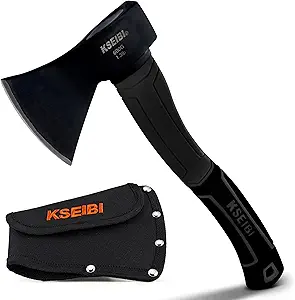 |
| Highest Rated A top-rated pick with lots of positive feedback | Fiskars X14 14" Universal Hatchet |  |
| Most Popular A crowd favorite that many people choose with confidence | Estwing Sportsman’s Axe 14" Leather Grip Hatchet (E24A) |  |
| Best Seller A high-volume bestseller chosen again and again | Fiskars X11 17" Splitting Axe |  |
Gerber Freescape 17.5" Hatchet with Sheath

| Blade Material | Alloy Steel |
|---|---|
| Handle Material | Nylon |
| Head Type | Hatchet |
| Blade Edge | Single sharp edge |
The Gerber Freescape hatchet is a compact, forged-steel hatchet made for campsite chores and light wood splitting. Its low-friction, PTFE-coated alloy steel head and single sharp edge make it efficient at chopping kindling, trimming small logs, and driving tent stakes. The full-tang construction and composite handle with a soft-touch overmold give a secure grip and absorb shock during repeated swings, which helps reduce hand fatigue. A slim sheath stores on the handle for safer transport and protects the blade when not in use. Practical strengths are its balance of weight and control for one-handed work and a hardened blade that slices deeper than many backpacking axes. Important limitations are that it is aimed at lighter splitting and bushcraft tasks rather than heavy timber felling or splitting large rounds; users needing high-volume or heavy-duty splitting will want a larger splitting axe or maul.
Best for: Buyers who want a well-balanced, durable hatchet for campsite use, making kindling, light splitting, and general bushcraft chores with good control and portability.
Less Ideal for: People who need to split large logs or want a dedicated high-leverage splitting tool for frequent heavy-duty work should choose a larger splitting axe or maul instead.
- Forged alloy-steel head with low-friction coating for deeper, cleaner chops
- Full-tang construction for durability and reliable striking strength
- Composite handle with soft-touch overmold improves grip and reduces shock
- Includes slim sheath that stores on the handle for safe transport and blade protection
- Designed for light to moderate splitting rather than heavy-duty log splitting
- Relatively short overall length limits leverage compared with full-size axes
Verdict: A durable, well-balanced hatchet that delivers efficient chopping and portability for campsite splitting and general bushcraft tasks.
Gränsfors Bruks Splitting Hatchet with Sheath

| Head Weight | 2 pounds |
|---|---|
| Blade Material | Carbon Steel |
| Handle Material | Hickory Wood |
| Included Components | Sheath |
| Head Type | Hatchet |
This Gränsfors Bruks splitting hatchet is built for performance-minded users who want a durable, traditionally made tool for splitting kindling and smaller logs. The convex carbon-steel blade and 2 lb head deliver controlled, deep cuts while the 19-inch hickory handle provides good leverage and shock absorption. It comes with a grain-leather sheath and steel collars that secure the head to the handle, reflecting a focus on long-term durability and safe storage. In practice the hatchet excels at splitting rounds too large for a knife but too small for a full maul, and its weight and balance make repeated swings less tiring than heavier axes. Limitations are its single-purpose design and shorter handle, which mean it is not a replacement for a splitting maul on large rounds and offers less reach and momentum. Buyers should expect to maintain the carbon steel edge periodically to preserve cutting performance.
Best for: Gardeners and homeowners who value a well-crafted, high-performance hatchet for splitting kindling and small to medium firewood and who prefer a traditional, durable tool they can maintain.
Less Ideal for: People who regularly split large diameter logs or need maximum reach and power should choose a heavier splitting maul or full-size axe instead.
- Convex carbon steel blade for efficient, long-lasting splitting performance
- 19-inch hickory handle provides solid leverage and natural shock absorption
- Balanced 2 lb head suited to controlled, repeatable swings for kindling and small logs
- Includes grain-leather sheath and steel collars for safe storage and head retention
- Shorter handle and lighter head limit effectiveness on large rounds compared with a splitting maul
- Carbon steel blade requires regular maintenance to prevent rust and preserve the edge
Verdict: Choose this hatchet if you want a durable, high-performance splitting tool optimized for kindling and small to medium firewood.
Fiskars 14" Hatchet with Sheath

| Head Type | Hatchet |
|---|---|
| Blade Material | Alloy Steel |
| Handle Material | Steel,Wood |
| Blade Edge | Plain |
| Manufacturer Warranty Description | Lifetime warranty |
The Fiskars 14" hatchet is built for outdoor use and everyday kindling work, combining a sharpened alloy-steel blade with a lightweight, shock-absorbing handle. It is typically used to split small to medium logs and produce kindling for campfires or home woodstoves. Notable features include a proprietary blade grind and low-friction coating that help the blade penetrate cleanly and reduce sticking, plus a molded head design that resists loosening from repeated strikes. The handle is engineered to absorb shock and resist overstrike damage, which reduces hand strain during longer chopping sessions. Practical benefits are faster, cleaner cuts and a durable construction that holds up to repeated outdoor use. Important limitations are that its 14-inch length and hatchet head are intended for smaller pieces of wood, so it is not a substitute for a full-size felling axe when tackling large logs or heavy-duty splitting tasks.
Best for: Buyers who want a reliable, easy-to-carry hatchet for chopping kindling, campsite tasks, and routine woodstove prep with emphasis on clean cuts and reduced hand shock.
Less Ideal for: Woodcutters who need a tool for felling trees or splitting large logs should choose a full-size axe or dedicated splitting maul instead.
- Sharp alloy-steel blade with proprietary grind for deeper, cleaner cuts
- Low-friction blade coating reduces sticking in wood
- Molded head resists loosening and overstrike breakage
- Shock-absorbing Dura frame handle reduces hand strain during use
- Designed for small- to medium-sized wood so not suitable for heavy-duty felling or large log splitting
- Handle material mix of steel and wood may feel different than full fiberglass or single-material handles
Verdict: A compact, durable hatchet that makes producing kindling and handling small- to medium-size wood faster and easier thanks to a sharp blade and shock-absorbing handle.
KSEIBI 14-inch Camping Hatchet with Forged Steel Blade

| Blade Material | Forged Steel |
|---|---|
| Handle Material | Fiberglass |
| Head Weight | 600 g |
| Blade Length | 4 inches |
This KSEIBI 14-inch camping hatchet is a straightforward, utilitarian tool for campsite wood prep and light log splitting. The forged steel, heat-treated 600 g head delivers solid chopping power for kindling and small- to medium-sized logs, while the 4-inch blade profile is easy to resharpen and holds an edge during regular use. The fiberglass handle with rubberized inserts offers a secure, anti-slip grip and helps absorb shock so longer chopping sessions feel less jarring. At 14 inches overall it balances power and control, letting you swing quickly without excessive fatigue. The hatchet is best used for splitting kindling, chopping firewood, and general campsite tasks rather than heavy felling or large-log splitting. It performs reliably and is low maintenance, but heavier-duty splitting mauls will outperform it on big logs. Safety information is provided and the head-to-handle joint is described as secure, though routine inspections and proper sharpening are still necessary for safe, long-term use.
Best for: Buyers who want a dependable, no-nonsense camp hatchet for preparing kindling, small firewood, and general outdoor chores and who prioritize a lightweight, easy-to-handle tool.
Less Ideal for: People who need a tool for splitting large logs, professional forestry work, or heavy-duty timber cutting should choose a larger splitting maul or full-size axe instead.
- Forged, heat-treated 600 g steel head for durable chopping performance
- Fiberglass handle with rubber inserts reduces shock and improves grip
- Compact 14-inch length balances swing speed and control for campsite use
- 4-inch blade that is easy to resharpen and maintain
- Not intended for heavy-duty felling or splitting very large logs
Verdict: A well-balanced, shock-reducing 14-inch hatchet that reliably handles kindling and light campsite splitting for practical outdoor users.
Fiskars X14 14" Universal Hatchet

| Handle Material | Alloy Steel |
|---|---|
| Blade Material | Forged Steel |
| Included Components | Sheath |
| Head Type | Hatchet |
The Fiskars X14 is a balanced 14-inch universal hatchet intended for chopping kindling, limbing small branches, and light felling tasks where single-handed control matters. It pairs a double-hardened forged steel blade with a low-friction coating to cut through fresh, resinous wood cleanly and resist surface corrosion. The FiberComp handle is lightweight but engineered to absorb shock and protect the head from overstrike damage, while the ergonomically curved grip and SoftGrip texture help keep your wrist comfortable during repeated swings. An insert-molded head reduces the risk of handle separation and loosening over time, and the included sheath keeps the blade protected in storage or transport. The tool is not meant for heavy log splitting or prolonged two-handed chopping; users who overwork it on large firewood may find the blade or handle strained. For regular garden clearing, campsite tasks, and producing kindling, the X14 offers a reliable, low-maintenance option built for dependable everyday use.
Best for: A buyer who prioritizes a dependable, low-maintenance tool for routine garden work, campsite tasks, and making kindling will appreciate this hatchet's durability and consistent performance.
Less Ideal for: People who need an axe for splitting large logs, prolonged two-handed chopping, or heavy-duty forestry work should choose a dedicated splitting axe or a longer-handled felling axe instead.
- Balanced, single-handed design for controlled swings and accurate chopping
- Double-hardened forged steel blade with low-friction coating for cleaner cuts and rust resistance
- FiberComp handle that absorbs shock and reduces overstrike damage
- Insert-molded head construction to minimize loosening and handle separation
- Included sheath for safe storage and transport
- Not intended for heavy log splitting or sustained two-handed chopping
- Handle material listed as alloy steel in some specs which may confuse buyers expecting composite
Verdict: A dependable, well-balanced hatchet built for clean cuts and long-term reliability in routine garden and campsite tasks.
Estwing Sportsman’s Axe 14" Leather Grip Hatchet (E24A)

| Blade Material | Alloy Steel |
|---|---|
| Handle Material | Leather |
| Head Type | Hatchet |
| Blade Length | 3.25 inches |
The Estwing Sportsman’s Axe is a compact, one-piece forged hatchet built for rugged outdoor use. Its solid alloy-steel head and handle are forged as a single piece, which removes weak joints and gives the tool excellent balance and long-term durability. Typical uses include chopping small limbs, splitting kindling, driving tent stakes and light camp clearing; the 3.25-inch cutting edge handles those chores efficiently while the leather-sanded grip helps control swings and limits hand fatigue. The included ballistic nylon sheath with belt loop keeps the edge covered for transport and gives quick access at camp. Because the axe is relatively short and light, it is easy to carry in a pack or on a belt but will not replace a full-size felling axe for large logs or prolonged heavy splitting. Also the leather handle requires some care to avoid weather degradation compared with synthetic grips. For bushcraft tasks that need a durable, easy-to-carry hatchet that stays sharp and balanced, this model is a practical choice.
Best for: A practical bushcrafter or camper who values a durable, easy-to-carry hatchet for campsite tasks, firewood prep, and trail use and prefers tools built to last rather than lightweight novelty gear.
Less Ideal for: Not the best choice for users who need a dedicated felling axe or who will be splitting large quantities of thick firewood as their primary task.
- One-piece forged alloy-steel construction for strength and consistent balance
- Compact 14-inch length makes it easy to carry and maneuver in tight workspaces
- Hand-sanded leather grip improves comfort and control during extended use
- Ballistic nylon sheath with belt loop provides safe, convenient carry
- Short handle and small blade limit effectiveness on large-diameter logs or heavy-duty splitting
- Leather grip needs occasional maintenance to preserve durability in wet conditions
Verdict: Buy this if you want a stout, one-piece forged hatchet that balances durability and portability for bushcraft and campsite chores.
Fiskars X11 17" Splitting Axe

| Blade Material | Forged Steel |
|---|---|
| Handle Material | Wood |
| Head Type | Splitting Wedge |
| Included Components | Sheath |
The Fiskars X11 17" Splitting Axe is a compact, well-balanced tool built to split small logs and produce kindling with fewer swings. It pairs a wedge-shaped forged steel head and advanced blade geometry to increase penetration and make the blade easier to remove from wood. The lightweight FiberComp handle provides shock absorption and an insert-molded head design that prevents loosening, so the axe feels secure during repetitive swings and holds up to outdoor use. Typical uses include splitting camp firewood, trail clearing, and backyard kindling preparation where portability and one-handed control matter. The included sheath protects the blade in transport. Limitations are inherent to its size: it is optimized for small to medium rounds and not intended for heavy-duty felling or splitting large logs, and users expecting a traditional wooden handle may notice the composite feel. For buyers wanting a reliable, low-maintenance hatchet for campsite and light yard work, this model offers a compelling combination of power and durability.
Best for: Buyers who want a portable, durable splitting axe for campsite use, kindling prep, and light yard work and who prioritize efficiency and low maintenance over heavy-duty splitting.
Less Ideal for: People who need an axe for regularly splitting large rounds, felling trees, or heavy commercial use should choose a larger splitting maul or full-size axe instead.
- Wedge-shaped forged steel head and advanced blade geometry for efficient one-strike splits
- FiberComp composite handle absorbs shock and resists weathering
- Insert-molded head design prevents the head from loosening over time
- Lightweight, well-balanced design improves swing speed and control
- Includes protective sheath for safe transport and storage
- 17-inch length and lighter head limit effectiveness on large logs or heavy-duty splitting
- Composite handle lacks the traditional feel preferred by some users
Verdict: A rugged, lightweight 17-inch splitting axe that gives campers and homeowners efficient, low-maintenance splitting power for small logs and kindling.
Choosing the Right Hatchet for Wood Splitting: Key Factors to Consider
Head Shape and Bevel Profile
The head geometry determines how a hatchet splits wood. A slightly wedge-shaped head with a moderate bevel angle forces fibers apart more effectively, producing cleaner splits on cocked or seasoned pieces. Too thin a profile may cut rather than split and can get jammed; too steep a wedge will require more effort and can bounce on impact.
When evaluating head shape, consider the typical wood you split. Softwoods respond differently than dense hardwoods, and small-diameter pieces benefit from a narrower, sharper edge while broader wedges work better for thicker rounds.
Handle Material and Attachment
Handle composition affects shock absorption, durability, and safety. Traditional hickory handles absorb vibration well and are easy to replace, but they can split or swell if left exposed to moisture. Composite or fiberglass handles resist weathering and are less likely to crack, but they vary in how they transmit impact to your hands.
Equally important is how the head is secured. A tight mechanical fit with a visible wedge or a molded connection reduces the chance of the head loosening. Inspect the attachment method for redundancy; a glued and wedged wooden fit or a securely molded head on a synthetic handle are both acceptable when executed properly.
Weight, Balance, and Swing Dynamics
A hatchet that feels balanced reduces fatigue and increases control. Heavier heads provide more splitting momentum but increase the energy needed to swing repeatedly. Lighter hatchets are easier to wield for long sessions but may require more swings.
Balance is about where the center of mass sits relative to the handle. A head-heavy tool gives stronger strikes but can be harder to control precisely, which matters when splitting small pieces or working near your hands. Choose a balance that matches how you intend to use the tool: short, controlled strikes or forceful splitting swings.
Blade Steel, Hardness, and Edge Retention
The alloy and heat treatment used for the blade affect how long it keeps an edge and how resistant it is to chipping. Harder steels hold an edge longer but can be more brittle; softer steels are tougher but require more frequent sharpening. For frequent splitting, a balance that leans toward harder, well-tempered steel is useful so you spend less time maintaining the edge.
Consider how easy the steel is to sharpen in the field. Some steels accept quick re-profiling with a file or stone, which is handy for outdoor use.
Handle Length and Control
Hatchets come in a range of lengths and the handle plays a central role in control. Shorter handles offer precise control for kindling and campsite tasks, while slightly longer handles increase leverage for splitting thicker rounds. Excessively long handles negate the hatchet's portability and make close work awkward.
Think about storage and transport. If you will carry the hatchet in a pack, a compact length is preferable. If most work is in a yard making lot-sized splits, a longer handle can reduce the number of strikes required.
Corrosion Resistance and Maintenance
Exposure to moisture and sap can accelerate rust and degrade wooden handles. Protective finishes, stainless or coated heads, and sealed handle materials extend service life. Tools with simple maintenance needs save time; for example, a coated head that resists surface rust needs only occasional oiling, and synthetic handles only need a wipe-down.
Also consider how easy the tool is to service. Replaceable handles or straightforward sharpening profiles make long-term ownership less costly and more practical.
Best Hatchet Profiles for Different Wood Types
Different wood species and moisture levels respond differently to hatchet profiles. For soft, knotty wood you want a profile that bites cleanly but does not mushroom on impact. For dry, dense hardwoods a slightly blunter wedge reduces the chance of the blade pinching and allows the head to force the split without immediate dulling.
For mixed-use gardeners who split both seasoned kindling and green scraps, a compromise profile with a medium bevel angle and a slightly convex grind usually performs well across the board.
- Narrow, sharp bevels: good for thin sticks and precise work.
- Moderate wedge angles: best for general-purpose splitting.
- Blunt wedges: help on tough, dense pieces but need heavier swings.
Field Sharpening and Edge Care
Keeping a splitting hatchet sharp makes each swing more effective and safer. Carry a compact file or sharpening stone that matches the edge geometry. A few quick strokes on a coarse stone before a splitting session can restore bite and reduce bounce.
After work, wipe the blade clean and apply a thin layer of oil if the metal is uncoated. For wooden handles, a light coat of linseed oil once a season prevents drying and splitting.
- Bring a coarse file for reshaping and a finer stone for honing.
- Dry the tool and oil exposed metal to prevent rust.
Safe Splitting Technique and Work Setup
Proper technique reduces injury and tool damage. Position small logs on a stable chopping block rather than the ground to avoid kickback and blunt damage to the blade. Keep a relaxed grip and let the tool's weight do most of the work rather than forcing the swing with your arms.
Wear eye protection and sturdy footwear. When splitting near other people, maintain a clear swing zone and communicate before starting. Inspect the wood for hidden nails or wires that can damage the head.
- Use a stable, elevated chopping block for control.
- Stand with a balanced stance and swing in a predictable arc.
- Check wood for foreign objects before striking.
Transport, Storage, and Sheath Options
A sheath protects the edge and reduces accidental cuts when carrying or storing a hatchet. Look for sheaths that cover the cutting edge completely and attach securely to a belt or pack. Synthetic sheaths tend to be weather resistant while leather sheaths dress well and can be repaired.
For storage, keep the hatchet in a dry place away from temperature extremes. If the tool will be kept in a moist shed, a light coat of oil on the head and periodic inspection of the handle will prevent degradation.
- Choose a sheath that fully covers the blade and secures to carry gear.
- Store in a dry area and check the handle attachment periodically.
When a Hatchet Is the Right Tool
Hatchets are ideal for small to moderate splitting tasks: preparing kindling, trimming small limbs, and light campsite duties. They balance portability with enough force to split rounds up to a few inches in diameter efficiently.
If you frequently work on larger logs or need to split many big pieces, a larger splitting maul or dedicated splitting axe will be more efficient. Use a hatchet when you need control, quick portability, or are working with small-diameter wood.
- Best for kindling and small rounds under a few inches.
- Choose a hatchet when portability and control matter more than brute force.
How We Chose the Best Hatchet for Wood Splitting
We focused on features that directly affect splitting performance, durability, and safety in everyday garden and outdoor use. Key evaluation points included head geometry and bevel profile because these determine how cleanly a hatchet enters and forces splits in small logs. Handle material and attachment method were assessed to judge shock absorption, long-term wear, and the risk of the head loosening. Balance and swing weight were weighed to ensure the tool is efficient without excessive user fatigue. Edge hardness and toughening were considered to estimate how well the blade keeps a sharp split edge over repeated use. Comfort and ergonomics, including grip texture and overall length, were included because better handling reduces fatigue and improves control. Finally, we checked corrosion resistance and basic maintenance needs for tools kept outdoors or used in damp conditions. We excluded multiuse hatchets designed primarily for chopping or camping tasks where splitting is incidental, and we did not consider tools intended for heavy felling or large log splitting. The list favors hatchets whose design and specifications match real-world splitting tasks under the constraints of small to medium wood and typical backyard or campsite needs.
FAQ
What size hatchet is best for splitting kindling?
A compact hatchet with a handle length around 12 to 16 inches is often ideal for kindling and small rounds. It gives good control and portability without sacrificing too much leverage for splitting.
Can I use a camping hatchet for backyard splitting?
Often yes for small tasks, but many camping hatchets prioritize chopping or multitasking features rather than splitting geometry. For frequent backyard splitting, choose a hatchet designed with a splitting wedge profile and a durable handle.
How do I know if a hatchet head is loose?
A loose head will shift or rotate on the handle during a swing or produce a rattling sound when tapped. Regularly inspect the head-to-handle junction and re-wedge or replace the handle if there is movement.
Should I oil the hatchet head after use?
Yes, wiping the head clean and applying a light coat of oil helps prevent rust, especially if the metal is uncoated. Do this more frequently in damp environments.
How sharp should a splitting hatchet be?
A splitting hatchet should be sharp enough to bite into the wood but not razor thin. A modest, robust edge that resists chipping and retains a bevel ideal for forcing splits is preferable to an extremely acute cutting edge.
Final Verdict
Prioritize head geometry and a secure handle when choosing a hatchet for wood splitting. Those two factors determine how effectively the tool converts each swing into a split and how long the tool lasts under regular use. Balance, weight, and edge steel are secondary but important choices that determine comfort, required maintenance, and long-term performance. Select a hatchet whose length and profile match the wood sizes you split most often, and maintain the edge and handle to keep the tool safe and reliable. With those priorities in mind you can pick a practical, durable hatchet that makes kindling and small log work faster and more predictable.
