

Note: This article contains affiliate links. If you click on these links and make a purchase, I may earn a small commission at no extra cost to you. This helps support my research and content. Read my full affiliate disclosure here.
If you rely on a wood stove, campfire, or fireplace, the right firewood hatchet makes short work of kindling, limb clean-up, and small-log splitting. You want an axe that bites cleanly, feels balanced in one hand, and stays safe through repeated use. This guide covers seven shortlisted firewood hatchets that perform well in typical yard and campsite tasks. We evaluated each on chopping geometry, head steel and heat treatment, handle strength and comfort, and how easy the tool is to maintain. Read on to understand the practical tradeoffs and which features matter most for the tasks you do most often.
Top Picks at a Glance
| Best Overall The best all-around choice for most situations | Fiskars 14" Hatchet with Sheath |  |
| Best Quality Built to a higher standard if you want something more solid | Estwing Sportsman’s Axe 14" Leather Grip Hatchet (E24A) |  |
| Best Value The sweet spot between price and what you get | KSEIBI 274150 Camping Hatchet Axe (Forged Steel, Fiberglass Handle) | 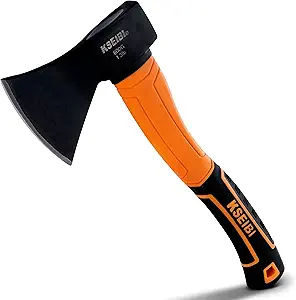 |
| Best Budget The cheapest option that still gets the job done reliably | Coleman Camp Axe with Drop-Forged Steel Head and Non-Slip Grip |  |
| Highest Rated A top-rated pick with lots of positive feedback | Fiskars X14 14" Universal Hatchet |  |
| Most Popular A crowd favorite that many people choose with confidence | Fiskars X7 14" Hatchet |  |
| Best Seller A high-volume bestseller chosen again and again | Fiskars X13 Ultralight 13" Hiking Axe |  |
Fiskars 14" Hatchet with Sheath

| Head Type | Hatchet |
|---|---|
| Blade Material | Alloy Steel |
| Handle Material | Steel,Wood |
| Blade Edge | Plain |
| Manufacturer Warranty Description | Lifetime warranty |
The Fiskars 14" hatchet is built for outdoor use and everyday kindling work, combining a sharpened alloy-steel blade with a lightweight, shock-absorbing handle. It is typically used to split small to medium logs and produce kindling for campfires or home woodstoves. Notable features include a proprietary blade grind and low-friction coating that help the blade penetrate cleanly and reduce sticking, plus a molded head design that resists loosening from repeated strikes. The handle is engineered to absorb shock and resist overstrike damage, which reduces hand strain during longer chopping sessions. Practical benefits are faster, cleaner cuts and a durable construction that holds up to repeated outdoor use. Important limitations are that its 14-inch length and hatchet head are intended for smaller pieces of wood, so it is not a substitute for a full-size felling axe when tackling large logs or heavy-duty splitting tasks.
Best for: Buyers who want a reliable, easy-to-carry hatchet for chopping kindling, campsite tasks, and routine woodstove prep with emphasis on clean cuts and reduced hand shock.
Less Ideal for: Woodcutters who need a tool for felling trees or splitting large logs should choose a full-size axe or dedicated splitting maul instead.
- Sharp alloy-steel blade with proprietary grind for deeper, cleaner cuts
- Low-friction blade coating reduces sticking in wood
- Molded head resists loosening and overstrike breakage
- Shock-absorbing Dura frame handle reduces hand strain during use
- Designed for small- to medium-sized wood so not suitable for heavy-duty felling or large log splitting
- Handle material mix of steel and wood may feel different than full fiberglass or single-material handles
Verdict: A compact, durable hatchet that makes producing kindling and handling small- to medium-size wood faster and easier thanks to a sharp blade and shock-absorbing handle.
Estwing Sportsman’s Axe 14" Leather Grip Hatchet (E24A)

| Blade Material | Alloy Steel |
|---|---|
| Handle Material | Leather |
| Head Type | Hatchet |
| Blade Length | 3.25 inches |
The Estwing Sportsman’s Axe is a compact, one-piece forged hatchet built for rugged outdoor use. Its solid alloy-steel head and handle are forged as a single piece, which removes weak joints and gives the tool excellent balance and long-term durability. Typical uses include chopping small limbs, splitting kindling, driving tent stakes and light camp clearing; the 3.25-inch cutting edge handles those chores efficiently while the leather-sanded grip helps control swings and limits hand fatigue. The included ballistic nylon sheath with belt loop keeps the edge covered for transport and gives quick access at camp. Because the axe is relatively short and light, it is easy to carry in a pack or on a belt but will not replace a full-size felling axe for large logs or prolonged heavy splitting. Also the leather handle requires some care to avoid weather degradation compared with synthetic grips. For bushcraft tasks that need a durable, easy-to-carry hatchet that stays sharp and balanced, this model is a practical choice.
Best for: A practical bushcrafter or camper who values a durable, easy-to-carry hatchet for campsite tasks, firewood prep, and trail use and prefers tools built to last rather than lightweight novelty gear.
Less Ideal for: Not the best choice for users who need a dedicated felling axe or who will be splitting large quantities of thick firewood as their primary task.
- One-piece forged alloy-steel construction for strength and consistent balance
- Compact 14-inch length makes it easy to carry and maneuver in tight workspaces
- Hand-sanded leather grip improves comfort and control during extended use
- Ballistic nylon sheath with belt loop provides safe, convenient carry
- Short handle and small blade limit effectiveness on large-diameter logs or heavy-duty splitting
- Leather grip needs occasional maintenance to preserve durability in wet conditions
Verdict: Buy this if you want a stout, one-piece forged hatchet that balances durability and portability for bushcraft and campsite chores.
KSEIBI 274150 Camping Hatchet Axe (Forged Steel, Fiberglass Handle)

| Blade Material | Forged Steel |
|---|---|
| Handle Material | Fiberglass |
| Head Weight | 600 g |
| Blade Length | 4.13 inches |
The KSEIBI 274150 is a small camping hatchet built for routine campsite tasks: splitting kindling, chopping small to medium logs, and other general outdoor work. It pairs a 600 g forged steel head with an anti-corrosion coating and a fiberglass handle that includes rubberized inserts for grip and shock absorption. The weight and balance make it easy to swing quickly, which helps cut deeper with each strike and reduces fatigue during repeated use. It ships moderately sharp and will benefit from a tune-up if you need maximum cutting performance. A molded hole in the handle offers simple hanging or lanyard attachment and the package includes a carrying sheath for safe storage. Limitations are its size and head weight, which are optimized for portability and kindling rather than splitting very large or frozen rounds; heavy-duty log splitting will require a larger splitting axe or a maul. The hatchet’s throwing suitability and ergonomic grip make it a versatile camp tool for campers who value a durable, lightweight axe for everyday campsite chores.
Best for: Buyers who want a compact, reliable camp axe for splitting kindling, campsite chores, and occasional survival tasks and who prioritize portability and low fatigue during repeated use.
Less Ideal for: Anyone who plans to split large, heavy, or frozen logs regularly should choose a heavier splitting axe or maul instead.
- Forged steel 600 g head with anticorrosive coating for durable cutting performance
- Fiberglass handle with rubber inserts that reduces shock and improves grip
- Well-balanced design that increases swing speed and efficiency for kindling and small logs
- Includes carrying sheath and a hanging hole for easy storage and transport
- Moderately sharp out of the box for general use but may need additional sharpening for optimal performance
- Head weight and compact length are not suited for splitting large or very dense logs
Verdict: A lightweight, well-balanced camping hatchet that delivers durable, efficient performance for splitting kindling and everyday camp tasks.
Coleman Camp Axe with Drop-Forged Steel Head and Non-Slip Grip

| Recommended Uses For Product | Camping |
|---|---|
| Blade Material | Alloy Steel |
| Handle Material | Steel, Rubber |
| Head Type | Hatchet |
The Coleman Camp Axe is a small, no-frills hatchet designed for campsite and small wood-splitting tasks. It pairs a drop-forged carbon steel head with a forged steel handle and a non-slip rubber grip, so it feels solid for chopping kindling, splitting small logs, and hammering or pulling tent stakes using the built-in notch. At roughly 13 inches total length with a 3-inch blade, it is easy to carry and maneuver, which makes it useful for backpacking or backyard chores where large felling axes would be overkill. The alloy steel blade sharpens easily and the sturdy handle construction resists bending under typical outdoor use. Limitations are obvious for heavy-duty splitting or large rounds where a full-size splitting axe would be far more efficient and safer; this hatchet is aimed at lighter, shorter-duration work. For buyers prioritizing value and basic campsite utility, it delivers dependable performance in a compact package.
Best for: Buyers looking for an affordable, compact axe for campsite tasks, kindling and occasional backyard use who value portability and straightforward, reliable performance.
Less Ideal for: People who need to split large rounds, do extended heavy logging, or require a long-handled splitting maul should choose a larger specialized splitting tool instead.
- Drop-forged carbon steel head offers solid edge retention for splitting kindling
- Forged steel handle with rubber non-slip grip provides secure control during use
- Integrated stake-puller notch adds campsite utility beyond chopping
- Compact size and light weight make it easy to carry and maneuver
- Too small and short-handed for splitting large logs or heavy-duty work
Verdict: A reliable, low-cost compact hatchet that handles campsite splitting and stake removal well for buyers on a budget.
Fiskars X14 14" Universal Hatchet

| Handle Material | Alloy Steel |
|---|---|
| Blade Material | Forged Steel |
| Included Components | Sheath |
| Head Type | Hatchet |
The Fiskars X14 is a balanced 14-inch universal hatchet intended for chopping kindling, limbing small branches, and light felling tasks where single-handed control matters. It pairs a double-hardened forged steel blade with a low-friction coating to cut through fresh, resinous wood cleanly and resist surface corrosion. The FiberComp handle is lightweight but engineered to absorb shock and protect the head from overstrike damage, while the ergonomically curved grip and SoftGrip texture help keep your wrist comfortable during repeated swings. An insert-molded head reduces the risk of handle separation and loosening over time, and the included sheath keeps the blade protected in storage or transport. The tool is not meant for heavy log splitting or prolonged two-handed chopping; users who overwork it on large firewood may find the blade or handle strained. For regular garden clearing, campsite tasks, and producing kindling, the X14 offers a reliable, low-maintenance option built for dependable everyday use.
Best for: A buyer who prioritizes a dependable, low-maintenance tool for routine garden work, campsite tasks, and making kindling will appreciate this hatchet's durability and consistent performance.
Less Ideal for: People who need an axe for splitting large logs, prolonged two-handed chopping, or heavy-duty forestry work should choose a dedicated splitting axe or a longer-handled felling axe instead.
- Balanced, single-handed design for controlled swings and accurate chopping
- Double-hardened forged steel blade with low-friction coating for cleaner cuts and rust resistance
- FiberComp handle that absorbs shock and reduces overstrike damage
- Insert-molded head construction to minimize loosening and handle separation
- Included sheath for safe storage and transport
- Not intended for heavy log splitting or sustained two-handed chopping
- Handle material listed as alloy steel in some specs which may confuse buyers expecting composite
Verdict: A dependable, well-balanced hatchet built for clean cuts and long-term reliability in routine garden and campsite tasks.
Fiskars X7 14" Hatchet

| Blade Material | Forged Steel |
|---|---|
| Head Type | Hatchet |
| Included Components | Fiskars X7 Hatchet (14") |
| Manufacturer Warranty Description | Lifetime Manufacturer Limited |
The Fiskars X7 14" Hatchet is a lightweight, purpose-built tool for campfire prep and light wood chopping. Its forged-steel head uses a proprietary grind and low-friction coating to hold an edge longer and reduce blade sticking when splitting small to medium kindling. The hatchet’s weight distribution increases swing speed and perceived power, so one-handed or short two-handed chops feel efficient compared with a basic hatchet. The FiberComp insert-molded handle provides shock absorption and a non-slip grip that reduces fatigue during repeated use, and the included sheath makes it safe to carry. Practical limitations are its size and head weight, which make it unsuitable for heavy-duty felling or large log splitting. The wooden handle listed in some specs may need occasional care compared with full synthetic handles, but the build and edge geometry make this a dependable choice for campers and yard work where a compact, durable hatchet is preferred.
Best for: Buyers who prioritize a reliable, easy-to-use hatchet for camping, firewood prep, and light yard tasks and who look for proven performance rather than experimental features.
Less Ideal for: People needing a heavy-duty splitting axe or a tool for cutting large trees should choose a larger splitting axe or maul instead.
- Proprietary ground forged-steel blade that stays sharp longer and reduces sticking
- Balanced weight distribution for increased swing speed and chopping power
- Shock-absorbing FiberComp handle with non-slip grip reduces user fatigue
- Compact size with included sheath makes it easy to carry for camping and hikes
- Not designed for heavy felling or splitting large logs due to lighter head weight
- Some listings reference a wooden handle which may require more maintenance than full synthetic handles
Verdict: A compact, well-engineered hatchet that delivers durable sharpness and efficient chopping power for campers and outdoor enthusiasts.
Fiskars X13 Ultralight 13" Hiking Axe
| Blade Material | Forged Steel |
|---|---|
| Handle Material | Alloy Steel |
| Included Components | Belt Loop, Sheath |
| Head Type | Hatchet |
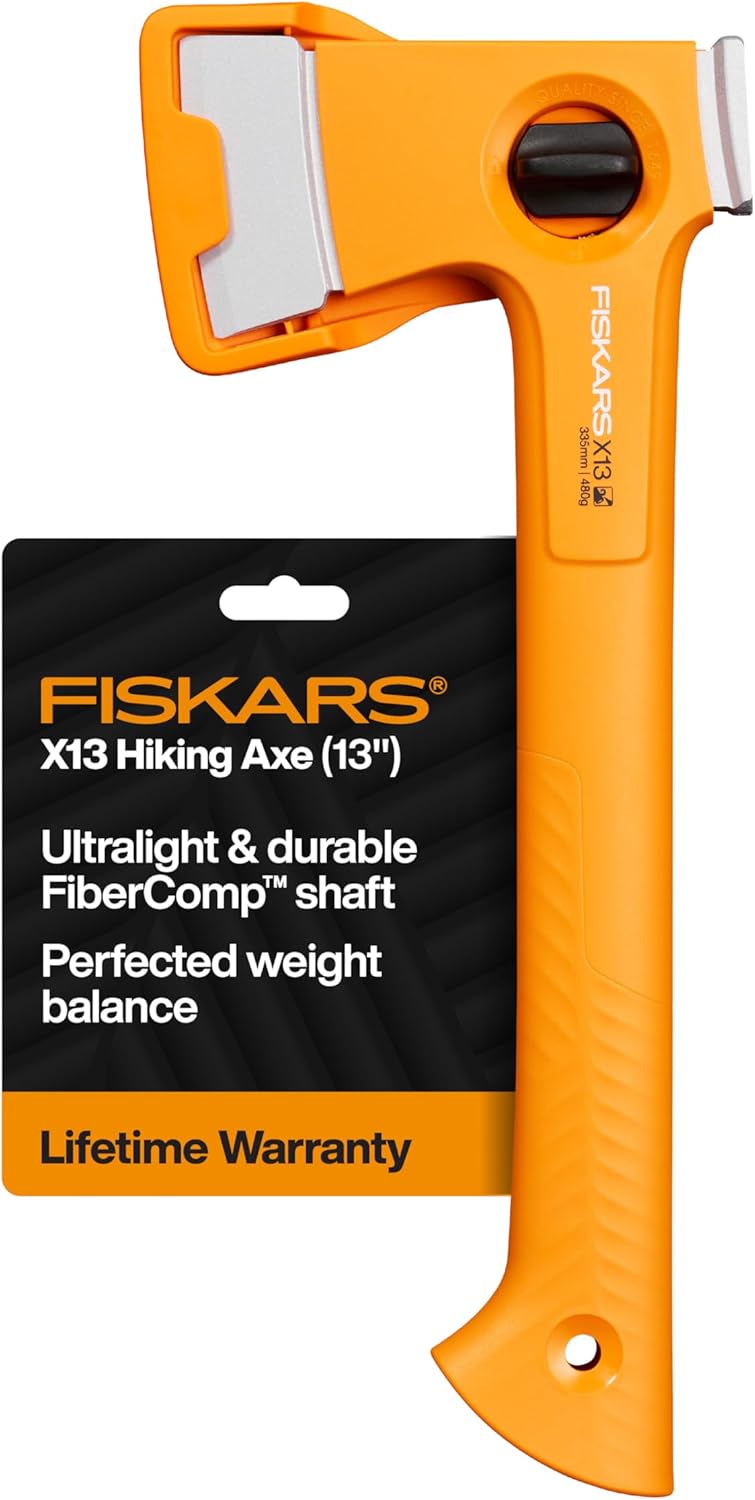
The Fiskars X13 Ultralight 13" hiking axe is built as a lightweight, easy-to-carry camp hatchet for hikers and backpackers who need a reliable tool for cutting kindling, light chopping and driving tent stakes. Its masterfully balanced, compact design makes single-handed swings comfortable and reduces fatigue on long hikes. The double-hardened forged steel blade and proprietary grinding give a sharp cutting edge that holds up for repeated use, while a low-friction coating helps the blade glide through wood and adds rust resistance. The bright orange FiberComp handle is strong, absorbs shock and is easy to spot if dropped, and the included locking sheath with belt loop keeps the blade covered in transit. Because it is an ultralight hatchet, it handles light campsite work very well but is not intended for heavy log splitting or felling large trees. Buyers should expect a tool optimized for portability and precision rather than maximum chopping power.
Best for: Buyers who prioritize a portable, dependable campsite hatchet for chopping kindling, light woodwork and driving tent stakes and who value ease of carry and reliable edge retention.
Less Ideal for: People who need a heavy splitting axe or a tool for sustained felling and large firewood processing should choose a larger, heavier-duty axe instead.
- Very lightweight, making it easy to carry on hikes and backpacking trips
- Double-hardened forged steel blade with proprietary grinding stays sharp and cuts cleanly
- Low-friction coating improves cutting performance and provides rust protection
- Bright FiberComp handle resists shock and is easy to locate outdoors
- Includes locking sheath with belt loop for safe transport
- Not suited for heavy-duty splitting or felling larger logs
Verdict: A lightweight, well-balanced hatchet that delivers sharp, reliable cutting for hikers and campers who need a portable everyday campsite tool.
Choosing the Right Firewood Hatchet: Key Factors to Consider
Head Shape and Bevel Angle
The head shape and bevel determine how the hatchet bites and whether it splits or pins. A slightly convex face with a moderate cheek helps push wood apart, reducing the chance of the blade sticking in a knot. A too-thin bevel will cut quickly but dull faster and may chip on hard grain.
For firewood work you will mostly split small rounds and trim limbs, so look for a head that balances a keen cutting edge with a robust shoulder. That balance makes everyday chopping efficient without demanding constant resharpening.
Steel Type and Heat Treatment
Steel composition and how it is heat treated control edge retention, toughness, and how the blade behaves on impact. Higher-carbon steels usually hold an edge longer but can be more brittle if not properly tempered. Alloy and treated steels can offer a good compromise between hardness and fracture resistance.
Consider how often you plan to sharpen and whether you will encounter nails, dirt, or frozen wood. Steel that takes a sharp, maintainable edge and tolerates occasional abuse will save time and reduce the risk of surprising chips during use.
Handle Material and Construction
Handles come in hardwood, fiberglass, and composite options. Hardwood handles absorb vibration naturally and are easy to replace, but they can break if subjected to lateral stresses. Fiberglass and composite handles resist weathering and lateral impact but transmit more vibration to the hand unless designed with damping features.
Pay attention to how the head is attached. A wedged, peened, or bolted head is safer than one that relies only on an interference fit. For frequent use you want a handle that resists loosening and feels secure in varied weather conditions.
Weight, Balance, and Swing Control
Hatchets should feel controlled in a one-handed swing while still carrying enough mass at the head to split wood efficiently. Too heavy and you tire quickly; too light and you need many more strikes. Balance between head and handle influences accuracy when trimming limbs or shaping kindling.
Try to match hatchet weight to the tasks you do most. For stove-side splitting and campsite tasks a lighter, better-balanced hatchet is easier to manipulate. For heavier splitting of larger rounds, a slightly heavier head helps, but consider whether a hatchet is the right tool for that work.
Edge Maintenance and Sharpening Ease
A hatchet that holds an edge poorly becomes a chore. Consider how easy the head geometry makes sharpening in the field. Simple bevels and steels that accept a clean burr are faster to reprofile with a stone or file.
Also think about corrosion resistance and whether protective coatings will affect future sharpening. Frequent users should favor steels that can be restored quickly with basic tools rather than those requiring specialized equipment.
Safety Features and Ergonomics
Small design details affect safe operation. A textured or contoured handle helps maintain grip when hands are sweaty or wet. A pronounced poll or heel can prevent your hand from sliding onto the handle during a swing.
Also consider sheath options and whether the hatchet comes with or accepts an aftermarket cover. A securely covered blade reduces the risk of accidents during transport and storage.
Using a Hatchet Safely Around the Wood Stove
When splitting kindling near a wood stove, clear a stable work surface and keep your feet and other feet-sized objects well back from the swing arc. Use controlled, downward chops aimed at the top third of the log and maintain a firm two-handed grip for added control when needed.
- Keep the cutting edge covered when not in use
- Wear eye protection against flying splinters
- Work on a solid chopping block to avoid glancing strikes
Maintaining Your Hatchet in the Field
Carry a small sharpening kit and a compact file for quick touch-ups. Remove sap, dirt, and moisture after use to slow corrosion and check the handle wedge for movement before each outing. If you use the hatchet in wet conditions, dry and lightly oil the head to protect the finish.
- Strop or hone the edge for fine work
- Use a coarse file for reshaping chips or burrs
- Check handle tightness and replace worn sheaths
When a Hatchet Is the Right Tool Versus an Axe or Maul
Hatchets excel at trimming branches, splitting small rounds into kindling, and campsite tasks where portability matters. They are not the best choice for splitting large, dense logs or felling mature trees. For heavy splitting you will be more efficient with a splitting maul or a full-sized axe designed for the load. Consider whether regular larger-split work would be better served by a different tool.
- Hatchet: kindling, limb trimming, portability
- Axe: felling and larger splits
- Maul: heavy splitting of large logs
Transport and Storage Best Practices
Store a dry, oiled hatchet in a ventilated area to avoid handle rot and head corrosion. Use a leather or synthetic sheath to protect the edge and reduce accidental cuts when reaching into a tool chest or pack. When transporting in a vehicle or backpack, secure the tool so it cannot shift and strike other gear.
- Secure blade cover before stowing
- Do not leave a wooden-handled hatchet in direct sun for long periods
- Check handle and head fit after extended transport
How We Chose the Best Firewood Hatchet
Our selection focused on tools built for routine firewood prep and yard work rather than heavy felling or decorative pieces. We prioritized head geometry and steel for efficient splitting and edge retention, handle materials and construction for shock control and durability, and balance and weight that let one-handed control for trimming and kindling. Evaluation criteria included blade profile and bevel angle for bite and splitting, steel composition and heat treatment for long-term edge life, handle material and attachment method for impact resistance and user safety, and overall balance for controlled swings. We also considered maintenance needs like ease of sharpening and rust resistance, and practical safety features such as a secure head wedge or well-set handle. We excluded oversized felling axes, splitting mauls, and novelty decorative hatchets not intended for regular firewood work. Tools that required significant aftermarket modification to be safe or useful were not considered. The final list emphasizes reliable construction, sensible ergonomics, and predictable performance in yard, campsite, and stove-side chores.
FAQ
What size hatchet is best for making kindling?
A hatchet with a head weight between about 0.9 and 1.5 pounds usually works well for kindling. It balances control and impact so you can split small rounds without tiring. Choose a comfortable handle length for safe, controlled swings.
Can I use a firewood hatchet to fell small trees?
You can use a hatchet to remove small saplings and branches, but it is not ideal for felling larger trees. Repeated use on trunks above the hatchet's design can overstress the head and handle. For larger trees use a full-sized axe or saw.
How often should I sharpen a hatchet used regularly?
Sharpening frequency depends on the wood and how hard you are pushing the tool. For regular stove-side use, a quick hone before each session and a more thorough file or stone every few weeks of use is common. Reshape the bevel if you notice chipping or poor bite.
Are fiberglass handles better than wood?
Fiberglass and composite handles resist weather and lateral impacts better than wood and rarely warp. Hardwood handles absorb vibration and are easier to replace in the field. The right choice depends on whether you prioritize shock damping and traditional feel or long-term weather resistance.
How should I inspect a hatchet before using it?
Check that the head is securely seated with no movement, inspect the edge for chips or cracks, and confirm the handle has no significant splits or soft spots. Tighten or replace loose wedges and fit a sheath before carrying to reduce accidental cuts.
Final Verdict
Prioritize the head shape and steel if you need regular, reliable splitting and trimming performance. Match handle material and weight to how and where you will use the tool to reduce fatigue and improve safety. Tradeoffs are inevitable: a harder steel holds an edge but can be less forgiving; a lighter hatchet is easier to control but may require more strikes. Choose a firewood hatchet that aligns with the size of wood you most often split, the conditions you work in, and how much maintenance you are willing to do. That approach delivers the most predictable everyday performance and keeps chores faster and safer.
