

Note: This article contains affiliate links. If you click on these links and make a purchase, I may earn a small commission at no extra cost to you. This helps support my research and content. Read my full affiliate disclosure here.
Growing herbs in small pots brings fresh flavor and convenience to windowsills, balconies, and tiny patios. The right herbs thrive in compact containers and still produce frequent harvests for cooking, tea, and garnishing. When you pick herbs suited to small pots you reduce maintenance, minimize root stress, and get better yields from limited soil. This guide covers five top herb options shortlisted for small-container culture and explains why they work in tight spaces. We evaluate light preferences, water tolerance, and pot-friendly growth habits so you can choose herbs that match your spot and routine. Read on for practical advice before the product list.
Top Picks at a Glance
| Best Overall The best all-around choice for most situations | AVERGO Indoor Herb Garden Kit with Five Seed Varieties and Wooden Planter |  |
| Best Value The sweet spot between price and what you get | Burpee Culinary Herb Garden Starter Kit — Cilantro, Dill, Parsley, Basil & Chives |  |
| Best Budget The cheapest option that still gets the job done reliably | Sunutri Seeds German Winter Thyme Seeds (Heirloom, Non-GMO) |  |
| Highest Rated A top-rated pick with lots of positive feedback | SPROUTIX Heirloom 10-Herb Seed Kit |  |
| Most Popular A crowd favorite that many people choose with confidence | Sereniseed Certified Organic Herb Seeds 10-Pack |  |
AVERGO Indoor Herb Garden Kit with Five Seed Varieties and Wooden Planter

| Indoor Outdoor Usage | Indoor |
|---|---|
| Other Special Features of the Product | Beginner Friendly, Family Activity, Five Herb Varieties, Plant Lover Gift |
| Sunlight Exposure | Partial Sun |
| Soil Type | Coconut coir soil |
| Moisture Needs | Moderate Watering |
This AVERGO indoor herb garden kit supplies everything needed to start a small kitchen herb patch from seed: five seed packets (basil, chives, dill, cilantro and parsley), coconut coir growing medium, five burlap pots, markers, a water tray, simple tools and a wooden planter. Typical use is straightforward for a windowsill or other bright indoor spot — expand the coir, fill pots, sow seeds, keep the medium evenly moist and provide direct light or a grow light after sprouting. The wooden planter and labeled pots make it tidy to keep multiple herbs separated and the included guide helps first-time growers with planting and watering steps. Practical benefits include fresh herbs for cooking, a contained setup that fits small spaces, and a kid-friendly activity for learning seed-to-harvest basics. Limitations are that the kit is focused on small-scale, indoor use only and uses burlap pots and coir rather than reusable plastic pots or potting mix, so you may need to transplant herbs to larger containers for long-term production.
Best for: Home cooks and casual gardeners who want an easy, compact way to grow common culinary herbs on a windowsill and prefer a ready-to-use kit that teaches seed-starting.
Less Ideal for: Experienced gardeners seeking long-term, high-yield herb production or people who want larger durable planters and professional potting mix.
- Complete kit includes seeds, coconut coir, burlap pots, markers, water tray and basic tools for instant setup
- Five common culinary herbs provided so you can harvest fresh basil, chives, dill, cilantro and parsley
- Wooden planter and labeled pots keep seedlings organized and look neat on a windowsill
- Beginner-friendly guide walks through simple steps for sowing, watering and light requirements
- Burlap pots and coir are intended for short-term use so larger transplants may be required for ongoing harvests
- Designed for indoor, small-scale gardening only and not suited for heavy, long-term production
Verdict: This ready-to-use indoor herb kit is the simplest way to start a windowsill herb garden and get fresh basil, chives, dill, cilantro and parsley with minimal fuss.
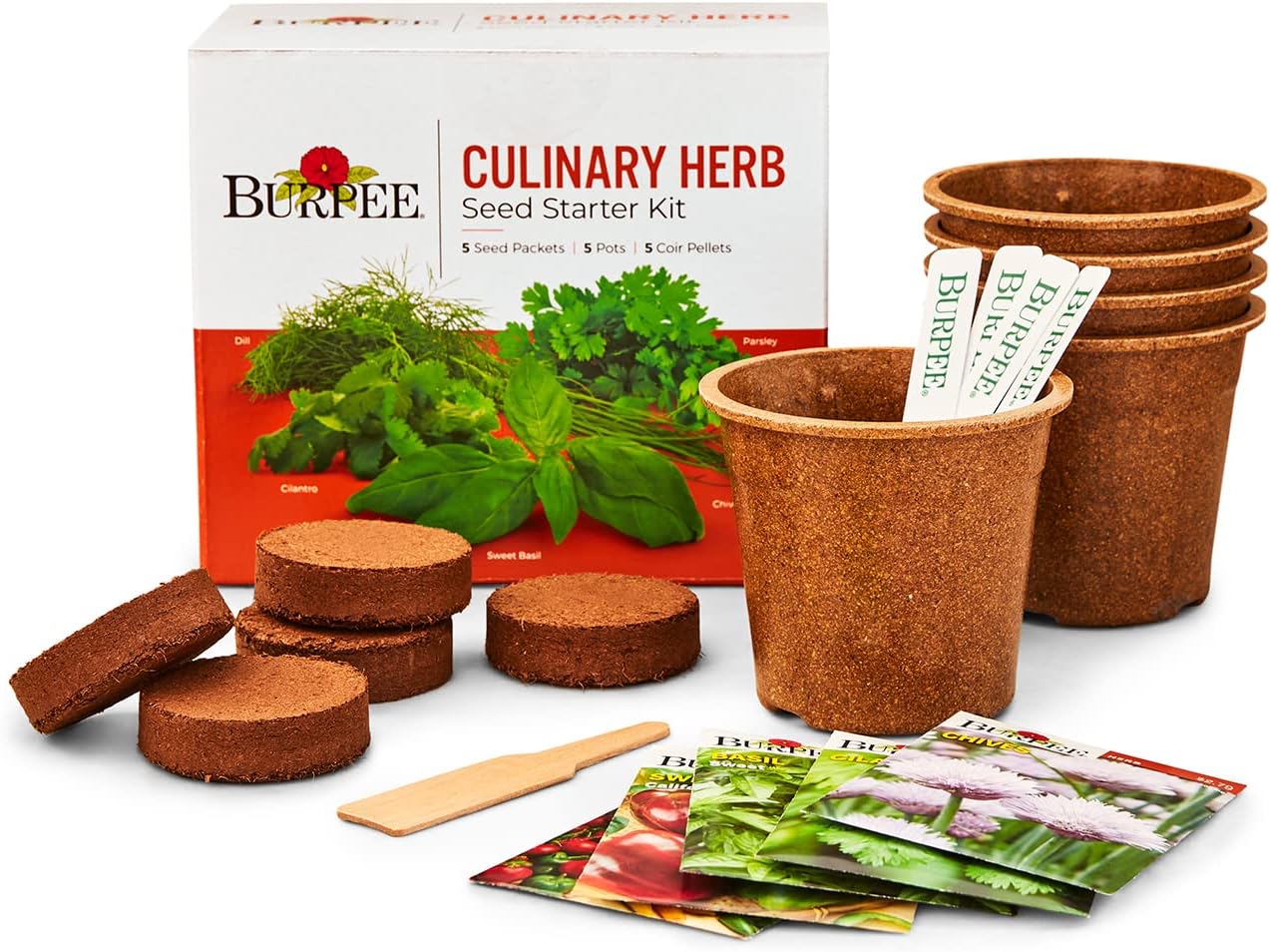
Burpee Culinary Herb Garden Starter Kit — Cilantro, Dill, Parsley, Basil & Chives
| Indoor Outdoor Usage | Indoor |
|---|---|
| Other Special Features of the Product | 5 Pots, 5 Coir Pellets & 5 Plant Markers, Certified Seeds, Cilantro, Dill, Parsley, Sweet Basil & Chives, Heirloom Seeds, Non-GMO Herb Seeds, Organic Seeds |
| Expected Blooming Period | Summer |
| Sunlight Exposure | Full Sun |
This Burpee Culinary Herb Garden Starter Kit provides everything you need to start five popular culinary herbs from seed: cilantro, dill, parsley, sweet basil and chives. Designed for indoor sowing, the kit bundles five biodegradable pots, five expanding coconut coir pellets and five plant markers so you can germinate seeds on a sunny windowsill and then either keep them in containers or transplant them outdoors. The included non-GMO, heirloom seed packets cover herbs that do well in small pots and frequent harvesting, making the kit practical for cooks who want fresh herbs without a large garden. Coconut coir pellets simplify initial watering and reduce mess compared with loose potting mix, and the biodegradable pots cut down on transplant shock. Limitations to expect are that packet quantities are modest so you may need to re-sow for continuous harvests and indoor light levels will determine how robust plants become, so a bright spot or supplemental light helps. For a low-effort way to get established herb plants for small-space cooking, this kit streamlines the process.
Best for: Ideal for cooks and small-space gardeners who want a ready-to-use indoor seed starter that gets common culinary herbs growing quickly on a windowsill or balcony.
Less Ideal for: Not the best choice for gardeners who need large yields, seasonal field planting, or commercial production where bulk seed quantities and heavier potting mixes are required.
- Complete kit: includes five seed packets, biodegradable pots, coir pellets, and plant markers for immediate seed starting
- Non-GMO heirloom seeds of widely used culinary herbs suited to container growing
- Coconut coir pellets expand with water for neat, low-mess seed starting
- Biodegradable pots reduce transplant shock and simplify moving seedlings to larger containers
- Seed packet quantities are small, so frequent re-sowing may be needed for continuous harvests
- Plants started indoors may require strong light or supplemental grow light to reach full vigor
Verdict: This all-in-one starter kit is the fastest way to get five kitchen-friendly herbs growing in small pots for fresh, homegrown flavor.
Sunutri Seeds German Winter Thyme Seeds (Heirloom, Non-GMO)

| Sunlight Exposure | Full Sun |
|---|---|
| Moisture Needs | Moderate Watering |
| Other Special Features of the Product | High Germination Rate |
| Material Features | GMO Free, Heirloom, Natural |
| Number of Pieces | 250 |
These Sunutri German Winter Thyme seeds are aimed at gardeners wanting a reliable, cold-hardy thyme for containers and small outdoor spaces. The tiny heirloom, non-GMO seeds are surface-sown on moist seed-starting mix and need bright light to germinate; once established the plants prefer full sun, fast-draining soil, and moderate watering. In containers or raised beds they form compact, fragrant stems that are easy to harvest fresh or dry for long-term use. Notable features include a high germination rate claim and winter hardiness, which make it practical for year-to-year return in milder cold conditions. Because the seeds are packaged in bulk (about 250 pieces), you can plant multiple pots or share extras, which helps stretch a tight gardening budget. Limitations: tiny seeds require careful surface sowing and patience during germination, and performance will depend on local winter severity and site drainage rather than the seed packet alone.
Best for: Budget-minded container gardeners who want a dependable, low-maintenance culinary herb that can be grown in pots or small beds and reused year after year.
Less Ideal for: Gardeners in regions with severe, prolonged freezes or consistently wet winters who need guaranteed survival without winter protection.
- Cold-hardy perennial suitable for winter return in many climates
- Heirloom non-GMO seeds for culinary use
- High germination rate indicated, useful for maximizing yield from a packet
- Large seed count (about 250) lets you populate several containers or share extras
- Very small seeds require careful surface sowing and consistent light for reliable germination
- Winter performance depends on local climate and drainage rather than guaranteed survival
Verdict: An economical choice for container gardeners who want a cold-hardy, culinary thyme that returns year after year.
SPROUTIX Heirloom 10-Herb Seed Kit

| Unit Count | 10 Count |
|---|---|
| Sunlight Exposure | Partial Shade |
| Brand Name | SPROUTIX |
This SPROUTIX kit supplies ten heirloom herb seed packets including thyme, lavender, chamomile, dill, chives, cilantro, rosemary, basil, parsley, and sage, sized for starting in small pots or windowsill planters. It is designed for beginners and reliability, with packets labeled for straightforward sowing and instructions recommending pre-soaking to improve germination. The description notes fast germination in about 7–14 days and claims generous seed quantities that are enough to produce measurable harvests when grown in containers, raised beds, or hydroponic setups. Practical benefits include a wide culinary selection in one purchase and heirloom seeds tested for good germination, which reduces the guesswork for new growers. Limitations are that germination rates can still vary with local conditions and that the kit includes only seeds, so you will need soil, pots, and basic light or a sunny sill to get consistent results. For those who want a reliable set of classic herbs to grow in small pots, this kit makes starting easy but not entirely hands-off.
Best for: Buyers who want a dependable, beginner-friendly set of classic culinary herbs to grow in small pots or on a sunny windowsill and prefer ready-made variety without sourcing individual packets.
Less Ideal for: Gardeners who need immediate plants, prefer specialty or hybrid cultivars, or want a kit that includes tools, soil, or pre-potted herbs should look elsewhere.
- Includes 10 commonly used heirloom herb varieties for a complete kitchen herb selection
- Seeds marketed as tested for high germination to improve reliability
- Packets sized and described for small-space growing including windowsills and containers
- Beginner-friendly instructions and recommended pre-soak guidance to aid successful starts
- Kit contains seeds only so additional supplies like pots and potting mix are required
- Actual germination and yields depend on local light, temperature, and watering practices
Verdict: A reliable, beginner-friendly collection of ten heirloom herbs tailored for starting a compact kitchen herb garden.
Sereniseed Certified Organic Herb Seeds 10-Pack

| Indoor Outdoor Usage | Outdoor |
|---|---|
| Sunlight Exposure | Full Sun |
| USDA Hardiness Zone | 2 through 9 |
| Moisture Needs | Moderate Watering |
| Material Features | GMO Free, Heirloom, Organic |
This 10-pack from Sereniseed supplies a range of popular culinary herbs including basil, oregano, parsley, thyme, sage, cilantro, chives, dill, lavender, and Thai basil, packaged as certified organic, non-GMO heirloom seed. It is intended for outdoor planting and suits raised beds where full sun and well-drained, moist soil are available. The kit emphasizes germination reliability with climate-controlled storage and a germination guarantee, and it includes planting tips and access to step-by-step seed-starting videos that help both beginners and experienced growers get predictable results. Because the varieties are common culinary types, they provide quick, practical harvests and can be spaced in succession crops to maximize production in a raised bed. Limitations to note are conventional to seed kits: you must still manage timing, thinning, and transplanting for best yields, and some herbs such as lavender prefer drier spots while cilantro bolts quickly in heat, so microclimate management in a raised bed matters for peak performance.
Best for: Gardeners who want reliable, organically produced culinary herbs for a productive raised bed and prioritize predictable germination and easy guidance to maximize yields.
Less Ideal for: People seeking single-variety, large-scale seed quantities for commercial production or those who want fully mature plants rather than starting from seed.
- Certified organic and non-GMO heirloom seeds for culinary use
- Ten complementary herb varieties that support continuous harvesting
- Germination guarantee with temperature- and humidity-controlled storage
- Includes planting tips and video guides to improve seed-starting success
- Some included herbs have different watering and heat tolerances which require bed microclimate management
- Unit count is by seed packets not specified seed quantities per variety
Verdict: A performance-minded seed kit that delivers a diverse set of certified organic culinary herbs with strong germination support for productive raised bed gardening.
Choosing the Right Herbs That Can Grow in Small Pots: Key Factors to Consider
Pot Size and Root Depth
Pot size determines how long an herb will remain healthy before becoming root bound. Small pots limit soil volume, which affects nutrient availability and moisture retention. Choose herbs with shallower root systems or compact, bushy habits to match narrow or shallow containers.
A deeper pot can extend time between repots, but it also holds more water which may increase rot risk for drought-tolerant herbs. Balance pot depth with drainage and the herb's root behavior to avoid frequent repotting or stressed plants.
Light Requirements
Different herbs need different amounts of sunlight. South- or west-facing windows provide strong light for sun-loving herbs, while north- or east-facing exposures suit varieties that tolerate shade. Assess the light in your chosen spot across the day and pick herbs whose requirements match that exposure.
In small pots you cannot easily move soil or roots to increase light, so prioritize herbs with flexible light needs if your location offers only partial sun. Supplemental grow lights are an option in dim spaces but add complexity and cost.
Watering Rhythm and Drainage
Small pots dry out faster than large containers, so watering frequency becomes a key task. Some herbs prefer consistently moist soil while others tolerate or prefer drier cycles. Match herb water preference to how often you realistically can water.
Good drainage is essential in small pots. Use well-draining potting mix and ensure drainage holes are clear. Elevate pots if necessary to avoid sitting in saucers of water, which can create root rot in less water-tolerant herbs.
Growth Rate and Harvesting Habit
Herbs that respond well to frequent harvesting will reward small-space growers by producing more foliage without needing larger pots. Fast-growing herbs can sustain regular clipping, but very vigorous varieties may need periodic pruning to maintain size in a small container.
Consider how often you will harvest and whether you want continuous fresh sprigs or occasional larger cuts. Slow-growing herbs can be excellent for low-maintenance windowsill displays, while fast growers suit cooks who harvest multiple times per week.
Cold and Heat Tolerance
Temperature swings on balconies and near windows can stress container herbs. Some herbs tolerate cooler indoor winters or hot, reflected heat from walls, while others prefer stable, moderate temperatures.
If your small-pot herb will sit outdoors seasonally, choose plants that tolerate your local extremes or that can be moved indoors during temperature spikes. Understanding thermal tolerance prevents winter dieback or heat-related leaf scorch.
Pest Susceptibility and Maintenance Needs
Containers often concentrate pests like aphids, spider mites, or fungus gnats in a small space. Herbs with natural pest resistance or fast recovery from clipping reduce the need for interventions. Regular inspection and simple cultural controls often keep issues manageable.
Factor in how much time you will spend on maintenance. Some herbs need occasional deadheading and cleaning to prevent woody growth, while others remain tidy with minimal care.
Best Locations for Small-Pot Herbs
Match the plant to the microclimate. Windowsills that receive morning sun are ideal for many herbs, while balconies may offer stronger afternoon light and wind exposure. Identify a stable spot out of strong gusts for light, tender foliage.
Consider grouping several small pots together. Grouping creates a small microclimate that helps moderate temperature and humidity swings and makes watering and harvest easier.
- Morning sun spots suit herbs that need bright light without intense afternoon heat
- Shady kitchens or north windows work for herbs tolerant of partial shade
- Group pots to simplify care and reduce heat stress
Potting Mix and Feeding for Small Containers
Use a light, well-draining potting mix rather than garden soil. Mixes designed for containers hold moisture while allowing excess to drain, which is critical in small pots. Add a modest amount of slow-release fertilizer or a diluted liquid feed during the growing season to replace nutrients lost from frequent watering.
Avoid heavy soils that compact over time and restrict small root systems. Refresh the top inch of soil annually or repot when growth slows to keep herbs productive.
- Choose mixes labeled for containers or herb gardens
- Feed lightly during active growth to support repeated harvesting
- Repot or refresh soil if drainage declines
Pruning and Training in Small Pots
Regular pruning keeps herbs compact and encourages bushier growth instead of legginess. Pinch back new shoots, deadhead flowers if you want more leaf production, and remove yellowing foliage to maintain air circulation around the plant.
Use pruning to manage size rather than moving to a larger pot. Many herbs respond well to clipping, producing denser foliage that fits better in confined containers.
- Pinch tips to promote branching
- Remove flower stalks if leaf production is the priority
- Sterilize shears between plants to limit pest and disease spread
Seasonal Care and Overwintering
Small pots are more prone to temperature fluctuations. Move sensitive herbs indoors before hard freezes and reduce watering in cool, low-light months to match slower growth. Provide bright light indoors or a cool, bright windowsill to maintain healthy, compact plants through winter.
For perennial herbs that can survive outdoors in your climate, consider slightly larger containers to protect roots from extreme cold. Alternatively, treat seasonal herbs as annuals and replace them each year for fresh vigor.
- Bring tender herbs indoors before frost
- Reduce feeding and watering during winter dormancy
- Use insulating wraps or move pots to sheltered spots for outdoor wintering
Container Styling and Practical Placement
Small pots can be decorative and functional. Select shallow saucers to catch overflow without leaving roots sitting in water. Use saucers, trays, or drip trays that allow airflow under the pot to avoid trapped moisture.
Think vertically if surface area is limited. Hanging pots, rail planters, or tiered shelves increase planting area without enlarging individual pots.
- Choose containers with drainage holes and breathable material when possible
- Consider vertical options to maximize herbs per square foot
- Place frequently used herbs near kitchen doors or food prep areas for convenience
How We Chose the Best Herbs That Can Grow in Small Pots
We shortlisted herbs based on measurable, garden-focused criteria that matter for small-container culture. Selection prioritized compact growth habit and root system size so plants do not become root bound in small pots. Light adaptability was a key filter because windowsill gardeners and balcony growers often have variable sun exposure. Water tolerance and drought resilience were used to identify herbs that survive common container watering patterns. Ease of propagation and frequency of harvest were included to favor herbs that establish quickly and reward repeated clipping. Pest and disease resistance in container conditions was also considered to reduce maintenance for small-space gardeners. We excluded plants that routinely need large, deep root volumes, aggressive spreaders that require frequent pot division, and herbs that demand greenhouse-level humidity or special soil amendments. The final choices reflect herbs that balance compact size, straightforward care, and reliable culinary or aromatic use in small pots. These criteria align with the scoring metrics shown below.
FAQ
How often should I water herbs in small pots?
Watering frequency depends on the herb and pot size but small pots generally dry faster, so check soil moisture every few days. Water when the top half-inch of soil feels dry for most herbs; allow drier-loving varieties to dry a bit more between waterings.
Can I grow multiple herbs in one small pot?
You can, but only if the herbs have similar light and water needs and the pot provides enough root space. Crowding plants can stress them and increase disease risk, so choose compatible companions and a slightly larger container if you want multiple herbs together.
What size pot is best for an herb on a windowsill?
Choose a pot that gives roots a few inches of depth and enough volume for the herb to grow without becoming root bound quickly. Shallow pots work for very compact herbs, but most kitchen herbs do best in containers at least 4 to 6 inches deep.
How do I keep herbs from getting leggy in small pots?
Regular pinching and pruning encourage bushy growth and prevent legginess. Ensure the plant gets adequate light and rotate the pot so all sides receive sun. If light is limited, supplement with a small grow light for short periods.
Are there special soils for herbs in small containers?
Use a well-draining potting mix formulated for containers rather than garden soil. Blends with perlite or coarse sand improve drainage and prevent compaction, which is important in small volumes of soil.
Final Verdict
When choosing herbs for small pots, match the plant's growth habit and water preferences to your available light and the time you can spend on care. Prioritize compact, pot-friendly herbs if you want low-maintenance, frequent harvests, and select slightly larger containers only for herbs that need extra root space. Balance tradeoffs between growth rate and maintenance: fast growers yield more but may need more pruning, while slower types stay tidy with less work. Use the evaluation criteria here to pick herbs that fit your spot and routine, and you will have fresh, accessible flavor within even the smallest spaces.
