

Note: This article contains affiliate links. If you click on these links and make a purchase, I may earn a small commission at no extra cost to you. This helps support my research and content. Read my full affiliate disclosure here.
Picking the right mulch for moisture retention changes how often you water and how well plants tolerate dry spells. In gardens, containers, and landscape beds a mulch that keeps water near roots can reduce stress on shrubs, vegetables, and perennials while improving soil structure over time. This guide presents seven shortlisted mulches chosen for their real-world ability to hold moisture and stand up in outdoor conditions. We explain the practical differences, why each material behaves the way it does, and the evaluation criteria used so you can match a mulch to your garden's soil, plant types, and maintenance rhythm.
Top Picks at a Glance
| Best Overall The best all-around choice for most situations | FDGARDEN Coco Husk Chips Coconut Substrate (Compressed Brick, 16 fl oz) |  |
| Best Quality Built to a higher standard if you want something more solid | Legigo Coco Coir Chips Organic Coconut Husk Potting Mix (1.1 lb) |  |
| Best Value The sweet spot between price and what you get | Halatool 10 lb Coco Husk Chips (Compressed) |  |
| Best Budget The cheapest option that still gets the job done reliably | Miuwauer Compressed Coco Coir Brick (1-Pack) |  |
| Highest Rated A top-rated pick with lots of positive feedback | Bean Products Hemp Garden Mulch Organic Soil Conditioner, 10 lb |  |
| Most Popular A crowd favorite that many people choose with confidence | Legigo 10-Pack Organic Coco Coir Bricks (Compressed) |  |
| Best Seller A high-volume bestseller chosen again and again | BRUT Worm Farms Organic Aspen Mulch, 10 Quart |  |
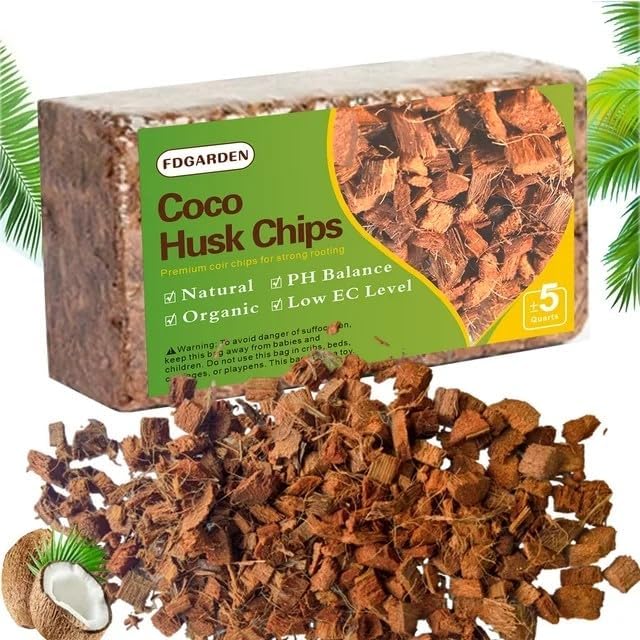
FDGARDEN Coco Husk Chips Coconut Substrate (Compressed Brick, 16 fl oz)
| Brand | FDGARDEN |
|---|---|
| Unit Count | 16 Fluid Ounces |
| Number of Packs | 1 |
| Volume | 16 fluid ounces |
This compressed coco husk brick rehydrates into fibrous coconut chips you can mix into potting soil, use as a mulch layer, or add to terrarium substrate. After soaking and rinsing as instructed it expands and provides good water-holding capacity while improving aeration compared with dense soils. That combination helps keep moisture available to roots longer without waterlogging, which is useful for container-grown flowers, orchids, and moisture-sensitive houseplants. The product is pH neutral and marketed with low electrical conductivity so it will not sharply change nutrient uptake when blended into mixes. Practical limits are its small sold volume and the prep step — you need to soak and rinse to remove salts and fully expand the material before planting, and larger garden beds will require many bricks. Also it is a plant amendment and mulch rather than a complete potting mix, so plan to combine it with compost or potting soil for nutrients.
Best for: Gardeners who want a reliable moisture-retaining amendment for containers, orchids, and small garden beds and who value better root aeration alongside prolonged hydration.
Less Ideal for: People who need a ready-to-use complete potting mix or who prefer zero-prep products for large landscape mulching projects.
- High water retention that helps keep soil moist between waterings
- Fibrous structure improves aeration and reduces compaction in potting mixes
- pH neutral and lower EC, minimizing sudden changes to nutrient availability
- Versatile use as a soil amendment, mulch, or reptile substrate
- Made from a renewable by-product of coconuts, a sustainable material
- Requires soaking and rinsing before use to remove salts and fully expand
- Small 16 fl oz volume means multiple bricks are needed for larger projects
Verdict: A compact, sustainable coco husk brick that expands into a moisture-retentive, airy amendment ideal for improving hydration in containers and orchid mixes.
Legigo Coco Coir Chips Organic Coconut Husk Potting Mix (1.1 lb)

| Material | Coconut Coir |
|---|---|
| Unit Count | 17.64 Ounce |
| Item Highlight | Drainage, Aeration & Moisture Retention |
| Volume | 7 quarts |
Legigo coco coir chips are compressed coconut husk pieces designed to expand when soaked and serve as a lightweight, well‑aerated growing medium or mulch. Typical uses include mixing into potting soil for houseplants and orchids, creating a chunky orchid substrate, amending garden beds to improve drainage, or applying as a surface mulch to retain moisture. Notable features are a stable pH in the 5.5–6.5 range, high cation exchange capacity for nutrient availability, and the material’s ability to absorb several times its weight in water while still draining excess. Practically, that means plants get steady moisture without waterlogging and roots benefit from good oxygen flow. Limitations are its coarse texture compared with fine mulches and the small pack size, so multiple bags are needed for large beds. Also coco coir itself has minimal nutrients so you should plan to supplement with fertilizer when used as a primary medium.
Best for: Gardeners who want a clean, low‑EC, moisture‑retentive mulch or soil amendment that improves drainage and root oxygenation, and who prefer products with positive user feedback. It suits people planning targeted amendments for containers, blueberry plants in raised beds, or mixing bespoke potting mixes.
Less Ideal for: Anyone wanting an all‑in‑one fertilizing mulch or a very fine textured soil conditioner for bulk landscape work should look at alternative mulches or larger volume soil amendments.
- Stable, slightly acidic pH suitable for many acid‑loving plants
- Good water retention while still providing drainage and aeration
- Clean, compressed brick format that expands after soaking for easy storage and handling
- Versatile: usable as potting amendment, orchid substrate, or surface mulch
- Small single‑pack volume means you may need several bags for an entire blueberry patch
- Provides little inherent fertility so additional fertilization is required
Verdict: A reliable, low‑EC coco coir chip mulch that improves moisture retention and drainage for blueberry beds and container plantings when paired with regular fertilization.
Halatool 10 lb Coco Husk Chips (Compressed)

| Unit Count | 160 Ounce |
|---|---|
| Brand Name | Halatool |
| Material | coconut husk |
| Volume (expanded) | 72 quarts |
Halatool coco husk chips arrive as a 10 lb compressed brick that soaks up water and expands into a lightweight, chunky coir suitable for potting mixes, topdressing, and mulch. After rehydrating the brick the chips create a well-aerated medium that improves drainage while holding some moisture around roots, which helps prevent waterlogging in indoor pots. Typical uses include mixing with potting soil to increase pore space for tropical houseplants, using as a surface mulch to reduce evaporation, or as a component in orchid and terrarium blends. The product is 100 percent natural coconut husk with low salt and balanced pH, so it is a gentle soil conditioner and does not introduce synthetic materials. You will need a container and a bit of time to fully expand the brick and break up any clumps, and because the chips are chunky they are best paired with finer compost or soil for small seedlings. There is also a basic safety note to avoid eye or skin contact when handling dry material.
Best for: Buyers who want a natural, easy-to-store amendment to improve drainage and moisture control in houseplant pots and mixed container plantings.
Less Ideal for: Not the best choice for growers focused on starting seeds or raising very small seedlings that need a fine, uniform seedling mix.
- Expands from a compact brick for easy storage and transport
- Improves aeration and drainage in potting mixes
- Organic coconut fiber with balanced pH that conditions soil
- Versatile: usable as mulch, potting mix component, or reptile substrate
- Requires soaking and manual flaking to fully expand before use
- Chunky chip size makes it less suitable alone for tiny seedlings or seed starting
Verdict: A compact, natural coco coir chip that expands into an airy, moisture-retaining mulch ideal for improving houseplant potting mixes.
Miuwauer Compressed Coco Coir Brick (1-Pack)

| Brand Name | Miuwauer |
|---|---|
| Number of Packs | 1 |
| Unit Count | 1 Count |
| Style Name | Brick,Coco Coir |
This 1-pack compressed coco coir brick is a compact, budget-friendly way to get organic mulch and a reusable growing medium for seed starting, potting mixes, and garden beds. The brick hydrates quickly and expands into a fluffy, water-retentive substrate that improves aeration around roots and reduces the need for frequent watering. It is pH neutral and contains naturally occurring minerals that support plant growth, making it suitable for flowers, vegetables, succulents, and foliage. Practical benefits include easy storage and transport while compressed, low mess when hydrated, and versatility as a soil amendment or top dressing. Important limitations are the single small brick size and the need to premix or combine with compost or potting soil for long-term container plants, since coco coir lacks substantial nutrient content on its own. Also take care to add water slowly to avoid dust and to rehydrate fully before use to reach the advertised volume.
Best for: Gardeners on a tight budget who want an affordable, organic mulch alternative or a lightweight seed-starting and potting substrate; good for small beds, containers, and starting transplants.
Less Ideal for: Large-scale landscapers or gardeners who need ready-to-use, nutrient-rich potting mixes for many containers without additional amendments.
- Expands rapidly with water into a lightweight, easy-to-handle growing medium
- Good water retention while maintaining aeration to reduce root rot risk
- pH neutral and contains natural minerals useful for a range of plants
- Compact compressed form saves storage space and shipping bulk
- Sold as a single small brick so you may need multiple packs for larger projects
- Not a complete fertilizer and should be mixed with compost or feed for long-term nutrient needs
Verdict: A low-cost, space-saving organic coco coir brick that expands into a versatile mulch and seed-starting medium ideal for budget-focused small-scale gardeners.
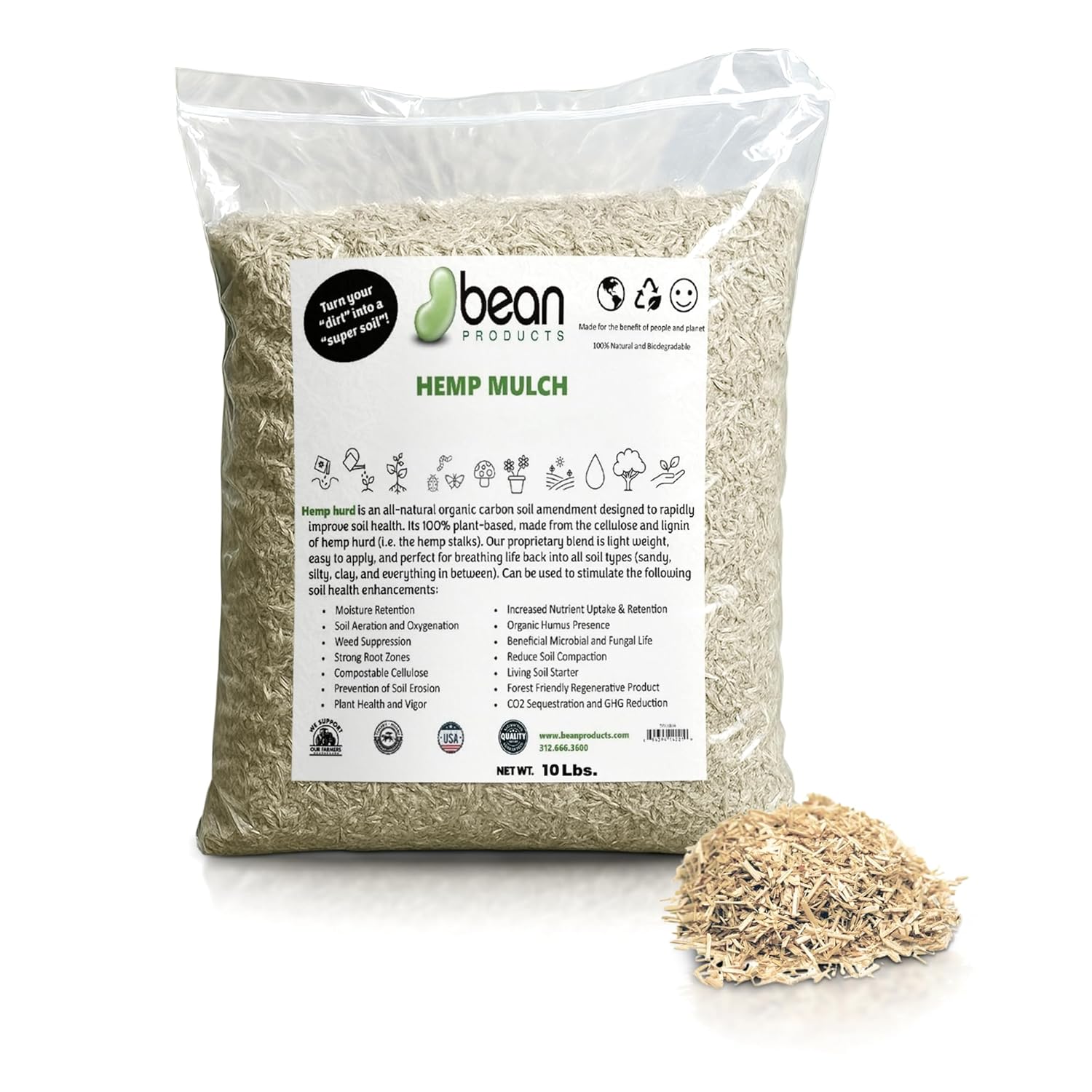
Bean Products Hemp Garden Mulch Organic Soil Conditioner, 10 lb
| Unit Count | 160 Ounce |
|---|---|
| Item Weight | 10 pounds |
| Style Name | Organic |
This hemp garden mulch is a natural soil conditioner made from hemp hurd that gardeners spread around flowers and vegetables to retain moisture and reduce weeds. It is typically applied as a 1 to 3 inch layer around plants and garden beds where its chunky, breathable texture helps slow evaporation while allowing air and water to reach roots. Notable features include its organic, midwestern-grown hemp feedstock and the material's tendency to break down over time, which adds organic matter back into soil and can improve soil structure. Practical benefits for reliability-focused gardeners are consistent moisture retention that reduces how often you need to water and a weed-suppressing surface that lowers maintenance. Limitations are the small 10 pound unit size, which means multiple bags will be required for larger beds, and because it decomposes it will need periodic top-ups and will not provide a permanent decorative layer like some synthetic mulches.
Best for: Gardeners who prioritize consistent moisture and soil health and want a low-chemical, natural mulch for flower and vegetable beds.
Less Ideal for: People seeking a long-lasting, decorative mulch that requires little replenishment or those managing very large landscapes on a single bag budget.
- Natural hemp hurd retains moisture and reduces watering frequency
- Breaks down to add organic matter and improve soil health over time
- Breathable texture allows air and water penetration to roots
- Made from US-grown hemp, supporting sustainable sourcing
- 10 lb bag covers limited area so larger gardens need multiple bags
- Material decomposes and requires regular replenishing
Verdict: Choose this hemp mulch if you want a natural, moisture-retaining bedding that gradually improves soil health for reliable watering and healthier beds.
Legigo 10-Pack Organic Coco Coir Bricks (Compressed)

| Number of Packs | 10 |
|---|---|
| Unit Count | 224 Ounce |
| Material | Coconut Coir |
| Style Name | Brick,Coco Coir,Potting |
Legigo's 10-pack of organic coco coir bricks offers a simple, shelf-stable way to add a renewable soil amendment or mulch layer to flower beds and containers. Each brick rehydrates quickly to produce a light, spongy medium that holds moisture while improving drainage and aeration around roots. Typical uses include mixing with garden soil to increase water retention, topping beds as a thin mulch to reduce surface evaporation, and starting seeds or potting up transplants. The product is low in soluble salts and slightly acidic, so it suits most flowering plants and helps moderate watering frequency. Because the bricks are compressed, they are easy to store and transport compared with loose bagged coir. Limitations are that you must hydrate and fluff the material before use and that coco coir does not provide nutrients on its own, so it should be combined with compost or fertilizer for long-term bed fertility. For gardeners who prefer predictable, organic amendments, these bricks are a straightforward option.
Best for: Gardeners who want a reliable, low-maintenance organic amendment to improve moisture control and root aeration in flower beds and containers without handling loose peat or bulky bags.
Less Ideal for: People looking for an all-in-one potting soil with built-in nutrients or those who need an instantly ready-to-plant, pre-mixed growing medium.
- Compresses for compact storage and expands quickly with water
- Improves moisture retention while maintaining good aeration and drainage
- Low EC and slightly acidic pH compatible with most flowering plants
- Versatile: useful for seed starting, mixing into soil, or as a surface mulch
- No inherent nutrient content so it must be paired with compost or fertilizer
- Requires time and water to hydrate and break apart before use
Verdict: A tidy, renewable way to improve moisture retention and root aeration in flower beds and containers when mixed with soil or compost.
BRUT Worm Farms Organic Aspen Mulch, 10 Quart

| Unit Count | 192 Ounce |
|---|---|
| Volume | 10 quarts |
| Style Name | Moisture-retaining |
| Certified Organic | OMRI-listed |
BRUT Organic Aspen Mulch is a fine-texture aspen bark mulch formulated to hold moisture, reduce weed pressure, and slowly add organic carbon to soil. It is applied as a top dressing around garden beds, pathways, or potted plants where you spread a thin layer to protect soil and conserve water. The product is OMRI-listed and described as odor-free and lightweight, which makes it convenient for indoor containers as well as outdoor borders. Its 30% carbon content supports beneficial microbes without drawing down nitrogen, so it helps long-term soil structure while decomposing slowly. Practical benefits include reduced watering frequency, a neater bed appearance, and gentle nutrient contribution that complements regular fertilizing. Important limitations are the small 10 quart volume per bag, which means multiple bags are needed for larger beds, and that it is primarily a surface mulch so it does not replace nutrient-rich soil amendments for heavy feeding tasks.
Best for: Gardeners who want a low-maintenance, organic mulch to conserve water, tidy beds, and slowly improve soil structure in small to medium beds or containers.
Less Ideal for: Large-scale landscapers or gardeners needing bulk mulch coverage or immediate high-nutrient soil amendments should consider larger-volume or nutrient-dense products.
- Odor-free fine aspen bark suitable for indoor and outdoor use
- High moisture retention reduces watering frequency
- OMRI-listed organic material that adds carbon to soil
- Lightweight and easy to spread for quick top-dressing
- Small 10 quart unit is insufficient for large beds without buying multiple bags
- Provides mainly carbon-rich mulch rather than concentrated nutrients
Verdict: A tidy, odor-free organic aspen mulch that conserves water and improves soil health best for small to medium garden beds and containers.
Choosing the Right Mulch for Moisture Retention: Key Factors to Consider
Water-Holding Effectiveness
This measures how well a mulch reduces evaporation and keeps moisture available in the root zone. A good moisture-retaining mulch shades the soil surface, slows airflow, and absorbs water that can later seep back into the soil.
Materials vary: some act like a sponge and hold water within their fibers, while others primarily block evaporation with a physical cover. Consider how often you want to water and whether the mulch will be used around thirsty annuals, water-wise perennials, or trees with deep roots. A highly absorbent mulch can buffer short dry spells but may also stay soggy if drainage is poor.
Durability and Breakdown Rate
How long a mulch layer lasts matters for both moisture management and labor. Fast-breaking mulches release organic matter into soil quicker and can improve structure, but they require more frequent replenishing to maintain that moisture-blocking surface.
Longer-lasting mulches reduce reapplication frequency but may not contribute as quickly to soil organic content. Think about how often you want to top up beds and whether you prefer a low-maintenance cover or one that actively feeds soil biology as it decomposes.
Impact on Soil Health and Biology
Mulches influence soil temperature, microbial activity, and nutrient cycling. Organic mulches add carbon and help build humus as they break down, supporting beneficial fungi and earthworms that improve water infiltration and retention over time.
Inorganic mulches do not feed soil biology but can protect soil structure. Some organic materials temporarily tie up nitrogen during decomposition; gardeners should account for this by adjusting fertilization or choosing a different mulch when planting nitrogen-hungry crops.
Installation and Maintenance Effort
Practicality matters: how easy is the mulch to spread, how well does it stay in place, and what ongoing work is required? Lightweight mulches can blow or wash away on slopes and may need anchors or edging.
Consider whether you will mulch large beds by hand or need a material that works well for container gardening or narrow beds. Maintenance also includes monitoring for pests, periodic raking to refresh the layer, and managing thickness so water infiltration is not impeded.
Weed Suppression and Soil Coverage
A mulch that minimizes weed emergence reduces competition for moisture. Dense, coarse materials can physically block weed seedlings, while fine-textured mulches may allow weed seeds to germinate and still be suppressed if the layer is thick enough.
Evaluate how thick you need to apply a specific mulch to suppress weeds without preventing rainfall from reaching the soil. Some mulches are best used over a weed barrier for long-term suppression, while others are more suited to seasonal beds where frequent cultivation is expected.
How Different Mulches Hold and Release Water
Mulch materials manage moisture in two main ways: by covering and shading the soil to cut evaporation, and by acting as a reservoir that soaks up rain or irrigation and releases it slowly. Organic mulches like shredded bark, composted wood, and straw tend to absorb some water and slowly pass it to the soil as they drain. Inorganic surfaces such as gravel or stone do not store water but reduce evaporation by shading and limiting direct sun and wind on the soil surface.
Organic mulches change behavior as they decompose. Fresh coarse bark might sit on top and block evaporation well, while finer compost both stores water and improves soil texture as it breaks down. Match the mulch type to your irrigation schedule and the moisture needs of your plants.
- Mulches that absorb water provide buffering during short dry periods.
- Non-absorbent mulches reduce evaporation but do not supply moisture back to the soil.
- Decomposition alters the water-storage properties of organic mulches over time.
Mulching Depth and Best Practices for Moisture Retention
Depth matters. Too thin and the mulch will not slow evaporation effectively; too thick and surface water may run off instead of soaking in, especially with hydrophobic materials. For most organic mulches, a 2 to 4 inch layer balances evaporation reduction and water infiltration. Finer mulches may need thinner layers to avoid matting, while chunky materials can be slightly deeper to increase shading and insulation.
Apply mulch evenly, keep it a few inches away from trunks and crowns to prevent rot, and replenish the layer as it decomposes. When mulching before planting, avoid burying young crowns; after planting, water the soil thoroughly before adding the final mulch layer so stored moisture is available immediately.
- Aim for 2 to 4 inches for most garden beds.
- Avoid piling mulch against stems or trunks.
- Water newly mulched beds to settle the layer and activate moisture buffering.
Mulch Choices for Different Garden Situations
In vegetable beds, choose mulches that balance moisture retention without causing excessive coolness at the root zone during short-season climates. Light, quick-breaking mulches combined with drip irrigation let you manage moisture precisely. For ornamental beds and shrubs, longer-lasting mulches reduce labor and cover larger root zones effectively.
In containers and raised beds, use mulches that are lightweight and do not compact, so drainage remains reliable. On slopes or high-wind sites, favor heavier or interlocking materials, or pair lighter mulches with landscape fabric or edging to keep them in place.
- Vegetable gardens often benefit from finer, quicker-breaking mulches and precise irrigation.
- Ornamental beds can use chunkier, longer-lasting mulches for low maintenance.
- Containers need light, non-compacting mulches to protect drainage.
Common Mistakes That Reduce Mulch Moisture Benefits
Applying mulch too thinly is a frequent error that fails to limit evaporation, while excessively thick layers can repel water or create anaerobic pockets. Using fresh high-carbon materials without understanding their nitrogen drawdown can stress young plants because microbial decomposition temporarily reduces available nitrogen in the soil.
Another common issue is allowing mulch to contact plant stems or tree trunks, which can encourage pests and rot. Also monitor for hydrophobic behavior in some woody mulches after they dry out; occasional light raking or wetting helps recondition the layer and restore water uptake.
- Do not over-apply; maintain recommended depths.
- Avoid mulch volcanoes against tree trunks.
- Watch for hydrophobic layers and rewet or refresh as needed.
How We Chose the Best Mulch for Moisture Retention
We evaluated mulches specifically for their ability to retain moisture in real garden settings and for practical gardener concerns. Selection favored materials with documented water-holding traits, reasonably consistent performance across seasons, and predictable interactions with soil and plants. We tested literature, manufacturer specifications, and common horticultural practice to identify options that deliver measurable differences in evapotranspiration and soil moisture. Key evaluation criteria included water-holding capacity and evaporation reduction, longevity and breakdown rate in the garden, impact on soil health and biology, and installation and maintenance effort. We excluded materials that pose clear planting risks such as persistent toxic residues or extreme nitrogen drawdown without proven mitigation. Products that required specialized equipment or professional installation were deprioritized in favor of options gardeners can apply by hand. Also considered were regionally relevant behavior like how a mulch reacts in wet winters or hot, arid summers, and whether the material alters pH or nutrient cycling in ways gardeners need to manage. These filters ensured the final list focuses on moisture performance plus practical garden tradeoffs.
FAQ
How thick should mulch be to keep soil moist without causing problems?
For most organic mulches, 2 to 4 inches provides good moisture retention while allowing rainfall and irrigation to penetrate. Finer mulches may need the thinner end of that range to avoid matting; chunkier materials can be closer to 4 inches.
Will mulch cause root rot if it stays wet longer?
Mulch itself does not cause root rot unless it keeps stems or crowns constantly wet. Maintain a gap between mulch and trunks or crowns and ensure soil has adequate drainage. Mulch helps roots by moderating surface moisture, not by creating saturated conditions at depth in well-drained soils.
Can mulch reduce how often I water my garden?
Often yes. Effective moisture-retaining mulches lower evaporation and can let you extend irrigation intervals. The exact reduction depends on weather, plant type, and mulch choice, so monitor soil moisture and adjust watering gradually.
Is it better to use organic or inorganic mulch for holding moisture?
Organic mulches generally improve moisture retention and soil structure as they decompose, while inorganic mulches reduce evaporation without adding organic matter. Choose organic when you want soil-building benefits; choose inorganic when you need permanent coverage and minimal breakdown.
How often should I replenish mulch in my beds?
Replenish based on the material's breakdown rate and garden needs. Fast-breaking materials may need topping once or twice a year, while durable mulches can last several years. Check mulch depth each season and add material to restore the recommended thickness.
Final Verdict
Prioritize a mulch that matches your soil drainage, plant water needs, and maintenance preferences. If you want to build soil and buffer short dry spells, choose an organic mulch that retains water and decomposes to feed the soil. If low maintenance and long-lasting coverage are more important, select a stable material that reliably limits evaporation. Balance the tradeoffs of absorption, decomposition, and application effort to get consistent moisture at the root zone. With the right mulch and correct depth, you can reduce watering frequency and support healthier plants through dry periods.
