

Note: This article contains affiliate links. If you click on these links and make a purchase, I may earn a small commission at no extra cost to you. This helps support my research and content. Read my full affiliate disclosure here.
Planting grass seed is the easy part; protecting that seed until it becomes an established lawn is what determines success. The right mulch helps retain moisture, reduces soil crusting, prevents birds from eating seed, and limits erosion on slopes. This guide covers the top shortlisted mulches suited for new grass seed, explaining how each option behaves in real lawn and garden conditions and why it made the list. We evaluated products for moisture retention, seed-to-soil contact, and ease of application to help you pick a mulch that matches your lawn size, climate, and watering routine. Read on to understand the tradeoffs and choose the best approach for your seeding project.
Top Picks at a Glance
| Best Overall The best all-around choice for most situations | EZ-Straw Seeding Mulch with Tackifier, 2.5 cu ft Bale |  |
| Best Quality Built to a higher standard if you want something more solid | EZ Straw Lawn Repair Mix Sun/Shade Blend (28 lb) |  |
| Best Value The sweet spot between price and what you get | GreenView Grass Seed Starting Mulch, 38 lb |  |
| Best Budget The cheapest option that still gets the job done reliably | Kela Tipi Natural Wheat Straw Bale Mulch |  |
| Highest Rated A top-rated pick with lots of positive feedback | EZ Straw Seeding Mulch with Tack (1 cu. ft. bale) |  |
| Most Popular A crowd favorite that many people choose with confidence | HealthiStraw GardenStraw Premium Garden Mulch, 3 cu ft |  |
| Best Seller A high-volume bestseller chosen again and again | Scotts PatchMaster Lawn Repair Mix Sun & Shade, 4.75 lb |  |
EZ-Straw Seeding Mulch with Tackifier, 2.5 cu ft Bale

| Volume | 2.5 cu ft |
|---|---|
| Coverage | Covers up to 500 sq. ft. |
| Material | Processed straw with tackifier |
| Weed content | 99% weed free |
EZ-Straw Seeding Mulch is a processed straw bale treated with a natural tackifier that makes the fibers cling together when activated with water. You lay the straw over newly seeded or bare soil, spray it to activate the tackifier, and the bonded mat resists wind and washout so seed and young plants stay covered. The straw is marketed as 99% weed free, UV‑protected in its packaging for easier outdoor storage, and biodegradable so you can leave it in place as plants establish. For strawberry beds it provides good protection from soil splash, conserves moisture to reduce watering frequency, and helps deter birds and erosion on sloped rows. Expect easy handling compared with loose straw because the tackifier keeps the material from blowing around, but note the bale size and packaging mean you will need space to store at least one bale and some effort to spread it evenly between plants. The natural tackifier is described as food‑safe, and the product is intended to break down without a cleanup step once plants are established.
Best for: Gardeners who want a low‑maintenance, natural mulch that protects seed and young strawberry plants while reducing watering and erosion risk.
Less Ideal for: Those with very small balconies or container strawberry setups where large bales are impractical or for gardeners who need a sterile, rock‑free inorganic mulch option.
- Tackifier bonds straw so it resists wind and washout after watering
- Biodegradable so it can be left in place as plants establish
- Processed and 99% weed free to reduce unwanted weed introduction
- UV‑protected packaging for outdoor storage and easier handling
- Large bale requires storage space and manual spreading to cover beds evenly
Verdict: Choose this straw mulch if you want a biodegradable, tackified cover that stays put to protect strawberry plants and speed establishment.
EZ Straw Lawn Repair Mix Sun/Shade Blend (28 lb)

| Item Form | plant_seed |
|---|---|
| Specific Uses For Product | Lawn |
| Application Method | Spread the mix over the desired area and water. |
| Coverage | 56 Square Feet |
| Target Species | lawn grasses |
EZ Straw Lawn Repair Mix is a one-step patching product that combines premium grass seed, processed straw mulch, organic fertilizer, and a biodegradable tackifier to help seed stay put and establish quickly. You spread the mix over bare spots, water, and the tackifier holds the straw and seed in place so it resists wind and light runoff on small slopes. The included organic fertilizer feeds new seedlings as the straw decomposes, and the manufacturer claims visible greening in about 7 to 10 days. Because it is a blended product, it is fastest and easiest to use for repairing localized bare patches rather than re-sodding or full lawn renovation. Coverage statements vary by listing, but the prepared mix eliminates the need to separately buy mulch and starter fertilizer and is simple for homeowners to apply with a rake or by hand. Expect quicker germination in well-prepared soil and regular watering; performance will be limited by soil contact and moisture rather than the product itself.
Best for: Homeowners who want a fast, low-effort way to patch bare spots and get reliable germination without buying separate seed, mulch, and starter fertilizer.
Less Ideal for: People planning full lawn overhauls, large acreages, or those who prefer to select specific seed-only or fertilizer-only products for custom blends.
- All-in-one blend of seed, processed straw, organic fertilizer, and tackifier for simple application
- Tackifier helps the mix stay in place on slopes and in light wind
- Designed for sun and shade so it works in a variety of yard exposures
- Contains extra seed (advertised 10% more) to improve establishment odds
- Bag coverage and exact germination rates depend heavily on soil preparation and watering
- Not intended for large-scale lawn renovation where bulk seed and soil work are preferable
Verdict: A convenient all-in-one patch mix that speeds up germination and keeps seed in place for fast, low-effort lawn repairs.
GreenView Grass Seed Starting Mulch, 38 lb

| Item Form | Granules |
|---|---|
| Specific Uses For Product | Root Development, Seed Development |
| Target Species | Lawn Grass |
| Unit Count | 608 Ounce |
GreenView Grass Seed Starting Mulch is a pelletized mulch you spread over fresh grass seed to hold seed in place, retain moisture, and supply a starter dose of nutrients. Use it after broadcasting seed: clear debris, apply seed, then broadcast the pellets and water. Each pellet absorbs and holds multiple times its weight in water so seed stays consistently moist during germination, and because the product is 100 percent weed-free it avoids introducing unwanted seeds. The pellets biodegrade as seedlings establish, eliminating the need to remove straw or netting. Practical benefits include reduced washout on slopes and less labor than laying straw. Limitations are that seed is not included and coverage claims depend on even application and seeding rate, so you may need more than one bag for large or uneven areas. The product works best as a simple, low-mess alternative to straw for spring or fall lawn overseeding and spot repairs.
Best for: Buyers who want a low-mess, reliable way to protect and hydrate newly sown lawn seed and prefer a straightforward product that reduces follow-up cleanup.
Less Ideal for: Not a great fit for someone who needs an all-in-one seed-and-mulch product or for very large commercial seeding jobs that demand bulk coverage solutions.
- Pellet form holds roughly 3× its weight in water to keep seed moist during germination
- Includes starter fertilizer to encourage root development
- Biodegradable pellets eliminate post-germination cleanup
- 100% weed-free so it does not introduce unwanted seeds
- Easier and less messy to apply than straw
- Seed is sold separately so you must buy grass seed separately
- Coverage depends on application technique so larger jobs may require multiple bags
Verdict: Choose this mulch when you want a low-mess, biodegradable pellet that holds moisture and supplies starter fertilizer to help new grass seed germinate successfully.
Kela Tipi Natural Wheat Straw Bale Mulch

| Manufacturer | Natural Wheat Straw |
|---|---|
| Item Weight | 15.8 ounces |
| Product Dimensions | 14 x 10 x 1.2 inches |
This wheat straw bale is a straightforward, no-frills mulch aimed at suppressing weeds, conserving moisture, and adding organic matter to planting beds. It is marketed as 100% natural and dried to reduce weed seed risk, so gardeners typically lay it around vegetables, strawberries, roses, or on newly seeded slopes to protect soil and reduce erosion. The straw is lightweight and fibrous, which helps it interlock on inclines better than loose shredded mulch and supplies slow-to-decompose biomass that improves soil structure over time. It is also usable as pet bedding or for decorative landscaping. Important limitations are that straw can blow on very steep or windy slopes unless anchored with pins or light netting, and it does not provide the visual uniformity of wood mulches. Because it is a plant residue it will break down and require replenishing more often than inert rock or heavier bark products. For budget-conscious gardeners needing an eco-friendly, easily applied cover for erosion control on moderate slopes, this is a practical option.
Best for: Gardeners on a tight budget who need an affordable, biodegradable mulch for vegetable beds, strawberries, or moderate slopes and who prefer an eco-friendly, multiuse material.
Less Ideal for: Landscapes on very steep, high-wind sites where heavier, erosion-resistant mulches or netting systems are required; those seeking a long-lasting decorative bark finish.
- 100% natural dried wheat straw reduces chance of introducing weed seeds when properly processed
- Lightweight and fibrous material that is easy to spread by hand on beds and slopes
- Adds organic matter to soil as it decomposes to improve structure and moisture retention
- Versatile for use as mulch, animal bedding, or decorative ground cover
- Lightweight straw can be prone to blowing on steep or exposed slopes unless secured
- Will decompose relatively quickly and needs periodic replenishment
Verdict: A low-cost, natural straw mulch that supplies quick, easy erosion protection and organic matter for moderate slopes.
EZ Straw Seeding Mulch with Tack (1 cu. ft. bale)

| Includes Bonding Agent | Yes |
|---|---|
| Indoor Outdoor Usage | Outdoor |
| Soil Type | Sandy Soil |
| Moisture Needs | Moderate Watering |
| Material Features | Plant-Based |
EZ Straw Seeding Mulch is a lightweight, plant-based straw mulch formulated for seeding and erosion control. You spread the straw over freshly planted seed, then wet it to activate the included tackifier so the straw bonds and resists wind and washout. That tackifier makes it useful on slopes or exposed lawns and helps keep seed covered from birds and heavy rain. The product is packaged in UV-protected plastic for convenient outdoor storage and is marketed as 99% weed free so it will not introduce competing seeds. In practice it reduces evaporation and can speed germination while biodegrading in place, so little cleanup is needed. Limitations are its small 1 cu ft bale size if you have a large lawn and the need to water after application to activate the bonding agent; it is not a long-term decorative mulch but a temporary seeding aid focused on protection and moisture retention.
Best for: Buyers who prioritize consistent, low-fuss establishment of new grass—especially on exposed or sloped areas—will appreciate a product that protects seed, retains moisture, and minimizes washout.
Less Ideal for: People looking for a decorative or long-term landscape mulch or those seeding very large lawns who prefer bulk mulch solutions should consider alternatives.
- Tackifier bonds straw to reduce wind and washout during germination
- Plant-based and biodegradable so it breaks down without removal
- Packaged in UV-protected bag with handle for easy storage
- Reportedly 99% weed free to avoid introducing unwanted seeds
- Sold in small 1 cu ft bales, so multiple bales are needed for larger areas
- Requires water activation of the tackifier to achieve bonding
Verdict: Use this tackified straw when you need reliable, stay-put protection for new grass seed that speeds germination and resists washout.
HealthiStraw GardenStraw Premium Garden Mulch, 3 cu ft

| Net volume | 3 cu ft |
|---|---|
| Intended use | Garden mulch, lawn seeding, compost-friendly |
| Material | 100% wheat straw |
| Source | Sustainably sourced, non-GMO |
HealthiStraw GardenStraw is a 3 cubic foot compressed bale of cleaned wheat straw formulated for use as garden mulch and seed protection. It is designed for vegetable, herb, flower and shrub beds where you want a lightweight, compostable mulch that retains soil moisture and suppresses weeds. The straw is processed to reduce dust and stray seeds and the short, specially cut fibers interlock when watered so the mulch stays in place without chemical tackifiers. For bushes you can apply a 2 to 3 inch layer around the drip line to cut evaporation, reduce compaction and gradually add organic matter as it breaks down. Practical benefits include easy spreading from a compressed bale, fast composting into the soil, and reduced watering needs. Limitations are that straw is less decorative than bark or wood chips and will decompose faster, so it requires periodic replenishing; it also provides less long-term weed barrier than heavier mulches. For gardeners focused on soil health and moisture conservation, it is a straightforward, low-risk choice.
Best for: Gardeners who prioritize soil health and want an easy-to-apply, compostable mulch for shrubs and mixed beds that reduces watering and improves organic matter over time.
Less Ideal for: People seeking a long-lasting, decorative mulch or a heavy-duty weed barrier for high-traffic beds should consider wood chips or stone instead.
- Cleaned, non-GMO wheat straw with reduced dust and seeds
- Fibers interlock when wetted so the mulch stays in place without binders
- Helps retain soil moisture and can reduce watering needs substantially
- Composts quickly and adds organic carbon to improve soil structure
- Decomposes faster than wood mulches so it needs topping up more often
- Less decorative and provides a lighter-duty weed barrier compared with heavier bark or rock mulches
Verdict: A clean, fast-composting straw mulch that conserves moisture and improves soil health, making it a safe, practical choice for mulching bushes.
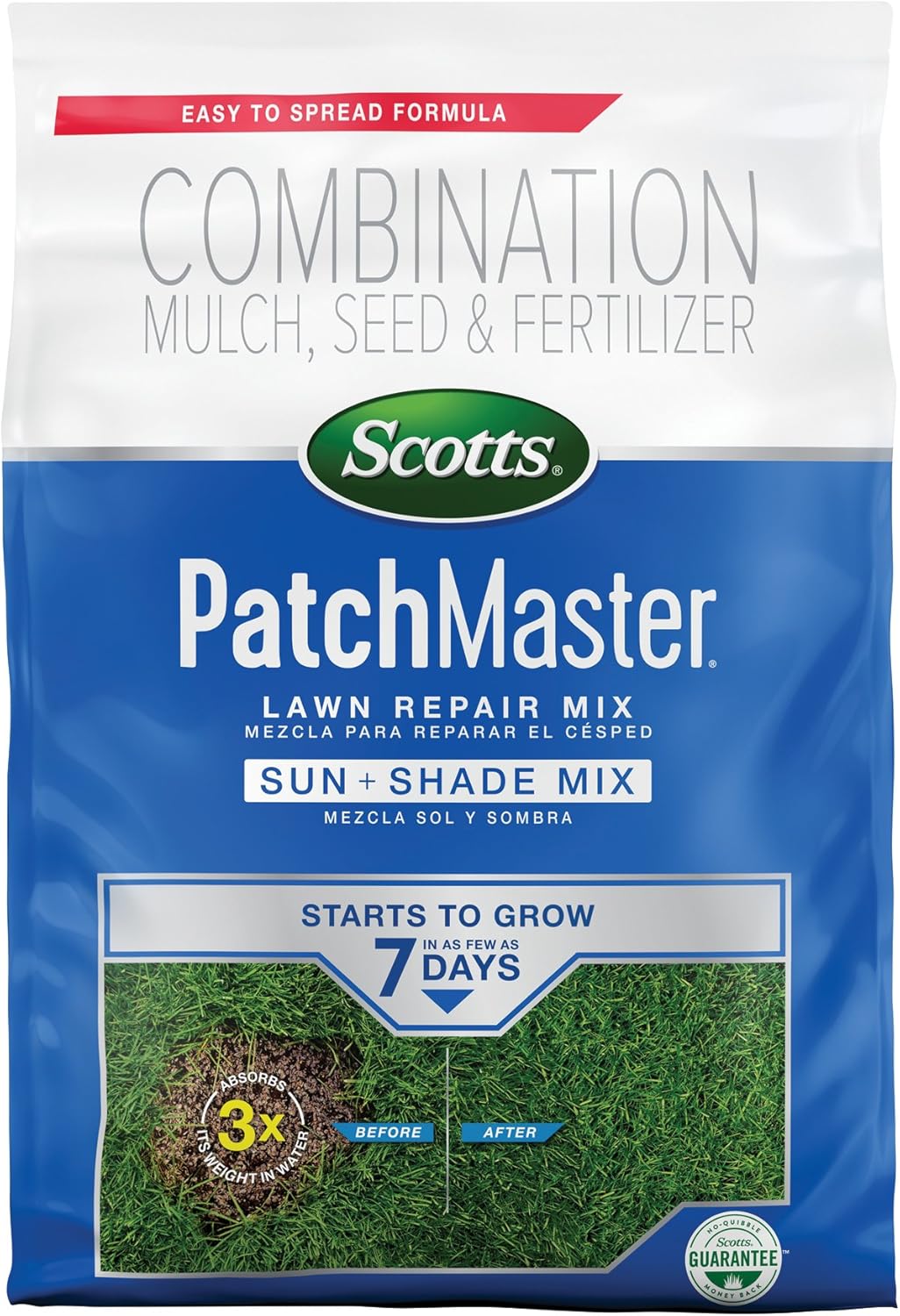
Scotts PatchMaster Lawn Repair Mix Sun & Shade, 4.75 lb
| Unit Count | 76 Ounce |
|---|---|
| Sunlight Exposure | shade |
| Moisture Needs | Moderate Watering |
| Item Type Name | Sun and Shade Mix |
| Included Components | Seed |
Scotts PatchMaster is an all-in-one patch product for repairing bare spots or thinning turf without mixing separate seed, mulch, and starter food. The bag contains a blend of Kentucky bluegrass, perennial ryegrass, and fine fescue plus recycled mulch that holds moisture and a controlled-release nitrogen to feed seedlings for up to six weeks. Typical use is simple: loosen the top soil, spread a thin layer (no more than 1/2 inch), water thoroughly until saturated, then keep the area moist daily until the grass establishes. The mulch helps reduce washout and keeps seed in place, and the mix is formulated to sprout quickly — often showing green in about 7 to 12 days with proper watering. Limitations are coverage and timing: one 4.75 lb bag only covers small patches (about 70 sq ft for bare spots) so multiple bags are needed for larger areas, and success depends on consistent watering and applying when daytime temps are in the recommended range. For practical lawn repairs, it reduces steps and materials compared with buying components separately.
Best for: Buyers who want a straightforward, time-saving solution to patch small bare or thin spots and prefer a single product that combines seed, mulch, and starter feed.
Less Ideal for: People needing to resurface large lawns or who cannot commit to regular watering during seed establishment should consider broadcast seed or professional overseeding options instead.
- Pre-mixed combination of seed, mulch, and starter fertilizer for one-step application
- Recycled mulch absorbs moisture and helps prevent seed washout during establishment
- Seed blend is suitable for both sun and shade so it integrates with mixed light conditions
- Fertilizer feeds new seedlings for up to six weeks to speed early growth
- Small bag size limits coverage so multiple bags are needed for larger repairs
- Requires daily watering during establishment which may be onerous without an automatic system
Verdict: A convenient one-bag solution that combines seed, mulch, and starter fertilizer to quickly repair small bare or thin lawn spots with minimal fuss.
Choosing the Right Mulch for New Grass Seed: Key Factors to Consider
Moisture Retention and Breathability
Keeping the seedbed consistently moist is critical during germination. A good mulch holds surface moisture and reduces evaporation while still allowing air exchange so seeds do not suffocate. Materials that form a light, porous blanket are best for balancing moisture retention with oxygen flow.
Overly dense or compacting mulches can trap too much water against the seed and encourage rot, while very loose materials dry out quickly. Think about your local evaporation rate, irrigation frequency, and the expected time to germination when selecting a mulch.
Seed-to-Soil Contact
Seeds need direct contact with the soil to absorb water and start growth. Mulches that are applied too thickly or that clump can prevent seeds from settling against the soil surface and interfere with germination. Ideal mulches settle down after placement and allow seeds to press into the soil when tamped or watered.
For broadcast seeding, choose a mulch that forms a thin, even layer. For patch repairs, a slightly thicker application may be acceptable as long as you press the seed and mulch into contact with the soil.
Erosion Control and Stability
Exposed seedbeds, especially on slopes or in windy areas, lose seed to runoff and wind. A mulch that resists displacement protects both seed and newly sprouting grass. Look for materials that interlock or can be anchored with light netting when necessary.
Consider the timing of heavy rains in your area. Mulches that wash away easily will leave seed vulnerable. Conversely, very heavy anchoring can impede seedlings, so choose a balance suited to the slope and expected weather events.
Application Ease and Labor
How easy a mulch is to apply affects whether you actually get consistent coverage. Hand-spreadable materials that can be raked or rolled are preferable for small yards and patch repairs. Larger lawn jobs benefit from materials compatible with broadcast spreaders or simple mechanical spreaders.
Also factor in how tidy the material is to handle and how much cleanup it creates. Lightweight, dusty mulches may be harder to keep in place during windy application, while bulky bales or rolls require more physical effort but can be more forgiving to place evenly.
Breakdown, Composting, and Removal
Some mulches break down quickly and add organic matter to the soil, which benefits long-term lawn health. Others are designed to be removed after germination. Rapidly composting mulches reduce the need for cleanup but can introduce temporary nitrogen drawdown if tilled in too soon.
If you plan to overseed regularly, consider a mulch that leaves minimal residue. If improving soil organic content is a priority, choose materials that decompose into beneficial humus without inviting weeds.
Pest and Weed Considerations
Mulch can deter birds and small mammals from eating seed, but some materials also provide habitat for pests or carry viable weed seeds. Sterile or processed mulches reduce the risk of introducing weeds, while raw straw or hay may carry weed seeds unless certified clean.
Also think about where mulch might attract slugs or other pests in damp climates. Choosing an appropriate material and application thickness helps limit pest problems while still protecting the seedbed.
When to Use Mulch Vs Letting Seed Bare
Mulch is most valuable when you cannot irrigate multiple times per day or when seeds are at risk of erosion or predation. In mild, consistently moist climates with light winds, bare-seeding and frequent light watering can work without additional covering. However, in hot, dry, or windy conditions, mulch greatly increases germination rates by stabilizing moisture and protecting seeds.
For small touch-ups, a thin mulch layer or gentle watering schedule may be enough. For larger renovations or sloped sites, a more robust mulch strategy is usually worth the extra work.
- Use mulch if daily watering is impractical
- Skip mulch only when you can maintain very regular, light irrigation
- Apply thicker mulch on slopes and exposed areas
Application Tips for Best Results
Spread mulch evenly and keep the layer thin enough to allow light and air while protecting moisture. For broadcast seeding, aim for a uniform blanket rather than piles. After spreading, gently press or roll the area to improve seed-to-soil contact without burying seed too deep.
Water in with fine, frequent sprays instead of heavy jets. Initial watering should settle the mulch and bring the seed into contact with the soil. Continue with light, frequent watering until seedlings develop true leaves, then taper to deeper, less frequent irrigation to encourage root growth.
- Rake or roll after spreading to improve contact
- Water gently to settle mulch and avoid washout
- Anchor on slopes with light netting if needed
Managing Mulch After Germination
Monitor the mulch as seedlings appear. Thin or remove mulch that is preventing sunlight from reaching young grass. Many organic mulches will naturally break down and can be left to integrate into the soil, but if they mat or form an impermeable layer, remove or rake them aside to avoid smothering.
Resume a regular watering and mowing schedule once the new grass reaches recommended mowing height for your grass type. Avoid heavy foot traffic until the lawn is well rooted to prevent disturbing the young plants.
- Rake or lift matting mulch if seedlings struggle
- Leave decomposing mulch if it is not impeding growth
- Wait until grass is established before normal use
Adjusting for Climate and Season
In hot, dry periods, prioritize mulches with high moisture-holding capacity and apply a slightly thicker layer. In cool, wet seasons, choose lighter mulches that dry quickly and do not trap excess water. Spring seeding often benefits most from a protective mulch because of fluctuating weather and predation pressure.
Consider frost and freeze-thaw cycles in colder regions. Mulches that insulate the soil can protect seeds from late cold snaps, but heavy winter cover may need to be managed in spring to allow faster warming and growth.
- Thicker moisture-holding mulch for hot, dry climates
- Light, fast-draining mulch for cool, wet seasons
- Use insulating mulch when late frosts are likely
Tools and Accessories That Help
A lightweight spreader or a hand-held blower can make even distribution faster for larger lawns. For small patches, a rake and a push roller are often sufficient to get good seed-to-soil contact. Consider biodegradable netting for steep slopes to keep mulch in place until seedlings establish.
Moisture meters and simple sprinkler timers help you maintain the light, frequent watering regimen that new seed benefits from. These small investments reduce the risk of failed germination due to under- or over-watering.
- Use rollers to firm seedbed after seeding
- Biodegradable netting secures mulch on slopes
- Sprinkler timers keep watering consistent
How We Chose the Best Mulch for New Grass Seed
We focused on factors that directly affect seed germination and early seedling survival. Final selections required consistent evidence that a mulch maintains surface moisture without smothering seed, enables good seed-to-soil contact, and resists displacement by rain or wind. We also prioritized materials that are practical to apply and remove or that naturally break down without harming young grass. Evaluation criteria included moisture retention capacity, seed-to-soil contact and settling, ease of application and cleanup, and erosion control on exposed sites. We reviewed performance in both hand-seeded and broadcast-seeded lawns and considered suitability across common climates. Products that require heavy machinery or specialized handling were excluded, as were mulches that introduce weed seed or persistent contaminants. The list emphasizes options that work reliably for typical homeowner seeding tasks, from small patches to full lawn renovations.
FAQ
How thick should mulch be when covering grass seed?
A thin, even layer is best. Too thick a covering can prevent light and air from reaching seed and delay germination. Aim for a layer that protects without completely burying seeds, and adjust based on the material's density.
Can I use straw or hay for new grass seed?
Straw is commonly used because it provides good cover and erosion control. Avoid hay unless it is certified weed-free, because hay often contains weed seeds. Processed or clean straw reduces the risk of introducing weeds to the lawn.
When should I remove mulch after seeding?
Remove or thin mulch once seedlings have developed several leaves and are starting to tolerate light mowing. If the mulch is decomposing and not matted, it can often be left to break down. Remove any matting that blocks light or traps excess moisture.
Will mulch cause disease or mold on new grass?
Mold and disease can occur if mulch holds too much moisture against seed and prevents airflow. Choose breathable mulch and avoid overly thick applications. Adequate watering management and good air circulation reduce disease risk.
Is it necessary to anchor mulch on slopes?
Yes, anchoring is usually recommended for slopes. Light biodegradable netting or staples can prevent mulch and seed from washing away during rain. The anchoring should be gentle so seedlings are not impeded as they grow.
Can mulch improve soil long term after it breaks down?
Organic mulches that decompose add organic matter and can improve soil structure over time. This benefits water retention and nutrient cycling for the lawn. However, very rapid decomposition can temporarily tie up nitrogen, so monitor soil fertility as the material breaks down.
Final Verdict
Choose a mulch that matches your climate, irrigation capacity, and site exposure. Prioritize materials that maintain even surface moisture, allow seed-to-soil contact, and resist displacement on exposed sites. Consider how the mulch breaks down and whether it introduces weed seed or requires removal. Balancing moisture control with breathability and easy application will give you the best chance of quick, even germination. Use the evaluation criteria above to weigh tradeoffs and select the mulch that fits your lawn size and maintenance routine.
