

Note: This article contains affiliate links. If you click on these links and make a purchase, I may earn a small commission at no extra cost to you. This helps support my research and content. Read my full affiliate disclosure here.
Choosing the right mulch for peas matters because peas need consistent moisture, cool soil temperatures, and minimal competition from weeds while they establish. The wrong mulch can hold too much heat, introduce weed seeds, or interfere with nitrogen fixation. This guide covers five shortlisted mulches suited for peas in typical garden beds, containers, and raised beds. We evaluated each option for how it affects soil moisture, temperature, and microbial health so you can pick a mulch that supports germination, vine vigor, and easy season-long care.
Top Picks at a Glance
| Best Overall The best all-around choice for most situations | EZ-Straw Seeding Mulch with Tackifier, 2.5 cu ft Bale |  |
| Best Value The sweet spot between price and what you get | EZ Straw Seeding Mulch with Tackifier, 2.5 cu ft bales, 2-pack |  |
| Best Budget The cheapest option that still gets the job done reliably | OLDCASTLE Pine Spruce Mulch, 2 cu. ft. |  |
| Highest Rated A top-rated pick with lots of positive feedback | HealthiStraw FarmStraw Coarse-Cut 3 cu ft Compressed Wheat Straw Bedding |  |
| Most Popular A crowd favorite that many people choose with confidence | HealthiStraw GardenStraw Premium Garden Mulch, 3 cu ft |  |
EZ-Straw Seeding Mulch with Tackifier, 2.5 cu ft Bale

| Volume | 2.5 cu ft |
|---|---|
| Coverage | Covers up to 500 sq. ft. |
| Material | Processed straw with tackifier |
| Weed content | 99% weed free |
EZ-Straw Seeding Mulch is a processed straw bale treated with a natural tackifier that makes the fibers cling together when activated with water. You lay the straw over newly seeded or bare soil, spray it to activate the tackifier, and the bonded mat resists wind and washout so seed and young plants stay covered. The straw is marketed as 99% weed free, UV‑protected in its packaging for easier outdoor storage, and biodegradable so you can leave it in place as plants establish. For strawberry beds it provides good protection from soil splash, conserves moisture to reduce watering frequency, and helps deter birds and erosion on sloped rows. Expect easy handling compared with loose straw because the tackifier keeps the material from blowing around, but note the bale size and packaging mean you will need space to store at least one bale and some effort to spread it evenly between plants. The natural tackifier is described as food‑safe, and the product is intended to break down without a cleanup step once plants are established.
Best for: Gardeners who want a low‑maintenance, natural mulch that protects seed and young strawberry plants while reducing watering and erosion risk.
Less Ideal for: Those with very small balconies or container strawberry setups where large bales are impractical or for gardeners who need a sterile, rock‑free inorganic mulch option.
- Tackifier bonds straw so it resists wind and washout after watering
- Biodegradable so it can be left in place as plants establish
- Processed and 99% weed free to reduce unwanted weed introduction
- UV‑protected packaging for outdoor storage and easier handling
- Large bale requires storage space and manual spreading to cover beds evenly
Verdict: Choose this straw mulch if you want a biodegradable, tackified cover that stays put to protect strawberry plants and speed establishment.
EZ Straw Seeding Mulch with Tackifier, 2.5 cu ft bales, 2-pack

| Item Form | Solid |
|---|---|
| Other Special Features of the Product | organic |
| Container Type | Bag |
| Full Cure Time | 24 hours |
| Indoor Outdoor Usage | Outdoor |
EZ Straw Seeding Mulch is a processed wheat straw product blended with a natural tackifier to help the straw cling together when wet. It is typically spread over newly sown seed to protect from wind, heavy washout, birds, and surface crusting. The tackifier makes the mulch less likely to blow away and helps retain moisture, which can speed germination and reduce watering frequency. Packaged in UV-protected poly bags, the bales store outdoors and are mostly weed free, which keeps seedbeds cleaner. Practical gardeners will appreciate that the product is organic, water resistant once applied, and formulated specifically for grass and other seeded areas. Limitations are that the product is intended for seeding protection rather than decorative bed mulch and coverage depends on application rate, so you may need multiple bales for larger areas; it is not a fertilizer and does not replace soil preparation or seed selection.
Best for: Gardeners who prioritize practical, low-maintenance solutions for establishing new plantings and want a biodegradable option that protects seed and conserves moisture.
Less Ideal for: People seeking a decorative or long-lasting landscape mulch or a soil amendment replacement should choose products made for finished beds or compost instead.
- Natural tackifier helps the straw bind and resist wind and washout
- Biodegradable processed straw that feeds the soil as it decomposes
- UV-protected bagging for convenient outdoor storage
- Mostly weed free product suitable for seedbeds
- Helps retain moisture to speed germination and reduce watering
- Designed for seeding protection rather than decorative or long-term garden mulch
- Coverage per bale is limited so multiple bales may be needed for larger plots
Verdict: Use this tackified straw mulch when you need a practical, biodegradable cover that holds seed in place and speeds germination.
OLDCASTLE Pine Spruce Mulch, 2 cu. ft.

| Manufacturer | OLDCASTLE LAWN & GARDEN |
|---|---|
| Item Weight | 30 pounds |
| Capacity | 2 cu. ft. |
OLDCASTLE Pine Spruce Mulch is a ready-to-use bagged mulch made from northern pine and spruce that brings a fragrant, natural brown cover to planting areas. It is typically spread 2 to 3 inches around vegetable rows and garden beds to help retain soil moisture, suppress weeds, and moderate soil temperature—useful when growing peas that prefer consistent moisture. The mulch’s coarse wood texture breaks down gradually, adding organic matter over the season while maintaining airflow at the soil surface. Because it is sold in 2 cubic foot bags, it is convenient for small beds and allows you to add material as needed without handling bulk deliveries. Limitations include the need to top up yearly as it decomposes and the potential for fresh wood mulch to temporarily tie up nitrogen unless incorporated or supplemented. For budget-minded gardeners, the prebagged format reduces mess and effort compared with loose delivery but can be more expensive per cubic foot for larger areas.
Best for: Gardeners working on small vegetable beds who want an easy, low-effort mulch that conserves moisture and adds organic matter without bulk delivery.
Less Ideal for: People preparing to mulch large acreage or those who prefer compost-style fine mulches that mix quickly into soil.
- Aromatic pine and spruce blend that adds natural brown color to beds
- Helps retain soil moisture which benefits shallow-rooted peas
- Sold in 2 cu. ft. bags for easy handling and spot application
- Coarse texture decomposes slowly and contributes organic matter over time
- Bagged format can be more costly per cubic foot for large areas
- Fresh wood mulch may temporarily immobilize soil nitrogen if not managed
Verdict: A convenient, bagged pine and spruce mulch that helps retain moisture around pea plants and is ideal for small beds or spot mulching.
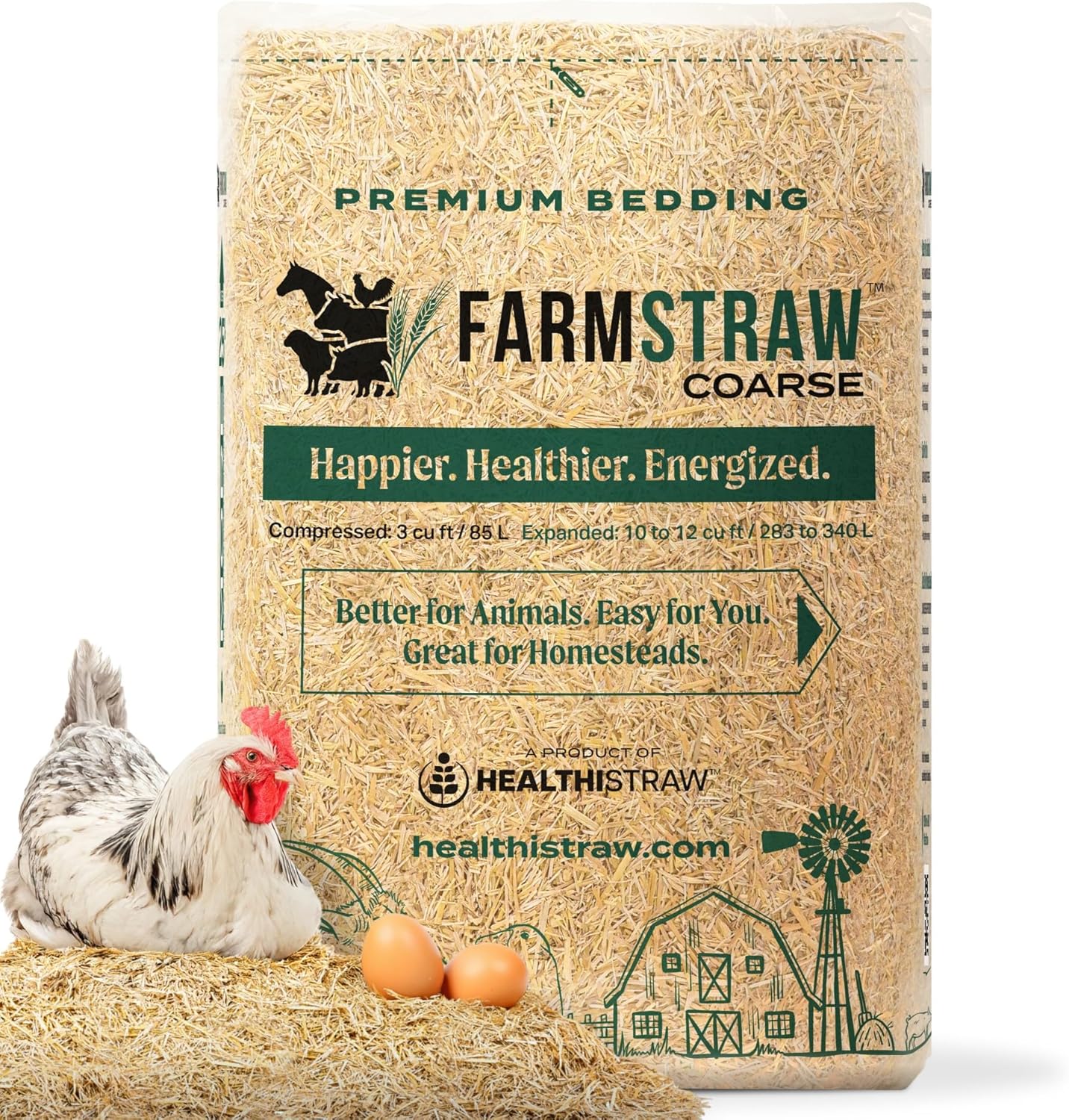
HealthiStraw FarmStraw Coarse-Cut 3 cu ft Compressed Wheat Straw Bedding
| Material Type | 100% Non-GMO Wheat Straw |
|---|---|
| Included Components | FarmStraw Fine Cut Chicken Bedding, 3 cu ft (25lb) |
| Specific Uses For Product | Chicken coops, nesting boxes, chick brooders, chicken runs and hen houses |
| Additional Features | Biodegradable, Eco-Friendly, Lightweight |
HealthiStraw FarmStraw is a compressed 3 cu ft bale of coarse 2–3 inch non-GMO wheat straw that expands to more than 10 cu ft for use as bedding and mulch in chicken coops, runs, and nesting boxes. The coarse cut produces a fluffy, insulative layer that cushions birds and helps protect eggs while wicking moisture and controlling odors by pulling dampness down into the straw. The product is cleaned to be low-dust, making it easier on flock respiratory health compared with dusty alternatives. It is lightweight to move when compressed and decomposes faster than wood-based bedding, so spent material can be composted to enrich garden soil. Important limitations are that a single 3 cu ft bale is modest coverage for larger runs and straw can mat in very wet climates, so occasional turning or replacement will be required to keep the run dry and clean. For run mulching, expect to top up periodically and monitor for compaction in high-traffic zones.
Best for: Buyers who want a practical, easy-to-store bedding and mulch that improves coop dryness and compostability while minimizing dust exposure for their flock. Good fit for owners who rotate and manage bedding regularly to optimize coop hygiene.
Less Ideal for: Not the best choice for owners who need a one-time, long-term ground cover for very large outdoor runs without regular maintenance or for extremely wet climates where straw will stay soggy.
- Expands from a compressed 3 cu ft bale to cover 10+ cu ft for easy storage and deployment
- Coarse 2–3 inch cut offers insulation and cushioning for birds and eggs
- Low-dust, all-natural cleaning process supports better respiratory conditions
- Wicks moisture and helps control odors by absorbing from the bottom up
- Biodegradable and decomposes faster than wood alternatives for composting use
- Single bale provides limited coverage for large runs so frequent top-ups may be needed
- Can compact or mat in persistently wet conditions requiring more maintenance
Verdict: A compact, low-dust wheat straw bale that expands into a fluffy, insulative bedding and mulch ideal for practical coop owners who prioritize dryness and easy composting.
HealthiStraw GardenStraw Premium Garden Mulch, 3 cu ft

| Net volume | 3 cu ft |
|---|---|
| Intended use | Garden mulch, lawn seeding, compost-friendly |
| Material | 100% wheat straw |
| Source | Sustainably sourced, non-GMO |
HealthiStraw GardenStraw is a 3 cubic foot compressed bale of cleaned wheat straw formulated for use as garden mulch and seed protection. It is designed for vegetable, herb, flower and shrub beds where you want a lightweight, compostable mulch that retains soil moisture and suppresses weeds. The straw is processed to reduce dust and stray seeds and the short, specially cut fibers interlock when watered so the mulch stays in place without chemical tackifiers. For bushes you can apply a 2 to 3 inch layer around the drip line to cut evaporation, reduce compaction and gradually add organic matter as it breaks down. Practical benefits include easy spreading from a compressed bale, fast composting into the soil, and reduced watering needs. Limitations are that straw is less decorative than bark or wood chips and will decompose faster, so it requires periodic replenishing; it also provides less long-term weed barrier than heavier mulches. For gardeners focused on soil health and moisture conservation, it is a straightforward, low-risk choice.
Best for: Gardeners who prioritize soil health and want an easy-to-apply, compostable mulch for shrubs and mixed beds that reduces watering and improves organic matter over time.
Less Ideal for: People seeking a long-lasting, decorative mulch or a heavy-duty weed barrier for high-traffic beds should consider wood chips or stone instead.
- Cleaned, non-GMO wheat straw with reduced dust and seeds
- Fibers interlock when wetted so the mulch stays in place without binders
- Helps retain soil moisture and can reduce watering needs substantially
- Composts quickly and adds organic carbon to improve soil structure
- Decomposes faster than wood mulches so it needs topping up more often
- Less decorative and provides a lighter-duty weed barrier compared with heavier bark or rock mulches
Verdict: A clean, fast-composting straw mulch that conserves moisture and improves soil health, making it a safe, practical choice for mulching bushes.
Choosing the Right Mulch for Peas: Key Factors to Consider
Moisture Retention and Timing
Peas prefer steady moisture from seed to flowering. A mulch that conserves soil moisture reduces how often you need to water, which is especially important during germination and early vine growth. Consider how quickly the mulch wicks water or sheds it; some mulches trap moisture at the surface while others allow water to penetrate more easily.
Timing matters because early-season peas like cool, moist soil; heavy mulches applied too early can keep soil cold and slow germination. Apply thin layers at sowing or use a lighter material until seedlings are established, then add more if needed to maintain even moisture.
Soil Temperature Moderation
Peas do best in cool conditions, so a mulch that significantly raises soil temperature can stress plants or shift flowering time. Materials that reflect sunlight or provide insulating air pockets help keep the root zone cooler on warm spring days. Conversely, in climates with late cold snaps, a temporary insulating cover can protect seedlings from frost.
Think about local climate and planting date. In cool spring climates choose mulches that moderate heat rather than accumulate it. In warmer regions select lighter, more breathable options to avoid overheating the crown and root zone.
Weed Suppression Without Smothering
A good mulch reduces weed pressure so peas do not have to compete for nutrients and moisture. However, peas are low to medium height plants and can be overwhelmed if mulch is piled against stems or if dense materials prevent light and air from reaching seedlings. Choose a mulch that suppresses weed growth but can be applied in a controlled thin layer near seed rows.
Also consider how easily you can remove or thin the mulch for hand-weeding and harvesting peas. Materials that mat into a hard layer over time may be effective at suppressing weeds but harder to manage around delicate vines.
Decomposition Rate and Soil Health
Organic mulches that break down add organic matter and feed soil microbes, which benefits peas over the season and for subsequent crops. But fast-decomposing materials may require topping up more often and can temporarily immobilize nitrogen if they are very high in carbon and not well aged.
Assess how quickly a mulch will decompose in your climate and whether it will need replenishing. Slow-decomposing materials give longer-lasting coverage but contribute less immediate organic matter. A balance between longevity and soil improvement is ideal for crop rotations that include legumes.
Ease of Application and Maintenance
Gardeners need mulches that are straightforward to apply around seed drills, transplants, and trellised rows. Lightweight materials that blow away can be frustrating in windy sites, while heavy options may compact and restrict airflow. Consider whether the mulch is easy to spread, remove for harvesting, or add to between succession plantings.
Also think about storage, cleanup, and whether the mulch introduces weed seeds or pests. Low-dust, pre-composted materials are generally easier to work with in small garden plots and raised beds.
Mulch Use in Different Planting Situations
Peas are planted in a range of setups from sowing directly in-ground to containers and raised beds. In containers you want a light, well-draining mulch that prevents rapid drying without adding too much weight. In raised beds choose a mulch that contributes organic matter and maintains even moisture across the bed.
For direct-seeded rows keep the mulch thin until seedlings emerge so soil warms and seeds do not rot. For established vines, a thicker layer can suppress weeds and reduce evaporation as plants enter the pod-filling stage.
- Containers: light, breathable mulches that allow drainage
- Raised beds: mulches that build organic matter and moderate moisture
- Direct seed: thin initial coverage to avoid cold, wet conditions
Applying Mulch Around Young Seedlings
When sowing peas, leave the seed line exposed or apply a very light dusting of mulch. After the seedlings are 2 to 3 inches tall, carefully add more mulch, keeping it pulled slightly away from the stem base to prevent crown rot. Avoid burying the stem or packing mulch tightly against young growth.
If you need to thin or remove mulch for watering or weeding, do this gently to avoid damaging shallow roots. Periodic checks help you gauge whether you need to add more mulch as the season advances.
- Hold mulch 1 to 2 inches away from stems
- Use finger-thin application at sowing, then increase after emergence
- Replace or top up thin layers rather than piling on all at once
Managing Mulch Through the Season
Monitor mulch condition after heavy rain and as decomposition progresses. Organic mulches may compact and restrict airflow if left in place for too long; loosen or refresh them midseason if needed. For succession planting, clear mulch from the row area, sow the next seed batch, and then reapply a light cover.
At season end, incorporate fully decomposed mulch into the bed as a soil amendment or leave a final layer to protect soil structure over winter depending on your rotation plan.
- Refresh decomposing mulch midseason to maintain coverage
- Remove or thin mulch for succession sowing and harvest access
- Incorporate well-rotted material at season end to build soil
Common Mistakes Gardeners Make
A frequent error is using too thick a layer at sowing, which keeps seedbeds too cold and wet. Another is choosing a mulch that sheds water and prevents rain from reaching shallow seeds. Some gardeners also forget to check for weed seeds in straw or hay mulches; contaminated material can increase work instead of reducing it.
Finally, not adjusting mulch strategy by climate and planting date leads to avoidable problems. What works in a warm late-spring planting may be the opposite of what is needed for an early cool-season sowing.
- Avoid heavy layers at sowing
- Check straw or hay for weed seeds
- Match mulch choice to regional climate and planting time
Companion Practices That Improve Mulch Success
Pair mulching with proper soil preparation. Firm, level seedbeds with good drainage reduce the risk of seed rot under mulch. Adding a light sidedressing of balanced fertilizer or compost at planting supports early growth; avoid high-nitrogen top dressings that can cause excessive leaf growth at the expense of pods.
Use supports and trellises so vines are held above the mulch surface. This improves airflow, reduces disease risk, and makes harvesting easier without disturbing the mulch layer.
- Prepare a well-draining seedbed before mulching
- Use trellises to keep vines off the mulch
- Top up mulch rather than reapplying large amounts midseason
How We Chose the Best Mulch for Peas
We focused on practical garden performance and compatibility with legumes when selecting mulches for peas. Editorial filters prioritized materials that stabilize soil moisture, moderate surface temperature, and break down into beneficial organic matter without interfering with root nodulation. We measured suitability by looking at breathability, decomposition rate, weed suppression effectiveness, and ease of application in small vegetable plots and raised beds. Excluded items were decorative or landscape-only mulches that routinely raise bed temperatures or introduce persistent contaminants. Mulches that shed fine dust or contain high weed-seed loads were also filtered out. The main dimensions that guided inclusion were moisture retention, cooling effect at the soil surface, contribution to soil organic matter, and how well the mulch works around short-statured vines without smothering seedlings. We also considered gardener ergonomics such as how easy a mulch is to apply, adjust, and remove for harvest and succession planting.
FAQ
Can peas be grown without mulch?
Yes. Peas will grow without mulch, but you will usually need more frequent watering and weeding. Mulch reduces early competition and stabilizes soil moisture, which often improves uniform germination and reduces maintenance.
When is the best time to apply mulch for peas?
Apply a light mulch at sowing or wait until seedlings are a couple of inches tall. Thicker layers are safest after plants are established to avoid cold, waterlogged seeds in cool soils.
Will mulch interfere with nitrogen fixation in peas?
Most mulches do not prevent root nodulation if the soil has healthy microbial life and nodulating inoculant was used when needed. Very high-carbon fresh materials may temporarily tie up nitrogen as they break down, so use well-aged or composted materials near young legumes.
How thick should mulch be for established pea vines?
For established vines a 1 to 3 inch layer is typically effective. Keep mulch thinner near stems and avoid packing it tightly to maintain airflow and prevent crown rot.
Is straw or hay better for pea beds?
Straw is usually better because it contains fewer weed seeds than hay. Pre-tested, weed-free straw reduces the chance of introducing new weeds, while hay often contains seed and can increase weed pressure.
Final Verdict
Pick a mulch that balances moisture retention and soil cooling for peas, taking into account your planting date and local climate. Favor materials that suppress weeds yet remain breathable and easy to manage around low vines. Prioritize a mulch that contributes to soil health without creating conditions that delay germination or foster crown issues. With the right tradeoffs in mind, you can choose a mulch that reduces work and supports steady pod production.
