

Note: This article contains affiliate links. If you click on these links and make a purchase, I may earn a small commission at no extra cost to you. This helps support my research and content. Read my full affiliate disclosure here.
If you need reliable screening, vertical green structure, or a living windbreak, choosing the right evergreen trellis plants changes how a garden performs across seasons. The wrong species can grow too slowly, become unruly, or struggle in your climate. This guide looks at seven shortlisted evergreen trellis plants suited to a range of gardens and trellis types. We focus on traits gardeners care about most: winter foliage retention, climbing or espalier habit, and how much pruning and support each plant needs. Read on for concise practical notes that help you pick the best evergreen climbers for privacy, year-round structure, or a low-fuss green wall.
Top Picks at a Glance
| Best Overall The best all-around choice for most situations | Florida Foliage Confederate Jasmine (60 Plants) |  |
| Best Quality Built to a higher standard if you want something more solid | Flora's Market Confederate Jasmine (3 Gallon) with Planting Kit |  |
| Best Value The sweet spot between price and what you get | Florida Foliage Creeping Fig (Ficus pumila) — 10 Live Plants |  |
| Best Budget The cheapest option that still gets the job done reliably | PERFECT PLANTS Yellow Carolina Jessamine (1 Gallon) Live Vine |  |
| Highest Rated A top-rated pick with lots of positive feedback | Plants by Mail Star Jasmine 'Large Leaf' (2.5 Quart) – Evergreen Climbing Vine |  |
| Most Popular A crowd favorite that many people choose with confidence | Perfect Plants Confederate Jasmine (2-Pack), Star Vine, 1 Gal |  |
| Best Seller A high-volume bestseller chosen again and again | CitronellaKing Star Jasmine (Trachelospermum jasminoides) — 6 Starter Plants in 3.5" Cubes |  |
Florida Foliage Confederate Jasmine (60 Plants)

| Sunlight Exposure | Full Sun |
|---|---|
| Unit Count | 60 Count |
| Plant or Animal Product Type | Shrub & Hedge |
These Confederate jasmine plants are sold as a large pack designed for fast, extensive planting across trellises, fences, or as ground cover. The species is an evergreen twining vine with glossy foliage and fragrant white flowers that bloom in clusters, and it is typically used to climb supports, soften walls, or fill landscape beds. The listing emphasizes vigorous growth and adaptability to full sun or partial shade and a range of soils, which makes establishing a continuous screen or floral display straightforward once the plants take hold. Practical benefits include year-round greenery, strong scent during bloom, and a low-maintenance habit after establishment. Important limitations are that this is a bulk bundle intended for mass planting rather than specimen pots, and buyers should plan for spacing, support structures, and initial watering until roots are established. Because plants arrive live, success depends on timely planting and appropriate site selection rather than on any added guarantees in the listing.
Best for: Gardeners planning to establish an evergreen flowering screen or extensive trellis coverage who want low-maintenance, fast-growing vines delivered in quantity.
Less Ideal for: Buyers seeking a single specimen plant, immediate mature coverage, or someone who prefers clearly specified pot sizes and planting instructions.
- Sold as a large 60-plant bundle for quickly establishing continuous coverage
- Evergreen habit provides year-round foliage
- Fragrant white flowers add seasonal scent and visual interest
- Adapts to full sun or partial shade and various soil types
- Pack is for mass planting and may include smaller nursery sizes requiring time to fill in
- No planting size, pot size, or detailed care schedule provided in the listing
Verdict: If you need a cost effective way to cover trellises or create a fragrant evergreen screen, this 60-plant Confederate jasmine bundle delivers rapid establishment and year-round interest.
Flora's Market Confederate Jasmine (3 Gallon) with Planting Kit

| Indoor Outdoor Usage | Outdoor |
|---|---|
| Sunlight Exposure | Full Sun-Partial Shade |
| USDA Hardiness Zone | 7-10 |
This Confederate Jasmine (Trachelospermum jasminoides) is a fragrant, evergreen climbing vine intended for covering trellises, fences, pergolas, or used as a dense groundcover. It ships nursery-ready in a 3-gallon pot and includes planting mix, fertilizer, and a guide to simplify establishment. The plant thrives in full sun to partial shade and produces abundant white, star-shaped flowers in late spring and early summer that attract pollinators and create a strong scent around patios. Its evergreen foliage provides year-round screening and visual structure while the vine can be trained on supports to reach significant heights. The plant is drought-tolerant once established and performs best in USDA zones 7 to 10. Limitations to consider are its climate range and need for a support structure for vertical use; in cooler zones it will not behave as a reliable evergreen and it requires periodic pruning to control vigorous growth. The included planting kit helps new growers get started, but long-term performance depends on appropriate siting and support.
Best for: Gardeners who want a fast-establishing, scented evergreen vine to create quick screening or cover trellis structures and who prioritize strong seasonal fragrance and year-round foliage.
Less Ideal for: Those in colder regions outside the plant’s hardiness range or gardeners seeking a low-maintenance, non-climbing groundcover with minimal pruning needs.
- Fragrant, abundant white blooms that attract pollinators and scent outdoor living areas
- Evergreen foliage provides year-round coverage for trellises and fences
- Includes planting kit with nursery-grade fertilizer, premium mix, and a planting guide
- Tolerates full sun to partial shade and becomes drought-tolerant after establishment
- Best suited to USDA zones 7 to 10 so not reliable as an evergreen in cooler climates
- Vigorous climber that needs a support structure and regular pruning to prevent overgrowth
Verdict: Choose this Confederate Jasmine when you want a fast-growing, fragrant evergreen vine that reliably covers trellises and creates year-round screening in warm climates.
Florida Foliage Creeping Fig (Ficus pumila) — 10 Live Plants

| Indoor Outdoor Usage | Indoor |
|---|---|
| Sunlight Exposure | Full Sun |
| USDA Hardiness Zone | 7 |
| Moisture Needs | Regular Watering |
Florida Foliage Creeping Fig arrives as a set of ten live plants intended to establish quickly as a dense evergreen cover for walls, trellises, fences, or as a groundcover. It tolerates full sun to partial shade and adapts to a range of soils, so you can plant it along a vertical structure or in containers to train onto a support. The main benefits are rapid coverage and low ongoing care once established; regular watering and occasional pruning are the primary upkeep tasks. Because the vine clings strongly to surfaces, it creates a smooth green blanket that softens hardscapes and fills gaps in a trellis without much training. Limitations to plan for are its vigor in warm climates where it can become invasive if not managed and the need to protect it or move containers in regions that experience frost, since it is rated for zone 7 and up. Practical gardeners will appreciate the cost-effective ten‑plant pack for establishing quick coverage, but expect to spend a little time early on training and periodic trimming to keep growth controlled.
Best for: Gardeners who want an efficient, low‑effort evergreen to quickly cover a trellis or soften walls and who plan to manage growth proactively.
Less Ideal for: Those seeking a slow‑growing, low‑spread specimen or gardeners in consistently cold climates who cannot provide winter protection.
- Fast establishment for rapid wall or trellis coverage
- Versatile use as groundcover, climber, or container plant
- Tolerates full sun to partial shade and various soils
- Low maintenance after establishment with only occasional pruning
- Can become overly vigorous and require regular control in warm climates
- Not winter hardy below USDA zone 7 so may need protection or indoor overwintering
Verdict: Buy this pack if you want fast, affordable evergreen coverage for trellises and walls that establishes quickly and fills in gaps with minimal ongoing effort.
PERFECT PLANTS Yellow Carolina Jessamine (1 Gallon) Live Vine

| Sunlight Exposure | Full Sun |
|---|---|
| Item Type Name | 1 Gal Yellow Carolina Jessamine |
| Plant or Animal Product Type | Shrub & Hedge |
| Unit Count | 1 Count |
This 1-gallon Yellow Carolina Jessamine is a fragrant, evergreen climbing vine intended for trellises, fences, arbors, or banks where you want year-round foliage and spring color. It arrives as a young, potted vine that will be trained to climb or permitted to sprawl; with full sun to partial shade it establishes quickly in well-draining soil and becomes drought tolerant once rooted. Key features noted by the seller include vigorous growth to 10–20 feet at maturity, glossy dark green leaves and abundant yellow trumpet flowers that create a strong spring display and add fragrance. Practical benefits are its versatility as a vertical screen or erosion-control groundcover and low-maintenance habit after establishment. Important limitations are shipping restrictions to several states and the need to plant somewhere with room for a large mature size and support for climbing; it also requires regular watering while establishing. For budget-minded gardeners this one-gallon size is a cost-effective way to start a trellis planting but expect a season or two of growth before seeing the full mature effect.
Best for: Gardeners who want an affordable, fragrant evergreen vine to create a quick trellis screen or add vertical interest and are willing to wait a season or two for full maturity.
Less Ideal for: Those with very small patios, containers, or buyers who need an instantly full specimen; also not suitable if your state is within the seller's shipping restrictions.
- Evergreen foliage provides year-round screening and structure
- Fragrant, abundant spring flowers create strong seasonal visual and scent impact
- Versatile: can be trained on trellises or used as groundcover or for erosion control
- Becomes drought tolerant after establishment, lowering long-term water needs
- Vigorous mature size (10–20 feet) requires space and support
- Cannot be shipped to certain states which limits availability for some buyers
Verdict: A budget-friendly way to add an evergreen, fragrant vine to a trellis or fence that fills in over a few seasons.
Plants by Mail Star Jasmine 'Large Leaf' (2.5 Quart) – Evergreen Climbing Vine

| Expected Blooming Period | Spring to Summer |
|---|---|
| Sunlight Exposure | sun to partial shade |
| USDA Hardiness Zone | 9 |
| Moisture Needs | Moderate Watering |
| Soil Type | Loam Soil |
This large-leaf Star Jasmine is a versatile, fast-growing evergreen vine that is typically used on trellises, arbors, fences, or as a groundcover. It produces clusters of fragrant white, star-shaped flowers in late spring through summer and can be trained to reach tall supports where it will twine and fill in quickly. The plant prefers full sun but tolerates partial shade and benefits from regular watering during its first seasons to establish strong roots. Practical features include vigorous twining habit that makes it easy to train on a trellis and glossy leathery leaves that provide year-round greenery. Expect steady vertical coverage and strong fragrance that attracts pollinators. Limitations to consider are its USDA zone preference (best in warmer climates) and the need for routine watering and occasional pruning after flowering to keep it neat and encourage denser growth. For gardeners wanting a reliable, fragrant climber for sunny trellis sites, this jasmine is a straightforward choice.
Best for: Gardeners who want a reliable, fragrant climber to quickly cover a sunny trellis or fence and value year-round evergreen screening with seasonal blooms.
Less Ideal for: Those in consistently cold climates or gardeners seeking a low-water, drought-tolerant climber should consider alternative species better adapted to cooler or xeric conditions.
- Fast-growing twining habit that quickly covers trellises and fences
- Fragrant clusters of white star-shaped flowers in spring and summer
- Evergreen glossy foliage provides year-round screening
- Tolerates full sun to partial shade and attracts pollinators
- Best suited to warmer USDA zones so may not survive cold winters without protection
- Requires regular watering and occasional pruning to maintain shape and vigor
Verdict: Choose this Star Jasmine when you need a fast, fragrant evergreen climber to quickly fill a full-sun trellis and provide seasonal white blooms.
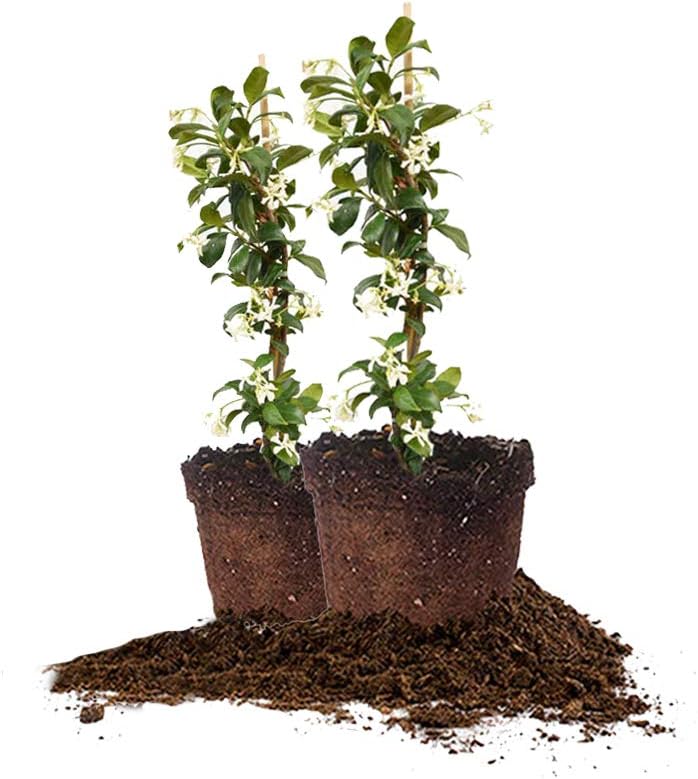
Perfect Plants Confederate Jasmine (2-Pack), Star Vine, 1 Gal
| Indoor Outdoor Usage | Outdoor |
|---|---|
| Expected Blooming Period | Spring |
| Sunlight Exposure | Full Sun, Partial Shade |
| Moisture Needs | Moderate Watering |
| Unit Count | 1 Count |
These two Confederate jasmine vines arrive in individual 1‑gallon nursery pots and are meant to be trained on fences, trellises, railings or other supports to form a fragrant, evergreen screen. They perform best in full sun to part shade and are rated for USDA zones 7–11, so on a shaded porch they will tolerate lower light but bloom most reliably where they get some sun. The plants are described as easy to establish; new arrivals need deep watering every day or two for the first two weeks and can drop some leaves while roots settle. Notable features are the glossy evergreen foliage, sweet white pinwheel flowers in spring and early summer, and organic plant material. Limitations include that each order contains small 1‑gallon pots so expect a period of growth before reaching the listed mature height, and some variability between the two plants. Buyers should plan to provide a structure and basic training to get a neat coverage and to monitor moisture while the plants establish.
Best for: Gardners who want a fragrant, evergreen climbing vine to train on a porch trellis or railing and who prefer a low‑maintenance plant that establishes quickly with basic watering.
Less Ideal for: Those seeking instant privacy or mature coverage right away or gardeners unwilling to train or support vines as they grow.
- Two evergreen vines per order for quicker coverage when planted together
- Fragrant white spring blooms that add scent to a porch area
- Tolerates full sun to partial shade, making it adaptable to sheltered porches
- Ships in 1‑gallon nursery pots so plants are ready to plant immediately
- Described as easy to establish with straightforward watering guidance
- Plants are small 1‑gallon specimens so visual impact takes time as they grow to mature height
- Some leaf drop and minor shipping damage to stems is possible during establishment
Verdict: A practical choice for porch gardeners who want a fragrant, adaptable evergreen vine they can train for seasonal blooms and long‑term screening.
CitronellaKing Star Jasmine (Trachelospermum jasminoides) — 6 Starter Plants in 3.5" Cubes

| Indoor Outdoor Usage | Outdoor |
|---|---|
| Expected Blooming Period | Spring, Summer |
| Sunlight Exposure | Full Sun to Partial Shade |
| USDA Hardiness Zone | 7-11 |
| Moisture Needs | Moderate Watering |
These Star Jasmine starters arrive ready to plant and are well suited for creating an evergreen, fragrant screen on a trellis or fence. The plants are fast-growing climbers with glossy foliage and clusters of white, star-shaped flowers that bloom in spring and summer and provide a persistent sweet scent. They tolerate full sun to partial shade, handle moderate drought once established, and are described as pet friendly and low-maintenance, which makes them easy to integrate into a home landscape. Practical features include small nursery cubes that are easy to transplant and clear care guidance for the first days after arrival. Limitations to expect are the usual timeframe for an immediacy of coverage since multiple seasons of growth and occasional pruning are needed to reach the advertised height and density, and they require well-draining soil and sensible winter protection in the cooler end of their hardiness range. For someone who prefers reliable, low-fuss climbers for a scented evergreen trellis, these starters are a straightforward option.
Best for: Home gardeners who want a dependable, low-maintenance evergreen climber to establish a scented trellis or privacy screen without complicated care.
Less Ideal for: Gardeners seeking instant, full coverage or those in colder climates outside USDA zones 7–11 should consider faster temporary screening options or hardier species.
- Fragrant white blooms that add scent to patios and walkways
- Evergreen, glossy foliage provides year-round coverage
- Adaptable to full sun or partial shade and moderately drought tolerant
- Sold as well-rooted starter plants in nursery cubes for easy transplanting
- Will take multiple seasons and regular pruning to achieve dense trellis coverage
- Hardiness limited to USDA zones 7–11 so may need winter protection in cooler areas
Verdict: A reliable, easy-care evergreen climber that delivers fragrant seasonal blooms and year-round foliage for trellises and privacy screens.
Choosing the Right Evergreen Trellis Plants: Key Factors to Consider
Winter Foliage Retention
Evergreen trellis plants are chosen for their ability to retain leaves or persistent foliage through the colder months. Plants that drop leaves or go bare in winter will not provide the visual privacy or wind protection gardeners expect. Consider how dense the foliage remains in your local winter temperatures and how long color or texture persists on stems and leaves.
Foliage retention can vary by cultivar and microclimate. South-facing walls, sheltered courtyards, or frost pockets can change how evergreen a species behaves. When privacy through winter is a priority, favor species and cultivars known to keep leaves down to at least the typical low temperatures in your area.
Climbing Habit and Attachment Method
Different evergreen climbers attach and ascend in different ways. Some use adhesive pads or aerial roots that cling directly to walls, while others twine or need training onto wires and trellis slats. The attachment method affects what structures are safe to use and how easily a plant can be moved or removed without damaging masonry or fencing.
Think about the structure you plan to use. Lightweight trellis panels and wires suit twining plants, while self-clinging species are better for smooth walls. If you anticipate changing the support later, choose a climber that can be trained to wires rather than one that firmly attaches to surfaces.
Growth Rate to Coverage
Growth rate determines how quickly a trellis becomes an effective screen. Fast growers can provide quick privacy but often need more frequent pruning and stronger supports. Slow growers are lower maintenance once established but require patience and possibly temporary screening while they mature.
Estimate how much vertical coverage you need and how soon. For immediate screening, combine faster-establishing specimens with structural elements or choose a vigorous species that tolerates regular cutting back. For long-term, low-maintenance screens, prioritize moderate growers with dense branching.
Pruning and Maintenance Requirements
Evergreen trellis plants vary from near-no-maintenance to requiring seasonal pruning to keep shape and health. Pruning influences flowering, airflow, and long-term form. Plants that tolerate hard pruning give you flexibility to control size, while those sensitive to heavy cuts need more careful, ongoing shaping.
Also consider pest and disease susceptibility, which can increase maintenance. Choose species that are resilient in your region to avoid frequent interventions. Think about access for pruning tools, ladder safety, and whether the plant produces debris that must be cleared regularly.
Climate Hardiness and Heat Tolerance
A plant that thrives in one climate may struggle in another. Hardiness to winter cold and tolerance of summer heat and dryness determine which evergreen trellis plants will do well without constant care. Microclimates, such as urban heat islands or sheltered south walls, can expand the range of species you can grow.
Match plants to your USDA or equivalent hardiness zone and account for extremes like late frosts or prolonged heat. If you plan to grow in containers on a patio, remember that pots can expose roots to colder or hotter conditions, so choose plants with appropriate root hardiness for container culture.
Support Structure and Installation
The type of trellis, wire system, or fence you use affects long-term plant health and safety. Heavier, woody climbers need sturdy framing and anchoring, while lightweight or young plants will flourish on simpler supports. Installation also determines maintenance access and whether the structure can bear a mature plant's weight.
Consider material longevity in outdoor conditions. Metal wires, rot-resistant timber, and corrosion-resistant fixings last longer and reduce the need to rebuild supports. Match the support spacing to the plant's branch spacing so shoots can weave naturally without excessive tying.
Best Uses for Evergreen Trellis Plants
Evergreen trellis plants work well for privacy screens, living fences, windbreaks, or ornamental green walls. Choose a vigorous screen where you need fast coverage, and a slower, denser species for a permanent architectural feature.
On patios and balconies, lean toward species that tolerate pruning and pot culture. For free-standing garden trellises, select plants with flexible stems that weave easily through lattice or wire.
- Privacy panels: choose dense-leaved climbers that fill gaps quickly
- Architectural espalier: use rigid-stemmed evergreens that respond to training
- Container screening: prefer compact, root-tolerant species
Planting and Early Training Tips
Plant at the right depth and close enough to the support that new stems can reach the trellis without excessive tying. For most climbers, position the root flare slightly above final grade so irrigation does not drown the crown.
Start training long shoots early. Use soft ties or twine to guide stems into the desired pattern, and remove any leaders that will compete with the main framework. Early investment in training reduces future heavy pruning.
- Place supports before planting when possible
- Space plants according to mature spread, not nursery size
- Use breathable ties that will not girdle stems
Irrigation and Feeding for Healthy Screening
Consistent moisture during establishment encourages deep roots and steady growth. Avoid waterlogged soil which can reduce evergreen leaf retention. Apply mulch to conserve moisture and suppress weeds, but keep it a few inches from the stem to prevent rot.
Fertilize conservatively according to soil tests. Overfeeding with high nitrogen can cause overly lush, weak growth that needs more pruning and may be more susceptible to pests and wind damage.
- Water deeply and infrequently to promote root depth
- Use slow-release fertilizers if soil is poor
- Top-dress with compost in spring to support steady growth
Managing Common Problems
Watch for signs of stress such as leaf drop, yellowing, or sparse winter foliage. Stress often points to poor drainage, incorrect planting depth, or insufficient light. Correct cultural issues before applying chemical solutions.
Pests like scale, aphids, or mites can be localized problems on evergreen screens. Encourage beneficial insects, use targeted horticultural oils if needed, and prune out heavily infested tissue to limit spread.
- Inspect new growth seasonally for pests and disease
- Improve airflow with selective thinning to reduce fungal risk
- Replace damaged support elements promptly to avoid plant collapse
Design Ideas for Vertical Evergreen Interest
Mix leaf textures and growth habits to avoid a flat green wall. Combine a dense-leaved climber with a more open, architectural evergreen to add depth and seasonal interest. Varying planting heights and staggered trellis panels create layered privacy and habitat niches for pollinators.
For formal gardens, use espaliered evergreens trained into clean geometric shapes. In informal settings, allow natural rambling habit on a strong support so the plant can form natural curtains and screens.
- Layer different climbers on separate wires to create depth
- Use clipped evergreen hedging at the base to conceal pot rims or trellis footings
- Include flowering evergreens where seasonal blooms are desired
How We Chose the Best Evergreen Trellis Plants
We selected plants based on measurable garden performance and real-world manageability. Key evaluation criteria included winter foliage retention to ensure year-round screening, natural climbing habit and attachment method so plants suit standard trellis types, and growth rate that affects how long it takes to fill a trellis. We also weighed cold hardiness zones and heat tolerance to match regional climates, plus pruning tolerance and maintenance needs so gardeners know how much effort is required after planting. Plants were excluded if they are typically invasive where commonly grown, if they require specialist structures beyond standard trellis systems, or if they lack reliable evergreen foliage in a wide range of climates. The shortlist favors species that establish on common supports, respond predictably to pruning, and provide practical structural benefits like dense foliage or durable stems. These dimensions align with the scorecard metrics used to evaluate each entry.
FAQ
How fast will an evergreen trellis plant fill a standard 6-foot trellis?
It depends on species and growing conditions. Vigorous climbers can cover a trellis in two to three growing seasons under favorable conditions, while moderate growers may take five years or more. Soil fertility, light, and moisture all influence the timeline.
Can evergreen trellis plants damage walls or fences?
Some self-clinging climbers can adhere tightly to masonry and may cause surface damage over many years. Twining or trained plants attached to wires are generally safer for walls. Choose attachment method based on the surface you want to protect.
Are evergreen trellis plants suitable for containers on a balcony?
Many evergreen climbers can be grown in large containers if the chosen species tolerates root restriction and your container receives regular watering. Select compact or slower-growing varieties and ensure winter protection for roots in cold climates.
How often should I prune an evergreen climber on a trellis?
Pruning frequency varies by growth rate and desired shape. Fast growers may need light shaping several times per season, with a heavier maintenance prune annually. Moderate growers often do well with one planned pruning each year.
Will evergreen trellis plants provide sound insulation?
Dense evergreen screens can help diffuse and slightly reduce noise by breaking up sound waves, but they are not a substitute for soundproofing structures. Heavier, thicker plantings with multiple layers work better than single thin climbers.
Final Verdict
Choose evergreen trellis plants based on how quickly you need coverage, how much pruning you are willing to do, and whether the plant suits your climate and support structure. Prioritize winter foliage retention and a compatible climbing habit for long-term screening success. Balance growth rate against maintenance needs so you get the level of privacy and visual structure you want without excessive upkeep.
