

Note: This article contains affiliate links. If you click on these links and make a purchase, I may earn a small commission at no extra cost to you. This helps support my research and content. Read my full affiliate disclosure here.
If your raised beds sit in a sunny spot all day, choosing the wrong plants leads to scorched leaves, rapid soil drying, and disappointing yields. The right selections tolerate high light, develop strong root systems in shallower soil, and use water efficiently so you get reliable color or harvests through long sunny stretches. This guide covers seven top plants suited for raised beds in full sun. Each was chosen for traits gardeners care about, including drought tolerance, canopy spread, and planting depth. Read on to see which types fit small beds, container-like raised beds, or longer vegetable troughs, and what to expect when you plant them.
Top Picks at a Glance
| Best Overall The best all-around choice for most situations | CZ Grain Camarosa Bare-Root Strawberry Crowns (10) |  |
| Best Quality Built to a higher standard if you want something more solid | Valley Greene Deluxe 30-Pack Heirloom Vegetable Seeds |  |
| Best Value The sweet spot between price and what you get | NatureZ Edge 1300+ Sunflower Seeds Variety Pack |  |
| Best Budget The cheapest option that still gets the job done reliably | MySeeds.Co SunSugar Cherry Tomato Seeds (15 count) |  |
| Highest Rated A top-rated pick with lots of positive feedback | DMOH Longevity Spinach Live Starter Plants (2 Count) |  |
| Most Popular A crowd favorite that many people choose with confidence | The Three Company Live Herb Assortment (6-Pack) |  |
| Best Seller A high-volume bestseller chosen again and again | Greenhouse PCA Jerusalem Artichoke (Sunchoke) Tubers, 20 Live Bulbs |  |
CZ Grain Camarosa Bare-Root Strawberry Crowns (10)

| Sunlight Exposure | Partial Sun |
|---|---|
| USDA Hardiness Zone | 3-11 |
| Expected Blooming Period | Summer to Fall |
| Moisture Needs | Moderate Watering |
| Soil Type | Loam Soil |
These Camarosa bare-root crowns arrive dormant with fibrous roots and a visible crown ready for transplanting into prepared raised beds or large containers. Camarosa is a June-bearing variety prized for glossy, firm red berries best harvested when fully ripe. Planting is straightforward: spread the roots in a hole, set the crown at soil level, and keep evenly moist while plants establish. The plants prefer full sun, loam soil, and moderate watering, and they perform well across USDA zones 3 through 11, making them versatile for many climates. Notable features are the extended bloom time into summer and fall and the variety's suitability for raised beds where drainage and soil fertility can be controlled. Expect a concentrated seasonal harvest rather than continuous fruiting, so plan crops or succession planting if you want longer picking. As bare roots, these require initial care to establish and will not fruit immediately like mature potted plants, so patience and proper planting depth are important for best results.
Best for: Gardeners who want a reliable, flavorful June harvest from raised beds or large containers and value varieties that set firm, transportable fruit.
Less Ideal for: Growers who need continuous summer-long production or immediate fruit from mature plants should consider everbearing varieties or established potted plants instead.
- Sold as bare-root crowns for easy transplanting into raised beds or containers
- June-bearing Camarosa produces firm, glossy berries favored for fresh eating and preserves
- Wide USDA zone range (3–11) so suitable for most temperate climates
- Extended bloom period and white flowers add visual interest before fruiting
- Produces a concentrated seasonal crop rather than continuous harvest
- Requires correct crown planting and attentive moisture while establishing
Verdict: Choose these Camarosa bare-root crowns for raised beds when you want a dependable, high-quality June harvest of firm, flavorful strawberries.
Valley Greene Deluxe 30-Pack Heirloom Vegetable Seeds
| Indoor Outdoor Usage | Outdoor |
|---|---|
| Other Special Features of the Product | High Germination Rate |
| Sunlight Exposure | Partial Sun |
| Soil Type | Loam Soil |
| Material Features | GMO Free, Heirloom |
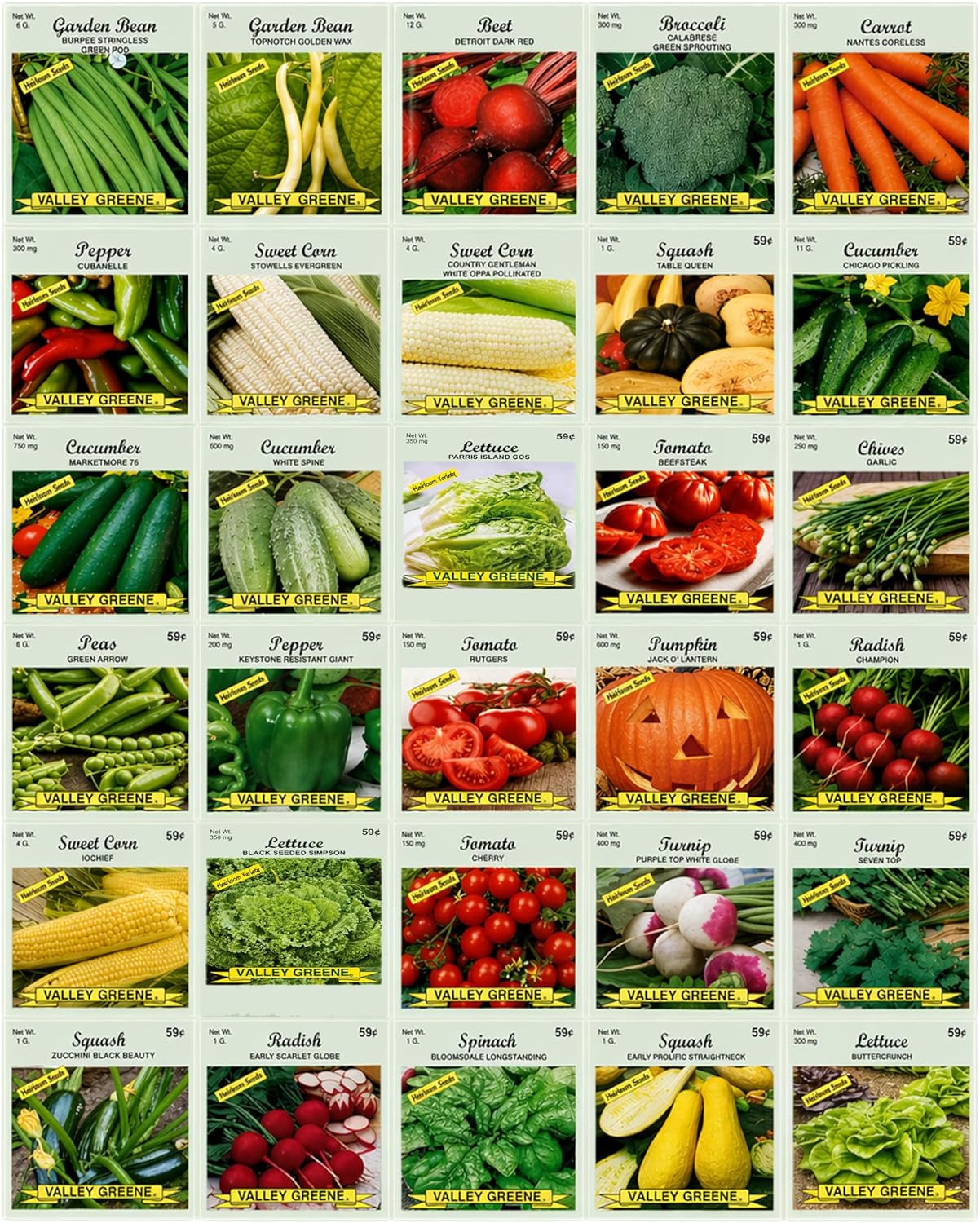
This 30-pack from Valley Greene supplies thirty different heirloom vegetable seed packets intended to kickstart a diverse outdoor vegetable garden. The seeds are labeled non-GMO and the listing emphasizes a high germination rate, typically producing sprouts within 7 to 14 days when sown in loam soil with partial sun exposure. Typical use is direct sowing or starting in flats for transplanting; the assortment makes it easy to trial many varieties without buying full-size seed packets. Practical benefits include broad variety for succession planting, an implied longer-term viability if stored cool and dry, and heirloom genetics for seed saving. Limitations to expect are lack of specific variety names and growing details on the listing, so gardeners should be prepared to research spacing, days-to-harvest, and cold tolerance for each type. Also the packet set is a general-purpose mix aimed at outdoor partial-sun sites, so it is less useful for strictly indoor or full-sun specialist plantings.
Best for: Gardeners who want to maximize output and diversity per dollar and prefer practical, tried-and-true heirloom varieties for outdoor beds and trial plantings.
Less Ideal for: Growers seeking documented cultivar names, certified organic labeling, or seed mixes designed specifically for indoor growing or full-sun specialty crops.
- Large variety with 30 different vegetable seed packets in one purchase
- Heirloom, non-GMO seeds suitable for saving seed from mature plants
- High germination rate claimed with sprouts commonly in 7–14 days
- Seeds are dated and store well if kept cool and dry
- Listing does not identify individual varieties or provide specific growing timelines
- Not tailored for full-sun only gardens or specialized crop needs
Verdict: A cost-effective way to add wide vegetable variety to an outdoor garden while relying on heirloom, non-GMO seed with strong germination potential.
NatureZ Edge 1300+ Sunflower Seeds Variety Pack

| Unit Count | 1300 Count |
|---|---|
| Sunlight Exposure | Full Sun |
| Expected Planting Period | Summer |
| Expected Blooming Period | Fall, Summer |
| Material Features | GMO Free |
This NatureZ Edge variety pack bundles more than 1,300 sunflower seeds across several types so you can plant a mix of heights and colors in a single raised bed. The mix includes compact varieties and tall types that range up to about 7 feet, which lets you plan for background tall plants and shorter foreground specimens in full sun. Seeds are labeled non-GMO and the listing highlights a high germination rate, so with regular moderate watering and summer sowing you can expect steady emergence and weeks of blooms through the season. The variety pack is convenient for seeding a contiguous area or succession planting to extend color. Limitations are that individual variety counts are not separated on the packet and exact germination percentage is not specified, so you may need to overseed in spots where you want denser displays. For raised beds in full sun the diversity here helps create layered height without buying separate packets of single cultivars.
Best for: Gardeners who want a practical, all-in-one sunflower mix to fill raised beds with layered height and continuous summer blooms without buying multiple single-variety packets.
Less Ideal for: Growers seeking precise cultivar selection, exact variety ratios, or certified germination figures should choose single-variety seed packets instead.
- Variety pack covers many cultivars so you can create mixed-height, multi-color plantings
- Non-GMO seeds with stated high germination rate for reliable starts
- Sufficient seed count (about 1,300) to seed a raised bed area or multiple successive plantings
- Designed for full sun and summer sowing, matching raised-bed sun exposure
- Packet does not break out individual counts per variety so exact ratios are unknown
- No specific germination percentage printed, so expected emergence is approximate
Verdict: A convenient mixed sunflower seed pack that lets you quickly fill sunny raised beds with layered heights and season-long blooms.
MySeeds.Co SunSugar Cherry Tomato Seeds (15 count)

| Unit Count | 15 Count |
|---|---|
| Sunlight Exposure | Full Sun |
| Expected Blooming Period | Spring, Summer, Fall |
| Material Features | Heirloom, Organic |
| Moisture Needs | Moderate Watering |
These SunSugar cherry tomato seeds produce an early, exceptionally sweet cherry tomato that matures in roughly 50 to 55 days, making them a good fit for quick harvests in full sun. They are marketed as an heirloom, organic variety with thin, crack-resistant skin and small one-gram fruits that concentrate sugar and flavor, which is ideal for snacking or salads. The variety reportedly performs well in cooler conditions and unheated greenhouses, and its tolerance to cracking helps in exposed raised-bed situations where irrigation and summer rains vary. Typical use is direct sowing or transplanting into warm raised beds with sandy, well-drained soil and moderate watering through the season. Limits to expect are small fruit size and the typical variability of open-pollinated heirlooms compared with hybrids; you may get uneven plant vigor and yields if seed quality or growing conditions vary. For gardeners on a tight budget, the packet size provides enough seed for multiple plants and trials in several beds.
Best for: Budget-minded gardeners who want a fast, flavorful cherry tomato for full-sun raised beds and prefer heirloom seed they can multiply or experiment with across several plantings.
Less Ideal for: Growers seeking large slicing tomatoes or strictly uniform, high-yield hybrid varieties should consider other seed types.
- Very early maturity around 50–55 days for quick harvests
- Heirloom organic seeds for saving seed and preserving variety
- Thin, crack-resistant skin reduces fruit splitting in variable watering
- Small, very sweet fruits good for fresh eating and snacking
- Produces small cherry-sized fruits rather than large slicing tomatoes
- As an open-pollinated heirloom, yield and uniformity can vary from seed to seed
Verdict: A cost-effective heirloom cherry tomato that matures very early and delivers exceptionally sweet, crack-resistant fruits ideal for full-sun raised beds.
DMOH Longevity Spinach Live Starter Plants (2 Count)

| Indoor Outdoor Usage | Indoor, Outdoor |
|---|---|
| Sunlight Exposure | Full Sun |
| USDA Hardiness Zone | 9-11 |
| Moisture Needs | Moderate Watering |
| Soil Type | Loam Soil |
These two Longevity Spinach starter plants are sold as live, 4–6 inch seedlings intended for indoor or outdoor transplanting and perform well in full sun. They are compact, fast-regrowing vegetable plants suited to containers, raised beds, balconies, or backyard gardens and are described as low-maintenance and hardy for beginners. In practice you would plant them in loam-based, well-draining soil, keep soil evenly moist, and prune for bushier growth; the plants tolerate repeated harvests and regrow quickly. They are recommended for USDA zones 9–11 but can be grown as annuals or started indoors in cooler climates. Practical limitations are that you receive small starters so they need time to establish before heavy harvests, and they are best in reliably warm, sunny locations rather than cool, shaded beds. For raised beds in full sun these make a convenient, space-efficient vegetable to add to a sun-dominant planting scheme.
Best for: Gardeners who want a dependable, easy-to-grow leafy vegetable for sunny raised beds or containers and prefer plants that regrow quickly after harvest.
Less Ideal for: Growers in consistently cool or shaded sites who need cold-hardy perennials or immediate large harvests should look for alternatives.
- Sold as live starter plants ready to transplant into containers or raised beds
- Compact habit suitable for small spaces, containers, and raised beds
- Fast regrowth after harvesting allows multiple pickings in a season
- Tolerant of full sun and described as hardy and low maintenance
- Limited to warmer growing zones unless treated as an indoor or annual crop
- Arrives as small seedlings so there is an establishment period before heavy yields
Verdict: A reliable, low-maintenance leafy vegetable starter that thrives in full sun raised beds and keeps producing with repeated harvests.
The Three Company Live Herb Assortment (6-Pack)

| Indoor Outdoor Usage | Indoor, Outdoor |
|---|---|
| USDA Hardiness Zone | 3-11 |
| Moisture Needs | Moderate Watering |
| Sunlight Exposure | Full Sun to Partial Shade |
| Unit Count | 6 Count |
This six-pack of live herbs delivers a hand-selected assortment of perennial culinary plants intended for container gardens, balcony planters, and kitchen beds. Plants arrive as small potted starts and are typically used to fill multiple pots or a single long planter; growers can transplant them into well-draining potting mix, place the planter in full sun to partial shade, and water regularly while they establish. Notable features include suitability for indoor or outdoor use across USDA zones 3 to 11 and modest moisture needs, which makes them adaptable to different balcony exposures. The assortment approach means you get variety and immediate usable herbs for cooking or for attracting pollinators, but you cannot choose specific varieties since the selection is the seller's grower choice. Because plants are live, initial condition and vigor may vary, so expect some variation in size and leaf count at delivery. For balcony gardeners this pack is a convenient way to start or expand an herb planter with minimal fuss.
Best for: Balcony gardeners who want an easy, low-effort way to establish a small edible herb collection and prioritize usable variety over picking specific cultivars.
Less Ideal for: Gardeners who need guaranteed specific herb varieties or those who prefer uniform, mature plants for immediate harvest.
- Ready-to-plant live herbs suitable for containers and balcony planters
- Adaptable to full sun or partial shade, widening placement options on balconies
- Perennial varieties cover cooking, tea, and pollinator uses
- Works across a wide USDA zone range (3-11) for broad climate compatibility
- Grower-selected assortment means you cannot choose exact herb varieties
- Live plants may arrive with variable size or vigor depending on shipment and handling
Verdict: An easy starter pack for balcony planters that delivers a mixed set of live culinary herbs ready to transplant and use.
Greenhouse PCA Jerusalem Artichoke (Sunchoke) Tubers, 20 Live Bulbs

| Indoor Outdoor Usage | Outdoor |
|---|---|
| Sunlight Exposure | Full Sun |
| Expected Blooming Period | spring,summer |
| Moisture Needs | Moderate Watering |
| Material Features | Organic |
These Greenhouse PCA Jerusalem artichoke tubers are live sunchoke bulbs sold for planting in outdoor beds and produce tall, sunflower-like stalks and nutty-flavored edible tubers. They are typically planted in full sun and well-draining soil and once established they are low-maintenance perennials that tolerate poor soils and cold; tubers can be left in the ground over winter and harvested in late fall or spring. Notable features from the listing include organic-grown stock, expected 6–16 foot flower stalks with yellow blooms in summer, and a moderate watering requirement. Practical benefits for raised beds in full sun include reliable yields with minimal care, attractive summer flowers that attract birds, and versatile culinary uses for roasted or pureed tubers. Important limitations are that sunchokes can spread and become vigorous if not contained, they reach considerable height which can shade nearby shorter plants, and they may be unsuitable for very small or carefully arranged beds where aggressive root spread is undesired.
Best for: Gardeners who want a low-maintenance, productive perennial for sunny raised beds that provides both ornamental summer flowers and a harvestable edible crop.
Less Ideal for: Those with very small or tightly planned raised beds, or gardeners who need strictly non-spreading, compact plants for close plantings.
- Easy to grow perennial that tolerates poor soil and cold
- Produces tall, showy yellow flowers that add summer interest
- Edible tubers with a nutty flavor usable roasted, sautéed, or pureed
- Organic-grown tubers from a greenhouse source
- Can become invasive and difficult to contain in small beds
- Very tall growth may shade neighboring plants and require staking
Verdict: A dependable, low-maintenance perennial for full-sun raised beds that delivers tall summer flowers plus a flavorful edible tuber harvest.
Choosing the Right Plants for Raised Beds in Full Sun: Key Factors to Consider
Sun Exposure and Heat Tolerance
Full sun raised beds receive six or more hours of direct sunlight and often heat up more than ground beds. Plants must be able to photosynthesize efficiently without burning leaf tissue or dropping blooms in midafternoon heat. Heat-tolerant varieties maintain stomatal control to reduce water loss while still producing flowers or fruit.
Consider how many consecutive hot days your site sees and pick plants that have documented tolerance to those conditions. Heat tolerance also affects bloom timing and longevity; some sun-loving plants will bloom for weeks, while marginal choices may fade quickly after a heatwave.
Soil Depth and Rooting Habit
Raised beds typically have shallower effective rooting depth than in-ground gardens. Choose plants with root systems that match your bed depth so roots do not become pot-bound or stressed. Shallow-rooted plants will perform better in narrow beds, while deeper-rooted types need more soil volume.
Also consider whether plants are tap-rooted or fibrous. Tap-rooted species require looser, deeper mixes to establish, while fibrous-rooted plants can spread through a shallower raised bed mix and exploit available nutrients more uniformly.
Water Use and Irrigation Needs
Raised beds dry out faster, so water use is a critical practical concern. Select plants whose watering needs align with how often you can irrigate. Drought-tolerant and Mediterranean-type plants often need less frequent watering once established, whereas thirsty vegetables or fast-growing annuals require consistent moisture.
Think about irrigation method as well. Drip irrigation and soaker hoses deliver water to the root zone with less evaporation than overhead watering, which helps maintain even moisture for plants that do not tolerate wide swings.
Mature Size and Spacing
Plan beds according to each plant's mature spread to avoid overcrowding and shading. Plants that look small at planting can quickly dominate a raised bed if their habit is sprawling or clumping. Proper spacing improves airflow, reduces disease pressure, and ensures each plant gets enough light in a sun-drenched bed.
When arranging mixed beds, place taller sun-loving specimens toward the back or center depending on access, and allow room for trailing or sprawling plants to cascade over edges without smothering neighbors.
Pest and Disease Resilience in Hot Weather
High heat and dry conditions change pest and disease dynamics. Some fungal diseases decline in very dry heat, while certain pests become more active. Choose plants with known resistance to the common issues in your region or that tolerate light pest pressure without significant loss of vigor.
Cultural practices matter too: adequate spacing, well-draining soil mixes, and removing infected material promptly reduce problems. Choosing resilient species lowers the amount of intervention a busy gardener needs to perform in summer.
Seasonal Interest and Productivity
Decide whether you prioritize continuous blooms, seasonal color, or edible harvests. Some plants provide long-lasting foliage and flowers that keep a bed attractive through hot months. Others deliver a concentrated harvest window followed by a dormant period. Match plant seasonal profiles to your gardening goals.
Also consider succession and companion planting. Alternating quick-growing annuals with longer-lived perennials or vegetables can keep raised beds productive and visually appealing across the season.
Designing a Sun-Ready Planting Plan
Start by mapping microclimates across the bed. Even full-sun sites have spots where walls, fences, or nearby trees alter wind and reflected heat. Note areas that stay hottest or dry fastest and place the most tolerant plants there.
Use a combination of upright and low-spreading plants to create layers of interest while keeping airflow high. Reserve deeper pockets of soil for those with larger root demands and edge zones for trailing or drought-tolerant species.
- Group plants by water needs to simplify irrigation
- Leave access paths or stepping spaces for maintenance
- Place taller specimens to avoid unwanted shading
Soil Mix and Fertility for Shallow Beds
A well-draining, moisture-retentive mix helps sun-exposed beds perform reliably. Incorporate organic matter to improve water-holding capacity but avoid mixes that stay waterlogged. In shallow beds, lighter, friable mixes let roots penetrate more easily.
Manage fertility with a light initial feeding and periodic, targeted applications. Slow-release amendments and regular compost top-dressing supply steady nutrients without excessive growth that increases water demand.
- Aim for a balance of drainage and moisture retention
- Top-dress with compost midseason to refresh nutrients
- Avoid soil mixes that compact and limit root growth
Irrigation Strategies for Full Sun Beds
Irrigate in the morning to reduce evaporation and stress during midday heat. Use targeted methods like drip lines, soaker hoses, or micro-sprays to keep moisture at the root zone rather than wetting foliage.
Monitor soil moisture at root depth rather than relying on surface dryness. Mulches help conserve moisture and keep root zones cooler, but choose types that do not trap excessive heat against shallow-rooted plants.
- Use drip irrigation for steady, efficient water delivery
- Mulch to reduce evaporation but leave a small gap around stems
- Adjust frequency during heatwaves and cooler spells
Combining Edible and Ornamental Choices
Raised beds in full sun can serve double duty. Pair flowering plants that attract pollinators with fruiting vegetables to improve yields. Consider aromatic herbs or companion flowers that repel pests or mask strong vegetable scents.
Balance aesthetics and function by mixing textures and bloom times. Use leaf color and form to provide interest when edibles are not at peak.
- Place pollinator-attracting flowers near fruiting crops
- Use herbs as borders to define beds and suppress weeds
- Stagger planting dates to extend harvest and bloom periods
Managing Heat Spikes and Seasonal Care
Protect young transplants from sudden heat spikes with temporary shade cloth or morning-only shade until roots establish. After establishment, acclimated plants withstand higher temperatures with less intervention.
Prune sparingly during extreme heat and focus on removing dead material. Excessive pruning stimulates new growth that needs more water and can stress plants during hot periods.
- Use temporary shade for newly planted seedlings
- Delay heavy pruning during peak heat
- Check for salt buildup if using tap water frequently
How We Chose the Best Plants for Raised Beds in Full Sun
We focused on garden-ready traits that matter in sunny raised beds, using concrete, horticultural filters rather than brand claims. Selection criteria emphasized drought tolerance and heat resilience, because raised beds warm and dry faster than in-ground soil. Root habit and mature spread were evaluated to ensure plants fit typical raised bed depths and do not crowd neighbors. We considered soil and nutrient sensitivity so choices work well with common raised bed mixes. Pest and disease resistance under high-light conditions was a factor to favor low-maintenance options. Finally, seasonal usefulness-whether a plant provides blooms, foliage interest, or edible yields across the growing season-was included. We excluded plants that require deep, cool, or shade conditions, varieties needing specialized greenhouse care, and those known to be invasive in small beds. The final list balances ornamental and edible options so gardeners can mix color and productivity in sun-drenched raised beds.
FAQ
How deep should soil be in a raised bed for sun-loving plants?
Depth depends on plant root habit. Many sun-loving herbs and annuals do fine in 6 to 10 inches of soil, while deeper-rooted vegetables or perennials benefit from 12 inches or more. Match depth to the root needs of the tallest or deepest-rooted species in the bed.
How often should I water raised beds in full sun?
Frequency depends on soil mix, plant type, and weather. Typically, check moisture every few days in hot weather and water when the root zone feels dry. Drip systems often run less frequently but for longer durations to moisten the root zone thoroughly.
Can I mix vegetables and ornamental plants in the same sun-drenched raised bed?
Yes. Combining edibles and ornamentals works well if you match water and light needs and allow for spacing. Use flowering plants to attract pollinators and place vegetables so they receive full sun and easy harvest access.
What mulch works best in full sun raised beds?
Organic mulches like shredded bark, straw, or composted leaves help retain moisture and moderate soil temperature. Lighter-colored mulches reflect some heat, which can benefit very warm sites, while darker mulches warm the soil earlier in spring.
How do I protect plants during a sudden heatwave?
Provide temporary shade during the hottest part of the day, increase irrigation frequency to maintain root moisture, and avoid fertilizing until temperatures ease. Focus on keeping plants hydrated rather than encouraging new growth.
Final Verdict
Choose plants for sunny raised beds by prioritizing heat and drought tolerance, appropriate root depth, and a mature habit that fits your bed size. Plan irrigation and soil mix to match the demands of the plants you select, and group species by water needs to simplify care. Expect tradeoffs between long-blooming ornamentals and high-yielding edibles; align choices with whether you want continuous color or concentrated harvests. With attention to spacing, soil depth, and seasonal care, you can build raised beds that stay productive and attractive through hot, sunny stretches.
