

Note: This article contains affiliate links. If you click on these links and make a purchase, I may earn a small commission at no extra cost to you. This helps support my research and content. Read my full affiliate disclosure here.
Getting the right liquid concentrate weed killer for lawns matters because a product that removes weeds but damages turf defeats the purpose. You want a formula that controls common broadleaf weeds, works predictably in typical lawn conditions, and is easy to apply without creating extra work or safety concerns. This guide covers the six top shortlisted options for lawns and explains how we evaluated them on measures that matter to home gardeners. We focus on effectiveness against common weeds, turf safety, application flexibility, and user handling so you can pick the right concentrate for your lawn and maintenance routine.
Top Picks at a Glance
| Best Overall The best all-around choice for most situations | BioAdvanced All‑In‑One Lawn Weed and Crabgrass Killer, Concentrate, 40 oz |  |
| Best Quality Built to a higher standard if you want something more solid | Ortho WeedClear Lawn Weed Killer Concentrate, 1 gal. |  |
| Best Value The sweet spot between price and what you get | Ortho WeedClear Lawn Weed Killer Concentrate, 32 fl. oz. |  |
| Best Budget The cheapest option that still gets the job done reliably | Spectracide Weed Stop for Lawns Plus Crabgrass Killer Concentrate, 32 oz |  |
| Highest Rated A top-rated pick with lots of positive feedback | Spectracide Large Plot Weed Stop for Lawns Concentrate, 1 Gal |  |
| Most Popular A crowd favorite that many people choose with confidence | Spectracide Weed Stop for Lawns Concentrate, 40 oz |  |
BioAdvanced All‑In‑One Lawn Weed and Crabgrass Killer, Concentrate, 40 oz
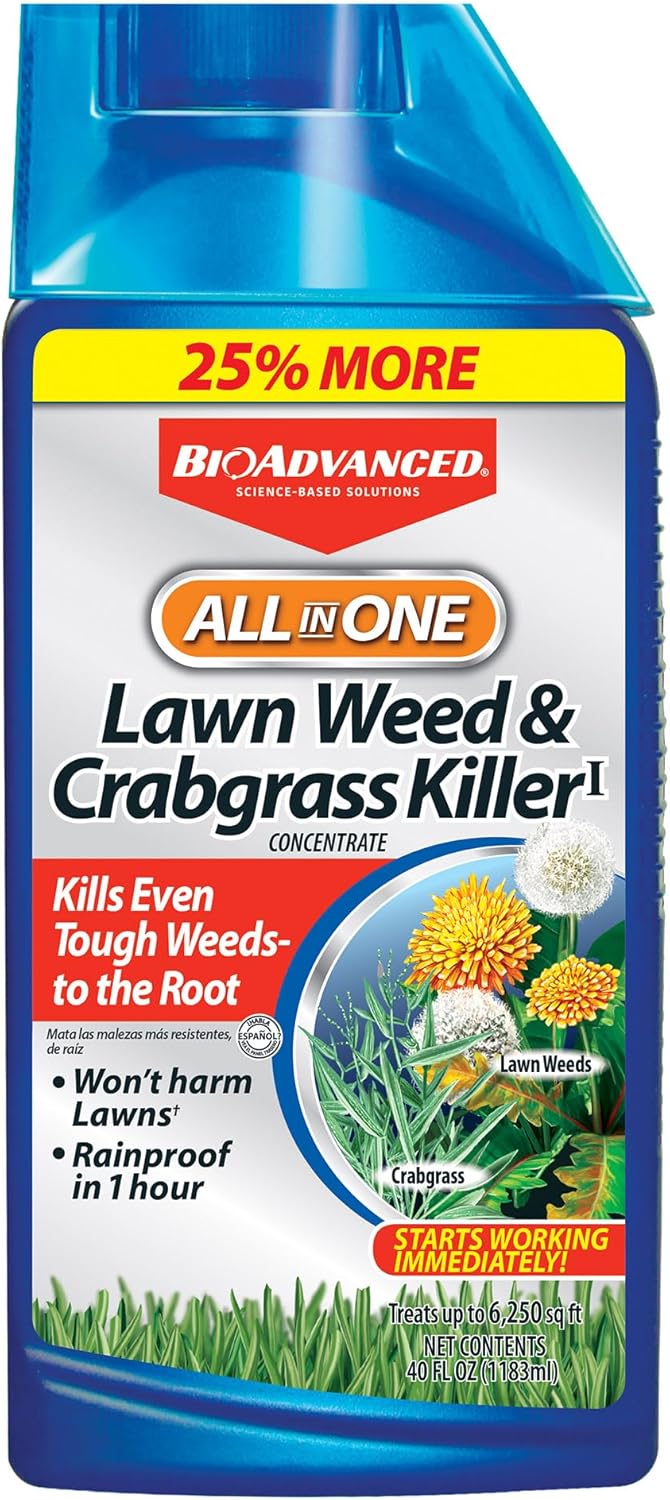
| Unit Count | 40 Fluid Ounces |
|---|---|
| Item Form | Spray |
| Coverage | 6250 square_feet |
| Active Ingredients | Herbicide (Quinclorac, 2,4-D, Dicamba salts listed in description) |
This BioAdvanced concentrate is a one‑step lawn herbicide meant to control a wide range of broadleaf weeds and crabgrass by spraying a hose‑connected applicator across the lawn. It is designed to penetrate and kill weeds down to the root and the label lists more than 200 targeted species, making it suitable for persistent problems such as spurge when applied as directed. The product is rainproof in about an hour, which reduces the risk of wash‑off after treatment, and the concentrate format lets you mix only what you need for the area you treat. Practical benefits include coverage for roughly 6,250 square feet from the 40 oz bottle at recommended rates and compatibility with many common turf types when used per label instructions. Important limitations: it should not be used on certain grasses like St. Augustine or centipede, and timing matters because weeds should be small and actively growing for best control. As with all herbicides, careful handling, exact mixing rates, and following safety directions are required.
Best for: Homeowners looking for a cost‑effective, broad‑spectrum weed control that treats whole‑lawn infestations and reduces repeat spot treatments.
Less Ideal for: People who need a spot treatment for a few isolated spurge plants or who maintain lawns with sensitive grass varieties listed on the label.
- Targets over 200 listed broadleaf weeds including common lawn spurge
- Concentrate formula allows mixing to treat large areas economically
- Rainproof in one hour, reducing loss from unexpected showers
- Penetrates to the root for longer lasting control
- Not safe for use on several turf types such as St. Augustine and centipedegrass
- Requires precise mixing and hose‑end application which may be fiddly for small patches
Verdict: A budget‑friendly concentrated herbicide that provides economical, wide‑area control of spurge and many other lawn weeds when used according to label directions.
Ortho WeedClear Lawn Weed Killer Concentrate, 1 gal.

| Unit Count | 128 Fluid Ounces |
|---|---|
| Coverage | 64000 square_feet |
| Item Form | Spray |
| Active Ingredients | Herbicide |
Ortho WeedClear Concentrate is a tank- or hose-end mix intended for homeowners who want fast, broadleaf weed control across large lawns. You dilute the concentrate per label rates and apply with a tank sprayer or an Ortho hose-end applicator; the formula starts showing visible results in hours and becomes rainproof in about an hour. It targets more than 250 listed weeds, specifically calling out chickweed, dandelion and clover, and is labeled for many common lawn grasses so you can treat weeds without damaging the turf when directions are followed. The one-gallon jug covers a lot of ground, which is convenient for seasonal spot treatments or whole-lawn applications. Important practical limits are that you must mix and apply carefully, observe safety precautions, and wait for sprays to dry before reentry by people or pets. Also follow timing guidance for spring or fall and avoid use on unsupported grass varieties. For someone who wants a concentrated, fast-acting product for broadleaf weeds like chickweed, this does the job efficiently but requires responsible handling and proper application.
Best for: Homeowners who prefer efficient, no-nonsense weed control and need a concentrated solution to quickly eliminate chickweed and other broadleaf weeds across medium to large lawns.
Less Ideal for: Gardeners wanting an organic or non-chemical option or owners of lawns with grass varieties not listed on the label should look for alternative methods or products.
- Kills over 250 listed broadleaf weeds including chickweed, dandelion and clover
- Fast visible results in hours and rainproof in about one hour
- Concentrated one-gallon container treats up to 64,000 sq. ft., suitable for large lawns
- Labeled as safe for many common lawn grasses when used according to directions
- Requires mixing and correct application with a sprayer or hose-end applicator
- Not labeled for every grass variety so compatibility must be checked before use
Verdict: A concentrated, fast-acting weed killer designed to remove chickweed and many other broadleaf weeds across large lawns when applied correctly.
Ortho WeedClear Lawn Weed Killer Concentrate, 32 fl. oz.

| Unit Count | 32 Fluid Ounces |
|---|---|
| Coverage | 5000 square_feet |
| Item Form | Spray |
| Active Ingredients | Herbicide |
Ortho WeedClear Lawn Weed Killer Concentrate is a tank-sprayer formula designed to target broadleaf and grassy weeds in lawns. You dilute the 32 fl. oz. bottle per label instructions, apply with a garden tank sprayer or Ortho Dial N Spray, and expect visible dieback within hours on many species. It is labeled for common turfgrasses such as fescue and Kentucky bluegrass and claims to control tough weeds down to the root, including dandelion, clover, crabgrass and other listed species. The concentrate treats up to 5,000 sq ft, so a single bottle covers a typical small-to-medium yard when mixed correctly. Practical benefits include fast action, rainproofing within an hour, and compatibility with several northern lawn grasses when directions are followed. Limitations are that it must be diluted and applied carefully with proper protective gear, it is not safe on all grass types so you must check the label, and it is a nonselective herbicide for some applications so spot treatment is recommended for targeting small patches like wild violets.
Best for: Homeowners who want a cost-effective, concentrated weed control product to treat an entire small-to-medium lawn and prefer buying a single bottle that covers multiple applications.
Less Ideal for: Gardeners with sensitive or excluded turf types, those who need a ready-to-use spot treatment only, or people who prefer non-chemical control methods for isolated wild violet patches.
- Concentrate treats up to 5,000 sq ft from one 32 fl. oz. bottle
- Fast-acting formula with visible results in hours and rainproof within one hour
- Labeled for use on several common lawn grasses when diluted and used as directed
- Kills a wide range of broadleaf and grassy weeds down to the root
- Requires dilution and a sprayer which adds prep time and equipment needs
- Not safe for all grass types and some ornamental areas so label restrictions limit use
- May require spot treatment strategy for isolated weeds like wild violets to avoid harming desirable turf
Verdict: A budget-friendly concentrate that covers a typical yard and delivers fast, broad-spectrum weed control when diluted and applied correctly.
Spectracide Weed Stop for Lawns Plus Crabgrass Killer Concentrate, 32 oz
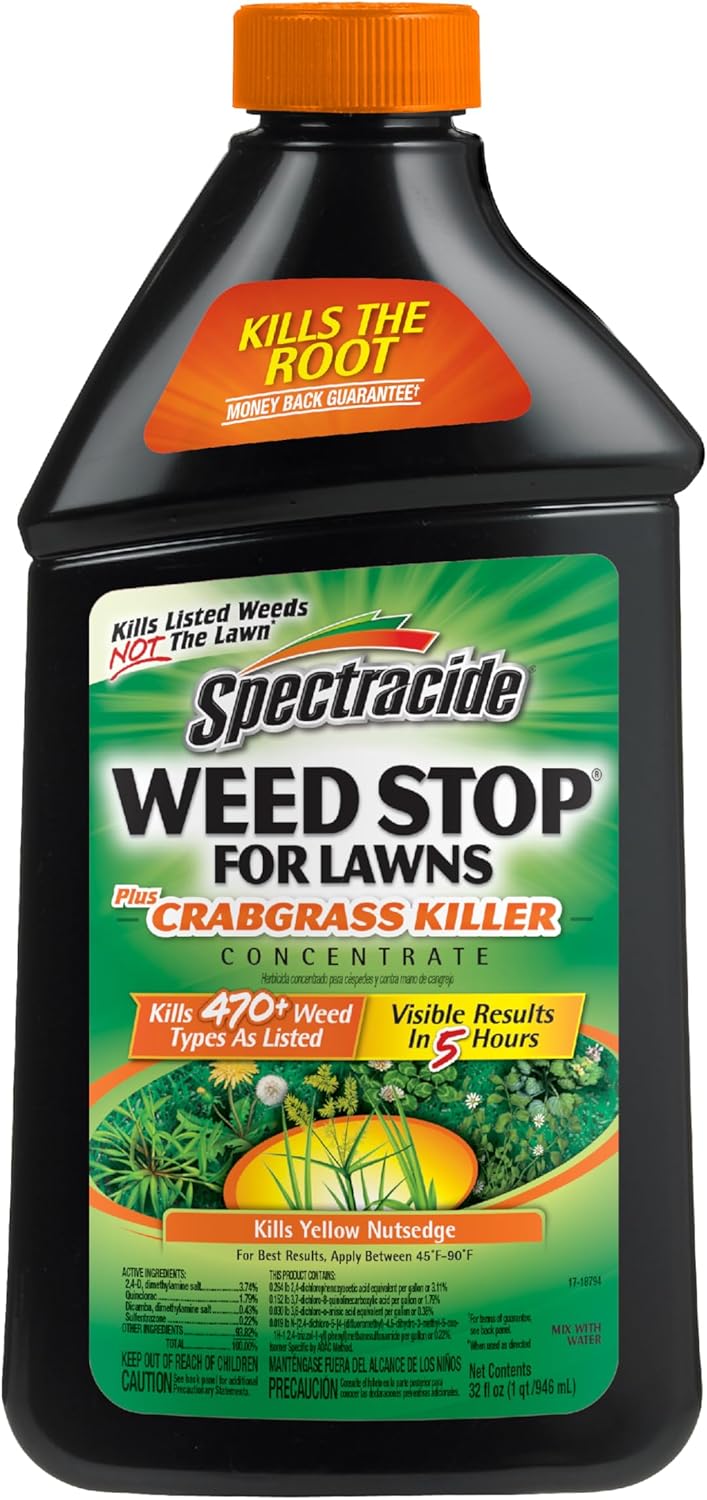
| Unit Count | 32 Ounce |
|---|---|
| Coverage | 5000 square_feet |
| Item Form | Liquid |
| Kills | 470+ listed weeds |
Spectracide Weed Stop Plus Crabgrass Killer is a ready-to-dilute concentrate designed to target grassy and broadleaf weeds across a typical yard. Mix and apply with a sprayer and the formula kills by contact down to the root with visible dieback in about 5 hours and becomes rainfast in roughly 3 hours. The 32 ounce bottle covers up to 5,000 square feet, making it a practical choice for treating whole lawns. Directions note best performance between 45 and 90 degrees daytime temperature and caution against treating Bermudagrass in very hot conditions to avoid temporary discoloration. Practical benefits include fast visible results, broad-spectrum control that includes dandelion and clover, and the convenience of a concentrated product that stretches across a larger area than ready-to-use sprays. Important limitations are the temperature restrictions for safe application, the need to let treated areas dry before people or pets return, and observing reseeding intervals after treatment. For routine crabgrass control on established lawns, this concentrate balances effectiveness and coverage for cost-conscious buyers.
Best for: Buyers who want an economical, concentrated treatment to control crabgrass and a wide range of weeds across a whole lawn and who are comfortable mixing and applying a spray product.
Less Ideal for: People with newly seeded lawns, very small patch treatments who prefer ready-to-use bottles, or those who cannot avoid applying during hotter daytime temperatures.
- Concentrated formula treats up to 5,000 sq ft from a 32 oz bottle
- Kills over 470 listed broadleaf and grassy weeds including crabgrass
- Visible results in about 5 hours and becomes rainfast in approximately 3 hours
- Designed to kill weeds down to the root when used as directed
- Must follow temperature limits to avoid lawn injury, particularly on Bermudagrass
- Requires mixing and a separate sprayer rather than being ready-to-use
Verdict: A budget-friendly concentrate that delivers fast, broad-spectrum crabgrass and weed control for established lawns while covering a large area per bottle.
Spectracide Large Plot Weed Stop for Lawns Concentrate, 1 Gal

| Unit Count | 128 Fluid Ounces |
|---|---|
| Item Form | Liquid |
| Coverage | 32000 square feet |
Spectracide Large Plot Weed Stop is a concentrate lawn herbicide you mix with water and apply with a sprayer to control broadleaf weeds across large areas. It targets more than 200 listed weeds, including common offenders like dandelion, chickweed and clover, and is formulated to kill weeds down to the root for visible results in hours. The bottle links to hose-end or tank sprayers and includes settings for concentrate or ready-to-spray use, which makes covering up to tens of thousands of square feet practical for homeowners with large yards. It is rainproof within hours and is labeled for both northern and southern grass types when applied at recommended rates. Important limitations are the temperature window for safe application and safety precautions for people, pets and water features; do not apply when air temperatures exceed 85°F and keep off treated areas until dry. For persistent or isolated tough weeds you may need targeted repeat spot treatments.
Best for: Homeowners who need an effective, large‑area solution for common broadleaf weeds and prefer a concentrated product they can mix and spray themselves.
Less Ideal for: Small-plot gardeners who prefer spot-only, non-chemical methods or anyone who cannot follow temperature and safety application restrictions.
- Concentrate treats large areas—label lists coverage up to 32,000 sq ft for northern grasses
- Kills over 200 listed broadleaf weeds and works down to the root for longer control
- Rainproof within hours so light rain soon after application is less likely to wash it away
- Works with common sprayers and has a built-in hose connector for easier mixing and application
- Must not be applied when air temperatures exceed 85°F to avoid turf damage
- Contains chemicals that require safety precautions and keeping people and pets off treated areas until dry
Verdict: Choose this concentrated sprayer-ready formula if you need a practical, large‑area herbicide that kills common broadleaf weeds down to the root while preserving lawn when used as directed.
Spectracide Weed Stop for Lawns Concentrate, 40 oz

| Unit Count | 40 Fluid Ounces |
|---|---|
| Coverage | 20000 square_feet |
| Item Form | Liquid |
Spectracide Weed Stop for Lawns Concentrate is a liquid herbicide you mix with water and apply with a garden sprayer to spot-treat or blanket-spray lawns. It targets more than 200 listed broadleaf weeds, including dandelion, chickweed and clover, and works by contact to kill down to the root with visible results in hours. The bottle treats up to 20,000 sq ft when mixed at recommended rates, is rainproof after six hours, and is intended for use in spring when weeds are actively growing or in fall to reduce next season’s problems. Practical features include a concentrated formula for fewer refill purchases and clear label directions for mowing, mixing and timing. Limitations are that you need a separate sprayer, careful mixing to avoid turf damage, and some very tough weeds may require a repeat spot treatment after a few weeks. For spring use follow label temperature guidance and safety precautions to avoid skin or eye contact.
Best for: Homeowners who want an economical, garden-sprayer solution to clear broadleaf weeds from established lawns in spring and prefer a concentrated product that covers large areas.
Less Ideal for: People without any sprayer equipment or those looking for an all-in-one ready-to-use product for small lawns and patios.
- Concentrated formula treats up to 20,000 sq ft, reducing how often you buy replacement product
- Kills over 200 listed broadleaf weeds and works down to the root for durable control
- Rainproof in about six hours so light rain shortly after application is less likely to reduce effectiveness
- Visible results within hours when applied during the recommended temperature window
- Requires a separate garden sprayer and correct mixing, adding equipment and setup time
- May need repeat spot treatments on very persistent weeds
Verdict: A concentrated, rainproof herbicide that gives fast, broadleaf weed control across large lawns when mixed and applied with a sprayer.
Choosing the Right Liquid Concentrate Weed Killer for Lawns: Key Factors to Consider
Weed Species Targeted
Different concentrates control different groups of weeds. Some formulations are optimized for broadleaf weeds like dandelion, clover, and plantain while others include active ingredients effective against grassy weeds or sedges. Knowing which weeds dominate your lawn helps you choose a concentrate whose active ingredients will reliably suppress those species.
A label that lists target species and expected control timing is valuable. Expect some weeds to need repeat treatments or follow-up cultural practices like mowing and overseeding to prevent reinfestation.
Turf Compatibility
Turf safety varies by active ingredient, grass species, and application rate. Certain herbicides are labeled safe on cool-season grasses but not on warm-season lawns, or vice versa. Temperature at the time of application can also affect grass tolerance. Applying during high heat or drought increases the risk of turf injury.
Check label directions for grass type, recommended application windows, and any restrictions on mowing or watering after treatment. Choosing a concentrate with clear turf compatibility reduces the chance of damaging desirable grass while treating weeds.
Dilution Ratios and Coverage
Concentrates differ in recommended dilution rates for spot treatments versus broadcast spraying. A flexible dilution range lets you tailor strength to weed pressure and lawn size, which is more economical and reduces chemical use. Coverage rate guidance helps you estimate how much mixed spray you will need to treat a given area so you can plan mixing and purchases.
Uniform coverage matters: too-weak mixes leave surviving weeds, while overconcentrated mixes increase turf injury risk. Choose concentrates with straightforward dilution charts and instructions for both small areas and whole-lawn applications.
Application Equipment Compatibility
Consider what sprayer you will use. Some concentrates are intended for pump sprayers, others are formulated for hose-end applicators, and a few are compatible with both. Viscosity, label restrictions, and the need for surfactants can influence whether a concentrate sprays cleanly and applies evenly from your equipment.
Also evaluate mixing and pouring practicality. Containers with measuring marks, pour spouts, or child-resistant caps improve safe handling. If you plan to use a backpack sprayer, check for guidance on tank-cleaning to avoid cross-contamination with other products.
Environmental and Safety Considerations
Homeowners should weigh off-target movement risks, runoff potential, and restrictions near water, gardens, or play areas. Some active ingredients bind tightly to soil and pose little leaching risk; others require buffer zones and careful timing to protect pollinators and neighboring plants.
Personal protective equipment recommendations and re-entry intervals are important for safety planning. Also consider whether the product label allows use around vegetable gardens or ornamental beds to avoid unintended damage.
Mixing, Storage, and Shelf Life
How easy a concentrate is to mix and store affects long-term usability. Clear instructions for mixing volumes, compatible surfactants, and how long mixed spray remains effective help you avoid wasted product. Some concentrates separate or degrade if stored improperly or left in mixed tanks for days.
Good packaging reduces spills and contamination. Check for storage temperature guidance and disposal instructions to stay compliant and keep product effective for the next season.
Timing Applications for Best Results
Apply liquid concentrate weed killers when target weeds are actively growing. For cool-season weeds, treat in spring or fall when plants are pulling nutrients into roots. For warm-season weeds, early summer treatments often work better.
Avoid treating during drought stress or extreme heat because turf and weeds can both suffer and uptake of active ingredients will be reduced. Follow label guidance on rain-free windows after application to allow herbicide absorption.
- Treat young weeds for faster control and less regrowth
- Avoid mowing for 24 to 48 hours before and after certain treatments unless label advises otherwise
- Use cooler, calm days to limit spray drift
Spot Treatment Versus Broadcast Spray
Spot treatment conserves product and reduces chemical exposure when weeds are patchy. Mix a stronger small-volume solution for targeted wand spraying to kill individual clumps without treating the whole lawn.
Broadcast spraying is more efficient on large or uniform infestations but requires accurate dilution and thorough coverage. Use a calibrated applicator and follow coverage rates to avoid over-application.
- Spot-spray small problems to protect turf and beneficial plants
- Broadcast when weeds exceed localized patches or when proactive control is needed
Tank Mixing and Surfactant Use
Some concentrates require or recommend adding a nonionic surfactant to help herbicide stick to waxy-leaved weeds. Labels should state whether surfactants are necessary and the compatible rates. Incorrect mixing can reduce effectiveness or increase turf stress.
When tank mixing multiple products, confirm compatibility on the label and perform a small jar test if guidance is unclear. Rinse sprayers thoroughly between different products to prevent unwanted chemical reactions.
- Follow label guidance for surfactants and avoid homemade additive recipes
- Do a compatibility test for any unlisted tank mixes
Minimizing Off-Target Damage
Prevent spray drift by applying when wind is minimal and using low-pressure nozzles. Avoid spraying when rain is expected within the label-specified rain-fast window. Gardeners should be careful around flower beds, vegetable gardens, or young trees that can be sensitive to herbicide exposure.
Physical barriers, turning nozzles away from sensitive areas, and using shielded wands for spot treatments reduce the risk of harming desirable plants.
- Shield sensitive plantings during application
- Maintain buffer zones next to water features and edible gardens
Post-Treatment Lawn Care
After weed control, support turf recovery with proper mowing, irrigation, and, if needed, overseeding bare patches. Avoid heavy fertilizer applications immediately after herbicide treatments unless the label permits it.
Observe treated areas over the following weeks. Some weeds brown quickly while others take longer to die back. Plan follow-up spot treatments for any persistent survivors rather than broad retreatment.
- Hold off on reseeding until the label-specified interval has passed
- Water according to label instructions to balance turf recovery and herbicide activity
How We Chose the Best Liquid Concentrate Weed Killer for Lawns
We shortlisted products that are designed specifically for lawn use and offer a liquid concentrate formulation suitable for homeowner spray rigs or hose-end applicators. Selection prioritized demonstrable control of common broadleaf weeds and reliable turf safety data for cool-season and warm-season grasses. We looked for concentrates that allow adjustable dilution rates so gardeners can match application strength to infestation level and grass condition. Ease of mixing and clarity of label instructions were key, because application mistakes are a common cause of turf injury. We also considered packaging that supports safe storage and pouring, plus formulation stability so the concentrate stays usable through a season. We excluded spot-only ready-to-use mixes, granular herbicides, and products intended exclusively for non-lawn sites. We also excluded concentrates without clear turf safety directions or those lacking guidance on tank mixing and compatible surfactants. The final list reflects products that scored well across effectiveness on target weeds, turf compatibility, dilution flexibility, label clarity, and user handling.
FAQ
When is the best time to apply a liquid concentrate weed killer to my lawn?
The best time depends on the weed type and grass species. Apply when weeds are actively growing, typically spring or fall for cool-season weeds and late spring to summer for warm-season weeds. Avoid applying during drought or extreme heat.
Can I safely use a liquid concentrate on any grass type?
Not always. Labels specify which grass species are tolerant. Some active ingredients are safe on common cool-season lawns but not on warm-season turf, so confirm compatibility before applying.
How long after application can I mow or water my lawn?
This varies by product. Many labels advise waiting 24 to 48 hours before mowing and recommend a rain-free window after application. Check label directions because mowing or watering too soon can reduce effectiveness or increase turf injury.
Do I need a surfactant with liquid concentrates?
Some concentrates require a nonionic surfactant to improve leaf uptake, while others contain adjuvants and do not need one. Follow the product label for surfactant recommendations to avoid reducing effectiveness or harming turf.
Is spot treatment better than treating the whole lawn?
Spot treatment is preferable for isolated patches because it reduces chemical use and off-target risk. Broadcast treatment is more efficient for widespread infestations but requires careful dilution and even coverage.
How should I store leftover concentrate?
Store concentrates in their original container, tightly sealed, away from heat and direct sunlight. Keep them locked and out of reach of children and pets, and follow label guidance on storage temperatures and shelf life.
Final Verdict
Prioritize a concentrate that matches the specific weeds in your lawn and is labeled safe for your grass type. Balance flexibility in dilution and ease of application with clear label guidance to reduce errors and off-target effects. Consider safety, timing, and follow-up cultural care when picking a liquid concentrate so you achieve reliable weed control without harming the turf.
