

Note: This article contains affiliate links. If you click on these links and make a purchase, I may earn a small commission at no extra cost to you. This helps support my research and content. Read my full affiliate disclosure here.
Choosing the right house fertilizer matters because indoor plants face unique limits on light, soil volume, and watering frequency. The wrong feed can cause leggy growth, salt buildup, or leaf burn, while the right one supports steady color, stronger roots, and flowering where appropriate. This guide covers seven shortlisted options that are well suited to typical apartment, patio, and home greenhouse situations. We evaluated each pick for nutrient balance, application method, and how forgiving it is for common indoor-care mistakes. Read on to find options that fit your watering habits and plant mix.
Top Picks at a Glance
| Best Overall The best all-around choice for most situations | Miracle-Gro Watering Can Singles All Purpose Plant Food, 24 Packets | 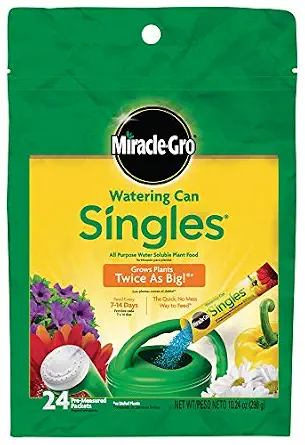 |
| Best Quality Built to a higher standard if you want something more solid | Osmocote Smart-Release Plant Food Plus, 2 lb granular |  |
| Best Value The sweet spot between price and what you get | BLESS YOUR SOIL Big Green Leaves Indoor Plant Food, 1 lb Concentrated Powder |  |
| Best Budget The cheapest option that still gets the job done reliably | Miracle-Gro Indoor Plant Food Spikes (24-count) |  |
| Highest Rated A top-rated pick with lots of positive feedback | Miracle-Gro Water Soluble All Purpose Plant Food, 1.5 lb |  |
| Most Popular A crowd favorite that many people choose with confidence | Miracle-Gro Indoor Plant Food for All Plants, Liquid, 8 fl. oz. (2-Pack) |  |
| Best Seller A high-volume bestseller chosen again and again | TPS NUTRIENTS Indoor Plant Food Liquid Fertilizer, 8 oz |  |
Miracle-Gro Watering Can Singles All Purpose Plant Food, 24 Packets

| Number of Packs | 24 |
|---|---|
| Application Method | watering can |
| Item Form | SOLID |
| Mixing Ratio | 1 teaspoon per 1 gallon of water |
Miracle-Gro Watering Can Singles are single-use, pre-measured packets of water-soluble all-purpose fertilizer intended to be mixed into a watering can and applied directly to the soil. Typical use is simple: tear open a packet, add to the recommended volume of water, and feed plants every 7 to 14 days while watering. The convenience of pre-measured doses eliminates measuring and mess, and the formula is marketed for broad use on flowers, vegetables, houseplants, roses, trees and shrubs. For houseplant care this makes regular feeding easy without overdoing it when directions are followed. Practical benefits include quick dissolution, predictable coverage per packet, and flexibility to treat individual pots or larger bed areas by varying the prepared volume. Limitations are that the product is an all-purpose feed rather than a specialized formula for specific needs and that repeated use requires buying replacement packets rather than a refillable concentrate. Also users must follow mixing ratios precisely to avoid nutrient imbalance in sensitive plants.
Best for: Home gardeners who want a low-effort, reliable feeding routine for a mixed collection of houseplants and outdoor containers and prefer convenience over specialized formulations.
Less Ideal for: Growers who need tailored NPK formulas for flowering boost, seedlings, or nutrient-sensitive species should consider dedicated liquid or granular fertilizers made for those purposes.
- Pre-measured packets remove the need to measure or store loose powder
- Quickly dissolves in a watering can for immediate application
- Labeled for use on a wide range of plants including houseplants and edibles
- Simple schedule of feeding every 7–14 days supports regular maintenance
- All-purpose formula may not meet specific nutrient needs of specialty plants
- Single-use packets generate more packaging waste compared with bulk concentrates
Verdict: If you want fuss-free, repeatable feeding for a variety of houseplants and containers, these pre-measured packets make regular fertilizing quick and reliable.
Osmocote Smart-Release Plant Food Plus, 2 lb granular

| Item Form | Granules |
|---|---|
| Specific Uses For Product | Plant Food |
| Application Method | Sprinkle |
| Coverage | Full |
| Mixing Ratio | 1 capful (3 tablespoons) per 2 gallons or per 4 sq. ft. |
Osmocote Smart-Release Plant Food Plus is a granular, slow-release fertilizer designed to feed a wide range of plants—houseplants, flowers, vegetables, shrubs and more—for up to six months per application. You sprinkle the granules on potting mix or garden soil (use half the outdoor rate for indoor pots), mix into the top inch or so of soil, and water; the resin coating meters nutrient release so plants receive steady feeding without frequent applications. The product lists 11 essential nutrients and claims a no-burn pledge when used as directed, which makes it practical for performance-focused gardeners who want reliable, long-lasting nutrition with minimal fuss. One 2 lb container covers about 75 sq ft and reapplication every six months keeps plants supplied through a growing season. Limitations are the fixed release duration and granular format, which is less convenient for foliar feeding or very small pots where precise micro-dosing is needed, and you must follow the reduced indoor rate to avoid overfeeding.
Best for: Buyers who prioritize consistent, low-maintenance feeding for houseplants and mixed garden plantings and want long-lasting performance with minimal repeat applications.
Less Ideal for: Growers who need precise, frequent dosing for seedlings, very small pots, or foliar applications should consider soluble or liquid fertilizers instead.
- Controlled-release resin coating provides steady feeding for up to six months
- Suitable for many plant types and growing conditions, including indoor pots and outdoor beds
- No-burn pledge when used as directed reduces risk of fertilizer damage
- Granular form is easy to apply by sprinkling and mixing into soil
- Granular format is not ideal for foliar feeding or very small containers where precise dosing is required
- Fixed six-month release means less flexibility if you want tailored feeding schedules
Verdict: Choose this if you want reliable, low-effort, six-month controlled-release nutrition for houseplants and general garden use.
BLESS YOUR SOIL Big Green Leaves Indoor Plant Food, 1 lb Concentrated Powder

| Form | Powder |
|---|---|
| NPK | 12-4-8 |
| Application | Soil drench, foliar, hydroponic |
| Yield | Makes 90+ gallons |
| Included | Measuring scoop |
Big Green Leaves is a dry, water-soluble houseplant fertilizer aimed at boosting foliage growth and supporting root health across a broad collection of tropical indoor plants. You mix a pre-measured scoop into water to create a balanced 12-4-8 solution that can be applied as a soil drench, foliar spray, or used in hydroponic and LECA systems. Notable features are the high nitrogen ratio for leafy growth, an included measuring scoop for repeatable dosing, chelated micronutrients for better uptake, and organic sea kelp to stimulate leaf production and support soil microbes. The powder dissolves quickly and is far more concentrated than typical bottled liquids, so a single pouch yields many gallons of feed solution and reduces plastic waste. Important limitations: it is designed for leafy tropicals and is not recommended for cacti, succulents, or high-phosphorus flowering crops, and regular users must follow dilution and frequency guidance to avoid overfeeding sensitive plants.
Best for: Buyers who want a compact, cost-effective fertilizer to maintain a collection of leafy indoor tropicals and who prefer precise, repeatable dosing and low-plastic storage.
Less Ideal for: Gardeners who mainly grow succulents, desert plants, or phosphorus-hungry flowering houseplants should choose a product tailored to those needs instead.
- High 12-4-8 NPK optimized for vigorous leaf and stem growth on tropical houseplants
- Concentrated powder yields up to 90 gallons of solution from one 1 lb pouch, lowering storage and plastic use
- Includes chelated micronutrients for reliable nutrient uptake across different soil pH levels
- Sea kelp and microbiome-focused ingredients support leaf production and long-term root zone health
- Not formulated for cacti, succulents, or flowering plants that need higher phosphorus
- Requires correct measuring and dilution to avoid nutrient burn on sensitive specimens
Verdict: A highly concentrated, kelp-enhanced powder fertilizer that delivers repeatable, foliage-focused feeding for indoor tropical plant collections while minimizing plastic and storage needs.
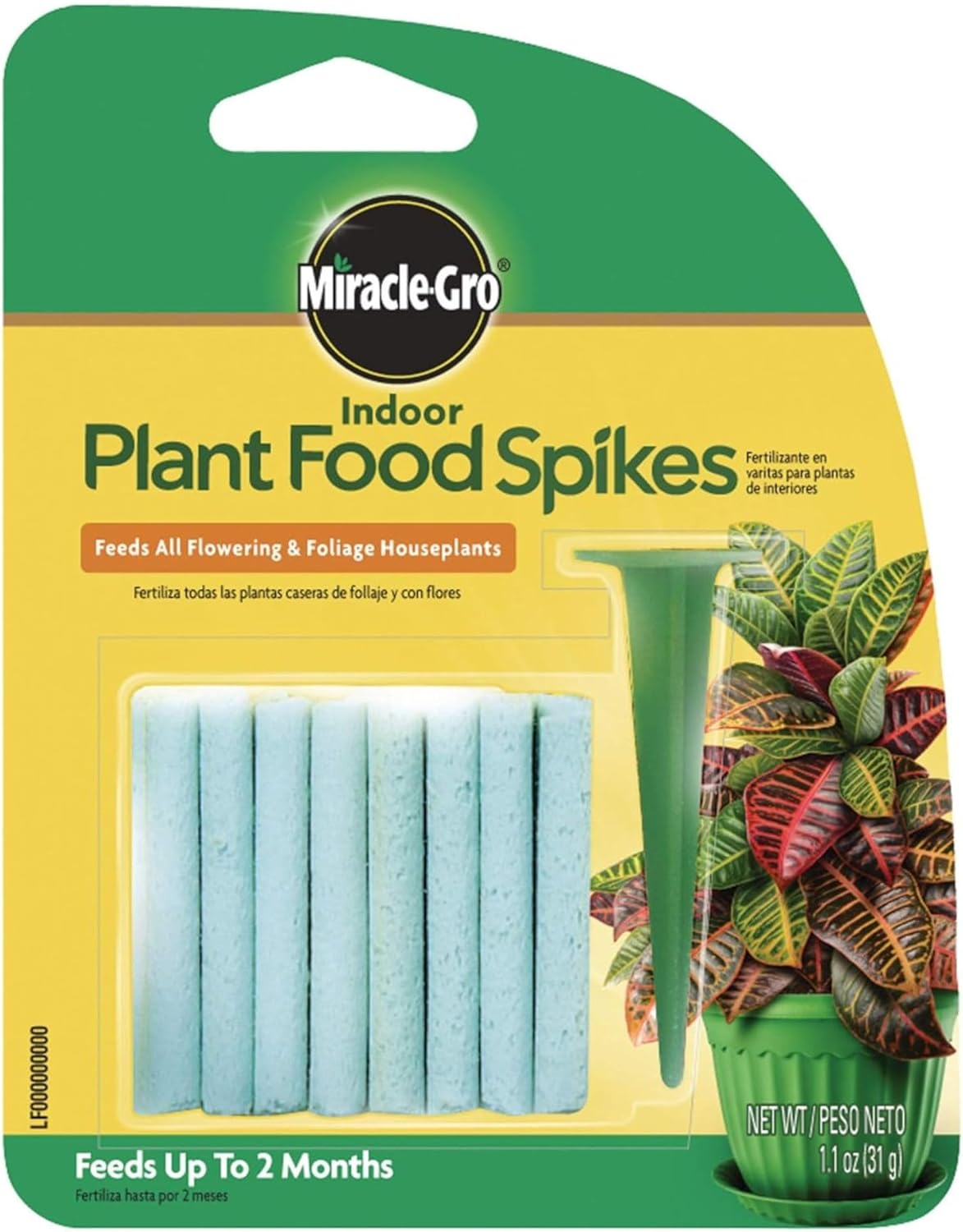
Miracle-Gro Indoor Plant Food Spikes (24-count)
| Application Method | Insert into soil |
|---|---|
| Item Form | Solid |
| Target Species | Indoor flowering and foliage houseplants |
| Fertilizer Analysis (N-P-K) | 6-12-6 |
These Miracle-Gro Indoor Plant Food Spikes are pre-measured solid fertilizer sticks designed to be pushed into the soil of potted houseplants and feed for up to two months. Usage is simple: make a hole in moist soil with the included aerator tip, insert a spike halfway between the stem and pot rim, and water as usual. The 6-12-6 formulation favors bloom and leaf development, so it works well on common indoor species such as spider plants, pothos, crotons, and ferns. The main practical benefit is convenience — no measuring or liquid mixing, and a single spike lasts a long time compared with weekly feeds. Limitations are that feeding is fixed by the spike strength and release schedule, so you cannot fine-tune doses for sensitive plants or quickly correct nutrient imbalances. Also spikes work best in regularly watered pots; in very dry soil release will be slower. For someone wanting low-effort, regular feeding across many houseplants these spikes make maintenance straightforward.
Best for: Buyers who want a low-effort, time-saving fertilizer for multiple common houseplants and prefer predictable, infrequent maintenance.
Less Ideal for: Indoor gardeners who need precise, adjustable feeding regimens, have many rare or sensitive specimens, or want rapid nutrient corrections.
- Very easy, no-mess application — insert and forget for up to two months
- Pre-measured NPK formulation suitable for flowering and foliage houseplants
- Works across common indoor species so one product fits mixed collections
- Fixed nutrient dose and release schedule limits precision for sensitive or newly repotted plants
- Less effective if soil stays dry because spikes rely on moisture to release nutrients
Verdict: If you want a cheap, hassle-free way to keep common houseplants fed for weeks at a time, these pre-measured spikes are an easy pick.
Miracle-Gro Water Soluble All Purpose Plant Food, 1.5 lb

| Item Form | Powder |
|---|---|
| Application Method | Watering Can |
| Target Species | All flowers, vegetables, trees, shrubs and houseplants |
| Mixing Ratio | 24-8-16 |
Miracle-Gro Water Soluble All Purpose Plant Food is a powder fertilizer you mix into a watering can to give houseplants, flowers and vegetables a quick nutrient boost. It dissolves in water and supplies a high-nitrogen 24-8-16 formula that promotes faster, greener growth when applied to the soil at the base of plants. Typical use is straightforward: measure the small scoop for indoor plants or the larger scoop for outdoor use, mix with the recommended amount of water, and feed every 1 to 2 weeks depending on the plant. Notable features include a universal formulation safe for many species, instructions for both watering-can and feeder application, and coverage guidance for an average garden area. In practice it provides fast, visible results for container plants and up-potted houseplants and is convenient for regular maintenance. Limitations are that the high nitrogen mix is focused on foliage growth rather than flowering or fruiting specificity and it requires consistent, periodic application rather than a one-time slow-release solution.
Best for: Home gardeners who prioritize dependable, predictable feeding for houseplants and common container vegetables and want a ready-to-mix product that produces quick visible results.
Less Ideal for: Growers seeking a single product to maximize flowering or fruit set, or those who prefer low-frequency slow-release fertilizers, should consider specialized bloom or slow-release options instead.
- Water-soluble powder that mixes easily for quick root uptake
- Clear mixing instructions and included scoop for indoor and outdoor use
- Broadly labeled safe for a wide range of plants including houseplants and vegetables
- Provides fast, noticeable foliage growth due to a high nitrogen ratio
- High nitrogen-heavy 24-8-16 formula favors leaf growth over blooms or fruit
- Requires regular reapplication every 1 to 2 weeks rather than long-term feeding
Verdict: Choose this if you want a reliable, easy-to-mix fertilizer that delivers fast, consistent growth for everyday houseplants and container vegetables.
Miracle-Gro Indoor Plant Food for All Plants, Liquid, 8 fl. oz. (2-Pack)

| Item Form | Liquid |
|---|---|
| Application Method | Apply directly to soil or mix with water |
| Target Species | Houseplants |
| Mixing Ratio | 4 pumps per 1 quart of water |
| Unit Count | 16 Fluid Ounces |
Miracle-Gro Indoor Plant Food is a ready-to-use liquid fertilizer for potted indoor plants that you either apply directly to the soil or dilute with water using the pump dosing instructions. It is intended for general use on houseplants, herbs, flowers and edible container vegetables and is used by feeding every two weeks or when you water using the recommended 4 pumps per quart mix. The product's clear benefits are instant nutrient delivery and simple dosing that fits into a regular watering routine, and the twin 8 fl. oz. bottles make it convenient to keep a steady supply. Practical features include a pump for measured dosing and guidance for using 2 pumps on larger pots. Limitations are that the listing provides only a basic NPK indicator without a full nutrient breakdown and it is an all-purpose formula rather than a plant-specific feed for orchids, succulents or heavy-feeding vegetables, so enthusiasts who need tailored nutrient programs may prefer specialized formulas.
Best for: Houseplant owners who want a low-effort, reliable fertilizer to add to their regular watering schedule and who value proven, widely used plant care products.
Less Ideal for: Growers who need precise NPK ratios, organic certification, or specialized feeds for orchids, succulents, or high-yield edible production should consider dedicated formulas instead.
- Simple pump dosing makes mixing with water quick and repeatable
- Formulated for a wide range of indoor container plants including herbs and vegetables
- Feeds instantly when applied and integrates with normal watering every two weeks
- Sold as a two-pack so you have a backup bottle for routine feeding
- No detailed NPK breakdown or micronutrient list is given on the product page
- All-purpose formula may not meet the needs of plants that require specialized nutrients
Verdict: A straightforward, pump-dosed liquid fertilizer that makes biweekly feeding of a broad range of houseplants quick and reliable.
TPS NUTRIENTS Indoor Plant Food Liquid Fertilizer, 8 oz

| Item Form | Liquid |
|---|---|
| Specific Uses For Product | Plant Food |
| Application Method | Watering can |
| Mixing Ratio | 2:1 (oz/gallon) or 1:64 (tbsp/gallon) |
This 8 ounce liquid indoor plant food is a concentrated, kelp-enhanced formula designed to mix with water and be applied during normal watering. It is intended for all common houseplants from pothos and snake plants to fiddle leaf figs, and the package gives a straightforward mixing ratio for weekly or regular feedings. The product emphasizes foliar vibrancy, steady new growth, and stronger roots, which makes it useful for plants that need a nutrient boost between repottings. Application via a watering can is simple and the liquid form dissolves evenly so you can feed while you water. Important practical limits are the small container size, which will require careful dilution to stretch over many plants, and the need to follow the stated mixing rate to avoid overfeeding sensitive species. Safety guidance to keep it away from children and pets is included. For someone who prefers simple, repeatable feeding with a plant-safe concentration, this fertilizer fits into an easy weekly care routine.
Best for: A cautious indoor gardener who wants a simple, consistent fertilizer to use with routine watering and prefers predictable, plant-friendly formulations for common houseplants.
Less Ideal for: Large collections or serious hobbyists who need bulk fertilizer or specialized nutrient formulations for advanced feeding programs.
- Liquid concentrate mixes easily with water for straightforward weekly feeding
- Kelp-enriched formula aimed at promoting leaf vibrancy, new growth, and root strength
- Clear mixing directions provided for consistent application
- Suitable for a wide range of common indoor houseplants
- Small 8 fl oz bottle may not last long for households with many plants
- Requires accurate dilution to avoid overfeeding sensitive plants
Verdict: A user-friendly kelp-enriched liquid fertilizer that makes weekly feeding easy and predictable for typical houseplants.
Choosing the Right House Fertilizer: Key Factors to Consider
Nutrient Formulation and NPK Balance
Indoor plants need a fertilizer whose nitrogen, phosphorus, and potassium ratios match how you want them to grow. Foliage-focused houseplants do best with formulas higher in nitrogen, while blooming plants need elevated phosphorus and balanced potassium for flower set. Concentrated formulas that force-feed blooms can cause weak stems if nitrogen is too low.
Beyond NPK, trace elements like iron, magnesium, and manganese matter in small pots because deficiencies show quickly as yellowing or stunted growth. Choose a formulation that lists micronutrients and does not rely entirely on organic matter to supply them slowly, unless you pair feeding with regular repotting.
Application Method and Frequency
How you apply fertilizer affects both plant health and convenience. Water-soluble concentrates allow precise, frequent feeding in small doses and are easy to apply when you water. Granular slow-release products reduce the need to feed often but can be harder to adjust and may sit too concentrated against roots in shallow nursery pots.
Consider whether you want a weekly weak feed, a monthly application, or an every-season slow-release approach. Your watering schedule and how often you repot influence the best match. Also check whether the product requires diluting to specific ppm levels or comes with simple teaspoons-per-gallon guidance.
Concentration and Dosing Precision
Indoor pots have limited soil volume, so small dosing errors can cause overfertilization quickly. Products that provide clear, small-measure dosing instructions are safer for houseplants. Liquid concentrates with recommended dilution ranges make it easier to tailor strength for seedlings versus mature specimens.
If a product only lists rates for large-scale outdoor use, it may be difficult to scale down accurately. Opt for fertilizers that include doses for pints, quarts, or liters, or that allow measuring in teaspoons per gallon so you can reliably feed small containers.
Salt Buildup and Soil Health
Repeated feeding without adequate leaching leads to soluble salt accumulation, which causes tip burn and reduced water uptake. Fertilizer type influences how quickly salts build up: high-concentration synthetic feeds and some slow-release granules can concentrate salts near the root ball in small pots.
Plan your feeding around occasional flushes of plain water or repotting schedules. Choose products with lower salt index or those labeled for use in containers, and monitor soil surface and leaf margins for telltale signs of buildup.
Compatibility With Water Quality
Tap water hardness and dissolved minerals change the effective nutrient mix. Hard water adds calcium and magnesium, which can interact with fertilizer components and cause precipitation or micronutrient lockout. If you have very hard or softened water, pick a fertilizer that accounts for common water chemistries or plan to use filtered or distilled water for sensitive species.
Some fertilizers include chelated micronutrients to stay available in a wider pH and hardness range. For growers using low-water-volume pots, compatibility with your water source helps avoid unexpected deficiencies.
Plant Type and Growth Stage Suitability
House plants range from leafy tropicals to cacti and orchids, and each group has different nutrient demands. Seedlings and recently repotted plants require gentler, lower-strength feedings, while established plants in active growth tolerate and benefit from more frequent nitrogen. Flowering species benefit from temporary shifts to bloom-boosting ratios during bud set.
Match the fertilizer to the dominant plant types you keep and consider having more than one formula on hand. A single all-purpose option works well for mixed collections, but specialized formulas can improve flowering or succulence when used correctly.
Feeding Schedules That Work for Indoor Gardens
A realistic feeding schedule balances plant demand with the risk of salt buildup. For most indoor foliage plants, a 'weak weekly feed' approach using a diluted water-soluble fertilizer reduces stress and provides steady nutrients. Succulents and cacti usually need less frequent feedings, often only during the active growing season.
Establish a routine that fits your watering habits. If you water lightly and often, use lower concentration each time. If you perform deeper saturating waterings, feed less frequently and consider flushing the potting mix every few months to remove accumulated salts.
- Weekly dilute feed for active growers and mixed collections
- Monthly or seasonal feed for succulents and slow growers
- Flush pots with plain water every 2 to 3 months to reduce salt buildup
How to Adjust Strength for Different Container Sizes
Small pots amplify concentration, so reduce the recommended strength proportionally for seedlings, cuttings, and plants in small containers. If a label gives a teaspoon-per-gallon rate, calculate a smaller fraction for a pint or quart to avoid overfeeding.
When repotting into fresh, nutrient-rich mix, cut back feeding for several weeks while roots establish. Conversely, older mixes that show nutrient depletion may need slightly stronger or more frequent applications.
- Use a fraction of the label rate for pots under 4 inches
- Hold off feeding for 2 to 6 weeks after repotting into fresh soil
- Increase feeding gradually as plants show healthy new growth
Special Considerations for Flowering and Foliage Plants
Flowering houseplants often respond to a temporary shift in nutrient ratios during bud formation. Raise phosphorus moderately for a short period to support blooming, then return to balanced feeding to maintain foliage health. Avoid extreme switches that shock plant metabolism.
For foliage-focused collections, prioritize steady nitrogen and stable micronutrients. High-phosphorus feeds intended for outdoor blooms may promote fewer leaves and weaker stems in plants grown primarily for their foliage.
- Switch to a bloom-support formula briefly during bud set
- Maintain balanced feeds for leaf-focused specimens
- Watch for leggy growth after fertilizer changes and adjust light and feeding together
Organic Versus Synthetic Options for Indoor Use
Organic fertilizers release nutrients more slowly and can help build long-term soil biology, which is useful in larger indoor gardens or when repotting frequently. However, organics may be less predictable in tiny pots and require microbial activity to become plant-available.
Synthetic water-soluble feeds give predictable, immediate nutrients and are easier to dial down for small containers. Many indoor gardeners use a combination approach: organic amendments at repotting and controlled synthetic feeds between repots to manage short-term growth needs.
- Use organic amendments mainly during repotting or in larger container mixes
- Rely on dilute synthetic feeds for predictable weekly maintenance
- Combine approaches carefully to avoid overfeeding
Troubleshooting Common Fertilizer Problems
Yellow leaf margins, brown tips, or sudden leaf drop often point to overfertilization or salt accumulation. The simplest remedy is a thorough flush of the potting mix followed by a reduced-strength feeding schedule. If symptoms persist, check watering frequency and pot drainage.
If plants show slow growth and pale new leaves, nutrient deficiency may be the issue. Confirm light and watering are adequate first, then try a gentle, balanced feed and monitor for improvement over a few weeks.
- Flush and reduce strength to address tip burn and salt damage
- Check cultural factors before assuming nutrient deficiency
- Adjust fertilizer type rather than just increasing quantity when problems persist
How We Chose the Best House Fertilizer
We focused on characteristics that directly affect how a fertilizer performs for indoor plants. Primary evaluation criteria included nutrient formulation and balance to ensure appropriate ratios for foliage versus bloom, concentration and dilution flexibility to match small pot volumes, and application method to suit typical indoor routines. Ease of use and dosing clarity were important because indoor gardeners often rely on measured feeding or water-soluble mixes. We also considered salt buildup risk and whether a product supports safe monthly or weekly schedules without frequent repotting. We excluded outdoor-only garden fertilizers, slow-release formulas designed exclusively for bulky landscape beds, and products requiring professional equipment. Products that rely on uncommon additives or complex activation steps were deprioritized. The final list favors fertilizers that are adaptable across common houseplant groups and that minimize leaf burn and root stress when used as directed. Our scoring aligned with measurable, gardener-facing dimensions such as nutrient ratio flexibility, application simplicity, and long-term soil health implications.
FAQ
How often should I fertilize typical houseplants?
Frequency depends on plant type and fertilizer form. Many gardeners use a weak weekly feed with water-soluble formulas for active growers, while succulents and slow growers need feeding only during the active season or monthly at most.
Can I use a garden fertilizer on indoor plants?
Garden fertilizers are often formulated for larger soil volumes and outdoor conditions, so they can be too strong for small pots. If using an outdoor product, dilute it heavily and test on a single plant first, or choose one labeled for container or indoor use.
What are signs of overfertilization in houseplants?
Common signs include brown leaf tips, leaf margin burn, wilting despite moist soil, and a white crust on the soil surface. These symptoms may appear quickly in small pots because salts concentrate near roots.
Should I change fertilizer when repotting?
Repotting into fresh, nutrient-rich mix usually means you can pause feeding for a few weeks to let roots recover. You can also add a light organic amendment at repotting and resume a milder feeding schedule once the plant shows new growth.
Is liquid or slow-release fertilizer better for indoor use?
Liquid fertilizers offer dosing precision and quick correction, which is helpful for small containers. Slow-release granules reduce application frequency but can be harder to adjust and risk localized salt buildup in shallow pots. Choice depends on how hands-on you want to be.
How does tap water affect feeding?
Hard or softened tap water alters nutrient availability and can add minerals that interact with fertilizer salts. For sensitive species, use filtered or distilled water or select a fertilizer with chelated micronutrients that remain available across common water chemistries.
Final Verdict
Prioritize a fertilizer that matches your plant mix, container sizes, and weekly routine. For most indoor gardeners, a predictable, dilute water-soluble feed combined with occasional flushing or repotting minimizes salt issues and supports steady growth. If you keep a mix of foliage and flowering plants, plan to adjust ratios seasonally rather than rely on a single fixed-strength approach. Focus on dosing clarity, compatibility with your water, and the product's salt profile when choosing. Those tradeoffs will help you keep leaves green and roots healthy without surprise setbacks.
