

Note: This article contains affiliate links. If you click on these links and make a purchase, I may earn a small commission at no extra cost to you. This helps support my research and content. Read my full affiliate disclosure here.
Picking the right indoor plants fertilizer matters because potted plants have limited soil volume and depend on you for steady nutrients. The wrong feed can cause leggy growth, salt build-up, or missed seasonal needs, while the right formula supports fuller foliage, stronger roots, and healthier blooms. This guide highlights seven shortlisted indoor fertilizer options suited to common houseplant situations. We evaluated each choice across practical gardener-focused criteria like nutrient ratio, application method, and salt control so you can match a product to your light, pot size, and watering routine.
Top Picks at a Glance
| Best Overall The best all-around choice for most situations | Miracle-Gro Indoor Plant Food for All Plants, Liquid, 8 fl. oz. (2-Pack) |  |
| Best Quality Built to a higher standard if you want something more solid | Osmocote Smart-Release Plant Food Plus Outdoor & Indoor, 2 lb |  |
| Best Value The sweet spot between price and what you get | Purived All-Purpose Liquid Plant Fertilizer, 16 oz (Makes 50 Gallons) |  |
| Best Budget The cheapest option that still gets the job done reliably | Miracle-Gro Indoor Plant Food Spikes (24 Count) |  |
| Highest Rated A top-rated pick with lots of positive feedback | Jack's Classic 20-20-20 All Purpose Water-Soluble Fertilizer (1.5 lb) | 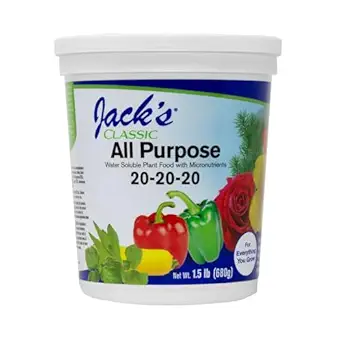 |
| Most Popular A crowd favorite that many people choose with confidence | Miracle-Gro Indoor Plant Food, Liquid, 8 oz. (2-Pack) |  |
| Best Seller A high-volume bestseller chosen again and again | TPS Nutrients Indoor Plant Food Liquid Fertilizer, 8 oz |  |
Miracle-Gro Indoor Plant Food for All Plants, Liquid, 8 fl. oz. (2-Pack)

| Item Form | Liquid |
|---|---|
| Application Method | Apply directly to soil or mix with water |
| Target Species | Houseplants |
| Mixing Ratio | 4 pumps per 1 quart of water |
Miracle-Gro Indoor Plant Food is a ready-to-use liquid fertilizer intended for regular feeding of indoor potted plants. It is typically used by mixing the dosing pump into a quart of water or applying directly to the soil, then watering as usual; the label recommends feeding every two weeks. The formula is described as an all-purpose NPK feed suitable for houseplants, flowers, herbs and vegetables kept in containers, so it works as a single product for mixed indoor collections. Practical benefits include quick uptake when watered in, a pump dispenser that makes dosing straightforward, and the convenience of a two-bottle bundle so you have a season of feedings on hand. Important limitations are that the product is a general-purpose feed rather than a specialty formula for orchids, succulents or heavy-feeding edibles, and users must follow the mixing guidance to avoid overfeeding. For most indoor gardeners who want a simple, reliable feeding routine, this product reduces guesswork and keeps a variety of container plants nourished.
Best for: Houseplant owners who want one easy, regular fertilizer to maintain a mixed collection of indoor container plants without juggling multiple specialized formulas.
Less Ideal for: Growers who need species-specific feeds for orchids, cacti and succulents, or commercial growers requiring precise nutrient programs.
- All-purpose liquid formula suitable for a wide range of indoor potted plants
- Pump dosing makes mixing and regular feedings simple and repeatable
- Feeds instantly when watered in, supporting visible plant vigor versus unfed controls
- Sold as a two-bottle pack to provide multiple months of feedings for a typical houseplant collection
- General NPK formula may not match the needs of specialist plants that prefer tailored nutrition
Verdict: A convenient, pump-dosed liquid fertilizer that keeps a mixed indoor plant collection fed with minimal fuss.
Osmocote Smart-Release Plant Food Plus Outdoor & Indoor, 2 lb

| Item Form | Granules |
|---|---|
| Application Method | Sprinkle |
| Target Species | All plants |
| Mixing Ratio | 1 capful (3 tablespoons) per 2 gallons of soil or per 4 square feet of area |
Osmocote Smart-Release Plant Food Plus is a granular, long-release fertilizer designed to feed a wide range of plants with minimal fuss. You apply it by sprinkling the recommended amount into the top 1 to 3 inches of potting soil or garden soil and then watering; the resin coating on each granule times nutrient release so plants receive steady nutrition for up to six months. It is practical for indoor houseplants, container-grown vegetables, flowers, shrubs, and in-ground beds because one product and one application schedule cover many plant types. The product carries a no-burn pledge when used as directed, and the manufacturer provides simple dosing guidance for outdoor and reduced rates for indoor use. Limitations to keep in mind are that it is a bulk granular feed rather than a quick soluble boost, so it will not correct acute nutrient deficiencies fast, and the fixed nutrient mix may not match highly specific crop nutrient plans. For growers focused on steady, low-maintenance feeding, it is an efficient option.
Best for: Serious indoor plant owners and performance-oriented gardeners who want reliable, low-maintenance nutrition for houseplants and container-grown crops without frequent reapplication.
Less Ideal for: Growers who need rapid corrective feeding, precise custom nutrient management, or hydroponic systems should consider soluble or specialty fertilizers instead.
- Controlled-release resin coating provides steady feeding for up to six months
- Suitable for a wide range of plants and both indoor and outdoor use
- Easy application by sprinkling and watering with clear dosing guidance
- Not a fast-acting soluble fertilizer for correcting immediate deficiencies
- Pre-mixed nutrient ratio may not match specific crop or high-performance feeding programs
Verdict: Choose this product if you want a one-application, six-month, low-maintenance fertilizer that reliably feeds a wide range of indoor plants.
Purived All-Purpose Liquid Plant Fertilizer, 16 oz (Makes 50 Gallons)

| Item Form | Liquid |
|---|---|
| Specific Uses For Product | Houseplant Fertilizer |
| Application Method | soil drench, foliar feed, full & semi hydroponics |
| Mixing Ratio | 320:1 |
| Liquid Volume | 16 fluid ounces |
Purived All-Purpose Liquid Plant Fertilizer is a concentrated 16 oz liquid designed to stretch into a large supply of houseplant feed. It mixes at 320:1 (one cap per gallon) and can be applied as a soil drench, foliar feed, or used in full and semi-hydroponic systems, so it fits a variety of indoor feeding routines. The formula lists primary macronutrients and a suite of micronutrients including iron, magnesium, and zinc, which supports steady growth and fewer nutrient gaps compared with single-nutrient feeds. Because it is odorless and labeled groundwater safe with a two year shelf life, it is convenient to store and use on a regular schedule. Practical gardeners will appreciate that a single bottle makes about 50 gallons of ready-to-use solution, reducing purchase frequency and storage clutter. Limitations include the need to measure the concentrate accurately and no specific N-P-K ratio provided on the listing, so those who track exact nutrient numbers may find it less transparent than lab-formulated fertilizers.
Best for: Buyers who want a practical, no-fuss fertilizer that stretches far and works across potted houseplants and simple hydroponic setups and who prioritize convenience and routine feeding.
Less Ideal for: Those who need precise, lab-specified N-P-K formulations or growers who require nutrient formulations tailored to specific growth stages and crops.
- Highly concentrated formula: one 16 oz bottle makes about 50 gallons of feed
- Versatile application: usable as soil drench, foliar spray, and in full or semi-hydroponics
- Includes a broad range of micronutrients in addition to primary nutrients
- Odorless formula with a two year shelf life for easy storage and regular use
- Does not list a clear N-P-K breakdown on the product details
- Requires accurate measuring of the concentrate to avoid over or under feeding
Verdict: A concentrated, versatile houseplant fertilizer that stretches a single bottle into many gallons of feed for convenient, routine indoor plant care.
Miracle-Gro Indoor Plant Food Spikes (24 Count)

| Application Method | Insert into soil |
|---|---|
| Item Form | Solid |
| Target Species | Indoor flowering and foliage houseplants |
| Mixing Ratio (N-P-K) | 6-12-6 |
| Coverage | Medium |
Miracle-Gro Indoor Plant Food Spikes are solid nutrient spikes you insert into moist potting soil to feed houseplants over time. Each spike contains an NPK 6-12-6 formula and micronutrients meant for common indoor plants such as ferns, pothos, spider plants, and crotons. Use is simple: make a small hole with the aerator tip, push a spike into the soil halfway between stem and pot rim, and replace monthly in spring and summer or every two months in cooler seasons. The spikes deliver slow, localized feeding that encourages blooms and greener foliage without needing frequent liquid feeding. They are particularly convenient for people who want low-effort routine care or travel occasionally. Limits to expect are less precise nutrient control compared with liquid feeds and reduced flexibility for plants with unusual nutrient needs; spikes also feed only the root zone where placed so uneven placement can cause inconsistent results across multiple pots.
Best for: Buyers looking for an affordable, low-effort fertilizer to maintain healthy common houseplants with minimal ongoing work or mixing.
Less Ideal for: Serious growers who need precise, adjustable feeding schedules or those tending nutrient-sensitive or high-performance specimens that require tailored liquid fertilization.
- Very easy single-step application with included aerator guidance
- Provides continuous feeding up to two months per spike
- Formulated for common indoor flowering and foliage houseplants
- Contains micronutrients in addition to NPK for balanced indoor use
- Not adjustable for precise, plant-specific nutrient ratios
- Feeding is localized so placement affects effectiveness
Verdict: A budget-friendly, no-fuss way to keep everyday houseplants fed for up to two months per spike.
Jack's Classic 20-20-20 All Purpose Water-Soluble Fertilizer (1.5 lb)

| Item Form | Powder |
|---|---|
| Specific Uses For Product | Plant Growth |
| Coverage | All |
| Mixing Ratio | 0.22 |
Jack’s Classic 20-20-20 is a water-soluble powder fertilizer designed for regular feeding of houseplants, vegetables, flowers, and mixed indoor plantings. It dissolves into a liquid concentrate that can be applied as a root drench, foliar spray, or used in continuous-feed systems, and the package includes a scoop and simple mixing directions. The balanced 20-20-20 N-P-K with added micronutrients promotes quick green-up and leaf expansion, which is useful for leafy houseplants and mixed containers. Because it is a concentrated powder, a single tub makes multiple gallons of feed and is convenient for gardeners who prefer to measure and mix batches as needed. Handling requires care since it is a concentrated chemical product and protective gloves and eye protection are recommended. Also, regular weekly to biweekly feeding is advised rather than one-off use, so it suits gardeners who will commit to a feeding schedule rather than those wanting a single slow-release application.
Best for: For indoor gardeners who value consistent, professional-style nutrition and are willing to follow a predictable feeding routine to keep houseplants vigorous and green.
Less Ideal for: Not a good fit for people who prefer one-time slow-release options or who want completely hands-off plant care.
- Balanced 20-20-20 formula suitable for a wide range of indoor plants and vegetables.
- Water-soluble powder yields many gallons of feed from a single tub, making it economical to use.
- Feeds both through roots and foliage so you can tailor application method to plant needs.
- Includes measuring spoon and clear mixing directions for predictable results.
- Requires regular mixing and a feeding schedule rather than one-time application.
- Concentrated powder requires careful handling and storage out of reach of children and pets.
Verdict: Choose this if you want a reliable, professional-grade water-soluble fertilizer that delivers consistent, fast green-up for indoor plants when used on a regular feeding schedule.
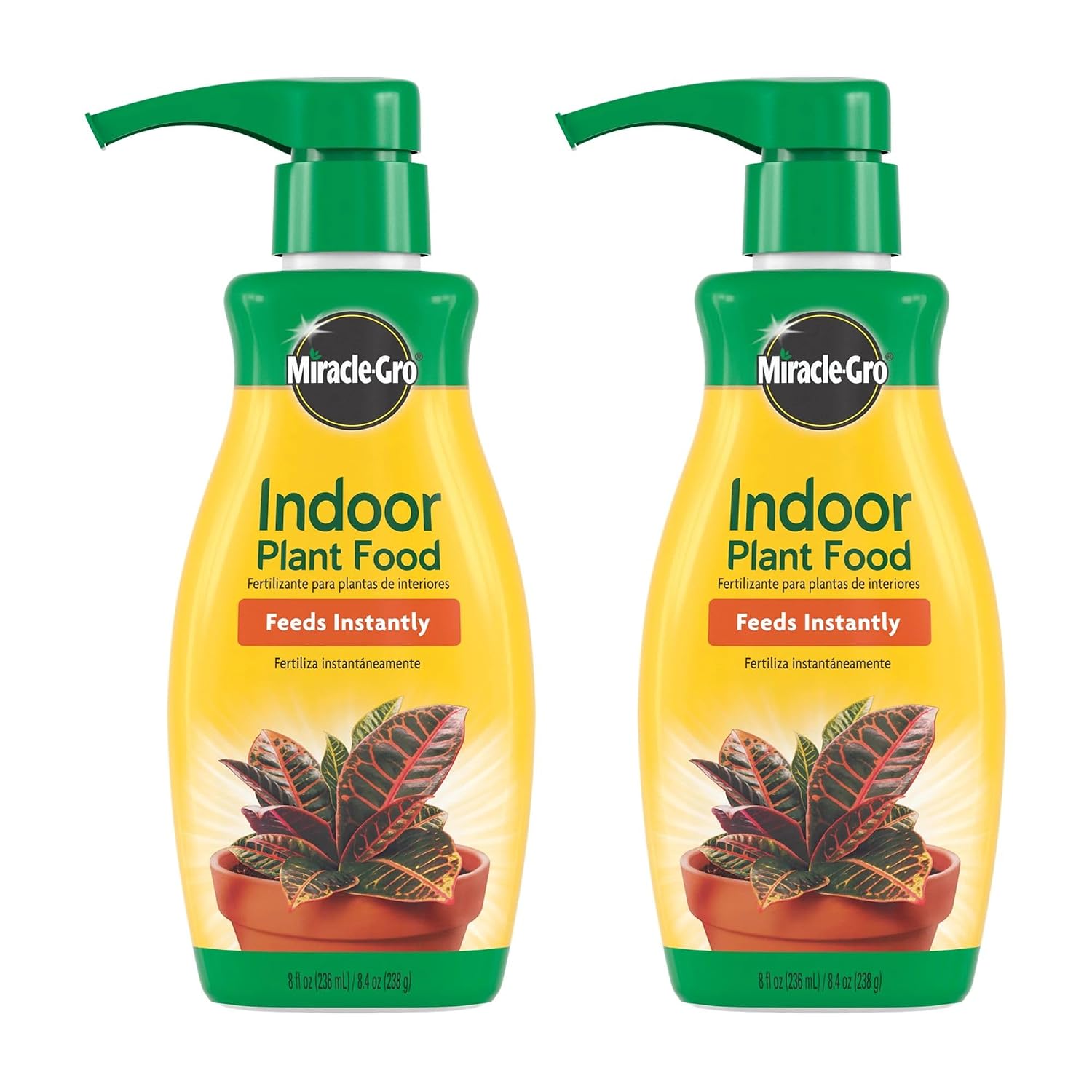
Miracle-Gro Indoor Plant Food, Liquid, 8 oz. (2-Pack)
| Item Form | Liquid |
|---|---|
| Application Method | Apply directly to the soil or mix with water |
| Coverage | Pot size |
| Target Species | Peace Lily, Snake Plant, Croton, Succulents, Herbs |
| Number of Packs | 2 |
Miracle-Gro Indoor Plant Food is a ready-to-use liquid fertilizer intended for weekly feeding of indoor container plants. It is applied either directly to the soil with the built-in pump (one pump for small pots, two for pots over 6 inches) or diluted by mixing four pumps per quart of water for watering. The formula is labeled for a broad set of houseplants including snake plant, peace lily, succulents, herbs and edible container vegetables, so it covers common indoor gardening needs. Practical benefits are quick uptake from a liquid formulation, simple dosing for routine use, and the convenience of two small bottles that are easy to store and measure. Important limitations are that it requires weekly application to see results and directions must be followed to avoid overfeeding sensitive plants. Also the product does not include specific N-P-K numbers on the listing, so growers who prefer exact nutrient ratios or a slow-release option may need a different product.
Best for: Buyers who want a straightforward, low-effort weekly feed for common houseplants and value simple dosing and quick results over precise nutrient control.
Less Ideal for: Advanced growers who need exact nutrient ratios, custom fertilization plans, or a slow-release product for hands-off feeding should look elsewhere.
- Liquid formula feeds plants instantly and is easy to apply
- Clear, simple dosing with pump or diluted in a watering can
- Suitable for a wide range of common indoor plants including edibles
- Two 8 oz. bottles offer convenient storage and a spare bottle
- Listing does not state exact N-P-K ratio for users who need precise nutrient information
- Requires weekly application rather than slower-release feeding
Verdict: A simple, ready-to-use liquid feed that makes weekly fertilizing of common indoor plants fast and fuss-free.
TPS Nutrients Indoor Plant Food Liquid Fertilizer, 8 oz

| Item Form | Liquid |
|---|---|
| Application Method | Watering can |
| Specific Uses For Product | Plant Food |
| Unit Count | 8 Fluid Ounces |
| Mixing Ratio | 2:1 (oz/gallon) or 1:64 (tbsp/gallon) |
This 8 oz TPS Nutrients indoor plant food is a kelp-enriched liquid concentrate designed to be mixed with water and applied with your watering can as part of routine houseplant care. It supplies balanced nutrients aimed at improving leaf vibrancy, encouraging steady new growth, and supporting stronger roots so plants absorb water and nutrients more efficiently. Typical use is weekly or regular feedings at the manufacturer mixing ratio (roughly 1 tablespoon per 32 oz of water) added to normal watering. The product is easy to use, suitable for a wide range of common houseplants, and concentrated enough that a small bottle treats many waterings. Limitations are that the 8 oz bottle is relatively small compared with bulk concentrates, and users who prefer precise NPK numbers or a slow-release granular option may want a different format. Also follow safety directions to avoid contact with skin and to keep out of reach of children and pets.
Best for: Buyers who want a simple, reliable weekly liquid fertilizer to keep common houseplants healthy without fuss; ideal for owners who value ease of use and predictable improvement in foliage and growth.
Less Ideal for: Not the best choice for growers who need bulk supply for many plants or who prefer slow-release granules or custom-formulated NPK controls.
- Concentrated liquid formula that mixes easily with water for regular feedings
- Kelp-enriched blend aimed at improving foliage color and encouraging new growth
- Suitable for a broad range of common indoor houseplants
- Simple application with a watering can using clear mixing instructions
- Small 8 oz bottle may require frequent repurchasing for households with many plants
- Product listing does not show explicit NPK ratio for precise nutrient tailoring
Verdict: A compact, easy-to-use liquid fertilizer that makes weekly feeding straightforward for anyone maintaining healthy indoor foliage.
Choosing the Right Indoor Plants Fertilizer: Key Factors to Consider
Nutrient Ratio and NPK Balance
Houseplants have different demands than outdoor beds because they grow in limited soil volume. The primary ratio of nitrogen, phosphorus, and potassium determines whether a fertilizer favors leaf growth, root development, or bloom production. For foliage-heavy plants, a moderate-to-high nitrogen ratio promotes greener, fuller leaves. For flowering indoor plants, higher phosphorus during bloom can help set flowers but should be used only in the blooming period.
Choosing a balanced NPK or a slow-release formulation helps avoid rapid flushes of growth that can stress plants when light is limiting. Check the guaranteed analysis and match the ratio to the plant type and the season.
Micronutrient Inclusion
Micronutrients like iron, magnesium, manganese, and boron influence leaf color, photosynthesis efficiency, and overall vigor. Indoor soils that are potting mixes or soilless blends can become depleted of these trace elements over time. A fertilizer that lists key micronutrients and their forms reduces the risk of subtle deficiencies such as yellowing between veins or poor new growth.
Chelated forms of iron and other micronutrients are particularly helpful in neutral to alkaline potting mixes where availability can be limited. For sensitive or variegated plants, a more complete micronutrient profile helps maintain coloration.
Application Method and Dosing Clarity
How a product is applied affects how often you fertilize and how easy it is to keep a consistent schedule. Liquid concentrates allow precise feedings and quick correction of deficiencies, while granular or slow-release types reduce the need for frequent dosing. Fertilizer spikes or time-release beads may suit busy gardeners but can be harder to adjust once placed.
Clear dosing instructions for small containers are essential. Gardeners should be able to scale rates down safely from instructions meant for larger pots or outdoor beds. Products with portion-measured caps, simple dilution charts, or clear per-liter directions make routine feeding less error-prone.
Salt Management and Leachability
Frequent fertilizing and low pot volume can lead to soluble salt accumulation, which damages roots and causes tip burn or leaf browning. Fertilizers with lower salt indices or slow-release mechanisms reduce buildup. Equally important is whether the product allows for easy leaching: you should be able to flush pots periodically without causing nutrient depletion.
Look for formulations that recommend occasional flushes and provide guidance on how to leach safely. Avoid mixes that encourage over-application or lack instructions for salt control.
Compatibility With Potting Mixes and Water Quality
Indoor gardeners use a variety of mixes, from peat-based to bark or soilless blends. Some fertilizers react differently depending on pH and organic content. A fertilizer that performs predictably across common indoor mixes reduces the chance of lockups or micronutrient unavailability.
Tap water hardness matters too. High-calcium water can interact with fertilizer salts and alter nutrient availability. Choose a product with guidance for different water qualities or that is formulated to tolerate a range of pH and hardness levels.
Safety, Handling, and Storage
Because fertilizer is applied frequently and stored near living spaces, safety and shelf stability matter. Water-soluble powders and concentrates should have clear storage instructions to prevent clumping and degradation. Child- and pet-safe packaging or clear labeling helps prevent accidental exposure.
Also consider how residues behave on foliage; foliar sprays should avoid formulas that burn delicate leaves. Shelf-stable dry formulations are often easier to store between seasons without losing potency.
When To Fertilize Indoor Plants
Timing depends on plant growth cycles and light availability. Most houseplants benefit from regular feeding during active growth in spring and summer, with reduced or no feeding during winter dormancy. Slow-release options can simplify timing by providing steady nutrients through a season.
Monitor growth rate and leaf color to determine if you need to adjust timing. If a plant is not actively producing new leaves or is under low light, hold back fertilizer rather than risk salt buildup.
- Feed actively growing foliage every 2 to 4 weeks with a diluted liquid fertilizer.
- Use slow-release or granular feeds for long, low-maintenance intervals.
- Flush pots with plain water occasionally to prevent salt accumulation.
Matching Fertilizer to Plant Type
Different houseplants have varied nutrient priorities. Tropical foliage plants prioritize nitrogen for leaf growth, succulents and cacti need lower, less frequent feeding, and flowering indoor plants benefit from slightly higher phosphorus during bloom cycles.
Adjust concentration and frequency rather than switching products constantly. A balanced, mild fertilizer used at reduced strength often outperforms a strong formula applied incorrectly.
- Foliage-heavy plants: moderate N, regular feeding.
- Flowering plants: boost P during bloom only.
- Succulents: infrequent, low-dose feeding.
How To Avoid Overfertilizing
Overfertilizing shows up as leaf tip burn, browning, or stunted growth. To avoid it, always start at half the recommended rate for containerized plants and watch new growth. Keep a consistent watering routine and flush pots if salts build up.
Using a meter to check electrical conductivity can help advanced gardeners monitor salt levels, but simple visual checks and conservative dosing are sufficient for most households.
- Begin with a weaker dose and increase only if plants respond.
- Flush containers every few months with plain water to remove excess salts.
- Reduce or stop feeding in low-light months.
Organic Versus Synthetic Indoor Fertilizers
Organic fertilizers release nutrients more slowly and improve potting mix biology, which can benefit long-term soil structure in larger pots. They tend to have lower immediate salt impact but may be less concentrated, requiring more frequent application in small pots.
Synthetic fertilizers are predictable, fast-acting, and easier to dose precisely. They often work well when plants show clear deficiency signs that need quick correction. Choose based on whether you prioritize steady biological benefits or precise, rapid nutrition.
- Organics support microbial life and are gentler on roots.
- Synthetics offer precise NPK control and quick results.
Practical Application Tips
Measure carefully and label your dilution mixes so you do not accidentally over-concentrate. Apply fertilizer to moist soil rather than dry to minimize root stress. When using foliar sprays, do so in the morning to allow leaves to dry before evening.
Store concentrates in a cool, dry place and keep dry granules in sealed containers to extend shelf life. Keep records of feeding frequency and plant response to refine your routine over time.
- Always dilute concentrates according to guidance for small pots.
- Apply to moist soil and avoid wetting foliage unless using a foliar formula.
- Rotate between liquid and slow-release feeds if you want both control and convenience.
How We Chose the Best Indoor Plants Fertilizer
We shortlisted indoor plant fertilizers by focusing on measures that affect real-world houseplant outcomes. Our evaluation emphasized nutrient balance and ingredient transparency to ensure formulas supply the right macro- and micronutrients without excess salts. Application flexibility and dosing clarity were weighed because indoor gardeners need predictable results across pots and potting mixes. We also considered salt management and leachability since small containers are vulnerable to buildup that can harm roots. Ease of use and packaging mattered for repeat dosing in low-light or busy households. Stability and shelf life were checked to reduce wasted product when fertilizing seasonally. Excluded items included outdoor-only lawn or shrub fertilizers, products that require professional application, and vague proprietary blends with no guaranteed analysis. The scoring focused on concrete specs and gardener-facing attributes rather than brand reputation or price. Evaluation criteria used: nutrient analysis and NPK balance, micronutrient inclusion and chelation, application method and dosing clarity, salt control and leachability, and packaging stability and shelf life.
FAQ
How often should I fertilize common houseplants?
It depends on the plant and fertilizer type. Many houseplants do well with a diluted liquid every 2 to 4 weeks during active growth. Slow-release granules can be applied once per season for convenience.
Can I use outdoor garden fertilizer on indoor pots?
Often outdoor formulas are stronger and intended for higher soil volumes, so they risk overfeeding small pots. If using an outdoor product, reduce the rate substantially and monitor for salt signs.
What signs show my indoor plant needs fertilizer?
Signs include slowed new growth, paler leaves, and reduced vigor when light and watering are adequate. Sudden yellowing can indicate other issues, so confirm cultural conditions before increasing feed.
Is it safe to fertilize succulents and cacti regularly?
Succulents need much less frequent feeding. Use a low-strength fertilizer and apply only during their active season. Overfertilizing commonly causes soft, etiolated growth in these plants.
How do I prevent fertilizer burn in small pots?
Start at half the recommended concentration for containers, water before feeding, and flush the pot with plain water occasionally. Avoid constant high-strength applications in limited soil volumes.
Do I need different fertilizers for seedlings versus mature plants?
Yes. Seedlings are sensitive and benefit from very mild, balanced feeds to avoid root damage. Mature plants tolerate standard diluted rates and may require higher nutrient inputs when actively growing or blooming.
Final Verdict
Choose an indoor plants fertilizer based on the plants you grow and your watering habits. Prioritize a balanced NPK for foliage, a clear micronutrient profile for long-term color and vigor, and an application method you will reliably follow. Consider salt management and compatibility with your potting mix to avoid root stress. If you want simplicity, a mild, regularly applied liquid at reduced strength works for most collections. For lower-maintenance care, a predictable slow-release option reduces feeding frequency but requires correct placement and occasional flushing. Focus on matching fertilizer type and dosing to plant needs rather than chasing the strongest formula.
