

Note: This article contains affiliate links. If you click on these links and make a purchase, I may earn a small commission at no extra cost to you. This helps support my research and content. Read my full affiliate disclosure here.
Picking the right balanced fertilizer shapes how evenly your vegetables, ornamentals, and lawn get the nutrients they need. The correct mix prevents single-nutrient lockups, supports predictable growth, and reduces the need for ad hoc corrections through the season. This guide highlights seven shortlisted balanced fertilizers chosen for common garden situations and explains the practical differences you will notice in a bed, container, or lawn. We evaluated products for nutrient ratio accuracy, release profile, ease of use, and compatibility with typical soil tests and organic practices. Read on to understand which features matter most for steady plant performance and which options fit specific garden setups.
Top Picks at a Glance
| Best Overall The best all-around choice for most situations | GARDENWISE 10-10-10 All-Purpose Granular Plant Fertilizer (4 lb) |  |
| Best Quality Built to a higher standard if you want something more solid | Jack's Classic 20-20-20 All Purpose Water-Soluble Fertilizer (24 oz) | 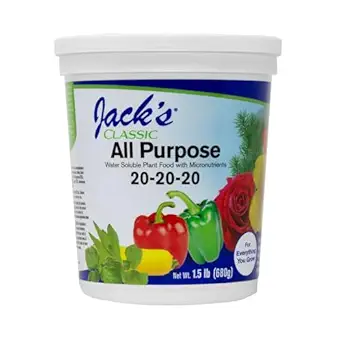 |
| Best Value The sweet spot between price and what you get | GreenView Multi-Purpose Fertilizer 10-10-10, 33 lb |  |
| Best Budget The cheapest option that still gets the job done reliably | GARDENWISE 10-10-10 Slow-Release Granular Plant Fertilizer (1/2 Quart) |  |
| Highest Rated A top-rated pick with lots of positive feedback | CountryMax 15-15-15 All-Purpose Granular Fertilizer (50 lb) |  |
| Most Popular A crowd favorite that many people choose with confidence | Southern Ag All Purpose Granular Fertilizer 10-10-10 (5 lb) |  |
| Best Seller A high-volume bestseller chosen again and again | TPS Nutrients Bonsai Liquid Fertilizer, 8 fl oz |  |
GARDENWISE 10-10-10 All-Purpose Granular Plant Fertilizer (4 lb)

| Item Form | Granules |
|---|---|
| Mixing Ratio | 10-10-10 |
| Specific Uses For Product | Vegetable gardens, fruit trees, evergreens, shrubs, lawns, flowers, potted plants, indoor gardening |
| Ingredients | Nitrogen 10%, Phosphate 10%, Potash 10% |
This granular 10-10-10 fertilizer supplies equal parts nitrogen, phosphorus and potassium in a straightforward, easy-to-apply form for everyday garden feeding. You spread the granules across beds, around trees or on lawns and water in; package directions give simple rates for vegetables, fruit trees, lawns and ornamentals so it fits routine seasonal maintenance. The balanced N-P-K makes it useful for promoting leafy growth, root development and general plant hardiness without needing different specialty formulas for each crop. Practical strengths are the clear directions for common garden uses and the fine granule texture that distributes evenly for consistent coverage. Important limitations are that it is a quick-release granular formula so it may require repeated applications through the season and is not tailored for acid-loving plants or problems needing targeted micronutrients. For growers who want one dependable, general-purpose feed, this makes scheduling regular feedings easy, but advanced users with specific soil test recommendations may still need supplemental or specialty fertilizers.
Best for: Gardeners who want a single, easy-to-use fertilizer for routine feeding of mixed vegetable beds, lawns, shrubs and container plants and who value simplicity over specialized formulations.
Less Ideal for: Gardeners managing plants that require acid-specific feeds or those following strict soil-test driven, specialty nutrient programs should consider targeted fertilizers instead.
- Balanced 10-10-10 N-P-K suitable for a wide range of plants
- Granular form spreads evenly for consistent application
- Clear application rates for vegetables, lawns, trees and ornamentals
- Works for both outdoor beds and potted/indoor plants
- Quick-release formula requires repeat applications during the season
Verdict: A reliable, easy-to-use balanced granular fertilizer for gardeners who want one product to support routine feeding across vegetables, ornamentals, trees and containers.
Jack's Classic 20-20-20 All Purpose Water-Soluble Fertilizer (24 oz)

| Item Form | Powder |
|---|---|
| Specific Uses For Product | Plant Growth |
| Coverage | All |
| Mixing Ratio | 0.22 |
Jack's Classic 20-20-20 is a professional‑grade, water‑soluble powder fertilizer intended for general feeding of indoor and outdoor plants. You dissolve the measured spoonfuls in water and apply as a root drench or foliar spray every 7 to 14 days, or use weaker mixes for seedlings and cuttings. The even 20-20-20 NPK formula promotes quick green‑up and leaf expansion, while included micronutrients support overall plant health. Because it is a powder concentrate, a small tub makes multiple gallons of feed, which is convenient for regular maintenance across beds, containers, and ornamentals. The product ships with a measuring spoon and clear directions, so it is easy to dose consistently. Limitations to note are that it is a generalist formula rather than crop‑specific booster, so plants with specialized needs may do better with targeted blends, and it requires careful handling and dilution to avoid overfeeding. Protective handling is recommended since the powder can irritate skin and eyes.
Best for: Gardeners who want a reliable, easy-to-use all‑around fertilizer for regular maintenance of outdoor beds, containers, and ornamentals and who value predictable, balanced nutrition.
Less Ideal for: Growers seeking a specialized bloom booster or a fertilizer tailored to a single crop should choose a targeted formula instead.
- Balanced 20-20-20 NPK supports fast green-up and leaf growth across many plant types
- Water‑soluble powder stretches farther than comparable liquid feeds so one tub makes multiple gallons
- Usable as both foliar spray and root feed for flexible application
- Includes measuring spoon and clear mixing directions for consistent dosing
- Added micronutrients reduce need for separate supplements
- General all-purpose formula is not optimized for bloom or fruit boosting
- Requires accurate measuring and dilution to avoid fertilizer burn
Verdict: A straightforward, professional‑grade balanced fertilizer that delivers reliable, easy-to-dose nutrition for maintaining healthy outdoor plants.
GreenView Multi-Purpose Fertilizer 10-10-10, 33 lb

| Item Form | Granules |
|---|---|
| Application Method | broadcast or drop spreader |
| Specific Uses For Product | Plant Growth, Root Development, Seed Development, Soil Conditioning |
| Target Species | Trees, Shrubs, Vegetables, Flowers, Ornamental Gardens |
GreenView 10-10-10 is a granular, balanced fertilizer designed for routine feeding across mixed garden beds. It is applied with a broadcast or drop spreader and can be used when planting or as a general feed to support plant growth, root development, and seed establishment. The product's NPK 10-10-10 formulation supplies nitrogen, phosphorus, and potassium in equal measure, which makes it a safe choice when you need broad-spectrum nutrition without strengthening one growth phase excessively. The bag covers a large area so it is convenient for medium to large beds and mixed plantings. Important practical notes are that it is intended to be distributed with a spreader rather than hand spread and that label directions differ by plant type, so following coverage and timing guidance is important. For gardeners that prefer tailored, soil-test-based fertilization or slow-release formulations targeted to a single crop, this general-purpose granular will be less specific than specialty blends.
Best for: Gardeners who want a single, straightforward fertilizer to maintain mixed garden beds and prefer a practical, easy-to-apply solution that covers multiple plant types.
Less Ideal for: Growers seeking a slow-release feed, highly targeted nutrient program, or formulas tuned to a specific crop or diagnosed soil deficiency.
- Balanced 10-10-10 NPK suitable for a wide range of vegetables, flowers, shrubs, and trees
- Granular form works with broadcast or drop spreaders for fast, even coverage
- Large coverage per bag makes it practical for multiple garden beds
- Supports plant growth, root development, and seed establishment
- Not a crop-specific or soil-test tailored formula for addressing particular nutrient deficiencies
Verdict: A single balanced granular fertilizer that delivers broad-spectrum nutrition and easy spreader application for maintaining mixed garden beds.
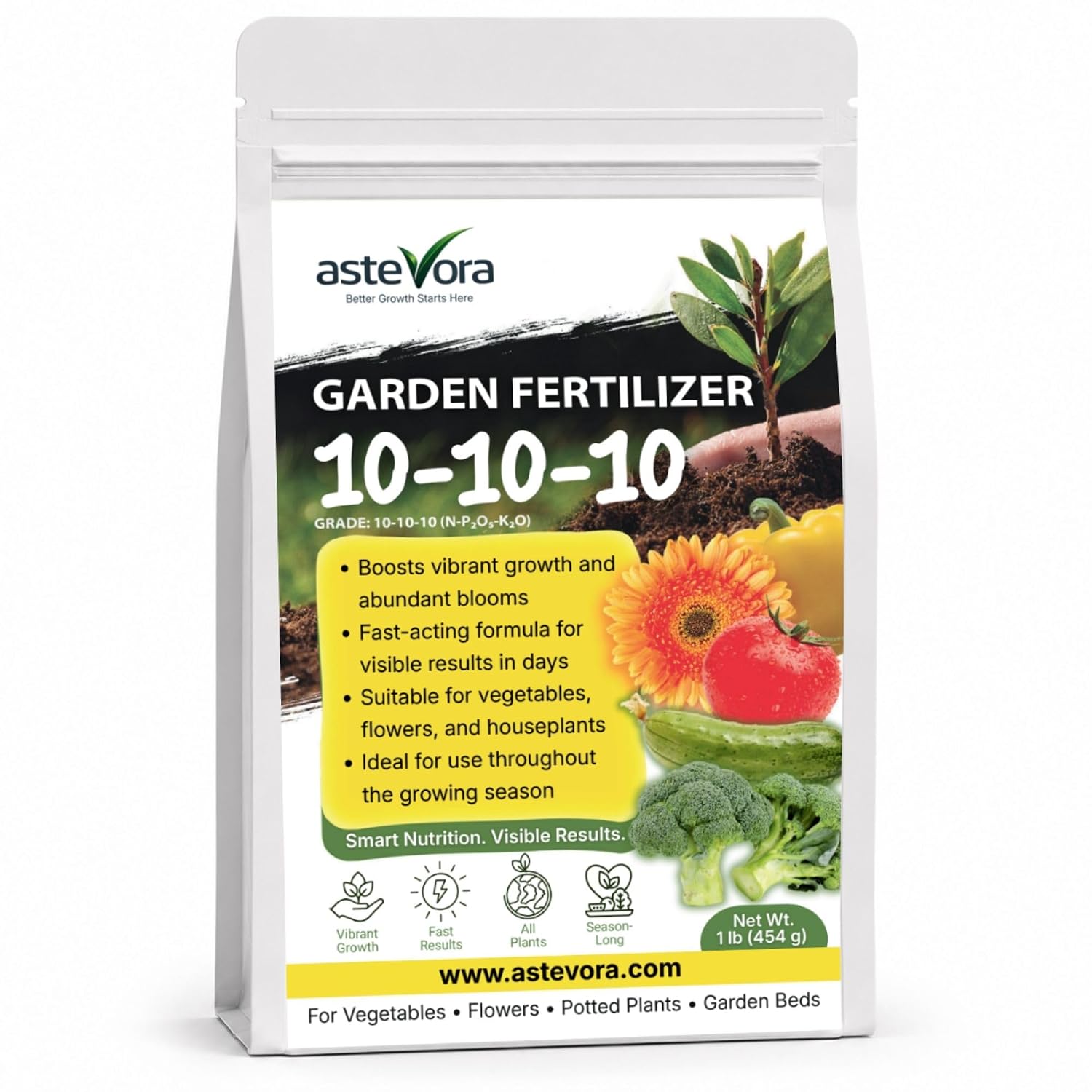
GARDENWISE 10-10-10 Slow-Release Granular Plant Fertilizer (1/2 Quart)
| Item Form | Granules |
|---|---|
| Mixing Ratio | 10-10-10 |
| Specific Uses For Product | Vegetable gardens, fruit trees, shrubs, lawns, flowers, potted plants, indoor gardening |
| Liquid Volume | 0.5 quarts |
This GARDENWISE 10-10-10 granular fertilizer is an all-purpose, slow-release plant food that supplies equal parts nitrogen, phosphorus, and potassium for up to eight weeks. You apply the fine granules evenly around the root zone and water in; directions include specific rates for vegetable beds, lawns, flowers, shrubs, and trunk-diameter-based dosing for fruit trees. The balanced N-P-K and slow-release formulation support root development, steady leaf and shoot growth, and improved stress tolerance—useful for fig trees between spring feeding cycles and as a maintenance boost during the growing season. Practical benefits include predictable feeding intervals that cut down on frequent applications and clear dosing guidance for different plant types. Limitations are that the product is a general-purpose formula rather than a fig-specific blend, so if your soil test shows particular nutrient imbalances or micronutrient needs you may need a supplemental product. Also the pack is a small consumer size, so larger orchards will need multiple bags.
Best for: Buyers who want a straightforward, low-maintenance fertilizer to support fig tree growth without fuss and who prefer predictable feeding intervals and simple dosing instructions.
Less Ideal for: Growers managing nutrient-deficient or pH-sensitive soils, or those who need large-volume supplies for multiple mature trees should consider targeted or bulk alternatives.
- Balanced 10-10-10 N-P-K supports roots, foliage, and fruiting for a wide range of plants
- Slow-release granules provide up to eight weeks of continuous feeding, reducing application frequency
- Clear, plant-specific dosing guidelines including per-inch trunk recommendations for fruit trees
- Fine granule form spreads evenly for good soil contact and easy watering-in
- Not formulated with fig-specific micronutrients or pH adjustments that some fruit growers prefer
- Small 0.5 quart/16 ounce consumer size may be insufficient for larger fig trees or multiple trees
Verdict: A convenient, balanced slow-release granular fertilizer that makes routine feeding of fig trees simple and low-effort.
CountryMax 15-15-15 All-Purpose Granular Fertilizer (50 lb)

| Item Form | Granules |
|---|---|
| Application Method | Granular |
| Coverage | Full |
| Mixing Ratio | 15-15-15 |
| Target Species | Plants |
This CountryMax 15-15-15 granular fertilizer delivers equal parts nitrogen, phosphorus, and potassium for predictable, all-purpose feeding across flower beds, vegetable gardens, lawns, and shrubs. You apply it by broadcasting over soil or turf and watering in; the granular form makes even spreading straightforward for routine maintenance. Notable features include a true balanced formulation that reduces the risk of nutrient imbalance and a large 50 pound bag that suits multi-area yards or repeated seasonal applications. Practical benefits are steady vegetative growth, support for root development and flowering, and suitability for use around edible plants when directions are followed. Important limitations are that it is a general-purpose product rather than a crop- or season-specific formula, so gardeners seeking slow-release timing or micronutrient blends will need supplements or a different product. Also, handling a 50 pound bag requires space and care when storing and applying.
Best for: Buyers who prioritize a consistent, no-nonsense fertilizer for routine feeding across mixed garden beds and lawns and who want predictable results from a single balanced formula.
Less Ideal for: Gardeners who need crop-specific feeds, extended slow-release nutrition, or formulations with added micronutrients for deficiency correction should consider specialized fertilizers instead.
- Balanced 15-15-15 formula supports steady growth without favoring one nutrient
- Granular form is easy to broadcast and water in for uniform coverage
- Large 50 lb unit reduces the need for frequent repurchasing on medium to large properties
- Suitable for a wide range of uses including lawns, flower beds, vegetables, and shrubs
- Not a targeted or slow-release fertilizer so timing and nutrient longevity may require additional products or repeat applications
- Requires safe storage and manual handling due to the heavy 50 lb bag
Verdict: Choose this balanced 15-15-15 granular fertilizer when you want a reliable, straightforward feed that delivers even, predictable nutrition across lawns and garden beds.
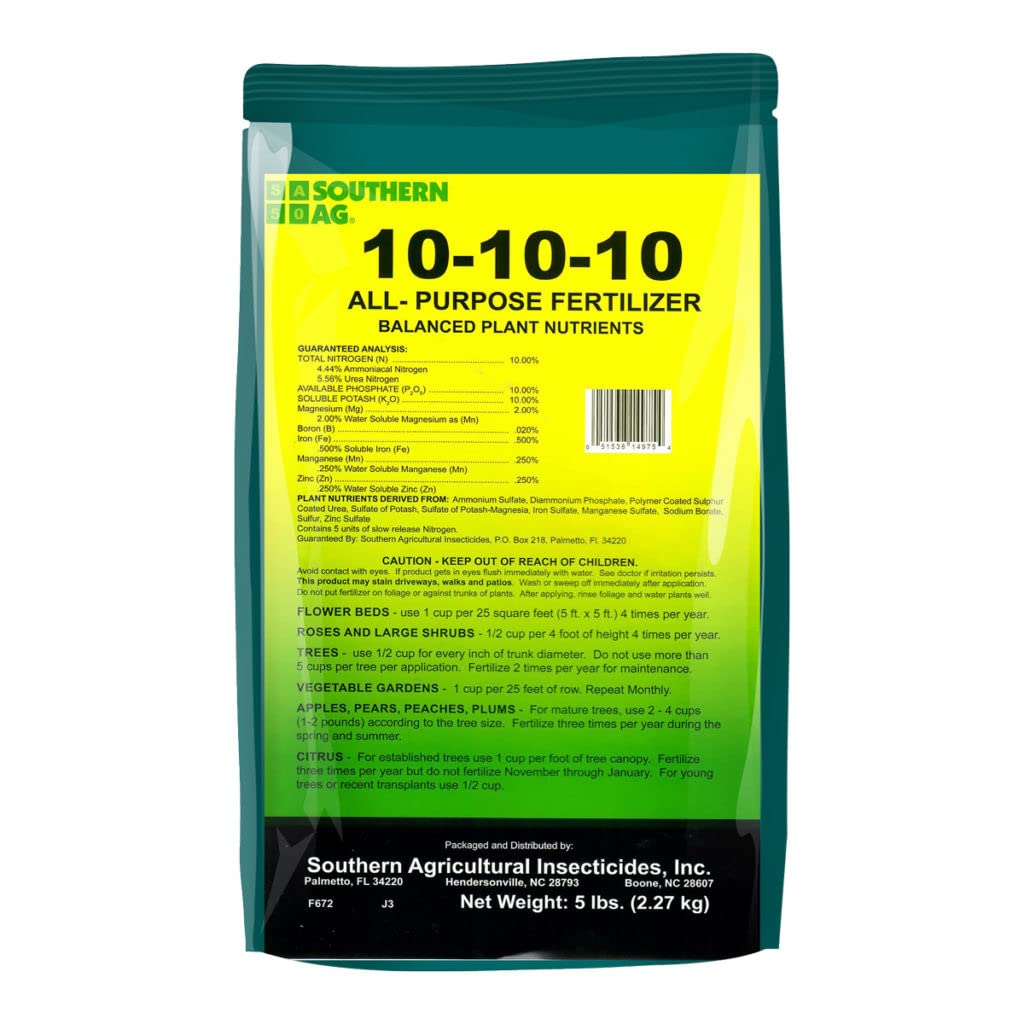
Southern Ag All Purpose Granular Fertilizer 10-10-10 (5 lb)
| Item Form | Granules |
|---|---|
| Specific Uses For Product | Citrus and Fruit Trees, Flowerbeds, Roses, and Large Shrubs, Vegetable Gardens |
| Application Method | Broadcast evenly over area and water in. |
| Mixing Ratio | 10:10:10 |
This 5 lb bag of Southern Ag 10-10-10 granular fertilizer is a straightforward, balanced all-purpose feed for vegetable beds, fruit trees, roses, and shrubs. You spread the granules uniformly over soil or beds and water them in; directions and recommended cup measurements are printed for common uses so dosing is easy. The formula supplies equal parts nitrogen, phosphorus, and potassium plus trace minerals like magnesium, iron, manganese, zinc, and boron, which supports steady vegetative growth and overall plant health. For asparagus specifically it can be used as a periodic maintenance feed during the growing season to support fern growth and energy storage in crowns. The product is simple to store and apply, and the small bag size is convenient for trialing on a single bed or patch. Limitations are that it is a general blend rather than a tailored asparagus formula, so heavy feeders or soils needing specific nutrient correction may require additional amendments, and granular broadcast feedings require careful placement to avoid contact with foliage or runoff risks described on the label.
Best for: Gardeners on a budget who want a simple, balanced fertilizer to maintain small asparagus patches and other mixed beds without buying specialty formulas.
Less Ideal for: Growers managing large asparagus plantings, or who need a targeted high-potassium or soil-specific amendment, should choose a crop-specific or soil-test-driven fertilizer.
- Balanced 10-10-10 N-P-K supports general growth and root development.
- Includes micronutrients (iron, manganese, zinc, boron) for broader plant nutrition.
- Clear application instructions and coverage rates for common garden uses.
- Small 5 lb size is convenient for testing on a single asparagus bed or small garden.
- Not formulated specifically for asparagus so may lack the higher potassium or phosphorus some heavy beds benefit from.
- Granular broadcast application can stain hard surfaces and requires watering after application to activate nutrients.
Verdict: A low-cost, easy-to-use balanced granular fertilizer that is a practical maintenance feed for small asparagus beds and mixed gardens.
TPS Nutrients Bonsai Liquid Fertilizer, 8 fl oz

| Item Form | Liquid |
|---|---|
| Specific Uses For Product | Plant Food |
| Application Method | dunking or traditional watering methods |
| Target Species | bonsai trees |
| Mixing Ratio | 1:8 |
This 8 fl oz liquid bonsai fertilizer is designed to deliver balanced nutrients in a fast-absorbing formula for miniature trees. It is intended for regular feeding by diluting at the manufacturer’s 1:8 mixing ratio and applying either by dunking the rootball or through normal watering, which makes it flexible for different bonsai care routines. The formula highlights kelp and micronutrients alongside a balanced NPK to promote vibrant foliage, steady branch development, and stronger roots without encouraging overly leggy growth. Practical benefits include easy measurement, quick uptake compared with granular feeds, and suitability across bonsai species. Important limitations are the small bottle size for gardeners with multiple trees and the need to follow dilution instructions closely to avoid overfeeding; there is no listed long-term release mechanism so regular applications are required. For someone who values targeted, fast-acting nutrition for bonsai, this product is a focused liquid option that complements standard watering and repotting practices.
Best for: Bonsai owners who want a fast-acting, bonsai-specific liquid feed and who prefer products with clear mixing instructions and visible customer acceptance.
Less Ideal for: Large-scale growers or collectors who need bulk fertilizer or a slow-release option should consider larger volume or different formulations.
- Formulated specifically for bonsai with balanced NPK to support compact growth.
- Liquid concentrate mixes at 1:8 for fast uptake and flexible application by dunking or watering.
- Contains kelp and micronutrients to support foliage color and root health.
- Small 8 fl oz bottle may require frequent repurchase for multiple trees.
- No slow-release component so feeding must be repeated on a schedule.
Verdict: A compact, bonsai-focused liquid fertilizer that delivers fast, easy-to-use nutrition to maintain compact growth and vibrant foliage.
Choosing the Right Balanced Fertilizer: Key Factors to Consider
Nutrient Ratio and Plant Stage
A balanced fertilizer supplies similar amounts of nitrogen, phosphorus, and potassium, but the exact ratio still matters depending on what you are growing. Early vegetative growth responds to nitrogen, while root and bloom development benefit from phosphorus and potassium. Matching the fertilizer ratio to the plant stage prevents overfeeding one nutrient and keeps growth proportional.
Using a true balanced mix for general maintenance is practical for mixed beds and lawns. For seedlings or flowering crops you may still supplement with targeted feeds, but starting with a balanced formula avoids dramatic swings in leaf versus root growth.
Release Type and Timing
How nutrients become available influences watering frequency and risk of burn. Quick-release granular and soluble mixes give a fast boost but require careful measurement and more frequent applications. Slow-release or controlled-release formulations release nutrients over weeks to months and reduce reapplication needs.
Think about the rhythm of your garden chores and seasonal weather. If you water less often or want longer intervals between feedings, a slower-release balanced fertilizer is easier to manage. If you want immediate correction after a soil test, a fast-acting formula is more appropriate.
Form Factor and Application Method
Balanced fertilizers come as powders, granules, pellets, water-soluble crystals, and liquid concentrates. Each form behaves differently in soil and containers. Granules can be broadcast or side-dressed, soluble powders and liquids work well for foliar or drench feeding, and pellets or coated granules provide time-release convenience.
Consider how you apply fertilizer and what tools you have. Containers benefit from precise soluble doses, while larger beds and lawns are more practical to feed with broadcast granules or spreader-friendly products.
Soil Chemistry and Compatibility
Soil pH, organic matter, and existing nutrient levels determine how a balanced fertilizer performs. Some formulations contain salts or acidifying agents that affect pH over time. Others are more compatible with organic amendments and microbial activity.
Always base your choice on a soil test when possible. A balanced product that works well in neutral to slightly acidic soils may need pairing with lime or sulfur in extreme pH conditions. Compatibility with compost and other standard amendments reduces the chance of negative interactions.
Application Rate Precision and Safety
Precise measuring matters because overapplication of even a balanced fertilizer can harm roots or cause nutrient runoff. Look for products with clear application charts for different planting situations and easy measuring units. Safety for household storage and child- and pet-aware gardens is also relevant; dry granules and liquids pose different handling risks.
Consider how easy it is to dispense small amounts for pots versus large amounts for beds, and whether the package supports resealing and accurate dosing to avoid spills or mistakes.
When to Use a Balanced Fertilizer
Balanced fertilizers are best as regular maintenance feeds for mixed plantings, lawns, and garden areas where no single nutrient deficiency is dominant. They provide even support so plants do not over-prioritize leaf growth at the expense of flowers or roots.
Use a balanced formula after initial establishment to maintain steady growth, or as a general corrective after a soil test shows overall low macronutrients without strong imbalance. They are also practical for community beds, ornamentals, and mixed vegetable patches where different crops share the same soil.
- Good for general feeding schedules
- Useful in mixed beds with diverse plant types
- Appropriate when soil test shows uniformly low N, P, and K
Adjusting Feedings for Containers Versus In-Ground Beds
Containers dry and deplete nutrients faster than in-ground beds, so you may need more frequent, smaller doses even when using a balanced product. Water-soluble or liquid balanced fertilizers are often easier to calibrate for pots.
In-ground beds benefit from slow-release balanced granules or timed applications tied to the growing season. Application rates and frequency should be reduced in heavy soils where nutrients persist longer.
- Containers: smaller, more frequent doses
- Beds: slow-release or less frequent applications
- Adjust rates for soil texture and drainage
Combining Balanced Fertilizers with Organic Matter
Adding compost or well-rotted manure improves structure and microbial activity, which in turn helps plants access balanced fertilizer nutrients more effectively. Organic matter buffers nutrient swings and reduces the risk of leaching.
When pairing with organic amendments, reduce synthetic application rates to avoid over-accumulation. Balanced products that are compatible with compost help maintain steady availability for roots.
- Compost improves nutrient retention
- Pairing reduces leaching and nutrient spikes
- Adjust synthetic inputs after adding large amounts of organic matter
Reading Labels and Application Charts
Labels provide N-P-K ratios, suggested rates per square foot or per gallon for containers, and timing guidance. Follow those directions and cross-check with your soil test to avoid under- or over-application.
Look for instructions that match your typical application tool, whether a scoop, spreader, or watering-can measure. Clear guidance on reapplication intervals and maximum seasonal rates helps maintain plant health without risking runoff.
- Match label recommendations to your planting area size
- Use the right measuring tools for consistency
- Follow seasonal maximums to protect plants and environment
Troubleshooting Common Issues
Yellowing leaves, stunted growth, or excessive foliage with few flowers can indicate mismatched feeding rather than a failure of a balanced fertilizer. Compare symptoms with a recent soil test before changing products.
If you suspect salt buildup from frequent feeding, flush containers with extra water and test the soil. Adjust feed frequency or switch to a lower-salt formulation if needed.
- Use soil tests before changing feeding plans
- Flush containers to address salt buildup
- Reduce rates if growth is excessive or uneven
How We Chose the Best Balanced Fertilizer
We shortlisted balanced fertilizers that deliver an evenly proportioned macronutrient mix appropriate for general feeding. Selection prioritized accuracy of the stated N-P-K ratio, predictability of nutrient release, and formulation compatibility with both soil and container growing. We also considered how easy each product is to apply and measure, plus how the product behaves in typical garden conditions such as heavy clay, raised beds, and pots. Concrete evaluation criteria included ratio accuracy versus label claims, release behavior under normal watering cycles, ease of application and measuring, material form suitability for different garden uses, and compatibility with common soil amendments and pH ranges. We excluded specialty blends targeted at single crops, microscale or hydroponic-only formulations, and products lacking clear label N-P-K information. The resulting picks emphasize general-purpose performance, consistent nutrient availability, and straightforward garden handling.
FAQ
How often should I apply a balanced fertilizer to vegetable beds?
It depends on the release type. Fast-release balanced fertilizers often require applications every 4 to 6 weeks during the growing season. Slow-release formulations can feed for several months, so a single application at planting and a midseason follow-up may suffice.
Can I use the same balanced fertilizer on my lawn and flower beds?
Often yes if the ratio suits both uses, but application rates and timing will differ. Lawns generally need higher nitrogen frequency for leafy growth, so follow label rates for turf and adjust frequency compared with ornamentals.
Will a balanced fertilizer correct a specific nutrient deficiency?
A balanced product helps when multiple macronutrients are low, but single nutrient deficiencies are best addressed with targeted amendments. Use a soil test to identify specific shortages before relying solely on a balanced formula.
Are slow-release balanced fertilizers safe for potted plants?
Yes, many slow-release options are suitable for containers because they reduce the chance of sudden nutrient spikes. For young seedlings or very small pots, use lighter doses and monitor growth closely.
Can I mix balanced fertilizer with compost tea or foliar sprays?
You can combine foliar sprays and soil-applied balanced fertilizers if the labels indicate compatibility. Avoid simultaneous heavy feeding from multiple sources to prevent nutrient overload and follow dilution instructions carefully.
Final Verdict
For most mixed gardens and lawns, prioritize a balanced fertilizer with an N-P-K ratio that fits your predominant planting stage and a release type that matches your watering routine. Tradeoffs include immediate correction versus convenience of fewer applications, and container needs versus in-ground persistence. Decide first on release profile and application form, then confirm compatibility with your soil test and existing organic amendments. That approach will help you pick a balanced fertilizer that supports steady, predictable growth across beds, containers, and turf.
