

Note: This article contains affiliate links. If you click on these links and make a purchase, I may earn a small commission at no extra cost to you. This helps support my research and content. Read my full affiliate disclosure here.
If you grow ornamentals, vegetables, or container plants, fungal disease can quickly reduce yield and ruin foliage. Choosing the right fungicide for plants matters because different products behave differently on leaves, roots, and young growth, and some active ingredients are safer around pollinators and edible crops. This guide presents seven shortlisted options that suit a range of home garden situations, from preventative sprays for tender seedlings to curative treatments for established beds. We evaluated products for how well they cover leaves, how long protection lasts, and practical safety and application concerns. Read on to find the type of formulation and features that match your planting setup and disease pressure.
Top Picks at a Glance
| Best Overall The best all-around choice for most situations | Bonide Captain Jack Copper Fungicide 16 oz Concentrate |  |
| Best Quality Built to a higher standard if you want something more solid | Atticus Gunner 14.3 MEC Propiconazole Fungicide (1 gal) |  |
| Best Value The sweet spot between price and what you get | BioAdvanced All-in-One Rose & Flower Plant Care Spray, 24 fl oz | 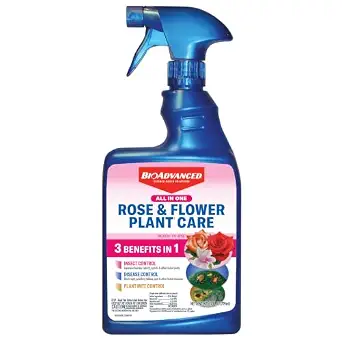 |
| Best Budget The cheapest option that still gets the job done reliably | Bonide Fung-onil Multi-Purpose Fungicide, 32 oz Ready-to-Use Spray |  |
| Highest Rated A top-rated pick with lots of positive feedback | Monterey Fungi-Max Systemic Fungicide, 16 oz (with Measuring Spoon) |  |
| Most Popular A crowd favorite that many people choose with confidence | Bonide Captain Jack's Ready-to-Use Neem Oil Spray, 32 oz |  |
| Best Seller A high-volume bestseller chosen again and again | Bonide Captain Jack's Liquid Copper Fungicide Ready-to-Use, 32 oz |  |
Bonide Captain Jack Copper Fungicide 16 oz Concentrate

| Unit Count | 16 Ounce |
|---|---|
| Item Form | Liquid |
| Target Species | Fungus |
| Active Ingredients | Copper Octanoate (Copper Soap) |
Bonide Captain Jack Copper Fungicide is a liquid concentrate designed to prevent and treat a broad range of fungal diseases on vegetables, fruits, ornamentals, and turf. Mixed with water per label directions, it is sprayed onto plant surfaces, including tops and undersides of leaves, and can be applied up to the day of harvest, which makes it practical for food crops like tomatoes. The active ingredient copper octanoate provides contact protection against powdery mildew, blight, black spot, rust, peach leaf curl and similar diseases. Application is straightforward and repeatable every 7 to 10 days as needed, and the product is cleared for use in organic gardening. Limitations to consider are that copper is a contact fungicide so it does not systemically move through the plant and works best as a preventative or early-treatment tool rather than curing severe systemic infections. Users should follow safety directions and avoid overuse to reduce copper buildup in soil.
Best for: Gardeners looking for a performance-focused, organic-approved fungicide to include in a preventative disease program for tomatoes and other edibles.
Less Ideal for: Growers seeking a systemic treatment for already advanced internal infections or those who prefer non-copper chemistries to avoid soil accumulation.
- Approved for organic gardening and can be used up to the day of harvest
- Controls a wide range of common diseases affecting tomatoes such as blight and powdery mildew
- Concentrated liquid formula mixes with water for spray application
- Repeatable 7–10 day application schedule makes preventative programs easy to maintain
- Acts as a contact fungicide and does not move systemically within the plant
- Repeated use can contribute to copper accumulation in soil if not managed
Verdict: Use this organic-approved copper concentrate when you want an effective, easy-to-apply preventative spray to protect tomatoes from common fungal diseases.
Atticus Gunner 14.3 MEC Propiconazole Fungicide (1 gal)

| Item Form | Liquid |
|---|---|
| Target Species | Fungus |
| Special Features | organic |
| Liquid Volume | 1 gallons |
| Active Ingredients | Propiconazole |
Gunner 14.3 MEC is a professional-style fungicide built around 14.3% propiconazole to prevent and treat more than 20 turf and ornamental diseases such as brown patch and leaf spot. It is sold as a 1-gallon microemulsion concentrate that mixes easily and stays stable in a sprayer, making it convenient for treating large lawns or landscapes. Applied preventively or at first signs of disease, recommended rates are 1 to 8 tablespoons per 1,000 sq ft with reapplication every 14 to 28 days depending on pressure. The formula moves into plants via foliar uptake and root translocation and is engineered to resist wash-off once dry, so it holds up through light rain or irrigation. Practical benefits include low odor, tank-mix compatibility with other fungicides for rotation, and clear label guidance for timing and application. Important limitations are that it requires careful measuring and same-day mixing of spray solution and that effective use depends on proper timing and environmental conditions for disease development.
Best for: Buyers who prioritize reliable, professional-level disease control for lawns and landscapes and who plan routine preventive or early-intervention treatments to keep turf in top condition.
Less Ideal for: Casual gardeners who want ready-to-use products or who prefer infrequent, hands-off care should consider simpler ready-to-spray options instead.
- Contains 14.3% propiconazole for proven broad-spectrum control of 20+ turf and ornamental diseases
- Microemulsion concentrate mixes easily and stays stable in sprayers for consistent applications
- Provides protection up to 28 days and resists washing off once sprays have dried
- Low-odor formulation suitable for residential lawn use
- Tank-mix compatible to support rotation and resistance management
- Spray solutions must be mixed fresh and cannot be stored for later use
- Requires precise measuring and adherence to label rates for safe, effective results
Verdict: Choose Gunner 14.3 MEC when you want a professional-strength, easy-mixing propiconazole concentrate that delivers predictable preventive and curative control for common turf diseases.
BioAdvanced All-in-One Rose & Flower Plant Care Spray, 24 fl oz

| Unit Count | 24 Fluid Ounces |
|---|---|
| Item Form | Liquid |
| Target Species | Fungus |
| Included Components | CARE ROSE&FLOWER RTU 3IN1 24OZ |
This ready-to-use BioAdvanced spray delivers three actions in one bottle: it kills listed insects on contact, controls common fungal diseases, and tackles spider mites while leaving a protective residue that lasts up to 14 days. You use it like a normal garden spray—apply to rose bushes, ornamentals, vines, shrubs, and similar plants when pollinators are not present. The product lists active ingredients (bifenthrin and myclobutanil) and is formulated to be rainproof within about four hours, so it holds up in typical garden conditions. Practical benefits include saving time by combining insect, disease, and mite control in a single application and being convenient as a ready-to-spray bottle. Important limitations are that it targets only the listed pests and diseases, must be used with pollinator safety in mind, and contains synthetic active ingredients that some gardeners prefer to avoid. Follow label directions and safety guidance for effective and responsible use.
Best for: Gardeners who want a simple, time-saving solution to keep roses and ornamental flowers healthy without mixing concentrates and who prioritize broad, short-term protection.
Less Ideal for: Growers seeking strictly organic or pollinator-safe products or those who need treatment for pests or diseases not listed on the label should look elsewhere.
- Three-in-one formula combines insecticide, fungicide, and miticide for fewer separate treatments
- Ready-to-use spray is convenient for spot and whole-plant applications
- Rainproof within about four hours and provides protection up to 14 days
- Kills listed pests on contact for fast visible results
- Active ingredients are synthetic and may be undesirable for organic gardeners
- Protection only covers pests and diseases specifically listed on the label
Verdict: Choose this ready-to-use spray if you want a convenient, single-product solution to kill common rose pests, control fungal diseases, and suppress mites with up to two weeks of protection.
Bonide Fung-onil Multi-Purpose Fungicide, 32 oz Ready-to-Use Spray

| Unit Count | 32 Ounce |
|---|---|
| Item Form | Spray |
| Target Species | Fungicide |
| Active Ingredients | Chlorothalonil |
Bonide Fung-onil is a 32-ounce ready-to-use spray that uses chlorothalonil to control and prevent common fungal problems such as leaf spot, blight, rust, and mildew. It comes in a trigger-sprayer bottle so you can shake and apply directly to affected lawns and plants without mixing concentrates. Typical use is to spray both tops and bottoms of leaves or turf blades until wet and repeat every 7 to 14 days when disease pressure appears. The practical benefits are broad-spectrum activity across vegetables, ornamentals, shrubs, trees, and grass, convenient spray delivery for small areas and quick application, and a trusted active ingredient for preventative protection. Important limitations are that it is a chemical fungicide so users must follow label safety directions and reapply on a schedule rather than rely on a single treatment, and it is not an organic option. For someone managing recurring fungal issues on turf like St. Augustine grass, this product provides an easy, affordable way to reduce disease spread when used as part of routine care and proper cultural practices.
Best for: Gardeners on a tight budget who need a straightforward, ready-to-use fungicide to manage recurring fungal problems on lawns and landscape plants and who prioritize convenience and proven chemistry over organic options.
Less Ideal for: Homeowners seeking certified organic treatments, those who prefer systemic or single-application alternatives, or users who do not want to follow safety precautions for chemical fungicides.
- Ready-to-use trigger bottle requires no mixing for quick spot treatments
- Chlorothalonil offers broad-spectrum control of leaf spot, blight, rust, mildew and other common fungal diseases
- Suitable for use on a wide range of plants including turf, ornamentals, vegetables and fruit
- Convenient 32 oz size covers multiple small-to-medium applications
- Chemical active ingredient limits use for organic or low-chemical gardening approaches
- Requires repeated applications on a 7 to 14 day schedule while disease pressure persists
Verdict: A low-cost, ready-to-use broad-spectrum fungicide that makes routine disease control on St. Augustine grass and other garden plants quick and simple.
Monterey Fungi-Max Systemic Fungicide, 16 oz (with Measuring Spoon)

| Item Form | Liquid |
|---|---|
| Application Method | Spray |
| Coverage | Wide range of plants and plant types |
| Target Species | Flowers, Vegetables, Trees, Lawn Grass |
| Liquid Volume | 16 fluid ounces |
Monterey Fungi-Max is a concentrated liquid fungicide that you dilute and apply with a sprayer to prevent and control many common plant diseases. It is used outdoors on flowers, shrubs, trees, lawns and edible plants including vegetables and fruiting trees; for tomato growers it is intended to control leaf spots, blights and powdery mildew when applied at the first sign of disease. The product’s systemic action means it is absorbed and provides residual protection for up to two weeks, which reduces how often you need to spray during an outbreak. A measuring spoon is included to help with mixing and the spray application method works with standard pump or backpack sprayers. Important limitations are that it must be mixed and applied correctly according to the label and it is not listed as organic, so it may not suit organic-certified operations; also coverage on large plantings requires multiple bottles. For gardeners who want a reliable, easy-to-use fungicide to protect tomatoes and other outdoor plants, Fungi-Max delivers predictable, short-term disease control when applied promptly.
Best for: Gardeners who prioritize reliable, fast-acting disease control for outdoor tomato beds and mixed orchards and who want a product that gives measurable residual protection between applications.
Less Ideal for: Growers who require organic-certified products or those managing very large commercial tomato plantings where bulk coverage and cost per acre are primary concerns.
- Systemic action provides plant uptake and up to two weeks of protection per application.
- Broad labeled coverage for many plant types including vegetables and fruit trees.
- Liquid concentrate mixes for use with standard spray equipment for even coverage.
- Includes a measuring spoon to simplify accurate dilution amounts.
- Not listed as organic so unsuitable for certified organic production.
- One bottle may not cover large tomato plantings without repeated purchases.
Verdict: For home tomato growers seeking dependable, systemic disease control that reduces spray frequency, Monterey Fungi-Max is a practical, easy-to-use choice.
Bonide Captain Jack's Ready-to-Use Neem Oil Spray, 32 oz

| Item Form | Liquid |
|---|---|
| Target Species | Insects |
| Liquid Volume | 32 fluid ounces |
| Active Ingredients | Clarified Hydrophobic Extract of Neem Oil |
This ready-to-use neem oil spray is a multipurpose garden treatment that kills insects at all life stages while also serving as a miticide and preventative fungicide. Packaged in a 32-ounce trigger bottle, it is applied by shaking and thoroughly spraying plant surfaces, including leaf undersides, at the first sign of pests or disease and reapplying every 7 to 14 days as needed. The active ingredient is a clarified hydrophobic extract of neem oil, which is approved for organic gardening and labeled safe to use on vegetables up to the day of harvest. Practical benefits include broad pest coverage (aphids, whiteflies, spider mites and others), disease suppression such as powdery mildew, and convenience from a ready-to-use sprayer. Important limitations are that results are slower than synthetic contact insecticides and application timing matters to avoid leaf burn in full sun; repeated applications may be needed for heavy infestations. Follow label safety directions and keep the product away from children and pets.
Best for: Gardeners who want a single, organic-approved product to manage common vegetable garden pests and fungal problems and who prefer products with strong user feedback.
Less Ideal for: Growers needing rapid knockdown of severe infestations or commercial producers who require fast-acting, high-throughput treatments.
- Kills multiple pest stages including eggs, larvae and adults for more complete control.
- Also acts as a fungicide and miticide so one product covers pests and common fungal issues.
- Ready-to-use trigger bottle requires no mixing and is easy to apply to leaves and undersides.
- Approved for organic gardening and can be used on vegetables up to day of harvest.
- Slower-acting than many synthetic contact insecticides, so it may take several applications to see control.
- Must avoid spraying in peak sunlight to reduce risk of leaf burn.
Verdict: A convenient, organic-approved all-in-one neem spray that controls common vegetable garden pests and fungal issues with minimal fuss.
Bonide Captain Jack's Liquid Copper Fungicide Ready-to-Use, 32 oz

| Item Form | Spray |
|---|---|
| Unit Count | 32 Ounce |
| Active Ingredients | copper |
Bonide Captain Jack’s Liquid Copper Fungicide is a trigger-spray, ready-to-use copper treatment designed to control common fungal diseases such as black spot, powdery mildew, blight and peach leaf curl. It is applied by shaking and thoroughly spraying tops and undersides of leaves every 7 to 10 days or as needed, and the label allows application up to the day of harvest on listed edible plants. The product’s copper active ingredient makes it broadly effective against many foliar diseases and the convenient spray bottle removes the need to mix concentrates. Practical benefits include organic approval for many uses and clear directions for repeat treatments, which helps with consistent disease management. Important limitations are that it is a contact-style copper spray rather than a systemic cure, so thorough coverage and repeated applications are required for control, and care must be taken to follow label directions to avoid phytotoxicity on sensitive varieties.
Best for: Gardeners who prioritize established, proven solutions and want an organic-approved spray that controls common foliar diseases on roses and other plants with minimal setup.
Less Ideal for: Growers looking for a systemic fungicide or a single-application cure for long-term prevention should consider alternatives with systemic activity.
- Ready-to-use trigger spray for easy application without measuring or mixing
- Approved for organic gardening and label allows use up to day of harvest on listed edibles
- Effective copper active ingredient against a wide range of foliar fungal diseases including black spot
- Clear instructions for treatment interval make follow-up applications straightforward
- Contact-action copper requires thorough coverage and repeat sprays rather than a one-time systemic fix
- Potential for phytotoxicity on some sensitive plants if label directions are not followed
Verdict: A ready-to-use, organic-approved copper spray that provides reliable contact control of black spot and other foliar diseases when applied thoroughly and on schedule.
Choosing the Right Fungicide for Plants: Key Factors to Consider
Active Ingredient and Spectrum
Different active ingredients target different fungal groups. Some act on surface fungi like powdery mildew while others are systemic and move inside plant tissue to control root and vascular infections.
Knowing which diseases afflict your plants lets you choose a product with the appropriate spectrum. Broad-spectrum contact fungicides work well for rapid suppression of visible spores on foliage, but systemic actives can protect new growth and reach infections that contact sprays miss.
Formulation Type and Application Method
Fungicides come as ready-to-use sprays, concentrated liquids, water-dispersible granules, wettable powders, or soluble packets. Each formulation affects mixing, spray drift, and how long active material adheres to foliage.
Sprays and aerosols are convenient for quick foliar coverage in beds and containers, while drenches are better for root or crown infections. Granules and wettable powders can be easier to store and transport but often require agitation and careful measuring before use.
Residual Protection and Reapplication Interval
Residual protection varies by active ingredient, formulation, and weather. Heavy rain, irrigation, and intense sun reduce surface residue and shorten protection time.
Consider how often you can realistically reapply. Preventative programs rely on actives with several days of residual activity, whereas curative treatments may need closer follow-up to prevent reinfection under high disease pressure.
Plant Safety and Phytotoxicity Risk
Some fungicides can burn tender foliage, discolour flowers, or cause leaf drop if applied in hot sun or at too high a concentration. Others are formulated to be safe on edible crops or during bloom, but label directions must be followed.
Test applications on a small area or a few plants when using a product for the first time, and avoid applying during midday heat or strong sunlight to reduce the risk of phytotoxic effects.
Compatibility With Edible Crops and Pollinators
Gardeners growing vegetables or fruit need to consider pre-harvest intervals, allowable crops on the label, and whether applications are safe during bloom. Some actives are not labeled for use on food crops or near flowering plants where bees visit.
Choose products with clear edible-crop labeling when treating vegetables and use careful timing to protect pollinators. Avoid spraying open flowers and follow reentry intervals to reduce exposure to beneficial insects.
Ease of Mixing, Spraying, and Cleanup
Practical handling often determines whether a treatment program gets applied correctly. Products with simple measuring systems, soluble packets, or ready-to-use sprayers reduce mixing errors and accidental overconcentration.
Also consider spray nozzle compatibility, tank-cleaning requirements after use on edible crops, and whether the product leaves residues on equipment that need special solvents for removal.
When to Use Preventative Versus Curative Treatments
Preventative applications are most effective when you know your garden has recurring disease pressure or conditions that favor fungal growth, such as cool, wet weather or dense canopy. A lower-rate preventative spray applied on a schedule can stop spores from germinating and protect new growth.
Curative treatments are intended to stop active infections and reduce visible symptoms. They are often higher-rate or systemic products applied when lesions are present. Under heavy disease pressure, follow-up applications and cultural controls are usually required.
- Preventative: best for susceptible crops and predictable seasons
- Curative: use when symptoms are visible and spreading
- Combine with sanitation and spacing to reduce reinfection
Safe Application Practices in Home Gardens
Mix and apply fungicides according to label directions, wearing recommended personal protective equipment. Avoid spraying on windy days to reduce drift and never apply during the hottest part of the day to limit leaf burn.
Protect pollinators by avoiding sprays when flowers are open. If you must treat blooming plants, choose products labeled safe for bloom or apply in the evening after pollinators are less active.
- Wear gloves, eye protection, and long sleeves when mixing concentrates
- Rinse equipment after use and dispose of rinse water according to local guidance
- Record application dates and concentrations to avoid accidental overuse
Integrating Fungicides With Cultural Controls
Fungicides are most effective as part of an integrated approach. Good cultural practices reduce disease pressure and improve the long-term success of chemical treatments.
Improve air flow by pruning crowded growth, avoid overhead irrigation when possible, remove diseased debris promptly, and rotate susceptible crop families to reduce pathogen build-up in soil.
- Improve drainage and avoid overwatering to reduce root and crown diseases
- Sanitize tools and stakes that contact infected plants
- Choose disease-resistant varieties to lower chemical reliance
Mixing and Spraying Tips for Even Coverage
Even coverage is critical for contact fungicides. Use a nozzle that produces a fine but not misting spray and move at a steady pace to avoid streaks. Overlap passes slightly to ensure full leaf coverage.
For systemic products, ensure thorough soil or foliar contact at recommended rates. When tank-mixing, check label compatibility and perform a small jar test to confirm there is no settling or separation before treating a whole crop.
- Calibrate sprayer output so you know how much product reaches a given area
- Avoid excess runoff; aim for coverage without dripping
- Label-check every time you mix different products together
Special Considerations for Container and Greenhouse Plants
Container and greenhouse conditions often favor rapid disease spread because of close spacing and consistent humidity. Choose formulations suited to these environments, such as soluble concentrates for foliar sprays or root drenches for soil-borne pathogens.
Ensure good ventilation in greenhouses and reduce humidity where possible. Potting media with good drainage lowers root rot risk and makes fungicide drenches more effective when they are needed.
- Apply sprays at lower volumes in dense greenhouse benches to avoid runoff
- Use drench protocols only when label directions and container sizes are followed
- Monitor regularly and isolate symptomatic plants to prevent spread
How We Chose the Best Fungicide for Plants
We focused on attributes that matter to gardeners dealing with fungal problems rather than laboratory performance numbers. Selection began with products intended for home and small-scale vegetable and ornamental gardens, excluding industrial or strictly-commercial formulations. We prioritized demonstrated efficacy against common foliar and stem diseases, speed of symptom suppression, and residual protection period. Practical handling factors were equally important: ease of mixing and application, compatibility with edible crops and pollinator-safe practices, and clear label instructions for timing and reentry intervals. We also weighed formulation type because sprays, drenches, and baits behave differently in greenhouse, container, and in-ground situations. Products were excluded if they are only for turf, seed treatment, or require commercial applicator licensing. The resulting shortlist balances disease control, plant safety, and real-world usability for typical gardeners.
FAQ
How often should I reapply fungicide to keep leaves protected?
Reapplication intervals depend on the active ingredient, formulation, and weather. Many contact fungicides require applications every 7 to 14 days under typical conditions, while systemic products may protect for longer. Always follow label directions and shorten intervals after heavy rain or during high disease pressure.
Can I use the same fungicide on vegetables and ornamentals?
It depends on the product labeling. Some fungicides are labeled for both edible and ornamental crops, while others are restricted to non-food plants. Check the label for crop allowances and pre-harvest intervals before applying to vegetables or fruit.
Will fungicides harm beneficial insects and pollinators?
Some fungicides have low toxicity to pollinators, but applications to open flowers can still expose bees to residues. Avoid spraying during bloom or choose products labeled safe for use during bloom. Applying in the evening reduces direct exposure to foraging pollinators.
Is it better to use a systemic fungicide or a contact product?
Systemic fungicides move within plant tissue and can protect new growth and treat internal infections, while contact products kill spores on the plant surface. The better choice depends on the disease type and timing. Combining cultural controls with the appropriate mode of action usually gives the best results.
How do I avoid phytotoxicity when treating tender plants?
Avoid applying during hot, sunny weather and follow concentration guidelines on the label. Test a diluted application on a small area before treating an entire crop, and wait the recommended interval between successive treatments to reduce stress on young plants.
Final Verdict
Choose a fungicide based on the diseases you face, how you plan to apply it, and the crops you grow. Prioritize plant safety and label allowances when treating edible plants, and match formulation type to the situation-foliar sprays for leaf diseases and drenches for root issues. Pair chemical control with cultural practices to reduce overall reliance on treatments and to achieve longer-lasting disease management.
