

Note: This article contains affiliate links. If you click on these links and make a purchase, I may earn a small commission at no extra cost to you. This helps support my research and content. Read my full affiliate disclosure here.
If you have dogs, standard ant control products can feel risky because curious pets explore grass, patio cracks, and under furniture. Choosing a dog safe ant killer matters because it reduces chances of accidental ingestion, contact irritation, or exposure where dogs play and sleep. This guide shortlists six well-regarded pet-friendly ant control options suited to yards, patios, and indoor spots where pets roam. We focused on products and approaches that balance colony control with documented safety features and application methods. Below you will find the factors we used to evaluate each option, practical guidance for using pet-safe treatments, and answers to common questions about protecting dogs while managing ant problems.
Top Picks at a Glance
| Best Overall The best all-around choice for most situations | Wondercide Outdoor Pest Control Spray — 32 oz Ready-to-Use |  |
| Best Quality Built to a higher standard if you want something more solid | EcoVenger Ant Killer & Nest Treatment, 32 oz |  |
| Best Value The sweet spot between price and what you get | Syngreen Diatomaceous Earth Food Grade Powder with Peppermint, 1 lb |  |
| Best Budget The cheapest option that still gets the job done reliably | STEM Plant-Based Bug Spray for Ants, Roaches and Flies, 12 fl oz |  |
| Highest Rated A top-rated pick with lots of positive feedback | NCSIFDD Ant Away Ant Repellent Gel, 6-Pack |  |
| Most Popular A crowd favorite that many people choose with confidence | Mighty Mint Peppermint Oil Insect Repellent Spray, 16 oz |  |
Wondercide Outdoor Pest Control Spray — 32 oz Ready-to-Use

| Format | Pre-mixed, hose-end spray |
|---|---|
| Active ingredients | Cedarwood Oil 12.63%, Sesame Oil 2.73% |
| Coverage | Up to 5,000 sq ft (general); 2,500 sq ft (ticks/mosquito repel) |
Wondercide Ready-to-Use Outdoor Pest Control is a hose‑end spray designed for treating yards up to 5,000 sq ft for general pests and 2,500 sq ft for ticks and mosquito repellency. You attach the bottle to a garden hose, sweep the nozzle across lawns, patios, and foundation lines, and the cedarwood‑based formula delivers quick coverage with no dry time required. Notable features include plant-powered active ingredients (cedarwood and sesame oils), ready-to-use convenience, and instructions for both active infestations and preventative maintenance. Practical benefits are that it is safe to use around people and pets when directions are followed, residues are reported to be non-harmful to pollinators, and the hose attachment makes treating large areas fast. Important limitations are that effectiveness depends on water pressure, walking speed, and weather, heavy rain may require reapplication, and spraying in temperatures above 90°F or direct sun can cause plant burn. Users who need an all‑season, high‑durability pesticide for heavy infestations should plan on repeated applications and follow label precautions to protect sensitive plants.
Best for: Buyers who prioritize effective, plant‑based mosquito and tick control for medium to large yards and want a fast hose‑attached solution that is safe around families and pets when used as directed.
Less Ideal for: Gardeners who need a single, long‑lasting professional‑grade pesticide for severe, persistent infestations or who cannot reapply after rain should consider alternative, heavier‑duty treatments.
- Ready-to-use hose-end applicator for fast coverage of large yards
- Plant-based active ingredients (cedarwood and sesame oils) that target common yard pests
- No dry time required so kids and pets can re-enter treated areas quickly
- Covers up to 5,000 sq ft for general pest control and 2,500 sq ft for ticks/mosquito repellency
- May cause phytotoxic burning if applied in direct sun or temperatures above 90°F
- Performance depends on water pressure and user walking speed which can lead to uneven coverage
- Heavy rain can wash it away and requires reapplication
Verdict: If you want a fast, family- and pet-friendly plant‑based spray to reduce mosquitoes and ticks across a medium to large yard, this ready‑to‑use hose‑end formula delivers practical, repeatable results.
EcoVenger Ant Killer & Nest Treatment, 32 oz

| Unit Count | 32 Fluid Ounces |
|---|---|
| Item Form | Spray |
| Target Species | Odorous House Ants, Fire Ants, Roaches, Fleas, Spiders |
| Active Ingredients | Citronella Oil, Geraniol, Cedarwood oil, Sodium Lauryl Sulfate |
EcoVenger Ant Killer is a plant-extract spray formulated to kill house ants on contact, treat fire ant mounds, and leave a residual barrier that deters re-entry for up to four weeks. You use it like a standard ready-to-use spray: spot-treat visible trails, spray around entry points and saturate mound tops or nest openings to reach the colony. Notable features include a citronella/cedarwood/geraniol active blend, a user-friendly trigger sprayer and claims of university testing and professional use. In practice the product offers fast knockdown for foraging ants and the ability to deliver treatment down tunnels using the spray wand, which helps target queens in mounds. The botanical formulation is marketed as non-staining and safe to use around pets and children when directions are followed, and the light citrus scent dissipates quickly. Limitations are that efficacy details beyond labeled target species rely on manufacturer testing and heavier infestations may need repeated treatments or perimeter work; the nozzle has delicate parts so care is needed when handling.
Best for: Homeowners who prioritize effective, fast-acting ant control but want a pet- and child-friendly botanical option for indoor and outdoor use.
Less Ideal for: People needing an industrial-strength chemical treatment for very large or persistent infestations or those who prefer products supported by multiple independent field trials.
- Kills odorous house ants on contact and eradicates fire ant mounds when applied to the colony
- Botanical active ingredients (citronella, geraniol, cedarwood) offer a lower-toxicity alternative to conventional pesticides
- Provides residual repellency for up to four weeks to help prevent re-entry
- Suitable for indoor and outdoor use and formulated to be non-staining on carpets and fabrics
- Nozzle contains delicate parts that can be damaged and may require careful handling
- Manufacturer efficacy claims are based on internal or cited studies rather than independent third-party field trials
Verdict: A fast-acting, plant-powered ant spray that balances quick colony knockdown with a formulation designed for use around pets and children.
Syngreen Diatomaceous Earth Food Grade Powder with Peppermint, 1 lb

| Item Form | Powder |
|---|---|
| Target Species | Insects |
| Active Ingredients | Diatomaceous Earth Food Grade, Peppermint Oil |
This Syngreen diatomaceous earth combines food-grade silica powder with peppermint oil to control crawling insects like ants, roaches, fleas, and bed bugs without synthetic pesticides. Apply a fine dust along baseboards, under appliances, in pantry corners, or around doorways for indoor protection, or dust garden edges and planters outdoors. The powder works mechanically by abrading insect exoskeletons so pests dehydrate, while the peppermint helps deter pests and leaves a fresh scent. It is simple to use with a shaker, brush, or gloved hand and can begin reducing activity within 24 to 48 hours, lasting for weeks in dry conditions. Important limitations: it must stay dry to remain effective so reapply after cleaning or rain, and it is a contact killer rather than a bait so it will not eliminate nests or hidden colonies by itself. For use around pets and children follow the directions carefully and avoid applying where animals will inhale dust.
Best for: Pet owners and families who want a low-toxicity, non-chemical solution to reduce indoor ant activity and spot-treat problem areas while avoiding synthetic insecticides.
Less Ideal for: People who need a fast colony-level eradication method or who expect long-lasting control in wet environments without frequent reapplication should consider professional or bait-based options instead.
- Food-grade diatomaceous earth provides a non-chemical, mechanical mode of action against crawling insects
- Added peppermint oil helps deter pests and leaves a pleasant scent compared with plain DE
- Versatile for indoor and outdoor use including baseboards, pantries, planters, and perimeter barriers
- Easy application with a shaker, brush, or glove and begins working within 24–48 hours
- Effectiveness requires staying dry and will be reduced by moisture or cleaning
- Kills on contact but does not function as a nest-targeting bait to eliminate colonies
Verdict: A pet-safe, non-chemical powder that reduces indoor ant and crawling insect activity with the added deterrent of peppermint when kept dry and applied to targeted areas.
STEM Plant-Based Bug Spray for Ants, Roaches and Flies, 12 fl oz

| Active ingredients | Geraniol 6.2%, Lemongrass Oil 0.5% |
|---|---|
| Other ingredients | White Mineral Oil, Isopropyl Myristate, (+)-Ethyl Lactate 93.9% |
| Form | Trigger spray |
| Use | Indoor and outdoor spot treatments |
This STEM bug spray is a trigger-spray insecticide formulated with plant-derived actives such as geraniol and lemongrass oil to kill ants, roaches and flies on contact. It is intended for targeted indoor and outdoor spot treatments: shake, hold about a foot from the insect and spray directly on or where insects congregate. The product’s botanical formula and absence of added dyes or strong chemical fragrances make it a reasonable choice for homes where users prefer less synthetic-smelling options. The trigger bottle gives control for spot application and repeated short bursts, and the directions note it is oil-based so spills should be cleaned promptly. Important limitations are that it is not for spraying on people, pets or plants and requires direct hits for best effect rather than long-range fogging. For persistent infestations you may need supplemental measures because this is designed for surface and contact kills rather than residual baiting or area-wide control.
Best for: Buyers who want an affordable, low-odor botanical spray for quick spot control of common household pests and who prioritize a simple, easy-to-use trigger bottle for targeted treatments.
Less Ideal for: People facing large or hidden infestations who need long-lasting residual control or bait-style solutions should consider professional products or integrated pest control approaches.
- Plant-based active ingredients (geraniol and lemongrass oil) that reduce strong chemical odor
- Trigger-spray bottle for controlled, targeted application
- Labeled for both indoor and outdoor spot treatments when used as directed
- No added dye or fragrance listed, which minimizes residue and scent
- Oil-based formula can leave slippery residue if spilled
- Requires direct spraying of insects for effectiveness and offers limited residual control
- Not safe to spray on people, pets or plants
Verdict: A budget-friendly, low-odor plant-based trigger spray that provides quick, targeted kills of ants, roaches and flies for everyday spot treatments.
NCSIFDD Ant Away Ant Repellent Gel, 6-Pack

| Unit Count | 12 Count |
|---|---|
| Number of Pieces | 1 |
This ant repellent gel is a concentrated applicator product intended for targeted spot treatments around entry points, baseboards, window frames, and known ant trails. You remove the cap, attach the precision tip, and apply pea‑sized drops into crevices or along trails; the manufacturer notes it can take 3–5 days to work through a colony and helps keep ants away for up to 60 days in treated areas. Practical benefits include the narrow applicator for neat placement in tight gaps, suitability for both indoor and outdoor problem spots, and a formulation presented as family and pet safe when used as directed. Important limitations are that results are not instantaneous and multiple applications or placements may be needed to control larger or multiple colonies, and effectiveness depends on correctly locating trails and nest access points. For someone who wants a low‑mess, targeted solution rather than broad broadcast treatments, this gel is a convenient option.
Best for: Buyers who prioritize dependable, low‑mess spot treatment for recurring ant sightings and prefer a product they can place precisely where ants travel.
Less Ideal for: People needing rapid elimination of very large or widespread infestations or those who prefer broadcast sprays or professional colony eradication services.
- Precision applicator allows neat, pea‑sized placements in tight crevices and along ant trails
- Labeled for both indoor and outdoor use so the same product can treat kitchens, baseboards, and patios
- Formulation described as family and pet safe when used according to directions
- Single placements can provide protection in treated areas for up to 60 days
- Not an immediate knockdown—can take 3–5 days to affect a colony
- May require several placements and correct trail identification to fully control larger infestations
Verdict: Use this precision gel when you want a neat, family‑safe spot treatment that targets ant trails and entry points rather than a broad spray solution.
Mighty Mint Peppermint Oil Insect Repellent Spray, 16 oz
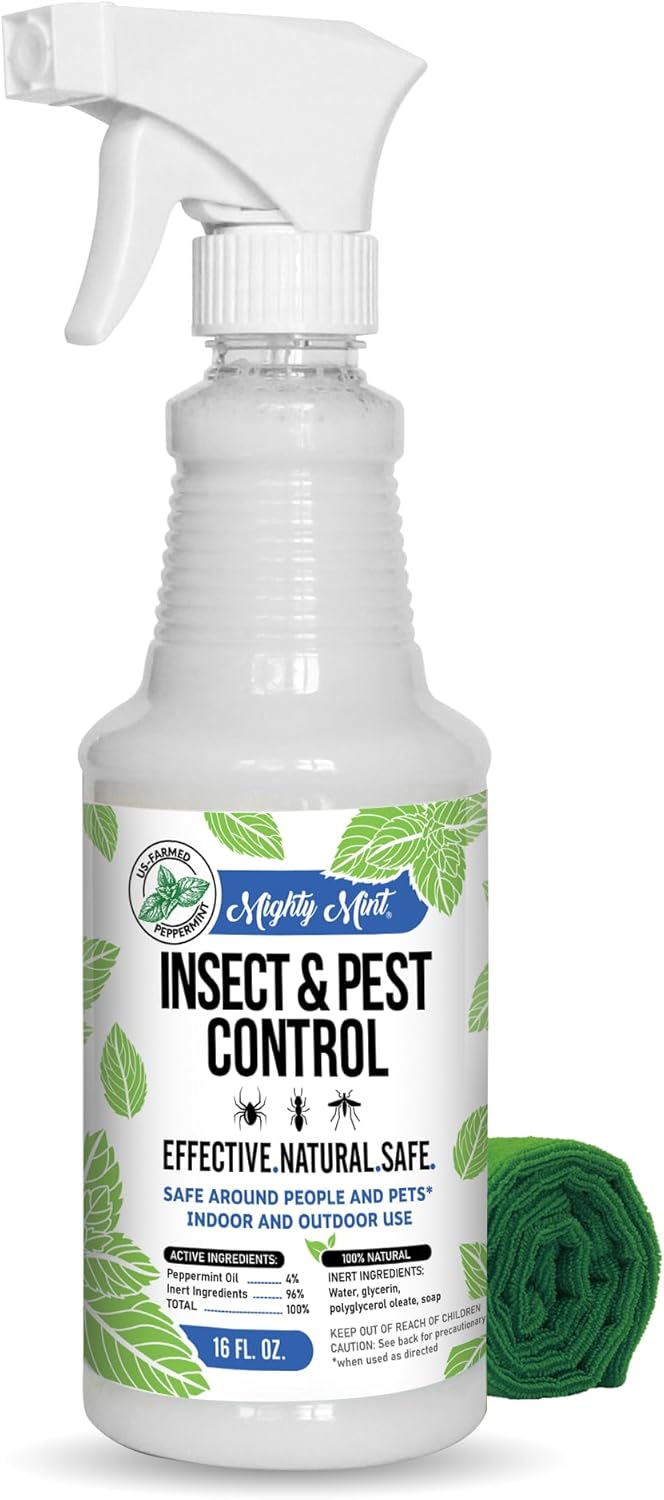
| Ingredients | Water, Glycerine, Polyglycerol oleate, Soap, Peppermint oil |
|---|---|
| Use Areas | Indoor / Outdoor |
| Size | 16 oz |
Mighty Mint is a plant-based, ready-to-use spray that uses concentrated peppermint oil to repel a broad range of household and patio pests. You apply it directly to problem areas such as baseboards, entryways, patios and around outdoor seating; the manufacturer recommends shaking and spraying until surfaces are covered and repeating applications two or more times per week for best results. Notable features include a peppermint-only scent profile, a formulation that avoids synthetic fragrances and the convenience of a 16 oz spray bottle for targeted spot treatments. Practical benefits are that it is safe to use around people and pets when dry and does not leave obvious stains on most surfaces, and the scent can make treated areas smell fresher than chemical alternatives. Important limitations are that it is a repellent rather than a pesticide so it works by discouraging pests rather than killing them, effectiveness depends on regular reapplication and it should not be applied when pollinators are present or to skin or food-contact surfaces.
Best for: Buyers who prioritize natural, low-toxicity solutions and want a targeted spray to reduce insects around patios and entryways while keeping family and pets in mind.
Less Ideal for: Anyone needing a one-time extermination or long-term residual pesticide for severe infestations should consider professional treatments or products formulated to kill pests rather than repel them.
- Plant-based peppermint formula that avoids synthetic fragrances
- Ready-to-use spray for quick, targeted indoor and outdoor applications
- Safe for people and pets when used as directed and allowed to dry
- Nonstaining on most surfaces and leaves a fresh mint scent
- Repels rather than kills insects so regular reapplication is needed to maintain protection
- Strong peppermint concentration may bother scent-sensitive individuals and requires keeping children and pets away until dry
Verdict: Choose Mighty Mint when you want a pet-friendly, plant-based spray to reduce patio and entryway insects with a fresh peppermint scent.
Choosing the Right Dog Safe Ant Killer: Key Factors to Consider
Dog Safety Profile
This factor examines how a product's active ingredient and formulation affect dogs if they sniff, lick, or touch treated areas. Look for products with low mammalian toxicity, clear treatment zone instructions, and safety data that explain symptoms and first-aid steps. For baits, consider whether the bait matrix is attractive to dogs as well as ants; tightly contained bait stations or slow-acting active ingredients that ants carry back to the nest reduce the chance a dog will directly ingest a toxic dose.
Pay attention to label instructions about reentry times and whether treated turf or surfaces need drying before dogs can return. Products that leave greasy or sweet residues can tempt pets, so choose formulas that dry quickly or are designed for enclosed deployment to lower exposure risk.
Ant Control Effectiveness
Effectiveness depends on matching the treatment style to the ant species and infestation scale. Baits that workers carry back to nest are typically the most reliable for colony control, especially against many common household and lawn ants. Contact sprays can kill workers on sight but rarely reach hidden queens, so they are best for quick knockdown rather than long-term control.
Consider the life cycle and foraging behavior of the species you are targeting. Some products are formulated for sugar-feeding ants while others target protein-feeding species. Choosing the appropriate food-type bait increases the odds that foragers take bait to the colony, improving long-term control without repeated surface treatments.
Application Containment
How a product is applied matters for pet safety. Bait stations, granules placed in planters, or enclosed stakes are easier to keep away from dogs than loose sprays or powders. Containment also affects how long pets must be kept away; enclosed systems often allow dogs to resume normal access sooner.
Evaluate whether the product requires frequent reapplication or refilling, which may increase the chance of accidental pet contact over time. Permanent or semi-permanent containment options that can be anchored out of reach are advantageous in yards and busy households with active dogs.
Residual Hazard Duration
Residual hazard duration refers to how long a treated area remains risky to dogs after application. Some contact insecticides have short residual periods once surfaces dry, while others leave a longer-lasting residue that continues to affect insects and might pose exposure risks to pets.
For outdoor use, consider how rainfall, irrigation, and sun exposure alter residual activity. Short-residual products can be preferable where frequent pet access is unavoidable. When longer residual control is necessary, choose application methods that reduce pet contact, such as soil injections or sealed bait stations, and follow label guidance on reentry times.
Ease of Use
Ease of use covers how simple the product is to apply correctly and to maintain safely around dogs. Clear instructions, minimal handling of concentrated liquids, and refillable contained systems reduce user error and accidental exposure. Products that integrate safeguards, such as child- and pet-resistant lids or anchoring hardware, make ongoing use less risky in active yards.
Also consider how easy it is to monitor treatment success and replace spent bait. If a product demands frequent, intricate maintenance, a simpler safer option may be a better fit for busy pet owners.
Choosing Between Baits and Contact Treatments
Baits and contact treatments serve different purposes. Baits are designed to be taken back to a colony and can deliver slower, deeper control when the ant foragers accept the formulation. Contact treatments kill visible workers quickly but often do not reach nest sites. For homes with dogs, baits that come in sealed stations are usually safer because they limit pet access.
When you need immediate reduction of ants crossing into living spaces, a targeted contact application in hard-to-reach cracks or on baseboards can help while you deploy baits outdoors. Always allow sprays to dry and follow reentry or pet-safe time recommendations on the label.
- Use sealed bait stations in high-traffic pet areas
- Reserve targeted sprays for cracks and external building perimeters
- Match bait food type to ant feeding habits for better uptake
Using Bait Stations Safely in Yards
Place bait stations in shaded, dry spots along ant trails and near nests when possible. Anchoring or partially burying stations reduces the chance a curious dog will tip or carry one. Check stations regularly and replace them when bait is spent to avoid attracting wildlife or creating residue.
If you have multiple dogs or neighborhood wildlife, consider installing stations inside shallow trenches or under pavers so they remain accessible to ants but out of a pet's direct reach. Avoid scattering loose granules on lawns that dogs walk and roll on.
- Anchor or partially bury stations to prevent tipping
- Place stations along natural ant trails and shaded areas
- Inspect and replace bait on a schedule to prevent spoilage
Temporary Pet Management During Treatments
Some treatments require a short temporary relocation of pets, typically only until sprays dry or bait stations are settled. Plan applications when dogs can be safely away for the recommended time, such as during a walk or short trip. Keep treated areas clearly marked until pets can re-enter.
For larger yards, block off treated zones with temporary fencing or garden netting until the product has become safe according to label directions. Maintain good hygiene by washing paws or wiping feet after dogs explore treated areas until you are confident the hazard has passed.
- Schedule treatments when dogs can be absent briefly
- Use temporary barriers for sections of yard under treatment
- Clean paws after outdoor time in recently treated areas
Nonchemical and Integrated Options
Nonchemical approaches can reduce reliance on insecticides and lower risk to dogs. These include physical barriers at entry points, habitat modification to remove attractive food and water sources, and targeted removal of nesting sites when accessible. Boiling water or physical nest removal may work for small surface nests in driveways or patios, but use caution if pets are nearby.
Integrated pest management combines sanitation, exclusion, habitat modification, and selective use of pet-safe baits to achieve control while minimizing chemical exposure. This strategy often reduces the frequency of treatments and is well suited to households with dogs.
- Remove food debris, standing water, and leaf litter that attract ants
- Seal cracks and gaps to block ant entry into buildings
- Use nonchemical nest treatments for surface colonies when safe to do so
Reading Labels and Safety Data
Labels provide essential information about dog-specific precautions, dilution rates, application methods, and reentry times. Look for explicit pet-safety statements and first-aid directions. If label language is unclear about pets, treat the product as higher risk until you can confirm safe use.
Consult the product's safety data sheet for toxicity details, signs of exposure, and recommended first-aid steps. Understanding these instructions ahead of application reduces the chance of accidental misuse and helps you respond quickly if a pet is exposed.
- Check reentry times and residual hazard statements
- Follow dilution and application directions exactly
- Keep label and safety data sheet accessible during and after application
How We Chose the Best Dog Safe Ant Killer
We selected options that offer effective ant control while explicitly minimizing harm to dogs through either low mammalian toxicity formulations, contained bait delivery, or application methods that limit pet contact. Our editorial filters emphasized efficacy against common ant species, labeled safety information for dogs, and practical application formats that reduce accidental exposure in yards, patios, and homes where dogs frequent. Key evaluation criteria included active ingredient toxicity profile, bait or containment design, residual activity and how long treated areas remain hazardous, ease of application and whether the product can be kept out of reach of pets, and documented efficacy against typical household and lawn ant species. We excluded any product lacking clear safety labeling for pets, treatments that require prolonged pet evacuation beyond reasonable durations, and methods that rely on ambiguous homemade mixtures without evidence of consistent ant control. Laboratory-only claims without real-world usage guidance were deprioritized. The final shortlist reflects treatments and formats most suitable for managers who need reliable colony reduction while protecting canine family members.
FAQ
Are pet-safe ant baits effective against large colonies?
Pet-safe baits can be effective against large colonies if the active ingredient is transferred by foraging workers back to the nest and if the bait matches the ants' feeding preference. Large or established colonies may require patience and repeated monitoring, and integrated methods often improve results.
How long should I keep my dog away after applying an ant spray?
Reentry times vary by product and formulation, but many low-residue sprays are safe once surfaces are fully dry. Always follow the label's reentry instructions and err on the side of caution if the product does not state a clear safe-return time.
Can I use professional-strength treatments if I have dogs?
Professional-strength treatments may have longer residual hazards and stricter reentry recommendations. They can be used when necessary, but you should follow all label precautions, restrict pet access for the stated period, and consider containment methods to minimize exposure.
What should I do if my dog eats ant bait?
If your dog eats bait, consult a veterinarian or animal poison control resource immediately and provide the product label information. Monitor for symptoms such as vomiting, lethargy, or drooling and be prepared to describe the bait matrix and active ingredient if known.
Are natural or homemade ant treatments safer for dogs?
Not always. Some natural treatments can still cause irritation or toxicity if ingested. Homemade mixtures may be unpredictable in concentration and efficacy. Choose products with clear safety data and labeled pet precautions rather than relying on untested home remedies.
How can I reduce the chance ants come back after treatment?
Maintain good sanitation, seal entry points, remove food and standing water, and keep mulch and debris away from foundations. Use targeted baiting to reduce colonies at the source and inspect the yard periodically to intercept new foraging trails early.
Final Verdict
When choosing a dog safe ant killer, prioritize formulations and application methods that reduce pet exposure while still reaching the colony. Sealed bait stations, properly placed granular systems, and integrated nonchemical practices often provide the best balance of safety and control. Be prepared to manage short-term access to treated areas and follow label instructions closely. By matching treatment style to the infestation and using containment strategies, you can protect your dogs and regain control of ant problems with confidence.
