

Note: This article contains affiliate links. If you click on these links and make a purchase, I may earn a small commission at no extra cost to you. This helps support my research and content. Read my full affiliate disclosure here.
Getting tomato seedlings off to a strong start depends heavily on the medium you use. Compost for tomato seeds should be light enough for roots to penetrate, contain gentle available nutrients, and drain well to avoid damping-off. This guide highlights seven shortlisted composts suited specifically for starting tomato seeds in flats, cells, or small pots. We evaluated each option for particle size, nutrient balance, and disease risk to help you pick a seed-starting compost that promotes steady germination and healthy first true leaves. Read on for the criteria we used and practical tips for using seed compost in your garden or greenhouse.
Top Picks at a Glance
| Best Overall The best all-around choice for most situations | Vermont Compost Company Fort Vee Organic Potting Mix (20 qt) |  |
| Best Quality Built to a higher standard if you want something more solid | Vermont Compost Company Fort Vee Organic Potting Soil Mix, 40 Quart (2 Pack) |  |
| Best Value The sweet spot between price and what you get | Miracle-Gro Organic Indoor Potting Mix, 16 qt. |  |
| Best Budget The cheapest option that still gets the job done reliably | SunGro Horticulture Organic Seedling Mix (8 Quart) |  |
| Highest Rated A top-rated pick with lots of positive feedback | BIOSTART Organic Seed Starting Mix with Biochar, 1.5 Cu Ft |  |
| Most Popular A crowd favorite that many people choose with confidence | Miracle-Gro Indoor Potting Mix for Seed Starting, 8 qt. (2-Pack) |  |
| Best Seller A high-volume bestseller chosen again and again | Back to the Roots Organic Expanding Coco Coir Potting Soil Brick (10 lb) |  |
Vermont Compost Company Fort Vee Organic Potting Mix (20 qt)

| Brand Name | Vermont Compost Company |
|---|---|
| Volume | 20 quarts |
| Unit Count | 640 Fluid Ounces |
| Style Name | Garden,Peat Moss,Potting,Potting Soil Mix,Soil Mix,Vermiculite |
Fort Vee is a compost-rich potting mix designed for seed starting and potting up trays, plugs, soil blocks, and containers. It blends composted manure and plant materials with sphagnum peat moss, vermiculite, coconut coir, and organic amendments such as blood meal, bone meal, kelp, and mined gypsum to deliver sustained nutrition for young plants. In practice the mix holds its shape well for soil blocks and stays structurally stable through repeat waterings, which makes transplanting easier and reduces root disturbance. The high-nutrient formula is particularly helpful for heavy-feeding seedlings and vegetable transplants that need a nutrient boost before going into the garden. Expect vigorous early growth and good germination when used for peppers, tomatoes, and similar crops, but gardeners seeking a very lightweight, inert seed-starting medium may find this richer mix denser than plain peat or coco coir blends. Also follow handling guidance to avoid inhaling dust and wash hands after use.
Best for: Gardeners who want an all-in-one, nutrient-rich starting medium for vegetable seedlings and transplants and who prioritize early vigor over an ultra-lightweight mix.
Less Ideal for: People who need an extremely sterile or lightweight inert medium for very small seeds or grafting work should choose a peat- or coir-only starter instead.
- Compost-based nutrient profile supplies sustained food for seedlings and transplants
- Formulation holds shape well for soil blocks and repeated watering
- Includes water-retaining ingredients like vermiculite and coconut coir for consistent moisture
- Contains organic amendments (blood meal, bone meal, kelp) that benefit heavy-feeding vegetables
- Richer, denser mix may be heavier than inert seed-starting media
- Contains dust and requires careful handling to avoid inhalation
Verdict: Choose Fort Vee when you want a compost-rich, nutrient-loaded potting mix that promotes vigorous seedling and tomato transplant growth.
Vermont Compost Company Fort Vee Organic Potting Soil Mix, 40 Quart (2 Pack)

| Brand | Vermont Compost Company |
|---|---|
| Volume | 40 quarts |
| Style Name | Garden,Peat Moss,Potting,Potting Soil Mix,Soil Mix,Vermiculite |
| Unit Count | 1280 Ounce |
This Fort Vee organic potting soil is a compost-heavy mix designed for seed starting, transplants, and container vegetables that need a nutrient boost. It is intended for indoor and outdoor use in trays, soil blocks, and pots and is blended from composted manure and plant materials with sphagnum peat moss, vermiculite, coconut coir, and mineral amendments to improve structure and nutrients. In practice the mix holds its form well for transplanting and gives heavy-feeding crops like tomatoes and peppers a strong start thanks to added blood meal, kelp meal, and bone meal. It is easy to use straight from the bag with no extra amendments required for short-term container growth, and the composition should help with moisture retention while still draining better than plain compost. Important limitations are typical of rich mixes: it is a starter or container medium rather than a final garden topsoil, and the nutrient level may require adjustment or dilution before long-term use in beds or for very young seedlings sensitive to strong fertilizer salts.
Best for: Gardeners who want a reliable, ready-made organic potting mix to start and grow nutrient-hungry vegetables in containers or for transplanting to the garden.
Less Ideal for: People seeking a low-nutrient seed-starting medium for delicate micro-seedlings or gardeners who need bulk topsoil for bed building rather than a concentrated potting mix.
- Compost-based formula supplies organic nutrients useful for heavy-feeding vegetables
- Includes moisture-holding and aeration components like vermiculite and coconut coir
- Pre-mixed with mineral and biological amendments (bone meal, blood meal, kelp) for immediate plant support
- Designed to hold form for soil blocks, trays, and pots which eases transplanting
- High nutrient content makes it stronger than basic seed mixes and may be too rich for very small seedlings
- Formulated as a potting/starting mix rather than a finished garden soil for permanent beds
Verdict: A dependable, nutrient-rich organic potting mix that gives tomato seedlings and other heavy feeders a strong, ready-to-use start in containers.
Miracle-Gro Organic Indoor Potting Mix, 16 qt.

| Volume | 1 cubic feet |
|---|---|
| Style Name | Indoor |
| Item Highlight | Protects Against Over & Under Watering |
| OMRI Listed | Yes |
Miracle-Gro Organic Indoor Potting Mix is a ready-to-use organic blend designed for houseplants, seedlings, and container herbs. It combines coir for air space and moisture retention, sphagnum peat moss to hold and release water, and a quick-start natural fertilizer so young plants get an initial nutrient boost. Typical use is filling pots or seed trays with a drain hole, transplanting by loosening the root ball and topping up with fresh mix, or starting seeds in shallow trays and keeping them moist until germination. Practical benefits for herb growers include improved moisture regulation that helps prevent both waterlogging and rapid drying, and organic certification for those avoiding synthetic inputs. The bag claims one 16 qt. package fills a 12-inch container, which fits small- to medium-sized herb pots. Limitations are the modest volume per bag for users with multiple pots and the inclusion of peat, which some growers try to avoid for sustainability reasons. Also, plants that need very fast-draining media, such as certain succulents, may need a different blend or added grit.
Best for: Buyers who want an easy, organic potting mix for growing kitchen herbs and houseplants and who prioritize proven formulations and user guidance over sourcing bulk soil.
Less Ideal for: People looking to pot large numbers of containers at once or gardeners who prefer a peat-free, fast-draining custom mix should consider larger bags or alternative blends.
- OMRI listed and made with organic ingredients suited to organic indoor gardening
- Blend of coir and sphagnum peat moss balances aeration and moisture retention
- Includes quick-start natural fertilizer to feed plants during establishment
- Formulated specifically for indoor containers and seed starting
- 16 qt. bag provides limited coverage if you have several herb pots
- Contains peat which some gardeners avoid for environmental reasons
Verdict: A convenient OMRI-listed indoor potting mix that helps regulate moisture and gives seedlings and container herbs a reliable, organic start.
SunGro Horticulture Organic Seedling Mix (8 Quart)

| Brand Name | SUN GRO |
|---|---|
| Style Name | Peat Moss |
| Volume | 8 quarts |
SunGro Horticulture Seedling Mix is a fine-textured, peat-based starting mix formulated to germinate seeds in flats, pots, and plug trays. It contains sphagnum peat moss, perlite for lightness and drainage, and an organic wetting agent to promote even water absorption, which helps maintain consistent moisture for small seeds. The mix also includes a silicon-enriched additive called RESiLIENCE intended to support stronger seedlings and reduce wilting during establishment. Typical use is filling trays or small pots, keeping the medium evenly moist but not waterlogged, then transplanting seedlings once roots are established. Practical benefits include predictable moisture retention, a clean fine texture that allows delicate roots to develop, and OMRI listing for organic onion transplants and other edible starts. Limitations are its small 8 quart volume for larger onion seed programs and that peat-based mixes dry out faster than heavier soils, so frequent monitoring is required; it also provides limited long-term nutrients so potting up into a richer mix or fertilizing before transplant is necessary.
Best for: Gardeners who want an organic, predictable seed starting medium for small to medium onion seed batches and who prioritize reliable germination over bulk volume.
Less Ideal for: Commercial growers or anyone starting very large quantities of onion seedlings should choose larger-volume or more nutrient-dense starting media.
- Fine, light texture suitable for delicate seed germination
- Organic wetting agent promotes uniform water absorption
- OMRI listed so safe for organic edible starts
- Contains perlite for improved drainage and root aeration
- Small 8 quart bag may not be cost-effective for starting large onion batches
- Peat-based mix has low long-term nutrient content and needs fertilizing before transplant
Verdict: A reliable OMRI-listed seed starting mix that delivers even moisture and a fine texture ideal for producing healthy onion seedlings in small home gardens.
BIOSTART Organic Seed Starting Mix with Biochar, 1.5 Cu Ft

| Brand Name | BIO365 |
|---|---|
| Item Highlight | Fine peat, coco & perlite seed starting mix with biochar and beneficial biology |
| Size | 1.5 Cubic Feet |
| OMRI Listed | Yes |
This seed starting mix is engineered to give tomato seeds a reliable, controlled environment for germination and early root development. It combines fine peat, coco coir and perlite to create a balance of seed-to-medium contact, moisture retention and aeration so tiny roots can establish without waterlogging. The addition of softwood biochar and a beneficial Bacillus strain introduces stable biology that can support early nutrient uptake, while a light starter nutrient charge lets you control follow-up feeding. The mix arrives ready to use from the bag and is designed and tested in indoor facilities to reduce contamination risk. For growers focused on dependable germination and transplantable seedlings, it removes common variables like uneven moisture and compacted media. It is not a complete potting soil for older plants so you will need to pot up into a richer medium or amend when seedlings outgrow trays.
Best for: Growers who prioritize consistent, low-risk germination and want a ready-to-use, science-backed medium for starting tomato seeds and other seedlings.
Less Ideal for: Gardeners looking for an all-in-one potting soil for mature tomatoes or those who prefer to rely solely on homemade compost mixes without commercial amendments.
- Fine-texture blend promotes close seed-to-media contact for consistent germination
- High porosity from perlite and coco reduces damping-off risk by improving aeration
- Contains biochar and a Bacillus strain to introduce beneficial biology for early root health
- Pre-hydrated and OMRI listed so it is ready to use out of the bag with FSMA testing reported
- Light starter nutrients mean seedlings will need repotting or supplemental feeding as they grow
- Not formulated as a long-term potting mix for mature tomato plants
Verdict: Choose this mix if you want a ready-to-use, contamination-tested starter medium that reliably supports tomato seed germination and early seedling growth.
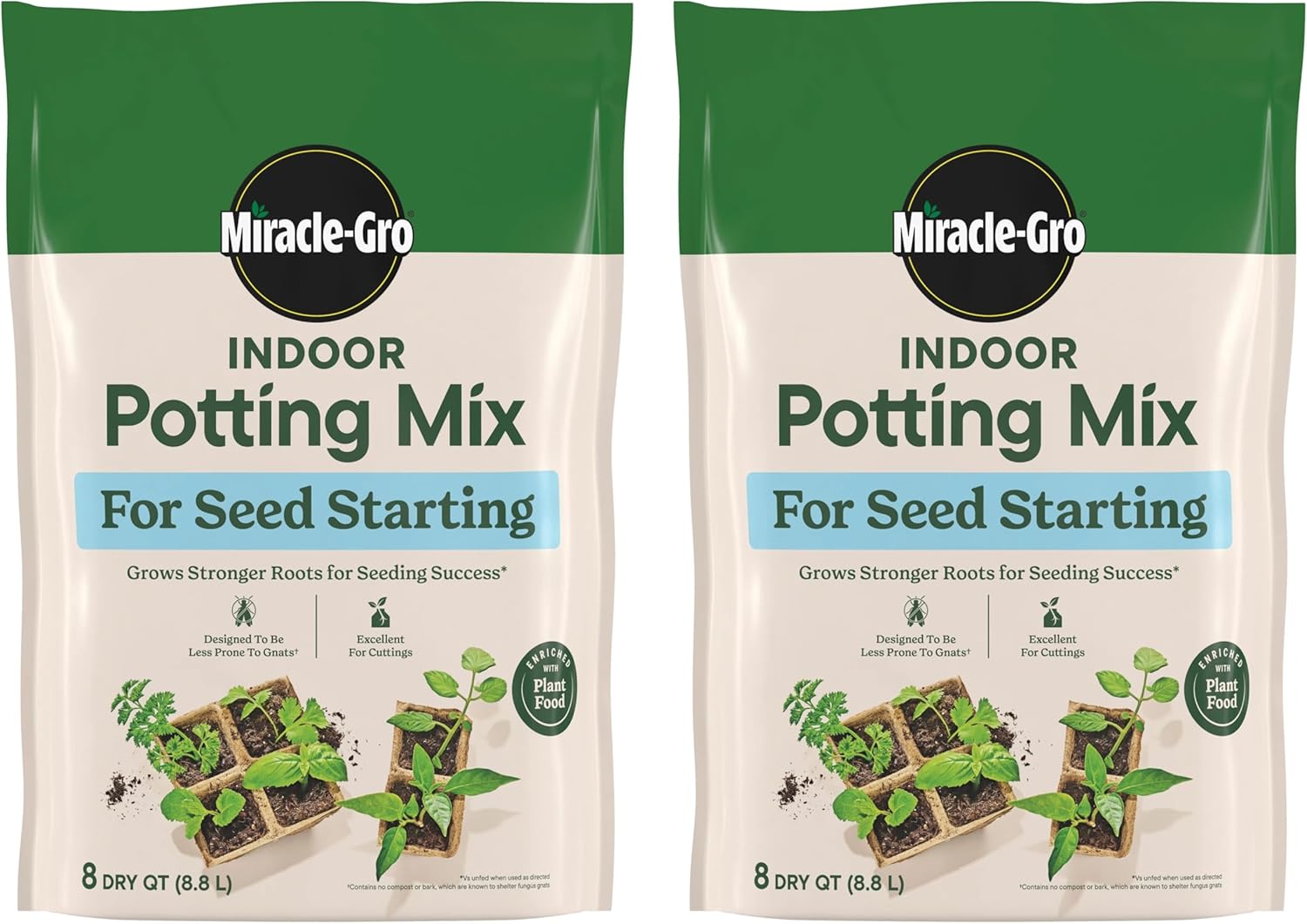
Miracle-Gro Indoor Potting Mix for Seed Starting, 8 qt. (2-Pack)
| Brand Name | Miracle-Gro |
|---|---|
| Item Type Name | Potting Mix |
| Number of Packs | 2 |
| Volume | 8 quarts |
This two-pack of Miracle-Gro Indoor Potting Mix is designed specifically for starting seeds and rooting cuttings indoors. The blend is lightweight and pre-enriched with plant food so seedlings get a nutrient boost during early root development, and the manufacturer says it yields stronger roots compared with unfed mixes when used as directed. It is intended for vegetables, flowers, and herbs and works well in cell trays and small containers; one 8 qt. bag will fill roughly three 72-cell trays. Notably, the formula omits compost and bark, which helps lower the chance of fungus gnat infestations in damp seed-starting setups. Use it by filling trays or pots, keeping the mix evenly moist, and shielding newly sown seeds from direct sun until germination. Important limitations are standard for enriched mixes: it contains fertilizer (so handle carefully) and it is a seed-starting medium rather than an all-purpose potting soil for mature plants, so you will likely transplant seedlings into a different mix or amend soil later.
Best for: Buyers who want a low-effort, indoor seed-starting medium that supports faster root development and reduces common pest risks while following proven seed-starting practices.
Less Ideal for: Gardeners who need a permanent potting soil for mature container plants or who prefer fully organic, compost-rich mixes should consider alternatives.
- Lightweight, ready-to-use formula tailored for seed germination and cuttings
- Pre-enriched with plant food to support early root and seedling growth
- Excludes compost and bark to reduce habitat for fungus gnats
- Comes as a two-pack so you have enough mix for multiple trays
- Contains fertilizer which requires careful handling and storage
- Intended for seed starting so not formulated as long-term potting soil for mature plants
Verdict: A practical, low-risk seed-starting mix that boosts early root growth and reduces fungus gnat risk, making it a reliable choice for indoor vegetable seedlings.
Back to the Roots Organic Expanding Coco Coir Potting Soil Brick (10 lb)

| Item Highlight | 10 lb compressed coco coir brick; peat-free; OMRI Listed |
|---|---|
| Item Type Name | Coconut Coir |
| Volume | 2 cubic feet |
| Ingredients | Coconut Coir |
| Style Name | Expanding Potting Soil |
This compressed coco coir brick provides a lightweight, peat-free potting medium that expands when you add water to create loose, airy substrate for containers and seed flats. It is typically used by hydrating the 10 lb block to about 2 cubic feet of coir and then using it alone for potted plants, mixing it into garden soil to improve drainage and aeration, or blending with compost for starting seeds. Notable features include OMRI listing for organic use, a balanced pH suited to a wide range of plants, and compact storage before expansion which saves space. Practical benefits are improved root aeration and water retention compared with heavy garden loam, easier handling than bulky bags, and versatility across vegetables, herbs, and ornamentals. Important limitations are that coco coir is a soilless substrate and does not supply significant nutrients on its own so you will need to add fertilizer or compost for long-term potted herbs like rosemary, and the product requires time and a water source to expand before use.
Best for: Buyers who prioritize low-risk, easy-to-handle, organic potting media and want a versatile base for container herbs and seed starting without dealing with heavy bags.
Less Ideal for: Gardeners who want a ready-to-plant, nutrient-rich potting mix out of the box or those who prefer soil with built-in slow-release fertilizer.
- Peat-free OMRI listed organic coco coir suitable for organic growing
- Expands from a compact brick to about 2 cubic feet for easy storage and transport
- pH balanced and airy texture that improves drainage and root aeration
- Versatile use: can be used alone, for seed starting, or mixed into existing soil
- Provides little inherent fertility so supplemental feeding or compost is needed for nutrient-hungry plants
Verdict: A compact, peat-free coco coir brick that expands into an airy, pH-balanced base ideal for low-risk organic container gardening and seed starting when paired with fertilizer or compost.
Choosing the Right Compost for Tomato Seeds: Key Factors to Consider
Particle Size and Uniformity
Fine, uniform particles let seedling roots penetrate easily and give consistent contact with moisture. Coarse chunks or large wood particles can create dry pockets and uneven germination.
When you start tomato seeds in small cells or trays, look for compost that sifts to a fine texture or is labeled for seed starting. Uniformity also improves water distribution when you bottom-water or mist, which reduces the risk of some seeds staying dry while others sit too wet.
Moisture Retention Versus Drainage
Tomato seeds need consistent moisture while germinating, but excess water invites damping-off pathogens. A good seed compost holds enough water to keep seed coats moist yet drains freely so the surface does not stay saturated.
Assess how a compost behaves in your typical containers. If you use small cells or fine seedling trays, choose a mix that retains moisture without compacting. If you tend to overwater or have poor drainage in your workspace, prefer mixes with slightly higher drainage components like perlite or fine sand.
Nutrient Level Appropriate for Seedlings
Young tomato seedlings require low to moderate available nutrients until they develop true leaves. Too much soluble nitrogen in compost can burn tiny roots or cause weak, leggy growth; too little leaves seedlings pale and stunted.
Select composts formulated for seed starting or with modest nutrient charge. You can supplement later with diluted fertilizer once true leaves appear. Knowing the nutrient profile helps you anticipate when to begin feeding and avoid early stress.
Disease Control and Sanitation
Damping-off and seed rot are common problems in seed starting. Composts that are fully composted, heat-treated, or pasteurized have a lower likelihood of harboring pathogens compared with fresh, unfinished material.
Consider the production method when choosing compost for seeds. Even with low-risk compost, practice sanitation: clean trays, sterile potting tools, and careful watering to minimize disease pressure.
Texture Stability and Handling
How a compost behaves during filling, transplanting, and watering affects your workflow. A mix that compacts badly will reduce air space around roots, while one that blows away or clumps makes accurate filling difficult.
Choose compost that remains friable after wetting and dries back evenly. Ease of handling also matters if you start many cells; mixes that dose cleanly into trays and hold shape around roots make transplanting less disruptive.
pH and Salt Content
Tomato seedlings are sensitive to high soluble salts and prefer a slightly acidic to neutral pH for optimal nutrient uptake. Composts with elevated salt levels from recent manures or amendments can inhibit germination and damage seedlings.
Check product information or test a small batch in a tray if salt content is uncertain. A neutral pH and low soluble salts reduce the chance of nutrient imbalances and support steady early growth.
Preparing Compost for Seed Trays
Even when you choose a compost marketed for seeds, a short preparation step improves results. Sift larger particles out or blend the compost with a sterile, lightweight medium to achieve a consistent fine texture for trays and small pots.
Moisture-condition the compost before sowing so it is evenly damp but not dripping. Fill trays lightly and firm just enough to give seed-to-soil contact without compacting. Label the trays and position them to receive gentle warmth and indirect light to speed germination without overheating the surface.
- Sift or mix to remove large chunks
- Moisten thoroughly and test by squeezing a small handful
- Fill trays lightly and avoid compressing the mix
Watering and Drainage Tips for Seedlings
Gentle bottom-watering or misting helps prevent disturbance of fine seeds and reduces surface saturation. If drainage is limited in your trays, use a slightly coarser surface layer or add perlite to the top inch to improve air exchange.
Watch for signs of overwatering: sticky surface, mold on the compost, or collapsed seedlings. Conversely, if cotyledons curl and the surface cracks, seedlings need more consistent moisture or a finer-textured mix that holds water better.
- Prefer bottom-watering for delicate seedlings
- Ensure trays have adequate drainage holes
- Adjust surface texture to control moisture exchange
When to Start Feeding Seedlings
Hold off on regular fertilization until seedlings have their first true leaves. At that stage, a dilute balanced feed helps maintain steady growth. Using a compost with mild nutrient availability delays the need for early feeding and reduces the risk of nutrient burn.
Introduce a low-strength liquid fertilizer or a weak soluble feed on a two-week schedule, watching plant response. Increase strength gradually as seedlings grow and are hardened off for transplanting.
- Begin feeding after first true leaves appear
- Use a dilute balanced solution at first
- Increase feed strength gradually as plants mature
Testing a New Compost Batch
Before committing to a large batch for many seeds, test a small tray to observe germination rate, drainage behavior, and any early signs of disease. This quick trial helps you adapt watering and feeding schedules to the specific compost.
If seedlings show slow germination, try misting the surface more frequently or blending in a finer component. If damping-off appears, stop misting, increase airflow, and discard contaminated compost to prevent spread.
- Start with a small trial tray
- Adjust moisture and texture based on results
- Discard and replace material at signs of contamination
Adapting Compost for Different Starting Methods
Whether you start seeds in peat-free pellets, cell trays, or recycled containers, tailor the compost texture to the method. Pellets need a finer, uniform mix that rehydrates consistently, while larger cells tolerate slightly coarser blends that encourage root development.
For heat mat use, some moisture-retaining capacity helps maintain steady warmth transfer to the seed zone. For outdoor cold frames, favor mixes with better drainage to prevent freezing and waterlogging in variable weather.
- Match texture to the container style
- Increase drainage for outdoor or cold frame starts
- Use slightly more moisture retention with heat mats
How We Chose the Best Compost for Tomato Seeds
We focused on seed-starting performance and practical garden outcomes when narrowing the list. Our selection prioritized composts with a fine, uniform texture that allows small roots to move easily and promotes even moisture retention without waterlogging. Nutrient balance was evaluated for seed-stage needs, favoring modest soluble nutrient availability that feeds seedlings without burning delicate roots. Microbial and disease risk was considered, with preference for properly finished, pasteurized, or well-cured composts that reduce damping-off and seed rot. Drainage and moisture-holding balance were assessed to suit common home seed-starting containers and heat mats. We excluded composts that are heavily fibrous, too coarse for small cells, or likely to contain high levels of fresh manure or uncomposted material. Also omitted were blends formulated only for mature plants with very high fertilizer charge. The final list reflects composts that match seed-starting texture, mild fertility, and low pathogen risk-criteria that align with the scoring metrics used in our evaluations.
FAQ
Can I use garden compost to start tomato seeds?
Often garden compost can work if it is fully finished, sifted, and free of large particles. Unfinished compost or fresh manure risks high salts and pathogens, so test a small tray first or blend with a sterile seed mix.
Should seed-starting compost contain fertilizer?
Seed-starting compost should have only low to moderate available nutrients. Tiny seedlings need minimal soluble fertilizer until the first true leaves appear, at which point you can start dilute feeding.
How do I prevent damping-off when using compost?
Use well-finished or heat-treated compost, maintain good air circulation, avoid overwatering, and use clean trays. Bottom-watering and proper spacing reduce surface moisture where pathogens thrive.
Is peat-free compost suitable for tomato seeds?
Yes, peat-free composts can work if they provide a fine, consistent texture and balanced moisture retention. Some peat-free blends may need added fine components to match the lightness of traditional peat mixes.
How often should I water seedlings started in compost?
Usually water when the surface begins to dry but before seeds or roots desiccate. Frequency depends on container size and ambient conditions; small cells often need daily checks, while larger pots dry more slowly.
Can I reuse compost from previous seedings?
Reusing old compost is possible only if it was disease-free, not overly depleted, and you refresh it with fresh material or nutrients. Sterilize or discard compost that showed any damping-off or root disease to avoid repeating problems.
Final Verdict
Choose a compost for tomato seeds that prioritizes fine, uniform texture, balanced moisture retention, and low pathogen risk. Those tradeoffs determine how easily seeds germinate and how healthy the first true leaves develop. Focus on mixes that match your starting method and watering habits. If you need quick germination in small cells, favor finer, well-draining seed compost with mild nutrients; if you start in larger cells or use heat mats, select a mix with slightly more moisture retention. These priorities will help you select the best compost for strong, transplant-ready tomato seedlings.
