

Note: This article contains affiliate links. If you click on these links and make a purchase, I may earn a small commission at no extra cost to you. This helps support my research and content. Read my full affiliate disclosure here.
If you want vibrant color on a sunny patio in autumn, choosing the right fall container plants makes all the difference. Plants grown in full sun behave differently than those for shade: they need containers and soil that drain well, and varieties that hold color later into cool weather. This guide looks at five carefully shortlisted full sun fall container plants that perform reliably in bright, exposed locations. We evaluate each option for cold tolerance, bloom duration, and ease of seasonal care so you can pick containers that stay attractive through the first frosts.
Top Picks at a Glance
| Best Quality Built to a higher standard if you want something more solid | PERFECT PLANTS Jubilation Gardenia Live Plant (1 Gallon) |  |
| Best Budget The cheapest option that still gets the job done reliably | Perfect Plants Autumn Bonfire Encore Azalea, 1 Gallon, Live Shrub |  |
| Highest Rated A top-rated pick with lots of positive feedback | ELLA'S HOMES Lantana Live Plants (2-Pack) |  |
| Most Popular A crowd favorite that many people choose with confidence | The Three Company Creeping Jenny (Lysimachia nummularia) 2-Pack Live Trailing Groundcover |  |
| Best Seller A high-volume bestseller chosen again and again | Southern Living Obsession Nandina Shrub (2 Gal) |  |
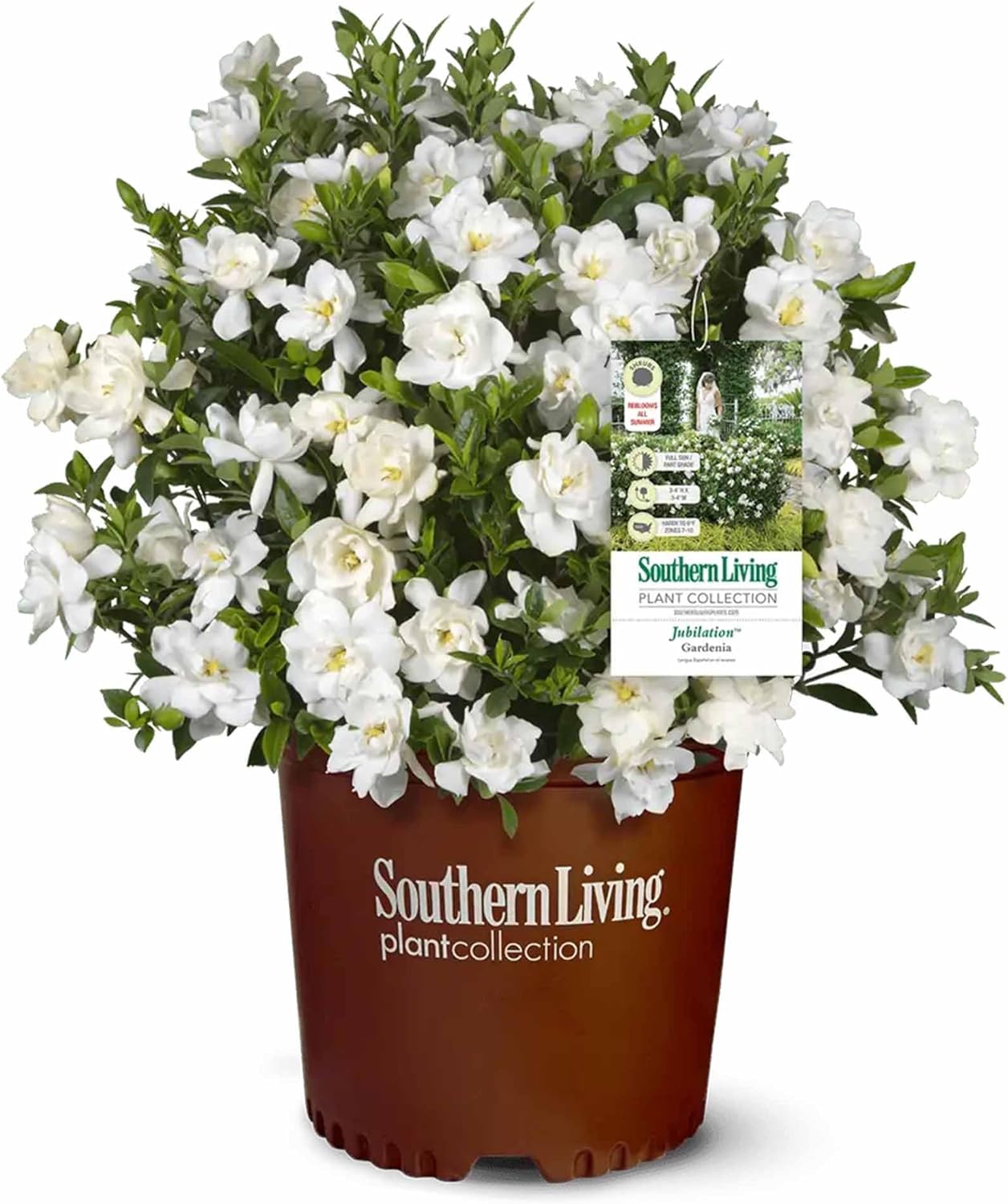
PERFECT PLANTS Jubilation Gardenia Live Plant (1 Gallon)
| Indoor Outdoor Usage | Outdoor |
|---|---|
| Other Special Features of the Product | Attracts Pollinators, Compact, Deer Resistant, Disease Resistant, Fragrant |
| Expected Blooming Period | Spring to Fall |
| Sunlight Exposure | Full Sun |
| USDA Hardiness Zone | 10, 7, 8, 9 |
The Jubilation Gardenia is a compact evergreen shrub selected for reliable, repeat blooming and strong fragrance from late spring through fall. In practice it works well as a potted patio specimen or small foundation plant placed in full to partial sun where its creamy white flowers and glossy foliage can be appreciated up close. Notable features include improved reblooming, heat and humidity tolerance for USDA zones 7–10, and a naturally rounded habit that keeps the plant tidy with minimal pruning. For container use it prefers well drained, slightly acidic loam and regular watering plus occasional fertilizing to sustain heavy bloom cycles. Limitations to consider are its climatic range and the need for consistent moisture and feeding to get the long flowering season; it is not suited to cool northern climates and cannot be shipped to certain states. For gardeners who want a high-performing, fragrant potted shrub for sunny outdoor spots, Jubilation delivers strong visual and olfactory impact with manageable care needs.
Best for: Gardeners who want a high-performing, fragrant shrub in a container or small sunny bed and prioritize frequent blooms and reliable summer heat tolerance.
Less Ideal for: Those gardening in cool northern zones, or buyers seeking a low-water, no-maintenance patio plant should consider alternatives.
- Compact, naturally rounded habit that fits well in containers and small sunny spaces
- Long flowering season with repeat blooms from spring through fall
- Strong, classic gardenia fragrance useful for placement near entries or seating areas
- Improved tolerance for heat and humidity, suitable for zones 7–10
- Glossy evergreen foliage provides year-round structure when not in bloom
- Requires consistent watering and periodic fertilizing to maintain heavy bloom performance
- Not cold-hardy outside USDA zones 7–10 and unsuitable for cooler climates
Verdict: Choose this gardenia when you want a compact, highly fragrant potted shrub that reliably reblooms and handles summer heat in sunny outdoor spots.
Perfect Plants Autumn Bonfire Encore Azalea, 1 Gallon, Live Shrub

| Indoor Outdoor Usage | Outdoor |
|---|---|
| Expected Blooming Period | Spring to Fall |
| Sunlight Exposure | Full Sun |
| USDA Hardiness Zone | 10, 6, 7, 8, 9 |
| Moisture Needs | Regular Watering |
The Autumn Bonfire Encore Azalea is a compact, performance-focused flowering shrub that delivers repeat red blooms and year-round evergreen foliage. Typically used as a mass planting, accent shrub, or in larger containers, it flowers from spring through fall and tolerates some drought while resisting common pests and deer. Notable features include its semi-double and single funnel-shaped flowers, suitability for USDA zones 6 to 10, and low-maintenance needs with only occasional fertilizing. In practical use it prefers 4 to 6 hours of sun with some afternoon shade and moist, well-drained slightly acidic soil; this makes it a strong choice for sunny window boxes that can supply regular watering. Limitations are that it will need consistent moisture and slightly acidic soil to thrive in containers, and its compact mature spread (listed as up to 3 feet in description) means it is better for medium window boxes rather than very small sill boxes. Expect reliable seasonal color and minimal pest fuss when placed in the right light and soil conditions.
Best for: Gardeners who prioritize dependable seasonal performance and low-maintenance color in sunny to part-shade window boxes and want a compact evergreen that flowers repeatedly through the growing season.
Less Ideal for: Those who need a tiny sill-plant or want a no-water, drought-only container solution should choose a smaller or more drought-specialized species instead.
- Repeat bloomer with bright red semi-double and single flowers from spring to fall
- Evergreen foliage provides year-round visual interest
- Pest resistant and deer resistant for lower maintenance
- Performs across a wide range of climates (USDA zones 6–10)
- Requires regular watering and slightly acidic, well-drained soil to perform well in containers
- May be too large for very small or narrow window boxes when mature
Verdict: Choose this compact evergreen azalea when you want reliable, repeat red blooms and year-round foliage for sunny window boxes that receive regular watering.
ELLA'S HOMES Lantana Live Plants (2-Pack)

| Unit Count | 2 Count |
|---|---|
| Plant Type | Perennial Flower Plant |
| Sun Exposure | Full sun |
| Size at Shipment | 5-12 Inches Tall |
This 2-pack of Lantana live plants arrives ready to transplant into pots or garden beds and is aimed at straightforward, low-maintenance summer color. Each plant is described as well-rooted and 5 to 12 inches tall, with random blooming colors that provide mixed orange, yellow, red, and purple clusters. In practice these lantanas perform best in full sun and are valued for long bloom periods and drought tolerance once established, making them a reliable option for sunny patios and containers. The plants are perennial where climate allows but go dormant in winter, so they are best used as outdoor seasonal or multi-year accents depending on your zone. Limitations are the random color selection and modest initial size, so buyers who need specific color schemes or instant large specimens may want larger or labeled starts. For gardeners seeking fuss-free, sun-loving container plants, these lantanas are an easy way to add sustained bloom without heavy care requirements.
Best for: Buyers who want dependable, low-effort full-sun container plants that provide long-lasting color on patios and in sunny beds.
Less Ideal for: Gardeners who need specific flower colors on demand or immediate large displays should consider larger nursery specimens or labeled varieties.
- Ready-to-transplant, well-rooted plants for quick establishment
- Long-blooming, colorful flower clusters that thrive in full sun
- Low maintenance and drought-tolerant once established
- Sold as a two-pack for easy pairing in pots or beds
- Color is random so exact flower shades are not guaranteed
- Plants are small on arrival and may take a season to reach full size
Verdict: A simple, dependable two-pack of sun-loving lantanas that delivers long-lasting color with minimal care.
The Three Company Creeping Jenny (Lysimachia nummularia) 2-Pack Live Trailing Groundcover

| USDA Hardiness Zone | 4-9 |
|---|---|
| Sunlight Exposure | Full Sun |
| Expected Blooming Period | Summer |
| Soil Type | Well-draining Soil |
| Moisture Needs | Regular Watering |
Creeping Jenny (Lysimachia nummularia) is a vigorous trailing perennial valued for rapid coverage and bright chartreuse leaves. It is typically used in containers, hanging baskets, as an edging plant, or to form a low mat in shady containers where quick visual impact is wanted. The plants arrive live and establish quickly in well‑draining soil with regular watering and tolerate full sun to partial shade, making them flexible for many shade container spots. Notable features include fast spreading habit for erosion control or weed suppression and suitability for USDA zones 4–9 so it returns in many temperate climates. Practical benefits are immediate color, low long‑term maintenance once established, and usefulness in mixed shade containers to contrast darker foliage. Important limitations are that it can become aggressive in favorable conditions and will need periodic pruning or containment to prevent it overtaking small pots or nearby plants, and it prefers consistent moisture so may need more frequent watering in shallower containers.
Best for: Gardeners who want a fast‑establishing, colorful trailing plant for shaded or partially shaded containers and hanging baskets and who prioritize quick visual impact and easy seasonal color.
Less Ideal for: People who prefer strictly non‑invasive, slow‑growing plants for tightly packed mixed containers or who want truly drought‑tolerant species for infrequently watered pots.
- Fast spreading habit provides quick coverage in containers and hanging baskets
- Bright chartreuse foliage adds season‑long color in shade or partial shade
- Hardy across USDA zones 4–9 for reliable perennial return in many climates
- Low maintenance once established, tolerates a range of soils with regular watering
- Can be invasive in favorable conditions and requires trimming or barriers in small containers
- Needs consistent moisture so shallow pots may require frequent watering
Verdict: Choose this fast‑spreading Creeping Jenny 2‑pack when you need an easy, high‑impact trailing groundcover for shaded containers and hanging baskets.
Southern Living Obsession Nandina Shrub (2 Gal)

| Sunlight Exposure | Full Sun to Part Shade |
|---|---|
| USDA Hardiness Zone | 6, 7, 8, 9, 10 |
| Moisture Needs | Moderate Watering |
| Expected Planting Period | Year Round |
The Southern Living Obsession Nandina is a 2-gallon evergreen shrub prized for intense red foliage that holds color through much of the year. It is marketed for outdoor beds and containers, and performs in full sun to part shade across USDA zones 6 to 10. Typical use is as an accent in mixed borders, a colorful container specimen on a patio, or a low hedge where a 3- to 4-foot mature height is acceptable. Practical benefits include low maintenance, deer resistance, and moderate water needs once established; the plant is described as organic and suited to loam soils with well-drained conditions. Limitations to consider are that it does not produce notable blossoms and requires routine watering while establishing; it will also reach about 48 inches, so plan placement or pruning accordingly. For container use, choose a generous pot and monitor soil moisture to keep foliage vibrant in hot, sunny sites.
Best for: Gardeners who want a low-maintenance, colorful evergreen for patio containers or small landscape accents and value year-round foliage interest.
Less Ideal for: People seeking a showy flowering shrub or those who need a very small dwarf variety for tight spaces should consider other options.
- Bright red evergreen foliage provides season-long color
- Suitable for containers or landscape beds thanks to compact mature size
- Tolerates full sun to part shade across USDA zones 6–10
- Low maintenance and described as deer resistant
- Does not produce significant blossoms for floral interest
- Requires consistent watering until established
Verdict: Choose this nandina when you want an easy-care, brightly colored evergreen that performs well in pots and small garden settings.
Choosing the Right Full Sun Fall Container Plants: Key Factors to Consider
Cold Tolerance and Seasonal Lifespan
Cold tolerance determines how long a plant will look good through cool nights and early frosts. Some annuals hold color until the first hard freeze while others will yellow and collapse after light frosts. For containers that sit in full sun, temperature swings between sunny days and chilly nights can stress tender plants sooner than ground-planted specimens.
When you choose plants, consider zone hardiness when applicable and whether you want a plant that is reliably hardy in your region or a tender annual that will be replaced each season. Using varieties with stronger cold tolerance extends visual interest and reduces the need for late-season replacements.
Bloom Duration and Seasonal Interest
Bloom duration matters because continuous flowers are the primary source of color in a fall container. Some species have long bloom windows and rebloom after light pruning, while others provide a short but intense display. In full sun locations, sustained bloom requires varieties that do not drop flowers rapidly in heat or wind.
Also think beyond flowers: foliage color and texture can keep a container attractive after blooms fade. Plants with persistent leaves or colorful stems add value late into fall when flowers decline.
Sun Exposure and Heat Handling
Full sun means prolonged direct light and often hotter surface temperatures in containers. Plants must tolerate high light without leaf scorch and manage higher evaporative demand. Some fall-blooming plants are adapted to cooler, overcast conditions and perform poorly in bright, hot spots.
Choose species known to handle strong afternoon sun or place containers where they receive morning sun and some afternoon relief if you are unsure. Good heat handling reduces watering frequency and lowers stress-related foliage loss.
Watering Frequency and Drought Resilience
Containers dry out faster than garden soil, especially in full sun. Watering frequency affects both plant vigor and maintenance time. Plants with moderate drought resilience survive brief lapses in irrigation and are more forgiving when daily watering is not possible.
Consider root depth and transpiration rates. Deep-rooted fall plants are rare in pots, so select varieties that maintain turgor with typical container moisture cycles or plan for mulching and soil mixes that retain moisture without causing root rot.
Container Size Compatibility and Root Behavior
Not every plant suits small pots. Root behavior and mature plant size determine container compatibility. Some plants form compact root systems and thrive in smaller pots, while others need larger volumes to avoid becoming rootbound and declining prematurely.
Match plant selection to the pot size you plan to use. Also consider how quickly a plant will fill the container and whether you want a solitary specimen or a mixed planting combining thrill, spill, and filler.
Maintenance Needs and Seasonal Care
Maintenance includes deadheading, fertilizing, pruning, and overwintering. Plants that require heavy deadheading or frequent fertilizer may not suit gardeners looking for low-effort containers. In full sun, higher nutrient turnover can mean more frequent feeding to support continued blooms.
Decide how much time you will commit to late-season upkeep. Low-maintenance options usually offer steady performance with minimal deadheading and only light feeding, while showier choices may demand weekly attention to remain at peak appearance.
Designing a Full Sun Fall Container
Start with a plan for scale and contrast. In bright light, bold foliage colors and layered textures read well from a distance. Use a taller 'thrill' plant as a focal point, compact 'fillers' for mid-height mass, and trailing 'spill' plants to soften the pot edges.
Choose a container that balances proportion and root volume. Bigger pots moderate temperature swings and reduce how often you need to water, which is especially helpful in full sun. Match the planting soil to drainage needs: a mix that drains well but retains enough moisture will support steady autumn blooms.
- Place taller plants at the back of a narrow balcony pot or center in a round container.
- Include at least one plant with durable foliage since blooms decline earlier in cool weather.
- Use color repetition across multiple containers to create a unified patio display.
Soil, Drainage, and Fertilizer Tips
Good drainage prevents root rot while allowing the frequent light watering full sun containers require. Use a commercial container mix or blend field soil with compost and coarse material to improve aeration.
Fertilize lightly on a schedule suited to the plant types. Fast-blooming annuals benefit from regular, balanced fertilizer during active flowering. Slower-growing or foliage-centric plants usually need less frequent feeding.
- Ensure at least one drainage hole and consider a layer of coarse material under the soil if the pot is shallow.
- Top-dress with slow-release fertilizer at planting and supplement with liquid feed during peak bloom.
Protecting Containers From Early Frost
When nighttime temperatures start dipping near freezing, move portable containers to a protected area such as against a south-facing wall. Grouping pots together reduces exposure and helps retain heat. For immovable planters, cover sensitive plants with frost cloth on cold nights.
Consider using mulch on the soil surface to moderate root temperature and reduce freeze-thaw stress. If you prefer to keep a container through winter, choose hardy species and reduce watering as growth slows.
- Bring small pots indoors or to a sheltered spot on nights forecasted below freezing.
- Use breathable frost fabric rather than plastic to avoid trapping moisture and causing rot.
Mix-and-Match Pairings That Work in Sun
Combine plants with similar water and light requirements to simplify care. Pair vigorous bloomers with slower-growing companions that provide texture so the pot maintains interest as some plants decline.
Think about staggered seasonality: include at least one species that retains color late into fall so the container still looks finished after other blooms fade.
- Avoid pairing shallow-rooted, moisture-sensitive plants with thirsty, large-rooted species in the same pot.
- Use trailing plants to conceal pot rims and softens the arrangement as plants age.
Common Mistakes to Avoid
Overplanting a small pot with large species is a frequent error. Crowded roots stress plants and shorten the display life. Match plant maturity to container size and allow room for airflow.
Another mistake is inconsistent watering. Full sun containers often need routine checks; neglect leads to rapid decline while overwatering causes root issues. Establish a watering routine and adjust for rainfall and temperature changes.
- Do not assume a plant labeled 'fall' will thrive in full sun without checking heat tolerance.
- Avoid heavy soils that retain too much water in direct sun.
How We Chose the Best Full Sun Fall Container Plants
We focused on traits that matter for containers placed in full sun during fall, then narrowed the field to plants that reliably produce color late into the season. Selection prioritized cold tolerance or predictable seasonal lifespan, sustained bloom or attractive foliage through cool weather, and manageable maintenance for container culture. We compared typical water needs and drought resilience because sun-exposed containers dry quickly. Root behavior and suitability for confined pot volumes were considered to ensure plants do not become rootbound too fast. Pest and disease resistance in cooler, windy autumn conditions was also part of our assessment. We excluded species that require aggressive pruning, large permanent beds, or specialized greenhouse care. The final picks balance visual impact with straightforward container care and realistic outdoor performance under bright fall sunlight.
FAQ
Can I leave fall containers in full sun through light frosts?
Often you can, depending on the plants. Many fall-blooming varieties tolerate light frosts and will keep color, but tender annuals may blacken quickly. Protecting pots on predicted freezing nights extends their appearance.
How often should I water full sun fall containers?
Usually containers in full sun need checking daily during warm, dry periods. Water when the top inch of soil feels dry, and expect to water less frequently as temperatures drop and plants slow growth.
Do I need a special soil mix for autumn containers?
A well-draining container mix with some organic matter works best. The mix should retain moisture without becoming soggy. Adding a bit of slow-release fertilizer at planting helps sustain blooms.
Should I deadhead fall-flowering plants to prolong blooms?
Often light deadheading encourages additional bloom on many species, but some foliage-focused choices keep interest without it. Balance your desire for continuous flowers with the time you want to spend maintaining the pots.
Can I combine hardy and tender plants in the same container?
You can, but it complicates care and overwintering. Pair plants with similar cold and water needs to avoid moving or protecting some but not others as temperatures change.
Final Verdict
Pick full sun fall container plants based on how long you want color, how much maintenance you will do, and the container size you have available. Prioritize cold tolerance and bloom duration for lasting displays, and match water needs and root behavior to pot volume. With the right combinations and basic seasonal care, you can keep sunny patios bright well into autumn without excessive effort.
