

Note: This article contains affiliate links. If you click on these links and make a purchase, I may earn a small commission at no extra cost to you. This helps support my research and content. Read my full affiliate disclosure here.
A well-built wooden raised garden bed changes how you grow vegetables and flowers by giving you control over soil depth, drainage, and plant spacing. The right box reduces back strain, improves drainage for summer heat, and keeps soil life healthy for successive plantings. This guide covers seven shortlisted options that suit common backyard, patio, and small-acreage situations. We evaluated build materials, rot resistance, ease of assembly, and long-term garden performance to help you choose a bed that fits your planting goals and maintenance preferences. Read on to see which features matter most and which beds excel at them.
Top Picks at a Glance
| Best Overall The best all-around choice for most situations | MIXC Fir Wood Raised Garden Bed with Legs, 72" x 23" |  |
| Best Quality Built to a higher standard if you want something more solid | Infinite Cedar Premium Western Red Cedar Raised Garden Bed, 3' x 6' |  |
| Best Value The sweet spot between price and what you get | Best Choice Products 48" x 24" x 30" Fir Wood Raised Garden Bed with Liner |  |
| Best Budget The cheapest option that still gets the job done reliably | MIXC 8×2 ft Wooden Raised Garden Bed Planter Box |  |
| Highest Rated A top-rated pick with lots of positive feedback | SoliWood Cedar Raised Garden Bed with Legs, 48×24×30 |  |
| Most Popular A crowd favorite that many people choose with confidence | Best Choice Products 72 x 24 x 30 in Fir Wood Raised Garden Bed |  |
| Best Seller A high-volume bestseller chosen again and again | Yaheetech Wooden Raised Garden Bed Planter Box (8 ft x 2 ft) |  |
MIXC Fir Wood Raised Garden Bed with Legs, 72" x 23"

| Material Type | Fir Wood |
|---|---|
| Capacity | 8.4 cubic feet |
| Mounting Type | Floor Standing |
| Other Special Features | Breathable, Drainage Hole, Rot Resistant, Weather Resistant |
| Indoor Outdoor Usage | Outdoor |
This MIXC raised garden bed is a simple, sturdy wooden planter built for outdoor use. It provides roughly 8.4 cubic feet of planting space and sits about 30 inches high so you can tend flowers, herbs, or vegetables without bending to ground level. The construction uses unfinished fir wood and a reinforced frame that resists warping while the included drainage holes reduce waterlogging and root rot. Because it is elevated and has a solid footprint it also helps keep small animals and pests from accessing your plants. Typical use is straightforward assembly on a balcony, deck, or patio, fill with potting mix, and plant seasonal crops or ornamental beds. Limitations are the unfinished wood surface that will need sealing or seasonal maintenance for long-term weather protection and that the size is a single fixed bed rather than modular pieces for larger beds. The design is practical for everyday gardening tasks but expect to treat or replace wood over several seasons in wet climates.
Best for: Gardeners who want a durable, easy-access wooden raised bed for a balcony, patio, or small yard and value a balance of planting space, comfort, and straightforward setup.
Less Ideal for: People who need a low-cost disposable planter, a fully weatherproof maintenance-free option, or a modular system to create much larger planting runs.
- Elevated 30" height reduces bending and protects knees and back
- Six drainage holes improve root aeration and prevent water buildup
- Constructed from fir wood for natural strength and weather resistance
- Generous planting volume (8.4 cubic feet) suitable for multiple plants
- Unfinished wood will require sealing or seasonal maintenance to maximize lifespan
- Fixed one-piece size limits flexibility if you want a modular or larger bed
Verdict: A practical, ergonomic fir wood raised bed that gives balanced planting space and easier gardening without bending.
Infinite Cedar Premium Western Red Cedar Raised Garden Bed, 3' x 6'

| Capacity | 16.5 cubic feet |
|---|---|
| Material Type | Cedar Wood |
| Other Special Features of the Product | 1" Thick Boards, Easy To Assemble |
| Indoor Outdoor Usage | Outdoor |
This Infinite Cedar raised bed is a straightforward, performance-focused option for serious vegetable gardeners who want a durable wooden frame that installs quickly. Made from 1" thick North American Western Red Cedar, the kit uses half-lapped corners and aluminum rods that slide through the boards rather than screws or dovetail joints, which helps keep corners tight over years of wet and dry cycles. Assembly is tool-free and can be completed in minutes, and the modular boards let you stack or disassemble the bed if you need to move or adjust planting depth. The natural rot resistance of cedar means you can leave the bed unfinished to weather to a gray patina or stain it to match hardscaping. Practical limits are the single 11" height and rectangular footprint, which is ideal for shallow vegetable beds and perimeter borders but not for deep-rooted crops or very large planting volumes. The craftsmanship and hardware approach prioritize longevity and low maintenance for gardeners who value durability and straightforward installation.
Best for: Gardeners who prioritize durable, low-maintenance construction and fast assembly so they can set up productive vegetable beds quickly and reliably.
Less Ideal for: Growers needing deep soil profiles for large root crops or those who want a wide variety of integrated features like built-in irrigation or trellising.
- Constructed from rot-resistant Western Red Cedar for long outdoor life
- Tool-free, quick assembly with half-lapped corners and aluminum rods
- 1" thick boards provide sturdy walls that resist warping
- Modular design allows stacking or disassembly to relocate or adjust depth
- Fixed 11 inch height limits use for deep-rooted vegetables or large root crops
- Single-size footprint may require multiple units for larger growing areas
Verdict: Buy this if you want a handcrafted, rot-resistant cedar raised bed that assembles without tools and holds up season after season.
Best Choice Products 48" x 24" x 30" Fir Wood Raised Garden Bed with Liner

| Capacity | 5 cubic feet |
|---|---|
| Material Type | Fir Wood |
| Other Special Features of the Product | Drainage Hole |
| Mounting Type | Floor Standing |
| Indoor Outdoor Usage | Outdoor |
This raised garden bed provides a roomy, elevated planting area ideal for vegetables, herbs, and compact root crops. Built from fir wood with an included fabric liner, it keeps soil separated from the wood to slow rot and reduce weed intrusion while the drainage hole prevents waterlogging. At about 30 inches tall the bed brings planting up to a comfortable working height so you spend less time bending and kneeling on patios, balconies, or small backyards. The construction is straightforward to assemble from multiple pieces and the unfinished wood can be stained or sealed to extend life and match outdoor decor. Limitations to note are the modest 5 cubic foot soil capacity and stated 200 pound weight capacity, which means very deep-rooted or heavy setups will be constrained, and the unfinished fir will need regular sealing in wetter climates to maintain durability. Overall this is a practical, space-efficient raised bed for growers who want easier access and decent planting depth in a compact footprint.
Best for: Buyers who want a low-maintenance, space-efficient raised bed that makes frequent planting and harvesting easier without heavy physical strain.
Less Ideal for: Not the best choice for growers needing very large or deep beds for longrooting crops or for those who prefer a maintenance-free composite or metal planter.
- Ergonomic 30-inch height reduces bending and protects the back while gardening
- Included bed liner separates soil from wood to slow decay and discourage pests
- Built-in drainage hole prevents waterlogging and helps soil health
- Fir wood construction offers natural strength and weather resistance
- Compact footprint fits patios, balconies, and small yards
- Unfinished fir requires sealing or maintenance in wet climates to prolong lifespan
- Soil capacity (5 cu ft) limits very deep or large planting projects
Verdict: A practical, elevated wooden planter that makes vegetable gardening easier in small outdoor spaces by improving access and soil management.
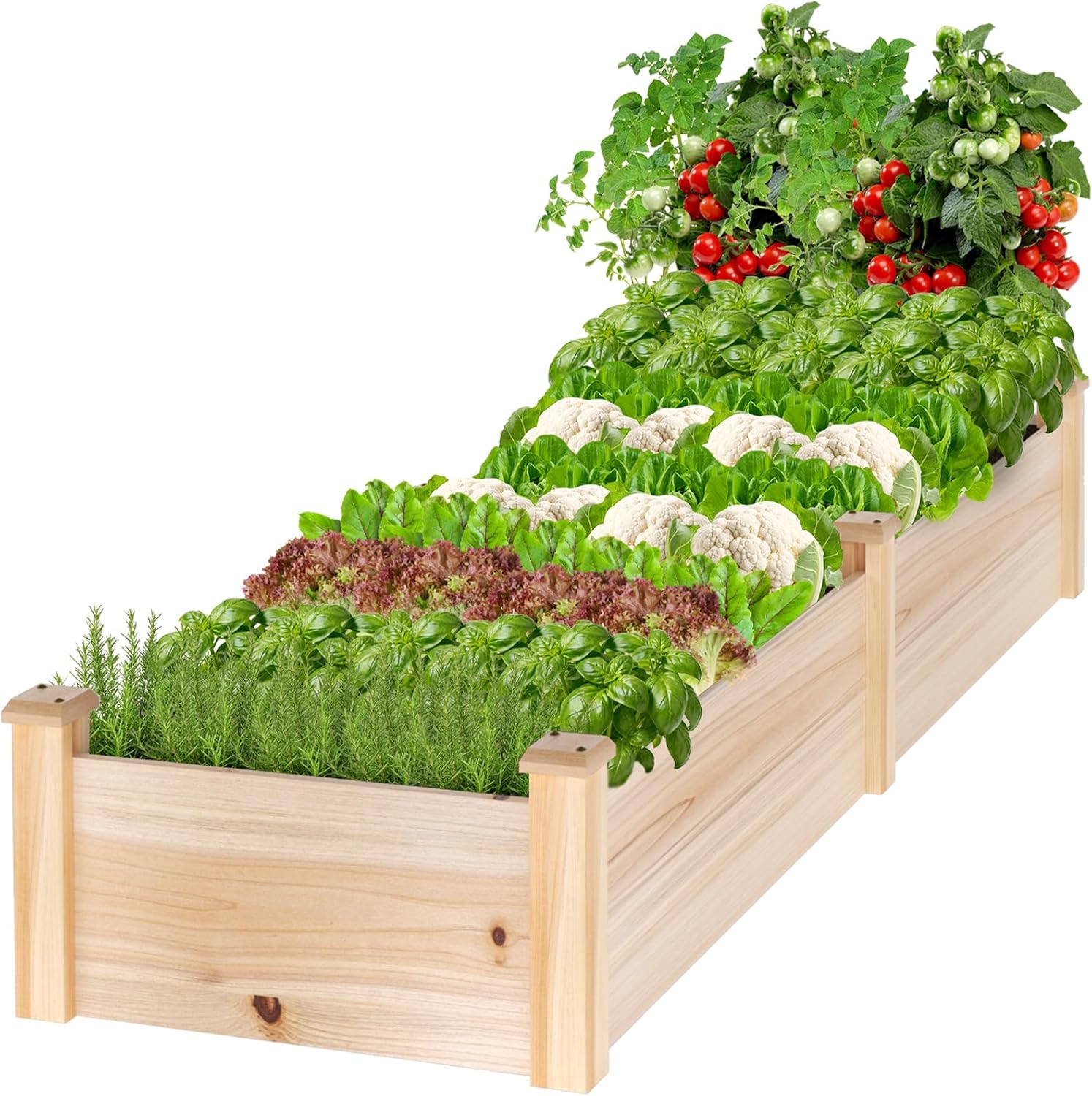
MIXC 8×2 ft Wooden Raised Garden Bed Planter Box
| Material Type | Fir Wood |
|---|---|
| Planter Form | Raised Bed |
| Other Special Features of the Product | Drainage Hole |
| Indoor Outdoor Usage | Outdoor |
| Capacity | 13.33 cubic feet |
This MIXC raised garden bed is a straightforward, no-frills planter made from unfinished Chinese fir intended for outdoor vegetable and flower beds. The panels use dovetail joints that slide together, so assembly requires minimal tools or skill and the included middle divider helps organize separate planting zones for herbs, strawberries, or tomatoes. At eight feet long and 24 inches wide it gives a lot of planting area without needing custom carpentry, and the pre-sanded surfaces reduce prep work before filling with soil. A drainage hole is provided to prevent waterlogging. Because it is unfinished fir, the box will weather naturally and will benefit from sealing or painting if you want longer life or a finished look. The height is modest, so it is best for ground-level planting rather than waist-high accessibility. Overall this is a practical, budget-friendly wood bed for expanding growing space quickly, though buyers who want rot-resistant or finished premium materials may prefer a different option.
Best for: Gardeners on a budget who want to add substantial planting area quickly and prefer a simple, easy-to-assemble wooden bed for vegetables, herbs, or flowers.
Less Ideal for: Those seeking a fully rot-resistant or finished planter, or gardeners who need a taller, back-friendly bed for raised planting.
- Large 8 ft length provides generous planting area for multiple crops
- Pre-sanded dovetail panels that slide together for quick, tool-light assembly
- Included middle divider helps separate planting zones
- Made from natural fir wood which is sturdy and easy to modify or seal
- Built-in drainage hole reduces risk of waterlogging
- Unfinished fir requires sealing or painting to extend lifespan
- Relatively low height may not suit gardeners who need raised access
Verdict: A large, easy-to-assemble wooden raised bed that stretches planting space affordably for budget-focused gardeners.
SoliWood Cedar Raised Garden Bed with Legs, 48×24×30

| Material Type | Cedar Wood |
|---|---|
| Capacity | 6 cubic feet |
| Finish Types | Grey Water Based Painting |
| Mounting Type | Outdoor |
| Included Components | Liner |
This SoliWood raised garden bed is a straightforward cedar planter designed to make outdoor gardening easier and more durable. It is assembled into a rectangular box on four sturdy legs to raise soil to a comfortable 30-inch working height so you spend less time bending. The unit includes a soil liner and drainage holes to keep roots healthy and prevent waterlogging, and the cedar construction with a water-based finish offers natural rot resistance for outdoor use. Typical uses are growing herbs, vegetables, and flowers on patios, balconies, and small backyards where a contained, elevated bed is helpful. Assembly is intended to be simple with pre-drilled holes and clear instructions, though parts arrive in multiple pieces so plan for about 20 to 30 minutes of work. The planter supports heavy soil loads and has a useful 6 cubic foot capacity, but because it is solid wood it will need occasional maintenance or sealing over time to preserve the finish. Its design favors practicality and longevity rather than decorative complexity.
Best for: Buyers who prioritize a dependable, low-profile wooden planter that will perform season after season and reduce strain while gardening in patios or small yards.
Less Ideal for: Gardeners seeking a zero-maintenance synthetic planter or those who need very large growing capacity should consider other options.
- Raised 30-inch height reduces bending and makes planting and harvesting easier
- Cedar wood construction offers natural weather resistance and a solid feel
- Included liner and drainage holes promote healthy soil moisture management
- Pre-drilled holes and clear instructions simplify assembly
- Generous planting volume suitable for multiple vegetables or mixed plantings
- Wood construction requires periodic maintenance to maintain the finish and longevity
- Delivered in many small pieces so assembly still requires time and basic tools
Verdict: A solid, no-frills cedar elevated bed that reliably raises your garden to a comfortable working height while providing good drainage and durable outdoor performance.
Best Choice Products 72 x 24 x 30 in Fir Wood Raised Garden Bed

| Capacity | 251 quarts |
|---|---|
| Material Type | Fir Wood |
| Other Special Features | Drainage Hole |
| Indoor Outdoor Usage | Outdoor |
| Plant or Animal Product Type | Vegetable |
This raised garden bed is a practical, no-frills option for growing vegetables, flowers, or herbs on a patio, deck, or balcony. Built from unfinished fir wood, the box offers a large planting volume and stands 30 inches high so you can tend plants without bending or kneeling. Six drainage holes let excess water escape and improve root aeration, and the elevated design helps deter small animals and keeps soil contained. Assembly is required but it ships with an assembly guide and the simple rectangular form is straightforward to put together. Because the wood is unfinished, planters should expect natural weathering unless they apply a sealant or liner for longer life and to protect against moisture over seasons. The bed is sturdy enough for heavy soil mixes but has a listed weight capacity, so place it on a firm, level surface. For gardeners who prioritize a durable, natural-looking wooden bed and easy ergonomics, this unit performs well; those seeking treated wood or a maintenance-free composite will need to consider other materials.
Best for: Buyers who want a natural wooden raised bed with easy access for back-friendly gardening and prefer a product with widespread positive feedback and straightforward construction.
Less Ideal for: People who want a maintenance-free or rot-resistant material, or who prefer a pre-sealed or painted finish ready for long-term outdoor exposure without additional treatment.
- Ergonomic 30-inch height reduces bending and kneeling while gardening
- Multiple drainage holes (six) improve root aeration and prevent waterlogging
- All-wood fir construction provides a natural, sturdy planter frame
- Large planting capacity suitable for vegetables and multiple plants
- Unfinished wood will weather over time and may need sealing or a liner
- Assembly required and some users may need two people for setup
Verdict: A large, back-friendly wooden raised bed that delivers natural durability and good drainage for vegetable and container gardening.
Yaheetech Wooden Raised Garden Bed Planter Box (8 ft x 2 ft)

| Capacity | 9.95 cubic feet |
|---|---|
| Material Type | Fir Wood |
| Indoor Outdoor Usage | Outdoor |
| Other Special Features of the Product | Flexible DIY, Open Bottom, Weather Resistant |
| Included Components | Instruction manual, Tools |
This Yaheetech raised garden bed is a simple, sturdy wooden planter intended for outdoor vegetable, herb, or flower beds. It ships as a kit with basic tools and an instruction manual and uses heavy-duty screws and corner posts for a snug, stable fit; assembly is practical for one or two people and can be completed in a short time. The box is split into two equal growing areas with a removable baffle, so you can plant different crops or open it up for a single larger bed. Made from unfinished fir wood with an open bottom, it drains naturally and can be combined with additional beds thanks to upgraded slotting on the posts for flexible DIY layouts. Practical benefits include good capacity for an 8 by 2 foot planting area, easy staining or painting to match garden aesthetics, and weather-resistant treatment for outdoor use. Limitations are that the wood is unfinished so it will need periodic sealing for long-term rot resistance and the open bottom means it sits directly on soil rather than isolating root zones from underlying ground pests or poor soil conditions.
Best for: Buyers who want a low-risk, easy-to-assemble wooden raised bed for growing vegetables or flowers and prefer a straightforward product they can adapt or expand over time.
Less Ideal for: Gardeners who need a fully enclosed or pest-proof raised bed, or those seeking a maintenance-free, rot-resistant composite alternative.
- Sturdy screw-and-post construction for quick, reliable assembly
- Dividable design with removable baffle for two planting zones
- Open bottom allows natural drainage and root access to native soil
- Posts are slotted for combining multiple beds into custom layouts
- Unfinished fir requires sealing or staining to extend service life
- Open-bottom design does not protect against ground pests or very poor soil
Verdict: A practical, easy-to-assemble fir-wood raised bed that offers flexible planting zones and straightforward expansion for reliable backyard vegetable or flower growing.
Choosing the Right Wooden Raised Garden Bed: Key Factors to Consider
Lumber Type and Treatment
The species of wood and whether it is treated are the biggest determinants of a raised bed's lifespan. Denser, naturally rot-resistant species will last longer in contact with damp soil, while pressure-treated or factory-sealed boards can extend life but may need careful selection to avoid undesirable chemicals.
Think about how long you want the structure to last and how close it will sit to irrigation or splash zones. Wood that withstands repeated wet-dry cycles reduces replacement frequency and keeps soil chemistry more stable over time.
Joinery and Structural Design
How the boards are held together affects how the bed resists soil pressure and winter freeze-thaw cycles. Strong corner joinery, internal stakes or brackets, and cross-supports prevent bulging and leaning as the soil settles and roots push against boards.
Look for designs that allow for added reinforcement later. Beds that use replaceable panels or accessible fasteners make it simpler to tighten connections or swap out a damaged board without rebuilding the entire box.
Soil Depth and Internal Dimensions
Different crops need different effective soil depths. Shallow-rooted herbs and lettuces do fine in 6 to 8 inches of growing medium, while many root vegetables and larger perennials require 12 inches or more. Wider beds allow more planting configurations, but very wide beds make it hard to reach the center without stepping into the bed.
Plan the bed footprint to match your planting plan and physical reach. Consider whether you will layer with compost and mulch, and allow for eventual soil settling when calculating final planting depth.
Assembly Time and Required Tools
Some wooden beds ship as kits that bolt together with basic hand tools, while others need cutting, notching, or heavy hardware and might require a drill, clamps, or more advanced carpentry. Your available tools, skill level, and whether you prefer a one-person install matter when selecting a model.
Faster assembly reduces the time between purchase and planting and lowers the chance of installation errors that could compromise stability.
Drainage and Soil Aeration
Raised beds typically improve drainage, but design details influence how quickly excess water moves away from roots. Boards nailed flush to the ground can restrict lateral drainage, while beds with slight internal gaps, raised bottoms, or simple gravel layers encourage faster runoff. Good aeration supports healthy root systems and beneficial soil life.
Consider your local rainfall patterns and whether you will irrigate frequently. In heavier clay soils, better drainage is essential to prevent root rot and nutrient lockup.
Maintenance Needs and Repair Options
All wooden beds will need attention over time. Finishes may need reapplication, fasteners can corrode, and boards will eventually splinter or rot. Choose a design that makes targeted repairs straightforward and that uses common fastener types so you can source replacements easily.
Also consider whether the bed allows seasonal tasks such as lining replacement, soil topping, or re-leveling without major disassembly.
Sizing Beds to Your Garden Space
Decide on bed width based on how far you can comfortably reach from the edge. Common workable widths are between 2 and 4 feet for most gardeners; narrow beds allow single-sided access while wider beds require access from both sides or stepping stones. Consider the length in relation to your soil sources and how many crops you want per row.
Think vertically as well. Taller beds reduce bending and can hold deeper soils for root crops, but they hold more water and may need sturdier support. If you have limited space, stackable or tiered arrangements can increase planting area without expanding the footprint.
- 2 to 3 feet: easy single-sided reach
- 3 to 4 feet: good for double-sided access
- 12 inches or more: suitable for most vegetables
Site Preparation and Positioning
Pick a site with full or partial sun depending on your crop choices and avoid low spots where water pools. Level ground makes assembly and drainage simpler. If you place beds on lawn, remove turf first or add a weed barrier so grass roots do not infiltrate the box.
Consider proximity to water and garden paths. Placing beds near a hose or irrigation line reduces hauling water. Good access for adding compost, tools, and harvests speeds routine chores and keeps the garden productive.
- Choose level, well-drained ground
- Allow easy access from all sides
- Place near water and tool storage when possible
Lining and Soil Choices
Decide whether to line the interior with landscape fabric or waterproofing membrane. A breathable fabric can suppress weeds while allowing drainage, but heavy plastic liners can trap moisture against the wood and speed rot unless there is a gap between liner and board.
Fill beds with a mix that balances structure, nutrients, and drainage. A common approach is a layered mix of compost, topsoil, and aerating materials like coarse sand or grit for heavy soils. Keep in mind that fresh wood may tie up nitrogen in the first season, so plan to add compost or an initial nutrient boost.
- Use breathable fabric to limit weed intrusion
- Blend compost with topsoil for fertility and structure
- Add coarse material in heavy soils to improve drainage
Extending Lifespan Without Harmful Chemicals
If avoiding harsh chemical treatments is important, choose naturally rot-resistant wood or use physical barriers between soil and wood, such as thick liners or galvanized hardware. Reapplying food-safe oils or natural sealants can slow moisture ingress without introducing heavy preservatives to the soil zone.
Regular inspection and targeted repairs will keep beds serviceable longer. Replace the lowest boards first if rot appears, and tighten or replace corroded fasteners to retain structural integrity.
- Use physical barriers to protect wood from constant soil contact
- Select non-toxic finishes if you intend to grow edibles
- Inspect annually for rot and loose hardware
Seasonal Care and Soil Management
Top up soil each season to account for settling and decomposition. Mulch to conserve moisture in summer and add a winter cover crop or mulch layer to protect soil life over colder months. Avoid leaving beds waterlogged in prolonged wet seasons; improve drainage or temporarily relocate potted plants.
Plan crop rotations and periodic soil renewals to prevent nutrient depletion and disease buildup. Raised beds make soil management and targeted amendments easier, so take advantage of that access to maintain vigorous plantings.
- Top up soil annually to maintain planting depth
- Rotate crops to reduce pests and disease
- Mulch to regulate moisture and temperature
How We Chose the Best Wooden Raised Garden Bed
We focused on practical, garden-facing criteria that predict how a wooden raised bed will perform season after season. Primary evaluation dimensions included lumber durability and rot resistance, because wood type and protective treatments determine lifespan in contact with soil and moisture. We also scored structural design and joinery for stability under soil pressure and for resisting warping. Ease of assembly and hardware quality were judged to reflect realistic backyard installations where gardeners may work alone. Soil depth and internal dimensions were considered because they affect what crops you can grow and how easily you can manage root systems. Drainage and aeration features were assessed to ensure healthy root environment and to avoid waterlogging. Finally, maintenance and repairability looked at how simple it is to replace boards or renew finishes. We excluded beds with unclear material specs, experimental treatments without reliable longevity data, and designs that require complex tools or professional installation. The result is a set of options that balance durability, gardener-friendly assembly, and straightforward seasonal upkeep.
FAQ
How deep should a wooden raised bed be for vegetables?
It depends on the crops. Many vegetables do well in 8 to 12 inches of soil, while root crops and larger perennials often need 12 inches or more. Plan for settling and add extra depth if you will grow carrots, potatoes, or other deep-rooted plants.
Can I put a wooden raised bed directly on grass?
Yes, but it is better to remove the turf first or place a weed barrier under the bed. Leaving grass under the box allows roots to grow up into the soil and can make the base stay wetter, increasing the risk of rot.
Is lining a wooden bed with plastic a good idea?
Plastic liners prevent soil contact with wood but can trap moisture and accelerate decay unless ventilation is provided. Breathable landscape fabric is often a better compromise because it reduces weed intrusion while allowing drainage.
How do I prevent wooden boards from rotting quickly?
Choose rot-resistant lumber or use safe sealants, ensure good drainage, avoid constant soil contact where possible, and inspect and repair boards promptly. Elevating the bed slightly and using proper fasteners also helps extend service life.
Can I stack multiple wooden beds for taller planting?
Stacking beds or using taller boards is common to increase soil depth and reduce bending. If you stack, reinforce corners and joints to handle the extra soil weight and watch for increased moisture retention that can accelerate rot without proper drainage.
Final Verdict
Choose a wooden raised garden bed by balancing longevity and convenience. Prioritize lumber durability and secure joinery if you want a low-maintenance structure, or favor faster assembly and lighter-weight materials if you plan to move or reconfigure beds frequently. Be mindful of soil depth relative to your crops and factor in drainage and seasonal upkeep when selecting a design. Ultimately, the best option fits your space, planting goals, and willingness to perform routine maintenance. Focus on rot resistance, accessible construction, and the right soil depth to get the most productive and long-lasting raised bed for your garden.
