

Note: This article contains affiliate links. If you click on these links and make a purchase, I may earn a small commission at no extra cost to you. This helps support my research and content. Read my full affiliate disclosure here.
Choosing the right hardy plants for planter boxes matters because containers expose roots to temperature swings, limited soil volume, and faster drying than beds. The right selections reduce watering and care, hold shape in wind, and provide dependable seasonal color or evergreen structure. This guide shortlists six top hardy plants for planter boxes that perform well in confined soil and variable outdoor conditions. We evaluate resilience to cold, root-bound behavior, and compact growth habit so you can pick plants that fit your porch, balcony, or patio planters with confidence.
Top Picks at a Glance
| Best Overall The best all-around choice for most situations | Mountain Crest Gardens Sempervivum 25-Pack (5 Varieties, 2-inch Pots) |  |
| Best Quality Built to a higher standard if you want something more solid | Altman Plants 20-Pack Live Succulent Assortment (2" Pots) |  |
| Best Value The sweet spot between price and what you get | Plants for Pets 10" x 20" Sedum Groundcover Mat |  |
| Best Budget The cheapest option that still gets the job done reliably | BuggyBeds Creeping Thyme Herb Seeds (17500 Count) |  |
| Highest Rated A top-rated pick with lots of positive feedback | Mountain Crest Gardens Sempervivum Succulents Variety Pack — 6 Live Rosette Plants (rooted in 2" pots) |  |
| Best Seller A high-volume bestseller chosen again and again | KVITER English Lavender Heirloom Seeds (Lavandula angustifolia) — 2000-Pack |  |
Mountain Crest Gardens Sempervivum 25-Pack (5 Varieties, 2-inch Pots)

| Unit Count | 25 Count |
|---|---|
| USDA Hardiness Zone | 5 |
| Sunlight Exposure | Full Sun, Partial Sun |
| Moisture Needs | Moderate Watering |
This 25-pack from Mountain Crest Gardens provides five each of five Sempervivum varieties, delivered rooted in 2-inch nursery pots so they are ready to arrange, transplant, or display. These hens-and-chicks style succulents are cold-hardy to about -20°F, making them a reliable choice for outdoor pots and rock gardens in USDA Zone 5 and warmer. They prefer full to partial sun and low-maintenance watering—deep watering only after the soil dries—which suits busy gardeners or designers installing multiple containers. The coordinated selection simplifies creating even groupings and consistent color and form across pots or a mixed planting. Practical materials like coconut coir in the pots and reusable plastic nursery containers make initial handling straightforward. Limitations to note are the small nursery pot size, which means you will likely need to up-pot or space them after planting for long-term container vigor, and the pack focuses solely on Sempervivum so you will need other plants for varied heights or textures in a mixed outdoor pot design.
Best for: Gardeners and landscapers who need hardy, low-maintenance succulents that establish quickly in outdoor pots and rock gardens and prefer ready-to-plant specimens for efficient installation.
Less Ideal for: Buyers seeking tall or trailing plants for dramatic mixed containers or those who want a multi-species collection for varied seasonal interest should look elsewhere.
- Cold-hardy varieties rated to about -20°F suitable for outdoor pots in Zone 5+
- Supplied rooted in 2-inch nursery pots for easy transplanting and quick installs
- Coordinated set with five plants of each variety makes uniform container layouts simple
- Low-water, low-maintenance care ideal for busy gardeners and outdoor plantings
- Plants arrive in small pots and will need repotting or spacing for long-term container health
- Pack contains only Sempervivum, so additional plant types are required for mixed-texture designs
Verdict: This pack is the fastest way to fill outdoor pots with hardy, low-maintenance Sempervivum that establish quickly and survive winter temperatures down to about -20°F.
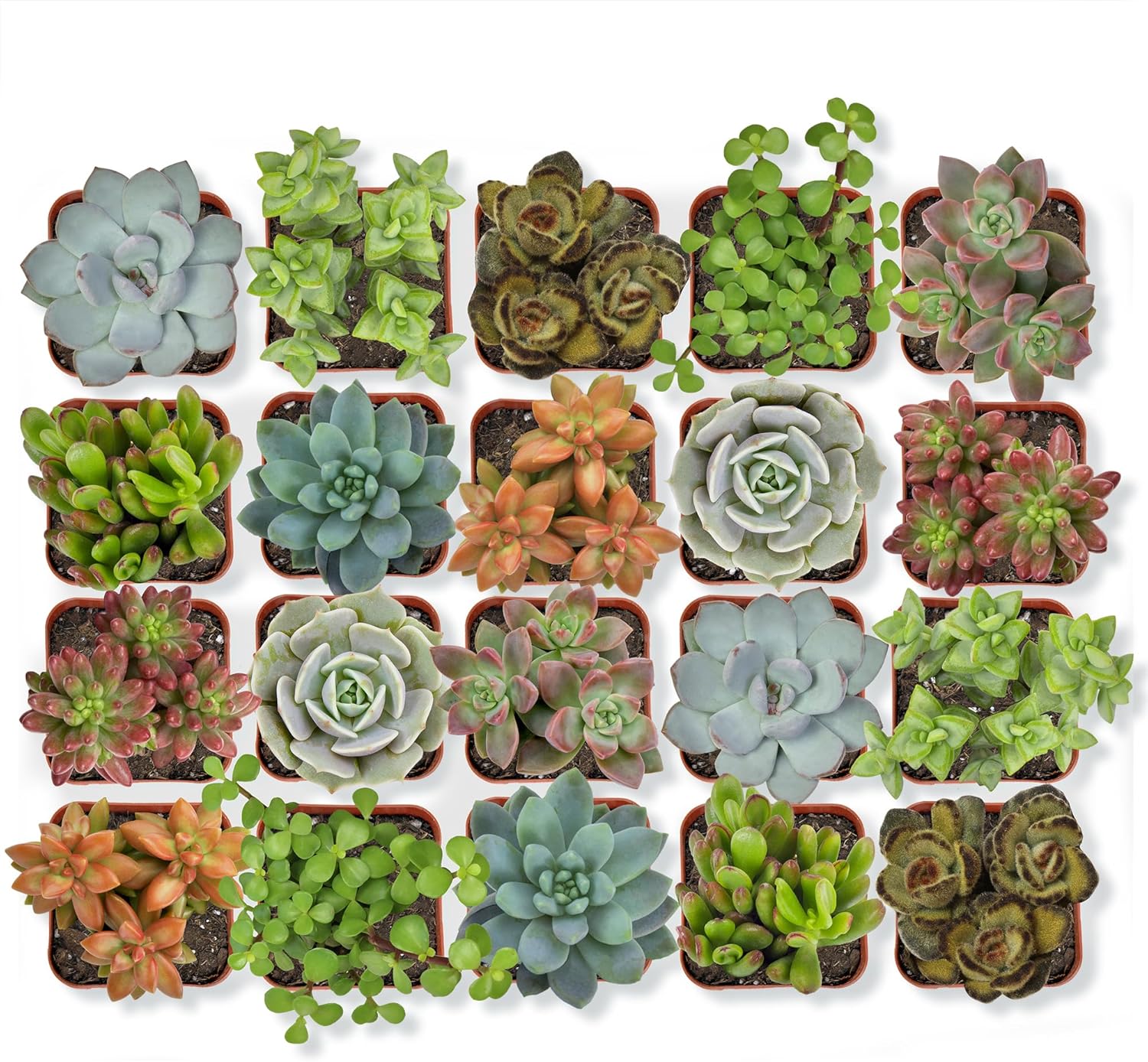
Altman Plants 20-Pack Live Succulent Assortment (2" Pots)
| Indoor Outdoor Usage | Indoor, Outdoor |
|---|---|
| Moisture Needs | Little To No Watering |
| Sunlight Exposure | Full Sun |
| USDA Hardiness Zone | 5 |
This 20-pack from Altman Plants delivers a varied selection of 2" succulents intended for starting container displays, terrariums, or gifting. Each pack contains ten paired varieties such as Echeveria, Crassula, Sedum and others, so you get color and texture variety without sourcing plants individually. The plants are grown to be drought tolerant and prefer bright light and sandy, well-draining media, which makes them easy to place in small pots or mixed container gardens. Practical benefits include low watering needs, year-round interest, and visibly healthy nursery-rooted stock suited to DIY arrangements. Limitations to note are the small nursery pot size, so plan to pot up into larger containers for long-term growth, and full sun preferences mean some indoor spots may require very bright light or supplemental light. For container projects these give a quick, coordinated start but expect to replant or group them for mature displays.
Best for: Buyers who want a reliable, low-maintenance way to start multiple container displays or DIY succulent projects and who value visible social proof that the mix performs well for other gardeners.
Less Ideal for: Gardeners seeking mature, display-size specimens or those who need plants for consistently low-light indoor spots should consider larger, sun-tolerant varieties or shade-adapted houseplants instead.
- Twenty individually potted succulents provide immediate variety for mixed container arrangements
- Pairs of ten different varieties make it easy to create balanced, symmetrical plantings
- Low watering needs and drought tolerance reduce maintenance for container growers
- Suitable for both indoor and outdoor container use when given bright light
- Plants come in 2" nursery pots and will need repotting for sustained growth
- Many varieties prefer full sun, which can limit bright indoor placement options
Verdict: A convenient, low-maintenance 20-pack that gets container succulent projects started quickly with a variety of ready-to-pot plants.
Plants for Pets 10" x 20" Sedum Groundcover Mat

| Indoor Outdoor Usage | Indoor, Outdoor |
|---|---|
| Sunlight Exposure | Full Sun |
| USDA Hardiness Zone | 3, 4, 5, 6, 7 |
| Soil Type | Sandy Soil |
| Moisture Needs | Moderate Watering |
This pre-planted sedum mat arrives as a 10 by 20 live tile of mixed sedum varieties intended for fast groundcover and vertical accents in full-sun locations. You can lay the mat directly into a well-drained, sandy bed, separate it into sections for multiple small plantings, or attach it to a living wall frame; the drought- and heat-tolerant succulents need bright sun and infrequent watering once established. Notable features include a ready-to-plant live mat that blooms in late spring to early summer, biodegradable material, and plant mixes that tolerate neglect and resume growth after dry periods. Practical benefits are quick visual coverage without transplanting many small pots, low watering needs for waterwise landscapes, and suitability for hardiness zones listed by the maker. Important limitations are the small tray size that covers only a modest area per unit and the seasonal sensitivities of some sedum types which may go semi-dormant under 50°F, so multiple tiles or dividing the mat is necessary for larger projects.
Best for: Buyers who want a low-maintenance, fast-establishing groundcover for sunny beds or living walls and prioritize reliable drought performance and easy installation.
Less Ideal for: Not a great fit for large-scale monoculture lawns where bulk coverage and uniformity are needed or for gardeners who need shade-tolerant groundcovers.
- Ready-to-plant live mat simplifies installation and speeds groundcover establishment
- Drought and heat tolerant sedum mix reduces watering and maintenance needs
- Versatile use for beds, edging, green roofs and vertical gardens
- Biodegradable mat material integrates into soil over time
- Small 10×20 mat covers a limited area so larger projects require multiple tiles
- Some varieties may go dormant or thin in cooler temperatures below about 50°F
Verdict: An easy-to-install live sedum mat that delivers fast, drought-tolerant groundcover for sunny spots where low maintenance and quick coverage matter.
BuggyBeds Creeping Thyme Herb Seeds (17500 Count)

| Unit Count | 17500 Count |
|---|---|
| Indoor Outdoor Usage | Outdoor |
| USDA Hardiness Zone | 5-9 |
| Expected Blooming Period | Late Spring To Early Fall |
| Moisture Needs | Low |
These BuggyBeds creeping thyme seeds are sold in a very large 17,500-count packet and are aimed at establishing a fragrant, low-growing ground cover that suppresses weeds and attracts pollinators. Typical use is direct sowing in spring or fall where you want a carpet-like planting between stones, on slopes, or in areas that are hard to mow. The seeds produce a drought-tolerant perennial that blooms from late spring through early fall and performs best in partial shade to full sun in zones 5 to 9. Practical benefits include minimal ongoing care once established, strong weed suppression, and a pleasant aroma when walked on. Because the packet contains so many seeds, it is cost-effective for covering large areas or multiple projects. Important limitations are that success depends on proper soil contact and site preparation, and germination rates can vary so you may need time and patience to get a uniform stand; very heavy clay with poor drainage will still need amendment for best results. This is a straightforward option for gardeners who want an inexpensive, attractive ground cover for drier, well-drained spots.
Best for: Gardeners looking to cheaply establish a fragrant, low-care ground cover over large or difficult-to-mow areas and who prioritize value and low ongoing maintenance.
Less Ideal for: Gardeners seeking an instant lawn-like cover or planting in permanently waterlogged clay sites where drainage cannot be improved.
- Very large 17,500 seed count makes it economical for covering large areas
- Drought-tolerant perennial habit reduces watering once established
- Low-maintenance growth habit that helps suppress weeds
- Attractive, fragrant ground cover that attracts pollinators
- May require site prep and soil amendment for heavy clay to ensure good drainage
- Germination and uniform coverage can be variable, so establishment may take time
Verdict: If you need an inexpensive, drought-tolerant ground cover to seed large areas, this high-count creeping thyme pack offers strong value and low long-term care.
Mountain Crest Gardens Sempervivum Succulents Variety Pack — 6 Live Rosette Plants (rooted in 2" pots)

| Indoor Outdoor Usage | Indoor, Outdoor |
|---|---|
| Other Special Features of the Product | Drought Tolerant, Hardy outdoors in zones 5–10, Live Sempervivum rosettes, Low Maintenance, Multiple varieties per pack, Rooted in 2-inch pots |
| Sunlight Exposure | Full Sun, Partial Sun |
| USDA Hardiness Zone | 5 |
| Moisture Needs | Moderate Watering |
These Sempervivum from Mountain Crest Gardens are a practical choice for outdoor pots and rock gardens where reliability matters. The pack delivers six different sempervivum species or cultivars, each rooted in a 2-inch nursery pot so you can plant them into containers or keep them temporarily in the pots. They are drought tolerant, designed for full to partial sun, and hardy to USDA zone 5 which means they tolerate frost and seasonal cold once established. The plants arrive in coconut coir potting medium and plastic nursery pots that can be reused, and care instructions stress sharp drainage and watering only when the soil is dry — straightforward rules that suit busy gardeners. Expect seasonal color shifts and durable rosette forms that require little attention other than occasional deep watering and protection from prolonged wet soil. Limitations are the small pot size at arrival which means repotting for long-term container displays, and moderate watering needs that still require you to avoid overwatering in cool, wet seasons.
Best for: Gardeners who prioritize dependable, low-care plants for outdoor pots and rock gardens and want hardy succulents that survive seasonal cold with minimal fuss.
Less Ideal for: People seeking instant large container specimens or those who prefer moisture-loving container plants that tolerate constant damp conditions.
- Six distinct sempervivum varieties with no duplicates for visual variety in pots or rock gardens
- Hardy to USDA zone 5 so reliable through cold winters once established
- Low-maintenance and drought tolerant when planted into well-draining soil
- Arrives rooted in 2-inch nursery pots ready for easy transplanting
- Coconut coir medium and reusable plastic pots simplify initial setup
- Ships in small 2-inch pots so you will likely need to repot for long-term container displays
- Not suited to locations with prolonged wet soil without excellent drainage
Verdict: Choose this six-pack when you want hardy, low-maintenance sempervivum that reliably perform in outdoor pots and rock gardens through cold seasons.
KVITER English Lavender Heirloom Seeds (Lavandula angustifolia) — 2000-Pack

| Number of Pieces | 2000 |
|---|---|
| USDA Hardiness Zone | 3,4,5,6,7,8,9 |
| Sunlight Exposure | Full Sun |
| Expected Blooming Period | Spring to Summer |
| Material Features | GMO Free, Heirloom |
KVITER’s 2000-count English lavender seed pack supplies enough Lavandula angustifolia seed for multiple planter boxes or a small border. The packet is heirloom and non-GMO and includes a step-by-step growing guide aimed at repeatable results for beginners. Lavender prefers full sun, sandy well-drained soil and light, regular watering until established, after which it tolerates drier conditions and becomes low maintenance. Expect flowering from late spring into summer and mature plants roughly 20–24 inches tall, suitable for shallow raised planters or larger boxes when spaced properly. Strengths are the quantity of seed, clear planting instructions, and broad USDA zone suitability (3–9). Limitations to plan around are the need for cold stratification for best germination and lavender’s intolerance of heavy, moisture-retentive soils common in some planters without added drainage or gritty mix. For planter-box use you will need to ensure excellent drainage and allow adequate spacing to avoid overcrowding as plants mature.
Best for: Buyers who want an easy-care, fragrant perennial for sunny planter boxes and value a large seed supply with clear instructions to reduce uncertainty.
Less Ideal for: Gardeners who cannot provide well-drained soil or planters with limited drainage, or those wanting instant mature plants rather than growing from seed.
- Very large seed count suitable for multiple planter boxes or larger displays
- Heirloom, non-GMO seeds with an included step-by-step growing guide
- Adapted to a wide range of USDA zones (3–9) so plants are hardy in many climates
- Best germination often requires cold stratification which adds a prep step
- Not suited to heavy or poorly drained potting mixes without added grit or drainage amendments
Verdict: A budget-friendly choice for filling sunny planter boxes with hardy, fragrant English lavender grown from a large, guided seed pack.
Choosing the Right Hardy Plants for Planter Boxes: Key Factors to Consider
Cold Tolerance and USDA Zone Fit
Cold tolerance determines whether a plant will survive winter conditions when its roots are constrained in a planter. Containers expose roots to colder air and faster temperature swings than in-ground plantings, so a species rated to your USDA zone may still struggle if not sufficiently hardy. Match plant hardiness to local lows and consider moving containers closer to the house or under cover for extra protection when temperatures approach the plant's lower limit.
Also factor in microclimate created by walls, eaves, and pavement. South- or west-facing balconies often stay warmer, letting you push a zone boundary by a degree or two. When selecting plants for year-round boxes, prioritize those with documented hardiness in container settings rather than relying solely on landscape ratings.
Root Behavior and Container Size
Root architecture affects how a plant performs in limited soil. Shallow, fibrous root systems generally adapt better to planter boxes than deep taproots. Plants that become severely root-bound can decline quickly, show stress, and require frequent repotting. Choose species known to tolerate confinement or that have cultivars bred for containers.
Consider the planter depth and volume relative to the plant's root spread. Larger, sturdier shrubs need deeper and wider boxes, while trailing and tufted perennials often thrive in shallower containers. Matching root tendencies to planter dimensions minimizes maintenance and supports steady growth.
Mature Size and Habit
Compact growth habit prevents overcrowding and keeps planter compositions balanced over the season. Knowing a plant's mature height and spread in container conditions helps you plan complementary combinations and avoid constant pruning. Some plants stay naturally compact, while others only remain small under restricted soil; prefer predictable, naturally compact specimens for low-maintenance boxes.
Also think about vertical versus mounded versus trailing habits. Mixing one of each habit type creates visual interest, but each choice changes watering needs and how light reaches lower foliage.
Water Needs and Drought Response
Planter boxes dry out faster than the ground, so drought tolerance and how a plant responds to intermittent drying are key. Some hardy plants wilt quickly and recover; others suffer irreversible stress after a brief dry period. Plants with moderate drought tolerance reduce watering frequency and recovery risk.
Pay attention to how quickly a plant uses water in sun versus shade. Grouping plants with similar water needs in the same box avoids chronic over- or under-watering that can weaken some species and invite pests or root rot in others.
Pest and Disease Resilience
Containers can concentrate pests and pathogens when airflow is limited or soil remains wet. Choosing plants with natural resistance to common foliar or root problems lowers maintenance and reduces the need for treatments. Some hardy species are surprisingly susceptible to specific insects or fungal issues when grown in containers. Prioritize plants with a track record of health in small spaces and maintain good hygiene and drainage to limit problems.
Routine inspection and prompt removal of affected foliage keep planter displays attractive and protect neighboring pots from spread.
Seasonal Interest and Foliage Texture
A successful planter box delivers interest across the season through bloom, foliage color, or evergreen structure. Select plants that offer a desirable combination of flowers, seed heads, or persistent foliage to avoid empty-looking containers after bloom fades. Texture and leaf color add year-round appeal and help containers read as intentional designs instead of a single-season splash.
Consider how seasonal interest aligns with maintenance. Long-blooming or multi-season foliage reduces the need to replant frequently, which is helpful if you prefer low-maintenance containers.
Best Placements for Winter-Proof Planter Boxes
Where you place a planter box affects winter survivability as much as plant selection. Position boxes against heated walls or under eaves to benefit from slightly warmer microclimates. Avoid sites where frozen runoff or ice will sit against the planter, as prolonged saturation and freeze-thaw cycles stress roots.
On exposed balconies or rooftop terraces, group planters together to reduce wind chill and insulate pots from rapid temperature swings. Use protective wraps or insulating materials around containers for especially shallow pots built from thin materials.
- Sheltered south- or west-facing spots help extend hardiness.
- Raised planters on legs lose heat faster than ground-level boxes.
- Cluster pots to create a microclimate and reduce exposure.
Soil Mix and Drainage Tips for Container Hardiness
Use a well-draining, nutrient-holding mix designed for containers to balance moisture retention with excess water escape. Adding coarse materials such as perlite or grit improves drainage without forcing frequent watering. Good drainage reduces the risk of winter root rot and helps roots access oxygen during cold periods.
Top-dress with mulch or leaf litter in late fall to moderate temperature swings and protect root crowns. Avoid heavy, compacting mulches that trap moisture directly against stems.
- Aim for a mix that holds moisture but sheds excess quickly.
- Ensure planter has adequate drainage holes and elevate slightly to prevent standing water.
- Refresh surface mix annually and replace a portion of potting mix every few years for long-term plant health.
Designing Balanced Planter Compositions
Combine contrast in height and texture to keep containers interesting without crowding roots. A simple formula pairs a structural center or back plant with a mounding filler and a trailing spiller to soften edges. Keep mature sizes in mind to avoid forcing plants into the same small root volume.
Think about staggered bloom times and evergreen elements so containers remain attractive as seasons change. Replace only the quick-season elements while keeping hardy anchors in place for continuity.
- Use one structural plant, one filler, and one spiller for classic balance.
- Leave at least one-third of pot volume free of dense roots when planting to allow future growth.
- Prune annually to maintain shape and aeration.
Maintenance Routines for Long-Lived Container Plantings
Regular maintenance keeps planter boxes healthy and attractive. Water deeply but infrequently to encourage deeper root growth and reduce surface salt buildup. Monitor moisture with a finger test or probe rather than relying on a schedule, because sun exposure and wind change drying rates.
Fertilize lightly during the active growing season with a slow-release or balanced liquid feed suited to containers. Refresh topsoil and check roots each year; repot into a slightly larger container only when necessary to avoid stressing hardy species that prefer some confinement.
- Inspect for pests weekly in warm months and remove spent flowers to direct energy into foliage.
- Reduce watering and fertilizing in late fall to prepare plants for dormancy.
- Repotting is usually needed every 2 to 4 years depending on growth rate and root crowding.
Seasonal Transitions and Overwintering Strategies
Prepare boxes for seasonal transitions by adjusting water, fertilizer, and placement rather than replacing entire displays. In autumn, stop high-nitrogen feeds and reduce watering so plants harden off. Move containers to protected areas or wrap them if your locale experiences deep freezes.
For particularly shallow or lightweight planters, consider sinking them into the ground or surrounding them with an insulating layer of straw or bubble wrap during the coldest months. Lift and store frost-tender components when freezing weather begins while leaving hardy anchors in place.
- Reduce fertilizer in autumn to help plants enter dormancy.
- Protect root zones of shallow pots with insulation in severe winters.
- Store vulnerable plants indoors or in a cold frame if needed for extra protection.
How We Chose the Best Hardy Plants for Planter Boxes
We focused on traits that actually affect performance in planter boxes rather than broad garden virtues. Our shortlist prioritized cold hardiness and root management because planter soil freezes and warms faster than the ground. Compact growth habit and predictable mature size were essential to avoid overcrowding small containers. Drought tolerance and water-use predictability matter for container culture, so we favored plants that tolerate periodic drying without rapid decline. Resistance to common pests and diseases reduces maintenance and the risk of losing a container planting. Seasonal interest and foliage texture were considered so boxes deliver color or structure through multiple months. Excluded were plants that require deep soil or aggressive feeders that need frequent repotting. We also excluded invasive species and plants with widely variable cultivar behaviors that would confuse gardeners about expected size and habit. The resulting criteria reflect realistic container needs: cold tolerance, compact habit, root behavior, water needs, pest resistance, and seasonal interest.
FAQ
Can hardy plants survive in small, shallow planter boxes?
Often they can, but it depends on root habit and winter conditions. Shallow-rooted species and compact cultivars are a better fit. In cold climates, shallow pots freeze more quickly so additional insulation or moving pots to a sheltered spot helps survival.
How often should I water hardy container plants in cool weather?
Usually less often than in warm months. Water when the top inch of mix feels dry, because overwatering in cool conditions increases root rot risk. Check moisture more frequently after heavy rain or thaw periods.
Do I need to repot hardy plants every year?
Not usually. Most hardy container plants prefer some root restriction and only require repotting every 2 to 4 years, or when roots circle heavily and growth declines. Refreshing the top few inches of mix annually helps replenish nutrients without full repotting.
Will adding mulch to a planter help overwintering?
Yes. A light mulch layer insulates the root zone and moderates freeze-thaw cycles. Use a breathable mulch such as shredded bark or leaf litter and avoid piling mulch against stems, which can promote rot.
How do I handle pests on container-grown hardy plants?
Inspect regularly and remove affected foliage promptly. Encourage good airflow, avoid prolonged leaf wetness, and use targeted, least-toxic controls when necessary. Healthy plants stressed by improper watering or poor light are more pest-prone.
Can I mix evergreen and flowering hardy plants in the same box?
Yes. Evergreens provide winter structure while flowering plants add seasonal interest. Match water and light needs to avoid conflicts and plan for space so the evergreen does not overwhelm flowering companions.
Final Verdict
Prioritize cold tolerance, root behavior, and mature habit when choosing hardy plants for planter boxes. Those three dimensions determine whether a plant will thrive in limited soil, resist winter stress, and hold its shape without frequent repotting or pruning. Balance drought response and pest resilience with seasonal interest to create low-maintenance containers that perform across months. Focus on predictable, container-suitable selections and planters sized appropriately to the plant habit for the most reliable results.
