

Note: This article contains affiliate links. If you click on these links and make a purchase, I may earn a small commission at no extra cost to you. This helps support my research and content. Read my full affiliate disclosure here.
When lubber grasshoppers show up in your garden they can strip leaves and damage flowers, vegetables, and young shrubs fast. Choosing the right insecticide for lubber grasshoppers matters because some options give quick contact control while others reduce plant stress or are safer around beneficial insects and pollinators. This guide covers our five shortlisted insecticides for lubber grasshoppers and explains how we evaluated knockdown speed, residual activity, plant tolerance, and application practicality so you can pick the best fit for your planting situation and tolerance for reapplication.
Top Picks at a Glance
| Best Value The sweet spot between price and what you get | Sevin Insect Killer Concentrate II, 32 oz |  |
| Best Budget The cheapest option that still gets the job done reliably | Eco Bran Grasshopper Bait (2 lb) |  |
| Highest Rated A top-rated pick with lots of positive feedback | Eco Bran Grasshopper Bait 44 lb |  |
| Most Popular A crowd favorite that many people choose with confidence | Eco Bran Grasshopper Bait (7.5 lb) |  |
| Best Seller A high-volume bestseller chosen again and again | Atticus Talak 7.9% Bifenthrin Indoor/Outdoor Insecticide Concentrate, 32 oz |  |
Sevin Insect Killer Concentrate II, 32 oz

| Item Form | Liquid |
|---|---|
| Target Species | Insects |
| Liquid Volume | 32 fluid ounces |
| Active Ingredients | Zeta Cypermethrin |
Sevin Insect Killer Concentrate II is a garden spray concentrate you mix with water and apply with a handheld, tank, or hose-end sprayer to control insects on lawns, vegetables, fruits, shrubs, and ornamentals. The label rate (for example 4 fl oz per gallon) and included measuring cap make mixing straightforward for routine applications. It kills by contact more than 500 listed pests and claims residual control for up to three months on most insects, which reduces how often you need to reapply. The formula lists zeta-cypermethrin as the active ingredient, so it is fast acting against chewing and sap-sucking pests but you must avoid spraying open blooms to protect pollinators and follow label precautions for personal safety. It is versatile for spot treatments or broader landscape use, but users should follow label restrictions for certain pests and regional regulations. Practical gardeners will appreciate the concentrated format and multi-plant label, while those needing an organic or pollinator-safe option will want alternatives.
Best for: Gardeners who want a practical, no-nonsense concentrate to control a wide range of insect pests across vegetable beds, ornamentals, and lawns and who prioritize effective, infrequent applications.
Less Ideal for: People seeking organic, pollinator-safe, or aquatic-friendly pest control should consider non-synthetic or targeted biological options instead.
- Concentrated formula lets you treat large areas from a single bottle when mixed as directed
- Kills over 500 listed insect pests by contact, covering many common garden problems
- Measuring cap and clear mixing instructions make preparation simple and consistent
- Works on both ornamental and edible plants so one product covers multiple garden zones
- Contains a synthetic pyrethroid (zeta-cypermethrin) which can harm pollinators and aquatic life if misused
- Not registered for certain pests or regions so users must check local label restrictions
Verdict: A versatile, concentrated insecticide that gives practical gardeners broad-spectrum, long-lasting control when used according to the label.
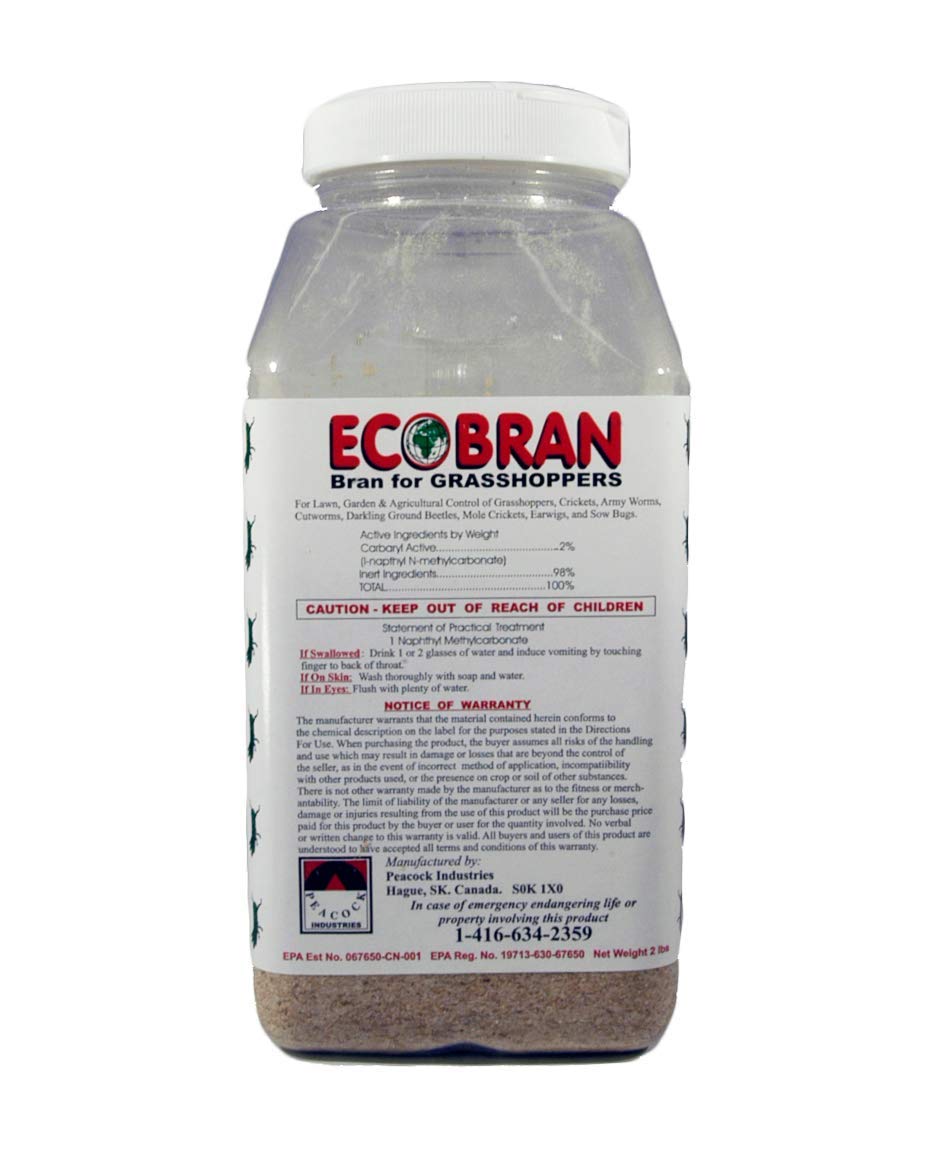
Eco Bran Grasshopper Bait (2 lb)
| Item Form | Liquid |
|---|---|
| Target Species | Grasshopper |
| Unit Count | 1 Count |
| Included Components | 1 bottle |
Eco Bran Grasshopper Bait is a liquid bran bait insecticide intended to be applied where grasshoppers feed so they ingest the carbaryl-treated wheat bran. Typical use is broadcasting or spot-treating problem patches in pastures, rangeland, or around garden edges; because it is a non-contact bait it targets chewing grasshopper species while reducing direct exposure to other insects and birds. The listing emphasizes a reduced chemical loading compared with standard liquid formulations, which may appeal if you want a bait-based approach rather than a spray. Practical benefits include species coverage across many North American grasshoppers and simple application with a bottle or spreader. Important limitations are that it must be eaten to work so thorough coverage where grasshoppers are actively feeding is required and results are not immediate. The product contains carbaryl, so users should follow label safety directions and avoid use around pollinator-attractive blooms and in areas where pets or livestock could access treated material.
Best for: Buyers looking for a low-cost, bait-based control method to reduce grasshopper pressure in pastures, rangeland, or perimeter garden areas who prioritize minimizing direct spray exposure to non-target wildlife.
Less Ideal for: People needing immediate knockdown or a contact spray solution, or those who prefer non-chemical control methods.
- Bait formulation targets chewing grasshoppers and reduces non-contact exposure to beneficial insects and birds
- Covers a wide range of grasshopper species including locusts and Mormon crickets
- Lower chemical concentration in the liquid matrix compared with typical formulations as stated by the manufacturer
- Simple application suitable for spot treatments or broadcasting in feeding areas
- Requires grasshoppers to ingest bait so effectiveness depends on placing material where they are actively feeding
- Contains carbaryl which requires careful handling and avoidance near pollinators and non-target animals
Verdict: A straightforward, bait-based carbaryl product that offers budget-conscious grasshopper control when placed where insects are actively feeding.
Eco Bran Grasshopper Bait 44 lb

| Included Components | One 44lb bag of Eco Bran |
|---|---|
| Manufacturer | Peacock Industries – Can |
| Item Form | Liquid |
| Target Species | Insects |
Eco Bran Grasshopper Bait is a bran-based bait treated with carbaryl intended for targeted control of grasshoppers, locusts, and Mormon crickets. You apply the product as a non-contact bait so insects must ingest it, which reduces risk to non-chewing insects and birds compared with broadcast sprays. Typical use is spreading the bait across affected fields, edges, or around garden areas where grasshoppers are feeding; the 44 pound bag supplies enough material for larger infested areas. The formulation emphasizes reduced liquid pesticide content while keeping an effective active ingredient, which supports reliable results against the common damaging species named in the product description. Limitations to consider are that it relies on grasshoppers finding and eating the bait so it is less effective for instant knockdown and it is intended for chewing insects only. Users should follow label directions for placement and timing to get consistent control and to minimize exposure to non-target animals.
Best for: Buyers who prioritize a dependable, ingestion-based solution for recurring or widespread grasshopper infestations and who plan treatments over larger outdoor areas.
Less Ideal for: Gardeners needing fast knockdown of a heavy, visible outbreak or anyone targeting non-chewing pests should consider other control methods.
- Bran bait formulation targets grasshoppers through ingestion, reducing non-contact exposure
- Contains carbaryl, a proven active ingredient for chewing insect control
- Large 44 lb bag suitable for treating extensive infested areas
- Described reduction in liquid pesticide percentage lowers overall chemical load compared with some liquid applications
- Requires grasshoppers to feed on the bait so results are not immediate
- Not effective for non-chewing pests or for situations needing rapid knockdown
Verdict: Choose this bran bait when you want a reliable, ingestion-based treatment to control grasshoppers across larger outdoor areas.
Eco Bran Grasshopper Bait (7.5 lb)

| Item Form | Powder |
|---|---|
| Target Species | Insects (grasshoppers, locusts, Mormon crickets) |
| Active Ingredients | Carbaryl 2.0% |
| Included Components | one 7.5lb bag |
Eco Bran Grasshopper Bait is a bran-based insecticide designed to be eaten by grasshoppers rather than sprayed on plants. You apply the powdered bait to fields, pastures, or border areas where grasshoppers congregate and feed, and the carbaryl-infused bran delivers a toxic dose when ingested. The product is non-contact and intended to reduce impacts on non-chewing insects and birds compared with broadcast spraying. A practical advantage is that the bran formulation is easy to spread by hand or with a spreader and targets feeding insects directly. Important limitations are that it must be consumed to work so dense vegetation or uneven bait coverage can reduce effectiveness, and it contains carbaryl which requires careful handling and adherence to label safety instructions. For balanced, routine control of grasshopper populations on small to medium acreage this bait is a straightforward option, but results depend on correct placement and timing relative to hopper activity.
Best for: Gardeners and small acreage landowners looking for a targeted, ingestible control for grasshoppers who want a straightforward bait they can apply themselves and monitor.
Less Ideal for: People who need immediate contact knockdown for non-feeding pests or those unwilling to handle chemical insecticides should consider alternative control methods.
- Bran formulation targets feeding grasshoppers and is simple to apply by hand or spreader
- Non-contact approach reduces direct exposure to non-chewing insects and birds compared with broad spraying
- Contains 2.0% carbaryl for effective mortality when ingested
- Can be used against multiple pest types including locusts and Mormon crickets
- Requires ingestion so poor coverage or heavy vegetation can limit control
- Contains a chemical insecticide that requires careful handling and following label safety directions
Verdict: Buy this if you want an easy-to-apply, ingestible bran bait that targets grasshoppers and related pests on small to medium acreage.
Atticus Talak 7.9% Bifenthrin Indoor/Outdoor Insecticide Concentrate, 32 oz

| Active Ingredient | Bifenthrin |
|---|---|
| Formulation | Suspension Concentrate |
| Liquid Volume | 32 fluid ounces |
| Length of Control | Up to three months |
| Target Species | Insects |
Talak 7.9% is a liquid concentrate for treating lawns, landscaping, outdoor living areas and indoor perimeter spots like baseboards and cabinets. You dilute the concentrate with water to create a spray for barrier treatments, spot applications or lawn mixes; label rates explain how much to mix per gallon depending on the use. The product uses bifenthrin, a proven broad-spectrum active ingredient, and the manufacturer states it controls over 75 species and can give residual control for as long as three months. Its water-based formula dries clear, leaves no odor or visible residue, and is not phytotoxic on plants when used per label. Practical benefits include flexible indoor and outdoor use, clear drying, and a bottle designed for easier pouring. Important limitations are that solutions should be mixed only for same-day use, it is not registered for sale in a few states, and it is not approved for fogger application, so professional-style misting methods are not appropriate.
Best for: Buyers who want a single, reliable product to protect yards, patios and building perimeters from a wide range of common pests and prefer conservative, label-driven application practices.
Less Ideal for: People seeking ready-to-use sprays or fogger-compatible products or those in states where this formulation is not registered should look at alternatives.
- Broad-spectrum control listed for 75+ indoor and outdoor pest species
- Water-based formula that dries clear and leaves no odor or residue
- Flexible label directions for lawns, landscapes, hardscapes and indoor perimeter treatments
- Long residual activity up to three months when applied at recommended rates
- Mixed spray solutions cannot be stored and must be used the same day
- Not approved for fogger application and not available for sale in some states
Verdict: A versatile, water-based bifenthrin concentrate that delivers long-lasting, broad-spectrum outdoor (and perimeter indoor) control when used according to the label.
Choosing the Right Insecticide for Lubber Grasshoppers: Key Factors to Consider
Mode of Action and Knockdown
How an insecticide works affects how quickly you will see results and whether treated grasshoppers will stop feeding before they die. Contact insecticides deliver rapid knockdown when spray hits the pest directly, which is useful for immediate relief on heavily damaged plants. Systemic chemistries or ingestion-based options can provide longer control if grasshoppers feed and ingest treated tissue. Matching mode of action to the pest behavior is important because lubber grasshoppers are large chewing insects. A product that only irritates may not stop feeding promptly, so choose formulations with documented efficacy against chewing grasshoppers to limit leaf loss.
Residual Activity and Reapplication Needs
Residual activity determines how long a single treatment protects plants and how frequently you must reapply. Short-residual contact sprays may require repeat applications during heavy infestations or after rain. Products with longer residuals reduce labor but can increase exposure risk for beneficial insects. Consider the length of protection you need based on the severity of the infestation, recent weather patterns, and the presence of pollinator-attractive flowers. For vegetable beds where harvest intervals are short, shorter residuals with careful timing may be preferable.
Plant Tolerance and Phytotoxicity
Some insecticide formulations can cause leaf burn, discoloration, or fruit scarring, especially on tender seedlings, newly set transplants, or heat-stressed plants. Always check label directions for temperature restrictions and plant type limitations. If you grow both ornamentals and edibles in close proximity, select products labeled safe for both or plan spot treatments to protect sensitive plants. Testing a small area before broad application reduces the risk of widespread damage.
Application Method and Coverage
Application form-ready-to-use sprayer, concentrate for a pump sprayer, or dust-affects coverage and convenience. Sprays provide surface coverage on leaves and stems where grasshoppers feed. Dusts can cling to rough foliage and crevices but may be less precise in windy conditions. Think about how easy it is to get even coverage on dense shrubs or container groups and whether you need a nozzle that produces a fine mist for thorough contact. Proper coverage is essential because missed insects will continue to damage plants.
Safety for Beneficial Insects and Pollinators
Many insecticides that control chewing pests can also harm pollinators, predatory insects, and other beneficials. Consider products with lower non-target impact or plan applications for times when pollinators are not active, such as early morning or evening. Avoid broad spraying of flowering plants; use targeted spot treatments and follow label instructions on bloom restrictions. Reducing non-target exposure helps maintain natural pest suppression and pollination services in your garden.
Label Restrictions and Edible Crop Use
Labels specify whether a product can be used on vegetables, herbs, and fruiting plants and list required preharvest intervals. Using products off-label risks plant damage and legal problems. Review the label for crop-specific instructions, maximum allowable application rates, and days-to-harvest. For mixed-use beds, select materials expressly registered for edible use or plan to keep treated areas separate from food crops until safe to harvest.
When to Treat Lubber Grasshoppers
Treat when you see active feeding, egg-laying, or the presence of several large nymphs and adults on plants. Early-season small populations can be managed with spot treatments, while established outbreaks on ornamentals or vegetables may require broader application and follow-up.
Inspect susceptible plants like young transplants, sunflowers, and tender annuals daily during warm, dry periods when lubber grasshoppers are most active. Prioritize treatments where visible defoliation is beginning, because a few large grasshoppers can strip foliage quickly.
- Start with hand removal if numbers are low and plants are accessible.
- Spot-spray clusters of grasshoppers and the foliage they feed on.
- Treat edges of beds and sunny perimeters where grasshoppers concentrate.
Application Timing and Weather Considerations
Apply insecticides in the cooler parts of the day to reduce plant stress and avoid harming pollinators. Early morning or late evening applications limit exposure to bees active midday. Avoid spraying when rain is expected within 24 hours unless the product is rainfast.
High temperatures and bright sun can increase risk of phytotoxicity for some formulations. Check label temperature guidance and avoid treating heat-stressed plants to prevent leaf scorch.
- Do not spray during windy conditions to avoid drift.
- Allow foliage to dry before irrigation where labels recommend.
- Reapply according to labeled interval, especially after heavy rain if product is not rainfast.
Spot Treatment Techniques for Gardens and Containers
For home beds and container groups, targeted spot treatments concentrate active ingredient where it is needed and limit non-target exposure. Focus on the undersides of leaves, plant bases, and dense foliage where lubber grasshoppers hide during the day.
Use a small hand sprayer or trigger bottle for precise application. Repeat treatments in the same area only as allowed by label directions, and physically remove large, visible adults after spraying to reduce surviving populations.
- Wear gloves and eye protection while applying concentrates.
- Mark treated plants so you do not overapply in follow-up visits.
- Combine spot sprays with hand-picking during early morning when insects are sluggish.
Integrating Nonchemical Controls
Physical methods such as barriers, row covers, and frequent hand removal reduce reliance on chemicals, especially in small beds and container setups. Removing weeds and tall grasses around planting areas decreases grasshopper habitat and can lower pressure over time.
Encouraging natural enemies and creating habitat for insectivorous birds can help but usually will not be sufficient alone during heavy lubber grasshopper outbreaks. Use nonchemical tactics as a complement to targeted insecticide use to achieve longer-term control.
- Keep borders mowed and remove debris where nymphs hide.
- Use snug-fitting covers for vulnerable seedlings during peak activity.
- Install visual deterrents or sticky boards only as supplemental measures.
Safety and Personal Protective Equipment
Always follow the product label for recommended personal protective equipment and application rates. Common precautions include long sleeves, gloves, and eye protection when mixing concentrates and applying sprays.
Store insecticides in original containers away from children and pets, and dispose of empty containers according to local regulations. Rinse application equipment thoroughly after use to avoid residue transfer to other garden products.
- Avoid contact with treated foliage until spray has dried.
- Wash exposed clothing separately after application.
- Keep pets out of treated areas until products have dried and according to label guidance.
How We Chose the Best Insecticide for Lubber Grasshoppers
We prioritized products that offer reliable control of lubber grasshoppers while minimizing collateral damage to plants and non-target insects. Evaluation emphasized measurable effectiveness against large chewing grasshoppers, safety on common garden ornamentals and edible crops, and ease of application for backyard gardeners. Concrete criteria included contact knockdown and ingestion efficacy against large-bodied grasshoppers, labeled plant safety and phytotoxicity risk across flowers and vegetables, persistence and rainfastness to judge reapplication intervals, and application form and nozzle options for accurate spot treatment. We also considered formulation compatibility with home garden sprayers and clear labeling for legal use on edible and ornamental plants. We excluded products labeled only for turf or for use by commercial applicators, materials not registered for backyard ornamental or edible use, and repellents that do not offer insecticidal action. We focused on products with clear directions for controlling large chewing pests and with safety data appropriate for mixed planting beds and container gardens.
FAQ
Will one spray kill all lubber grasshoppers in my garden?
Often not. One spray may knock down many individuals, but surviving grasshoppers, eggs, and newly arriving adults can require follow-up treatments. Check labeled reapplication intervals and monitor plants regularly.
Are there insecticides safe to use on vegetables where I harvest soon after treatment?
Some products are labeled for edible crops with short preharvest intervals. It depends on the active ingredient and the specific crop. Always follow label directions for days-to-harvest and crop restrictions.
Can I protect pollinators while treating for lubber grasshoppers?
Yes. Apply treatments early or late in the day when pollinators are less active, avoid spraying flowering plants, and use spot treatments to limit non-target exposure. Choosing products with lower residual activity on blooms also helps.
Should I use dusts or sprays against lubber grasshoppers?
Both can work depending on the situation. Sprays provide even coverage on foliage and are easier to target in dense plantings. Dusts cling to rough surfaces and crevices but are less precise and can drift in wind.
Do lubber grasshoppers develop resistance to common insecticides?
Resistance can develop over time with repeated use of the same mode of action. Rotate products with different modes of action and integrate nonchemical controls to reduce selection pressure.
Final Verdict
When choosing an insecticide for lubber grasshoppers, prioritize contact efficacy against large chewing insects, plant tolerance for your specific crops, and application practicality for your garden size. Balance residual needs against the desire to protect beneficial insects and follow label restrictions for edible plants. A targeted approach that combines timely spot treatments, nonchemical measures, and careful product selection will usually control outbreaks while minimizing harm to pollinators and garden plants. Focus on the criteria discussed here to choose the option that fits your planting mix and management preferences.
