

Note: This article contains affiliate links. If you click on these links and make a purchase, I may earn a small commission at no extra cost to you. This helps support my research and content. Read my full affiliate disclosure here.
A scarifier lawn dethatcher is one of the fastest ways to strip away the compacted organic layer that smothers grass and stops water and nutrients from reaching roots. Picking the right machine matters because tine style, depth control, and engine or motor power determine how deep you can work without damaging soil or crowns. This guide presents seven shortlisted options that cover small lawns, larger yards, and varied turf conditions. We evaluated each option on concrete garden-ready factors so you can match a machine to your lawn's density and recovery needs. Read on to understand the differences in cutting systems, drive and handling, and maintenance requirements before comparing the individual product entries.
Top Picks at a Glance
| Best Overall The best all-around choice for most situations | Greenworks 13 Amp 14-Inch Corded Dethatcher and Scarifier |  |
| Best Quality Built to a higher standard if you want something more solid | WEN DT1516 16-Inch 15-Amp Electric 2-in-1 Dethatcher and Scarifier with Collection Bag |  |
| Best Value The sweet spot between price and what you get | BILT HARD 16-inch Corded Electric Dethatcher and Scarifier (15 Amp) |  |
| Best Budget The cheapest option that still gets the job done reliably | MAXLANDER 15-Inch 13A Electric Dethatcher and Scarifier (2-in-1) |  |
| Highest Rated A top-rated pick with lots of positive feedback | Klysiora 2‑in‑1 Electric Lawn Dethatcher and Scarifier with 14.5‑Gal Collection Bag |  |
| Most Popular A crowd favorite that many people choose with confidence | Sun Joe 15-Inch Electric Dethatcher and Scarifier, AJ805E |  |
| Best Seller A high-volume bestseller chosen again and again | Westinghouse 16" 15-Amp 2-in-1 Electric Dethatcher and Scarifier with Collection Bag |  |
Greenworks 13 Amp 14-Inch Corded Dethatcher and Scarifier

| Motor | 13 Amp |
|---|---|
| Working path | 14 inches |
| Tines | Stainless steel |
| Depth adjustment | 5 positions |
The Greenworks 13 Amp 14-Inch corded dethatcher/scarifier is a straightforward, reliable tool for homeowners who need to remove thatch, moss, and other debris from small to medium lawns. It converts quickly between dethatching and scarifying heads and runs on a corded 13 A motor, giving steady power without the hassle of gas or batteries. The 14-inch working path and stainless steel tines make passes efficient, and the 5-position depth adjustment helps you match tine penetration to lawn conditions. A push-button start and cord retainer simplify use, and four wheels plus a lightweight design make it easy to maneuver across established turf. The main limitations are the corded power source, which restricts reach unless you use extension cords, and the 14-inch width, which is slower on very large properties compared with wider machines. It is built with practical features for dependable seasonal dethatching and scarifying, and its simple controls make it suitable for regular maintenance without a steep learning curve.
Best for: Homeowners who prioritize a dependable, low-maintenance tool for routine seasonal dethatching and scarifying on small to medium lawns and who prefer corded electric equipment over gas or battery systems.
Less Ideal for: People with large acreages or who need cordless freedom for remote yards should consider wider or battery/gas models instead.
- Steady corded 13 amp motor provides consistent power for continuous work
- 14-inch working path with stainless steel tines cleans thatch effectively
- Five-position depth adjustment customizes tine penetration for different lawns
- Quick-change 2-in-1 design lets you switch between dethatching and scarifying
- Push-button start and cord retainer simplify setup and operation
- Corded design limits reach unless an outdoor extension cord is used
- 14-inch cutting width can be slow on large lawns compared with wider machines
Verdict: A dependable, easy-to-use corded dethatcher/scarifier that delivers consistent power and practical features for reliable seasonal lawn maintenance.
WEN DT1516 16-Inch 15-Amp Electric 2-in-1 Dethatcher and Scarifier with Collection Bag

| Power Source | AC |
|---|---|
| Cutting width | 16 inches |
| Maximum Adjustable Cutting Height | 6.35 millimeters |
| Number of Positions | 5 |
| Material Type | Alloy Steel |
The WEN DT1516 is a mid-size electric dethatcher and scarifier built for homeowners who want a performance-focused machine without the fuss of gas. Its 15-amp motor spins up to about 3,300 RPM and clears a 16-inch swath, making quick work of medium-size lawns. You switch between a 24-steel-tine dethatching head to pull up thatch and a 20-blade scarifying head to loosen compacted soil and promote airflow. A five-position depth adjustment lets you control how aggressive each pass is, and the detachable collection bag captures pulled material for easier cleanup. Overload protection stops the motor if the unit hits immovable objects, which helps protect the blades and drive. Practical limitations are its corded AC power that restricts reach without an extension and a relatively heavy build that can be tiring to push across larger properties. It is best used on maintained lawns that need periodic dethatching or light scarifying rather than for very large commercial lawns.
Best for: Gardeners focused on lawn performance who want a tool that removes thatch and lightly scarifies soil to improve turf health on small to medium lawns.
Less Ideal for: Large properties where a gas or battery model with longer runtime and easier maneuverability would be more practical.
- Powerful 15-amp motor with up to 3,300 RPM for effective thatch removal
- Two interchangeable heads (24-tine dethatcher and 20-blade scarifier) for versatile lawn care
- Five-position depth adjustment for precise control of raking or scarifying depth
- Detachable collection bag simplifies debris pickup and yard cleanup
- Corded AC power limits reach and requires an outdoor-rated extension for larger yards
- At about 33.7 pounds it can be heavy to maneuver over long sessions
Verdict: Choose the WEN DT1516 if you want a robust, two-in-one electric tool that efficiently dethatches and scarifies small to medium lawns for noticeably healthier turf.
BILT HARD 16-inch Corded Electric Dethatcher and Scarifier (15 Amp)

| Power Source | Electric |
|---|---|
| Rated Power | 15 Amp |
| Working Width | 16 Inch |
| Thatch Bag Capacity | 14.5 Gallons |
| Number of Positions | 5 |
The BILT HARD 16-inch corded electric dethatcher/scarifier is built to remove compacted thatch and lightly scarify lawns with a single, easy-to-use machine. It swaps between a dethatching roller with spring-steel tines and a scarifying roller with 16 blades so you can rake up thatch or open the soil surface depending on seasonal needs. The 15 amp copper motor delivers sufficient torque for typical suburban lawns while the 16-inch working width lets you cover ground without being unwieldy. Controls include a five-position depth adjustment and a tool-free quick-lock knob for fast setup, and a 14.5-gallon removable bag collects debris for straightforward cleanup. Practical touches are the foldable handle and flat-free wheels that reduce maintenance and storage hassle. Limitations to note are the corded power requirement, which restricts range unless you use a suitable outdoor extension cord, and the machine is best for light to moderate thatch rather than heavy commercial jobs.
Best for: Buyers who want a practical, no-frills machine to maintain small to medium residential lawns and prefer equipment that balances performance with simple setup and storage.
Less Ideal for: Do not choose this if you need cordless mobility, long reach without extension cords, or a heavy-duty unit for large properties or professional landscaping work.
- Two-in-one dethatcher and scarifier rollers for seasonal versatility
- 15 Amp copper motor provides steady performance for typical home lawns
- Five-position depth control for matching different turf and soil conditions
- 14.5-gallon removable bag makes collection and disposal of debris easy
- Foldable handle and flat-free wheels simplify storage and reduce upkeep
- Corded design limits working range without a heavy-duty extension cord
- Not intended for very large or commercial-scale dethatching jobs
Verdict: A versatile, easy-to-store 2-in-1 dethatcher and scarifier that delivers reliable home-lawn performance for practical gardeners.
MAXLANDER 15-Inch 13A Electric Dethatcher and Scarifier (2-in-1)

| Power Source | Corded Electric |
|---|---|
| Cutting width | 15 inches |
| Number of Positions | 5 |
| Motor current | 13 Amp |
| Collection capacity | 45L |
The MAXLANDER 15-inch electric dethatcher is a straightforward corded machine for removing dead grass and surface debris to improve lawn health. It uses a 13-amp motor to drive interchangeable dethatching and scarifying blades across a 15-inch path, and a 45L collection bag captures pulled thatch to reduce cleanup. Height is set with five positions so you can adjust working depth for light raking or more aggressive scarifying, and dual safety switches plus a foldable handle make operation and storage simple. For typical suburban yards this unit is practical for seasonal dethatching and encouraging thicker turf without renting larger power equipment. Expect reasonable performance on thin to moderate thatch but limited power compared with gas models or professional units, and the corded design restricts reach to areas near an outlet. Assembly and the collection bag lessen post-use labor, making this a functional, budget-friendly option for homeowners who want to maintain lawn health themselves rather than hire a service.
Best for: Homeowners looking for an affordable, no-frills electric tool to handle seasonal dethatching on small to medium lawns who prefer to do lawn maintenance themselves.
Less Ideal for: Owners of large properties, commercial landscapers, or anyone who needs the extra reach or raw power of gas or tow-behind professional equipment.
- Two-in-one dethatcher and scarifier blades let you strip thatch or lightly scarify without changing machines
- 45L removable collection bag reduces manual raking and simplifies cleanup
- Five-position depth adjustment adapts to light or heavier dethatching needs
- Corded 13-amp motor delivers consistent power for small to medium lawns
- Corded design limits reach and requires an outdoor extension for larger yards
- Less powerful than gas or professional-grade dethatchers for very heavy thatch
Verdict: A budget-friendly, two-in-one electric dethatcher that makes seasonal lawn care easier for small to medium yards.
Klysiora 2‑in‑1 Electric Lawn Dethatcher and Scarifier with 14.5‑Gal Collection Bag
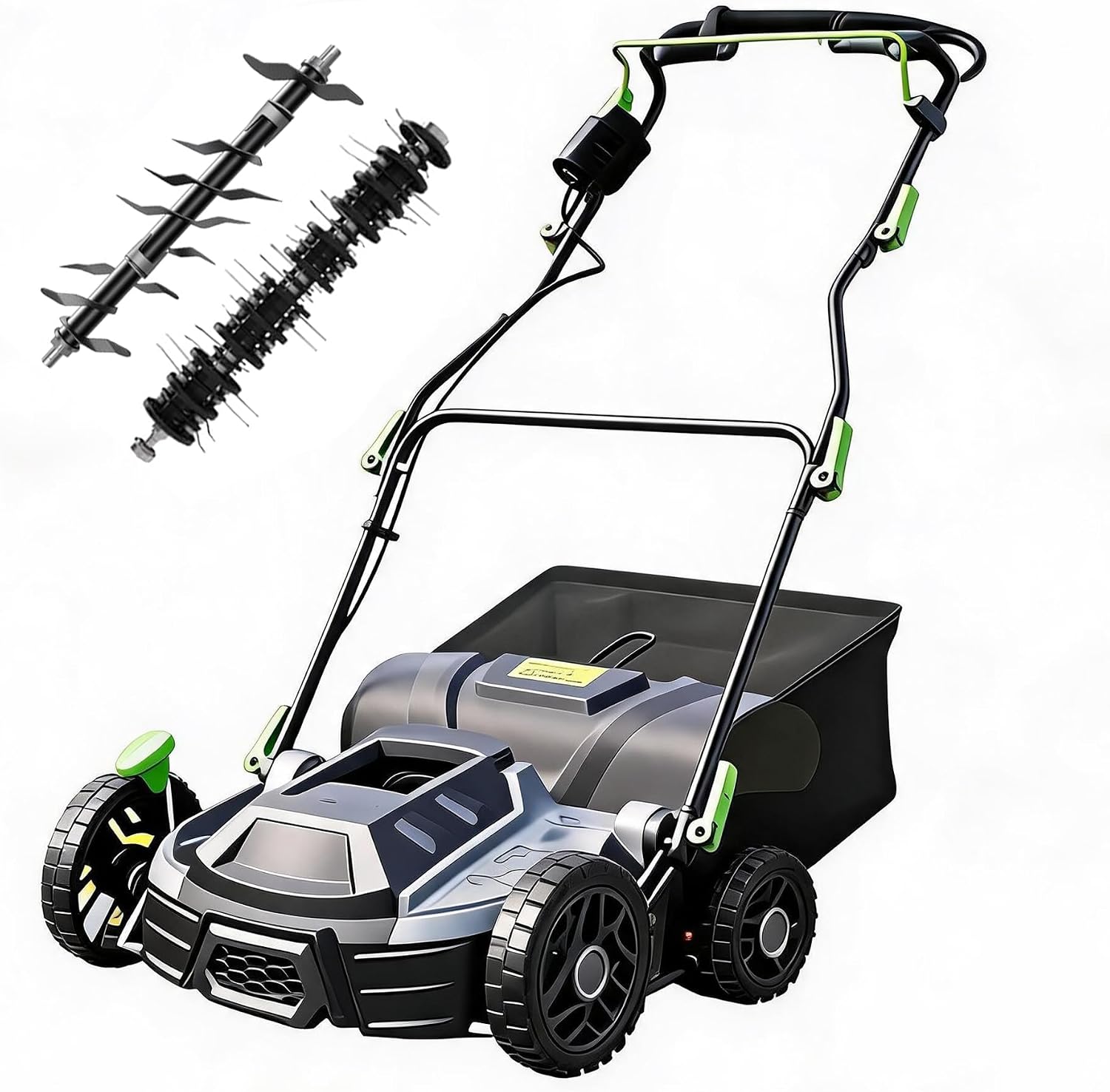
| Power Source | ac |
|---|---|
| Maximum Adjustable Cutting Height | 0.47 inches |
| Number of Positions | 5 |
| Cutting width | 14.5 inches |
| Item Highlight | 2-in-1 Dethatcher and Aerator |
The Klysiora 2-in-1 electric dethatcher and scarifier combines a high-torque 15.5A motor with interchangeable carbon-steel thatcher and scarifier blades so you can both remove thatch and loosen compacted soil with one machine. Typical use is simple: run the thatcher blade to pull up dead grass and moss, then swap to the scarifier blade when the soil needs loosening to improve oxygen and nutrient uptake. A 14.5 inch working path balances coverage and maneuverability for small to medium yards, and the included 14.5 gallon collection bag reduces stops for emptying. Five depth settings and three adjustable handle heights let you tune performance to seasonal conditions and reduce strain during longer sessions. The unit folds for compact storage and has a dual safety switch to prevent accidental starts. Limitations to note are its corded AC power, which restricts range compared with cordless models, and the relatively narrow cutting width versus larger professional machines, so it is best for homeowners rather than large properties.
Best for: A homeowner who prioritizes a dependable, single-machine solution for regular dethatching and light scarifying on small to medium lawns and wants straightforward, low-fuss operation.
Less Ideal for: Not the best choice for contractors or owners of large properties who need cordless range or wider commercial-grade machines for faster coverage.
- Powerful 15.5A motor for steady, high-torque operation.
- Interchangeable steel thatcher and scarifier blades for two functions in one tool.
- Large 14.5 gallon removable collection bag reduces interruptions to empty debris.
- Five depth positions and adjustable handle heights for tailored operation and user comfort.
- Quick-fold handle allows compact storage when not in use.
- Corded AC power limits working radius and requires access to an outlet.
- 14.5 inch working width is narrower than commercial dethatchers, making large lawns take longer.
Verdict: Choose this unit if you want a reliable, two‑in‑one electric dethatcher that removes thatch and scarifies soil while minimizing cleanup with a large collection bag.
Sun Joe 15-Inch Electric Dethatcher and Scarifier, AJ805E

| Power Source | Corded Electric |
|---|---|
| Number of Positions | 5 |
| Material Type | Alloy Steel |
| Item Type Name | 15-Inch 13-Amp Electric Dethatcher and Scarifier |
The Sun Joe AJ805E is a corded electric dethatcher and scarifier designed to remove thatch and lightly scarify lawns to improve air, water, and nutrient penetration. It runs on a 13-amp motor and covers a 15-inch cut, using a powered reel to pull up dead grass and debris into a removable 13.2-gallon collection bag for easier cleanup. Users adjust performance with five depth positions to match turf conditions, and four glide wheels make it straightforward to push across modest-sized yards. Practical benefits include quicker dethatching than manual rakes and the combined scarifier/dethatcher function so you can refresh turf without renting larger equipment. Important limitations are that it is corded so reach is limited by your extension setup and it is best for light to moderate thatch rather than commercial-scale jobs; very dense thatch may require multiple passes or a heavier machine. For homeowners prioritizing a simple, maintenance-friendly electric tool, this Sun Joe offers a sensible balance of power and convenience.
Best for: Homeowners who want an easy-to-use electric dethatcher to maintain small to medium lawns and prefer a tool that simplifies cleanup and routine lawn rejuvenation while avoiding complex equipment.
Less Ideal for: Landscape professionals or owners of large properties with persistent, heavy thatch who need high-capacity or petrol-powered machinery for faster, deeper removal.
- 13-amp motor provides sufficient power for typical residential thatch removal
- Removable 13.2-gallon collection bag simplifies debris collection and disposal
- Five-position depth adjustment lets you tailor dethatching intensity to lawn needs
- Compact 15-inch cutting width is easy to maneuver and store for small to medium yards
- Corded power limits range without using an extension cord
- Not intended for heavy commercial dethatching or very dense thatch
Verdict: A practical, maintenance-friendly electric dethatcher that gives homeowners an effective way to remove light to moderate thatch and tidy lawns without renting larger equipment.
Westinghouse 16" 15-Amp 2-in-1 Electric Dethatcher and Scarifier with Collection Bag

| Power Source | ac |
|---|---|
| Motor | 15 amp, up to 3500 RPM |
| Working width | 16 inches |
| Collection bag capacity | 14.5 gallon |
| Depth settings | 5 |
The Westinghouse 16" 2-in-1 dethatcher and scarifier combines dethatching and slice aeration in a single corded electric machine so you can clear thatch and relieve surface compaction without gas or batteries. Swap between the spring-tined dethatcher head that lifts buried debris and the 20-blade scarifier head that slices narrow channels to improve water and seed contact. The 15 amp motor delivers consistent power up to 3500 RPM, and the 16-inch working path covers ground efficiently for small to medium yards. Five depth settings and three handle heights let you tailor performance and comfort, while the 14.5 gallon rear collection bag reduces stops to empty. Practical extras include a folding handle for compact storage and a center carry point for transport. Expect straightforward seasonal use in spring and fall and easier overseeding prep compared with manual raking. Limitations are typical of corded models: you need an extension cord for larger lots, and slice aeration is less invasive than plug aerators if deep soil cores are required.
Best for: Gardeners who want a single, no-fuss electric tool for seasonal dethatching and light-to-moderate soil slicing on small to medium lawns and who prioritize steady power and easy cleanup.
Less Ideal for: Owners of large properties who need cordless range or heavy-duty core aeration and users who require deep plug aeration to address severe compaction should consider different tools.
- Two interchangeable heads let you both remove thatch and slice compacted soil with one machine
- Corded 15 amp motor provides steady power up to 3500 RPM without fuel or battery maintenance
- Large 14.5 gallon collection bag reduces cleanup stops and captures debris
- Five depth settings and three handle heights provide adjustable control and user comfort
- Corded power requires an extension cord for larger yards
- Slice aerator avoids plugs so it does not remove deep soil cores for heavier compaction
Verdict: Choose this model if you want a single corded machine that efficiently dethatches and slice-aerates small to medium lawns with minimal cleanup.
Choosing the Right Scarifier Lawn Dethatcher: Key Factors to Consider
Tine Type and Configuration
Tine type determines how the machine removes thatch. Spring tines flex and grab surface material without excessively cutting living crowns, which is helpful on fragile or older lawns. Fixed blade tines or rigid scarifying blades cut more aggressively and are better for heavy, compacted thatch but require careful depth setting.
The number and spacing of tines affect pass coverage and how much material is lifted per pass. Wider spacing tends to reduce clogging but may need multiple passes to remove thick mats, while dense tine arrays clear more in one pass but can overload smaller engines or motors.
Depth Adjustment and Control
Accurate depth control keeps you from scalping the lawn while still getting into the thatch layer. Easy-to-read settings, incremental adjustments, and a mechanism that holds position under load let you dial in the right penetration for your turf type and season.
If you plan to scarify in different seasons or on varying soil types, look for models with a broad adjustment range. Some machines offer quick-lever adjustments suitable for rapid changes, while others require tools to set depth precisely. Consider how confident you are in making repeated adjustments during a single job.
Power Source and Delivery
Power affects how consistently the tines slice through dense material. Gas engines provide higher torque for large yards and heavy thatch but add weight and maintenance. Electric corded units are lighter and quieter but limited by cord length and outlet access. Battery machines deliver good mobility but check run time and whether battery pack torque declines under heavy load.
Also consider how the unit maintains speed under strain. Machines that bog down will require slower passes and more time, and they may not cleanly remove dense mats. Look for consistent rpm or gearing that matches the tine load.
Width and Coverage Versus Lawn Size
Working width determines how quickly you can cover an area. Wider machines cut down on time for large lawns but can be harder to maneuver around obstacles and in tight yards. Narrower machines are better for small plots, steep slopes, and gardens with many features.
Think about storage and transport as well. A wider unit may demand more storage space and a larger vehicle if you move it between sites. Balance the desire for speed with the practicalities of your landscape layout.
Debris Handling and Cleanup
Scarifying lifts a lot of organic material that typically needs removal. Some machines offer built-in collectors or mulching ports that reduce raking time, while others simply eject material onto the lawn. Collection options speed cleanup but add weight and can affect balance.
Consider how you will deal with the removed material. If you want to compost the debris, a machine that leaves larger fragments intact may be preferable. If quick cleanup is the priority, prioritize models with efficient collection or easy attachment systems.
Durability and Serviceability
Tines, tine mounts, belts, and bearings take the most wear in a scarifier. Machines with easy access to these parts and clear maintenance instructions reduce downtime and service costs. Robust mounting plates and replaceable tine modules extend service life when you treat the tool as a garden investment.
Also check for corrosion-resistant finishes if you store equipment outdoors or in damp sheds. Simple, well-documented controls and common fastener sizes make routine maintenance and part replacement less of a hassle.
When to Scarify Vs Aerate
Scarifying and aerating address different lawn issues. Scarifying actively cuts and lifts the thatch layer and is best when a dense, matted layer of dead vegetation is preventing air, water, and nutrients from reaching the soil. Aeration removes plugs to relieve soil compaction and improve root space without removing thatch. Many gardens benefit from doing both in the appropriate sequence: scarify first to remove the mat, then aerate to open the soil for root recovery.
- Scarify when you can lift visible thatch or when a spongy layer forms on top of soil.
- Aerate when soil compaction limits root expansion or water ponds after heavy rain.
- Avoid scarifying during drought stress or when grass is dormant; aim for active growth windows so turf recovers quickly.
Season and Timing Best Practices
Timing scarifying for when grass is actively growing gives the turf the best chance to recover. For cool-season grasses, early fall or early spring when the lawn is vigorous are typical windows. Warm-season grasses tolerate scarifying in late spring through summer when growth is strong. Avoid scarifying immediately before a heat wave or during drought. Plan to overseed and fertilize after scarifying to help fill any bare patches and speed recovery.
- Perform scarifying on a dry day for cleaner tine action and easier debris collection.
- Water lightly a day or two before if soil is hard, but do not work wet, sticky soil.
Safety and Worker Comfort Tips
Use eye protection and gloves to protect against flying debris and sharp tines. Machines can eject shards of thatch and small stones, so a face shield or goggles reduce the chance of injury. Wear sturdy footwear and long pants to protect legs from thrown material. Noise and vibration can cause fatigue. Choose hearing protection appropriate to the power source and take regular breaks when working large areas. If a machine vibrates excessively, stop and check for loose parts before continuing.
- Inspect tines and fasteners before each use to avoid failures.
- Keep bystanders and pets well away while the machine is operating.
Post-Scarifying Lawn Care
After scarifying, rake or vacuum up removed material promptly to prevent it from smothering the lawn. Apply a starter fertilizer and overseed bare spots to speed canopy recovery. Light topdressing with a thin layer of compost or topsoil helps seed contact and smooths the surface for mowing. Reduce mowing height gradually over subsequent cuts until the lawn returns to its normal setting. Avoid heavy foot traffic during the early recovery period and monitor moisture to keep new seedlings alive.
- Water new seedings lightly and frequently until established.
- Delay heavy fertilization until seedlings show steady growth.
How We Chose the Best Scarifier Lawn Dethatcher
Our shortlist focused on machines that deliver consistent thatch removal across common lawn conditions while being practical for home gardeners to own and operate. We filtered candidates by the effectiveness of the cutting or raking system, whether the depth adjustment is precise and repeatable, and the power source's ability to sustain usable operating speed under load. We also considered user safety and ease-of-use features that matter in real lawn work: balance and maneuverability, simple maintenance for tines and belts, durability of the tine or blade mount points, and whether the machine offers useful debris collection or side-discharge options. Noise and vibration levels were noted because they affect how long you can comfortably work. Units that required professional servicing for basic upkeep or had poorly documented parts access were excluded. The final picks are machines that combine effective thatch removal mechanics with accessible controls, serviceability, and consistent performance in home lawn settings.
FAQ
How deep should I set the tines when scarifying?
Depth depends on thatch thickness and turf type. Start shallow and increase penetration until you see thatch being lifted without cutting into crowns. For most home lawns, a few millimeters beyond the thatch layer is sufficient; aggressive passes can follow if the grass recovers well.
Can I scarify and aerate on the same day?
It depends on turf recovery priorities. If you need both, scarify first to remove the thatch, then aerate to relieve compaction. Allow a short recovery window if your grass is stressed. In many cases spacing the jobs by a week is gentler on the lawn.
Is a collector necessary or can I just rake afterwards?
Collectors save time but add weight and complexity. Raking or vacuuming by hand works fine for small areas and gives you control over composting removed material. For larger lawns, a collector reduces cleanup time considerably.
How often should I scarify my lawn?
Frequency depends on species and thatch buildup. Many lawns need scarifying every one to three years. Heavily thatched or high-maintenance turf may require annual attention, while well-managed lawns with low thatch may need it less often.
Will scarifying damage my lawn permanently?
Scarifying removes surface material and can cause temporary thinning. If done correctly during active growth and followed by overseeding and proper care, most lawns recover fully. Damage is more likely if scarifying is too deep or done during stress periods.
Final Verdict
Choose a scarifier lawn dethatcher that matches your lawn size, thatch severity, and preferred power source. Prioritize tine configuration and dependable depth control for safe, effective thatch removal, and balance working width against maneuverability in your landscape. Remember the tradeoffs: more aggressive cutting clears heavy mats faster but requires careful timing and follow-up care. If you plan to maintain a healthy lawn over the long term, select a machine that you can service easily and that fits how often and how deeply you will scarify.
