

Note: This article contains affiliate links. If you click on these links and make a purchase, I may earn a small commission at no extra cost to you. This helps support my research and content. Read my full affiliate disclosure here.
When you need precise, chip-free edges on composite decking, the right hand saw makes the job faster and leaves a neater finish. Composite boards behave differently from wood: they can melt, chip, or catch if the blade and cutting technique are wrong. Choosing a saw designed to handle the composite material and the dust it produces matters for both cut quality and your comfort. This guide covers the top shortlisted hand saws for cutting composite decking and explains the evaluation criteria we used. You will get practical advice on blade type, teeth per inch, handle ergonomics, and portability so you can pick the best saw for your deck repairs or installation. Below are the picks and the decision factors that helped us narrow them to the top options.
Top Picks at a Glance
| Best Overall The best all-around choice for most situations | Shark 12-Inch Carpentry Hand Saw |  |
| Best Value The sweet spot between price and what you get | IRWIN Marathon ProTouch 15-Inch Coarse-Cut Carpenter Saw |  |
| Best Budget The cheapest option that still gets the job done reliably | HAUTMEC 11-Inch PVC Pipe Saw with Adjustable Angle Handle |  |
| Highest Rated A top-rated pick with lots of positive feedback | Jorgensen 20-Inch Hand Saw with 11 TPI Black-Coated Blade and Ergonomic Non-Slip Handle |  |
| Most Popular A crowd favorite that many people choose with confidence | QYQRQF 14 in. Pro Hand Saw with Ergonomic Soft-Grip Handle |  |
Shark 12-Inch Carpentry Hand Saw

| Blade Material | High Speed Steel |
|---|---|
| Blade Length | 12 inches |
| Number of Teeth | 168 |
| Power Source | Manual |
| Other Special Features of the Product | Keyless Blade Change |
The Shark 12-inch carpentry hand saw is a straightforward manual saw aimed at everyday workshop and jobsite use. It has a 12-inch high-speed steel blade with 14 teeth-per-inch and a flexible profile that allows flush and trim cuts; the keyless blade change makes replacing the blade quick and tool-free. Typical use will be ripping and crosscutting lumber, trimming PVC or ABS pipe, and on-deck tasks where a powered saw is impractical. The relatively fine tooth count produces smooth, fast cuts in wood and composite materials without excessive tearing. Practical benefits include portability, no power required, and an inexpensive, replaceable blade when it dulls. Limitations are the manual effort required for long or repeated cuts compared with power saws, and the saw is not intended for cutting metal or heavy structural timbers where a powered or larger saw is faster and less tiring.
Best for: Buyers who want a reliable, no-power hand saw for occasional decking tasks and trim work and prefer a simple, portable tool for precise manual cuts.
Less Ideal for: Contractors or anyone regularly cutting long runs of composite decking or large volumes of boards should choose a powered saw for speed and consistent straight cuts.
- High-speed steel blade with 14 teeth-per-inch for smooth cuts in wood and plastic
- Keyless blade change lets you replace the blade quickly without tools
- Flexible blade allows flush trimming against surfaces
- Portable manual tool that requires no power or cords
- Manual cutting is slower and more tiring than using a circular or powered saw for long runs
Verdict: A compact, replaceable-blade hand saw that gives smooth, controlled cuts for occasional deck trimming and detail work without power.
IRWIN Marathon ProTouch 15-Inch Coarse-Cut Carpenter Saw

| Blade Material | Alloy Steel |
|---|---|
| Number of Teeth | 14 |
| Blade Shape | Rectangular |
| Power Source | Hand powered |
The IRWIN Marathon ProTouch 15-inch carpenter saw is built for heavy-duty, performance-focused wood cutting. Its M2 tooth geometry and Tri-Ground teeth deliver fast, efficient cutting across and with the grain, while deep gullets clear chips quickly to maintain cutting speed. The tapered-pitch nose improves clearance and control when starting cuts and working near corners, and the thick-body blade adds rigidity for straighter strokes when ripping or crosscutting. The wood ProTouch handle is shaped for comfort during extended use but remains robust for jobsite wear. This saw is best used for framing, rough carpentry, and general-purpose wood cutting where speed and aggressive material removal matter more than super-fine finish. Limitations include a coarse 9-point tooth pattern that leaves a rougher cut compared with fine-tooth saws and a wooden handle that some users may find less ergonomic than modern composite grips.
Best for: Buyers who prioritize fast, aggressive cutting for framing, rough carpentry, or frequent jobsite use and want a reliable, high-performance hand saw.
Less Ideal for: People who need very fine, smooth finish cuts for trim, cabinetry, or finish carpentry should choose a finer-toothed saw designed for precision.
- Aggressive M2 and Tri-Ground teeth for fast cutting and efficient chip removal
- Deep gullets reduce clogging and keep the cut moving quickly
- Thick-body blade improves rigidity for straighter, controlled strokes
- Tapered-pitch nose aids clearance and starting cuts in tight spots
- Coarse 9-point tooth pattern produces a rougher finish not ideal for fine joinery
- Wooden handle offers durability but less modern ergonomic padding
Verdict: Choose this saw when you need a durable, high-performance carpenter saw that cuts fast and clears chips efficiently for rough and framing work.
HAUTMEC 11-Inch PVC Pipe Saw with Adjustable Angle Handle

| Blade Material | 11-Inch heat-treated 65Mn steel |
|---|---|
| Number of Teeth | 10 |
| Cutting Angle | 70 degrees |
| Power Source | Manual |
This 11-inch HAUTMEC handsaw is built for precise, controlled cutting of plastics, thin lumber and similar materials where a compact tool is helpful. The 1mm heat-treated 65Mn steel blade is stiff, which limits blade flex and helps keep cuts straight when working on PVC, composite trim, or smaller decking boards. The double-ground 10 TPI teeth produce relatively fine, chip-reducing cuts that are useful for composite decking profiles and narrow cuts where a coarse saw would tear the material. The die-cast aluminum handle with a TPR overmold gives a secure grip, and the tool-free, 11-position quick-release angle makes it easier to reach awkward angles under railings or near joists. Blade swaps are simple thanks to the keyless mechanism. Expect the saw to excel on short crosscuts and trimming tasks but be aware the short blade length and fine TPI will slow large ripping cuts on thick decking boards compared with longer, coarser saws or power tools.
Best for: Buyers who want an affordable, portable handsaw for precise trimming, fitting, and on-site adjustments to composite decking and trim where control and low chipping matter.
Less Ideal for: Contractors or users who need to make long rip cuts or high-volume decking installs; those tasks favor longer saws or power saws for speed and reach.
- Rigid 1mm heat-treated 65Mn steel blade reduces flex for straighter cuts
- 10 TPI double-ground teeth deliver clean, low-chipping cuts on composites and plastics
- 11-position quick-release adjustable handle for tight or angled work
- Die-cast aluminum core with non-slip TPR grip improves control during long cuts
- 11-inch blade is short for large or long decking boards, requiring more strokes
- Fine 10 TPI tooth count cuts slower on thick material than coarse blades
Verdict: A budget-friendly compact handsaw that gives controlled, low-chipping cuts for trimming and fitting composite decking in tight spots.
Jorgensen 20-Inch Hand Saw with 11 TPI Black-Coated Blade and Ergonomic Non-Slip Handle

| Power Source | hand_powered |
|---|---|
| Number of Teeth | 11 |
| Blade Material | High Speed Steel |
| Handle Material | ABS and TPE |
The Jorgensen 20-inch hand saw is a straightforward, reliability-minded tool for cutting wood, PVC and similar materials. Its 11 TPI triple-ground teeth and induction hardened high-speed steel blade are designed to hold an edge and cut quickly on both push and pull strokes, while the low-friction black coating helps reduce binding. The molded ABS and TPE handle is shaped for a firm, non-slip grip and includes 45 and 90 degree guide marks to help keep cuts square. Practical touches include a cardboard sleeve and plastic tooth protector for safe storage and transport. In use the saw excels at fast, coarse ripping and trimming tasks around the workshop or yard, and the robust blade construction makes it suitable for repeated use without frequent re-sharpening. It is not a fine-tooth finish saw, so expect rougher edges on delicate joinery and slower performance on very hard, dense timbers. For routine framing, pruning and general carpentry where dependable, aggressive cutting is the priority, this saw performs well.
Best for: Buyers who prioritize a durable, workhorse handsaw for everyday cutting tasks like framing, pruning and general carpentry and who want a tool that stays sharp through repeated use.
Less Ideal for: Woodworkers needing a fine-tooth saw for smooth finish cuts or hobbyists doing delicate joinery should choose a finer TPI saw instead.
- Triple-ground 11 TPI teeth and induction hardened high-speed steel blade for durable, fast cutting
- Low-friction black coating reduces binding for smoother strokes
- Ergonomic ABS+TPE non-slip handle with angle guides for comfortable, accurate cutting
- Includes blade protector and cardboard sleeve for safer storage
- Coarse 11 TPI tooth pattern produces rougher cuts not suited for fine finish work
Verdict: A tough, no-nonsense 20-inch handsaw built for fast, reliable cutting on everyday woodworking and yard tasks.
QYQRQF 14 in. Pro Hand Saw with Ergonomic Soft-Grip Handle
| Blade Material | Alloy Steel |
|---|---|
| Blade Length | 14 inches |
| Number of Teeth | 11 |
| Handle Material | Thermoplastic Elastomers |
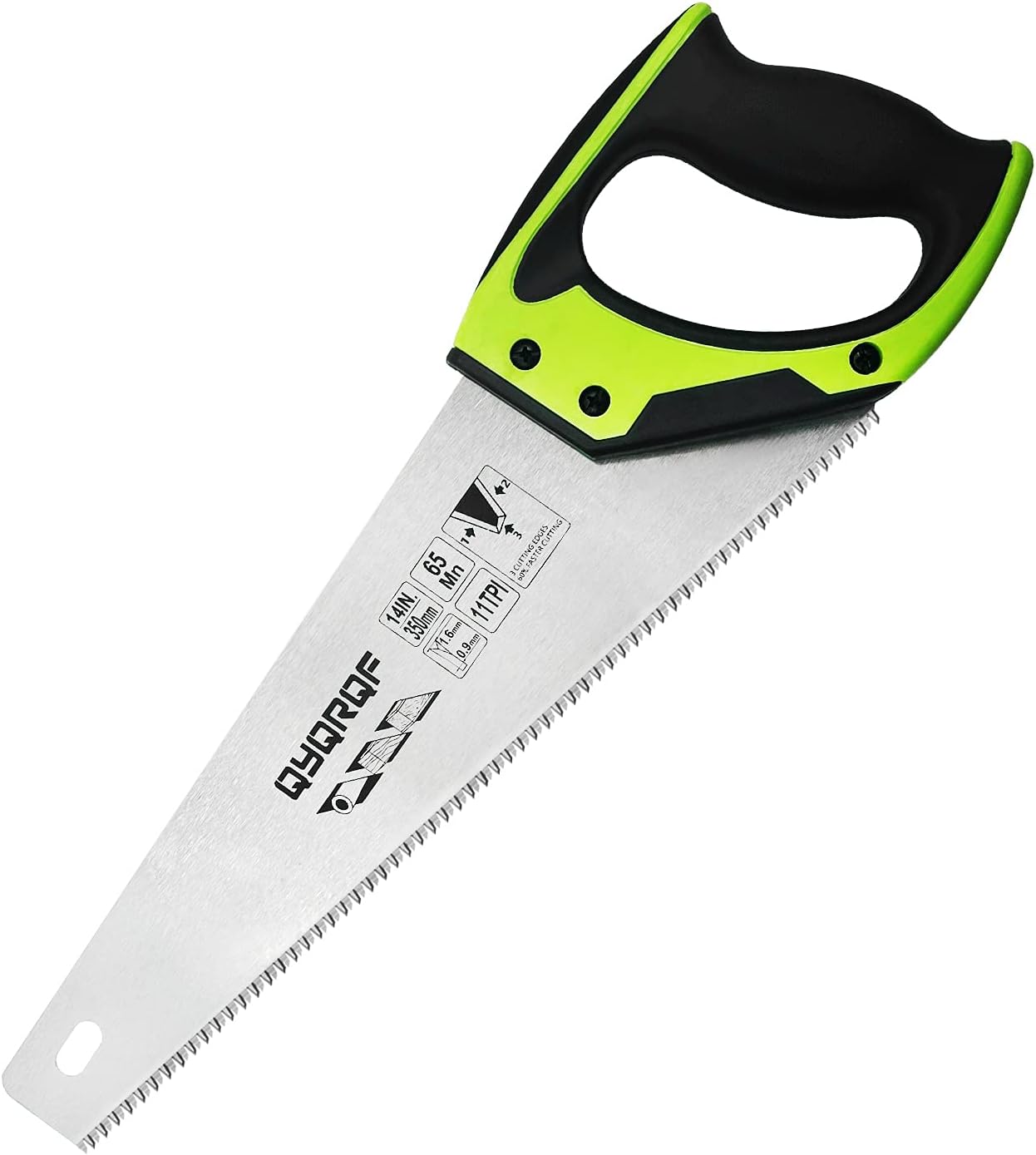
This 14-inch pro hand saw is built for fast, accurate cuts in wood, plywood and PVC pipe. The 65Mn heat-treated alloy-steel blade with three-face grinding and deep gullets clears chips quickly, and the 11 TPI fine-cut tooth pattern makes controlled crosscuts and trim work straightforward. A low-friction coating helps the blade slide through material, while the thermoplastic elastomer soft-grip handle is shaped for comfort during repeated strokes and reduces hand fatigue. It ships with a protective sleeve and a hard case for safe storage. For someone focused on practical performance, the saw delivers durable sharpness and predictable cuts without power tools. Limitations are its manual speed compared with a power saw and that the 11 TPI is a compromise between fast ripping and very fine finishing, so you may need a different tooth count for very fine trim or rip work.
Best for: Buyers who prioritize efficient, reliable hand cutting for routine wood trimming and light carpentry and want a durable tool that reduces hand fatigue during regular use.
Less Ideal for: Users who need the fastest bulk ripping or ultra-fine finish cuts, or those who prefer powered saws for large projects.
- Heat-treated 65Mn alloy-steel blade for long-lasting edge retention
- Three-face grinding and deep gullets for faster chip removal and quicker cuts
- Low-friction coating reduces binding and improves stroke efficiency
- Ergonomic non-slip soft-grip handle reduces hand fatigue during extended use
- Manual saw cannot match the speed of powered cutting tools
- 11 TPI is a middle-ground tooth count and may not be ideal for very fine finish cuts or fast ripping
Verdict: A durable, comfortable 14-inch hand saw that speeds up manual cutting with a heat-treated blade and efficient tooth geometry, ideal for everyday wood and trim work.
Choosing the Right Hand Saw for Cutting Composite Decking: Key Factors to Consider
Blade Tooth Geometry and Coating
Blade tooth shape and any anti-friction coating are the primary determinants of how a hand saw behaves on composite decking. Composite boards are made from plastic and wood fibers, which can melt or tear instead of cleanly shearing. A tooth geometry designed to slice rather than rip reduces chipping along the cut edge and keeps the board profile intact.
Coatings or finishes that reduce heat buildup and friction help prevent melting at the cut line and make the blade glide more smoothly. When assessing saws, look for blades described with fine, alternate, or triple-ground tooth profiles and for mentions of coatings that lower sticking or scorching during long cuts.
Teeth Per Inch (TPI) and Cut Finish
TPI affects both the speed of cut and the quality of the edge. Higher TPI blades produce finer finishes and reduce chipping on composite materials, but they cut more slowly. Lower TPI blades cut faster but can tear or chip the plastic-rich surface. For most composite decking tasks, a medium to fine tooth count gives the best balance between speed and a clean edge.
Consider the type of cuts you'll make: rip-like cuts along the board length generally tolerate slightly coarser teeth if the blade geometry is slicing, while crosscuts across the board face benefit from finer TPI to avoid fraying the composite surface.
Handle Ergonomics and Control
A well-shaped handle matters for guided, straight cuts. Composite decking often requires long, continuous strokes to maintain a square edge. Handles that promote a neutral wrist position and provide a secure grip reduce fatigue and help you hold the saw true to the layout line.
Also consider the saw balance and how the handle connects to the blade. Handles with vibration-damping inserts or textured grip surfaces improve comfort during repetitive cuts. Poor ergonomics increase the risk of wandering cuts, which can ruin a board and waste material.
Dust Production and Cleanup
Cutting composite boards produces fine, abrasive dust and small particles. How you manage that dust affects site cleanliness and personal safety. A saw that produces long, ribbon-like chips may be easier to sweep than one that generates very fine dust, but the priority should be minimizing airborne fine particulates.
Look for saws that allow easy brushing of the kerf, that pair well with a jobsite vacuum for near-blade pickup, or have tooth patterns that throw chips clear of the cut. Also plan for personal protection: respirators, eye protection, and good ventilation are important when working with composite materials.
Blade Length and Portability
Blade length determines how many passes you need and whether you can cut a full-width board in a single stroke. Longer blades let you complete straight edge cuts in fewer strokes, which reduces wobble and improves finish. However, longer blades add weight and can be harder to control if the handle balance is poor.
Portability matters if you will carry the saw around a large job site or bring it up ladders. Folding saws or those with protective sheaths are convenient for transport and storage, but ensure the folding mechanism is sturdy and does not compromise blade alignment when locked open.
Durability and Blade Replacement
Durability covers both the blade steel and the mounting connection to the handle. Composite cutting can blunt teeth faster than cutting softwood, so a blade that holds its edge or is easy to replace will reduce downtime. Consider how easily replacement blades can be sourced and whether the saw accepts standard-size blades.
Also check the mounting hardware for loosening during repeated use. A secure, simple-to-adjust tensioning method extends the useful life of the saw and maintains cutting accuracy over time.
Cutting Techniques for Composite Decking
Proper cutting technique reduces chips and keeps edges square. Score the cut line lightly first on the board face to mark the line and provide a guide for the initial teeth. Use steady, full-length strokes rather than short sawing motions when possible; long strokes distribute cutting across more teeth and reduce localized heat build-up.
Support the board near the cut to prevent flexing and reduce tear-out at the far edge. If you need an angled or decorative cut, practice on a scrap piece of the same composite to confirm blade behavior before committing to boards already installed.
- Make a light scoring pass along the face before the full cut
- Use full-length, steady strokes for straighter cuts
- Support the off-cut to prevent splintering or chipping
- Practice angled cuts on scrap material first
Protective Gear and Site Preparation
Composite dust contains fine particles that can irritate lungs and eyes. Wear an appropriate respirator rated for fine particulates, safety glasses, and hearing protection for extended sawing tasks. Lay down drop cloths to catch chips and make cleanup easier and to prevent tracking fine dust into the house.
Secure the board on sawhorses or a workbench at a comfortable height. Keep the cut line lit and clearly marked so you can follow it without bending your neck into awkward positions that affect control.
- Use a respirator rated for fine particulates
- Wear eye protection and gloves
- Work on a stable, supported surface at a good height
- Contain chips with drop cloths for easier cleanup
Maintaining Saw Blades for Long-Term Use
Regular maintenance preserves cut quality. Clean blades after use to remove abrasive composite dust and check teeth for dulling or damage. Minor burrs can sometimes be dressed with a fine file, but heavily worn or damaged blades should be replaced to avoid poor finishes.
Store blades in a dry place and consider applying a light rust-preventive coating if your tools sit in a damp garage. If your saw uses replaceable blades, keep a spare on hand so you can swap out a dull blade quickly and maintain productivity on the job.
- Brush or blow dust from the blade after each use
- Inspect teeth and replace blades when visibly worn
- Store blades dry and protected from moisture
- Keep spare blades or a sharpening plan available
Tools That Complement a Hand Saw
A few complementary tools speed the job and improve results. A fine-toothed back saw or trim saw is useful for finish cuts and tight areas, while a straightedge or cutting guide helps you keep long cuts square. Clamps or a decking jig hold boards steady so you can focus on the cut rather than on support.
A jobsite vacuum or brush makes cleanup easier and reduces airborne dust, and a quality tape measure and square ensure accurate layout so you only make the cuts you need.
- Use a straightedge or cutting guide for long, straight cuts
- Clamps or decking jigs stabilize the board
- A jobsite vacuum reduces airborne fine dust
- Carry a square and tape measure for layout accuracy
How We Chose the Best Hand Saw for Cutting Composite Decking
We selected hand saws that perform reliably on composite decking by testing how their blades and designs handle the material rather than relying on general-purpose claims. Key evaluation criteria included blade tooth geometry and coating, which affect chip resistance and melting; tooth count and pitch, which determine cut speed and finish on dense composite boards; handle ergonomics and control, important for long straight cuts and angled crosscuts; dust control and ease of cleanup, since composite dust is fine and abrasive; and portability and blade length, which influence reach on deck boards and ease of use on site. We excluded general timber saws with only coarse framing teeth or blades clearly intended for rough carpentry where the tooth form would damage composite edges. Tools that lacked clear specifications for teeth per inch or blade material were also removed from consideration. The short list emphasizes blades and handles that reduce chipping, keep the cut line visible, and minimize heat buildup while being comfortable for repeated cuts. These concrete dimensions guided selection and align with the scoring criteria used in each product block.
FAQ
What tooth count is best for cutting composite decking?
A medium to fine tooth count is usually best. Higher TPI produces a cleaner edge and reduces chipping on composite surfaces, while a lower TPI cuts faster but risks tearing. Balance finish and speed based on whether you are doing long ripping cuts or finish crosscuts.
Can I use a regular wood hand saw on composite boards?
You can in a pinch, but many general wood hand saws have tooth geometry meant for softwood or ripping and may cause chipping or melt the composite. Choose a saw with a slicing tooth profile and finer TPI for better results.
How do I reduce dust when sawing composite decking by hand?
Work outdoors when possible and position drop cloths to catch chips. Use a steady technique that produces ribbon-like chips rather than fine dust, and consider a small jobsite vacuum for nearby dust pickup. Always wear a respirator to avoid inhaling fine particles.
Should I score the cut line before making the full cut?
Scoring a light guide line on the face of the board helps prevent tear-out and gives you a visual reference for keeping the saw straight. It is a simple step that improves edge quality, especially on finished-facing boards.
How often will I need to replace the blade when cutting composite decking?
Blade life depends on frequency of use and the specific composite formulation. Composite materials can blunt teeth faster than softwood, so expect more frequent replacement or sharpening if you are cutting many boards. Keeping a spare blade on hand is a practical approach.
Final Verdict
Prioritize blade geometry, tooth count, and handle ergonomics when choosing a hand saw for cutting composite decking. Those features determine whether your cuts stay clean and square or leave chipped, melted edges that need rework. Balance blade length and portability against the scale of your project: longer blades reduce passes but can be heavier to control. Focus on the tradeoffs that matter for your work pattern. If you need the neatest possible finish for visible board edges, favor finer teeth and slicing geometries. For quick rough cuts where speed matters, a coarser blade may be acceptable. With the right saw and technique, you can achieve precise, durable cuts for a professional-looking composite deck.
