

Note: This article contains affiliate links. If you click on these links and make a purchase, I may earn a small commission at no extra cost to you. This helps support my research and content. Read my full affiliate disclosure here.
Finding houseplants that tolerate very low light changes how you use indoor space. In dim apartments, north-facing rooms, or windowless offices, plants chosen for extreme low-light tolerance can add color and improve air quality without constant repositioning or bright light tricks. This guide summarizes the top five no sunlight plants suited to those situations and explains the practical tradeoffs gardeners should expect. Each shortlisted plant was selected for reliability in low-illumination settings and manageable care needs. Below you will find concise reasons these types work well, what to expect for watering and feeding, and the simple maintenance steps that keep them looking their best. Read on for the evaluation criteria used and the decision factors that matter most when growing in minimal light.
Top Picks at a Glance
| Best Overall The best all-around choice for most situations | Costa Farms Snake Plant 3-Pack (Live Indoor Plants, 8–12 in, in Grower Pots) |  |
| Best Quality Built to a higher standard if you want something more solid | Costa Farms Chinese Evergreen (Aglaonema) Live Indoor Plant, Medium, in Grow Pot |  |
| Best Value The sweet spot between price and what you get | Plants for Pets Easy-to-Grow Live Houseplants, Assorted 6-Pack (2" Pots) |  |
| Highest Rated A top-rated pick with lots of positive feedback | Thorsen's Greenhouse Live Low Light Houseplants (3 Pack) with 4" Decorative Pots |  |
| Most Popular A crowd favorite that many people choose with confidence | Plants for Pets Pothos 4-Pack (4" Assorted) |  |
Costa Farms Snake Plant 3-Pack (Live Indoor Plants, 8–12 in, in Grower Pots)

| Indoor Outdoor Usage | Indoor |
|---|---|
| Other Special Features of the Product | Air Purification, Drought Tolerant, Low Maintenance |
| Sunlight Exposure | Partial Sun |
| Moisture Needs | Little To No Watering |
| Product Care Instructions | Bright, Indirect Sunlight; Water 2-3 cups once a week |
These Costa Farms snake plants are a practical choice when you want low-maintenance greenery that still makes a visual impact. The 3-pack arrives in grower pots with plants sized about 8 to 12 inches tall, ready to place on shelves, desks, or narrow corners. Snake plants tolerate a wide range of light and require very little water, so they work well in dim bedrooms, windowless offices, or busy homes where regular care is unlikely. Notable features include drought tolerance, air-purifying qualities, and packaging designed to protect upright leaves during transit. The main benefits are instant decor with architectural vertical foliage, ease of care for beginner plant owners, and the flexibility to split the trio across rooms or give individual plants as gifts. Limitations are inherent to small potted plants: they are starter-size rather than mature floor specimens and come in plain grower pots so you may want to repot into decorative containers for long-term display.
Best for: Buyers who want reliable, low-effort houseplants to brighten low-light rooms or busy spaces and who value proven, widely purchased varieties with straightforward care.
Less Ideal for: People seeking large, mature statement floor plants or those who want decorative pots included out of the box.
- Very low water needs and tolerant of neglected watering
- Performs well in low to partial sun, suitable for dim indoor spots
- Arrives in a coordinated 3-pack for consistent styling across multiple areas
- Small, vertical growth habit fits narrow shelves and desks
- Advertised air-purifying benefit for healthier indoor air
- Ships in basic grower pots, so repotting or decorative containers are needed for long-term display
- Plants are starter-size (8–12 inches) rather than fully mature floor specimens
Verdict: Choose this 3-pack if you want dependable, nearly indestructible plants that add vertical greenery to low-light rooms with minimal care required.
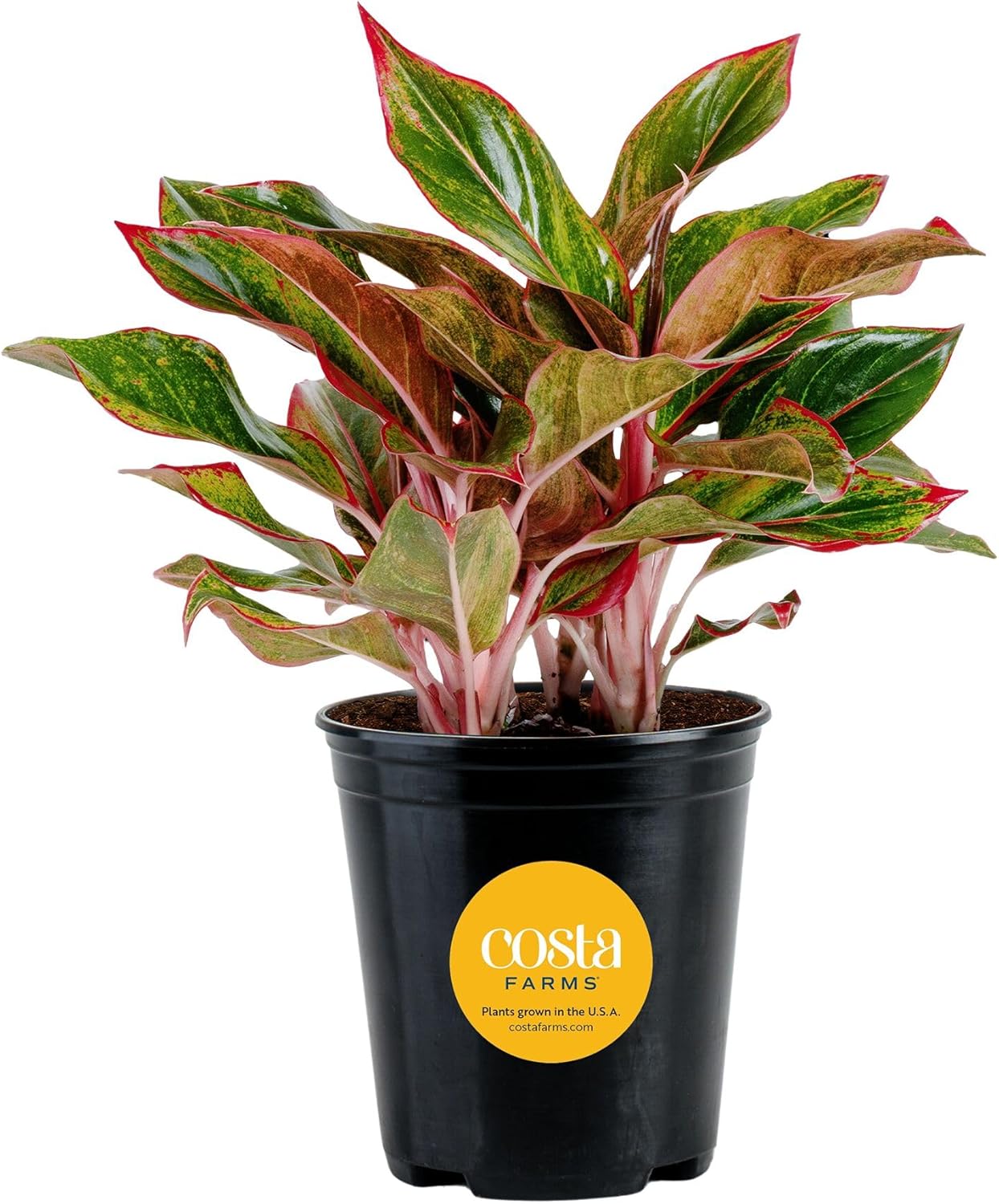
Costa Farms Chinese Evergreen (Aglaonema) Live Indoor Plant, Medium, in Grow Pot
| Indoor Outdoor Usage | Indoor |
|---|---|
| Other Special Features of the Product | Air Purification |
| Sunlight Exposure | Partial Sun |
| Moisture Needs | Regular Watering |
| USDA Hardiness Zone | 10-11 |
The Costa Farms Chinese Evergreen is a straightforward choice when you want a tall, low-light houseplant that does most of the work for you. It’s an Aglaonema sent in a plastic grow pot and described as reaching about three feet tall, with variegated leaves that provide a strong decorative focal point for a living room, office, or bedroom. Care needs are minimal: the plant tolerates a range of light levels (does well in partial to low light) and requires only regular watering—about a cup once a week as a starting guideline. The listing highlights air-purifying qualities and farm-fresh packaging, so you get a plant ready to display on arrival. Important limitations are that it is not frost-hardy and needs indoor temperatures consistent with USDA zones 10 to 11, and the grow pot is basic plastic so you may want to transplant to a decorative container for long-term display. For someone focused on performance in low-light spaces, this plant delivers attractive foliage and reliable vigor with modest maintenance.
Best for: Buyers who need a tall, low-light tolerant plant that performs reliably with minimal attention and makes an immediate decorative statement indoors.
Less Ideal for: People who want an outdoor-hardy specimen or who prefer flowering plants or compact desk plants; also not suited for unheated spaces exposed to cold.
- Tolerates low to medium light, suitable for dim rooms and offices
- Low watering needs with simple weekly guideline
- Variegated large leaves provide strong decorative presence
- Advertised air-purifying benefit for indoor environments
- Shipped in a basic plastic grow pot so transplanting may be desirable
- Not cold-hardy and requires indoor temperatures above cool-zone ranges
Verdict: A reliable, tall Aglaonema that delivers impressive foliage and low-light performance for buyers who prioritize dependable indoor plant performance with minimal upkeep.
Plants for Pets Easy-to-Grow Live Houseplants, Assorted 6-Pack (2" Pots)

| Indoor Outdoor Usage | Indoor |
|---|---|
| Other Special Features of the Product | Air Purification, Compact, Low Maintenance |
| Sunlight Exposure | Partial Sun |
| Moisture Needs | Regular Watering |
| Number of Pieces | 6 |
This 6-pack of mini houseplants delivers a practical way to add living greenery to small office spaces or desks. Each shipment contains six different 2" potted varieties selected from common indoor types such as pothos, peperomia, spider plant, croton, ficus and more, so you get visual variety without buying several full-size plants. They arrive rooted and ready for bright indirect light and light-duty care routines like weekly watering until repotted. The compact size makes them easy to group in shared planters, terrariums, or on a windowsill and they are marketed for air-purifying, low-maintenance performance. Limitations are their nursery pot size and small stature, which means frequent repotting and limited long-term presence on a desktop unless transplanted into larger containers. Because the assortment rotates, you cannot pick exact varieties ahead of time, which is good for variety but not for specific plant collections.
Best for: Ideal for office workers or renters who want low-effort greenery to brighten small desks, shelves, or windowsills and prefer a cost-effective way to try multiple indoor plant types.
Less Ideal for: Not a good fit for buyers who need mature, statement houseplants or who require specific plant varieties for allergy, pet-safety, or aesthetic reasons.
- Includes six different fully rooted plants so you can assemble grouped displays or fill multiple small spots
- Compact 2" pots are easy to fit on desks, shelves, and windowsills in offices with limited space
- Designed for low maintenance with recommendations for bright indirect light and weekly watering
- Rotating assortment introduces variety over repeat purchases
- Plants arrive in small grower pots and will need repotting sooner than larger nursery plants
- Assortment is randomized so you cannot guarantee specific varieties in a given order
Verdict: A budget-friendly grab-and-go solution for adding low-maintenance, small live plants to no-light or low-light office spots when grouped or transplanted into larger pots.
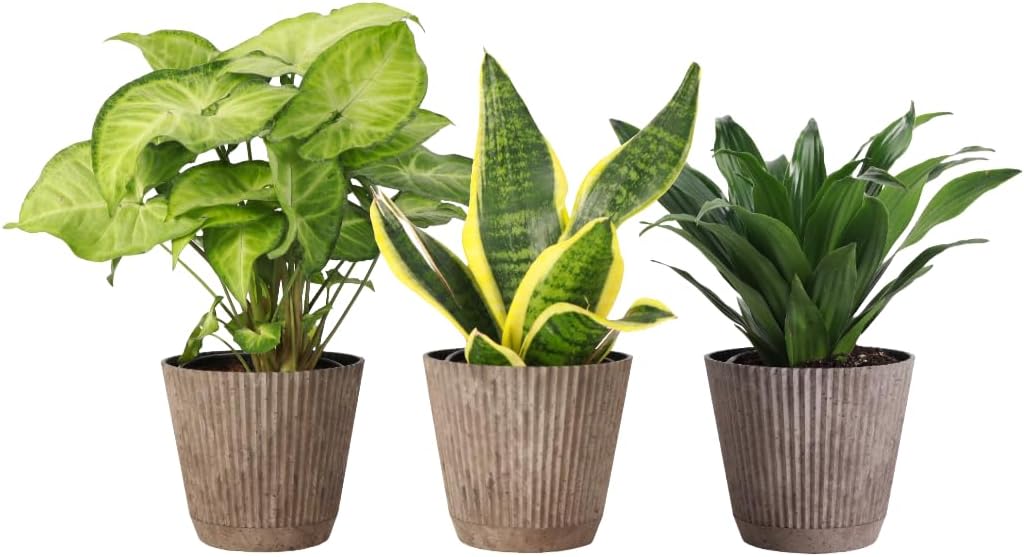
Thorsen's Greenhouse Live Low Light Houseplants (3 Pack) with 4" Decorative Pots
| Indoor Outdoor Usage | Indoor |
|---|---|
| Other Special Features of the Product | Low Maintenance |
| Sunlight Exposure | Partial Shade |
| Soil Type | Peat Soil |
| Moisture Needs | Moderate Watering |
This 3-pack from Thorsen's Greenhouse supplies a small group of low-light houseplants selected by the grower and shipped in 4-inch pots with decorative plastic covers and attached saucers. Designed for dim indoor spots, the collection includes common office-friendly varieties such as pothos, snake plant, and prayer plant depending on what the grower chooses. Care guidance calls for moderate watering—roughly a small amount each week—and occasional diluted fertilizer during the growing season. The decorative pots make it easy to set the plants on a desk or shelf without extra saucers, and the plants are described as low maintenance and tolerant of low to medium light, which is useful in windowless offices. Because the bundle is grower’s choice, you cannot pick specific varieties and plants may show minor shipping stress on arrival that needs a short acclimation period. If you want predictable, specific cultivars or larger specimens, this surprise assortment may feel hit-or-miss, but for someone seeking reliable, low-effort greenery for a no-light office it provides a convenient starter set.
Best for: Office workers or facility managers who need low-effort, low-light greenery for desks, cubicles, or windowless rooms and prioritize dependable, easy-care plants over picking exact varieties.
Less Ideal for: Collectors who want specific cultivars, large statement plants, or immediately showroom-perfect specimens should consider single-variety nursery purchases instead.
- Three ready-potted low-light plants tailored for dim indoor spaces
- Decorative plastic pot covers with attached saucers simplify placement and watering
- Plants labeled low maintenance with simple weekly watering guidance
- Grower-selected assortment makes it easy to add variety without plant-shopping
- Grower’s choice means specific species are not guaranteed
- Plants may show minor wilting or leaf loss from shipping and need an acclimation period
Verdict: If you want a simple, low-maintenance set of plants that tolerate very low light and arrive potted and presentation-ready for an office, this 3-pack is a convenient, reliable choice.
Plants for Pets Pothos 4-Pack (4" Assorted)

| Indoor Outdoor Usage | Indoor |
|---|---|
| Other Special Features of the Product | Air Purification |
| Sunlight Exposure | Full Sun |
| Moisture Needs | Regular Watering |
| USDA Hardiness Zone | 3 |
This four-pack delivers beginner-friendly pothos varieties that suit low-light rooms and simple indoor care routines. Each plant comes rooted in a 4" nursery pot and the assortment rotates between familiar types such as Marble Queen, Golden, Neon, and Satin, so you get visual variety without extra effort. Pothos are typically grown in hanging planters, on shelves, or trained up a support; they prefer bright, indirect light but tolerate lower light levels that many apartments and offices have. The listing emphasizes air-purifying benefits and gives clear care guidance: allow the soil to dry between waterings and keep temperatures above about 60 F. Practical strengths are resilience, fast trailing growth for a lush look, and compatibility with common indoor spots like living rooms, kitchens, or bathrooms. Limitations are that you may receive different varieties than pictured and plants arrive in small 4" pots, so plan to repot sooner if you want bigger specimens or longer-term display without frequent watering.
Best for: Buyers who want low-maintenance greenery for indoor spaces and prefer reliable, easy-to-care-for plants that tolerate lower light and occasional neglect.
Less Ideal for: Growers seeking large, mature plants ready for instant statement displays or those who want guaranteed, specific rare varieties.
- Easy to grow and tolerant of low to bright indirect light
- Four different varieties provide visual variety in one purchase
- Ships in small nursery pots that establish quickly and are ready for hanging or shelving displays
- Listed care guidance is straightforward for first-time plant owners
- Arrives in 4" pots so plants may need repotting soon for faster growth or long-term display
- Specific varieties are not guaranteed and assortment can vary
Verdict: A simple, low-maintenance way to add trailing, low-light-friendly pothos to your home with minimal fuss.
Choosing the Right No Sunlight Plants: Key Factors to Consider
Light Requirements and Placement
Low-light tolerance is not the same as no light at all. Even plants described as suited to 'no sunlight' still need some ambient or artificial light to carry out photosynthesis. Consider how far the plant will be from the nearest light source and whether that location receives any indirect or reflected light during the day.
Placement affects leaf color, stem length, and flowering. Plants in very dim spots often grow slower, develop larger gaps between leaves, and may lose variegation. Planning for a rotation schedule to a brighter spot briefly every few weeks can revive sluggish specimens without needing constant bright light.
Watering Rhythm in Dim Conditions
Low light reduces a plant's rate of water use, so overwatering is the most common mistake. Expect longer drying intervals between waterings, and use the potting mix and pot size to help moderate moisture. A dense mix in a large pot will retain moisture for much longer than a chunky, fast-draining one.
Check soil moisture by finger test or moisture meter rather than sticking to a calendar. Signs of overwatering in low light include yellowing lower leaves, soft stems, and a persistent damp smell; underwatering usually shows as crispy leaf edges and slowed growth.
Soil, Pots, and Drainage
Choose potting media that balance moisture retention and drainage for shaded interiors. A loam-based houseplant mix with some perlite or bark keeps oxygen available to roots while preventing waterlogging.
Use pots with adequate drainage holes and consider a saucer with passive drainage to avoid standing water. In very low-light setups, larger pots can extend watering intervals but increase the risk of sitting moisture, so match pot size to the plant's root mass and anticipated growth rate.
Fertilizer and Feeding Frequency
Plants in dim spaces grow slowly and therefore need less fertilizer than their sunlit counterparts. Overfertilizing can cause salt buildup and root stress when growth does not keep pace.
Apply a diluted balanced fertilizer at a reduced rate during the active growing season, and skip feeding during winter dormancy or prolonged low-activity periods. Flush the potting mix occasionally if using an indoor fertilizer regimen to prevent mineral accumulation.
Pest and Disease Vigilance
Low-light environments can favor pests that hide in shaded foliage and leave symptoms that are easy to miss. Inspect leaves and undersides regularly for scale, mealybugs, spider mites, and fungal signs. Poor air circulation combined with moist soils increases the chance of root rot and fungal leaf spots.
Mitigate risk with periodic leaf cleaning, prudent watering, and improving airflow with a small fan or by relocating a plant briefly. Catching problems early makes containment much simpler than treating established infestations.
Practical Care Tips For Dim Rooms
Use consistent, simple routines that match the lower activity level of no-light setups. Reduce watering frequency and keep a small journal or sticky note with last-watered dates to avoid overdoing irrigation. Dust leaves gently every few weeks to ensure the plant can photosynthesize as efficiently as possible under low light.
If growth becomes leggy, selective pinching or pruning will concentrate energy into new shoots and improve form without forcing rapid produce. Rotate plants occasionally to even out shading from room fixtures, and consider a short weekly move closer to indirect light for plants showing pale foliage.
- Check soil moisture before watering rather than following a strict schedule
- Wipe leaves with a damp cloth to remove dust and improve light capture
- Prune elongated stems to maintain compact shape and reduce stress
When to Use Supplemental Light
Supplemental light is a tool, not a requirement. For true no-window spaces, a small LED grow light on a timer can provide enough light for slow growth without increasing maintenance. Choose fixtures rated for low-energy output and position them to deliver diffuse light rather than a hotspot that causes uneven growth.
If you prefer not to use artificial light, select the most low-light-tolerant types and accept slower growth and less frequent flowering. Supplemental lighting is most useful when you want a fuller, greener look or to speed recovery after stress.
- Use low-output full-spectrum LEDs for modest, energy-efficient light
- Set timers for 8 to 10 hours a day in very dark rooms
- Place lights several feet above plants to avoid intense light patches
Common Problems In No-Light Environments
Expect slower growth, reduced leaf size, and sometimes loss of variegation in shaded plants. Etiolation, the stretching for light, is common and results in weak stems that break more easily. Identifying the problem early by watching internode length and leaf color helps you decide whether to prune, rotate, or add light.
Root problems also appear more often from overcare rather than neglect. Because plants use less water, soil stays wet longer and roots can suffocate. If you spot yellowing leaves or a sour smell from the pot, reduce watering and check for root rot as a first step.
- Look for elongated stems and pale leaves as signs of insufficient light
- Smell and visual checks of the potting mix can reveal overwatering issues
- Address pest issues promptly; shaded foliage can hide infestations
Styling Low-Light Plants In Interior Spaces
Choose planters and placement that complement the plant's natural form. Tall, upright species work well beside furniture and in narrow corners. Trailing plants soften shelving edges and can be trained on supports to add vertical interest without needing bright windows.
Group plants with similar light and water needs together to simplify care. Use decorative pots with drainage practice in mind: inner nursery pots can sit inside a decorative outer container to preserve drainage while keeping aesthetics.
- Match plant habit to available space: upright for corners, trailing for shelves
- Group by light and watering needs to streamline maintenance
- Use inner pots to maintain drainage while keeping decorative planters neat
How We Chose the Best No Sunlight Plants
We focused on plants that reliably survive and remain attractive in very low natural light, prioritizing traits gardeners can verify without specialized equipment. Selection criteria included documented low-light tolerance, ease of routine care, resistance to common indoor pests and diseases, and predictable growth habits in shaded conditions. We also considered space adaptability so each plant can fit small apartments, offices, or shaded corners without aggressive spreading. Plants were excluded if they required supplemental lighting, frequent repotting, or high humidity to stay healthy. We filtered out varieties that are commonly sold for bright-window conditions only or that show rapid decline in true low-light indoor settings. The evaluation emphasized actionable gardener concerns: how a plant behaves under low light, how often it needs watering, how much pruning and training it requires, and whether it tolerates the typical indoor temperature and humidity range. These dimensions directly informed the scoring criteria used across the shortlist.
FAQ
Can any plant really survive with no sunlight at all?
Most plants need at least some light, even if low. True no-sunlight survival usually relies on artificial light or extremely low-light tolerant species that perform slowly. Rooms with zero light for weeks will eventually stress most houseplants.
How often should I water plants kept in dim rooms?
Watering frequency depends on pot size, soil mix, and plant type, but expect longer intervals than in bright conditions. Check soil moisture before watering and allow the top inch or two to dry for many low-light species.
Will plants grown in low light still flower?
Flowering is less likely or less frequent in very low light because bloom production requires more energy. Some species may flower sporadically if they receive occasional bright periods or supplemental light.
Are pests more common on low-light plants?
Pests can be harder to spot in shaded foliage, and poor air circulation common in low-light rooms can encourage fungal issues. Regular inspection and clear cultural practices reduce outbreaks.
Is fertilizing necessary for plants in no-sunlight conditions?
Fertilizer is usually needed less often. Apply a diluted fertilizer at reduced frequency during active growth and skip feeding during long dormant or slow-growth stretches to avoid salt buildup.
Final Verdict
Prioritize realistic expectations when choosing No Sunlight Plants: slower growth, less frequent watering, and occasional loss of variegation are normal tradeoffs for low-light resilience. Focus on species with proven shade tolerance, sturdy growth habits, and low-maintenance watering needs. Keep care simple-correct drainage, periodic leaf cleaning, and early pest checks will prevent most problems. With those priorities, you can enjoy green, healthy plants in spaces that receive very little natural light.
