

Note: This article contains affiliate links. If you click on these links and make a purchase, I may earn a small commission at no extra cost to you. This helps support my research and content. Read my full affiliate disclosure here.
If you have a shaded porch, north-facing balcony, or a patio that gets only brief sun, choosing the right mostly shade potted plants makes all the difference. Plants suited to mostly shade behave differently from sun lovers: they use light more efficiently, need gentler watering rhythms, and tolerate less frequent fertilizing. This guide covers seven top container-friendly options that perform reliably in low light. We shortlisted plants that combine shade tolerance, compact growth habits for pots, and straightforward care. Below you will find practical notes on maintenance, soil and watering, and how each plant type behaves in a real container garden. The selections are the top picks for mostly shaded outdoor planters and window boxes and are followed by clear buying and care guidance to help you pick the best fit for your spot.
Top Picks at a Glance
| Best Overall The best all-around choice for most situations | American Plant Exchange Calathea Makoyana (6-Inch) with Pot Cover |  |
| Best Quality Built to a higher standard if you want something more solid | Altman Plants Deluxe Assorted Houseplants 3-Pack (4.25 in Pots) |  |
| Best Value The sweet spot between price and what you get | Thorsen's Greenhouse Lemon Lime Prayer Plant (4" Pot) |  |
| Best Budget The cheapest option that still gets the job done reliably | Hirt's Victorian Parlor Palm (4" Pot) – Chamaedorea elegans 'Bella' Live Plant |  |
| Highest Rated A top-rated pick with lots of positive feedback | Aspidistra elatior 'Milky Way' — 4" potted plant (California Tropicals) |  |
| Most Popular A crowd favorite that many people choose with confidence | American Plant Exchange Cast Iron Plant — 6" Potted Live Evergreen |  |
| Best Seller A high-volume bestseller chosen again and again | Costa Farms Aglaonema (Chinese Evergreen) Live Indoor Plant in 6" Planter |  |
American Plant Exchange Calathea Makoyana (6-Inch) with Pot Cover

| Indoor Outdoor Usage | Indoor, Outdoor |
|---|---|
| Sunlight Exposure | Partial Shade |
| Moisture Needs | Moderate Watering |
| Container Material | Ceramic or Porcelain |
The Calathea Makoyana is a compact, pattern-leaved tropical houseplant that brings bold foliage interest to shaded patios, rooms, or offices. It is typically kept as an indoor potted specimen and prefers indirect light and consistent moisture, so most users place it in bright shade away from direct sun and water when the topsoil begins to dry. Notable features include its striking feather-like leaf patterns with burgundy undersides, pet-safe classification, and reported air-purifying qualities. In practice the plant performs well in small pots and ceramic covers, making it an easy focal point on tabletops or plant stands. Expect daily leaf movements and a slow to moderate growth habit rather than a fast-growing specimen. Important limitations are its preference for steady humidity and moderate watering discipline; environments that are very dry or erratically watered can cause leaf curling or brown edges. For someone who prioritizes high-impact foliage in shaded spots and is willing to monitor moisture and humidity, this Calathea is an attractive, low-footprint choice.
Best for: Buyers who want a high-impact, shade-tolerant potted plant for indoor or sheltered outdoor spots and who pay attention to regular watering and humidity.
Less Ideal for: People seeking a carefree, drought-tolerant plant or those who prefer fast-growing plants that quickly fill large containers.
- Attractive, patterned leaves with burgundy undersides that create visual impact in shade
- Suitable for partial shade and designed for indoor potted display
- Pet-friendly and described as having air-purifying qualities
- Comes in a 6-inch pot with a ceramic or porcelain cover for ready display
- Requires consistent moisture and higher humidity than many common houseplants
- Not a fast grower so it will remain a small, decorative specimen rather than filling large pots
Verdict: Choose this Calathea if you want a striking, shade-tolerant potted plant that adds dramatic patterned foliage to indoor or sheltered outdoor spots while remaining pet-safe.
Altman Plants Deluxe Assorted Houseplants 3-Pack (4.25 in Pots)
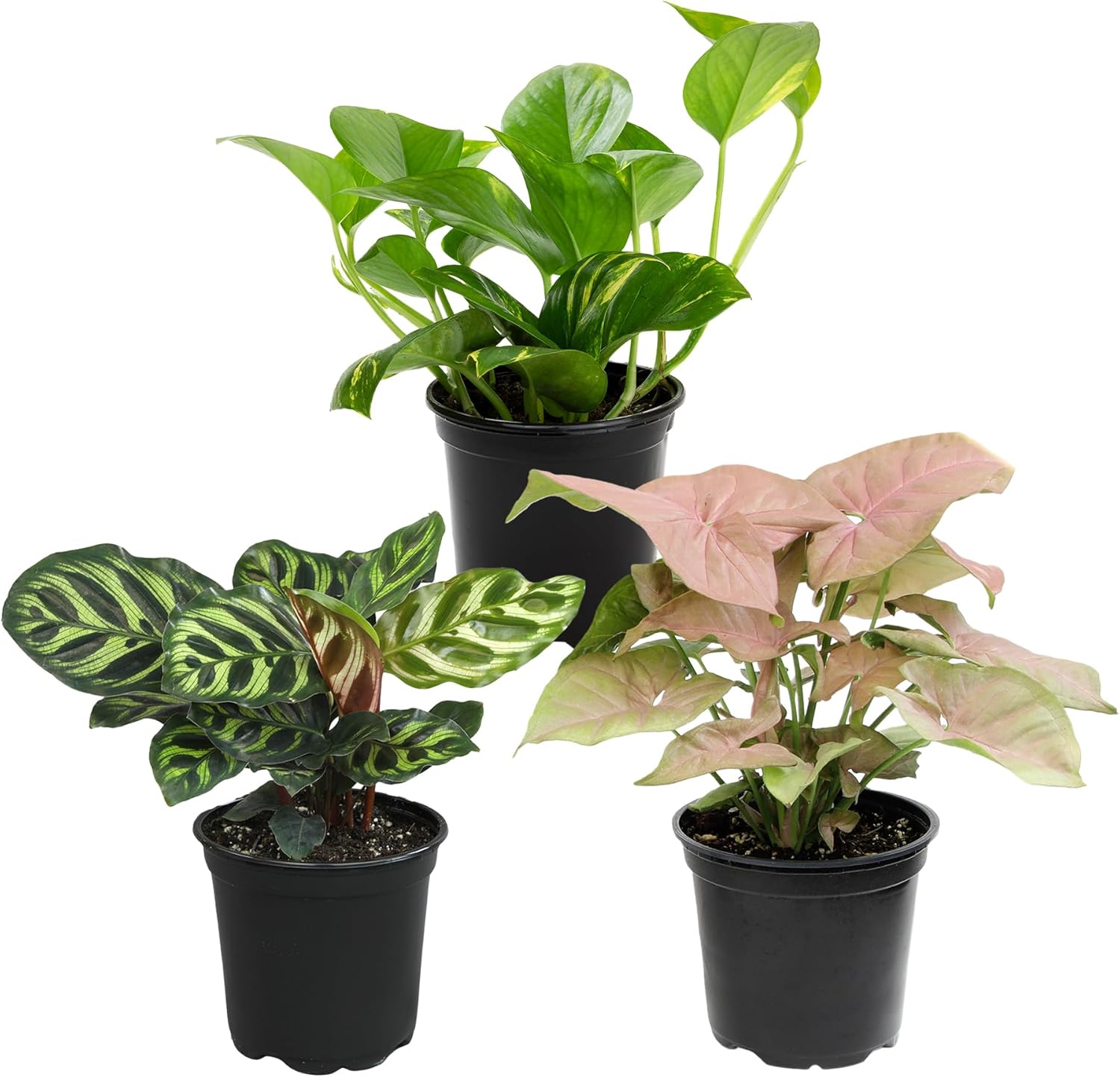
| Indoor Outdoor Usage | Indoor |
|---|---|
| Sunlight Exposure | Filtered Light |
| Other Special Features of the Product | Low Maintenance |
| Moisture Needs | Regular Watering |
| Unit Count | 3 Count |
This 3-pack from Altman Plants delivers a rotating selection of popular, easy-care indoor varieties grown in greenhouse conditions and shipped in 4.25-inch grower pots. Typical mixes include Pothos, Peperomia, Calathea, Dracaena, Ficus and Syngonium, so you get a blend of foliage types that perform well in filtered or mostly shaded indoor spots. The plants arrive potted and rooted, ready to be displayed alone or grouped in decorative containers and stands. Practical benefits include low maintenance needs, natural air‑filtering foliage, and the convenience of having multiple varieties to populate a shelf, bathroom, or office corner. Expect slightly different light and water preferences between varieties, so place them in bright indirect to low light and water when the soil dries to the touch. Limitations are the small nursery pot size which may require repotting for faster growth and the unpredictability of which exact varieties you will receive in each pack. For buyers focused on performance in mostly shaded indoor spaces these are a quick way to add reliable, low-effort plants to a collection.
Best for: Buyers who want reliable, low-maintenance houseplants that perform well in mostly shaded indoor spots and prefer ready-to-display plants to quickly populate shelves or offices.
Less Ideal for: Gardeners seeking specific cultivars, uniform color schemes, or larger mature specimens right away should consider single-variety larger pots instead.
- Assortment of proven, easy-care varieties that tolerate filtered or low light
- Plants ship rooted in grower pots ready for immediate display
- Hand-selected and greenhouse-grown for healthier starter plants
- Natural air-purifying foliage beneficial for indoor environments
- Plants come in small 4.25-inch grower pots and will need repotting for faster growth
- Exact varieties in each pack vary by availability, so selection is not guaranteed
Verdict: An easy, performance-minded way to add three proven low-light tolerant houseplants to mostly shaded indoor spaces quickly and reliably.
Thorsen's Greenhouse Lemon Lime Prayer Plant (4" Pot)

| Indoor Outdoor Usage | Indoor |
|---|---|
| Other Special Features of the Product | Air Purification, Low Maintenance, Pet Friendly, Shade Resistant |
| Sunlight Exposure | Partial Sun |
| Moisture Needs | Moderate Watering |
The Lemon Lime Prayer Plant (Maranta leuconeura) is a compact, easy-care houseplant that brings bold, bright green foliage and subtle leaf movement to mostly shaded windowsills and shelves. Supplied in a 4-inch plastic nursery pot, it is typically used as a small tabletop or hanging specimen where it can receive bright indirect light rather than direct sun. Notable features include ASPCA-approved non-toxicity for pets, moderate watering needs, peat-based soil, and a reputation for being low-maintenance and tolerant of shade. In practice this means it is forgiving for busy owners: keep the soil evenly moist but not waterlogged, avoid harsh afternoon sun, and the plant will retain its vibrant striping and gentle nyctinastic leaf folding. Limitations are mostly those of any small nursery pot plant: it arrives small and will need repotting as it grows, and shipping can cause minor cosmetic stress that needs a short acclimation period. For mostly-shade indoor corners this plant delivers high visual impact with straightforward care.
Best for: Buyers who want a low-effort, pet-safe houseplant to brighten mostly shaded indoor spots and prefer a plant that shows visible leaf movement without demanding daily fuss.
Less Ideal for: People seeking large statement plants right away or those who want a fully mature specimen without repotting and a period of recovery from transit stress.
- ASPCA-approved non-toxic to cats and dogs, making it safe for pet households
- Displays striking lemon-lime leaves with dark green stripes for strong visual impact in shade
- Tolerates partial to mostly shaded indoor light and moves its leaves with daily light cycles
- Low-maintenance requirements with moderate watering and peat-based soil
- Arrives in a small 4-inch plastic pot and will need repotting as it matures
- Live-plant shipping can cause temporary wilting, leaf loss, or cosmetic damage requiring acclimation
Verdict: A compact, pet-safe choice that delivers high-impact foliage for mostly shaded indoor spaces with minimal care required.
Hirt's Victorian Parlor Palm (4" Pot) – Chamaedorea elegans 'Bella' Live Plant

| Sunlight Exposure | Partial Sun |
|---|---|
| Brand Name | Hirt's Gardens |
| Unit Count | 1 Count |
The Hirt's Victorian Parlor Palm is a compact live houseplant grown in a 4-inch pot and marketed for easy indoor care. It is typically used as a tabletop or shaded patio plant where light is limited. Notable features are its tolerance for low light, drought resistance, and reputation as a forgiving plant that withstands occasional neglect. In practice this means minimal watering and placement out of direct sun, making it a low-maintenance choice for renters or busy households. Because it is sold in a small container, the palm is convenient to group with other shade-loving plants or move around without heavy lifting. Limitations to expect are the small initial size from the 4-inch pot, so it will need repotting as it grows, and it will not develop a large specimen form quickly. For those who want an instant tall focal plant, this starter pot requires patience and basic repotting care to reach larger sizes.
Best for: Buyers seeking an inexpensive, low-maintenance shade-loving plant for apartments, offices, or shaded patios who prefer a resilient starter plant that requires minimal day-to-day care.
Less Ideal for: Gardeners who want an immediate tall focal palm or a mature specimen without repotting and growth time should consider larger nursery-sized plants instead.
- Very tolerant of low light and occasional drought, making it easy to keep alive
- Compact 4-inch pot is lightweight and easy to move or group in containers
- Well suited for indoor tabletops or mostly shaded patios where direct sun is absent
- Arrives in a small pot so it needs repotting to grow into a larger specimen
- Not a fast grower to large height when kept in a small container
Verdict: A budget-friendly, low-maintenance parlor palm that reliably performs in mostly shaded containers and small indoor spaces.
Aspidistra elatior 'Milky Way' — 4" potted plant (California Tropicals)

| Sunlight Exposure | Full Sun, Partial Shade |
|---|---|
| Moisture Needs | Moderate Watering |
| Unit Count | 1 Count |
| Plant or Animal Product Type | Milky Way |
The Aspidistra elatior 'Milky Way' is a low-maintenance shade-tolerant houseplant sold in a 4" nursery pot and ready to place in a dim corner or office. It thrives with moderate watering and tolerates full sun to partial shade, though its reputation is built on performing especially well in low-light locations where many other houseplants struggle. The plant arrives rooted and can be left in the provided pot or repotted into a larger container as it grows. Notable features are its forgiving light range, simple watering needs, and sturdy foliage that stands up to occasional neglect and variable indoor conditions. Because it is a slow grower, you will not need frequent repotting but should expect modest size increases over time. Limitations are that the 4" starter pot restricts initial root space and that this variety is not a fast visual filler for large rooms, so plan placement accordingly.
Best for: Buyers who want a dependable, easy-care shade plant for low-light rooms or offices and prefer a plant that tolerates irregular attention.
Less Ideal for: People looking for fast-growing statement plants to quickly fill large pots or those who prefer flowering or highly decorative foliage varieties.
- Tolerant of low light and partial shade, suitable for mostly shaded indoor spots
- Low to moderate watering needs make it easy to care for
- Arrives fully rooted in a 4" pot ready for immediate display
- Durable foliage that tolerates occasional neglect
- Delivered in a small 4" pot so it will need repotting for long-term growth
- Slow growth rate means it will not quickly fill a large space
Verdict: A reliable, low-maintenance shade-tolerant houseplant that performs well in dim indoor spots and requires minimal care.
American Plant Exchange Cast Iron Plant — 6" Potted Live Evergreen

| Indoor Outdoor Usage | Indoor, Outdoor |
|---|---|
| Other Special Features of the Product | Air Purification, Drought Tolerant, Low Maintenance, Pet Friendly, Shade Resistant |
| Soil Type | Peat Soil |
| Moisture Needs | Moderate Watering |
The American Plant Exchange Cast Iron Plant is a classic, easy-care houseplant suited to mostly shaded spots. In a 6-inch nursery pot it produces upright, deep-green leaves that create a dense, architectural clump without blooms. It is typically used on shelves, desks, in low-light corners, or on shaded patios where other tropicals struggle. Notable features from the listing include drought tolerance, low maintenance, and reported air-purifying benefits; the plant prefers moderate watering and well-draining peat-based soil, allowing the topsoil to dry slightly between waterings. Practical benefits are straightforward: it brings lasting greenery with little attention, tolerates artificial light and brief dry periods, and is generally safe around pets. Limitations are inherent to the size and plant type — a 6-inch potted specimen will be a compact accent rather than a large floor specimen and will establish slowly from the small root mass. Buyers who want immediate large-scale impact or flowering color should plan to repot or select a different species.
Best for: Ideal for buyers who need a tough, low-effort plant to brighten shaded indoor spots or covered outdoor patios and who value proven, resilient houseplants supported by existing buyer feedback.
Less Ideal for: Not the best choice for gardeners seeking flowering plants, instant large floor specimens, or those who prefer highly decorative variegated foliage.
- Tolerates low to partial light so it works in mostly shaded rooms and covered patios.
- Low watering needs and drought tolerance reduce care time for busy owners.
- Glossy, upright foliage provides a substantial, long-lasting green focal point.
- Sold in a nursery pot with potting soil so it is ready to display or repot on arrival.
- 6-inch pot size limits immediate visual impact and may require repotting for larger displays.
- No information on mature spread or growth rate from the small specimen is provided.
Verdict: A dependable, low-light tolerant potted evergreen that delivers easy, long-lasting greenery for mostly shaded rooms and patios.
Costa Farms Aglaonema (Chinese Evergreen) Live Indoor Plant in 6" Planter

| Indoor Outdoor Usage | Indoor |
|---|---|
| Other Special Features of the Product | Includes Planters |
| Sunlight Exposure | Partial Sun |
| Moisture Needs | Moderate Watering |
| Style Name | Aglaonema |
This Costa Farms Aglaonema is a ready-to-display Chinese evergreen shipped in a 6-inch composite planter and intended as an easy-care indoor accent. It performs well in moderate to low light spots that receive a few hours of indirect sun, making it a good choice for tabletops, shelves, or near east-facing windows. Care directions recommend watering when the top two inches of soil feel dry and avoiding standing water since the shipping container does not have drainage holes. The plant arrives potted in grower soil with slow-release fertilizer and shows the broad, colorful leaves typical of Aglaonema cultivars. Practical benefits include low maintenance water needs, tolerance of indoor light variations, and an attractive compact form that fits small spaces. Important limitations are that the supplied planter lacks drainage so repotting or careful watering is needed to prevent root rot, and growth is moderate so it will remain a small-to-medium houseplant rather than a large statement tree. Overall this is a solid pick for someone who wants a low-effort, attractive low-light indoor plant.
Best for: Buyers who prioritize reliable, low-maintenance indoor plants that perform well in lower light and want an attractive, display-ready plant for small spaces.
Less Ideal for: People looking for fast-growing large indoor specimen plants or those who want a pot with built-in drainage and higher transplanting convenience.
- Tolerates low to moderate indirect light, suitable for indoor spots with limited sun
- Ships in a decorative 6-inch planter ready for display
- Arrives in grower soil with slow-release fertilizer for easy initial care
- Compact size fits small spaces such as desks, shelves, or tabletops
- Shipping planter does not have drainage holes, increasing risk of overwatering if not repotted
- Moderate growth rate means it will not quickly become a large focal plant
Verdict: A dependable, low-light houseplant that arrives ready to display and stays compact for easy placement in small indoor spaces.
Choosing the Right Mostly Shade Potted Plants: Key Factors to Consider
True Shade Versus Dappled Light
Not all "shade" is the same. True shade means few direct sun hours and mostly indirect or reflected light; dappled light or bright shade gets intermittent sun through tree canopy. Pick plants rated for the specific shade you have because many so-called shade plants will languish in deep, north-facing gloom while others will scorch with even brief hot afternoon sun.
Understanding the exact light level affects placement in a container. A pot that sits closer to a house wall may receive reflected light and sustain a wider range of plants, while a spot under dense trees may suit only the most tolerant species. Take multiple observations at different times of day before committing to pots, and move containers seasonally if light patterns change.
Container Size and Root Space
Plants suited to mostly shade often favor shallow, fibrous root systems, but container depth still matters. A pot that is too small will stress roots, increase watering frequency, and stunt growth. Choose container size based on Mature Plant Habit rather than initial nursery size: allow space for the clump to expand without crowding.
Drainage is critical in shady locations where soil can stay damp longer. Use pots with adequate drainage holes and a free-draining potting mix that prevents waterlogging while holding enough moisture between watering. Layering with coarse gravel is optional but not a substitute for well-structured potting soil.
Watering Rhythm in Low Light
Shaded containers dry more slowly than sunny ones, so watering schedules must be adjusted. Overwatering is a common mistake because soil may appear moist on the surface while lower layers are waterlogged. Test moisture by feeling the potting mix an inch or two below the surface; water only when the root zone is slightly dry.
Consider plants with flexible water needs if you cannot check pots daily. Self-watering containers or capillary mats can help maintain even moisture. Also account for seasonal changes: cool, moist springs reduce watering frequency, while warm, humid summers increase plant demand even in shade.
Soil Mix and Fertility Needs
Mostly shade potted plants benefit from a light, well-aerated potting mix enriched with organic matter. Because shaded plants photosynthesize less, they usually do not require heavy feeding. Overly rich fertilizer can promote leggy, weak growth that is more susceptible to disease.
A balanced, slow-release fertilizer applied sparingly in spring, plus a light feed during active growth, is often sufficient. Replacing or refreshing the top few inches of potting mix annually helps maintain nutrient levels without shocking roots.
Disease, Humidity, and Airflow
Shaded areas often have higher humidity and reduced airflow, which increases the risk of fungal diseases and foliar problems. When planning containers, keep some spacing between pots to improve circulation and avoid crowding that traps moisture.
Choose plants with good natural resistance to common shade-related issues like powdery mildew and root rot. Monitor regularly for early signs of disease and remove affected foliage promptly. Avoid overhead watering in humid conditions; water at the soil level to keep leaves dry.
Seasonal Behavior and Wintering Options
Different mostly shade container plants have varying lifespans and cold tolerance. Some are tender perennials that need overwintering indoors or protected locations, while others are hardy and can stay in place year after year. Consider whether you want a long-term container specimen or seasonal rotation for color.
Plan for overwintering by selecting appropriate pot size and material. Larger, heavier pots resist freeze-thaw movement, and porous materials can help moderate moisture. If moving containers indoors is not feasible, choose hardy varieties suited to the local winter climate.
Best Potting Mixes for Shaded Containers
A mix for shaded containers should focus on drainage and organic content without being too heavy. Use a premium potting blend with added compost or well-aged leaf mold to provide slow-release nutrition while preserving porosity. Adding a small proportion of coarse sand or perlite improves aeration and helps prevent perched water in low-sun locations.
- Aim for a light, airy mix with good water retention but fast drainage.
- Include organic matter to feed slow-growing shade plants without excess nitrogen.
- Top-dress annually with compost rather than repeated heavy feeding.
Placement and Rotating Pots for Light Variability
Even mostly shaded spots can benefit from occasional rotation. Moving containers a few feet or rotating them through brighter locations during mid-summer can refresh color and reduce legginess. For balconies, place more shade-tolerant choices near railings where reflected light is lower and reserve brighter shaded corners for slightly higher-light tolerant varieties.
- Observe light through the day before final placement.
- Rotate pots monthly to even out growth direction and color.
- Use hanging baskets or tall stands to vary the vertical light gradient.
Watering Tools and Techniques That Work in Shade
Because overwatering is a common problem, use tools that help you judge soil moisture. A simple moisture probe or a finger test into the root zone tells you more than surface appearance. Soaker hoses on a low timer or self-watering inserts can maintain consistent moisture without saturating the root zone in humid conditions.
- Water at soil level to keep foliage dry.
- Check moisture below the surface before watering.
- Consider self-watering pots for stable moisture in busy seasons.
Designing Attractive Mostly Shade Containers
Shade does not mean dull. Combine contrasting leaf textures and variegated foliage with a few subdued flower spikes for interest. Use a layering approach: a taller foliage element for backbone, a mid-layer for texture, and a trailing plant to soften pot edges. Focus on texture and leaf color rather than relying solely on blooms, which are often fewer in low light.
- Mix bold-leaf and finely textured foliage for contrast.
- Include at least one trailing or cascading plant to soften the rim.
- Choose repeatable color palettes to keep groupings cohesive.
Managing Pests and Common Shade Problems
Inspect shaded containers frequently for slugs, snails, and sap-sucking insects that favor cool, damp spots. Use hand removal, traps, and targeted biological controls as first responses. For fungal leaf spots or mold, increase airflow, remove affected leaves, and avoid overhead watering until the problem subsides.
- Check undersides of leaves for pests regularly.
- Improve airflow by spacing pots and pruning crowded growth.
- Treat fungal issues early with cultural controls and remove infected material.
How We Chose the Best Mostly Shade Potted Plants
We selected these Mostly Shade Potted Plants by focusing on traits that matter for container success in low-light outdoor settings. Our evaluation emphasized shade tolerance in practical terms, such as the minimum indirect light needed for steady growth and whether the plant can cope with morning-only sun or dappled canopy light. We prioritized compact or clumping growth habits that fit common pot sizes and avoid aggressive spread that quickly outgrows containers. We also assessed water needs and drought tolerance specific to pots, since containers dry faster and require different watering rhythms than garden beds. Disease and pest resistance in shady conditions was considered because low light can increase humidity and fungal pressure in tubs and hanging baskets. Ease of care was another filter: plants that need minimal pruning, straightforward fertilizing, and predictable seasonal behavior ranked higher. Excluded from the list were species that need full sun, very deep root space, or invasive habits that make them unsuitable for containers. Bulbs and annuals that behave like short-term bedding plants were deprioritized unless they reliably perform multiple seasons in pots. The scoring criteria reflect these practical dimensions so gardeners can match plants to their specific shaded container sites.
FAQ
Can mostly shade potted plants flower well in low light?
Many mostly shade potted plants do produce flowers, but blooms are often less abundant than in brighter conditions. Choose species known for consistent bloom in filtered light and pair them with textural foliage to maintain visual interest when flowers are sparse.
How often should I fertilize shade containers?
Usually a light feeding once at the start of the growing season and a modest follow-up midseason is enough. Shaded plants use less energy than sun-exposed ones, so overfertilizing can cause weak, leggy growth and increase disease risk.
Do I need special soil for pots in shade?
A well-draining, organic-rich potting mix is best. Shade containers still need good drainage because moisture lingers longer without sun-driven evaporation. Avoid heavy garden soil that compacts in pots.
Will shaded pots need less watering than sunny pots?
Generally yes, shaded pots dry out more slowly, but exact needs depend on pot size, wind, and plant type. Always check the root zone rather than relying solely on surface dryness because moisture can persist below the top layer.
Can I overwinter mostly shade potted plants outside?
It depends on the plant's hardiness. Some shade-tolerant perennials are hardy and can remain outdoors if the pot and soil are protected from freeze-thaw cycles. Tender species should be moved to a frost-free spot or brought indoors to avoid winter damage.
Final Verdict
In mostly shaded patios and containers, prioritize plants with proven low-light performance, compact container habits, and flexible water needs. Pay attention to potting mix and airflow to reduce disease pressure, and choose plants whose seasonal behavior matches whether you will overwinter them or rotate annually. Balance texture and limited blooms to keep containers visually appealing in low light. Focus on the tradeoffs discussed here and pick the plant types that fit your light, maintenance comfort, and winter plans for the most reliable shady container displays.
