

Note: This article contains affiliate links. If you click on these links and make a purchase, I may earn a small commission at no extra cost to you. This helps support my research and content. Read my full affiliate disclosure here.
If you garden in a shady corner, choosing plants suited to low light makes the difference between a lush border and a struggling bed. Outdoor plants for low light behave differently than sun-loving species: they use slower growth, larger leaves, and adaptable root habits to capture limited sunlight. This guide shortlists six strong options that perform in shaded patios, under trees, and on north-facing walls. We focus on traits that matter in the landscape such as shade tolerance, winter hardiness, disease resistance, and seasonal structure. Read on for practical notes on planting, site placement, and the evaluation criteria used to pick plants suited to dimmer outdoor conditions.
Top Picks at a Glance
| Best Overall The best all-around choice for most situations | Touch Of ECO Hosta Bare Roots 6-Pack (Mixed Heart-Shaped) |  |
| Best Quality Built to a higher standard if you want something more solid | American Plant Exchange Cat Palm (10-inch Pot) – Live Tropical Houseplant |  |
| Best Value The sweet spot between price and what you get | Sow Right Seeds Rainbow Coleus Seeds (800 Count) |  |
| Best Budget The cheapest option that still gets the job done reliably | BuggyBeds Hosta Seeds (99-Pack) — Perennial Shade Garden Plants |  |
| Highest Rated A top-rated pick with lots of positive feedback | The Three Company Ajuga (2-Pack) Live Flowering Ground Cover |  |
| Best Seller A high-volume bestseller chosen again and again | HOME GROWN Rainbow Mix Coleus Seeds (approx. 400) |  |
Touch Of ECO Hosta Bare Roots 6-Pack (Mixed Heart-Shaped)

| Unit Count | 6 Count |
|---|---|
| Indoor Outdoor Usage | Outdoor |
| USDA Hardiness Zone | 3-9 |
| Moisture Needs | Regular Watering |
These Touch Of ECO hosta bare roots arrive dormant and are intended to be planted in fall or early spring for reliable, low-maintenance shade interest. Each pack contains six mixed heart-shaped hosta crowns that produce rich green foliage and fragrant white or purple flowers on tall stems from spring through fall. Hostas are typically used in shady borders, under trees, or in large planters where regular watering and indirect light suit them best. The listing notes hardiness to zones 3 through 9, so they will return year after year in a wide range of climates, and the plants attract pollinators while being resistant to deer. Practical gardeners will appreciate that the plants ship as bare roots for easy planting and faster establishment when placed with the crown at soil level and watered in. Limitations are that these are not container-ready potted plants and need initial attention to planting depth and moisture; smaller or shallow planters may not give the crowns enough room to spread.
Best for: Gardeners who want reliable, low-maintenance shade plants to establish in planters or beds and prefer economical bare-root stock they can plant themselves.
Less Ideal for: Buyers who want instant, display-ready potted plants or who need specimens sized for very small decorative containers.
- Six bare-root crowns per pack provide quick value for filling multiple planters or a shady border
- Hardy across USDA zones 3–9 so they are suitable for most climates
- Attractive heart-shaped foliage with seasonal fragrant blooms adds texture and pollinator value
- Ships dormant for easy handling and planting in fall or early spring
- Arrives as bare roots rather than established potted plants, so initial planting care is required
- Not suitable for very small or shallow containers where crowns cannot spread
Verdict: A cost-effective way to fill shady planters or beds with hardy, low-maintenance hostas if you are comfortable planting bare-root stock.
American Plant Exchange Cat Palm (10-inch Pot) – Live Tropical Houseplant

| Indoor Outdoor Usage | Indoor, Outdoor |
|---|---|
| Sunlight Exposure | Partial Sun |
| USDA Hardiness Zone | 10, 11, 9b |
| Moisture Needs | Moderate Watering |
| Material Features | Live plant potted in soil |
The Cat Palm is a compact, clumping palm that brings dense, feathery fronds to shaded corners of the home or patio. Sold in a 10-inch plastic pot and grown in sandy, well-draining soil, it is typically used as an accent plant in living rooms, sunrooms, covered patios, or shaded garden beds where bright, indirect light or partial sun is available. Notable features include pet-safe foliage, air-purifying qualities, and a low-maintenance habit that only needs roughly weekly watering and occasional misting in dry climates. For performance-minded buyers, the palm offers reliable visual impact and steady growth in USDA zones 9b to 11 and performs well when consistently kept moist but not waterlogged. Limitations to consider are its climate restriction to warm zones and its preference for humidity and indirect light, so it will struggle in cold, full-sun, or very dry conditions without extra care. The plant is best used as a focal accent where shade and humidity can be provided rather than a sun-exposed landscape specimen.
Best for: Buyers who need a durable, attractive shade-loving accent for indoor rooms or covered outdoor areas and prioritize steady, reliable performance over flashy seasonal blooms.
Less Ideal for: Gardeners in cooler climates or those wanting a full-sun, drought-tolerant landscape plant should choose a hardier outdoor species instead.
- Dense, fountain-like foliage creates immediate visual impact indoors or on shaded patios
- Non-toxic to cats and dogs, safe for households with pets
- Low maintenance with moderate weekly watering and tolerance for partial shade
- Helps improve indoor air quality through natural air-purifying properties
- Limited to warm climates (USDA zones 9b–11) so not suitable for cold outdoor locations
- Prefers higher humidity and consistent moisture which may require extra attention in dry interiors
Verdict: If you want a low-fuss, pet-safe palm that reliably fills shady indoor or covered patio spots with lush foliage, this Cat Palm delivers consistent ornamental performance.
Sow Right Seeds Rainbow Coleus Seeds (800 Count)

| Unit Count | 800 Count |
|---|---|
| Plant or Animal Product Type | Plectranthus scutellarioides |
| Sunlight Exposure | Partial Sun |
| Expected Blooming Period | Spring to Summer |
| Material Features | GMO Free, Heirloom |
These Rainbow Coleus seeds come in a large packet (about 800 seeds) and are aimed at gardeners who want bright, foliage-focused plants for containers or shaded beds. Coleus is grown for its colorful leaves rather than flowers and this mix produces a wide range of yellow, pink, green, red and maroon patterns that show well in pots and hanging baskets. The packet lists a high germination rate and seedlings typically emerge in 10 to 14 days at soil temperatures around 70 to 75°F. Directions call for shallow planting and spacing appropriate for container culture; mature plants reach roughly 18 to 30 inches tall so they make a substantial potted specimen or companion plant. Because these are non-GMO heirloom seeds sold in a bulk packet, you get many plants for your investment which is useful when filling multiple containers. Limits to expect are typical for coleus: they prefer partial shade and warm conditions and are tender in cold weather, so they need protection or to be brought indoors in cool climates.
Best for: Gardeners who want an affordable way to mass-fill outside pots with colorful, shade-friendly foliage and who prefer growing many plants from seed rather than buying individual transplants.
Less Ideal for: Someone who needs uniform, predictable single-color plants from the start or who wants immediate mature plants without waiting for seed-grown development.
- Very large seed count (about 800) gives good value for filling multiple pots or containers
- Non-GMO heirloom seeds suitable for saving and replanting
- High germination rate and clear planting instructions for quick establishment
- Shade-tolerant foliage plant that performs well in partial sun pots and hanging baskets
- Tender to cold and not suitable for frost-prone outdoor locations without protection
- Packet contains a mix so you cannot predict exact colors or patterns for each plant
Verdict: A budget-friendly way to fill outside pots with vibrant, shade-tolerant coleus foliage by growing many plants from a single large packet of heirloom seeds.
BuggyBeds Hosta Seeds (99-Pack) — Perennial Shade Garden Plants

| Unit Count | 99 Count |
|---|---|
| USDA Hardiness Zone | 3-9 |
| Expected Blooming Period | Summer to Fall |
| Sunlight Exposure | Full Sun |
| Moisture Needs | Medium Moisture, Drought Tolerant Once Established |
This 99-seed packet from BuggyBeds supplies enough Hosta seed to establish a substantial shade planting or refresh multiple containers. Hostas are grown for their foliage and are typically planted in partial to full shade; the packet is intended for spring or early fall sowing and thrives in USDA zones 3 to 9. The listing emphasizes easy care: the plants are described as fast-growing, drought tolerant once established, and adaptable to most well-draining soils, making them a practical choice for low-effort beds. Expect summer to fall blooms that attract pollinators, while spacing recommendations and pruning notes help manage spread as they form groundcover. Limitations are that seed-grown Hostas vary in appearance and establishment takes longer than buying transplants, so results are less predictable and patience is required. For small urban patios, starting in pots will need careful watering until roots set. For the budget-conscious gardener wanting to fill shady areas with foliage without frequent maintenance, this seed pack offers an economical way to add classic shade plants, but be prepared for variability and a slower timeline compared with established plants.
Best for: Gardeners on a budget who want to fill shady patios or beds with traditional foliage plants and are willing to start from seed and wait for establishment.
Less Ideal for: Buyers who need immediate, uniform plants for instant curb appeal or those who prefer plug-grown transplants with predictable size and form.
- Large 99-count packet supplies seed for multiple beds or containers
- Adaptable to USDA zones 3 to 9, suitable across many climates
- Low maintenance once established and drought tolerant
- Shade-tolerant species that attracts pollinators when in bloom
- Seed-grown Hostas establish more slowly and produce variable results compared with nursery transplants
- Product details list indoor usage but practicality is primarily for shaded outdoor planting
Verdict: If you want an economical way to populate shady patios and beds with classic, low-maintenance foliage, this 99-pack of Hosta seed delivers the most plants per dollar.
The Three Company Ajuga (2-Pack) Live Flowering Ground Cover

| USDA Hardiness Zone | 4-9 |
|---|---|
| Sunlight Exposure | Partial Shade to Full Sun |
| Expected Blooming Period | Spring |
| Moisture Needs | Moderate Watering |
| Soil Type | Well draining soil |
These Ajuga plants are sold as a two-pack of live, low-growing ground cover that quickly fills bare patches with glossy dark leaves and blue spring flower spikes. They are typically planted in beds, borders, or under trees where partial shade to full sun conditions occur; they spread to form a dense carpet that suppresses weeds and reduces exposed soil. Notable features from the listing include USDA hardiness to zones 4–9, preference for well-draining soil, moderate watering needs, and an expected mature height around six inches. In practice this means they are low-maintenance once established, provide year-round foliage interest, and add spring color without frequent deadheading or pruning. Important limitations are that they prefer well-draining conditions and moderate moisture, so they are not a solution for persistently waterlogged clay unless amended or planted on a raised bed or slope. Expect good site coverage in a season or two but plan for containment where you want to prevent aggressive spread.
Best for: Buyers who want a reliable, low-maintenance ground cover that quickly fills shaded or partly sunny beds and reduces weed pressure with minimal ongoing care.
Less Ideal for: Gardeners with permanently waterlogged clay sites or those who need a non-spreading, tightly contained plant should consider alternatives or soil improvement before planting.
- Evergreen foliage provides year-round visual interest
- Forms a dense ground cover that suppresses weeds and fills bare spots
- Blue spring blooms add seasonal color above dark, attractive leaves
- Cold-hardy across USDA zones 4 to 9 so suitable for many climates
- Low maintenance after establishment with only moderate watering needs
- Prefers well-draining soil and can struggle in heavy, poorly drained clay without soil amendment or raised planting
Verdict: A dependable, low-care evergreen ground cover that delivers seasonal blue flowers and rapid site coverage when planted in well-draining clay amended or raised beds.
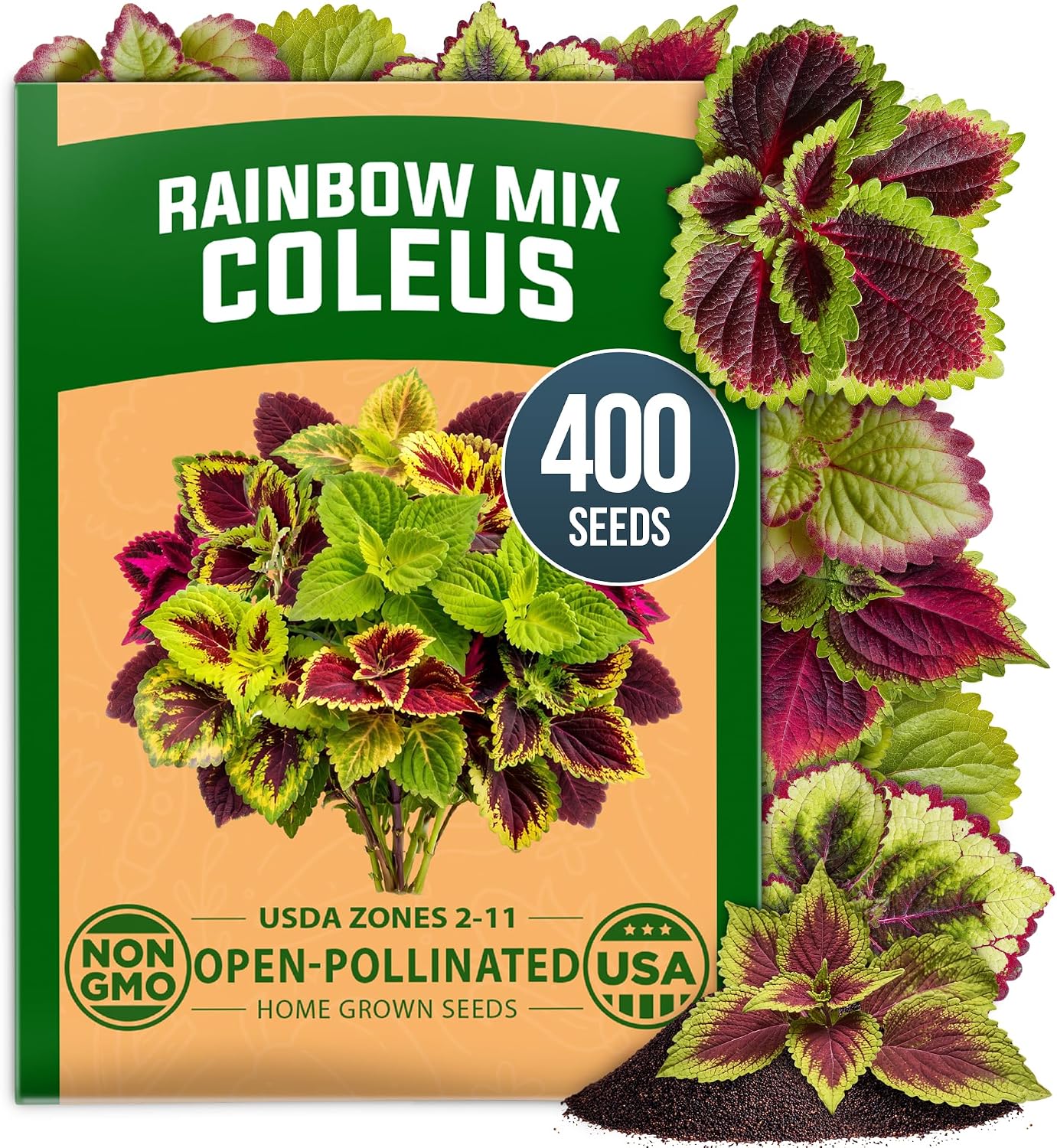
HOME GROWN Rainbow Mix Coleus Seeds (approx. 400)
| Sunlight Exposure | Part Shade to Shade |
|---|---|
| USDA Hardiness Zone | 2-11 |
| Expected Blooming Period | Spring through Frost |
| Material Features | GMO Free, Heirloom |
| Unit Count | 1 Count |
These Rainbow Mix coleus seeds produce compact, colorful foliage plants that are well suited to containers and shaded patio spots. Surface-sow the tiny seeds (do not cover), keep the medium warm and consistently moist, and seedlings typically appear in 10–14 days; pinch growing tips to encourage bushy, mounded plants. The mix is valued for season-long leaf color in shades of rose, green, bronze, cream, and scarlet, so you get visual impact without relying on flowers. Coleus grows indoors near bright north or east windows and outdoors in part shade to shade, making it a flexible choice for window boxes, mixed planters, and small pots. Important limitations are that coleus is a tender annual in most regions and needs protection from frost and prolonged drought, and it prefers warm temperatures for best germination and growth. For container gardeners who want low-maintenance, high-impact foliage, this seed mix is an easy way to produce many plants from one packet.
Best for: Gardeners who want easy-to-grow, high-impact foliage for containers and shaded patios and prefer predictable, low-fuss plants they can start from seed.
Less Ideal for: People seeking long-lived perennial landscaping or plants that tolerate full sun and drought without extra care.
- High seed count (about 400) gives many starts for containers or massing
- Open-pollinated non-GMO seeds from a mix that yields varied, colorful foliage
- Specifically suited to part shade and shade where many flowering plants struggle
- Compact, mounded habit that performs well in pots, window boxes, and mixed planters
- Tender annual in most zones and requires frost protection or indoor overwintering
- Requires consistent moisture and will suffer if soil dries out or remains waterlogged
Verdict: A high-count, non-GMO coleus seed mix that reliably produces compact, colorful foliage perfect for containers and shaded patios.
Choosing the Right Outdoor Plants for Low Light: Key Factors to Consider
Light Levels and Microclimates
Assess the actual light your planting site receives across the day and season. Low light can mean deep, year-round shade under mature trees, bright dappled sun through deciduous canopy, or consistent north-facing shade. Each of those microclimates changes what plants will thrive. A species labeled shade-tolerant may still need a few hours of morning light, while true deep-shade performers handle nearly no direct sun.
Knowing whether light increases in late winter and early spring because of leaf drop, or whether a nearby structure casts constant shadow, helps you place plants where they can photosynthesize enough to stay healthy without stretching toward light.
Soil Moisture and Drainage
Shaded sites are often cooler and retain moisture longer, which can be an asset or a liability. Plants adapted to low light frequently tolerate higher moisture but many still require well-drained soil to avoid root rot. Test your soil by digging a small hole and observing how long water remains after a rain.
If drainage is poor, raise beds slightly or amend the planting hole with coarse material to improve aeration. Conversely, very dry shade under certain trees may need supplemental watering during extended dry spells, so choose drought-tolerant shade species for those spots.
Competition From Tree Roots
Under mature trees, shallow roots compete aggressively for water and nutrients. Low-light gardeners should expect slower growth and may need to select plants that establish shallow fibrous roots or that tolerate reduced nutrition.
Mulch helps conserve moisture and add organic matter, but avoid piling mulch against trunks or stems. For heavy root competition, consider planting in contained raised beds or using root-pruning techniques when preparing the site.
Plant Size and Spacing
Plants in low light often grow more slowly but can get leggy as they seek light. Allow adequate spacing to reduce shading among understory plants and improve air circulation, which lowers disease risk in damp, shady environments.
Plan for mature spread rather than initial nursery size. Crowded plants in shade will be more prone to fungal issues and will require more frequent pruning to maintain form and health.
Seasonal Interest and Structure
Because flowering can be reduced in deep shade, prioritize species that offer year-round value through foliage color, texture, or persistent stems. Evergreen groundcovers and shrubs keep structure in winter, while variegated or textured leaves can brighten dim corners.
Think beyond flowers: bark, berries, and architectural leaves ensure the area remains attractive when blooms are scarce. Combining different leaf shapes and heights creates depth and visual contrast in a low-light bed.
Maintenance and Cultural Needs
Maintenance expectations should match your schedule and site conditions. Some shade plants need regular division, deadheading, or soil feeding to look their best. Others are largely hands-off once established.
Factor in leaf litter from overhead trees, seasonal cleanup, and any pruning needed to manage air flow. Choosing plants with lower upkeep helps keep shaded areas tidy and reduces the risk of disease in damp conditions.
Preparing a Shady Planting Bed
Begin by removing competing vegetation and testing soil. Add organic matter such as compost to lighten heavy soils and improve nutrient content. Where drainage is an issue, create a slightly raised planting area to promote root health.
Lay out plants with room for mature size and arrange taller specimens at the back or center of a bed. Apply a 2 to 3 inch mulch layer to conserve moisture and suppress weeds, keeping mulch pulled away from stems.
- Clear invasive groundcovers before planting
- Improve compacted soils with organic amendments
- Use raised beds or mounds where drainage is poor
- Space plants for airflow to minimize fungal disease
Planting and Establishment Tips
Plant in early spring or fall when temperatures are moderate and soil is workable. Water thoroughly at planting and maintain consistent moisture for the first growing season to encourage root establishment.
Limit fertilizer to moderate applications; shaded plants often need less feeding than sun-loving species. If stems become leggy, selective pruning and pinching will encourage bushier growth without forcing excessive new foliage that the light cannot support.
- Dig a hole twice as wide as the root ball, shallowly set the crown
- Water deeply at intervals rather than daily light watering
- Mulch after planting but avoid burying crowns
Design Approaches for Low-Light Gardens
Use contrast in leaf color and texture to create interest where flowers are limited. Place variegated and light-green-leaved plants near paths and focal points to draw the eye. Group plants with similar moisture and light needs to simplify care.
Layering is effective: low groundcovers, mid-height perennials, and a few small shrubs create depth. Repeat plant forms and foliage colors to create cohesion in dimmer settings.
- Combine evergreens and seasonal perennials for year-round structure
- Use light-reflecting surfaces nearby, such as pale stone, to boost perceived brightness
- Concentrate bloomers where they will receive the most available light
Managing Shade-Related Pests and Diseases
Shady, moist conditions often favor fungal diseases and slugs. Improve air circulation by spacing and selective pruning. Remove diseased foliage promptly and avoid overhead watering to reduce leaf wetness.
Use organic controls when possible: hand-pick slugs, set traps, and apply biological fungicides only when cultural controls are insufficient. Regular monitoring in shady beds catches issues early when they are easiest to manage.
- Monitor for powdery mildew and treat promptly
- Encourage natural predators for slug control
- Avoid dense plantings that trap moisture
Adapting Plant Choices by Climate Zone
Match plant hardiness to your local winter lows. A shade-tolerant species in one region may be marginal in another because of cold intolerance. Check general hardiness guidance and lean toward proven, regionally appropriate varieties for long-term success.
In warmer climates, choose heat-tolerant shade performers that also handle humidity. In colder areas, favor evergreens and perennials known for winter survival and protective leaf litter management.
- Select winter-hardy evergreens for year-round structure in cold zones
- Opt for moisture-tolerant species in cool, damp climates
- Consult local extension resources for region-specific recommendations
How We Chose the Best Outdoor Plants for Low Light
We selected plants that consistently perform in low-light outdoor situations by applying practical, gardener-focused filters. First, we prioritized verified shade tolerance based on typical garden light categories such as deep shade, partial shade, and dappled sunlight. Cold hardiness was the next filter so options suit a range of climates rather than being restricted to mild coastal zones. We evaluated maintenance needs, favoring species with moderate to low pruning and feeding requirements. Disease and pest resistance were considered to reduce the need for chemical controls in shady, moisture-prone spots. Seasonal interest-foliage color, texture, winter structure, and bloom timing-was included so shaded beds stay visually appealing year-round. Plants with very high ongoing care demands or that are invasive in common landscapes were excluded. In short, selections balance real-world survivability, seasonal value, and reasonable upkeep for everyday gardeners.
FAQ
Can any plant survive in deep shade?
Not every plant thrives in deep shade. Many species labeled shade-tolerant still need some indirect or dappled light. For deep, constant shade choose plants specifically adapted to very low light and expect reduced flowering and slower growth.
How do I improve flowering in a shaded area?
Place flowering species where they receive the most available light, such as near gaps in tree canopy or along a north-facing wall that gets morning sun. Improve soil fertility moderately and avoid over-pruning which can reduce bloom production.
Are shaded gardens more likely to get fungus problems?
Yes, cooler, damp microclimates in shade encourage fungal diseases. Good spacing, improved air circulation, proper watering practices, and removing infected material reduce fungal pressure.
What maintenance is different for shade gardens compared with sunny beds?
Shade gardens often need less fertilizer and less frequent watering but more attention to spacing, mulching, and disease monitoring. Leaf litter management and selective pruning are common tasks to keep plants healthy in low light.
Should I adjust watering in shaded spots?
Usually you can water less often because shaded soil dries more slowly. However, established tree roots may compete for moisture, so check soil moisture before skipping irrigation and water deeply when needed.
Final Verdict
Prioritize true shade tolerance, appropriate hardiness, and low maintenance when choosing outdoor plants for low light. Balance evergreen structure with textural foliage and occasional bloomers so a shaded area retains visual interest across seasons. Focus on site preparation, correct spacing, and cultural practices that reduce moisture-related problems. With the right choices and modest care, shaded corners can become reliable, attractive parts of the landscape rather than problem areas.
